Showing posts with label US sanctions. Show all posts

Thursday, December 19, 2019

Rouhani: Cooperation among Muslim states key to resist U.S. pressure

Mahathir Mohamad: Malaysia thriving to re-boost trade ties with Iran
Iranian President Hassan Rouhani has underlined the need for cooperation among Muslim countries to fend off pressures by big powers, particularly the U.S., Press TV reported.
It is necessary for Muslim countries to cooperate in order to counter pressures by big powers, Rouhani said on Wednesday during a meeting with Malaysian Prime Minister Mahathir Mohamad in Kuala Lumpur.

“Many problems facing Muslims are due to the interference of the U.S., including the sanctions against Iran,” he added.
Rouhani, who is in Malaysia to attend the Kuala Lumpur Summit, criticized the U.S. for imposing “unilateral and cruel sanctions” on Iran, saying Washington left the 2015 nuclear deal between the Islamic Republic and major world powers without any justification and placed bans against Tehran despite UN Security Council Resolution 2231, which endorses the nuclear agreement.   
Stressing that sanctions will fail to dent Iran’s determination to boost ties with other countries, Rouhani underlined the need for Tehran and Kuala Lumpur to shore up ties in different sectors, including science, technology, energy, industry, tourism, information technology and medicine.
He expressed hope that the Kuala Lumpur Summit would come up with solutions to challengers facing Muslim countries, particularly Middle Eastern states.
The Malaysian prime minister, for his part, called for expansion of ties with Iran in all sectors, expressing his country’s strong determination to increase trade ties with Tehran.
He said that sanctions have affected trade ties between the two countries but said his country was thriving to re-boost trade cooperation with Iran.
“We will continue our trade and economic ties with Iran,” he said.    
He also rejected the “illegal sanctions” against Iran as a contravention of UN regulations, but expressed optimism that Tehran will surmount the pressures of the U.S. and Europe.
He said the Kuala Lumpur Summit provided an opportunity for Muslim countries to share their experiences.
Separately on Wednesday, Rouhani met and held talks with Malaysian King Abdullah of Pahang, during which the two sides called for further promotion of ties in different sectors, especially economic and cultural cooperation.
Rouhani told the Malaysian King that the key to settling woes facing Muslims were solidarity and cooperation.
He added that Palestine, interference of big powers in the domestic affairs of Muslims countries and the need for promotion of scientific and economic progress were among the most important issues that needed to be addressed.
The Malaysian King also welcomed the Iranian president’s participation in the Kuala Lumpur Summit, expressing hope that the event will yield fruitful results.

Sunday, December 08, 2019

Effects of U.S. sanctions on Iranian citizens' health security

By Hamed Khani

1. Problem statement Sanctions are one of the punitive measures in international relations that have a lot of meanings. Sanction can be defined as cutting or restricting business and political ties as punitive action by one or more governments against a country that has violated international law. 
In international law, sanctions are a series of compulsory actions aimed at forcing governments, international actors or noncompliant individuals to observe international law or to comply with the policy of the organization that imposes sanctions. Technically, the term is used for both military and civilian actions, but it is mostly common in civilian cases. Sanctions may be imposed as a response to violation of a norm or preventing the violation, but it also may be an act to achieve a foreign policy goal or certain concessions from the sanctioned country. 
According to the power of the organization that imposes sanctions, they can be divided to unilateral, multilateral, and UN (international) sanctions. When sanctions are imposed by a single country they are called unilateral sanctions. Prominent examples of unilateral sanctions are those that have been imposed by the United States against Iran over the past four decades. If sanctions are imposed by a group of countries, they are called multilateral sanctions. Sanctions on Haiti imposed by the Organization of American States, and more recently sanctions by the EU against Syria and Iran are among multilateral sanctions. Finally, the restrictive measures that imposed according to Article 41 of the Charter of the UN are called UN sanctions.
What will be discussed briefly are the U.S. unilateral sanctions against Iran, which have been intensified in recent years. Some scholars and legal experts believe that in the case of sanctions imposed by the United States, international law and human rights are deliberately ignored. This issue has made us to briefly describe U.S. sanctions actions and decisions toward the Iranian nation, considering international law and human rights. 
2. Health security from the prospective of international law
The concept of health security was first stated by the UN in 1994 and aimed to ensure the protection against diseases and unhealthy lifestyles. Subsequent to this initiative, many references have used this concept to represent the health issues that have a major influence on human security. Such security tackles the insecurities that are resulted from infectious and parasitic diseases in vulnerable areas or widespread consequences of countries’ industrialization. In other words, health security refers to the people’s freedom from all kinds of diseases and their access to health services. Currently, the UN is the main active organization in health security at the international level. The organization was founded in 1948 and pursues the above-mentioned goals. 
Health is an international issue and there is a strong link between health and global peace and security. The World Health Organization (WHO), which was founded in 1984, at the same time the Universal Declaration of Human Rights was signed, is aimed at achieving health and developing health standards. In addition, the right to health security is emphasized in various international instruments and laws, such as the Statute of the WHO, Article 25 of the Universal Declaration of Human Rights, Article 12 of the International Covenant on Economic, Social and Cultural Rights (ICESCR), Article 12 of the Convention on the Elimination of all Forms of Discrimination Against Women (CEDAW), Article 29 of  Convention on the Rights of the Child (CRC) and Article 5 of the International Convention on the Elimination of All Forms of Racial Discrimination (ICERD). In Article 2 of the Charter of Rights is also stated that citizens have the right to a decent life and its necessities, including clean water, proper food, health promotion, environmental health, and access to medicine and medical services in accordance with current knowledge and national standards. 
Regarding various international human rights instruments, it can be seen that today, the right to health security is a human right that obliges governments to respect, support and implement trans-national health security laws. Therefore, governments should not directly or indirectly prevent people from their right to health. They should take appropriate legislative and executive measures to carry out all health security issues for the citizens within their geographical territory or outside it. 
Another point is that the right to health is comprehensive and includes the right to health care and its determining factors as well. This issue is so important that the WHO considers the access to essential medicines as a necessary matter and has discussed about compulsory licenses in this field. Therefore, from the view of international law, sanctions should not lead lack of access to medicine and food to citizens. 
On the other hand, the right to health is liable to stay in execution, and is considered as one of the most complex human rights in international law. International health law, which is developing on various international instruments, as well as national, regional and global organizations, has faced with new concepts. Health justice, primary health care, health promotion and health security are stated as the components of human security in international health law. The right to health security, as a significant human right, plays an important role in approaching a healthy society.
3. The effects of sanctions on health security
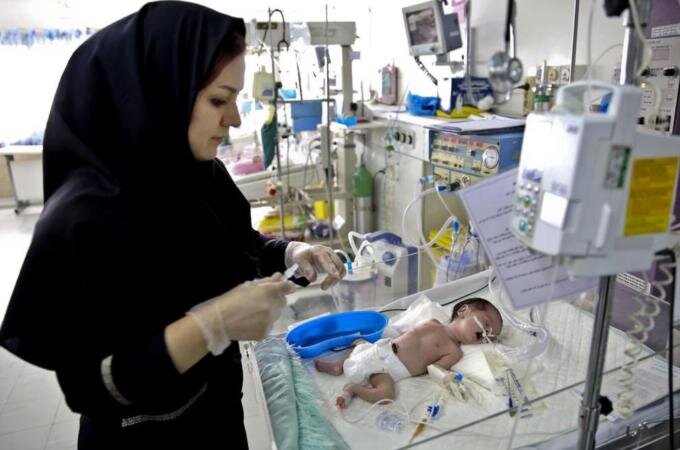
It is obvious that some international sanctions and also most U.S. sanctions have had various effects on health security of the Iranian people. The lack or restriction of access to medicine and standard medical services and supplies is one the sanctions’ effects. The economic and financial sanctions imposed by the U.S. in the recent years have influenced the import of medical goods. In this regard, in 2018, the Executive Director of the Kidney Foundation of Iran, Ahmad Ghavidel, stated, “If we cannot buy medicine through the (banking) channel, we must buy low-quality medicines, those countries that have pharmaceutical agency in Iran are present in Iran, but banks have been sanctioned in a way that they cannot transfer money”. Emphasizing that we are facing the U.S. in the current situation, he said, “These sanctions are different from those in previous periods, and we are not facing with all countries, and Americans are lying that medicine is not sanctioned and they must be held accountable”. 
4. The reaction of the Islamic Republic of Iran from a legal perspective
1. The ruling of the International Court of Justice (ICJ) on October 3, 2018 to temporarily settle the U.S.-Iranian disputes can be an example of the Iranian government’s reaction to U.S. sanctions. According to the court’s ruling, the sanctions may not hurt exportation to the territory of Iran of goods required for humanitarian needs such as medicines, medical devices and foodstuffs and agricultural commodities as well as goods and services required for the safety of civil aviation. In fact, Iran’s government has been able to persuade the ICJ to order the U.S. that it does not have the right to impose sanctions on the three major fields of medicines, foodstuffs (agriculture) and airplane components. 
2. The correspondence of the Minister of Health and Medical Education with the WHO about sanctions. Following the negotiations carried out at the meetings of the headquarters for providing medicine and medical equipment on October 30, 2018, Iran’s Minster of Health and Medical Education Saeed Namaki sent a letter to WHO director-general stating the cruel and inhuman goals of the sanctions.
5. Legal recommendation to the government
Finally, in addition to the measures taken by the government to counter the effects of sanctions on health security, it is recommended that all deliberate actions and violations by the U.S. against the Iranian nation be filed for claiming damage. One of the measures that the executive body, especially the Ministry of Foreign Affairs and the Ministry of Health and Medical Education, can take in coordination with the Islamic Consultative Assembly (Parliament) and the Judiciary is recording all the violations related to supply of medicines and medical devices, as well as banking operations. This move is essential for claiming damage from the United States. Since the ICJ has not yet entered the main lawsuit, the documentation is the most important step that can be taken at the present time. The management of public and private companies, hospitals and health centers can document all the damages to legal entities or individuals to record and claim damages. 

Saturday, November 30, 2019

Will Iran face new crises?

By Mohammad Ghaderi

Some security analysts believe that since the Islamic Republic of Iran dealt with the recent unrest quickly and intelligently the foe did not use all of its energy and decided to use the rest of its capacity in the future.
Regardless of whether the analysis is correct or not, it is necessary that the government be fully aware of the possibility of future crises which there is a ground for them.
The foe has chosen the vulnerable point to create a crisis. It exploits the legitimate and rightful protests of people who are concerned about their future living conditions. The foe’s think tank is well aware of economic problems, that part of which is because of sanctions and another part is due to mismanagement and incompetence. 
The most important factor in creating crises are people. However, if people do not accompany the foe in carrying out its plans, the effects of its actions will effectively be limited to vandalism and plunder.
It should be noted that since Trump came to power, diplomats, despite making commendable efforts, were not able to pave the way for overcoming deep challenges between Iran and the West and its regional allies. They also failed to lift or halt cruel sanctions against the Iranians. 
The Leader of the Islamic Revolution Ayatollah Khamenei, during his meeting with businesspersons and entrepreneurs on November 19, explicitly emphasized this fact and said sanctions will go unabated. 
The Leader said the impression that sanctions would come to an end in the next one or two years is an illusion. He said with the knowledge of the arrogant front’s position, sanctions will be in place for the foreseeable future and in order to save the economy, one should not wait for the lifting of sanctions or action by some countries.
Although it cannot be expected that, despite unprecedented economic sanctions (economic terrorism), people’s living conditions will remain unharmed, certainly there are some solutions that can significantly ease the economic pressure on the people. 
Through their epic participation in pro-establishment rallies across the country in the past few days, people have shown that there is a strong bond between them and the country and that they will not compromise on the country’s security and stability. Yet, they rightfully have demands from the authorities.
The crisis can reemerge because its conditions still exist and such vulnerabilities will tempt the foe to take advantage of them. 
Also, the recent crisis must have made all state bodies and authorities aware that one cannot expect that the security bodies always pay for the costs but an immediate measure is not taken to activate the national economy with a real focus on domestic production. 

Thursday, November 21, 2019

In recent security issues we have repelled the enemy: Leader

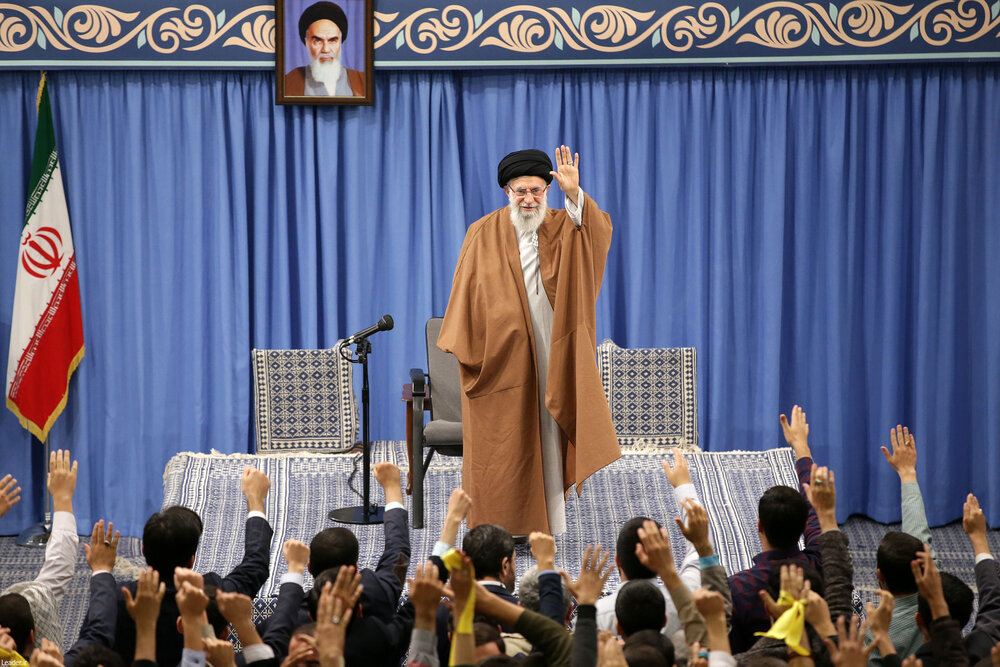
"Both friends and foes should know that we have repelled the enemy in the war in military, political and security issues,” the Leader stated.
The statement by the Leader came after protests were sparked in some cities in Iran against the government’s measure in rationing gasoline and substantially increasing its price. The protests turned violent with reports of clashes between security forces and certain elements vandalizing public property.
“The recent actions were security issues, not from the people. We have repelled the enemy in various areas, and by God's grace, we will also definitely repel the enemy in the economic war,” Ayatollah Khamenei remarked.
The Leader made the remarks during a meeting with a group of entrepreneurs and producers.
‘We should not wait for end of sanctions to save economy’
The Leader also said that no one should wait for end of sanctions to save the economy.
“If the Iranian people, entrepreneurs and the country’s thinkers neutralize the effects of sanctions through reliance on domestic capabilities, imposers of sanctions will stop sanctions because they will be harmed,” Ayatollah Khamenei pointed out.
He attached great importance to reducing reliance on oil revenues in order to decrease harms of the sanctions.
Ayatollah Khamenei says the current U.S. government has launched an economic war against Iran “in a brutal, hatful and criminal way”.He noted that the country should not pin hope on foreign countries.
“Fundamental strategy to immunize economy from effects of sanctions is through boosting domestic production and I back this real path of progress,” he said.
Elsewhere, he said that Islam attaches value to increase in national wealth and well-being.
He said that “producers are commanders and front runners of domestic production and economic boom and promotion of public well-being.”
The Leader also said that there have always been economic war among the countries and arrogant powers, adding, “However, during tenure of the current president of the United States, this war with China, Korea, Europe and other countries has been expanded and this war has been launched against Iran through sanctions and in a brutal, hatful and criminal way.”
‘We will turn sanctions into opportunities’
Ayatollah Khamenei also said that the country will turn sanctions into opportunities through relying on domestic capabilities and economic activities.
He noted that the policy of reliance on domestic capabilities should not be changed even if sanctions are removed.
The Leader also said that foreign countries will never transfer fundamental technologies, especially in areas of automobile, petrochemistry and oil sector, to Iran and the country must use domestic capacities to reach such technologies.
Elsewhere, he noted that the country can have good economic relations with its neighbors.

Friday, November 08, 2019

Iran, Cuba paying the price for resistance against US colonialist policies: UN envoy

Iran, Cuba paying the price for resistance against US colonialist policies: UN envoyTEHRAN, (MNA) – Iran’s Deputy Permanent Representative to the UN on Thu. censured the US unilateral embargoes and coercive sanctions against independent states such as Iran and Cuba, stressing his country's resolve to offset the US unlawful measures.

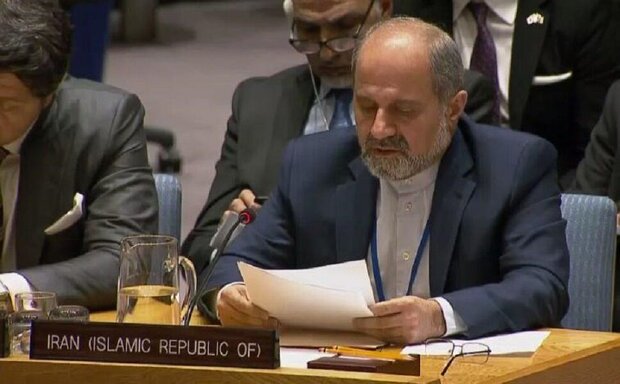
Iran’s Deputy Permanent Representative to the United Nations, Es'hagh Al Habib made the remarks on Thursday in his address to the UN General Assembly focusing on "Necessity of ending the economic, commercial and financial embargo imposed by the United States of America against Cuba".
Full text of the statement reads as follows:
"Mr. President,
At the outset, I wish to take this opportunity to offer our warm welcome to Mr. Bruno Eduardo Rodríguez Parrilla, the Foreign Minister of Cuba.
My delegation associates itself with the statements delivered yesterday by the representatives of Palestine, Azerbaijan and Uganda, on behalf of Group of 77 and China, the Movement of Non-Aligned Countries as well as Organization of Islamic Conference. However, I would also like to add the following remarks in my national capacity.
Today, we are witnessing that the expansionist and arrogant approach of a certain Government presents the greatest threat and challenge to the world peace and security. The growing resort to unilateral coercive measures is one of the clear symptoms of unilateralism coupled with an interventionist, flawed and short-sighted foreign policy.
Among others, unilateral embargoes and coercive sanctions, as a means to achieving national policy objectives, have a seriously adverse impact on the promotion of peace at the regional and international levels. They are fundamental impediments to establishing not only a peaceful and prosperous world but also a just and equitable international order which is a vital prerequisite for sustainable development.
The inhumane sanctions and blockade imposed by the United States against Cuba for almost six decades is the most unjust and prolonged system of unilateral sanctions applied against any country. These aggressive measures constitute a gross violation of the norms and principles underpinning the international relations order. No Cuban citizen or sector of the economy has been immune from the negative effects of this unilateral policy which hinders the development that every country is entitled to construct in a sovereign manner.
In the past year, tightening of the blockade has continued to be the central pivot of US government policy towards Cuba, with ever more notable effects in its extraterritorial application. 
Regretfully, we have observed that the US Department of State has on different occasions expanded the “Restricted List of Cuban Entities”, to the blockade regulations, which caused considerable damage to the country’s economy because of its effects of intimidating the international business community.
In fact, the US has been addicted to imposing unilateral sanctions when it comes to states that do not submit to or follow its contradictory and expansionist policies. In reality, Iran and Cuba are paying the price for their resistance and insistence on their independence from the United States’ colonialist policies. Iran has experienced the US unlawful sanctions since the triumph of the Islamic Revolution 40 years ago.
Within the last four decades, the US has imposed unilateral coercive measures on the Iranian people at an increasing rate to the extent that the current US Administration, defiant of the established norms, has even targeted importation of medicine and medical equipment. Thus, patients, women and children, refugees, poor and those in vulnerable situations have become the prime target of the US genocidal economic terrorism--against all principles of international law.
The US Administration wants the world to believe that it is concerned about the Iranian people. Yet the very first sanctions it reimposed have cancelled licenses for sales of more than 200 passenger jets under absurd pretexts, endangering ordinary Iranians. US hypocrisy knows no bounds.
The economic war that the United States has initiated under the rubric of putting “Maximum Pressure” through imposing new sanctions, not only targets the Iranian public but also has harmful repercussions for the peoples of other countries, and has disrupted the state of global trade.
The message of today’s meeting is a reaffirmation of the fact that the time for interventionist policies and interference in the farthest reaches of the world is long over.
Mr. President,
Iran will keep working with its partners to create a new environment in which self-respecting nations can pursue their own interests and international obligations. We will continue to work to offset unlawful US sanctions and irrevocably eliminate the destabilizing phenomenon of the US extraterritorial application of domestic legislation.
The world needs to find solutions against such destructive interventions and unilateralism.
Iran strongly believes in cooperating with friendly countries, including Cuba to address this challenge prudently and will not allow the US Administration, which has stripped the US foreign policy of any principles, to achieve its illegitimate objectives.

Sunday, November 03, 2019

Leader says 1953 coup marks beginning of U.S. hostility against Iran

TEHRAN – The Leader of the Islamic Revolution said on Sunday that the U.S. enmity against Tehran dates back to a Washington-sponsored coup against the legal government of Iran in 1953, noting that the U.S. in now weaker than that time but more “barbaric and flagrant”.
Ayatollah Seyed Ali Khamenei made the remarks during a meeting with thousands of pupils and university students one day ahead of the Aban 13, which marks the U.S. embassy seizure in Tehran by students on November 4, 1979. 
Since the takeover of the U.S. embassy, Iranians have been celebrating the occasion every year by holding rallies on the anniversary and viewing it as the national day against “global arrogance”.
“The wolfish U.S. has certainly become weaker, but in the meantime, it has become more barbaric and flagrant,” the Leader reiterated, adding, “The Islamic Republic of Iran, in response, has blocked the entire ways on U.S. return and influence via mighty defense and logical rejection of any talks (with the White House).”
Noting that the United States has never been trustworthy, the Leader said, “The government which was overthrown (in the 1953 coup), in fact, was hit by the stick of reliance on the great Satan (the U.S.).” 
Ayatollah Khamenei went on to say that today those who see dialogue with the U.S. as a remedy for problems are seriously mistaken.
“Negotiation with the U.S. is indeed fruitless. Those who consider resumption of talks with the U.S. as the only way out of the country’s problems are one hundred percent wrong. There will be no achievement from talks with the Americans, because they certainly will not give any concession to us.”
In the 1953 coup d'état (known in Iran as the 28 Mordad coup), the democratically elected government of Iran led by Prime Minister Mohammad Mosaddeq was overthrown on August 19, 1953.  The coup was orchestrated jointly by the United States (under the name “Pejak Project”) and the United Kingdom (under the name of “Operation Boot”).
The coup saw the formation of a military government under Mohammad Reza Shah Pahlavi, who progressed from a constitutional monarch to an authoritarian one who relied heavily on United States' support to hold on to power until his own overthrow in February 1979.

Wednesday, October 09, 2019

U.S. sanctions jeopardizing global trade system: envoy

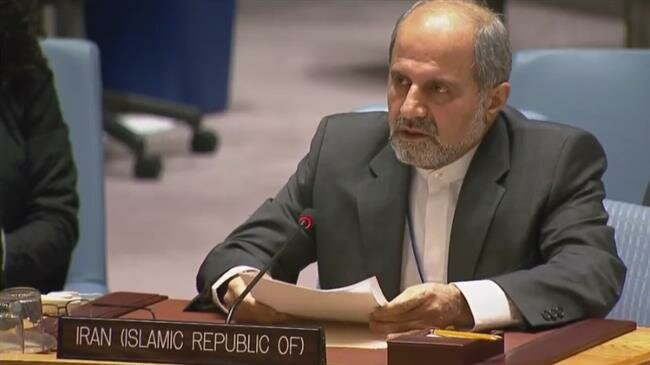
TEHRAN – Iran’s deputy ambassador to the UN, Es’haq Al-e Habib, says Washington’s illegal sanctions have endangered the international trade system, calling on the international community to break its silence over what he called an “unprecedented threat”.
Addressing a meeting of the Second Committee of the UN General Assembly held in New York on Monday, Al-e Habib said it is undeniable that commitment to multilateral cooperation as a basis for global treaties and agreements is currently under unprecedented and growing pressure.
“Sanction-based policies have made multilateral financial and trade system very inefficient, and now it is upon the international community to guarantee that the financing of development is not taken hostage by certain countries through unilateral coercive measures,” he added, Press TV reported.
“The illegal and illegitimate coercive and unilateral measures of the U.S., including its unprecedented and unjustifiable sanctions against certain developing countries, Iran in particular, amid the international community’s silence have increased in an unprecedented way and threaten the foundations of multilateralism,” Al-e Habib said.
Tensions between Tehran and Washington have risen since last year when President Donald Trump abruptly withdrew the United States from the 2015 nuclear deal and attempted to put “maximum pressure” on the Islamic Republic.
On May 8, exactly one year after the U.S. abandoned the deal, Tehran began to partially reduce its commitments to the agreement at bi-monthly intervals.
In the first stage, Iran announced that it will not limit its stockpile of the nuclear fuel to 300 kilograms allowed under the deal. However, on that date (May 8) Iran’s Supreme National Security Council (SNSC) said if the remaining parties to the JCPOA, especially Europeans, devise a mechanism to protect it from the sanctions effect in the two-month deadline it will reverse its decision. 
But since European parties missed the deadline, on July 7 Iran announced that it has started enriching uranium to a higher purity than the 3.67%, thereby starting the second step.
As Europe missed the second 60-day deadline, Iran moved to take the third step, removing ban on nuclear research and development (R&D).
In a letter on September 5, Iranian Foreign Minister Mohammad Javad Zarif notified European Union foreign policy chief Federica Mogherini about Iran’s third step.
In his Monday speech, Al-e Habib also criticized the World Trade Organization (WTO) for blocking Iran’s membership for two decades because of the political pressures of certain member states, saying that unilateral behaviors are currently targeting the WTO, jeopardizing the entire trade system of the world.
Iran, the largest economy not yet member of the WTO, has been requesting to join the organization since 1995, and was admitted to it as an observer in 2005, but sanctions began to hit Tehran afterwards and certain countries – especially the U.S. – opposed its membership.

Saturday, October 05, 2019

Iran ranks second in terms of fast growing tourism

Tehran, IRNA – Iran ranks the second fastest-growing country in terms of attracting foreign tourists, with 49% growth after Ecuador, according to a new report from the World Tourism Organization.
Iran, which hosted a total of 4.867 million foreign tourists in 2017,  in 2018 with a grow of 49.9% hosted 7.295 million foreign tourists and reached the 2nd rank  in the world's fastest growing tourism, Ecuador is the fastest-growing country with 51% among the countries of the world in attracting tourists.
Ecuador in South America has increased its number of tourists from 1.6 million  to 2.6 million in the period from 2017 to 2018.
The increase in the world's fastest-growing tourism in Iran  from 2017 to 2018 that earlier, in the period of 2016 to 2017  Iran's tourism growth was -1.5 %.
Iran's tourism revenue for the year 2010 is reported at $ 2.438 billion, according to the report.
Minister of Cultural Heritage, Tourism and Handicrafts Ali Asghar Mounesan says that naming September 27 as International Tourism Day and marking a week with this name in our country indicates the importance of this growing industry on a national and international scale. Last year, the momentum of the Iranian tourism has been driven to the track of global standards about tourism industry.
Recently, Ali Asghar Mounesan in his note in Shargh Daily said that at such times each year, a variety of special programs are being held around the world to focus on tourism and its advantages and challenges to reaffirm the unparalleled role of tourism industry in the global economy and its impacts on sustainable development of the countries.
The Government of the Islamic Republic of Iran has realized the importance of this industry and gave preference to the natural and historical capacities and attractions of our country over the last few years.
Despite unilateral US sanctions and efforts for Iranophobia, Iran's tourism growth has accelerated over the past two years, and the movement of the Iranian tourism industry has fallen on the right track in accordance with the global standards.
Minister of Cultural Heritage, Tourism and Handicrafts Ali Asghar Mounesan said on Saturday that last year some seven to eight million tourists visited Iran ignoring a very tough economic sanctions while four million tourists have come to Iran since the beginning of the current Iranian year.
Since 1980, the United Nations World Tourism Organization has celebrated World Tourism Day on September 27. 
According to the statistics of the International Tourism Organization, the share of Iran's tourism sector in 2017 was $ 11.8 billion of GDP, Mounesan said at the World Tourism Day Conference in Zahedan.
He added that $ 21 billion investment is required to achieve the objectives set for the Iranian tourism industry.
He said tourism industry plays an important role in creating jobs, adding that one out of every five jobs in the world is related to tourism.
Tourism in the country can create job opportunities which is now serving as a breakthrough for the Iranian economy helping our officials to employ the youth, the minister said.

Tuesday, October 01, 2019

How Trump's close-call diplomacy with Rouhani ended into ban on Iranian officials from US: report

TEHRAN, (MNA) – In her article published in The New Yorker on September 30, Robin Wright put forward 'Trump’s close-call diplomacy with Iran’s President' during the recent UNGA in New York.
As she wrote, "Macron intended to set up a three-way telephone conversation with Rouhani and President Trump. A team of technicians arrived to set up a secure line, in a meeting room on Rouhani’s floor, for the call at 9:30 p.m."
"Earlier in the day, Macron, alongside the British Prime Minister, Boris Johnson, had urged Rouhani to talk with Trump. Macron’s mission in New York was to secure a verbal agreement from Trump and Rouhani on a four-point plan to jump-start diplomacy—and to avoid another Middle East war," she added.
"Macron hoped that the telephone conversation would lay the groundwork for the first meeting between an American President and an Iranian President since Tehran’s 1979 revolution."
As she continued, Trump has repeatedly signalled an interest in meeting Iranian leaders. During the previous two UN General Assembly meetings, in 2017 and 2018, he has conveyed secret messages, through the French, asking to meet Rouhani. In July, Senator Rand Paul, the Kentucky Republican and Trump golf partner, hand-carried an invitation to Iran’s Foreign Minister, Mohammad Javad Zarif, to visit the White House—that very week. In late August, during the G-7 summit in Biarritz, Trump asked Macron to set up a meeting with Zarif, who was holding talks nearby with French officials. At the UN last week, Trump expressed his interest to reporters. “They’re here, we’re here, but we have not agreed to that yet,” he said. “But they would like to negotiate. And it would certainly make sense.”
"The Iranians, however, don’t trust Trump," she wrote.
"Four days before Trump arrived in New York, the Administration added another layer of sanctions, this time on Iran’s Central Bank. This year, the Trump Administration has imposed at least sixteen new rounds of sanctions on Iran, beyond those reimposed last year," Wright described. 
"After every Trump overture, Rouhani and Zarif have responded that the United States must first publicly promise to lift sanctions." 
"Trump’s speech to the UN last week didn’t foster trust, either."
By the end of Tuesday, Rouhani was in no mood to believe that Trump would take the first step and promise to lift sanctions. When Macron showed up, Rouhani had already retreated to his bedroom. “This was just a game to get us to a meeting without any assurances that Trump would deliver,” Zarif later told Wright.
The call to Trump’s line came through at nine-thirty, according to sources familiar with events that evening. Macron took the call. But Rouhani never emerged from his room. “As we have been doing for several months, we worked in New York to get Iran to make new commitments and for the US, in exchange, to ease sanctions,” a French diplomat told Wright. “We made technical arrangements in the event that a telephone call could take place. That call did not take place.” The next day, Trump banned Iranian officials and their families from the United States.

Tuesday, September 17, 2019

US might topple Saudi Arabia as the world's top oil exporter sooner than planned


US might topple Saudi Arabia as the world's top oil exporter sooner than planned

TEHRAN, (MNA) – Commenting on recent drone attack on Saudi Aramco Mehmet Ogutcu says prior to this attack, the US was planning to double its crude oil exports to 9 million barrels per day by 2024. That means the US might topple Saudi Arabia as the world's top oil exporter sooner than planned.
Following drone attacks on Saudi oil plants, the White House said on Saturday that the United States was committed to keeping oil markets well-supplied in the wake of an attack on Saudi Arabian oil plants by Yemen.
According to some sources in Saudi Arabia, its return to full oil supply capacity after Saturday’s attacks on Aramco oil plants could take “weeks not days”.
An attack on Saudi oil facilities on Saturday is believed to have disrupted half the country’s production capacity, making the United States the only real holder of the global supply cushion via its ability to raise own output or to soften sanctions against other major oil producers.
Some believe that it surely is no coincidence the US is targeting virtually every major energy producer from Iran, Venezuela, and Russia, but also including its own "allies" such as Saudi Arabia.
We reached out to Mehmet Ogutcu, Chairman of London Energy Club to shed more light on the issue.
Referring to the drone attacks on Saudi oil plants, he said, “I believe that we have experienced the “Pearl Harbour of the oil industry” on 14 September. Saudi Aramco lost about 5.7 million barrels per day of output after 10 unmanned aerial vehicles struck the world’s biggest crude-processing facility in Abqaiq and the Kingdom’s second-biggest oil field in Khurais.”
“The drone attack, removing 5 percent of the global oil production, will be remembered as a watershed incident in the world oil history. Its impact will be severely felt not only for a few weeks when damaged Saudi oil installations will be repaired and crude supplies will start flowing again business as usual. The impact will be much longer. The world’s largest oil exporter is vulnerable and its air defense system has proven to be ineffective,” he added.
Ogutcu went on to say, “For oil markets, it is the single worst sudden disruption ever, and while Saudi Arabia may be able to return some supply within days, the attacks highlight the vulnerability of the world’s most important exporter. They also add further political risk to prices, raising the specter of more destabilization in the Middle East and the threat of US retaliation against Iran. Even, with a price that could easily double, the Saudi remaining exports will still earn amounts close to what they earned before.” 
Commenting on who are the most beneficiaries of the tension in the region, he mentioned, “The Russians will be great beneficiaries of this escalating crisis as they will earn much more per barrel on their oil and gas exports. Of course, the United States, now the largest exporter in the world, will also benefit greatly. Remember, prior to this attack, the US was planning to double its crude oil exports to 9 million barrels per day by 2024. That means the US might topple Saudi Arabia as the world's top oil exporter sooner than planned. 
The US is pointing a finger to Iran as behind this attack and said it would provide evidence. Traditional US allies are however not on-board. Geopolitics and great-power competition are playing a greater role these days, and while that may satisfy some narrow interests, it does not bode well for stable energy prices, or for the secure and dependable delivery of energy along global supply chains. 
Only China, which imports most of its crude from the Persian Gulf, will be financially hit at the tune of $1.1 billion for each dollar increase per barrel. Thus, except for China, few of the players will seek to defuse the situation, all feeling that they have little to lose and much to gain.  Hence, it would seem that the September 14 attack stands a strong chance of escalating into an all-out conflict.
The sanctions are already cutting $42 billion/year of oil exports from Iran’s economy. They have slashed Iran’s oil production and exports to historic lows. Before the US sanctions, Iran produced 3.8 million barrels/day and exported 2.5 million barrels. Oil made up 80% of Iran’s exports. The US ended sanctions waivers for major importers of Iranian oil in May 2019. Iran’s oil exports were down about 2 million barrels and oil production hit its lowest levels since the Iran-Iraq war.”
Regarding the Iran-Saudi Arabia relation in recent years, Ogutcu noted, “While Saudi Arabia supports economically squeezing the Iranian regime, they may not wish to see a war with Iran. While the context has changed in light of the weekend attack, the reasons have not. Saudi Arabia would find itself on the front line of an armed conflict, with Iran or its proxies to the east, south, and north. Such a conflict would also cripple plans for an Aramco IPO and would cause driving foreign investment from the country. 
Saudi Arabia has many long term reasons to showcase its resilience and de-escalate. Until now, Iran and Saudi Arabia were protected by the fear of mutual destruction of their main oil export assets, should one attack the other’s facilities. Now that the Iranians have lost most of their export capacity due to the sanctions, this fear of mutual destruction is no longer there. 
How Washington and Riyadh choose to respond (for now limited to rhetoric) will show exactly whether this is a flash in the pan or a step-change in Persian Gulf tensions.”
Interview by Zahra Mirzafarjouyan

Wednesday, September 04, 2019

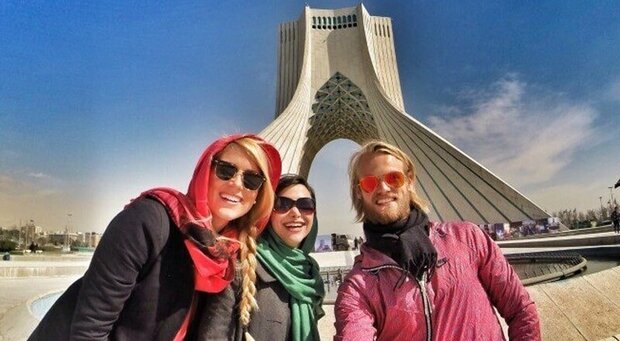
Eye-opening experience: As many Americans as possible should visit Iran

TEHRAN, (MNA) – Judith Bello, a long-time American peace activist, who has visited Iran for two times, believes such a journey “will be an eye-opening experience”.
“In these difficult times, we need as many people as possible from the US to go to Iran and see that Iranians are people not so different from ourselves, and they are the keepers of an ancient history that is not only theirs, but all of ours,” she said in an opinion article released by USA Today in August.
Bello has assessed her Iran’s adventures as “very rewarding”, finding its people “friendly and generous”. 
“I have traveled to Iran twice with similar delegations and had experiences that were very rewarding. The people there are friendly, down to earth and generous, and seeing Iran for yourself puts a whole new perspective on any prior information you might have. Many people there speak English and the food is excellent.”
She says that there are antiquities in Iran that are inconceivable for those who have not left the western hemisphere.
“There is a modern art museum in Iran and another museum with a mind boggling collection of gemstones along with medieval jeweled swords and gowns and whatnot. Iran is a mid-sized country, but they have a long and well preserved history that is just astounding.”
For several thousand years, Iran was at the epicenter of the civilized world. From Cyrus to Darius to the Mogul emperors in India, Iran was the center of the universe. They met and matched the Greeks and Romans, she noted.
“Zoroastrianism, the ancient religion of Iran, was the first religion with many of the characteristics of the three sisters, Judaism, Christianity and Islam: One God, a world of Good and Evil, and human choices. Poetry is popular in Iran and poets are revered especially mystics. They have a powerful and sophisticated film industry, and a complex political system with many democratic elements.”
Visiting Tehran Peace Museum, Bello comments “The Tehran Peace Museum is part of an international network of peace museums that are affiliated with the Hiroshima Peace Museum. It is run primarily by disabled veterans from the Iran-Iraq war, who like many veterans who joined the peace movement here, saw that war is not the way. They have a mission to find better ways to treat victims of toxic gas attacks, a weapon Saddam Hussein used against them again and again.”
“We all have something to learn about what is outside our own world. In these difficult times, we need as many people as possible from the US to go to Iran and see that Iranians are people not so different from ourselves, and they are the keepers of an ancient history that is not only theirs, but all of ours.”
Regarding to recent tensions between the Islamic Republic and the US, Bello hopes that it could ultimately be cooled by the means on dialogue not a war.
“I sincerely hope our government will use diplomacy rather than force to resolve their issues with the Iranians.”
Many travelers to Iran find their new perception of the country as totally different from that they previously thought based on mainstream Western media outlets.
For an example, Jenny Gray, the global product and operations manager of the Australia-based Intrepid Travel, said earlier this year that “It is a country that is often portrayed as unwelcoming, but the reality is quite the opposite… Iranians are warm, friendly and eager to show off their country to foreigners. The feedback from our travelers is a testament to this.”
As we know, the media play a pivotal role in informing the public about what happens in the world, including Iran as a lesser-known country for a majority of Western people. Media’s portrayals could be more effective in areas in which audiences do not possess direct knowledge or experience to construct public belief and attitudes.
The 2019 Travel Risk Map, which shows the risk level around the world, puts Iran among countries with “insignificant risk”, a category where the UK, Denmark, Switzerland, Norway, and Finland are placed in.
Decades of unresolved tensions between Iran and the US, ran high once again last year, when the Trump administration pulled the United States out of an international deal to give Iran access to world trade in return for curbs to its nuclear program, reinstated sanctions on the Islamic Republic.
Since then Washington’s major European allies Britain, France and Germany have been at odds with the US, believing that pulling out of the nuclear agreement was a mistake. The Europeans have warned that heightened confrontation could lead to an accidental war in the Persian Gulf.

Monday, September 02, 2019

It is difficult to expect Iran to renew its commitments: Falk

It is difficult to expect Iran to renew its commitments: Falk

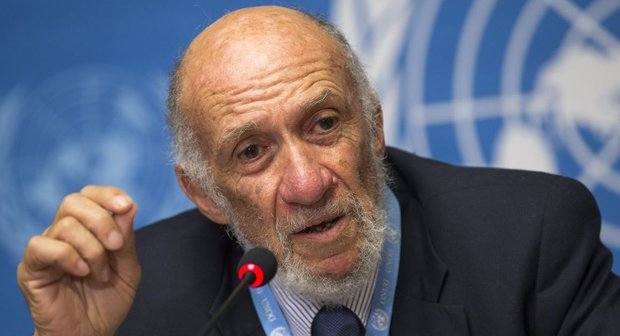
TEHRAN, Sep. 01 (MNA) – Richard Anderson Falk, professor emeritus of international law at Princeton University, says “Both Iran and the United States have rather firm positions.”
Former United Nations High Commissioner for Human Rights says “It is difficult to expect Iran to renew its commitments, much less strengthen them, under JCPOA, unless the US agrees to roll back present sanctions on Iran in a convincing manner.”
He says “In contrast, it is difficult to imagine Trump reducing sanctions unless he can point to some sort of victory that places new restrictions on the international regulatory regime governing.”
Following is the full text of the interview:
US President Donald Trump has driven up the pressure against Iran while at the same time suggested he might be willing to talk to Iranian leaders. How serious he is in this offer? Does he really want to engage Iran diplomatically?
Trump is impulsive, acts inconsistently, and is almost impossible to interpret accurately in advance of his actions. He seems to view foreign policy choices as transactions with a gain/loss transactional connection as measured by his sense of impacts on domestic American politics.
On balance, it would seem sensible for Iranian leaders to test whether Trump is sincere about a willingness to negotiate a way out of present confrontational diplomacy, but without investing their own credibility or political composure by doing so. A show of receptivity, perhaps with a condition asserted that hostile actions be suspended with respect to Gulf tanker navigation, might be an appropriate way to see whether there exists a potential opening for restorative diplomacy aimed at crisis resolution.
As the 2020 election gesture, it is important for Trump to talk on the phone or in-person with Iranian officials. In this regard, some experts believe that he should give special concessions such as oil waivers to Iran so that they come to the negotiation table. Do you think that Trump is ready to make any kind of concessions?
As I have indicated, it is difficult to assess what Trump might be prepared to do if he believes there would be a positive payoff in his 2020 electoral prospects by talking peace directly with Iranian leaders. On the one side, is Trump’s pledge back in 2016 to avoid further American involvement in Middle East wars, and presenting himself as someone who has avoided costly and failed international adventures. On the other side is the appointment of war-mongering and Islamophobic individuals as his principal foreign policy advisors, Bolton and Pomeo. Also, Trump’s belligerent political personality always seeks to project a tough guy, bullying image in dealing with foreign governments with which there are active conflictual relations.
It seems as if Trump administration wants Iran to withdraw from JCPOA. Will be the US-Israeli interests better provided In case of Iran’s withdrawal?
It seems that the Trump objective is to reach a new agreement on Iran’s nuclear agreement that he can claim gives Israel and Saudi Arabia more assurance that Iran will not have the means to cross the nuclear threshold covertly or in a short period of time. These supposed concerns were his main argument relied upon in repudiating and withdrawing the US from the JCPOA, and reimposing and extending harsh sanctions. These concerns hide to some extent the real motivations that were to please Israel and repudiate a major achievement of the Obama presidency.
Of course, it seems unlikely that Iran would give Trump such a victory in the context of either revalidating JCPOA or reaching a new agreement. In that event, the further unraveling of JCPOA confronts Trump with a dilemma, either acknowledging the failure of his approach or escalating the tensions by further escalating tensions with Iran, and risking the outbreak of war.
We are witnessing French President Emmanuel Macron efforts to convince Trump to rejoin JCPOA. How serious should we take these efforts? Shall we think of them as a US coordinated plan?
There is no firm evidence to support the view that US diplomacy with respect to Iran would cooperate with France in overcoming the present impasse. As my prior responses suggest, Trump would have to be willing to back down if there is a renewal of the US commitment to JCPOA, or deepen the already dangerous crisis. I suspect that it is possible that the Macron role might give the parties more time to figure out whether they can find a mutually acceptable face-saving compromise. Both Iran and the United States have rather firm positions. It is difficult to expect Iran to renew its commitments, much less strengthen them, under JCPOA, unless the US agrees to roll back present sanctions on Iran in a convincing manner. In contrast, it is difficult to imagine Trump reducing sanctions unless he can point to some sort of victory that places new restrictions on the international regulatory regime governing Iran’s nuclear program as a result of the earlier agreement.
Interview by Javad Heirannia

Thursday, August 29, 2019

US once again resorts to sanctioning policy despite futility of previous sanctions

US once again resorts to sanctioning policy despite futility of previous sanctions

TEHRAN, Aug. 28 (MNA) – The Trump administration has imposed new sanctions against ‘networks’ allegedly helping Iran skirt sanctions.
In another desperate move in continuation of the so-called ‘maximum pressure’ campaign and only a few days after calls for a meeting with the Iranian president, Donald Trump administration announced on Wednesday the imposition of economic penalties against two 'networks' allegedly linked to Iran for helping it evade the American sanctions regime and boost the country's missile program.
The US Treasury indicated that the new sanctions are aimed at freezing the designated companies' and persons' assets on US territory and in the possession of US citizens, as well as the imposition of a ban on operations with these entities, according to Russian Sputnik news agency.
Washington has been imposing sanctions against Iran since it illegally withdrew from the Iran nuclear deal (JCPOA) in May 2018 in a bid to persuade Iran to renegotiate a nuclear deal, but its attempt has been proven futile. Iran says that it will not hold any talks with the current US administration until it returns to the JCPOA and lifts all illegal sanctions. 
Although Iranian economy suffered setbacks during the first year of sanctions, it has shown more stability  this year despite increasing US sanctions.