Showing posts with label Yuram Abdullah Weiler. Show all posts

Wednesday, December 18, 2019

CIA-Mossad backed MEK resembles ISIS in many ways: analyst

Mohammad Reza Pahlavi, and the leader of the MEK, Masoud Rajavi, formed cults of personality around themselves. Many people are attracted to cults, some of whom are willing to engage in deadly violence for the sake of being a member. One can see this type of behavior among members of Daesh.
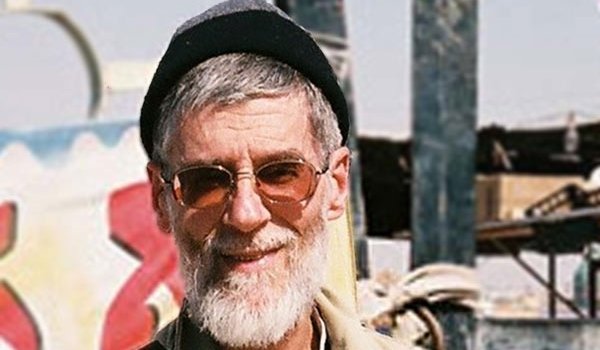
Yuram Abdullah Weiler is a former engineer educated in mathematics turned writer and political critic who has written over 130 articles on Islam, social justice, economics, and politics focusing mainly on the Middle East and U.S. policies.  His works have been largley published across the globe. In addition, he has frequently appeared as a guest commentator on Press TV, Al Etejah, and Alalam. A dissenting voice from the “Belly of the Beast”, he currently lives in Las Cruces, New Mexico, USA. In an exclusive interview with Khamenei.ir, Mr. Abdullah elaborates on the U.S.- West support for the notorious MEK terrorist organization. The following is the full text of the interview:
The MEK terrorists assassinated the Iranian President and PM of the time - Muhammad Ali Rajai and Javad Bahonar - on August 30th; how do you evaluate the West and the U.S.’s support effective in the execution of such crimes?

The United States has a long history of state-sponsored terrorism against Iran beginning in 1953 with the CIA-engineered coup of the legitimate government of Iran by covert action.  This was followed by 25 years of rule by the U.S.-supported dictator, Mohammed Reza Pahlavi, whose brutal security force, the SAVAK, was responsible for the death and torture of thousands of Iranians.  U.S. policy since the time of the victory of the Islamic Revolution in February 1979 has been one of recapturing the country that former President Jimmy Carter “lost” on his watch. 

U.S. state-sponsored terrorism directed against Iran has included support of terrorist organizations such as Jundullah based in Pakistan, assassination of senior Iranian nuclear scientists by agents of the terrorist organization Mujahedin-e Khalq (also known by acronyms MeK, MKO, PMOI), a draconian regimen of economic sanctions, and launching proxy wars against Iranian allies such as Syria.  Just as the U.S. used the Afghan mujahedin to fight a proxy war against the Soviet Union in Afghanistan, the U.S. is now using the MKO in conjunction with Mossad to fight a covert war against the government of the Islamic Republic of Iran.  

The relationship of the U.S. and the MKO certainly dates back to the Islamic Revolution, but prior to 1975, when the MKO split into Islamic and Marxist factions and was under severe repression from the shah, it is doubtful that the organization was receiving any support from Washington.  However, there is evidence that the CIA was attempting to infiltrate the MKO by recruiting the first president of Iran, Abol Hassan Bani Sadr, while he was still in Paris in January 1979 when CIA agent Vernon Cassin offered him $5,000 a month to act as a “consultant” for a U.S. company. 

What is certain is that MKO leader Masoud Rajavi, along with twenty members of his organization, paid a visit to Ayatollah Hussein Ali Montazeri on 25 October 1978 in Evin Prison seeking a leading role for the MKO in the post-revolutionary government.  Rajavi explicitly told Montazeri to pass a message to Imam Khomeini in Paris that the MKO would be the only group capable of administering Iran.  Suspiciously enough, on 30 October, Montazeri was released and was “debriefed” by SAVAK chief general Nasser Moqaddam.  It is certainly possible that this was an initial vetting of Rajavi and the MKO by Washington for being an acceptable “Iranian opposition.”

In the days following the 15 June 1981 impeachment of Abol Hassan Bani Sadr, the MKO called for massive demonstrations against the nascent Islamic government of Iran compelling security officials to initiate a crackdown on the group. On June 28, the MKO launched a series of lethal terrorist attacks in an attempt to topple the government beginning with the bombing of the headquarters of the Islamic Republic Party during a meeting of party leaders, killing Ayatollah Mohammed Beheshti along with four cabinet ministers, twenty-seven members of the Majlis and several other government officials for a total of 72 fatalities.   On August 30 just after 2:30 p.m., another bomb planted by an MKO operative, most likely Masoud Kashmiri, detonated killing President Mohammed Ali Rajai and Prime Minister Mohammad Javad Bahonar.

In the aftermath of the attempted overthrow of the government in June 1981 by the MKO that had Bani Sadr’s support, he and MKO leader Masoud Rajavi, whose second wife was Bani Sadr’s daughter, along with other leaders of the organization, fled Iran for Paris on July 29 where they established the National Council of Resistance (NCR). After being evicted from France in 1986, Rajavi relocated the MKO to Iraq, where, receiving asylum and financial support from Iraqi dictator Saddam, he formed the National Liberation Army (NLA), the military wing of the MKO, with himself as commander in chief.  The NLA used Iraq as a base to launch multiple attacks across the border into Iran. In June and July 1988, the NLA participated in a joint invasion into Iran with Iraqi forces, which used chemical weapons against Iranians. 

By 1988 during the Sacred Defense, the MKO had become a U.S. asset as evidenced by National Council of Resistance of Iran (NCRI) mouthpiece Alireza Jafarzadeh’s admission that, by that time, the MKO possessed hundreds of millions of dollars’ worth of tanks, armored personnel carriers and field guns.   The claim that such a huge cache of heavy weaponry was acquired from cross-border raids into Iran simply does not ring true.  Other evidence of U.S. involvement in the 30 August bombing can be gleaned from the fact that Bani Sadr and Rajavi were whisked out of Iran in a Boeing 707 military tanker piloted by Colonel Behzad Moezzi, who was in the cockpit of the shah’s plane when he fled from Iran to Aswan, Egypt on 16 January 1979.

Since then, the U.S. has even trained members of the MKO at the U.S. Department of Energy Nevada Security Site under the auspices of the Joint Operations Special Command between 2005 and 2008.  Additionally, senior U.S. officials have confirmed that the MKO, working through the Zionist spy organization, Mossad, has been responsible for carrying out the assassinations since 2007 of five top Iranian scientists: Mostafa Ahamdi Roshan on Jan. 11, 2012; Darioush Rezaei-Nejad on July 23, 2011; Majid Shahriari on November 29, 2010; Massoud Ali-Mohammadi on January 12, 2010; and, Ardeshir Hosseinpour on January 15, 2007.


Why did MKO terrorists kill both officials as well as ordinary Iranian citizens?

During that reign of terror in 1981, the MKO targeted Friday prayer leaders, including those in Tabriz, Kerman, Shiraz and Yazd, as well as minor government officials, members of the Revolutionary Guard, prison wardens and even ordinary citizens.  Such random violence fits well with the definition of terrorism used by the United States Department of Defense (DoD):
“The calculated use of unlawful violence or threat of unlawful violence to inculcate fear; intended to coerce or to intimidate governments or societies in the pursuit of goals that are generally political, religious, or ideological.”

While I am by no means qualified to voice an opinion on the psychology of terrorism, I would point out that the terrorist engages in violent activities under an assumption that this will cause a political change.  However—and I believe the MKO is a good example of this—political change can, in turn, precipitate terrorism.  While MKO members apparently did contribute to the victory of the Islamic Revolution in Iran, nevertheless following the victory of the Islamic Revolution, because of unfulfilled aspirations of leadership in the new government, ideological disagreement with the direction set by Imam Khomeini and other factors, the MKO mutated into a terrorist organization, and turned viciously against the fledgling Islamic government voted upon by the people of Iran.


Shahid Rajai was severely tortured on the hands of SAVAK and then martyred by MKO in a bomb explosion. What is the common enmity of the thugs of the shah and MKO with Iranian revolutionaries like Shahid Rajai?

To discuss the enmity, one would have to delve into the psychological factors motivating individuals to join with others and resort to extreme violence, whether deemed as terrorist or state-mandated, in order to achieve political goals.  To study such factors scientifically remains a near impossibility, since few legitimate researchers have direct access to terrorist groups over long periods of time to gather data for analysis.  Certainly there is no single causative factor, such as mental illness or low childhood self-esteem that causes the embrace of enmity.

Beyond the psychological factors, the thugs of the shah and the MKO appear to have shared a common goal of suppressing the desire of the Iranian people to have an Islamic form of governance.  The common denominator seems to be the use of extreme violence for the imposition of a political goal.  In the case of the shah, it was the perpetuation of his U.S.-supported regime, and in the case of the MKO, it was instituting an authoritarian Marxist regime.

From another aspect, one can say that the former shah, Mohammad Reza, and the leader of the MKO, Masoud Rajavi, both formed cults of personality around themselves.    Both used media to surround themselves with an idealized, mystical aura, and both pursued and promoted radical ideologies:  the shah with his “White Revolution” of westernization and marginalization of Islam, and Rajavi, with his obsession with toppling the legitimate Islamic government of Iran and assuming the leadership role himself.  Many people are attracted to cults, some of whom are willing to engage in deadly violence for the sake of being a member.  One can see this type of behavior among members of  Daesh.


How do you analyze all the fuss MKO is making these days by meeting with the dictators of certain countries?

On 9 July 2016, former Saudi intelligence chief and former Saudi ambassador to Britain and the United States Prince Turki al-Faisal Al Saud spoke for 30 minutes before a crowd in Paris, France gathered for the annual conference of the MKO.  This is not totally surprising, for there has been a long list of U.S. politicians, including Newt Gingrich, the former speaker of the House, Bill Richardson, a former New Mexico governor and U.N. ambassador under Bill Clinton, and former Vermont governor Howard Dean, have spoken to and received handsome fees from the MKO.  These fees, in the neighborhood of $25,000 each, may have been funded by Saudi Arabia, so covert support of the MKO may not be a recent development.

In contrast, al-Faisal’s overtly inflammatory rhetoric against Ayatollah Khomeini however was indeed shocking.  Crudely stating that Iran was infected with a “Khomeini cancer,” al-Faisal, openly called for regime change by declaring, “I, too, want the downfall of the regime.”  The rhetoric directly threatening the Islamic Republic of Iran may have been for its support of the legitimate government in Syria, Lebanese Hezbollah, and for its support of Houthi resistance fighters in Yemen.  At a minimum, al-Faisal’s announcement certainly chills any further incentive for Tehran to deice diplomatic relations with Riyadh.

The U.S. the Israeli entity and the Saudis appear to have convergent interests in destabilizing Iran with the ultimate goal of toppling the Islamic government and installing a pro-western client regime.  Certainly U.S. and Saudi support for terrorist organizations to fight their proxy wars is nothing new and the symbiotic relationship dates back to the 1980s, when Washington and Riyadh partnered to fund the Afghan mujahedin, which later morphed into the terrorist group al-Qa’idah.

As far as Mahmoud Abbas’ meeting with Maryam Razavi three weeks after al-Faisal’s disclosure, it is not clear what the aging American puppet hoped to accomplish.  As a largely irrelevant figure in the fight for the rights of the oppressed Palestinian people, Abbas may have simply desired to show himself as associating with an opponent of Iran, which is a requirement to remain in the good graces of the U.S. and the Israeli entity.  On the other hand, the Abbas-MKO meeting may signal the reestablishment of a Fatah-MKO coalition, which fought together against Iran during the 1980-1988 Iraq-imposed (and U.S.-backed) war.

Sunday, December 15, 2019

As the Islamophobia index increases: On being Muslim in America

By Yuram Abdullah Weiler

“I think the real question is not whether America is afraid of Islam (and its adherents) but whether Muslims should be afraid of the US and Americans especially in this post-9 /11 world.” —Attorney Diana Mae Cabili
Being Muslim in America carries the risk of being reviled, insulted, discriminated against, humiliated publicly or, worse yet, physically attacked. Despite having been a part of the American landscape since 1501, Muslims have faced discrimination, suspicion and hatred bordering on public hysteria, especially since the 9/11 attacks. With the ascendancy of Donald Trump and his virulent anti-Muslim diatribes, the prospect of a McCarthy-era-like internment of Muslims in the United States does not appear to be off the table given current policy trends.
Make no mistake about it; Islamophobia in the U.S. not only is on the rise but also is condoned public policy. The Institute for Social Policy and Understanding (ISPU) with support from the Bridge Initiative of the Alwaleed Center for Muslim-Christian Understanding at Georgetown University has developed the National Index of Islamophobia based on responses to various survey questions designed to uncover the deep-seated beliefs of respondents in five particular anti-Muslim stereotypes, which regrettably are often utilized by U.S. political leaders during campaigns to gain voter support. 
These five anti-Muslim stereotypes are that most Muslims living in the United States: are more prone to violence than other people; discriminate against women; are hostile to the United States; are less civilized than other people, and are partially responsible for acts of violence carried out by other Muslims. These five stereotypes are linked to constituent support for policies, enacted by government officials, which discriminate specifically against Muslims, such as the surveillance of mosques, racial profiling and heightened security scrutiny of Muslims at airports.
Here in the quiet border community of Las Cruces, New Mexico, people seem to be generally tolerant and supportive of Muslims. Perhaps this is because Hispanic Americans are five times as likely to hold positive views of Islam and Muslims as negative views.  Ironically, the only place where I have been even questioned aggressively about my Shi'a Islamic faith and connection to the Islamic Republic has been at the local mosque. But Las Cruces appears to be an exception to a general U.S. trend towards increasing Islamophobia. Over one quarter of Americans surveyed in a recent poll conducted by the ISPU endorsed negative stereotypes of Muslims and Islam. In fact, White Evangelicals are twice as likely to hold negative views of Muslims as positive ones.
As a Muslim living in the United States, I, too, have been discriminated against. Past employers have made it difficult for me to do salaat at the proper times, and have even suggested that I do the prayer in a filthy janitor’s closet so as not to bother or distract other employees. I have been threatened with loss of employment for exhibiting support for the oppressed Palestinians, who have been the perpetual targets of Israeli violence. I have been reprimanded for speaking out against possible U.S. military action against Iran.  I have been told that I should be shot for simply wearing a small flag of the Islamic Republic of Iran on my jacket. All this and more has taken place in the alleged bastion of human rights and religious freedom known as the United States of America.
However, I am not alone. Seventy-five percent of my brothers and sisters in Islam believe there is a great deal of discrimination against Muslims in the United States. Nearly the same number of Muslims is worried by the actions of the current U.S. president, and do not feel Islam is considered to be part of mainstream American society. About half feel that being Muslim in America has become more difficult and have themselves personally experienced an act of discrimination. Yet in spite of their Islamophobic environment, nearly nine out of ten Muslims in America claim to be proud to be Muslim and, astoundingly, proud to be American.  I myself, while proud to be a Muslim, do not profess membership in the latter group, seventy percent of whom still hold fast to the American dream.
Unfortunately, Islamophobia seems to be a commonality uniting a number of disparate hate groups in the United States. The Southern Poverty Law Center, a forerunner in confronting racial, ethnic and religious hatred, has identified 33 Islamophobic groups operating openly on Facebook, all of which engage in anti-Muslim imagery and promote Islamophobic stereotypes to attract members.  Some of these hate groups actually have avoided being screened out for hate speech and Islamophobic content by claiming to be educational forums. For example, the group “Infidels United for Truth” claims to be “for the education and sharing of information globally about the dangers of Radical Terrorism and how it is affecting all of the world.”
Professor of computer science at Elon University Megan Squire has done preliminary research on Islamophobia and has found it to be a common thread among hate groups. Squire’s findings indicate that those groups holding anti-Muslim and anti-immigrant views do have significant common membership. Moreover, analysis of the data shows that “anti-Muslim ideologies, in particular, can serve as a bridge between mostly disconnected communities, such as between anti-government and white nationalist communities.”
Yet the categorization of Islamophobia as merely “anti-Muslim” animosity overlooks the systemic racism inherent in the Orientalist world view that permeates and, in fact, predates the creation of the United States. Concerning this danger professor of law at the University of Detroit Mercy Khaled A. Beydoun warns, “To reduce Islamophobia to ‘anti-Muslim animus’ and nothing more overlooks its expansion and penetration into American culture, news, media, law, and political parlance.” As clearly evidenced by the “Muslim ban,” the Trump regime has endorsed Islamophobia as state policy, which legitimatizes anti-Muslim stereotypes widely held by private U.S. citizens. 
To see the systemic nature of Islamophobia in the United States, it is only necessary to note that Muslims are viewed as a “racial and socioeconomic monolith.”  In other words, Americans tend to view Muslims as a race, just like Blacks, Native Peoples, or Japanese, and given the endemic nature of racism in the U.S., we see that Islamophobia is another virulent strain of racism. The IPSU concurs, noting that “Islamophobia is just one branch on a bigger tree of bigotry.”
Continuing with the IPSU’s tree metaphor, we can understand that merely loping off the branch of Islamophobia does next to nothing to cut down the tree of American racism that nourishes its growth.   Fertilized by Facebook and other social media, the ugly branch of Islamophobia, after pruning, will not only sprout anew but also more vigorously than before. The same holds for another branch sprouting from the same tree, Iranophobia.
As far as Facebook is concerned, it is no exaggeration to call it fertilizer for the tree of bigotry, as can be seen by the central role played by Zuckerberg’s social media platform in the genocide of the Rohingya Muslims of Myanmar. According to Marzuki Darusman, chairman of the U.N. Independent International Fact-Finding Mission on Myanmar, Facebook has “substantively contributed to the level of acrimony and dissension and conflict, if you will, within the public.” U.N. Myanmar investigator Yanghee Lee, concurring, noted, “I’m afraid that Facebook has now turned into a beast, and not what it originally intended.” Similarly, Equality Labs, a South Asian community technology organization, found that most hate speech violations on Facebook India are Islamophobic, and 93 percent remain posted.
Given that Islamophobia and Iranophobia are both flourishing branches on this mammoth tree of systemic American bigotry, it is self-evident that the tree itself must be felled and the stump of residual racism uprooted. Muslims should not be afraid of the United States and Americans, as Ms. Cabili has suggested in the epigram. Instead, we Muslims must carefully sharpen the Ax(is) of Resistance, uniting in our Islamic Revolution to cut down the tree of bigotry once and for all.

Sunday, September 22, 2019

Houthi retaliation on Saudi oil facilities checkmates Trump

By Yuram Abdullah Weiler

“We promise the Saudi regime that our future operations will expand further and be more painful than ever as long as it continues its aggression and siege.” —Yemeni Armed Forces spokesman Brigadier General Yahya Sari'
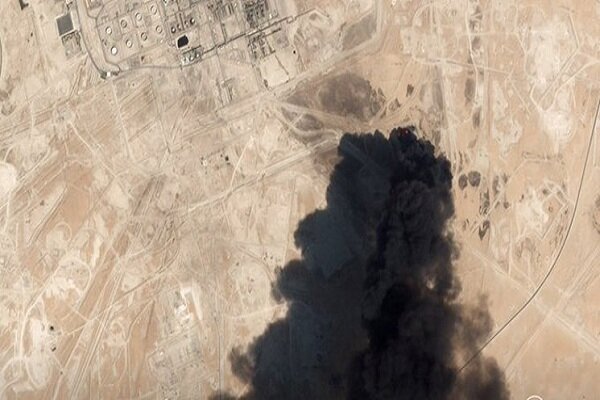
In a highly coordinated retaliatory attack deep inside Saudi Arabia, Yemeni Armed Forces targeted Aramco oil refineries at Buqayq and Khurais on September 14, 2019.  Ten drones carried out the sophisticated operation, which has effectively reduced Saudi output by 50 percent and the global oil supply by 5 percent, raising the specter of $100 a barrel oil prices once again.  The Houthi strike came at a time when the oil giant was preparing for a public stock offering “as soon as possible” according to Saudi Energy Minister Abdulaziz bin Salman.
For his part, Mike Pompeo, the Trump regime’s diplomatic hitman, blamed Iran for the astonishingly well-executed operation, calling it “an unprecedented attack on the world’s energy supply.” Concurring and always ready to blame Iran for the results of failed U.S. policies, chicken hawk senator Lindsey Graham threatened, “It is now time for the U.S. to put on the table an attack on Iranian oil refineries if they continue their provocations or increase nuclear enrichment.” In response to these spurious accusations and threats, Iran’s Foreign Minister Mohammad Javad Zarif wrote, “Having failed at ‘max pressure’ US Secretary of State Mike Pompeo turning to ‘max deceit’.”
The Saudis have blamed Iran for the attack on their country’s oil facilities out of embarrassment due to their inability to achieve their geopolitical goals despite U.S. backing. One must ask, how is it possible for the heavily-armed Saudis, awash in U.S. weaponry, appear weak and impotent in their military operations against the Houthi rebels? Why weren’t the sophisticated Saudi air defenses able to intercept the Houthi drones before reaching their targets? Ineptitude on the part of the Saudis is unacceptable, so Iran must be to blame. This is the mindset of the rulers in Riyadh, who are likely wondering if their Washington ally will come to their rescue.
In reality, Iran’s influence within Yemen is at best marginal, and certainly the Houthis are not aligned with the Islamic Republic in a manner such that they could be termed proxies. The main ignitor of the raging fire of conflict in Yemen is Saudi Arabia, whose de-facto leader, Mohammad bin Salman (MBS), made the misguided decision to invade the country in March 2015 to restore the exiled government of Abd Rabbu Mansour al-Hadi. While the western narrative accusing the Islamic Republic of aligning with the Shi’a Houthis strictly due to religious considerations simply does not hold up to a closer examination, Iran does, of course, cultivate ties with non-state actors who are in opposition to the U.S.-Israeli-Saudi regional hegemonic axis. For their part, the Houthis have the same goal as in the 1990s when the movement was born, and that is for increased autonomy, but not necessarily independence, from the central government.
Trump, being the draft-dodging, bellicose blowhard that he is, announced he is “locked and loaded” for a military operation, presumably against Iran, for which he is busy manufacturing consent. The argument being put forth is that the Houthi Ansar Allah forces lack the expertise to pull off the missile attack, which impacted 17 different points within the critical infrastructure of Aramco’s Abqaiq oil processing facility in Buqyaq. U.S. officials claim that, based on satellite imagery of the 19-odd impact points at both targets, the projectiles most likely originated in Iraq or Iran. Such an argument underscores the enduring colonial mindset of western officials, who readily accept as axiomatic that Ansar Allah is made up of backward, tribal people who could never carry out such a sophisticated attack. Nevertheless, some unnamed, but perhaps more enlightened, U.S. officials conceded that the trajectories could have originated in Yemen.
Regardless of the origin of the drone attack, its execution and timing display a brilliant sense of strategic thinking and planning, as well as a profound grasp of tactics.  Think about it for a moment: with comparatively low-tech weaponry at their disposal and at relatively modest cost, resistance fighters of Ansar Allah, or their backers as the case may be, were able to take a critical Aramco oil production facility off line and cut Saudi oil output by 50%, all in a military “op” that did not take a single human life. Global oil markets have surged in reaction to fears of shortages, if the imbroglio escalates, while the White House has announced its intention to release oil from the U.S. strategic petroleum reserves, an indication that U.S. political leaders fear a worldwide economic slowdown should crude prices take off. 
According to U.S. Federal Reserve Chairman Jerome Powell, “The global growth outlook has been deteriorating since the middle of last year.”  So given the sluggishness of the world’s economy, which, according to the International Monetary Fund, is being held back by “rising trade uncertainty,” any further escalation of tensions in the Persian Gulf may be sufficient to initiate a global recession. With the IMF World Trade Uncertainty Index already at levels exceeding previous records by an order of magnitude, the Washington warmongers must be fully aware that initiating any military action against Tehran would come with an extremely high economic cost. Trump himself has indicated his awareness of this reality by his remarks on Twitter that he is “waiting to hear from the Kingdom as to who they believe was the cause of this attack and under what terms we would proceed!”
And then there are the coming U.S. elections in November of 2020 and, of course politicians are already on the campaign trail stumping for re-election.  Trump is no different in this regard, having organized numerous campaign rallies in anticipation of his re-election. Currently engaged in a vigorous trade war with China, the current occupant of the Oval Office is desperately in need of some positive economic news to parade before American voters.  From this fact, we can conclude that starting a war with Iran, and its ugly economic consequences, is most likely not a viable option if Trump wants to be re-elected. This explains why, so far, the White House reaction to the Ansar Allah military strike has been vague and subdued.
But then the bellicose, anti-Iran rhetoric, which the former reality TV star and his B Team less Bolton has relentlessly regurgitated since his initial presidential campaign speeches, seems to resonate with a significant portion of his electoral base. Along with Pompeo and Bolton, Trump has been upping the rhetorical ante with Iran to the point where if he does not respond militarily to Ansar Allah’s successful retaliatory raid on Aramco’s oil processing facilities in Saudi Arabia, he will look decidedly weak and foolish. The director of the Future of Iran Initiative at the Atlantic Council, Barbara Slavin, noted that Trump has been “[r]ejected again and embarrassed by the escalation in the Persian Gulf his policies have incentivized,” and is likely to do more of the same.  Trump certainly appears to engage in behavior that Slavin previously dubbed “head-snapping schizophrenia” after his pontifical performance at the U.N. in September 2018.
In short, Trump has checkmated himself. He must do what he cannot afford to do militarily or economically, but if he does it, namely launch an attack on Iranian oil facilities, he will risk causing a global recession, which will negatively impact the U.S. economy and hence his chances for re-election.  Checkmate!

Thursday, June 20, 2019

Pompeo’s plot: US stages Gulf of Tonkin revival in Gulf of Oman

By: Yuram Abdullah Weiler

Pompeo’s plot: US stages Gulf of Tonkin revival in Gulf of Oman

TEHRAN, Jun. 19 (MNA) – “It is the assessment of the United States government that Iran is responsible for the attacks that occurred in the Gulf of Oman today,” said US Secretary of State Mike Pompeo.
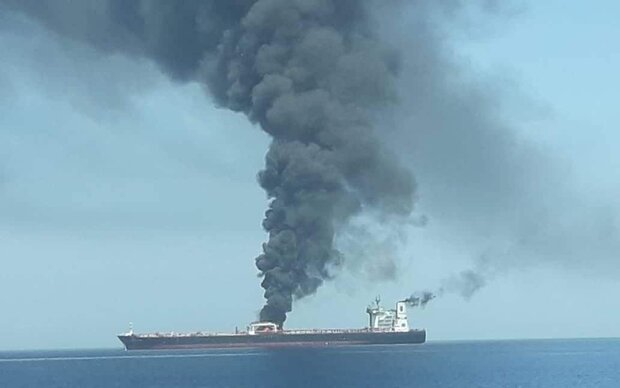
On June 6, 2019 two tankers, one Japanese and the other Norwegian, were attacked by unknown assailants in the Gulf of Oman.  The incident occurred less than a month after a series of acts of sabotage on four tankers, two Saudi, one UAE and one Norwegian, anchored off the coast of the United Arab Emirates near the port of Fujairah.
The Norwegian tanker, the Front Altair, was flying the flag of the Marshall Islands and was loaded with ethanol from Qatar, while the Japanese tanker, the Kokuka Courageous, was flying the flag of Panama and was carrying crude oil from the Saudi port of Jubail on the Persian Gulf.  The attacks, which occurred at the time of a high-level visit by Japan’s Prime Minister Shinzo Abe to Ayatollah Khamenei, may have been intended to embarrass the Islamic Republic or to thwart Japanese efforts towards the de-escalation of tension.
US Secretary of State Mike Pompeo was quick to lay the blame on the Islamic Republic of Iran, as was National Security Adviser and Iranophobe, John Bolton, who, following the first series of attacks, remarked, “There is no doubt in anybody’s mind in Washington who is responsible for this and I think it’s important that the leadership in Iran know that we know.” The perennial prevaricator on the Potomac trumpeted his concurrence in a television interview on Fox and Friends on Friday, June 14, insisting, “Iran did do it.”
Iran categorically denied Pompeo’s unsupported accusations, which were patently absurd given that the 44 sailors on the two burning tankers were rescued by an Iranian vessel that responded to their distress calls. Despite claims by the US Navy that the stricken tankers were under their purview, the Iranian rescue ship was the first to arrive on the scene of the incident and pull the tankers’ crewmembers to safety.  Furthermore, given the timing of the attacks, it would be beyond irrational for Iran to target a Japanese-owned tanker while the country’s prime minister was meeting with Iran’s Supreme Leader. Yet, Pompeo, turning logic on its head, claimed that the Iranian government had indeed “insulted Japan by attacking a Japanese-owned oil tanker just outside Iranian waters,” while simultaneously assuring Abe that it did not want war.
As if on cue, Pompeo came on stage with rhetorical escalation, declaring, “Taken as a whole, these unprovoked attacks present a clear threat to international peace and security.” Previously, the US secretary of state went so far as to suggest that Iran carried out the attacks, including the May 12 sabotage near Fujairah, “to raise the price of crude oil throughout the world.”  US Central Command officials even trotted out a grainy video, which they claimed was taken by a navy surveillance plane, of an unexploded mine attached to the hull of the Kokuka Courageous. The mine, referred to as a “limpet,” was supposedly of a type used by Iran and was similar to the explosive devices used in the previous attacks.
However, Yutaka Katada, the president of Kokuka Sangyo, the shipping line that owns the Kokuka Courageous, disagreed with the US official narrative about a limpet mine being the cause of the explosion. “I do not think there was a time bomb or an object attached to the side of the ship,” he said. “Our crew said that the ship was attacked by a flying object,” he added citing the fact that the holes caused by the explosion were well above the water line. Because of this fact, he explained, “There is zero possibility that they were torpedoes.”
Previously in May, the US had escalated tensions in the Persian Gulf by dispatching the USS Abraham Lincoln carrier strike group and a B-52 bomber task force allegedly to counter heightened threats to US forces posed by Iran. Given that Iran is literally encircled by US nuclear-capable forces, it seems utterly implausible that the Islamic Republic is the state actor posing the threat. Nevertheless, US Marine Corps Gen. Joe Dunford, the chairman of the Joint Chiefs of Staff, insisted that the deployment was not confrontational. “This is not intended to be a provocation,” he emphasized. “This is not intended to reinforce our offensive capability in the region,” even though it obviously looks like the US is preparing for a strike on Iran.
If the plot woven by Pompeo and his accomplices induces a vague but familiar feeling, perhaps it is due to the uncanny similarity with an incident in the Gulf of Tonkin in 1964, which was used by US officials to create a pretext for launching a full-scale war on Vietnam. The plot should have a familiar ring: a patrol boat from the Democratic Republic of Vietnam was reported to have attacked the USS warship Maddox without provocation in international waters, thereby justifying a severe US military response, which was announced shortly after the 11 o’clock nightly news by US president Lyndon Baines Johnson (LBJ) on August 4.  
There had been a defensive response by North Vietnamese patrol boats against ongoing CIA covert raids along the coast involving the Maddox on August 2, and intelligence reports suggested another retaliatory action was planned for August 4. However, the attack never happened. Admiral John Stockdale, who was flying an aircraft from the USS Ticonderoga, said that he saw nothing at all to indicate the North Vietnamese had made an assault on the Maddox. Yet despite the lack of clear and convincing evidence, defense secretary Robert McNamara called LBJ at 11:00 am to report that US destroyers Maddox and C. Turner Joy were under attack, convincing the US president to sign off on a retaliatory strike. 
“We're going to retaliate and we’ll make an announcement a little later in the evening, in the next hour or so and we’ll ask Congress for a resolution of war the next day to support us,” Johnson explained. By 9:15 pm, LBJ and McNamara had decided to make the public announcement of the non-attack by North Vietnam at 10 pm, so as to coincide with the commencement of an aerial assault by US warplanes on four North Vietnamese ports. However, crews were unable to load and launch the aircraft in time, forcing LBJ to delay his statement, which he finally made at 11:36 pm Eastern Time.
In his televised speech to the American people that night, LBJ announced, “Renewed hostile actions against United States ships on the high seas in the Gulf of Tonkin have today required me to take action and reply.” Still, he insisted, “Our response, for the present, will be limited and fitting. We still seek no wider war.” Two days later, the US congress passed the Gulf of Tonkin Resolution by a nearly unanimous 504 to 2 vote, allowing the US president to use military force without the constitutional constraint of seeking a congressional declaration of war. Johnson himself expressed doubts about the veracity of the reported incident a few days after the passage of the resolution, declaring that the alleged attack was nothing more than some sailors “just shooting at flying fish.”  
If Pompeo’s plot becomes a Gulf of Tonkin revival in the Gulf of Oman, who would benefit from the ensuing chaos in the Persian Gulf? Certainly the United States, since the shale oil and gas boom has made energy independence possible, thereby allowing Washington to indulge in aggressive behavior with few constraints.  The same may hold for Saudi Arabia, which, along with the US, would benefit from higher oil prices. Finally, the Zionist regime would have uncontested regional hegemony and could act with even greater impunity.
By 1969 LBJ’s response to a single alleged attack had spiraled into an all-consuming conflict: some 4.5 million tons of bombs had been dropped on Vietnam and neighboring Laos and Cambodia, killing an estimated 2 million civilians. Pompeo should carefully consider these horrific historical facts before continuing his cavalier accusations against Iran.
*******
Despite claims by the US Navy that the stricken tankers were under their purview, the Iranian rescue ship was the first to arrive on the scene of the incident and pull the tankers’ crewmembers to safety.  
************
Given the timing of the attacks, it would be beyond irrational for Iran to target a Japanese-owned tanker while the country’s prime minister was meeting with Iran’s Supreme Leader.

Sunday, December 17, 2017

The usurpation of Palestine from Balfour to Trump

By Yuram Abdullah Weiler

“Palestinian Arabs might have ended up governing their own country if a Russian Jew living in Manchester had not developed a chemical process for extracting nail-varnish remover from horse-chestnuts.” —Karl Sabbagh
In a lackluster speech on December 6, 2017, U.S. president Donald Trump announced the official recognition of Jerusalem al-Quds as the capital of the Israeli entity and directed the U.S. state department to make arrangements to move the U.S. embassy there from Tel Aviv.  While Jerusalem was acknowledged as the Israeli capital by U.S. Senate Concurrent Resolution 106 in 1990 and the embassy move was mandated by the Jerusalem Embassy Act of 1995, Trump has once again managed to spark worldwide outrage by declaring publicly what most intelligent observers had long since surmised.
The timing of Trump’s address on al-Quds was ironic, for one hundred years earlier British General Edmund Allenby, after having captured the city, which had been under the rule of the Ottoman Turks, spoke of “the establishment of national governments and administrations in those countries deriving authority from the initiative and free will of those people themselves.”  Allenby’s words, however, had previously been neutered by the now notorious Balfour Declaration of November 2, 1917, which declared the British government to “view with favour the establishment of a national home for the Jewish people, and will use its best endeavours to facilitate the achievement of this object,” and indeed “His Majesty’s Government” did.
The Balfour Declaration would never have materialized without the strident efforts of a Jewish chemist named Chaim Weizmann, a Zionist who later became the first president of the Israeli entity.  Originally from southern Russia in the Pale of Settlement, Weizmann left his homeland for Switzerland where he earned a doctorate in chemistry in 1904 from the University of Geneva.  Later he immigrated to Britain where he accepted a position at the University of Manchester until he was tapped by the British government in 1916 to work on munitions.  Weizmann developed a new process to make acetone, which is used in nail polish remover and for making cordite, a propellant used in British artillery projectiles, and when Munitions minister David Lloyd George was faced with a shortage of acetone, Weizmann came to his rescue.  Lloyd George later remarked, “Acetone converted me to Zionism,” and after becoming prime minister in December 1916, he rewarded Weizmann by his full support for a “national home for the Jewish people” in Palestine.
To be understood, the Balfour Declaration must be viewed through the lens of Britain at war against Germany shortly after the Russian Revolution and a mutiny by French troops, events that threatened to leave the British without allies.  Further fueling British fears of fighting the war singlehandedly were rumors that Germany was contemplating a pro-Zionist declaration to entice the Russians to leave the war, which the Bolsheviks did on November 7, 1917 when they entered into peace negotiations with the Germans.  Compounding British anxiety was the reality that most American Jews at the time favored supporting Germany over Britain; those from Germany retained fond memories of their former homeland while those from Russia recalled the Tsar’s pogroms and transferred this antipathy to Britain, Russia’s ally.
Knowing that U.S. president Woodrow Wilson held strong convictions concerning self-determination of peoples, British prime minister Lloyd George sought the help of American Jews to convince Wilson of the strategic importance of a British invasion and occupation of Palestine towards victory in the First World War.  The plan conceived with the help of Chaim Weizmann was to portray the Zionist project to Wilson as Jewish self-determination in Palestine, thereby averting any accusations of post-war annexation of conquered lands.   American Jewry had to be enticed to support the British war effort, so in exchange, Britain pledged to support the Zionist objectives in Palestine, but this also required the help of such notables as U.S. Supreme Court justice Louis Brandeis, who headed the Zionist organization in the U.S. and was close to president Wilson.  It was Brandeis who informed Weizmann of the U.S. president’s interest in Zionism.
The other side that had to be convinced to join with Britain in the war effort against the Ottoman Empire and Germany was the Arabs, who were also anticipating their own self-determination at the end of the First World War.  To that end, British diplomat Mark Sykes wrote a declaration of assurances to Sharif Hussein bin Ali, the leader of the Arab Revolt, which Hussein declared against the Turks in 1916. Sykes assured that the Palestinian Arabs would be granted political freedom and that the Balfour Declaration announcing British support for a Jewish homeland would be applied only as would be “compatible with the freedom of the existing population, both economic and political.” As a result, Hussein was deliberately duped by Sykes into accepting the idea that Jewish immigration into Palestine would not amount to much.  The British charade became apparent in 1918 when the Bolsheviks published copies of the British and French secret plans to carve up the Middle East at war’s end based on their respective self-interests.
It should be mentioned that the Zionists hedged their political bets in case Britain did not emerge from the First World War victorious by approaching the German and Turkish governments with proposals delivered by the Zionist organization’s representative in Istanbul, Richard Lichtheim.  Pointing out the anticipated gratitude of Jewish Americans, Lichtheim listed the advantages of German support for the Zionist project in Palestine, noting the common German language and emphasizing the business connections of the Jews already there.  To sweeten the deal, Lichtheim even offered to arrange for a Zionist armed force to fight against the British in the Middle East alongside their Turkish and German allies.  As Palestinian author Karl Sabbagh explained, “The unique status of Jews in global politics made this sort of double-dealing possible.”
Britain emerged from the First World War with a mandate for Palestine, which was granted at the San Remo Conference in April 1920.  The Balfour Declaration was also included in the obligations for the mandatory power, enshrining the document in an international agreement and thereby forcing Britain to abide by its terms to facilitate a Zionist colonization project in Palestine.  This was while the terms of the mandate also demanded of Britain that it preserve the rights of the existing inhabitants of Palestine.  However, the mandate document itself failed to mention the word “Arab” even once; instead it referred to “non-Jewish” inhabitants as if the overwhelming majority of the population of Palestine at the time were nothing more than a numerically inconsequential minority.
Unsurprisingly, conflict arose almost immediately, as European Jewish immigrants poured into Palestine, the first of which occurred during the Palestinian Muslim festival of Nabi Musa, which took place in April 1920.  Nine people were killed and over 200 wounded in the clashes along with much destruction and looting of property.  The chief Zionist political officer, Richard Meinhertzhagen, even accused the British of having foreknowledge of the riots and allowing them to happen, despite having told the British foreign office four days earlier that he did not anticipate any trouble.  To investigate the causes, the Palin Commission was formed, and after interviewing 152 witnesses, reported that while the violence may have been initiated by Arabs, these were “people who see themselves menaced with deprivation by a race they have hitherto held in dislike and contempt.”
Through the 1920s and 1930s, the conflict created by Balfour’s letter to Lord Rothschild continued to escalate as the native Palestinian Arab majority protested the wholesale colonization of their ancestral land by European Zionists.  Until 1928, the British government attempted to maintain “parity” in its treatment of the indigenous Palestinian Arab population, none of whom had access to British notables, and the incessant demands of the Zionists, who through Weizmann and others enjoyed close relations with British prime ministers and MPs.  While rejecting the concept of parity at first, Palestinian leaders finally agreed to accept the principle only to see their efforts at peaceful compromise summarily rejected by the Zionists.  The result was twofold: first, Palestinians launched a massive uprising in 1929 against the mandatory government, which they rightly saw as favoring the Zionists; and second, a pattern of Palestinian compromise and Zionist intransigency was established, which has held to the present.
Throughout the mandatory period, whenever the British government exhibited tendencies towards acknowledging and correcting the injustices committed against the Palestinians, the Zionists, with their close ties to His Majesty’s Government, managed to force a return to the Balfour colonization track.  This, of course, resulted in additional protests and uprisings by Palestinians, culminating in 1936 with the Arab Revolt, which lasted until 1939 before the British managed to suppress it by sending more troops to Palestine. In the meantime, the Zionists took full advantage of a proposal by the British Peel Commission to divide Palestine into separate Arab and Jewish states, and worked feverishly to establish an autonomous Jewish enclave.  By 1942, Zionist leaders were demanding all of Palestine, and drawing up plans for the ethnic cleansing that would be necessary to rid Palestine of her native Arab population.
Throughout the Second World War Palestinians and Zionists alike sensed that another clash was coming, as foreshadowed by the increasing number of British casualties and the pace of Zionist terrorist attacks such as the July 1946 bombing by the Stern Gang of the British headquarters in the King David Hotel in al-Quds.  The British government, with dire economic woes at home, decided it could no longer afford the expense of maintaining a standing army in Palestine larger than the one it had in India, and handed the entire Palestinian conundrum over to the fledgling United Nations in February 1947, announcing its intension to withdraw by mid-May in 1948.  By July 1947 the U.N. Special Commission on Palestine recommended partition of the country and the proposal was approved in the U.N. General Assembly on November 29.  Concurrently, the Hashemite leadership of Transjordan entered into secret talks with the Zionist leadership in hopes of gaining a share of the vacated mandate.  The stage was now set for the Nakbah, the 1948 expulsion of native Palestinians from their country.
In anticipation of the termination of the British mandate on May 15, 1948, the Zionists under the leadership of David Ben-Gurion declared the establishment of the “State of Israel” the day before.  On May 15, U.S. president Harry Truman instructed the U.S. delegation to the U.N. to announce America’s recognition of the newly-created Israeli entity, making the United States the first country to convey diplomatic legitimacy to the Zionists’ usurpation of Palestine.  On the same day, armed forces from Iraq, Syria, Lebanon, Egypt and Jordan, with a small number from Saudi Arabia, invaded Palestine in a futile attempt to liberate the land from its Zionist usurpers.  Apparently, even then, Saudi Arabia was not greatly concerned about the Zionist threat, and was even viewed as a collaborator given the kingdom’s extensive ties with the United States.  In any case, Palestine was not liberated, and some 450,000 Palestinians lost their homes in the ensuing war while hundreds of thousands of Jewish immigrants poured in from abroad.
It is beyond the scope of this article to discuss the ongoing theft of Palestinian lands since 1949 by the regime in Tel Aviv, which has enjoyed ever-increasing economic and political support from Washington.   Suffice it to say that the 1967 war, which by Menachem Begin’s own admission was a “war of choice” for the Zionists, created 275,000 additional displaced Palestinians and gave the Israeli entity de facto control over most of what had been called Mandate Palestine.  By 1973, when Syria and Egypt launched limited military strikes hoping to recoup losses of the Golan and Sinai respectively, “Eretz-Israel” not only had massive conventional armed forces but also had become a nuclear-armed state. Peace treaties with Egypt in 1979 and Jordan in 1994, and the much-vaunted Oslo Accord of 1993 notwithstanding, Palestinian negotiator Haydar Abd al-Shafi correctly predicted that Israel had “no intention of ever allowing a [Palestinian] state.”
How ironic that a former New York real estate developer, who managed to become the U.S. president, has now cut a deal with the Zionists involving a piece of priceless Palestinian real estate, namely al-Quds, which incidentally was not his in the first place.  While the move marks the death knell of any “peace process,” yet Trump continues to pontificate about “building a future of peace and security in the Middle East.”  No doubt, Lord Balfour would be pleased.

Sunday, September 10, 2017

Hajj: Antidote for the malignancy of American materialism

By Yuram Abdullah Weiler


“There is no crime America will not commit in order to maintain its political, cultural, and military domination of those parts of the world where it predominates.” —Imam Khomeini to Hajj pilgrims, September 12, 1980

Muslims of the world, whether Sunni or Shi’a, can attest to the veracity of Imam Khomeini’s words of nearly a half century ago. Since those prescient words were uttered by the Founder of the Islamic Republic of Iran, the United States, under the rubric of fighting terrorism, has shed blood and spread chaos in the Muslim world, the likes of which had not been seen since the times of the crusades.

Among the crimes committed by the Washington regime are supporting a sanguinary 8-year-long war upon Iran, backing a brutal occupation of the Palestinian homeland by its Zionist collaborator, invading the sovereign nation of Iraq and subjecting its people to unimaginable humiliation and death, laying waste to Afghanistan while coopting a rebellion and turning it into a proxy war against the former Soviet Union, instigating and funding a terrorist campaign aimed at the legitimate government of Syria, and providing military and logistic support for the vicious Saudi war against the people of Yemen.  These are but a few crimes from a long list of outrages.


Beyond these unconscionable criminal carnages perpetrated by the Potomac plutocrats, who, hand-in-hand with their Zionist accomplices, have turned the Middle East into a cauldron of chaotic conflict, lies the crime of exporting the seductive but contagious cancer of American materialism. If not for Islam and the valiant resistance of Muslims, this malignancy would metathesize unabated, spreading its infectious ideology to societies around the world.  The same can be said for Washington’s illegal and immoral policies of instigating sectarian violence and rebellion to destabilize legitimate governments in the Islamic countries.

This two-pronged assault on the Islamic world, materialism and destabilization, was mentioned by the Leader of the Islamic Revolution, Ayatollah Sayyid Ali Khamenei, in his annual Hajj message for 2017. “On the one hand, the magic of materialism is busy beguiling and annihilating by using advanced instruments,” the Leader noted, “and on the other hand, the policies of the system of domination are instigating sedition and fueling the fire of discord among Muslims and turning Islamic countries into a hell of insecurity and disagreement.”

What about this magical magnetism of American materialism and how, like a stealth weapon, can it ultimately destroy a society? “Materialism is, amongst all nations, a dangerous disease of the human mind; but it is more especially to be dreaded amongst a democratic people, because it readily amalgamates with that vice which is most familiar to the heart under such circumstances,” wrote Alexis de Tocqueville in his classic work, Democracy in America.  

Tocqueville went on to explain that democracy unchecked has the potential to push its adherents towards ever higher levels of self-gratification, which “soon disposes men to believe that all is matter only.”  In other words, people in a western-style democracy, unrestrained by the oversight of a religious scholar and fellow clerics, are irresistibly compelled by their appetites to embrace materialism. But then a destructive feedback loop acting upon the members of society is created by materialism itself, as Tocqueville noted, which “hurries them back with mad impatience to these same delights: such is the fatal circle within which democratic nations are driven round.” Like so many rats on a treadmill, those afflicted with this “dangerous disease” work rabidly to acquire more and more material possessions, which, in turn, only makes them desire even more.

Research into the nature of materialism appears to suggest that developing nations are particularly susceptible to its pernicious pull. “Recent analyses of globalism suggest that consumer culture is spreading from the West to other parts of the world,” researchers Giiliz Ger and Russell W. Belk wrote in 1994.  Disturbingly enough, they observed that “consumers of even the so-called Third World seem to be starting to want luxury consumer goods similar to those of the West, even before they have adequate nutrition.” 

Consequently, one of the most menacingly effective means of achieving total economic domination, which is the aim of western capitalism, is by promoting conspicuous consumption. Bombarded incessantly by advertising from the corporate media, the unsuspecting inhabitants of the Global South are persuaded into believing the consumptive lifestyle of the west is better for them. Ger and Belk highlight this point by stating “consumers in less economically developed nations try to imitate the more extravagant consumption of consumers from more economically developed nations with whom they come in contact.” Once someone is hooked on American materialism, it seems, there is no turning back from economic enslavement.

Obviously detrimental to the society in the targeted country, the imitation of conspicuous consumption is obscenely profitable for U.S. multinational corporations, which benefit from the Washington regime’s predatory policies of imposing corrosive corporate capitalism on developing nations under the façade of fostering economic growth. For example, the International Monetary Fund, essentially an appendage of Washington, has some 3,000 employees who dictate economic terms to 1.5 billion people in the developing nations.

So rather than creating “the opportunities impoverished households need to raise their living standards,” as the U.S. Agency for International Development insists is one of their areas of focus, Washington’s underlying goal is the perpetuation of profits for U.S. multinational corporations. However, as William Lazonick, a professor of economics at the University of Massachusetts at Lowell, has pointed out in the prestigious Harvard Business Review, “Corporate profitability is not translating into widespread economic prosperity,” an observation all too clear even to most Americans.

According to Belk, materialism has three dimensions: possessiveness (owning rather than renting or borrowing), nongenerosity (unwillingness to share with others), and envy (coveting the possessions of others).  One need only look to the current occupant of the Oval Office, the tangerine toupee-topped tweeter, to see all of these obnoxious characteristics in their most extreme form.  Here is a vulgar man so enmeshed in materialism that he could not resist seeking his own cravings for self-aggrandizement while posing in front of TV cameras against a backdrop of devastation caused by hurricane Harvey, and thereby marginalizing the misery of his fellow citizens.  As the Leader remarked, Trump “is showing the truth about America.”

As Ayatollah Khamenei has pointed out in his 2017 Hajj message, the way for Muslims to combat this pernicious, western-produced pandemic of materialism is by participating in the annual Hajj pilgrimage. “Hajj can be a cure for both of these grave maladies that the Islamic Ummah is suffering from,” the Leader stated.  “It can purge hearts of impurities and enlighten them with the light of piety and understanding,” he continued. Additionally the Hajj “can open eyes to the bitter realities of the world of Islam,” according to the Leader, undoubtedly a reference to the U.S.-induced catastrophes currently proliferating across the Middle East.

How does the Hajj serve as an antidote to materialism?  By tackling the three dimensions of materialism mentioned above—possessiveness, nongenerosity and envy—separately during the Hajj with appropriate rituals.  Firstly, envy is dashed by the plain, unstitched, two-piece white cloth garments worn by all pilgrims, thus making the rich indistinguishable from the poor. The Hajj garments, which resemble the burial shrouds placed upon the dead, force the pilgrims from the material world of envy and any other disobedience into the realm of submission to Allah.

Next, possessiveness is countered by circumambulating the Ka’aba, a simple mud and stone building, which has none of the glitter of the material possessions promised by western capitalism, yet attracts millions of pilgrims each year from around the world. By circumambulating the Ka’aba, the pilgrim demonstrates a desire only for Allah and nothing else.  

And lastly, nongenerosity is nullified by the sacrifices of animals made by the pilgrims on Eid, a portion of the meat of which is donated to the poor and indigent.  When making the sacrifice, the pilgrim should intend to “cut off the throat of greed,” for as Imam Ali (AS) said, “Love of the world engenders greed.”

The Prophet (S) and the Imams of Ahl ul-Bayt (AS) have been fighting materialism since the advent of Islam.  Intending to disparage the Hajj, one materialist named Ibn Abi’l-Aujaa asked Imam Sadiq (AS), “Until when will you work on this threshing-floor, seek refuge from this stone, worship this house of mud and stone, and go around it like frightened camels?”  The Imam (AS) replied, “Whomever Allah causes to go astray and to be blind in heart will find the truth bitter and will have the Satan as guardian and lord, and will be damned to perdition from which there is no return.”

It is clear that Allah has caused the leaders of the United States to go astray and be blind in their hearts, as evidenced by their crimes, which they continue to commit in the Middle East and elsewhere around the world. One of these many crimes is promulgating materialism, and as Ayatollah Khamenei has indicated in his address, the Hajj is the antidote.  As Imam Ali (AS) said, “The Hajj is the jihad of every weak person.”  May we Muslims merit joining this jihad, and thereby eradicate the malignancy of American materialism.


-Yuram Abdullah Weiler


Friday, December 16, 2016

Alarming appointees: Trump and his Islamophobic ideologues

By Yuram Abdullah Weiler

“This is a holy war. This is essentially the Constitution versus the Quran on every level.”
Trump national security appointee Monica Crowley
President-elect Donald Trump seems intent on surrounding himself with a cabal of ill-advised advisers, nefarious neurotics, disturbing demagogues and Islamophobic ideologues, which does not portend well for the Islamic Ummah.  Based on the rhetoric spewing forth from some of these rabid reactionaries, Trump may not only be blocking immigration from Muslim-majority countries, but also may be planning nationwide surveillance of all American Muslims.
Trump’s national security squad
One need look no further than Trump’s national security appointees to get a feel for the Islamophobic infrastructure being constructed to safeguard the American homeland.  At the head of Trump’s national security apparatus is retired lieutenant general Michael Flynn, who has already presented his credentials as an Islamophobe in good standing.  According to Flynn, Islam “is a vicious cancer inside the body of 1.7 billion people on this planet and it has to be excised.”   
Flynn also accused Democrats in the U.S. state of Florida of voting “to impose Islamic shariah law at the state and local level,” which, of course, is utter nonsense.  Moreover, he intimated that U.S. president Barrack Obama may be a Muslim, which undoubtedly meshed well with Trump’s “birther” views, although the president-elect has reportedly retracted them.
Another addition to the Trump national security team is retired U.S. army lieutenant general Joseph Keith Kellogg, who will be chief of staff and executive secretary of the National Security Council. A soldier who rose up through the ranks, Kellogg fought in the war against Vietnam and ended his career in 2003 as director of command, control and communications for the U.S. Joint Chiefs of Staff in the Pentagon.
Soon after retiring from the army, Kellogg served as chief operations officer for the Coalition Provisional Authority in Baghdad from November 2003 to March 2004 and, as such, played a key role in the ruinous U.S. occupation of Iraq, which contributed to the rise of Daesh.  After that, he became an executive vice president for CACI International, a firm that supplied intelligence interrogators to the U.S. military and was accused by 250 Iraqis of involvement in the Abu Ghraib torture scandal.
More recently, Kellogg has been the vice president of strategic initiatives for Cubic Corporation, a defense contractor involved in combat training, communications, intelligence and surveillance.  Before that he was with secretive Cubic subsidiary Abraxas, which developed a highly controversial surveillance tool called “Trapwire,” which reportedly could analyze images to identify terrorists planning an attack.  Given Trump’s inclination towards spying on American Muslims, Kellogg, with his well-honed surveillance skills, is a natural.
Trump’s most recent appointee to the post of senior director of strategic communications for the National Security Council is Monica Elisabeth Crowley, who holds a Ph.D. in international relations from Columbia University and is also a former Fox News personality. Both Crowley and Kellogg will report to Trump’s national security adviser, Flynn.
A member of the elitist Council on Foreign Relations, Crowley got her start in foreign affairs when former U.S. president Richard Nixon offered her a job as a research assistant in 1990.  After Nixon’s demise, Crowley, encouraged by former New York Times columnist William Safire, converted her personal notes into two books on the former president.  While her disclosures have been viewed by some as a breach of confidentiality, she now stands to hold a sensitive security post in the Trump administration. 
U.S. in “holy war” against Islam
While Crowley may be quite knowledgeable on Nixon, she has repeatedly displayed her lack of erudition on Islam, Iran and the Middle East.  Her ignorance can be gleaned from her statement that the only democracy in the region “is the one built by the United States in Iraq.”  With Islam, she has conflated and confused the Islamic concepts of jihad with hijra, the latter being the emigration of the Prophet Muhammad (S) from Mecca to Medina in 622 CE, and the former being the concept of striving in the way of Allah.
While usually translated in the west as “holy war,” jihad in Islam is struggle, either in one’s self-betterment or in defense against enemies.  In any case, Crowley is convinced that the U.S. is locked in a “holy war” with Islam, as she declared in a 2014 interview on Fox News. “This is a holy war,” she cried, continuing her rant, “This is a holy war. Whether we want to see it that way or not, whether it’s politically correct to say it or not, this is the truth.”
In a November 2015 op-ed published in the Washington Times, Crowley expressed her views of the refugee crisis, which has been caused by the U.S.-backed wars in Syria, Libya, Yemen, Iraq and Afghanistan.  Crowley insisted that the massive influx of refugees was really an “act of violent jihad...that has been underway in Europe for decades but has ramped up dramatically over the past year.”
Referring to the crisis as an “Islamic tsunami,” which she claims to have witnessed firsthand, Crowley authoritatively stated that some of the refugees “may be fleeing war and persecution, but most are not.”  Her solution for weeding out “genuine” refugees from the “jihadis” is to follow “Australia’s example of processing all refugees offshore. Those who qualify as actual refugees are then brought onshore to be further processed.”
For Crowley, hijra is a form of jihad involving conquest by migration.  According to her, “The objective is to overwhelm non-Muslim territories with Muslim populations until they achieve domination through sheer numbers.”  She fears “The Islamic Trojan Horse” has arrived in America, and she condemns Obama for pledging to accept “200,000 ‘refugees’.”  Yet according to the Wall Street Journal, the U.S. pledged to accept only 85,000 of which only 10,000 were from Syria.
Ramping up Iranophobia
On Iran, Crowley parrots the talking points of the Likudniks. She insists the JCPOA “legitimizes as a threshold nuclear power the world’s most fearsome state sponsor of terror,” which, of course, according to her is Iran.  Furthermore, Crowley charged that president Obama “has now given a green light to Iran’s march toward nuclear weapons.”  Continuing, she pontificated, “That’s why it’s now up to us to fight this potential death sentence for the West and Israel, our closest ally in the Middle East.” 
Crowley also inappropriately accused the Islamic Republic of being “one of the most efficient traffickers of deadly weapons.”  This ignominious title, however, rightfully belongs to the United States, which controls half of the world’s arms market.  Her future boss Flynn also sees the hand of Iran behind every incident.  Following the September 2012 attack on the U.S. consulate in Benghazi, Libya, Flynn obsessively hunted for evidence of Iran’s involvement.
Clearly, Crowley’s distorted perspective of Iran not only complements those of Flynn, but also those of other Trump appointees.  For example, anticipated nominee for deputy secretary of state, John Bolton, has openly called for regime change in Iran, which he feels is the “only long-term solution” to the imagined threats posed by the Islamic Republic, and has even advocated bombing to stop “Iran’s steady progress toward nuclear weapons.”
What next for Muslims in America?
John Robbins, an American Muslim and executive director of the Massachusetts chapter of the Council on American-Islamic Relations, is very concerned about the implications of Trump’s Islamophobic entourage. The president-elect’s actions “inherently label Muslims as second-class citizens in our own country, and send a clear message that equality is only for some.”  Omer Aziz, a J.D. candidate at Yale Law School and recently with the U.N. Special Envoy to Syria, wrote, “Our life for at least the next four years will be one of opposition.” 
All of us in Washington can find this appalling and scary,” confided columnist Matt Bai on Trump’s ascendancy.  If this is true for Beltway insiders, how much more alarming are Trump’s Islamophobic appointees for Muslims in the United States, as well as in Iran and worldwide?