By Zahra Mirzafarjouyan
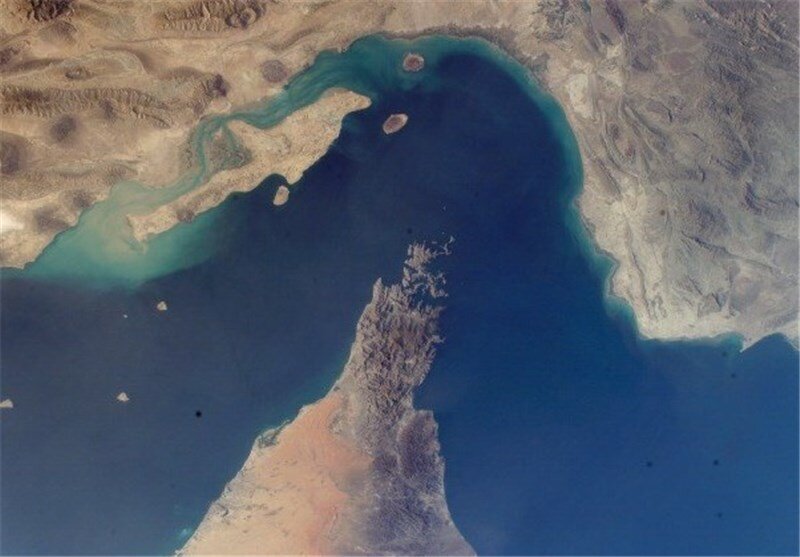
TEHRAN– After years of tensions between Iran and some Persian Gulf states particularly in recent months in the Strait of Hormuz, reports indicate the emergence of tensions reduction in this strategic region.
For nearly four decades, the Persian Gulf has not been calm and occasionally is the stage for Iran's confrontation with the US and its regional allies because of America's hostility toward the Islamic Republic of Iran. These tensions have sometimes led to direct military conflict.
Iran has been trying to challenge the US military power. The US also has hit Iran's military and oil facilities, killing many Iranians, including hundreds of civilians in the past.
The Persian Gulf, the Strait of Hormuz, and the Sea of Oman are a strategic route for supplying oil to world markets, and in this regards, oil tankers have been one of the main targets of military actions.
More than thirty years after the end of the Iran-Iraq war, several oil tankers have exploded again in the region in recent months. Tensions and maritime conflicts and attacks on oil facilities have re-emerged in the region by US and its regional allies destabilizing acts and the return of US sanctions against Iran.
The White House’s unlawful withdrawal from the Iran’s nuclear deal (JCPOA), designation of the Islamic Revolutionary Guards Corps (IRGC) as a terrorist group, re-imposing sanctions on Iran and trying to drive Iran’s oil export to zero all are provocative and suspicious moves of the US that have fueled the regional tensions.
Recently to reduce tensions in the region, a number of countries have taken steps and traveled to Iran to mediate.
Trying to calm the region Iran has also tried to take steps by a series of new proposals to improve relations with Arab countries on the Persian Gulf.
Iranian Foreign Minister Mohammad Javad Zarif suggested on May 26 signing a non- aggression pact with Persian Gulf littoral states during his three-day trip to Iraq. The suggested plan proves Iran to be right since security in the region would be achieved via cooperation of all regional countries and a desirable and stable regional discipline is obtainable without interference of foreign countries. The plan can become operational step by step in case of building confidence among regional countries.
Some speculation show that Oman and Iraq are likely trying to ease tensions between Tehran and some Persian Gulf states. In this regard, Iran’s Ambassador to Kuwait also announced on July 30 that some countries have accepted to join Iran’s proposed non-aggression pact.
Alongside with acceptance of some countries to join Iran's proposed non-aggression pact, it was announced that a joint Iran-UAE Coast Guard meeting had been held in Tehran after six years and some reports indicated that two UAE banks have announced their readiness to cooperate with Iran, Khorasan Newspaper reported.
Russia and Qatar welcomed the proposal in June, and it now appears that Kuwait has been added to its supporters. In this regards, Iran’s Ambassador to Kuwait Mohammad Irani in an interview with Al Rai, Kuwaiti newspaper said that some countries have accepted to join Iran’s proposed non-aggression pact.
He did not explicitly mention the names of the countries, but said in his remarks that the proposal was not specific to Kuwait and would include all countries in the region. He also mentioned that some countries have responded positively to this plan, and Iran is awaiting response from other countries.
Simultaneously, Special Assistant to the Speaker of the Iranian Parliament for International Affairs Hossein Amir-Abdollahian also referred to the recent visit of Omani foreign minister to Tehran and said that Yusuf bin Alawi bin Abdullah had positive and constructive ideas on the subject of Iranian-Arab talks and the reduction of seizures and tensions during his visit to Tehran.
Foreign policy reporter of Etemad Newspaper wrote in his tweet quoting an Arab source: “In response to Washington's request for joining an international coalition to protect commercial ships in the region, Kuwait stated that the situation in the region was not like Saddam Hussein’s, former President of Iraq when Kuwait united with the US against another regional state and will not allow its territory to be used to threaten Iran. Kuwait had earlier rejected the US request for deployment of four B-52 bombers in Kuwait.”
In addition to Iranian Foreign Minister’s plan of ‘non-aggression pact’, Russia also outlined plan for ‘collective security in Persian Gulf’ and presented it to the UN Security Council and the UN General Assembly on 30 July 2019. Russia's concept of collective security in the Persian Gulf has been distributed as an official document approved by the United Nations.
"In the current conditions, energetic and effective action is needed at international and regional levels in the interests of improving and further stabilizing the situation in the Persian Gulf, overcoming the prolonged crisis stage and turning this sub-region to peace, good neighborly relations and sustainable development," the document said.
"Practical work on launching the process of creating a security system in the Persian Gulf may be started by holding bilateral and multilateral consultations between interested parties, including countries both within the region and outside of it, UN Security Council, LAS [League of Arab States], OIC [Organization of Islamic Cooperation], PGCC [Persian Gulf Cooperation Council]," the document added.
In a letter to the UN Security Council and the UN General Assembly, Russia said that it is "ready for cooperation with all interested parties to implement this and other constructive proposals".
Russia’s plan and Iran's proposal both seek to reduce tensions between the Persian Gulf states. There is only one difference between them that in the Russian plan, it also calls to establish security in the region from some countries outside the region. Russia has also emphasized in its plan that the region's security system will be strengthened by its neighbors in the Persian Gulf only when foreign military presence in the region is reduced.
The regional non-aggression pact is expected to pave the way for neighboring countries to build trust and have constructive interaction.
Despite all pressures, diplomatic initiatives are being pursued by Iran and some regional and trans-regional countries to reduce tensions in the Middle East.
Tensions initially built up between US and Iran after the US President Trump withdrew Washington from the 2015 Nuclear Deal, officially known as the Joint Comprehensive Plan of Action (JCPOA), and imposed severe sanctions against Tehran. Despite US policy of maximum pressure on Iran Trump administration claims that they are ready for talks with Iran but Tehran says it doesn't trust on the White House and will resist in face of all pressures and there will be no talks with a party which has already violated many international agreements.
Tensions between Iran and the United States reached a record high after a US spy drone violated Iran’s airspace last month and ignored Iran’s warnings before being targeted by IRGC’s air defense.