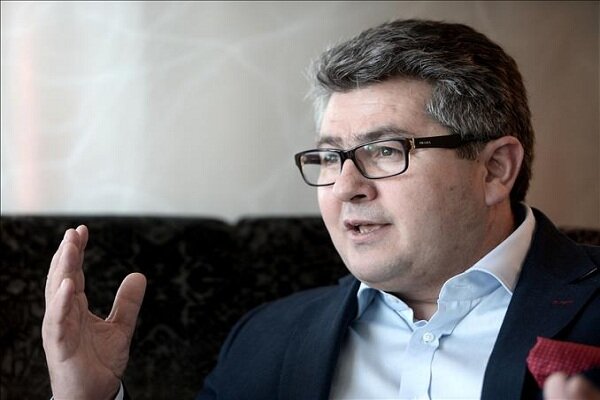
TEHRAN, (MNA) – Commenting on recent drone attack on Saudi Aramco Mehmet Ogutcu says prior to this attack, the US was planning to double its crude oil exports to 9 million barrels per day by 2024. That means the US might topple Saudi Arabia as the world's top oil exporter sooner than planned.
Following drone attacks on Saudi oil plants, the White House said on Saturday that the United States was committed to keeping oil markets well-supplied in the wake of an attack on Saudi Arabian oil plants by Yemen.
According to some sources in Saudi Arabia, its return to full oil supply capacity after Saturday’s attacks on Aramco oil plants could take “weeks not days”.
An attack on Saudi oil facilities on Saturday is believed to have disrupted half the country’s production capacity, making the United States the only real holder of the global supply cushion via its ability to raise own output or to soften sanctions against other major oil producers.
Some believe that it surely is no coincidence the US is targeting virtually every major energy producer from Iran, Venezuela, and Russia, but also including its own "allies" such as Saudi Arabia.
We reached out to Mehmet Ogutcu, Chairman of London Energy Club to shed more light on the issue.
Referring to the drone attacks on Saudi oil plants, he said, “I believe that we have experienced the “Pearl Harbour of the oil industry” on 14 September. Saudi Aramco lost about 5.7 million barrels per day of output after 10 unmanned aerial vehicles struck the world’s biggest crude-processing facility in Abqaiq and the Kingdom’s second-biggest oil field in Khurais.”
“The drone attack, removing 5 percent of the global oil production, will be remembered as a watershed incident in the world oil history. Its impact will be severely felt not only for a few weeks when damaged Saudi oil installations will be repaired and crude supplies will start flowing again business as usual. The impact will be much longer. The world’s largest oil exporter is vulnerable and its air defense system has proven to be ineffective,” he added.
Ogutcu went on to say, “For oil markets, it is the single worst sudden disruption ever, and while Saudi Arabia may be able to return some supply within days, the attacks highlight the vulnerability of the world’s most important exporter. They also add further political risk to prices, raising the specter of more destabilization in the Middle East and the threat of US retaliation against Iran. Even, with a price that could easily double, the Saudi remaining exports will still earn amounts close to what they earned before.”
Commenting on who are the most beneficiaries of the tension in the region, he mentioned, “The Russians will be great beneficiaries of this escalating crisis as they will earn much more per barrel on their oil and gas exports. Of course, the United States, now the largest exporter in the world, will also benefit greatly. Remember, prior to this attack, the US was planning to double its crude oil exports to 9 million barrels per day by 2024. That means the US might topple Saudi Arabia as the world's top oil exporter sooner than planned.
The US is pointing a finger to Iran as behind this attack and said it would provide evidence. Traditional US allies are however not on-board. Geopolitics and great-power competition are playing a greater role these days, and while that may satisfy some narrow interests, it does not bode well for stable energy prices, or for the secure and dependable delivery of energy along global supply chains.
Only China, which imports most of its crude from the Persian Gulf, will be financially hit at the tune of $1.1 billion for each dollar increase per barrel. Thus, except for China, few of the players will seek to defuse the situation, all feeling that they have little to lose and much to gain. Hence, it would seem that the September 14 attack stands a strong chance of escalating into an all-out conflict.
The sanctions are already cutting $42 billion/year of oil exports from Iran’s economy. They have slashed Iran’s oil production and exports to historic lows. Before the US sanctions, Iran produced 3.8 million barrels/day and exported 2.5 million barrels. Oil made up 80% of Iran’s exports. The US ended sanctions waivers for major importers of Iranian oil in May 2019. Iran’s oil exports were down about 2 million barrels and oil production hit its lowest levels since the Iran-Iraq war.”
Regarding the Iran-Saudi Arabia relation in recent years, Ogutcu noted, “While Saudi Arabia supports economically squeezing the Iranian regime, they may not wish to see a war with Iran. While the context has changed in light of the weekend attack, the reasons have not. Saudi Arabia would find itself on the front line of an armed conflict, with Iran or its proxies to the east, south, and north. Such a conflict would also cripple plans for an Aramco IPO and would cause driving foreign investment from the country.
Saudi Arabia has many long term reasons to showcase its resilience and de-escalate. Until now, Iran and Saudi Arabia were protected by the fear of mutual destruction of their main oil export assets, should one attack the other’s facilities. Now that the Iranians have lost most of their export capacity due to the sanctions, this fear of mutual destruction is no longer there.
How Washington and Riyadh choose to respond (for now limited to rhetoric) will show exactly whether this is a flash in the pan or a step-change in Persian Gulf tensions.”
Photo: This combination photo shows filmmakers Ebrahim Hatamikia (L), Mohammad-Hossein Mahdavian (C) and Narges Abyar after being honored during the 15th International Resistance Film Festival (IRFF) at Tehran’s Vahdat Hall on November 26, 2018. (Mehr/Majid Haqdoost)
TEHRAN – Films on the Iran-Iraq 1980-1988 war, which is called “Sacred Defense” in Iran, and those filmmakers active in this field were honored during the opening ceremony of the 15th International Resistance Film Festival (IRFF) at Tehran’s Vahdat Hall on Monday evening.
During a program titled “40 Years of Resistance Cinema”, three winners were selected in each category in a public poll.
“The Glass Agency” (1998) directed by Ebrahim Hatamikia, “The Outcasts” (2007) by Masud Dehnamaki, and “Track 143” (2013) by Narges Abyar were picked as best films.
The opening ceremony was attended by Islamic Revolution Guard Corps Commander Mohammad Ali Jafari, Basij Commander Gholamhossein Gheybparvar, and a number of cultural officials and filmmakers.
Speaking at the ceremony, Major General Jafari said that Islamic resistance is the only way to save the region, and added, “The Ulema and artists are more responsible for deepening the resistance.”
The awards ceremony then went on with honoring Hatamikia, Dehnamaki and Rasul Mollaqolipur as best directors.
“I will never forget this kindness of the people,” Hatamikia said after accepting his award.
He dedicated the honor those Iranian directors who have made films on the Iran-Iraq war and added, “I consider myself a representative of those filmmakers who produced films on the Sacred Defense, among whom is my master Bahram Beizai.”
Dehnamaki also dedicated his award to Hatamikia for his 1990 war drama “The Scout” and Monir Qeidi for her debut feature “The Villa Tenants”.
“This choice of people was not unpredictable,” he noted.
The honor was posthumously awarded to for Mollaqolipur who died in 2007.
Parviz Parastui, the star of several movies by Hatamikia, was among the best actors. Hadi Hejazifar, the star of “Damascus Time”, Hatamikia’s latest movie on Daesh extremism, was also honored.
Actress Merila Zarei also received an award as best actress. In “Track 143”, she portrays Olfat, a woman who is waiting for her son, who has been missing in action since the Iran-Iraq war. She also starred as the wife of a bodyguard in Hatamikia’s “Bodyguard”.
Hatamikia, Abyar and Mohammad-Hossein Mahdavian, the director and writer of “Standing in the Dust”, were also honored for their achievements in writing.
Yesterday September 22, the 38th anniversary of start of the Holy Defence of the newly-founded Islamic Republic by Iranian Muslims in the face of the 8-year war which the US had imposed through Saddam of Baghdad’s repressive Ba’th minority regime of Baghdad, saw terrorism once again raise its ugly head against the indomitable nation of Iran when in the southwestern city of Ahvaz the annual military parade was sprayed with gunfire resulting in the martyrdom of around 30 men, women, and children and injury to 60 others.
The dastardly act that occurred only two days after the grand nationwide commemoration of the anniversary of the tragedy of Ashura, the martyrdom of Imam Husain (AS), was yet another proof that the enemies of Islamic Iran are Godless elements devoid of any humanitarian tendencies.
It was a reminder to Iran, to Iranians and to the free world that Saddam may be dead, the Ba’thists obliterated and the Takfiri terrorists defanged in Iraq and Syria, but the puppeteers in Washington, Riyadh and Tel Aviv, still thirsting for innocent blood.
In other words, neither the US which had supplied lethal arms to Saddam such as internationally-banned chemical weapons for use against Iranian combatants, nor Saudi Arabia which had provided 80 billion dollars to the Ba’thist regime for the 8-year war as well as the genocide of Iraq’s Shi’a Arab majority and the ethnic Kurds, have yet to realize the futility of their plots following their decisive defeats in Syria and Iraq.
These two devilish destabilizers of West Asia and most of the Muslim World, along with the illegal Zionist entity, are clearly in a state of panic. In view of their failure in the downed aircraft incident in Syria to trap Russia in an open war – if not World War 3 – they plan to provoke Iran into a hasty military confrontation, oblivious of the fact that Tehran has many cards to play and will definitely avenge the innocent blood of the martyrs of Ahvaz.
The terrorists and their cowardly backers, wherever they might be – in the US, in Europe, and in reactionary Arab states – should not think that they can get away with their crimes against humanity.
In the meantime, let us focus on the values of the Holy Defence and what made the Iranian people to enact epics of resistance at the warfronts to defeat an armed-to-the-teeth regime, supported by the then Capitalist West and the Socialist East.
Weapons and brilliant military strategy did play their roles, but what inspired Iran’s Muslim combatants to achieve victory after memorable victory against the enemy, without the least doubt, were spiritual values.
We still remember vividly the regular recitation of the famous Kumayl Supplication and the Ziyarat (salutation) of the Martyr of Karbala, Imam Husain (AS), in the bunkers on the frontlines, interspersed with cries of God’s Majesty (Allaho Akbar) by Iranian forces that demoralized the Ba’thist enemy.
The cannibalistic takfiri terrorists, despite their bloodcurdling crimes against helpless human beings, crumbled before these very same spiritual values inspired by Iran in Syria and Iraq, and over a decade earlier the supposedly mighty Israelis were humbled in Lebanon by the spiritual strength of the legendry anti-terrorist movement, Hezbollah.
These were, and still are, the super weapons – more powerful than nuclear bombs – in the arsenal of the Islamic Republic of Iran, which at the same time continues to test, develop and mass produce sophisticated conventional arms that are on par, if not superior, to the state-of-the-art military technology of the enemies.
Today also the spirit of brotherhood prevails amongst the people of Iran, irrespective of their ethnicity, social background, and political views. All Iranians, including religious minorities, acknowledge the timeless transcendental charisma of Imam Husain (AS) and feel indebted to his firm stand against injustice, as key to the success of the Islamic Republic of Iran in all fields.
It is this Husaini spirit and solidarity that binds together the people of Iran, Iraq, Syria, Lebanon, Yemen, Arabia, Bahrain, Pakistan, Afghanistan, India, and the Republic of Azerbaijan, as well as Nigeria, Tanzania and elsewhere.
To sum up, whatever cowardly act the Great Satan and its devilish minions think they are capable of carrying out, the Islamic Republic and the Iranian people, with trust in God Almighty and on the basis of the values of the Holy Defence, are confident of defeating, no matter the magnitude of sacrifices required, as taught by Imam Husain (AS).
US interference in the Middle East and Asia did not start in 2001.
Long before Afghanistan, Iraq, Libya and Syria were attacked by the US Empire and its allies, these countries had something very important in common: They all had secular progressive nationalist sovereign governments with long established ties with the former Soviet Union, which is one of the reasons why the US has long planned to destroy them and turn them into client states.
They had an all inclusive society that respected and protected religious and ethnic minorities and women’s rights. Their economies were necessarily state controlled in order to protect against predatory western corporations that have destroyed and still are destroying national economies around the world in the name of the so-called free trade and open market policies.
After nearly four decades of war, death and destruction, it is now difficult to imagine Afghanistan before its tragic recent history. Up until the Soviet invasion of 1979 the country was indeed a secular country with a nationalist government and long proud history, where people lived their normal lives in peace. Contrary to current perception, women then had access to university education and pursued varied professional careers like their counterparts in any other twentieth century modern country.
Thanks to the overwhelmingly biased mainstream media there are many other myths about Afghanistan long held in the West, however, it is worth reading Jonathan Steele’s article in The Guardian in which he tries to dispel some of them.
Well before the Soviet invasion the Afghan Mujaheddin were supplied with arms by the US and funded by the Saudis in order to topple the pro-Moscow government in Kabul. Furthermore, the US had an even bigger plan to drag the Soviet Union into a quagmire in Afghanistan where “We now have the opportunity of giving to the USSR its Vietnam War”, according to Brzezinski the national security adviser to President Carter. His aim was to break up the Soviet Union at any cost and the Mujaheddin were merely tools used to that end. He called them “Some stirred-up Moslems”who have over the years morphed into today’s terrorists, with more support and aggression from the Empire of chaos.
After the collapse of the Soviet Union in 1989-1991, the US found itself the only superpower in an uncertain and rapidly-changing world. Instead of showing leadership on tackling poverty, health, education and climate change, the US, driven by its entrenched Neo-cons and Neo-liberals, chose to embark on a campaign of unprecedented aggression starting with the Middle East, where the world’s largest gas and oil reserves lie. Therefore, it is hardly surprising that the US refused outright to accept the Taliban’s offer to hand over Bin Laden on condition the US did not invade Afghanistan.
The mainstream media did not even mention this crucial fact because the propaganda machine in the West was spinning out of control after 9/11/2001.The hawks in Washington were intent on invading Afghanistan under the false pretext of capturing Bin Laden and destroying Al-Qaeda, the very jihadist group they set up years earlier.
Iraq was another example of US Empire projecting its military power. After the Iranian Revolution in 1979, the American administration did not spare any effort in encouraging and supporting Saddam Hussein to engage in a catastrophic conflict with Iran. The result was an 8 year long bloody war which killed an estimated one million people and crippled the economies of both countries.
This left the Iraqi government no option but to ask the Saudi, Kuwaitis and other Gulf states to help Iraq by raising the price of oil, which they refused under American pressure. Intriguingly, American connivance tricked Saddam Hussein into thinking that he could invade Kuwait and put further pressure on the Saudis and others to see matters from his point of view. But this was a grave miscalculation by Saddam Hussein and a well planned American trap for him and one that resulted in yet another catastrophe for Iraq.
The usual propaganda spun its lies about the Iraqi Army’s barbaric atrocities in Kuwait and the valiant resistance there, all of which mobilised public opinion in the so-called civilised world. Consequently, much of the Iraqi Army was pulverised in what was called “Desert Storm” and most of Iraq’s infrastructure was systematically attacked from the air and destroyed. A no-fly zone was declared through the United Nations; nominally over the north of the country but effectively over the whole of Iraq.
Contrary to what was reported in the media at the time, this gave licence to the US and its allies to bomb targets anywhere in Iraq on a daily basis which went on for 12 years. Sanctions had been imposed immediately after Iraq invaded Kuwait and also lasted for 12 years until 2003. The government could not even import essential items such as food and medicine, “As many as 576,000 Iraqi children may have died since the end of the Gulf war because of economic sanctions imposed by the Security Council” according to The New York Times in 1995.
As if this humanitarian tragedy of enormous proportions was not enough to satisfy the neo-con hawks who pulled the levers of power behind Bush junior they used the events of September 2001 in America to whip up such frenzy around the world so as to silence any dissenting voice, not that the mainstream media showed any signs of being critical or even tried to question what the US administration was doing- interesting in a country that claims to be the land of democracy and freedom of speech. The Bush administration even concocted “evidence” from various questionable sources showing falsely that Iraq had weapons of mass destruction (“WMD”), this despite the fact that the UN weapons inspectors led by Hans Blix were reporting that there were no WMD, having been dealt with and disposed of many years before. Among such sources were an Iraqi exile’s PhD thesis and the infamous dossier that led Blair to tell parliament in September 2002 that Saddam Hussein had “chemical and biological weapons, which could be activated within 45 minutes”.
Fourteen years later the Chilcot Reportfound that the “Supposed Iraqi weapons of mass destruction identified in an intelligence dossier resembled an inaccurate portrayal of such weapons in a fictional Hollywood movie”.
All the protest around the world by millions of people could not prevent the illegal invasion of Iraq in 2003. The fact that Iraq had nothing to do with the attack of September 2001 on America, had no connection whatsoever with Al-Qaeda and more importantly posed no threat to any western countries, all of this did not make any difference to the US administration already intent on invading Iraq. Apart from the oil, there were arguably other reasons why the Americans were so determined to invade Iraq:
Iraq was already a weak state without significant allies and therefore with no hope of defending itself against the military might of the US who counted on minimal casualties.
America had long wanted to banish once and for all the nightmare of Vietnam that had been weighing heavily on the American psyche for a long time.
The military industrial complex had huge stockpiles of arms that needed to be tested and used in a “fireworks” show to project its might as the only superpower in the world.
To make huge fortunes for the arms manufacturers and other big corporations.
To intimidate and bully other countries and demonstrate literally what it could do to them if they do not fall in line with US imperialist policies.
To satisfy Israel’s unquenchable thirst for security by destroying a major Arab country.
To confirm itself as the only superpower in the world.
The well planned and executed US invasion of Iraq saw the complete destruction of a sovereign state: Its army, civil service, ministries, power stations, hospitals, schools, bridges, museums, archives and much more of the Iraqi state’s administrative, social and civil structure. Some have always argued that the vacuum and chaos that ensued represents the failure of the invasion as the planners had no plans for the aftermath. Seen from a different perspective, it could well be argued that the lack of plans for the post-invasion period was, in an undeclared way, deliberate and as such the invasion was indeed a big success. Its real objective was to plunge Iraq and the entire region into endless sectarian wars for years or even decades, leading ultimately to Balkanising the Middle East.
Until 1991, Iraq was a modern secular country with an excellent free health care system and a first class free education system up to university level. Art, science and music flourished and were enjoyed by all citizens irrespective of their religious or ethnic affiliation.
Libya too had free health care and education systems with an economy considered to be the best in Africa to the extent that it provided employment for thousands of Africans from across the whole continent. After the Western invasion of Libya those workers who survived the killing spree by the NATO-backed death squads had no option but to head for Europe as migrants. Gaddafi was always portrayed by the West as the “madman of Libya”, though in fact he was helping to develop African countries and their economies in many ways, hardly the work of a madman. Moreover, Gaddafi had huge quantities of gold and silverwith a plan to”establish a pan-African currency based on the Libyan golden Dinar” which would threaten western currencies and lead many African countries to more economic and political independence, according to recently disclosed emails.
This clearly was the real reason behind NATO’s military campaign in Libya, which was not reported at all in the West. Instead the public were fed with the usual fabricated images of civilians about to be massacred by Gaddafi‘s forces and that NATO had to intervene to prevent a humanitarian disaster, using the UN Security Council resolution as a fig-leaf. Consequently Libya’s weapons were looted by extremists and soon went to various African countries, a destabilising factor and a major contributor to the on-going migrant crisis in Europe. Following the collapse of the Libyan state, the US oversaw the transfer of significant quantities of Libya’s weapons to the jihadists in Syria. According to Seymour Hersh, “The rat line, authorised in early 2012, was used to funnel weapons and ammunition from Libya via southern Turkey and across the Syrian border to the opposition.”
For years Syria has been refusing to become a client state of the US Empire. Since independence from the French colonisers in April 1946, the Syrian people have built a modern secular inclusive society with free education and health care for all citizens. The Syrian economy needed to be controlled by the government in order to protect it from hostile western multinationals. Unsurprisingly, such an independent stance always angered the US who never ceased to plot and scheme to interfere in Syria’s internal affairs over the past seven decades.
What is happening in Syria these days is not a civil or sectarian war but a war of aggression by the US and its regional proxies to dismantle the state and tear apart the very fabric of Syrian society and culture.
In its July 5th-11th 2014 issue, The Economist bemoans the failure of the so-called “Arab spring” completely ignoring western meddling behind it, through their supply of funding and weapons as well as their hired agitators and saboteurs who operated among innocent protesters. The vast majority of the Syrian people did not participate in such protest and were appalled by the armed violence and the atrocities committed at the start of the conflict by the mercenaries sent by the Wahhabi machine. The Economist also questions the failure of Arab countries to create democracy and prosperity for their people. Again there is no mention of the constant and relentless aggression from western powers throughout the past one hundred years or more. Even after independence colonial powers never stopped interfering in the whole region covertly or otherwise, not to mention the illegal creation of Israel in Palestine at the heart of the Arab world. Imagine if these countries were left alone to develop and build their economies free of bullying or threat of regime change, the world would be in a better state than it is now.
After a quarter of a century of America’s campaign of continuous destruction and military adventurism in the Middle East, US aggression has now hit a hard obstinate rock in Syria. It is the rock of resistance that has its roots deep in Syrian history. It is the unshakeable rock on which all foreign invaders were defeated; the people of Syria refuse to be subjugated. Syria and its allies have shown the world their legendary resistance over the last 6 years and the Syrian people will eventually emerge united and triumphant from this neo-colonial-manufactured crisis.
Leyla lived through the invasion of her home city Khorramshahr, but at a great price, she has lost members of her family and witnessed the destruction of the city that she was born in and loved greatly.
In his mind, Saddam had to find an enemy to destroy thus elevating his status among the neighbouring Arab monarchs.
The Iran-Iraq war started on the 22nd of September 1980 and lasted for eight years. It was the longest conventional war in the 20th century, making it one of the bloodiest in history. The estimated cost of the war has been put at approximately $1 trillion. In this report I will tell the story of Leyla from the day of occupation of her home city, to the loss of her brother recapturing the same city. In the course of the horrific war, Leyla lost her brother and subsequently father, whose graves she has never seen. I will ask her what strength she used in the suffering and why she never gave in to self-pity. The reason for my personal interest in Leyla’s story of survival is because she is my mother and the brother and father she lost are my uncle and grandfather.
Leading to invasion
My mother retold me a story that I am already familiar with. It has affected my family’s life dramatically. The Iran-Iraq war has brought nothing but suffering to everyone I know affected by it and my experience proved to me that there is only suffering from any war.
It was after the revolution of 1979 when the Iranian King Mohammed Reza Pahlavi fled from Iran, and Ayatollah Ruhollah Khomeini headed the Islamic revolution to power. On the 1st of December the Iranian citizens approved the new Islamic constitution in a referendum, and the rest of the world, especially the Arab monarchs stood up and took notice at a new phenomenon. Like any other revolution the new Iranian government and people took time to converge and settle. Saddam wanted to take advantage of the difficulties in the neighbouring country for his own benefit and push his own status among the Arab countries.
Destruction of homes in Khorramshahr
Saddam always believed he was the leader and successor of the Arabs, like Salahaddin Ayubi from the 12thcentury. In his mind, Saddam had to find an enemy to destroy thus elevating his status among the neighbouring Arab monarchs. His country was making tremendous profits from oil exports; he enjoyed a great degree of political and military freedom before the summer of 1980, whilst holding $30 billion in foreign currencies. After consulting the Saudi monarch on the 5th of August, Saddam started to plan his war with Iran. His plan consisted of invading the Khuzestan province (in the South West of Iran), capturing the major oil fields of Abadan and Masjid-e Suleiman (MIS), and placing a puppet government opposing the newly created Islamic Republic of Iran. He believed he could accomplish his plan within a month and succeed in total victory.
The day of invasion
On the way my father would stop and help others who were badly wounded, our car was filled with more than seven people by the time we reached my grandmother’s house.
Khorramshahr means the “Cheerful City” and has played an important part in the history of both Iran and Iraq. The town used to be named Muhammara and was ruled by the Muhaisin tribe. Its location has placed great importance on the town and its province. Half way through the Iran-Iraq war the town was nicknamed Khonin shahr, which means the “City of blood” because so many Iranian soldiers lost their lives trying to recapture it. As a major port of Iran, Khorramshahr was a prosperous city, with trade passing through it from all over the world. My father owned a mechanic garage in town and had recently finished building his first house. He got the best builders and architects to design and build the house that would be the only one in the area not to fall to a rouble through the destructive war.
Sandra Mackey writes: “At dawn on September 22nd, 1980, fifty thousand Iraqi troops hit four strategic junctions along the 730-mile-long Iran-Iraq border. While the infantry punched forward from the bleak mountain ranges of northern Kurdistan to the swamplands of oil-rich Khuzestan, Iraqi planes pounded Iran’s air fields and military installations.”(Mackey, 1996)
My father was at work and my mother along with us was at home like any other day. My mother tells me the moments of the invasion:
“It was just the end of the afternoon and I think I was in the kitchen; you and your brother were in the sitting room playing. I heard a very loud bang, but I thought it was construction workers in the area. I went out to see what was happening, then I realised people running away and smoke in the background of houses. Your father was on the porch shouting at me “get the kids, get the kids, there’s no time, quickly come back”. I was still unsure of what was happening and what all the fuss was about, but when I saw blood on your father’s hands I came to my senses, he shouted, ‘There has been an announcement on radio, the Iraqis are invading.'”
My mother had no time to change her clothes or take any valuables with her. She even left her wedding ring in our home because of the rush. She fled the house holding me and my brother, locked the front door and ran to my fathers’ car, not realising it would be almost two decades later before she would see her home again. The only place my family would be safe was in the centre of the city, where my grandmother lived and artillery shelling would not reach. On the way my father would stop and help others who were badly wounded, our car was filled with more than seven people by the time we reached my grandmother’s house. My father dropped everyone off and turned the car around and went back to see if he could help others in the neighbourhood, by then the major roads and streets around the city centre were sealed off. Hour by hour my grandmother’s house would be filled by more people, some we did not even know, but my grandmother saw it a duty to help out. At the time my grandfather was in Kuwait, he worked there so he could not always stay long in Khorramshahr.
Civilians fighting the Iraqi invasion
“The mosque turned into a military command centre because this is where everyone came when we knew the Iraqis were advancing. The men who had weapons – any kind of weapons – went outside the town to try to delay the Iraqis advance.” Sweeping his arm around the mosque’s exterior courtyard, he said, “The women stayed here to tear cloth for bandages. When the fighting came closer, some of them left for the field to be nurses. None of it made any difference. The Iraqis kept coming. We pulled everything we could move in to the road. They just kept coming and we kept retreating back toward the mosque. At the end, we were throwing Molotov cocktails at tanks. And then it was over”. Khorramshar fell on October 24, 1980. (Mackey, 1996)
My mother was under the impression that this border dispute was temporary and she would be returning home soon, but as night overtook the day her hopes faded. By nighttime the shelling of the town by Iraqi artillery was worsening. The Iranian Navy had begun its attack on Iraqi military positions, so my mother would hear Iranian navel shells followed by Iraqi artillery shells. The explosions were getting closer to my grandmothers’ house. My mother was worried that the next house to be hit would be ours. My mother painfully remembers:
“That night was the longest of my life, never was I so terrified for my family, all I could hear was the shelling hitting buildings and the explosions that had my heart beating fast. We were in the corner of the room, so if our house was hit by the artillery shells, the pillars would be the safest place to be under, but I was still frightened for you and your brother’s lives, so I held your bodies close to mine and arched my body over yours so if the ceiling collapsed the debris would hit me first and you would at least have a chance.”
I have heard these events more than I can count, but every time I hear my mother suffer telling them to me a tear fills my eyes. Nothing can be clearly experienced unless at first hand, so I can only imagine the exact fear that my mother felt.
That night my father came back to my grandmother’s house, he could not help with any more civilian evacuations because he had ran out of fuel for his car, and all the petrol stations were closed. He realised there was no way we could go back to our house and the only other place to go would be Masjid-e Suleiman (MIS) 130 miles to the North of Khorramshahr. My auntie lived with her family in MIS, the town has one of the oldest oil refineries in Iran dating back to 1908. She was a nurse in the refinery’s hospital. When my mother decided to go to MIS, she did not contemplate that she would not see her home city for another 24 years.
The flight from home
The day after the invasion, my parents decided to take us to the MIS. There was no fuel for my father’s car so we had to take the coach to MIS, and the crisis was so bad that fares had increased a thousand fold. My father was able to get us all on the earliest departure from Khorramshahr to MIS. My mother told me how that journey tested the psychological limitations of her and my father:
“On the coach next to us was a blind man with his young daughter, his only company was his young daughter, his wife and other children were left in Khorramshahr because the fare was so expensive he could only take his daughter to look after him. There were people who were badly wounded, your father got so ill of the suffering that he vomited, and it was the only time I ever saw him like that.”
My family stayed in MIS for a week before my father noticed that the crisis was turning into a full blown war and returning back to Khorramshahr in the near future was out of the question. It would be best to head for Tehran the capital city of Iran. My father had friends and people who owed him money in Tehran, so after some weeks he rented a house for us to stay in, hoping to return back to Khorramshahr one day. That day slowly died away in front of my mother’s eyes.
Bait al Mugaddas (The Sacred House) Offensive
May of 1982 is one of the most important periods in my family’s history; my mother lost a brother and a father and I lost an uncle and my only living grandfather.
Iranian soldiers praying on the battlefield
By the end of March 1982 Iran prepared to implement the final stages of expelling the Iraqi army from the occupied territory within Iranian boarders. My uncle was one of seventy thousand soldiers deployed to launch the offensive code named Bait al Mugaddas – The Sacred House (referring to the holy city of Jerusalem) – this offensive would carry large numbers of causalities and dead but that was the price for the restoration of Iran’s honour and the liberation of occupied cities.
When Iraq occupied our home city Khorramshahr it left a scar on my mother’s heart and the national honour. Along with patriotism, it was a religious passion that drove my uncle to volunteer to fight against the invaders , the hope for martyrdom.
Martyr Mohsen Rangraz, before the Bait Al Mugaddas attack
My uncle was a man of passion for his country and faith; ever since he was young he was famous for his purity and religiosity. He studied for his diploma in Italy and then his masters in engineering in London. When the war started he left his studies and rushed back to volunteer for the army. He served for more than a year before theBait al Mugaddas offensive; my family told me how every time I used to see him, I would jump with excitement like for nobody else.
To my family the death of my uncle is one of the most tragic events of the war. My mother found it very emotional to talk about the death of her brother;
“A friend of the family came around; I knew that something had happened, he insisted he should see your father and give him some news, and then I realised that my brother was gone. The body still had to be identified by a family member, so your father, a friend and your grandmother went to a place near Khorramshahr. They wouldn’t let me go because I wasn’t strong enough to take the strain of seeing thousands of dead soldiers. Your father and grandmother looked through dead soldiers for five days before they found your uncle, may Allah bless his soul. His death has left a scar on my heart that will never heal until I die.”
My uncle was killed by a single bullet through the forehead, my mother showed me a picture of his body, he has a celestial smile and his face glows as he lies asleep.
I asked my mother what assisted her to keep going every day during those dark and hard years;
“God, the Almighty kept me alive, praying was my only weapon, and I knew I had to look after my children and provide for them. I had to show love and not hate which is difficult when we were being bombed in Tehran.”
Portrait of Martyr Mohsen Rangraz on the street of Khorramshahr
My grandfather a noble and caring man worked in Kuwait during the war as he had a small business there. He would dress in the Arabic dishdashe (traditional white long gown) and would always bring us gifts from his return trips to Iran. Sadly shortly after hearing of my uncle’s martyrdom, the news of his eldest son’s death was too great a pain to bare and my grandfather passed away from a stroke, alone in Kuwait. My mother has never had the opportunity to visit his grave and say goodbye to him. But then again, do those whom we love ever really leave our hearts?
My mother returned back to her home city after 17 years, but as she walked through the streets of Khorramshahr, the love and comfort that she once felt had been replaced with feelings of sadness, pain and loss.
My mother has had hardship enough for a life time, so when I see her happy it brings me joy. I can see that she has come out of it a stronger person; she feels no hatred towards the Iraqis. In Islam, war and aggression is forbidden, unless in self-defence. So I see no excuse for any sort of aggression, but there are a number of people in history who could not care for a thought like that.
Tomorrow marks the 35 year anniversary of the start of the Iran-Iraq war in which hundreds of thousands of people lost their lives. Spare a thought for them all, and recite a sura fateha for the pure souls.