TEHRAN - Persian architecture has a long and complex history. The Elamite, Achaemenian, Hellenistic, and other pre-Islamic dynasties left striking stone testaments to their greatness, such as Chogha Zanbil and Persepolis—both designated as UNESCO World Heritage sites in 1979.
Three monastic ensembles central to the Armenian Christian faith were collectively recognized as a World Heritage site in 2008. Their architecture represents a confluence of Byzantine, Persian, and Armenian cultures.
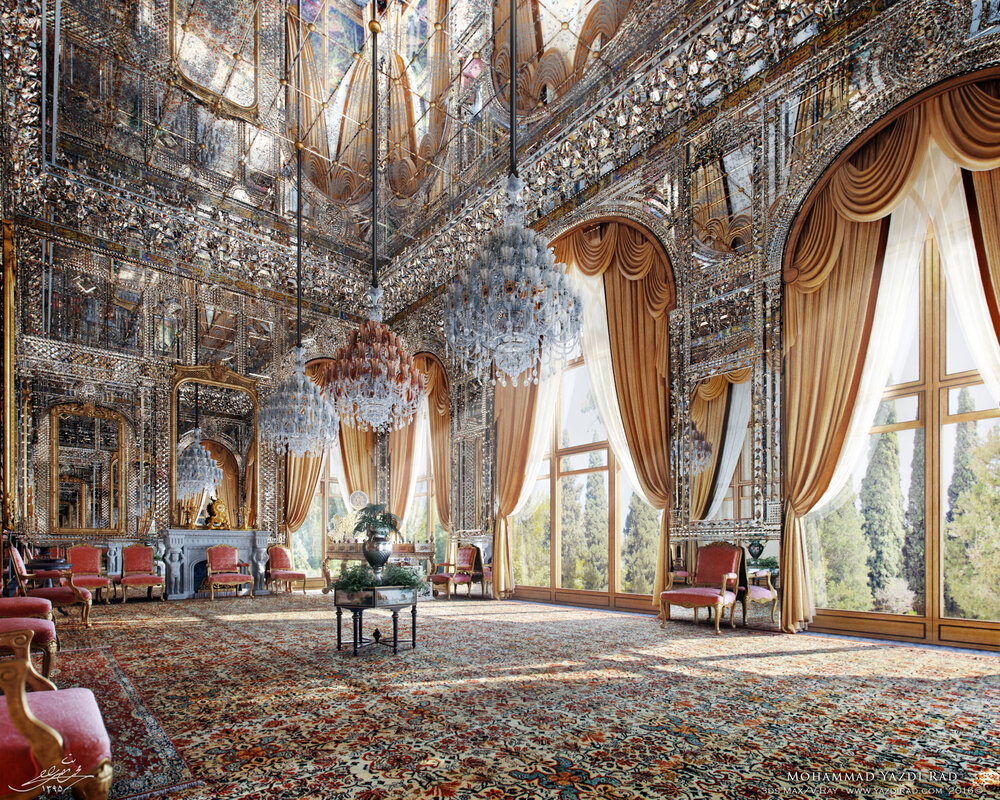
From the Islamic period the architectural achievements of the Seljuq, Il-Khanid, and Safavid dynasties are particularly noteworthy. During that time Iranian cities such as Neyshabur, Isfahan, and Shiraz came to be among the great cities of the Islamic world, and their many mosques, madrasahs, shrines, and palaces formed an architectural tradition that was distinctly Iranian within the larger Islamic milieu, according to Encyclopedia Britannica.
There are some elements that are common among most of the monuments constructed upon Persian architecture.
The usage of iwans (porticos)
An iwan is a vaulted space that opens on one side to a courtyard. The idea of iwan developed in pre-Islamic Iran where it was used in monumental and imperial architecture.
Extensive use of arches
The two famous monuments, the Taj Mahal for the Mughal architecture and the Great Mosque of Isfahan for the Persian architecture displays the example of this fact. It is built for aesthetic reasons, as well as to place windows and to lessen the extent of sunlight to pour into the building.
The two famous monuments, the Taj Mahal for the Mughal architecture and the Great Mosque of Isfahan for the Persian architecture displays the example of this fact. It is built for aesthetic reasons, as well as to place windows and to lessen the extent of sunlight to pour into the building.
Gardens, fountains, and pools
Water plays a particularly central role in Iranian design: millennia before the invention of the first water pump, Persian agricultural experts created the qanat (subterranean aqueduct) based on their hydraulic laws.
Spacious gardens and pools with fountains have always been a main feature of Persian architecture over time. In a traditional mosque, madrasa, house, it is used for ablutions, aesthetics or both.
Water plays a particularly central role in Iranian design: millennia before the invention of the first water pump, Persian agricultural experts created the qanat (subterranean aqueduct) based on their hydraulic laws.
Spacious gardens and pools with fountains have always been a main feature of Persian architecture over time. In a traditional mosque, madrasa, house, it is used for ablutions, aesthetics or both.
Domes
The Persian tradition of dome-building dates back to the earliest Mesopotamian architecture when domes became an integral part of buildings due to the scarcity of wood in many areas of the Iranian plateau.
In Ancient Persia, domes were associated with the divine side of life, as their circular shape represented perfection, eternity and the heavens, according to Press TV.
The Persian tradition of dome-building dates back to the earliest Mesopotamian architecture when domes became an integral part of buildings due to the scarcity of wood in many areas of the Iranian plateau.
In Ancient Persia, domes were associated with the divine side of life, as their circular shape represented perfection, eternity and the heavens, according to Press TV.
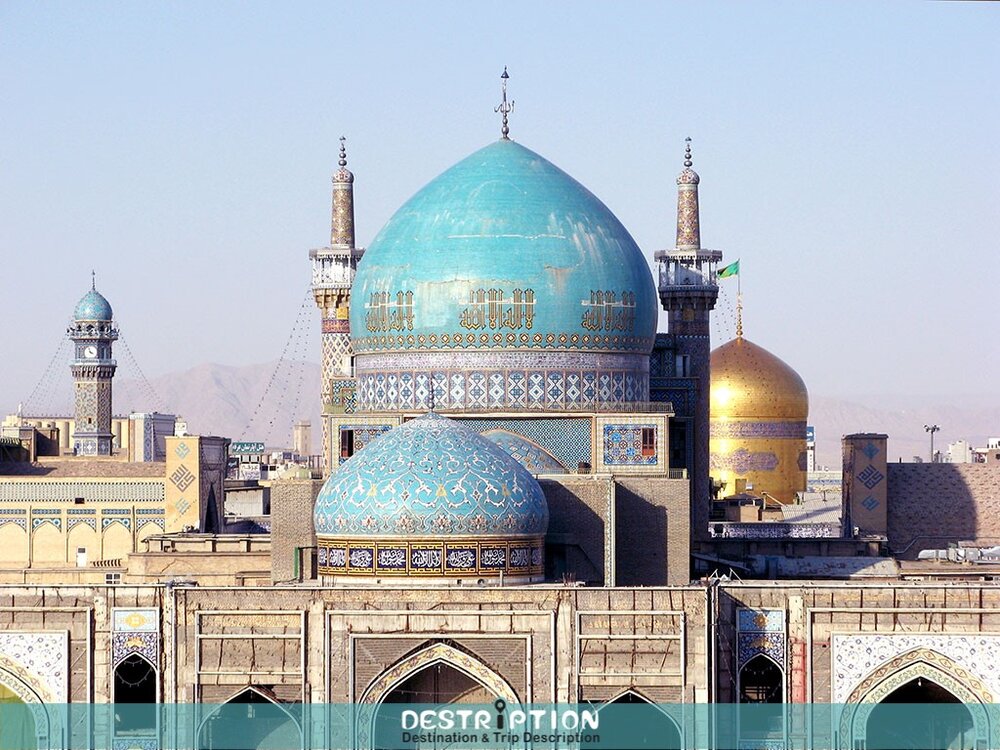
Domes moved to the forefront of Persian architecture during the Sasanian period (224 to 651 CE) and they evolved through different eras until the Safavid dynasty (1501–1732) when the last generation of Persian domes were characterized by a distinctive bulbous profile and astonishing tileworks.
In the Persian urban designing, domes in places of worship and public places, including traditional bazaars, caravansaries, schools and baths, are designed in such a way that can be seen from different parts of urban or rural area.
In the Persian urban designing, domes in places of worship and public places, including traditional bazaars, caravansaries, schools and baths, are designed in such a way that can be seen from different parts of urban or rural area.
The domes are normally double-shelled. While the interior shell is designed to carry the weight of the structure, the exterior shell serves as both a decorative element and as insulation against the elements. The aerodynamic shape of the domes also makes the structures more sustainable.
Symmetry
Iranian architecture makes use of abundant symbolic geometry, using pure forms such as the circle and square, and plans are based on often symmetrical layouts featuring rectangular courtyards and halls.
Sassanid architecture is decorated with carved stone or stucco reliefs and makes use of colorful stone mosaics. Beautiful gold and silver dishes, bowls, and ewers, often decorated with hunting scenes or animals in high relief, and textiles with symmetrical heraldic designs also remain.
Sassanid architecture is decorated with carved stone or stucco reliefs and makes use of colorful stone mosaics. Beautiful gold and silver dishes, bowls, and ewers, often decorated with hunting scenes or animals in high relief, and textiles with symmetrical heraldic designs also remain.
Usage of Muqarnas
Muqarnas is typically applied to the undersides of domes, pendentives, cornices, squinches, arches, and vaults and is often seen in the mihrab of a mosque. They can be entirely ornamental, or serve as load-bearing structures. The earliest forms of muqarnas domes, found in the Mesopotamian region, were primarily structural.
Calligraphy
Iranians’ passion for using the script as an artistic impression goes back to pre-Islamic times but it is the work of Islamic era calligraphers and illuminators that elevated its use into the high art we appreciate today. Encouraged by the Islamic preference for the art of calligraphy over representational arts, it developed from epoch to epoch and from style to style.