Showing posts with label President Rouhani. Show all posts

Sunday, December 01, 2019

Iran’s Security Counter Attack to A Three Year Plan! / Behind the Iran’s Recent Riots, Part 2

The operation rooms of riots inside Iran were in several locations, the main goal was to hit Iran near the beginning of winter to lead the country into a severe depression…
Turkish intelligence service is fully aware of foreign services in Turkey and them contacting Iranian citizens and they concluded in near future there will be severe protests in Iran. In addition, a few weeks ago it was announced that the plan to assassinate General Soleimani was disclosed and neutralized. The assassinators said in their confessions that they were trained for military acts and how to use explosive. Security officials of Iran also spotted unusual weapon trafficking to Iran.

The operation rooms of riots inside Iran were in several locations, the main goal was to hit Iran near the beginning of winter to lead the country into a severe depression. They spend millions of dollars on the Saudi television channel “Iran International”. Before than Pentagon spent on Manoto, CIA on Radio Farda and US Foreign Minister on VOA and did not get the desired results. Even BBC does not have the desired influence and after a decade turned into a normal network among others.

Arresting Roohollah Zam, the head of Amad News, who was supposed to spread the program on the start date of the operation to the network in Iran, made Iranian officials to take it more seriously. Having information about the possible targets of the saboteurs including, besieging Bandar Imam Khomeini and Mahshahr as the main trading hubs of Iran, sabotaging Asaluyeh gas infrastructure as the main producer of gas in Iran for the cold season and powerplants and blocking the roads to Persian Gulf Star refinery as the main producer of gasoline in Iran; gave Iranian security officials a heads up.

Regarding the capital, Tehran, due to information overlook of security departments on the treacherous elements makes any plan difficult to implement in Tehran. Therefore they invested in other towns and as you saw the most damages were imposed in towns surrounding Tehran. Learning lessons from Syria, tried to first take control of the gates of Tehran and then disrupt the traffic in Tehran. Although there were some protests in Tehran but it was expected they enter the city and engage lower class districts.

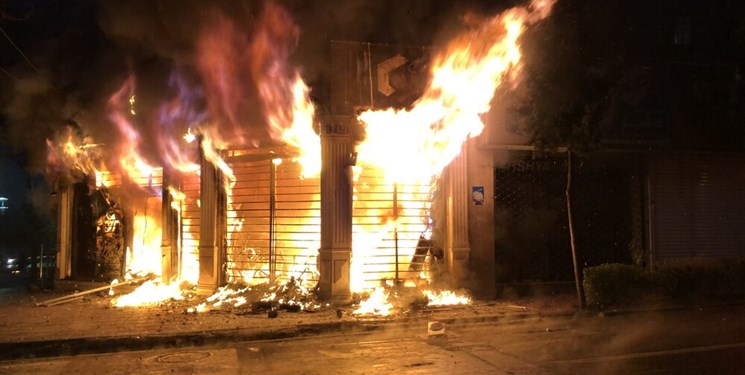
This plan however had several annexes including engaging military and increase the death toll. Discovering RPG, cannon, machine gun, bombs, grenades, etc. wasn’t that surprising. They had orders to attack some police stations and military bases and after occupying them bring those weapons from there and say they found them inside. However in some cities such as Shiraz and Isfahan and some towns in Khuzestan, this happened and even in Mahshahr, trucks of goods were fired at.

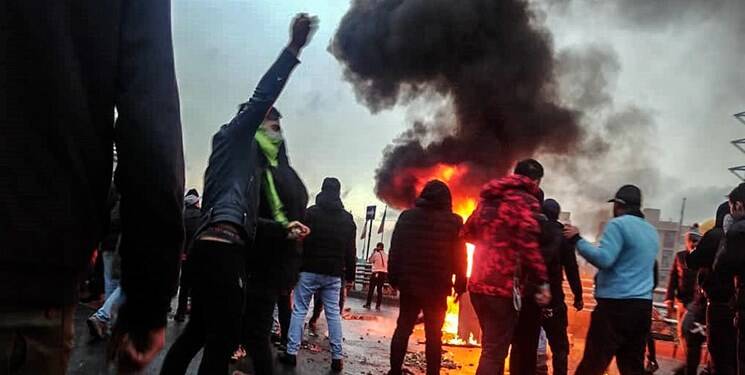
Nevertheless, the information of Iran made the security officials to give them the opportunity to surface themselves before the plan is complete. This happened by increasing the gas price abruptly and the commanding rooms out of Iran activated and started riots in the streets according to their previous trainings. Having the list of more than 2,500 elements by Iranian security departments, the leaders of the network were arrested before Sunday morning(in the first 48 hours). With the new information another groups were also disclosed and destroyed and by cutting the internet, the communication between elements inside Iran and foreign was disrupted.

Iran’s Security Counter Attack to A Three Year Plan! / Behind the Iran’s Recent Riots, Part 1


Why gas price increased in a night in Iran and even Parliament Members did not know about it? The head of national security and foreign police commission of the Iran’s Parliament was unaware of it and tried to prepare the bill of impeachment of President Rouhani and Head of Parliament. However, what happened was beyond the issues to inform the Parliament Members. To clear the issue we look deeper at the incidents.
It is a few weeks that we are talking about Spider and Nimrod plan(remember these names), which according to its designers is a sophisticated plan to turn down the government in Iran. Don’t forget the statement of the Saudi crown prince who said that we bring the riots to Iran. Muhamad Bin Salman never ignored the multi billion dollars he spent to turn over Iran’s government and he had great hope in the network designed by “MEK”and intelligence services of Britain and Israel.

The goal of “spider plan” was to use soft war to destabilize Iran up to three years. Some of the means to be used are political, economic, financial, cyber, media and juridical war against Iran to change the government of Tehran, according to Saudis, until (according to Saudis) the government of Iran does not support their allies, does not threaten the stability of neighbors and does not develop nuclear capabilities.

These are exactly what Adel al-Jubeir announced in a series of tweets on early october. He wrote in his twitter: I repeat the stances of Saudi Arabia again maybe (Iran’s leaders) have heard it; stop supporting terrorism. Leave the policy of riots and destruction and stop interfering in domestic affairs of Arab countries. Stop developing weapon of mass destruction and ballistic missiles and behave like a normal country not an outlaw and supportive of terrorism.

However, Saudi court follows three goals by the “spider plan”:
1. Turning people’s troubles into public demand for change of regime using media and social media,
2. Coordinate the social uprising and conducting vast protests against the government,
3. Engineering the revolution in Iran by defining the turning point of the revolution and preparing the substitute leaders for Iran!

The spider plan was followed in two parallel paths; the first which is for three years to destabilize the situation in Iran in short term and change the government in long term. The second is a short term goal for up to 12 months to send the message to Iran that they will pay for their interferences in the region and their opposite has the power of deterrence.

Another aspect of the spider plan is the military and security aspect of it. According to this part, some people should be hired and trained for military purposes abroad. The transportation usually takes place via Turkey and after people are selected they are sent to Turkey and moved to another country after it. They would spend several weeks there to learn how to networking and to be military trained and then send back to Iran. The plan was for more than two years and after incidents of 2017, they learned social movements are not enough due to security power of Iran and also lack of interest of most people.

In the last two months several important incidents happened. One was arresting the head of Amad News who had great information due to his relations and connections to several intelligence services, the second was Turkish President’s words who said that riots would reach Iran after Iraq and Lebanon! Erdogan did not sit still and gave Iran many first hand information probably; one of them is about observing Iranians who traveled to Turkey and then to a third country for training and they did not stay away from MIT’s eyes(Turkish intelligence service). According to reliable information, Turkey has provided a list of these individuals to Iran.

Thursday, November 21, 2019

Rouhani lauds people’s vigilance in foiling enemies’ plots

Rouhani lauds people’s vigilance in foiling enemies’ plots

TEHRAN, (MNA) – President Hassan Rouhani lauded the Iranian nation’s unity in thwarting enemies’ most recent plot, which was aimed at undermining the country’s security under the disguise of fuel price hike protests.
"Today, I want to thank the great Iranian nation for its vigilance and bow before them because of their patience and timeliness,” Rouhani said at the cabinet meeting on Wednesday.
“The people of Iran passed another historic test and proved that despite economic problems and discontent they may have with the management of the country, they will never let enemies to take advantage of the situation,” he added.
Noting that the government wants the lower-income classes take advantage of the fuel subsidies more than those who do not need it, he said, "The goal was to pay an amount to 18 million lower-income and middle-class households.”
Rouhani said, "In these incidents, people proved that they know the conspiracies of the enemies and terrorists, and are not deceived by them.”
“The number of people who had taken to the streets was determined and it turned out that only a few hooligans were among them; but the hooligans were well organized and armed, acting on behalf of the regional reactionaries, the Zionists and Americans,” he said.
The president added, "As the Leader said, our people have foiled the enemies’ plots in face of different incidents, and they became victorious in the recent plots that the enemies had hatched.”
"Despite the enemies’ pressures this year and last year, people showed that they are sensitive towards their national interests and security, as well as their integrity and solidarity,” he said.
It turned out that the Iranian nation’s enemies have hired mercenaries to inflict damages on people’s lives and livelihood, and they did not even show mercy towards children, he said, adding, "This shows that this small group have acted against the country, homeland and national interests”.
“The Iranian nation always show the world their vigilance, unity and solidarity with the entire state, and we should always give ear to people’s criticisms,” he continued.
Appreciating the people of Iran and the Supreme Leader, he said, "The Leader guided people and unveiled the truth with his wise remarks. The government will continue to cooperate and consult with the other two branches in important affairs.”
Rouhani also went on to appreciate the efforts of the Ministry of Interior, governor generals, governors and ministries that have been working hard to serve people.
“Our country’s devoted forces showed that they do not hesitate to sacrifice their lives for the security and protecting people’s properties and peace,” he said.
Rouhani stressed that "we should act decisively against mercenaries who act against our security so that our country moves towards excellence and development and security.”

Saturday, November 16, 2019

Iran not after building an empire: Rouhani

TEHRAN, (MNA) – Iranian President Hassan Rouhani said that the Islamic Republic is not seeking to build an empire in the region, rather, it wants to establish brotherhood and unity in the region.
He made the remarks on Friday at the meeting of participants of the 33rd International Islamic Unity Conference with the Supreme Leader of the Islamic Revolution.
 “In this blessed day, which is the birthday of the Prophet, we pray to God for unity and brotherhood in World of Islam to be able to achieve great victory against all kinds of oppression and aggression,” his office’s website quoted him as saying.
“In the era that women were considered second-class citizens and a bloody war was going on between different tribes, religions and branches, a man raised a voice that was different from all voices of the time and brought a book, wisdom and scale that was different from the previous ones,” he said.
He also went on to state, "the great Prophet of Islam brought everyone together; from black, white, Arab and non-Arab to women, men, the poor and the rich; they were all the same.”
Stating that to the Prophet, everyone is equal before the law, he continued, “except for the Quran, which was his heavenly miracle, the Prophet brought another great miracle and he showed the world the greatest social and virtuous miracle in the society with his ethics.”
“He made a covenant with the help of his political miracle and signed a peace treaty that was higher than tens and hundreds of wars, and God granted the Prophet with the medal of victory in that peace, not in war, as the verse in Quran says, ‘We have granted you a conspicuous victory’.”
The President went on to say that with his miracle of the Book, wisdom, ethics and politics, the Prophet brought a new civilization to the world, adding, "today, we, as followers of the Prophet, are looking to build a government based on his model, not looking for an empire.”
Rouhani emphasized, “our influence in the region is not due to our military strength and scientific and geographical capabilities and strategic geographical position. Our influence is due to the Islamic Revolution and its influence that has captured hearts.”
"We believe in a revolution that promotes Islam and the moralities of the Prophet; and today that people in Iraq, Syria, Lebanon, Bahrain, Yemen, and etc. feel close to Iran is because of the attraction and message of the Islamic Revolution that is on the path of the Prophet of Islam,” the president added.
“Our children went to Iraq and Syria as advisers and sacrificed their lives to fighting terrorism alongside the nations.”
Stating that being Persian or Arab is not a privilege and our privilege is following the Prophet, he continued, “Our main privilege is to follow the messenger of God. We do not want to conquer any land and to be like an empire; what we want in the region is brotherhood, unity, and obedience to the Prophet.”

Friday, November 08, 2019

Concerning JCPOA, France, European countries are playing with Iran : Velayati

TEHRAN, (MNA) – A top Advisor to Iranian Leader Ali Akbar Velyati has criticized the European signatories to the JCPOA for bringing up the issue of Iranian missile defense capabilities instead of abiding by their JCPOA obligations.
Ali Akbar Velayati made the comments in an interview with the France 24-Arabic Language TV, during which he said that Iran does not trust France as it has not abided by its commitments to the Iran nuclear deal or the JCPOA like other European countries.
It is noteworthy that the French President Macron has been holding regular phone conversation with his Iranian Counterpart President Rouhani with an attempt to save the JCPOA as Iran gradually take steps to reduce its own commitments to the deal in reciprocation for US illegal withdrawal and Europe’s failure to abide by their own obligations under the accord to make up for Iran’s losses.
In response to a question on the promised $15 billion credit line proposed to Rouhani by Macrone in exchange for reversing Iran’s JCPOA commitment reductions, the top advisor to the Leader said that “the main problem is that France and other European signatories to the JCPOA do not keep their promises. Nor did they live up to their promises in the nuclear deal. That is why we do not trust the French government to hold to its promises.”
He added that France like other EU countries are all talk and no action.
The official further lambasted the European countries for bringing up the issue of Iranian missile defense capabilities instead of abiding by their JCPOA obligations.
He called the French and other European states’ gestures with regard to the JCPOA as a show which is aimed at a political victory.
They want to tell the people of the world that they are trying to maintain and realize peace while the case is different, according to Velayati.
He further noted that when the US re-imposes the sanctions on Iran, Europe abides by them.
“France is seeking a political game with Iran,” he noted, adding as long as France does not take practical steps, Iran does not trust it.

Monday, June 17, 2019

US is the obvious benefactor of attacks in Oman Sea: Cartalucci

US is the obvious benefactor of attacks in Oman Sea: Cartalucci

TEHRAN, Jun. 16 (MNA) – Referring to US policy papers, Bangkok- based geopolitical expert says familiar pattern by the US to rush to conclusions before any investigation makes the US and its allies the prime suspects of attacks in Oman Sea, not Iran.
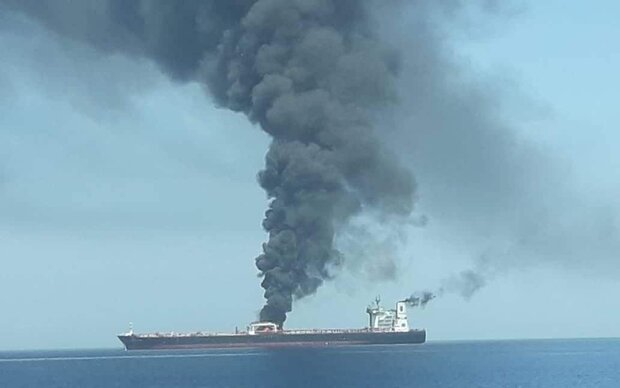
While the Japanese Prime Minister was visiting Iran after 4 decades and many expected even more reduction of the tensions in the region due his visit, in another suspicious and provocative move two large tankers were hit by explosions in the Sea of Oman on Thursday, a move that can intensify the tensions more than before.
Following the attack, US Secretary of State Mike Pompeo hastily accused Iran of carrying out the attacks without providing any evidence to back up his accusation.
In this regard, Iran rejected US Secretary of State Mike Pompeo's anti-Iran accusations, saying the suspicious nature of the recent attacks on two oil tankers in the Sea of Oman is "not funny or ridiculous but alarming".
To shed more light on the issue, an interview was done with Bangkok- based geopolitical researcher Anthony Cartalucci.
Following is the full text of the interview:
The US administration has hastily accused Iran of being behind the attacks on two oil tankers in Oman Sea. How do you assess validity of the accusations?
As the US has done before with now verified fabrications, it has hastily - and without any evidence or investigation - accused Iran of being behind these attacks. It did so within the same day of the attacks. So of course, there is no validity to the accusations. Even a local crime committed within the United States cannot be "solved" in a single day and without any sort of investigation, so how could an incident as serious as this be somehow solved without an investigation or evidence so quickly?
The US reveals its hand by quickly accusing Iran before any sort of independent investigation can be mounted. We've seen this pattern before in Iraq in 2003 where the rush to war was made before inspectors could confirm US claims of "weapons of mass destruction" in Iraq. We also saw the US did this last year in Syria where it quickly accused the Syrian government of a "sarin chemical attack" in Douma before carrying out military strikes - all done before the OPCW could even begin its investigation - which by the way, concluded claims of sarin gas were false.
This familiar pattern by the US to rush to conclusions before any investigation is mounted makes the US and its allies the prime suspects, not Iran.
Is it rational for Iran to commit such an action, while the Japanese PM is visiting Iran?
For Iran, it is not rational at all to carry out such an attack, and especially so against a ship belonging to Japan while the Japanese Prime Minister is in Iran. Iran's greatest strength at the moment is Washington's lack of credibility and increasingly blatant aggression against Iran. The international community can see that Iran upheld its part of the so-called "Iran Nuclear Deal" and that it was the US who walked away from it without justification. The best cards in Iran’s hand are the growing consensus that it is being victimized. Thus Tehran has nothing at all to gain by staging attacks against international shipping through the Strait of Hormuz.
Who in fact is the biggest beneficiary of the provocative incidents taking place in the region that threatens world energy security and route? Can any instability in the region affect EU interests?
The United States in its own policy papers - like Brookings Institution's 2009 "Which Path to Persia?" report - openly admit that the US would greatly benefit from a "provocation" that would allow them to increase military aggression against Iran.
Brookings policymakers would literally claim, "...it would be far more preferable if the United States could cite an Iranian provocation as justification for the airstrikes before launching them. Clearly, the more outrageous, the more deadly, and the more unprovoked the Iranian action, the better off the United States would be. Of course, it would be very difficult for the United States to goad Iran into such a provocation without the rest of the world recognizing this game, which would then undermine it."
The US is the obvious benefactor. Its partners in the region - believing in whatever promises were made to them by Washington about a "post-Iranian" Middle East - would also benefit by aiding this agenda.
Higher oil prices while sanctions squeeze Iran, Venezuela, and Russia can only benefit Western oil corporations. For the EU - interests are divided between multinational corporations there that seek to dominate the Middle East alongside Washington and Wall Street and those who seek to do business with Iran. Obviously pressure from Washington to accept its version of events would tilt the balance in favor of the former and place greater pressure on those seeking peace and cooperation - just as the staged attacks were designed to do. Higher oil prices as a result of instability and violence in the Middle East will further complicate European energy security which only further plays into Washington's hands which seeks to pry Europe away from Russian and Iranian hydrocarbons in favor of its "freedom gas" and sources from among its allies.
Interview by Payman Yazdani

Thursday, June 13, 2019

US economic terrorism must end for positive developments to happen

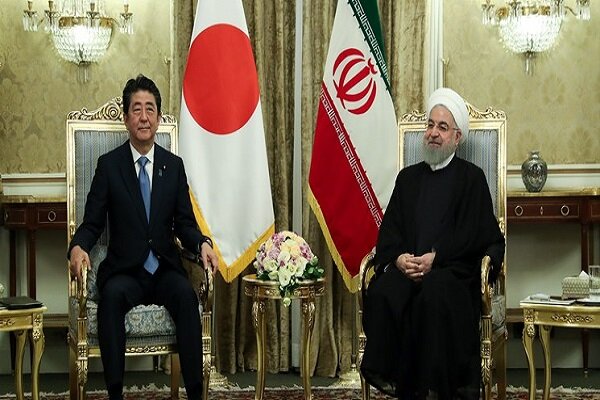
TEHRAN, Jun. 12 (MNA) – President Rouhani said in a joint press conference with Japanese Prime Minister Shinzo Abe that the cause of all current tensions in the region is the US’ economic war against the Iranian nation.
At the joint press conference in Tehran on Wednesday evening, President Rouhani expressed his gratitude to Mr Abe for accepting his invitation to visit Iran, saying that the two leaders have had constructive talks over the past years.
Rouhani said that today’s meeting was their eighth meeting.
“We welcome the fact that government of Japan and the prime minister are determined to expand political, economic, and regional and international relations,” Rouhani said.
The president stated that in both private meeting with Japanese prime minister and the meeting attended by the two countries’ delegations the two sides discussed “the issues of bilateral relations including the Japan’s investment Iran’s Chabahar and Makran coastlines.” 
“The fact that Japan is interested in buying oil from Iran and in resolving financial issues and scientific and cultural relations is a point that can guarantee the development of bilateral relations,” he added.
He further noted that in addition to bilateral relations the two sides also had discussed security and détente in the region.
“The tensions have roots in the American economic war against the Iranian nation, and if this war is stopped, we will witness positive developments in the region and in the world,” the president said.
Rouhani went on to add that Iran will not start any war, while stressing that it will vigorously respond to any aggression.
He added that the Japanese prime minister had been optimistic about the future in the meetings, expressing his happiness with Abe’s support for the continuation of the JCPOA as important for the region and the world.
Rouhani also said that he had urged the prime minister to start cooperation between Iran and Japan on peaceful nuclear technology.
The Iranian president further expressed hope that the visit of the Japanese prime minister would open a new chapter in the bilateral relations between the two countries.

Tuesday, April 23, 2019

Iran, Pakistan not to let others interfere in their brotherly relations: Rouhani

Iran, Pakistan not to let others interfere in their brotherly relations: Rouhani

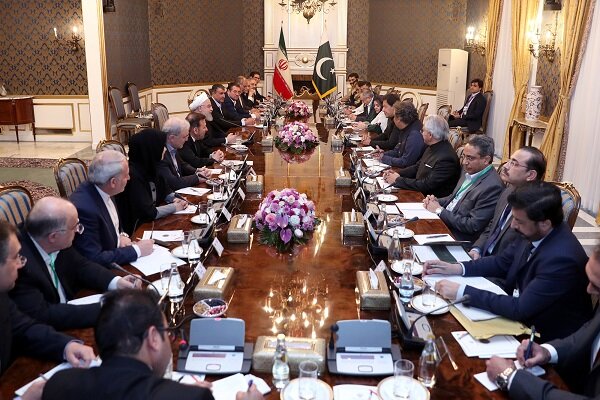
TEHRAN, Apr. 22 (MNA) – Iranian President Hassan Rouhani noted that Iran and Pakistan neighboring countries won’t let any third party interfere in the process of development of brotherly relations between the two neighboring states.
He made the remarks at the meeting of high-ranking delegations of Iran and Pakistan on Monday in Tehran.
Stating that a new chapter in Tehran-Islamabad ties has started, President of the Islamic Republic of Iran and the Prime Minister of Pakistan stressed that the two countries have close views in the development of relations in all fields, especially in fighting terrorism and creating security and stability in the region, reported the official website of Iranian Presidency.
“By activating all cooperation capacities, we can make good development in relations between the two countries to serve both nations and peoples in the region,” said Rouhani.
With its military intervention, the United States has inflicted the most loss on the economy and security of the region, Rouhani said, noting, “In the current conditions, the countries of the region should decide and plan for their own interests directly and independently.”
He went on to label recent measures of the United States on Golan, IRGC, Nuclear Deal and its anti-Pakistani remarks as ‘very dangerous’.
“In the current state, the independent countries in the region must stand together like Iran and Pakistan and plan and act based on the stability and security of the region,” Rouhani added.
He also stressed cooperation between the two countries in the fight against terrorism saying, “This cooperation should rise to a level so that terrorists understand that the two countries are determined to fight them.”
Iran-Pakistan borders must help trade, stability and development, he highlighted, adding, “Tehran is ready to develop its relations with Pakistan in different fields, such as oil, gas, power, petrochemicals, tourism, science, universities and health.”
“In banking relations, we can use the national currencies of the two countries, as well as barter accounts.”
On the development of transit railway between Iran and Pakistan, President Rouhani said, “Iran, Pakistan and Turkey are among the founders of Economic Cooperation Organization (ECO), within the framework of which we can establish a transit line between the East and the West.”
Iran and Pakistan have suffered the most losses because of insecurity in Afghanistan, he said, adding, “One of the joint goals of the two countries can be close cooperation for establishing stability in Afghanistan.”
For his part, Pakistani Prime Minister said, “Terrorists are trying to undermine brotherly, close relations between Iran and Pakistan, and therefore, we are determined to fight terrorism decisively.”
“We will not let terrorists carry out terrorist acts against the Islamic Republic of Iran,” Imran Khan said.
He then referred to his country’s willingness to develop economic relations with Iran, adding, “Pakistan is seeking a mechanism to deepen economic relations with Iran in different fields, especially oil and gas.”
“Pakistan is seeking long-term relations with Iran and we need to take the best advantage of the potentials in the region to reach this goal,” said Imran Khan.

Thursday, April 18, 2019

What are main aims of Imran khan’s Iran visit?

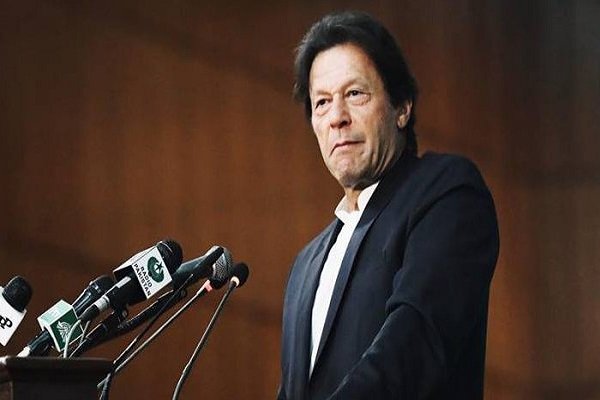
TEHRAN, Apr. 18 (MNA) – Pakistan’s Prime Minister Imran Khan is slated to undertake an official visit to Iran on April 21 and there are different speculations about the aims of this visit.
The two-day visit will be made upon the official invitation of Iranian President Hassan Rouhani and can start a new era of ties between Tehran and Islamabad.
This will be Khan’s first official visit to the western neighbor after assuming power. He has already paid official visits to some regional countries, including Qatar, Saudi Arabia, and the United Arab Emirates but his visit to Tehran was reportedly postponed after border security issues, including the abduction of Iranian border guards in Mirjaveh and also terrorist attack near Zahedan which killed 27 IRGC personnel.
On March 21, Iran announced that four other abducted guards had been released with the efforts of the Pakistani Army. Islamabad has vowed to gear up the fight against terrorism and its measures to provide western borders with increased security can have a significant effect on the development of ties with Iran.
Certainly, one of the main topics of Iran-Pakistan discussions during the upcoming PM’s visit will be ways to enhance border security which is essentially required if the states are determined to boost cooperation in different political, economic, and cultural spheres.
There are also reports which point to Pakistan’s close relationship with Saudi Arabia, saying that Imran Khan may try to mediate between Tehran and Riadh. In a meeting with Iranian ambassador to Pakistan Mehdi Honardoost in early August 2018, Imran Khan said that Pakistan is ready to play a constructive and positive role between Iran and Saudi Arabia.
Experts believe that the much-awaited Iran-Pakistan pipeline project will also be on the agenda of negotiations. Pakistan has not adhered to its commitments to complete the pipeline on its side with the excuse of international sanctions and pressures from countries such as US.
Some reports also speculate that the two sides will also confer on the future of Afghanistan, as well as inking probable economic agreements.
Imran Khan has proved to be courageous in supporting Iran. He and his party are among the defenders of Iran’s peaceful nuclear activity. He also, alongside Iran, strongly condemned Trump’s measure to ban Muslim’s immigration to the United States.
Cementing ties with Pakistan will also be beneficial for Iran since this leads to a decrease in security threats in the southeast of the country, furthermore, paving the way for an enhanced economic presence of Iran in Pakistan and benefit from its great potential market.
Iran was the first country to recognize Pakistan as an independent state in 1947 and two years later, they signed a treaty of friendship. The two countries have always maintained good and friendly relations based on mutual respect for each other’s sovereignty. Some experts believe Iran-Pakistan ties can be a model for relations between other regional countries.
In a statement, Pakistan’s Foreign Ministry announced that the country’s “relations with Iran are marked by close historic and cultural linkages and strong people to people exchanges,” adding that PM’s visit to Iran will further enhance the bilateral relations between the two countries.
Imran Khan will meet with Islamic Revolution Leader Ayatollah Seyed Ali Khamenei besides holding ‘detailed consultations’ with President Rouhani, reads the statement, noting that the PM will be accompanied by a host of high-ranking officials and ministers.

Wednesday, March 13, 2019

Iran’s trump card to challenge US

TEHRAN, Mar. 13 (MNA) – Iran is focused on strengthening its domestic production and economy via developing economic ties with its 15 neighboring countries, to retaliate the drop in its economy due to Trump’s decision in May 2018 to withdraw from the 2015 nuclear deal between Iran and six major powers, known as the Joint Comprehensive Plan of Action (JCPOA).
Any development in regional economic ties can bring Iran tighter political and cultural bonds and a more powerful presence and effective role in the region.
Iran’s western neighbor, Iraq, is now of the highest importance and among the main priorities for boosting economic ties, with whom Iran enjoys intimate political and cultural relations, as well.
All-out ties between Iran and Iraq have increased greatly since 2003, the fall of Saddam Hussein and presently, mutual relations are said to be unshakable and fruitful for the region.
Iran-Iraq economic ties
The existing joint reserves between the two countries, their complementary economy besides the common culture are the main reasons which help Iran and Iraq to expand ever-increasing economic ties in future.
Iraq is now the main importer of Iranian non-oil products and highly reliant on its energy ties with Iran. The country also imports a wide range of goods from Iran including food, agricultural products, home appliances, air conditioners and spare car parts.
In mid-November 2018 and in a meeting with Iraqi President Barham Salih in Tehran, President Rouhani announced that Iran and Iraq could raise annual bilateral trade to $20 billion from the current level of $12 billion.
According to the data the President of Iran World Trade Center Mohammad Reza Sabzalipour provided Mehr news agency, “Iraq has been the main importer of Iranian products during the first nine months of the Iranian calendar year 1397 (ending March 20, 2019). Some 22 percent of Iranian products have been exported to Iraq in the said time. Iran’s non-oil exports to Iraq grew 60 percent in terms of value and 68 percent in terms of weight in the said time.”
“Iraq could manage to beat Iran’s ex-main importer, China, in the said time,” he added.
“According to the data released by Islamic Republic of Iran Customs Administration (IRICA), Iran exported $3.416 billion of goods to Iraq in the first five months of the 1397 (March 21- August 22, 2018), registering $812 million increase in comparison with the same time in the previous year,” he said.
“Iran’s imports from Iraq stood at $3.713 million in the first five months of 1397, showing a remarkable drop from its previous level of $32.68 million in the preceding year,” the official announced.
“The sharp rise in exports to Iraq and the drop in imports from the country has made the trade balance between the two countries positive, at $3.41 billion, in favor of Iran,” Sabzalipour added.
“Trade balance with Iran has improved for $841.30 million, in comparison with the same period in 1396,” he said. 
Besides expansion of trade cooperation between the two countries, Iran is interested in developing the volume and number of its investments in Iraq since trade activities are short-term accomplishments while joint investments can warrantee two sides’ cooperation in the long-run. Some joint industrial parks have been established at the Iran-Iraq joint border and the idea is worth to be preserved.
Construction industry, technology and science, medicine and medical equipment, engineering services, biotechnology and ICT are among the potential sectors for Iran to rely on the way to boost economic ties with Iraq.
Iraqis warmly welcome Rouhani
As the first official visit to Iraq during his tenure, Iranian President Hassan Rouhani left Tehran for Baghdad on Monday for a three-day visit to meet Iraq's president, prime minister and parliament speaker, and the top Iraqi Shia cleric Grand Ayatollah Ali al-Sistani to deepen close relations between the two countries in all fields of mutual interest.
The president was accompanied by a high-ranking delegation, comprised of senior Iranian officials and a huge private sector business delegation.
During his stay a series of agreements were signed in energy, regional security, no-fee visas, connecting railways, dredging border river after 43 years, joint industrial zones, energy cooperation, $20B in trade, and PTA transport, agriculture, industry, health and etc. with the Arab neighbor.
Iran and Iraq also issued a joint statement on Tuesday and urged commitment to the implementation of the 1975 Treaty and the expeditious dredging of the border river.
Being warmly received by both the Iraqi government and the nation, Rouhani declared that "no power can separate this united community".
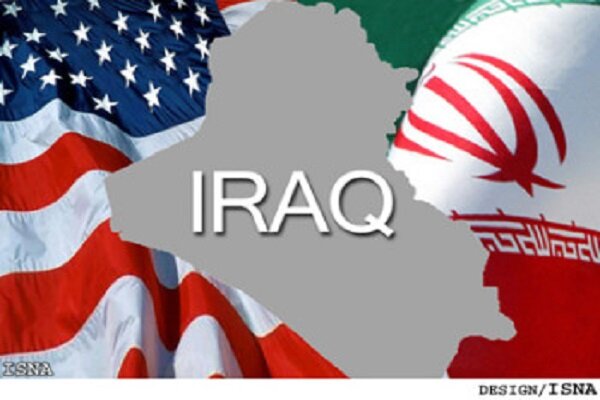
US, Iran, Iraq triangle
The US has pulled out the majority of its military forces from Iraq and the only way to preserve authority over the country would be economic dominance.
Through economic dominance, the US would find a chance to fortify its political relations with Iraq, to overshadow Iran-Iraq economic and trade ties, hinder exports of Iranian goods to Iraq and utilize Iraq as a platform to create new challenges for Iran.
Therefore, the US is concerned about the close ties between Tehran and Baghdad and seeks to reduce the mutual interactions between the two neighbors.
It has adopted the policy of confronting the Popular Mobilization Forces in Iraq to counter Iran, as well. Underlining the importance of Iraqi independence from Iran, US believes that President developing ties with Iran is not in the interest of the Iraqi people, while the US is helping Baghdad to become independent in its electricity needs.
However, Iran believes that the US has always sought to hatch plots against the peoples of the region and the Islamic Republic of Iran is preserved to continue its role in resolving regional problems and promoting interaction among countries.
Iraqi officials do not want US enmity with Iran to influence Iran-Iraq relations and has applied an unbiased political position against Iran and the US. They have been trying their best to persuade US continue Iran sanctions waivers for their country. However, they have been under US pressure to reduce trade ties with Iran since Washington reintroduced sanctions against Iran last May. As Iraq’s foreign minister has said recently that his country is not obliged to abide by sanctions imposed by the US against Iran and would be pursuing options to continue bilateral trade.
Iran and Iraq in order to be able to continue their economic cooperation despite the US pressure have agreed to trade in euros. Currently, the US has given Iraq a six-month waiver to continue buying energy form Iran.
A true image of the triangle can be described briefly in Bloomberg words on Wednesday: “Iraq and Iran build economic ties with the US on the sidelines.”  
On agenda
Thanks to the warm and growing political and economic relations between Iran and Iraq, the bed is set for Iran’s more effective presence in the Iraqi market.
Rouhani’s trip to Iraq can spur Iranian businessmen and investors to be more determined in competing with their foreign rivals to obtain a bigger stake from the Iraqi market.
However, lack of proper banking relations is the main issue decelerating development of mutual economic ties.
Iraq has expressed readiness to establish a joint bank with Iran.  In February, governors of the central banks of Iran and Iraq signed an agreement to develop a payment mechanism aimed at facilitating banking ties between the two neighboring countries. They also seek using rial and dinar in bilateral trade and to allow the banks of the two countries to issue letters of credit on the basis of Iranian rial and Iraqi dinar.
In a bid to establish tight commercial relations, it is a must for the two sides to develop mutual transportation ties, sign preferential as well as free trade agreements, remove visa issuance and customs bureaucratic procedures.  Expansion of banking and financial infrastructure, including opening credit lines and offering facilities, besides insurance ties are the other measures necessary for the two countries to take to hit the set economic goals.