Showing posts with label Bilateral Ties. Show all posts

Tuesday, April 23, 2019

Iran, Pakistan not to let others interfere in their brotherly relations: Rouhani

Iran, Pakistan not to let others interfere in their brotherly relations: Rouhani

TEHRAN, Apr. 22 (MNA) – Iranian President Hassan Rouhani noted that Iran and Pakistan neighboring countries won’t let any third party interfere in the process of development of brotherly relations between the two neighboring states.
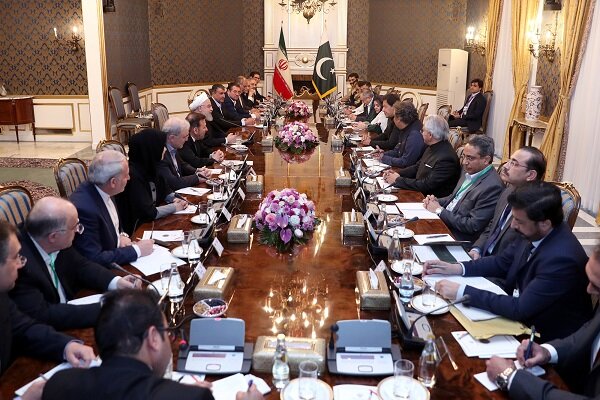
He made the remarks at the meeting of high-ranking delegations of Iran and Pakistan on Monday in Tehran.
Stating that a new chapter in Tehran-Islamabad ties has started, President of the Islamic Republic of Iran and the Prime Minister of Pakistan stressed that the two countries have close views in the development of relations in all fields, especially in fighting terrorism and creating security and stability in the region, reported the official website of Iranian Presidency.
“By activating all cooperation capacities, we can make good development in relations between the two countries to serve both nations and peoples in the region,” said Rouhani.
With its military intervention, the United States has inflicted the most loss on the economy and security of the region, Rouhani said, noting, “In the current conditions, the countries of the region should decide and plan for their own interests directly and independently.”
He went on to label recent measures of the United States on Golan, IRGC, Nuclear Deal and its anti-Pakistani remarks as ‘very dangerous’.
“In the current state, the independent countries in the region must stand together like Iran and Pakistan and plan and act based on the stability and security of the region,” Rouhani added.
He also stressed cooperation between the two countries in the fight against terrorism saying, “This cooperation should rise to a level so that terrorists understand that the two countries are determined to fight them.”
Iran-Pakistan borders must help trade, stability and development, he highlighted, adding, “Tehran is ready to develop its relations with Pakistan in different fields, such as oil, gas, power, petrochemicals, tourism, science, universities and health.”
“In banking relations, we can use the national currencies of the two countries, as well as barter accounts.”
On the development of transit railway between Iran and Pakistan, President Rouhani said, “Iran, Pakistan and Turkey are among the founders of Economic Cooperation Organization (ECO), within the framework of which we can establish a transit line between the East and the West.”
Iran and Pakistan have suffered the most losses because of insecurity in Afghanistan, he said, adding, “One of the joint goals of the two countries can be close cooperation for establishing stability in Afghanistan.”
For his part, Pakistani Prime Minister said, “Terrorists are trying to undermine brotherly, close relations between Iran and Pakistan, and therefore, we are determined to fight terrorism decisively.”
“We will not let terrorists carry out terrorist acts against the Islamic Republic of Iran,” Imran Khan said.
He then referred to his country’s willingness to develop economic relations with Iran, adding, “Pakistan is seeking a mechanism to deepen economic relations with Iran in different fields, especially oil and gas.”
“Pakistan is seeking long-term relations with Iran and we need to take the best advantage of the potentials in the region to reach this goal,” said Imran Khan.

Thursday, April 18, 2019

What are main aims of Imran khan’s Iran visit?

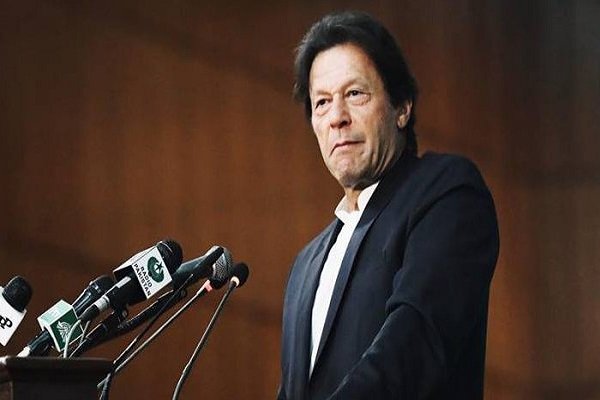
TEHRAN, Apr. 18 (MNA) – Pakistan’s Prime Minister Imran Khan is slated to undertake an official visit to Iran on April 21 and there are different speculations about the aims of this visit.
The two-day visit will be made upon the official invitation of Iranian President Hassan Rouhani and can start a new era of ties between Tehran and Islamabad.
This will be Khan’s first official visit to the western neighbor after assuming power. He has already paid official visits to some regional countries, including Qatar, Saudi Arabia, and the United Arab Emirates but his visit to Tehran was reportedly postponed after border security issues, including the abduction of Iranian border guards in Mirjaveh and also terrorist attack near Zahedan which killed 27 IRGC personnel.
On March 21, Iran announced that four other abducted guards had been released with the efforts of the Pakistani Army. Islamabad has vowed to gear up the fight against terrorism and its measures to provide western borders with increased security can have a significant effect on the development of ties with Iran.
Certainly, one of the main topics of Iran-Pakistan discussions during the upcoming PM’s visit will be ways to enhance border security which is essentially required if the states are determined to boost cooperation in different political, economic, and cultural spheres.
There are also reports which point to Pakistan’s close relationship with Saudi Arabia, saying that Imran Khan may try to mediate between Tehran and Riadh. In a meeting with Iranian ambassador to Pakistan Mehdi Honardoost in early August 2018, Imran Khan said that Pakistan is ready to play a constructive and positive role between Iran and Saudi Arabia.
Experts believe that the much-awaited Iran-Pakistan pipeline project will also be on the agenda of negotiations. Pakistan has not adhered to its commitments to complete the pipeline on its side with the excuse of international sanctions and pressures from countries such as US.
Some reports also speculate that the two sides will also confer on the future of Afghanistan, as well as inking probable economic agreements.
Imran Khan has proved to be courageous in supporting Iran. He and his party are among the defenders of Iran’s peaceful nuclear activity. He also, alongside Iran, strongly condemned Trump’s measure to ban Muslim’s immigration to the United States.
Cementing ties with Pakistan will also be beneficial for Iran since this leads to a decrease in security threats in the southeast of the country, furthermore, paving the way for an enhanced economic presence of Iran in Pakistan and benefit from its great potential market.
Iran was the first country to recognize Pakistan as an independent state in 1947 and two years later, they signed a treaty of friendship. The two countries have always maintained good and friendly relations based on mutual respect for each other’s sovereignty. Some experts believe Iran-Pakistan ties can be a model for relations between other regional countries.
In a statement, Pakistan’s Foreign Ministry announced that the country’s “relations with Iran are marked by close historic and cultural linkages and strong people to people exchanges,” adding that PM’s visit to Iran will further enhance the bilateral relations between the two countries.
Imran Khan will meet with Islamic Revolution Leader Ayatollah Seyed Ali Khamenei besides holding ‘detailed consultations’ with President Rouhani, reads the statement, noting that the PM will be accompanied by a host of high-ranking officials and ministers.

Wednesday, April 17, 2019

Iran, Turkey stress expansion of bilateral relations

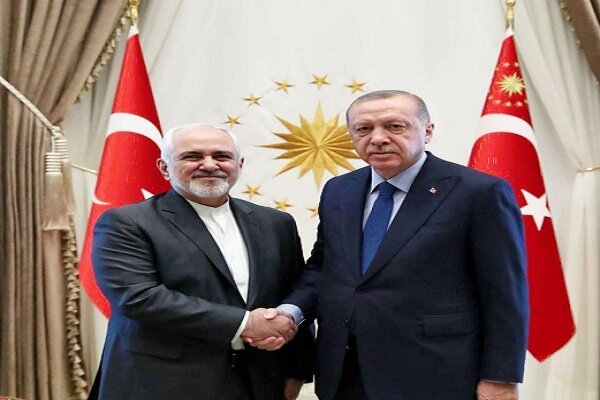
TEHRAN, Apr. 17 (MNA) – In the meeting between Iranian Foreign Minister Mohammad Javad Zarif and Turkish President Receb Teyyip Erdogan in Ankara today the two sides stressed expanding bilateral relations and strengthening economic ties.
Iranian Foreign Minister Mohammad Javad Zarif, who is on an official visit to Turkey, met with Turkish President Receb Teyyip Erdogan in Ankara, during which the two sides discussed bilateral relations and regional issues as well as international developments.
In the meeting, the Turkish president expressed his deep regret over the loss of lives in recent floods in Iran, offering sympathy to the families of the victims of the tragedy.
Zarif, in turn, offered congratulations on the successful holding of the recent local elections and the high turnout of the Turkish citizens.
During the meeting, the two sides expressed their opposition to the US sanctions and US terrorism designation of Iran’s IRGC and emphasized the expansion of bilateral relations within the framework of signed agreements between the two countries in all fields and strengthening of economic relations.
The latest developments in Syria, Yemen and North Africa were also discussed by the two sides.
Accompanying a delegation, Zarif arrived in Ankara last night from Syria, where he had held meetings with high-ranking Syrian officials including President Assad. Prior to meeting with President Erdogan, the top Iranian diplomat held a meeting with his Turkish counterpart followed by a joint press conference, during which the Turkish FM stressed that Turkey wanted a halt to US sanctions on Iran.

Monday, January 14, 2019

No one allowed to interfere in Iran-Iraq solid relations: Zarif

No one allowed to interfere in Iran-Iraq solid relations: Zarif


TEHRAN, Jan. 13 (MNA) – The Iranian foreign minister has said that relations between Iran and Iraq are not detrimental to any country’s interests, stressing that no other country is allowed to meddle with those bilateral relations.
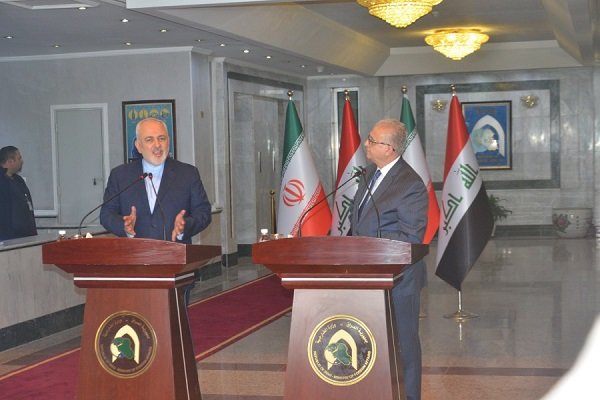
"The Iranian-Iraqi ties are solid and we do not allow anyone to interfere in the relations between Tehran and Baghdad," said Iranian Foreign Minister Mohammad Javad Zarif after a meeting with his Iraqi counterpart Muhammad Ali al-Hakim in Baghdad on Sunday evening during a joint press conference.
During the press conference, Zarif pointed out that the two foreign minister had discussed 10 various issues, adding that the two sides had had very close viewpoints on them.
The Iranian top diplomat added that bilateral relations in various fields of trade, politics, people-to-people affairs, health tourism as well as regional developments and cooperation in international organizations were among the issues discussed in the meeting.
The Iranian foreign minister added that it was decided to form a joint committee as soon as possible to deal with the issue of Arvand Rud, or as it is called in Iraq the Shatt al-Arab, and to introduce the members of the committee in order to start their work.
Zarif added that they had also discussed regional issues such as the situation in Syria, saying that the two sides had talked of the necessity of returning the sovereignty over the whole country to Syria and support the Syrian government in the fight against terrorism.
He added that Iran supports the Iraqi government's efforts to normalize the Syrian government's relations with the Arab countries.
"We also support the peace process in Yemen and solutions to stop the bloodshed there," the Iranian foreign minister added.
Zarif further noted the Islamic Republic of Iran considers Zionist regime of Israel’s policies and the support for that regime to be a major threat to the region. He emphasized that everyone should support the Palestinian cause and the people of Palestine.
Stating that Iran and Iraq share a lot of historical background, Zarif stated that millions of Iranians and Iraqis visit each other’s countries every year, which shows that bilateral relations between Iran and Iraq are "very solid and are not detrimental to anyone's interests. So we do not allow anyone to meddle with our relations.”
Heading a delegation, the Iranian top diplomat arrived in Baghdad this afternoon on a 5-day visit to hold meetings with high-ranking Iraqi as well as Kurdish officials in Erbil and attend three trade meetings between the economic activists from the two countries’ private sectors in the Iraqi cities of Baghdad, Karbala and Sulaymaniyah. He is also scheduled to visit the holy sites in Karbala and Najaf on the 5-day visit. 
Zarif's visit comes few days after his visit to India with the aim of enhancing relations with regional and neigbouring countries.