Showing posts with label Anthony Cartalucci. Show all posts

Monday, July 29, 2019

US attempts to find Amano’s replacement to serve its interests: Cartalucci

US attempts to find Amano’s replacement to serve its interests: Cartalucci

TEHRAN, Jul. 28 (MNA) – Referring to Yukiya Amano’s death and the US attempts to find a replacement to serve Washington's interests Cartalucci says Tehran must expect the worst and prepare for it while attempting to maintain diplomatic and strategic patience for as long as possible
Yukiya Amano, who led the International Atomic Energy Agency for a decade and was extensively involved in negotiations over Iran’s nuclear program, died at the age of 72. He was heavily involved in the years-long negotiations that led to the landmark Iran nuclear deal.
Under the agreement, reached between Iran and the P5+1 group of countries in 2015, Tehran undertook to put limits on its nuclear program in exchange for the removal of nuclear-related sanctions.
United States President Donald Trump, however, withdrew Washington from the landmark agreement last May and decided to re-impose what it described as the “toughest” sanctions ever against Tehran.
The news of Amano’s death comes at a time of increasing concerns and escalating tensions between US and Iran, with Washington and Tel Aviv having failed to create a crisis in Iran’s cooperation with the UN atomic agency which has repeatedly confirmed the peaceful nature of the country's nuclear program.
There are some speculations about Mr. Amano's (head of IAEA) death. Some reports say his death and replacement of him by an American close to Trump administration and Israel is very suspicious and can be interpreted in line of Israel and the US efforts to affect IAEA reports on Iran's nuclear activity.
In this regards, Bangkok- based geopolitical researcher Anthony Cartalucci said in an interview with Mehr News Agency that International Atomic Energy Agency chief Yukiya Amano was advanced in age, so his death was not in and of itself suspicious.
Meanwhile Cartalucci said, "The US and its partners including Israel will undoubtedly attempt to find a replacement that serve their own interests rather than the IAEA's actual mandate."
"However, it should be noted that Washington, London, and Brussels' serial abuse of international institutions like the United Nations and the IAEA have undermined the credibility of both and their efficacy not only to perform their stated missions, but to serve the interests of those trying to abuse them", he added.
He went on to say, " finally, it should be warned that Washington has reached a point of desperation in regards to Iran and other nations it sees as a threat to its global primacy".
Cartalucci added, "Tehran must expect the worst and prepare for it while attempting to maintain diplomatic and strategic patience for as long as possible. Empires do not disappear overnight nor do they usually disappear quietly. The United States and its global network of power and influence is no exception."
Interview by Payman Yazdani

Monday, June 17, 2019

US is the obvious benefactor of attacks in Oman Sea: Cartalucci

US is the obvious benefactor of attacks in Oman Sea: Cartalucci

TEHRAN, Jun. 16 (MNA) – Referring to US policy papers, Bangkok- based geopolitical expert says familiar pattern by the US to rush to conclusions before any investigation makes the US and its allies the prime suspects of attacks in Oman Sea, not Iran.
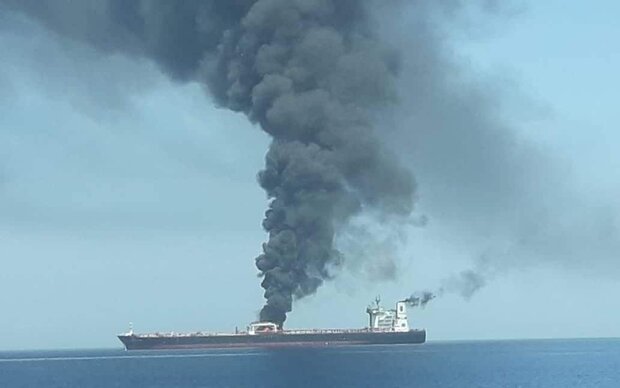
While the Japanese Prime Minister was visiting Iran after 4 decades and many expected even more reduction of the tensions in the region due his visit, in another suspicious and provocative move two large tankers were hit by explosions in the Sea of Oman on Thursday, a move that can intensify the tensions more than before.
Following the attack, US Secretary of State Mike Pompeo hastily accused Iran of carrying out the attacks without providing any evidence to back up his accusation.
In this regard, Iran rejected US Secretary of State Mike Pompeo's anti-Iran accusations, saying the suspicious nature of the recent attacks on two oil tankers in the Sea of Oman is "not funny or ridiculous but alarming".
To shed more light on the issue, an interview was done with Bangkok- based geopolitical researcher Anthony Cartalucci.
Following is the full text of the interview:
The US administration has hastily accused Iran of being behind the attacks on two oil tankers in Oman Sea. How do you assess validity of the accusations?
As the US has done before with now verified fabrications, it has hastily - and without any evidence or investigation - accused Iran of being behind these attacks. It did so within the same day of the attacks. So of course, there is no validity to the accusations. Even a local crime committed within the United States cannot be "solved" in a single day and without any sort of investigation, so how could an incident as serious as this be somehow solved without an investigation or evidence so quickly?
The US reveals its hand by quickly accusing Iran before any sort of independent investigation can be mounted. We've seen this pattern before in Iraq in 2003 where the rush to war was made before inspectors could confirm US claims of "weapons of mass destruction" in Iraq. We also saw the US did this last year in Syria where it quickly accused the Syrian government of a "sarin chemical attack" in Douma before carrying out military strikes - all done before the OPCW could even begin its investigation - which by the way, concluded claims of sarin gas were false.
This familiar pattern by the US to rush to conclusions before any investigation is mounted makes the US and its allies the prime suspects, not Iran.
Is it rational for Iran to commit such an action, while the Japanese PM is visiting Iran?
For Iran, it is not rational at all to carry out such an attack, and especially so against a ship belonging to Japan while the Japanese Prime Minister is in Iran. Iran's greatest strength at the moment is Washington's lack of credibility and increasingly blatant aggression against Iran. The international community can see that Iran upheld its part of the so-called "Iran Nuclear Deal" and that it was the US who walked away from it without justification. The best cards in Iran’s hand are the growing consensus that it is being victimized. Thus Tehran has nothing at all to gain by staging attacks against international shipping through the Strait of Hormuz.
Who in fact is the biggest beneficiary of the provocative incidents taking place in the region that threatens world energy security and route? Can any instability in the region affect EU interests?
The United States in its own policy papers - like Brookings Institution's 2009 "Which Path to Persia?" report - openly admit that the US would greatly benefit from a "provocation" that would allow them to increase military aggression against Iran.
Brookings policymakers would literally claim, "...it would be far more preferable if the United States could cite an Iranian provocation as justification for the airstrikes before launching them. Clearly, the more outrageous, the more deadly, and the more unprovoked the Iranian action, the better off the United States would be. Of course, it would be very difficult for the United States to goad Iran into such a provocation without the rest of the world recognizing this game, which would then undermine it."
The US is the obvious benefactor. Its partners in the region - believing in whatever promises were made to them by Washington about a "post-Iranian" Middle East - would also benefit by aiding this agenda.
Higher oil prices while sanctions squeeze Iran, Venezuela, and Russia can only benefit Western oil corporations. For the EU - interests are divided between multinational corporations there that seek to dominate the Middle East alongside Washington and Wall Street and those who seek to do business with Iran. Obviously pressure from Washington to accept its version of events would tilt the balance in favor of the former and place greater pressure on those seeking peace and cooperation - just as the staged attacks were designed to do. Higher oil prices as a result of instability and violence in the Middle East will further complicate European energy security which only further plays into Washington's hands which seeks to pry Europe away from Russian and Iranian hydrocarbons in favor of its "freedom gas" and sources from among its allies.
Interview by Payman Yazdani

Monday, March 04, 2019

Assad’s visit to Tehran sign of unwavering Syrian-Iran ties: expert

By Payman Yazdani

TEHRAN - Touching upon Iran’s important role in Syrian victory over Washington’s destructive proxy war, Anthony Cartalucci says Assad’s visit to Tehran is a sign of unwavering Syrian-Iran ties.
Syrian President Bashar Assad made an unannounced visit to Iran, he met with the leader of Islamic Revolution Seyed Ali Khamenei and other top Iranian officials including President Hassan Rouhani to discuss the planned U.S. troop withdrawal and efforts to set up a buffer zone in northern Syria.
Assad’s visit to Tehran was one of his rare trips to abroad since the crisis broke out in the country in 2011. 
His visit to Tehran had many clear message. To know more about the issue we discussed President Assad’s visit to Iran with Bangkok- based geopolitical researcher Anthony Cartalucci.
Here is full text of his interview with Tehran Times: 
Q: What is the message of his visit to Iran?
A: Syrian President Bashar Al Assad's visit to Iran - the first visit anywhere except for Russia since the war began in 2011 - is highly significant. It is a sign of unwavering Syrian-Iranian ties. It is also a very public message about the central role Iran has played in what is essentially a Syrian victory over Washington's destructive 8 year proxy war. It says that Iran is a regional player - that it played a role in defeating terrorist organizations including Al Nusra and the self-proclaimed Islamic State in ways the nearly 20 year U.S.-led "War on Terror" has categorically failed to do.
Q: What is the significance of Iran and Syria in foiling the U.S. plots in region? 
A: This is one of many key setbacks signaling the irreversible decline of Washington's unipolar international order. More specifically, Washington's failure in Syria exposes its declining influence in the region and should have Washington's traditional allies in the region reevaluating their commitments and investments in aiding and abetting U.S. agendas. The U.S.' inability to overthrow Syria after serial regime change wars across the Middle East is a sign of weakness Washington has tried and failed to reverse. It will be important for Syria and Iran to consolidate this victory and ensure the patient, systematic eviction of the U.S. from the region continues without allowing an opportunity for a resurgence of the sort of violence and chaos that swept the region in 2011.  
Q: Could the U.S. and its allies reach their goals in Syria?
A: It is likely that as U.S. capabilities degrade in the region, its "goals" will change from achieving hegemony to preserving what little influence it has remaining. It will do this through subversion, terrorism, and interventionism whenever and wherever the weakness or miscalculations of its adversaries allow. The U.S. is still capable of prolonging the Syrian conflict - it is still attempting to shield terrorists from their final reckoning in Idlib and has dragged its feet in withdrawing from eastern Syria - and may possibly never withdraw. 
Thus while its initial goal was the complete overthrow, division, and destruction of the Syrian state before moving onward to Iran, the U.S. may still be able to prolong the conflict and leave Syria partially divided. This also serves the purpose of forcing Iran to invest heavily in defense spending that could be better used in protecting and growing its economy in the face of persistent U.S. sanctions and economic warfare. Syria and its allies - especially Iran - still have a long fight ahead of them. The U.S. may have failed in its original plans, but its overall objective of eliminating Iran and its allies still drives its Middle Eastern policy.

Sunday, January 20, 2019

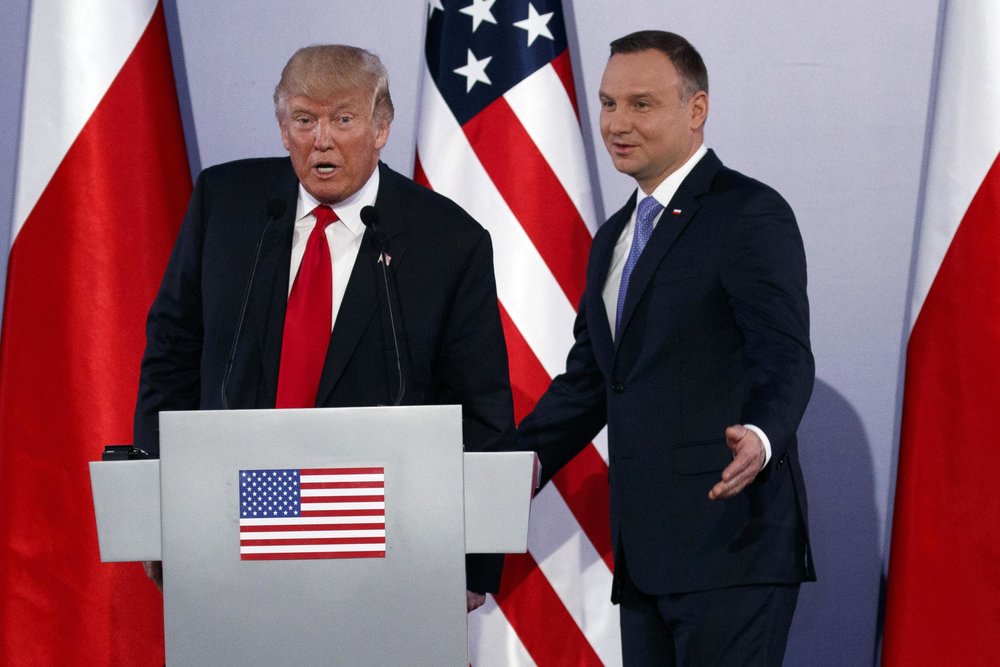
Poland is weak and submissive enough to host U.S.’ aggression against Iran and Russia: expert

By Payman Yazdani
TEHRAN - Commenting on the U.S. isolation and differences with its heavy weight European allies on Middle East, Anthony Cartalucci says that poland is the only weak and submissive european nation which is forced to host American’s aggrasion against Iran and Russia.
The U.S. State Department said in a statement on January 11 that an anti-Iran meeting will take place in Warsaw on February 13-14.
 
U.S. Secretary of State Mike Pompeo said that the meeting would focus on international cooperation on Middle East stability and peace and freedom and security in this region, and that includes an important element of making sure that Iran is not a destabilizing influence.
Many experts and officials around the world have expressed their doubt on success of the conference and have announced they will not attend the meeting.
The issue was discussed with Bangkok- based geopolitical researcher Anthony Cartalucci.
Following is the full text of the interview with him:
Q: Despite having heavyweight allies in Europe like Germany and France, why the U.S. has chosen a weak European country like Poland to host the event?
A: Washington's European allies have different ideas regarding the Middle East, especially regarding Iran - the undermining of which drives much of American foreign policy in the region. Poland has a compromised government and is easily coerced by the U.S. - it will eagerly host America's meeting and politically bolster any outcome the U.S. arrives at. Poland serves a similar, subordinate and submissive role in America's aggression toward Russia. 
Q: Iran has had a significant role in defeating ISIL and terrorist groups in the region, why the U.S. accuses Iran of destabilizing the region? How do you see the U.S.’s own role in destabilizing the region? 
A: U.S. rhetoric accusing Iran of destabilizing the region is a form of political projection aimed at diverting attention away from its central role in doing just that - destabilizing the region. By all accounts, the rise of ISIL is a direct result of U.S. military intervention in the region beginning with the illegal invasion and occupation of Iraq in 2003. Many sources including the United States' own Defense Intelligence Agency suggest the U.S. and its allies intentionally created ISIL to isolate and overthrow the Syrian government when speedy regime change failed to materialize in 2011. 
By blaming Iran for America's own destabilization of the Middle East the U.S. can politically undermine an adversary, deflect blame away from itself, and search for an additional pretext to remain involved in the region. 
Q: Will any plan to stabilize the region be successful without Iran? 
A: The U.S. does not seek to stabilize the Middle East. But if we imagine Washington did want to stabilize the region, it would be working with Russia, Syria, and Iran as well as with the Arabian monarchies to create a balance of power within which cooperation and healthy competition could take the place of the deadly and protracted conflict we see today. The fact is Iran has significant influence in the Middle East - which makes sense since it is a large Middle Eastern nation. That the U.S. refuses to recognize this or work with Iran helps to further understand the true source of what undermines the region's stability.    
Q: How successful do you see the conference?
A: The fact that the United States was forced to hold the conference in Warsaw - because Poland is the only nation weak and submissive enough to host such an event - already bodes poorly for the U.S. and whatever it hopes to accomplish with the conference. The conference is allegedly aimed at discussing the need to confront Iranian "extremism," which the U.S. ironically has spent years fighting by sponsoring terrorist organizations appearing on the U.S. State Department's own foreign terrorist organization lists.
The conference has been described by the Iranian government as an "anti-Iranian circus." Honestly, I think there is no better way to describe it.     
Q: UNSC is responsible for the peace and security of the world, why is the U.S. trying to lead the international community out of the legal framework of the UNSC?
A: Like any outlaw - be it an individual or a nation's government - when laws do not suit them they walk around them. The United Nations and its charter are clearly an obstruction to U.S. ambitions around the globe - including in the Middle East regarding Iran. The fact that the U.S. must not only do this outside the United Nations but also - now - outside allied circles it has depended on for decades - points to Washington's growing isolation upon the global stage. 

Wednesday, September 26, 2018

Ahvaz attack example of US, Saudi, UAE efforts to bring violence inside Iran: expert


Ahvaz attack example of US, Saudi, UAE efforts to bring violence inside Iran: expert
TEHRAN, Sep. 26 (MNA) – Referring to Ahwaz terrorist attack Anthony Cartalucci the West, Saudi Arabia and UAE have admitted interest in bringing armed violence to within Iranians borders, with Ahvaz being a crystal clear example of this interest materializing.
A terrorist attack during a military parade on people in Ahvaz, North West of Iran left tens of innocent civilians killed and injured.
Hours after the attack Saudi backed Al-ahvazi separatist terrorist group and ISIL claimed the responsibility for the terrorist attack.
To shed more light on the issue, an interview was done with Bangkok- based geopolitical researcher Anthony Cartalucci.
Here is the full text of the interview with him:
Do you see any foreign elements behind this attack?
Foreign elements can be implicated at least as far as long-stated and open admissions by Western policymakers regarding their interest in fomenting armed violence in Iran. The 2009 Brookings Institution paper, "Which Path to Persia? Options for a New American Strategy Towards Iran," had an entire chapter in it titled, "Inspiring an Insurgency: Supporting Iranian Minority And Opposition Groups." The West has - since the attack - repeatedly referred to the terrorists who perpetrated it as a "minority" and "opposition" group.
The US-NATO-PGCC clearly are supporting armed terrorists in Syria, including in a proxy war with Iranian-backed militias. The West has admitted interest in bringing armed violence to within Iranians borders, with Ahvaz being a crystal clear example of this interest materializing. Whether or not foreign elements organized or planned the specific act is another matter that will require further investigation.   
Saudi Arabia and the UAE didn't condemn the terrorist attack. Why?
Saudi Arabia and the UAE are openly supporting terrorism around the globe. An Associated Press investigation exposed their collaboration with Al Qaeda in Yemen. They are also backing various terrorist groups in Syria. They also have openly expressed a desire to bring similar chaos to Iran itself. They are likely aiding the US in sponsoring the very terrorist groups carrying out attacks inside Iran. Part of the strain of extremism they infect terrorists with in the first place is the belief that terrorism is justified. By condemning the Ahvaz attack even for the sake of putting forth a more enlightened face for Western audiences, would resonate poorly among the extremists these regimes are still attempting to recruit, radicalize, and send off to carry out violence.
How do you assess the US administration's reaction to the attack which it did not explicitly call a terrorist act?
It would seem many that the US is mirroring Saudi and Emirati malice, but I would say it is much worse than that. While Iranians mourned in the wake of the Ahvaz attack, prominent US politicians were hosting MEK terrorists in New York City explicitly calling for the overthrow of the Iranian government. While the Western media repeatedly frames these calls within a context of "peaceful" revolution, it is clear from events in Libya and Syria that the "revolution" will be just another episode of violent, attempted US-backed regime change.
Refusing to condemn this as a terrorist act could be an indication that many more attacks are planned and are planned to look like another "revolution" or "uprising" rather than the state sponsored terrorism it really is.
What can be the real goal of the attack perpetrators at this time?
Like in Syria, the US seeks an engineered, violent overthrow of the Iranian government. It is going to do this by using its extensive control over the media to portray state sponsored terrorism as a "popular uprising." The terrorists themselves have no chance of accomplishing their goals. But those using terrorists to create chaos they can leverage toward coercing or overthrowing a targeted government, have much to gain from an attack like in Ahvaz, and more like it. Thus the goal of those sponsoring the terrorists behind the Ahvaz attack is to create the illusion of an indigenous insurgency - when in reality it is foreign state-sponsored terrorism aimed at regime change.
By Payman Yazdani