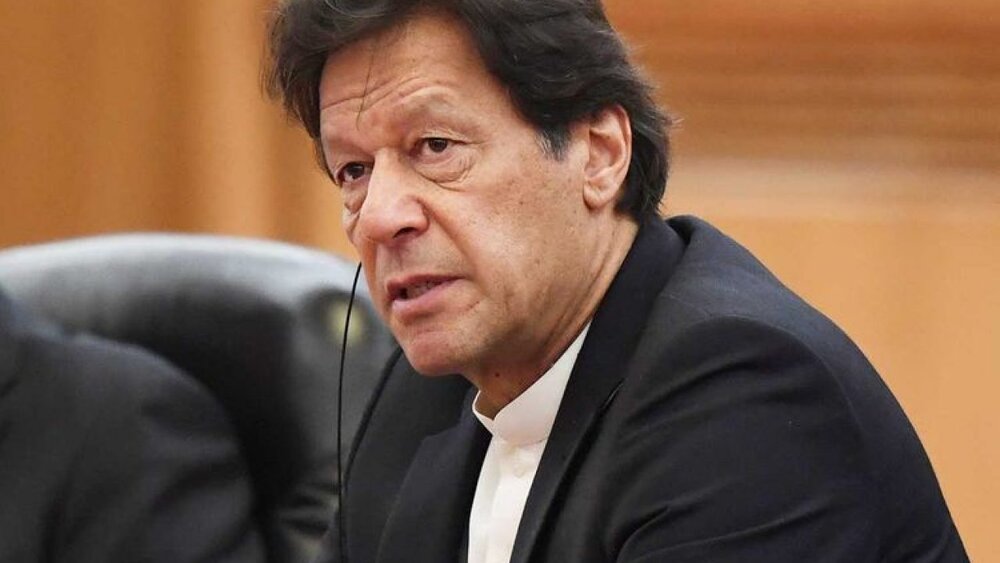
Imran Khan, the Pakistani prime minister, was scheduled to visit Riyadh on a one-day trip on Saturday as part of continued efforts to mediate between Iran and Saudi Arabia, Pakistan Today reported on Friday.
Pakistani Foreign Minister Shah Mahmood Qureshi, accompanied by the head of Inter-Services Intelligence (ISI), visited Riyadh on Wednesday and is believed to have laid the ground for the premier’s visit, the newspaper reported.
This would be Prime Minister Imran’s fourth visit to Saudi Arabia since May.
Khan visited Tehran on October 13 to “facilitate” possible dialogue between Iran and Saudi Arabia which have been at loggerheads over a number of issues including the Saudi war on Yemen and Riyadh’s support for the U.S. President Donald Trump’s anti-Iran moves.
Khan met with Leader of the Islamic Revolution Ayatollah Ali Khamenei and President Hassan Rouhani.
Qureshi has said that Iran and Saudi Arabia should bridge differences.
In an interview with Aaj News in October, Qureshi said that Pakistan will continue efforts in line with reducing tension in Iran-Saudi Arabia relations.
UN spokesman Stephane Dujarric has said that Antonio Guterres, the UN secretary-general, welcomes Khan’s initiative to de-escalate tensions between Iran and Saudi Arabia.
On October 12, the Iranian Foreign Ministry said Tehran is ready for talks with Saudi Arabia with or without a mediator.
During a joint press conference with Khan in Tehran on October 13, Rouhani, without mentioning Saudi Arabia, suggested that Iran will give a positive response to “good intention”.
Rouhani said Iran “welcomes efforts by the Pakistani prime minister to settle tensions in the region” and “restore peace and stability”.
During a separate meeting with Khan, Ayatollah Khamenei said that ending the war on Yemen will have positive effects on the Middle East region.
The Leader said, “The Islamic Republic of Iran presented a four-point plan to end the war in Yemen a long time ago and if this war ends in the right way, it can have positive effects on the region.”
Samarkand’s iconic Registan Square after dark – a bright symbol of Central Asia’s ongoing Islamic revival. Photo: Alexander Kruglov / Asia Times A post-Soviet Islamic revival has been followed by repression and promotion of state-sponsored Islam
ByALEXANDER KRUGLOV
The ancient Kukeldash Madrasah is in the heart of Tashkent’s old city. It’s Friday afternoon, and the nearby maze of medieval unpaved alleys looks unwelcoming under a scorching sun.
But outside the old gates of the religious school, a crowd of bearded young Uzbeks and veiled women wait patiently. The entire plaza in front of this famous Islamic center is flooded with people from the nearby Chorsu Bazaar, Tashkent’s largest, oldest outdoor market. Handicrafts makers, flat-bread sellers, black-market money dealers – all are here. Everyone is waiting for afternoon prayers.
It’s a typical scene in this sprawling city of over two million, replicated in front of every mosque, big and small. But it is also a relatively new one.
A few decades ago, Tashkent had a different vibe. The melting pot of ethnic Koreans, Russians, Tajiks, Turks, Uzbeks and myriad of other nationalities offered all a place under the welcoming Uzbek sun: It was – by Central Asian standards – a liberal, cosmopolitan hub.
But times have changed. In the 1990s, guerrilla wars swept the turbulent south, along with extremism and terrorism. Above all, hangs an Islamic revival that has made Tashkent into a stronghold of the religion.
Market activity grinds to a halt when prayers are called in Tashkent. Photo: Alexander Kruglov / Asia Times
Islamic inflow
Masterpieces of ancient Islamic architecture like Kukeldash, which were state-owned history and art museums in Soviet times, now serve as real religious centers for the locals. There are more scarfed and veiled women on the streets, more Arabic script on the billboards and markets cease to trade during prayers.
The ripple effect was a huge outflow of ethnic Germans, Koreans and Russians: Over a million fled Uzbekistan in the first two post-Soviet decades.
An ethnic Russian guide named Nikolai, who arranges Silk Road tours for Russian tourists, expressed common misgivings.
“We’re strangers here. We don’t feel we’re welcome anymore,” he said. “In the Soviet days, all my family were living in Tashkent, it was our hometown. There were so many Russian schools, restaurants, and of course, Orthodox churches – but [now] this is a Muslim city, for Uzbeks. All my relatives and friends have already moved to Russia; me and my wife, we’re the last holdouts in our family…”
Svetlana Lee, an ethnic Korean, works in a nearby souvenir shop. She enjoyed this leafy, sunny city, until not long ago. Not anymore.
“We have an Asian appearance, but we’re not Muslims,” she said. “Locals perceive us, especially Korean women, as Central Asians, so expect us to adhere to Muslim traditions and lifestyles – to wear a scarf, for example.”
Lee’s daughter, a student at a local university, has had disputes with college administrators over these issues.
“My sister and most of my friends have already moved – they now live in Moscow’s suburbs,” Lee continued. “We may join them, but it’s not that easy to arrange – and very expensive too.”
What makes non-Muslims wary is not just schooling. It’s a deeper issue: the ongoing Islamization of Uzbekistan and Central Asia.
A Samarkand tea house adjacent to a mosque awaits the thirsty Faithful. Photo: Alexander Kruglov / Asia TimesTides of conquest Islam arrived in Central Asia in the 8th century after Muslims conquered Central Asia; most Turkic khanates had converted by the 10th century. Islam sank deep roots.
Famed Islamic scientists and philosophers hailed from Central Asia; Samarkand and Bukhara flourished as centers of Islamic learning; Muslim empires, including the Mughal and Timurid, rose.
The Mongol hordes’ bloody take-over slowed Islamization – but only for a half-century.
Another wave of conquest surged through the ‘Stans in the 1860s: Imperial Russia on its eastward march. Russian colonists’ policy was of mild religious tolerance, but even then, Moscow was wary of pan-Islamic and Pan-Turkic movements.
Soviet officials took on a modernizing role, building schools and improving the status of women. Moscow campaigned against radical Islam, linking it to bigotry, backwardness and superstition. Meanwhile, the Moscow-controlled Islamic Board of the Soviet Union oversaw the religion.
Only in 1988, under liberal Soviet President Mikhail Gorbachev, did Moscow relax controls over Islam. Islam revived immediately and accelerated after the Soviet Union fell in 1991.
New mosques, religious centers, schools and literature sprang up. In 1912, there were some 26,000 mosques in Central Asia; by 1949, there were just 415 mosques in the entire USSR. In 2004, there were 2,500 mosques throughout Central Asia.
Relaxed travel restrictions boosted exchanges with Muslim countries: Saudi Arabia sent copies of the Qur’an into the region by the ton in the early ’90s; UAE and Kuwait deployed missionaries; Qatar and Bahrain sent teachers and scholars; Turkey built mosques and Islamic complexes. Ankara had a head start: Their religious mission was coupled with pan-Turkic nationalism.
But regional leaders were wary of politicized Islam.
A brand new mosque on the outskirts of Tashkent. Photo: Alexander Kruglov / Asia Times
War and peace
The radical Tajik Islamic Renaissance Party, or IRP, battled the Dushanbe government in the Tajik Civil War from 1992 until 1997, showing their fears were justified: From a population of six million, 50,000 were killed and 250,000 fled to Afghanistan and Uzbekistan. The 1996 Taliban takeover of Afghanistan further emphasized the perils.
But not all Islamic movements were violent. The most popular in Central Asia in the 1990s was the peaceable Hizb ut-Tahrir. Even so, with its declared goal of uniting all Muslim countries and replacing them with a caliphate, it was considered threatening. It has been banned across Central Asia.
Meanwhile, authoritarian regimes use Islamic terrorism as justification for repression of political opponents.
From revival to repression
Currently, the best example of the political role Islamists are trying to play in Central Asia – and the way authorities are trying to limit it – is in Uzbekistan.
Uzbek Islam is liberal compared to the conservative versions in the Middle East; it is tinted with Zoroastrism, common in the region before Islam’s introduction. Almost 90% of Uzbekistan’s population is Muslim, mostly Sunnis. The country is a cultural and religious hub in Central Asia.
Even in the Soviet era Uzbekistan was the most Islamic state, with some mosques left intact – but was still reasonably secular and Russified, with a large Russian minority
In the early 1990s, Islamic missionaries, mostly from Saudi Arabia and Turkey, arrived in Uzbekistan to promote Wahabism and Sufism. In 1992, in the town of Namangan, radicals educated in Saudi seized a government building and demanded President Islam Karimov declare an Islamic state and make Shari‛a the only legal system.
Karimov struck back hard; group leaders fled to Afghanistan and Pakistan. In 1992 and 1993, some 50 Saudi missionaries were expelled. Sufi missionaries were also forced to quit their activities.
Many schools that Ankara opened came under pressure. One organization that oversees Turkish Islamic exports is Süleymancılar’ – reportedly linked to Turkish intelligence. Under Turkish President Recep Erdogan’s rule, it has become more powerful, but it makes Central Asian leaders uneasy.
The Gulen Movement of moderate Islamists founded in the late 1960s by US-based leader Fethullah Gulen, whom Erdogan accuses of organizing a 2016 coup – is even more controversial. It opened schools in Central Asia, but after Erdogan parted ways with Gulen, these schools lost Ankara’s backing and the Uzbek government closed them all.
Then came the unrest of May 2005, with extremists bent on overthrowing the Uzbek government and making Uzbekistan a theocratic republic. The Uzbek government reportedly massacred hundreds of civilians, declaring them “terrorists.”
Karimov also banned the peaceful Hizb ut-Tahrir and the followers of Said Nursî of Turkey – even though these groups were unconnected to the radicals.
“Just as in the Soviet Union, Tashkent tolerates only a state-approved version of Islam. It has cracked down on all groups outside that system, and justified it as a fight against Islamist militants who seek to overthrow the leadership,” Igor Sidorov, a Russian political observer, based in Almaty, Kazakhstan told Asia Times. “Former President Islam Karimov kept saying that Islamist ‘terrorists’ were behind a so-called coup attempt. New President Mirziyoyev appears to repeat the same narrative.”
Uzbek flatbreads on sale in the bazaar. Photo: Alexander Kruglov / Asia Times
Crescent across the ‘Stans
Kazakhs, traditionally nomads, were greatly influenced by Russians with whom they were living side by side with, in the northern steppes, are not zealous followers of any Islamic group. But thanks to Turkey’s inroads and ex-President Nursultan Nazarbayev’s push, Kazakhstan is getting more Islamic, with new Turkish schools, mosques and centers springing up.
Kazakhstan is the northernmost Muslim-majority country in the world, with 70% of the population professing the religion.
Islamic religious institutions came were resurrected after the Soviet Union’s implosion. In 1991, 170 mosques were operating; by 2013 the number had risen to 2,320. In 2012 Nazarbayev opened the Khazret Sultan Mosque in the capital – the biggest mosque in Central Asia.
Still, he kept Kazakhstan secular; Islamic parties are banned. Nazarbayev always stressed is nation was “a bridge between the Muslim East and the Christian West.”
In Kyrgyzstan, 86.3% of people are Muslims of the Sunni branch, though their practice of Islam is influenced by shamanic tribal customs. The south – bordering Uzbekistan and Tajikistan – is most religious, but the country as a whole is officially secular. Even so, ethnic Germans, Russians and Ukrainians have been fleeing for three decades, and now make up only 10% of the population. In 1979, that figure was 31%.
Sunni Islam is widely followed in Tajikistan – especially the Hanafi school. With the departure of most Russians and Slavs, more than 97% of locals are Muslims – the highest figure in Central Asia. The Islamic revival was unprecedented in Tajikistan, but after the 1992-97 Civil War, the leadership cracked down hard.
In October 2005, the Ministry of Education stopped female students wearing Islamic headscarves in secular schools and started closing unregistered mosques: Since 2011, 1,500 have gone. Forced shaving of long beards was introduced; 160 Islamic clothing stores were shuttered. The government is even considering outlawing Arabic-Islamic names for children.
Even so, Dushanbe promotes “official” Islamization. One of the largest mosques in the world, funded by Qatar, is under construction and in 2010, Tajikistan hosted a session of the Organization of the Islamic Conference with delegations from 56 member states.
Market activity in Tashkent. Photo: Alexander Kruglov / Asia Times
Counter revival
Not everyone in the ‘Stans supports the Islamic revival. And those who do not are not restricted to non-Muslim ethnic minorities who feel abandoned and who have upped stakes.
In what might be considered a counter-revival, many urbanized, ethnic Central Asians prefer the secular lifestyles originally introduced by the Russians. Many students and white-collar workers have a Russian or Western look and dress. They dine at Western-style cafes, dance in clubs and enjoy traveling abroad. Among these, the hujum campaign for unveiling women, which dates back to the 1930s, retains many supporters.
But they may be pushing against a rising tide. Since the ‘Stans independence, the deep-rooted religion has flowered across the region. Its revival makes leaders uncomfortable and offers them excuses to crack down on dissent and religious freedoms. The dangerous irony is that repression – combined with corruption and poverty – creates fertile soil for militant Islam.
An old woman in a Tashkent alley. Corruption and poverty provide fertile ground for militant Islam. Photo: Alexander Kruglov/Asia Times
TEHRAN – Ali Shamkhani, secretary of Iran’s Supreme National Security Council (SNSC), has said the all-out Saudi war against the innocent Yemeni people is an example of expanding insecurity in the region and blatant violation of human rights.
He made the remarks on Tuesday during a meeting with Pakistan’s Chief of the Army Staff General Qamar Javed Bajwa in Tehran, IRNA reported.
“Islamic countries must immediately put an end to this heinous genocide by exerting great pressure on the Al Saud regime,” Shamkhani suggested.
Saudi Arabia and a number of its Arab allies launched a devastating campaign against Yemen in March 2015, with the goal of bringing the government of former president Abd Rabbuh Mansur Hadi back to power and crushing the Ansarullah movement.
In the relentless campaign, Saudi-led airstrikes have hit schools, hospitals and wedding parties and killed thousands of Yemeni civilians.
The war has also taken a heavy toll on the country’s infrastructure, destroying hospitals, schools, and factories. The UN says over 24 million Yemenis are in dire need of humanitarian aid, including 10 million suffering from extreme levels of hunger.
The United States and the United Kingdom are the main supporters of Saudi Arabia in the war, providing the kingdom with billions of dollars in arms sales, training, logistical support and targeting assistance for airstrikes.
In his remarks, Shamkhani also said Iran’s strategic approach is to boost its relations with neighboring countries, especially Pakistan.
Pointing to the determination of the two countries’ leaders to expand bilateral relations in all fields, he called for expansion of defense, security and economic ties between Tehran and Islamabad with the aim of establishing sustainable security in the region.
He emphasized the need to increase security along common borders.
Shamkhani also said that the United States sows discord among Islamic countries in order to protect the Zionist regime and expand its dominance over the region.
During the meeting, General Bajwa, for his part, called for expansion of bilateral relations in all fields, saying the Pakistani army is determined to take harsh measures to deal with insecurity at common borders.
He also warned against plots orchestrated by trans-regional countries to foment unrest and sectarianism in Islamic countries and highlighted the need to counter such approaches by Islamic countries.
General Bajwa met on Monday with Major General Mohammad Hossein Baqeri, Iran’s Armed Forces Chief of Staff, to discuss defense and security partnerships, regional developments, as well as strengthening cooperation to maintain durable security at the regional level.
Establishing security at the common borders, countering terrorism and preventing the terrorists from illegally crossing the borders of the two countries were among other issues the two sides discussed.
Convergence on the Islamic world’s issues and the creation of economically active frontiers were also discussed in their meeting.
General Bajwa also met with Iran’s Army Commander Major General Abdolrahim Mousavi to expand military cooperation between Iran and Pakistan and coordinate efforts in ensuring the security of common border.
Lauding Pakistan as a great country with an ancient civilization, General Mousavi said Iran and Pakistan are two neighbors with religious commonalities whose relations and cooperation in various fields date back to a long time ago.”
He also expressed hope for expansion of military interaction between the two countries, such as exchange of cadets and holding joint training programs.
For his part, the visiting Pakistani general welcomed the idea of mutual cooperation with Iran, saying Islamabad is prepared to expand its ties with Tehran in various fields.
TEHRAN – Chairman of Pakistan’s parliamentary committee on Kashmir says his country welcomes Iranian President Hassan Rouhani’s initiative for securing the Persian Gulf and the Strait of Hormuz, called “Hormuz Peace Endeavor (HOPE)”.
“I think in principle President Rouhani’s proposal is a very constructive one,” Syed Fakhar Imam said in an interview with the Tehran Times.
During his speech at the 74th UN General Assembly in late September, President Rouhani said, “Based upon the historical responsibility of my country in maintaining security, peace, stability and progress in the Persian Gulf region and Strait of Hormuz, I would like to invite all the countries directly affected by the developments in the Persian Gulf and the Strait of Hormuz to the ‘Coalition for Hope’, meaning Hormuz Peace Endeavor.”
Mr. Imam pointed to the HOPE initiative, saying, “Wherever there’s peace and order, the citizens of all countries benefit, and wherever there’s war, ultimately the citizens suffer.”
Mr. Imam who had visited Tehran along with a parliamentary delegation also said President Rouhani’s initiative could play a positive role to bring about peaceful negotiations between regional countries based on mutual respect.
“If some kind of formula can be evolved, I think it’ll benefit the whole region,” he added.
“Mr. Modi has gone against all canons of justice, law and basic human rights of Kashmiri citizens,” Syed Fakhar Imam told the Tehran Times.The Pakistani parliamentarian referred to Prime Minister Imran Khan’s visits to Tehran and Riyadh, saying, “Mr. Imran Khan visited both Tehran and Riyadh recently. He was asked obviously by Mr. Trump and the Saudi king and the crown prince to be the facilitator.”
“They asked him obviously,” he reiterated. “He wouldn’t have come on his own.”
PM Imran Khan visited Tehran last month for talks with Leader of the Islamic Revolution Ayatollah Ali Khamenei and President Rouhani. Khan then visited Riyadh afterwards. His visits were aimed at playing a mediatory role to reduce tension between Iran and Saudi Arabia.
Mr. Imam went on to say that the visits were a “very positive step” by the Pakistani prime minister and it was the first time any Pakistani leader was asked to play an intermediary role.
“I’m not sure what talks took place, I’m not familiar with the content of the talks, but I think in principle it’s a very good thing, especially if something can be resolved peacefully between these two countries,” he added.
‘U.S. JCPOA withdrawal was very unfortunate’
Asked to comment on the prospects of the Joint Comprehensive Plan of Action (JCPOA), commonly known as the Iran nuclear deal, Mr. Imam said it was unfortunate that the United States unilaterally withdrew from the historic agreement.
U.S. President Donald Trump withdrew Washington in May 2018 from the JCPOA, which was reached between Iran and six world powers in 2015, and imposed sanctions on the Islamic Republic.
Iran and the remaining parties launched talks to save the JCPOA after the U.S. withdrawal, but the three EU parties to the deal (France, Britain, and Germany) have failed to ensure Iran’s economic interests.
The Pakistani lawmaker described the JCPOA as a “very positive, excellent, constructive” agreement.
“Mr. Trump since last year, 2018, decided to unilaterally opt out. Now, in the last few weeks Iran has started enriching its uranium. First it gave notice to the European countries that if you do not do A, B and C, we will do it, so they started doing it,” he stated.
Following the U.S. withdrawal, Iran remained fully committed to the JCPOA for a year, but announced on the anniversary of Washington’s bellicose move that its “strategic patience” is over and would gradually reduce its commitments to the deal at 60-day intervals, which were designed as deadlines for Europe to protect Tehran’s interests under the deal.
“I think for world peace, world order, and world’s political stability, the JCPOA was an excellent arrangement if America had not gone on its own,” the top Pakistani lawmaker said.
“It’s what the Americans have done vis-a-vis Iran. I think it’s very unfortunate,” he added.
India after changing Kashmir’s demographics by letting more Hindus in: Pakistani MP
Asked about the Kashmir crisis, the Pakistani parliamentarian said there have been eleven UN Security Council resolutions according to which Jammu and Kashmir were recognized as disputed territory.
“After August 5, when Mr. Modi decided to set aside which was an internal arrangement on Indian-occupied Kashmir and article 370 of India’s constitution which said that Kashmir is special status, they have downgraded the status of Indian-occupied Jammu and Kashmir into two union territories, which is against their own arrangement and agreement with the leadership of Indian-occupied Kashmir,” he explained.
“The Indian government has downgraded the state into two union territories to be controlled directly by New Delhi ... Now they’ll be directly controlled by New Delhi,” he said. “It’s a very major thing. We don’t recognize any of that.”
He said the Indian government has gone into the disputed territory and deployed 900,000 troops there, and 180,000 troops moved in after August 5.
The UN Security Council established that “the world recognizes Kashmir as disputed area, which is very important, and that the future of Kashmir under the UN Security Council will be decided by plebiscite through vote of the Kashmiris,” he pointed out.
Mr. Imam stated that over 100,000 Kashmiris have been killed since 1987.
He also criticized the Indian government for ethnic cleansing of the Kashmiris and trying to change the demographics of Kashmir by allowing more Hindus in.
“There’s been a UN human rights council report, condemning all of India’s atrocities,” he said, adding that the Indian government does not allow anyone, including reporters, to go into the disputed area.
“Mr. Modi has gone against all canons of justice, law and basic human rights of Kashmiri citizens,” he concluded.
TEHRAN, (MNA) – Past tensions between Iran and Saudi Arabia in recent days have been replaced by positive signals for engagement and negotiation; the signs are evident in the speeches and statements of the Islamic Republic of Iran and Saudi Arabia’s officials.
According to a report by IRNA, After years of tension and disagreement in various fields between Iran and Riyadh, there are now positive and promising signs from the authorities of two sides.
Rejection of war with Iran by Saudi Crown Prince Mohammed bin Salman and emphasis on the effectiveness of diplomatic relations with Iran indicates a clear shift in the position of Saudi leaders.
The readiness of some regional actors such as Iraqi Prime Minister Adil Abdul-Mahdi and Pakistani Prime Minister Imran Khan to mediate between Iran and Saudi Arabia also shows that they hope to find a peaceful resolution of the Tehran-Riyadh disputes.
In addition, Iranian Government Spokesman Ali Rabiei recently revealed Saudi Arabia's message to Tehran, which Saudi Arabia had their own interpretation for their domestic public opinion and foreign allies.
For instance, Saudi Minister of State for Foreign Affairs Adel al-Jubeir wrote oh his twitter that what Iranian Government Spokesman said was not accurate about the message of Saudi Arabia to Iranians. What happened is that some countries were trying to reduce the tension; we also told them that Saudi Arabia was constantly trying to create security and stability in the region.
The Islamic Republic of Iran, which has always sought to improve its relations with neighboring and regional countries, such as Saudi Arabia, continues to emphasize its approach in the current situation.
In this regard, Iranian Foreign Minister Mohammad Javad Zarif told Turkey's TRT World that Iran has always been ready to negotiate on all issues with Saudi Arabia. It is Iran’s neighbor. There is no choice but to talk to each other. Negotiation with Saudi Arabia can be direct or through mediation. Iran never rejects mediation.
Iran's peace plan, named Hormuz Peace Endeavor (HOPE), proposed by President Hassan Rouhani at the annual meeting of the UN General Assembly this year in early September, showed the importance of endogenous security to achieve peace in the region.
Addressing the UN General Assembly session, Rouhani described ensuring security, peace, stability, and progress in the Persian Gulf and Strait of Hormuz as Iran’s historical responsibility and invited all countries that are affected by the Persian Gulf and Strait of Hormuz developments to join the Hormuz Peace Endeavour (HOPE) initiative.
The Initiative is based on the fact that all regional states are duty-bound to ensure peace, stability, and prosperity in the region. They along with the global community have common interests in maintaining freedom of navigation and transfer of energy. HOPE is designed to include all countries of the region and aims to expand cooperation beyond regional security.
The Initiative promotes solidarity, mutual understanding and peaceful and friendly relations and cooperation among regional states as well as boosting collaboration in uprooting terrorism, extremism, and sectarian tensions and making sure about energy security, freedom of shipping and free flow of oil are among the objectives of the initiative.
Rouhani's Initiative came days after Yemen's missile strikes on Saudi Aramco facilities inflicting heavy cost on the Saudis. In this regard, some of Iran's enemies sought to exert pressure on Iran by taking advantage of this incident and claiming that Tehran was responsible for the attack.
Nearly a month after the Aramco attacks, US President Donald Trump is still seeking to take the most advantage of the attack for his multi-purpose goals, such as isolating and pressuring Iran, increasing disparities in the region, especially between countries of the Persian Gulf and the Oman Sea, sending American weapons to these countries, justifying military presence and intervention in the region, and so on.
The US Secretary of Defense Mark Esper said on Friday 19 October that US has approved the deployment of 3,000 additional troops and military hardware to Saudi Arabia, boosting the country's defense capability after attacks on its oil installations. He authorized the deployment of two more Patriot missile batteries, one THAAD ballistic missile interception system, two fighter squadrons, and one air expeditionary wing, according to Pentagon statement.
Observers believe that the sale of military equipment and weapons, along with the significant US military presence in Saudi Arabia, will be used to militarize the region and bring the money of selling of the Saudi Arabian oil products to the United States. The danger that has even caught the attention of congressmen, who have repeatedly protested the effects of Trump's greed for weapons sales and stood in front of the president, but have so far failed to succeed.
The Pakistani Prime Minister Imran Khan who was in Tehran on Sunday Oct. 13, 2019 to try to defuse rising tensions in the Persian Gulf, said the main reason for his trip is that his country does not "want a new conflict in this region."
He noted that at a meeting held on the sidelines of the 74th session of the UN General Assembly in New York, US President Donald Trump had asked him to act as a "facilitator" between Iran and the United States. He said there are difficulties on this path, but Islamabad would do its utmost to help lift sanctions against Iran and implement the Iran nuclear deal by all its signatories.
The following is a news report in this regard by staff writers of website of Iran's English language TV network, Press TV, under the heading: "President Rouhani says no country can create insecurity and expect no answer."
President Hassan Rouhani says no country can create insecurity in the Persian Gulf region and simply get away with it. Rouhani made the remarks in a joint press conference with the visiting Prime Minister of Pakistan Imran Khan in Tehran on Sunday Oct. 13, 2019, after the two sides held detailed discussions on various issues of mutual interest.
Iran's president said "If a country thinks they can create insecurity in the region without getting an answer, they are totally mistaken." He pointed to his discussions with Khan about regional developments and said, "The West Asia, particularly the Persian Gulf and the Sea of Oman, constitute a very critical region in the world. Therefore, during our negotiations, we held talks about the establishment of regional stability and sustainable peace."
Rouhani said he had voiced Iran's concern about security in the Persian Gulf, specifically a missile attack on an Iranian vessel off the Saudi coast during his talks with Pakistan's premier.
Rouhani said: "In the talks, we expressed our concerns about security of oil tankers, especially what happened on Friday Oct. 11, 2019 to an Iranian oil tanker in the Red Sea," adding that he gave clues about the incident to the Pakistani prime minister and that investigations would continue to find the main perpetrators behind the attack.
On Friday, the National Iranian Tanker Company (NITC) reported that the Sabiti tanker had been hit by two separate explosions near the Saudi port city of Jeddah. The blasts caused an oil spill that was stopped shortly after.
Secretary of Iran's Supreme National Security Council (SNSC) Ali Shamkhani said on Saturday Oct. 12 that Iran would not let attacks on its vessels go unanswered. The top Iranian security official stated "Piracy and banditry in international waterways, which is done with the aim of making commercial shipping insecure, will not go unanswered."
Tensions have been high in the region after a series of suspicious explosions targeted oil tankers crossing the Strait of Hormuz earlier this year.
Iran's Government Spokesman Ali Rabiei on Saturday described the attack on Sabiti as "cowardly," saying the Islamic Republic will respond after the facts have been probed.
Rabiei said "Iran is avoiding haste, carefully examining what has happened and probing facts," adding, "An appropriate response will be given to the designers of this cowardly attack, but we will wait until all aspects of the plot are clarified."
Elsewhere in his remarks, Rouhani said both Tehran and Islamabad believe regional issues should be solved through political approaches and dialog among countries, adding that cruel sanctions imposed by the United States against the Iranian people are an example of "economic terrorism."
Rouhani said he and Khan discussed ways of getting Iran's landmark nuclear deal with the 5+1 group in 2015 back on the right track. The deal, officially known as the Joint Comprehensive Plan of Action (JCPOA), was clinched by Iran and the five permanent members of the UN Security Council plus Germany.
The Iranian president said "We also placed emphasis on the key and leading point that the United States must return to the JCPOA and lift sanctions [it has re-imposed on Iran] to settle [the existing] issues."
US President Donald Trump is a stern critic of the nuclear accord, which was clinched by Iran and the five permanent members of the UN Security Council plus Germany. Under the agreement, nuclear-related sanctions against Iran were lifted in exchange for some limitations on Tehran's nuclear program.
Trump unilaterally withdrew the US from the deal in May 2018 and unleashed the "toughest ever" sanctions against the Islamic Republic in defiance of global criticism in a bid to strangle Iranian oil trade.
In response to the White House, Tehran has so far rowed back on its nuclear commitments three times in compliance with Articles 26 and 36 of the JCPOA but stressed that its retaliatory measures will be reversible as soon as Europe finds practical ways to shield the mutual trade from the US sanctions.
The Atomic Energy Organization of Iran (AEOI) announced on October 6 that Tehran will continue to further scale back its commitments under the nuclear deal if the other signatories fail to keep their side of the bargain.
The AEOI's Deputy Head for International, Parliamentary and Legal Affairs, Behrouz Kamalvandi, said the Islamic Republic stands ready to return to the full implementation of its commitments under the JCPOA if the other parties live up to their obligations. "Otherwise, the reduction of the commitments will continue."
The Pakistani prime minister, who was in Tehran to try to defuse rising tensions in the Persian Gulf, said the main reason for his trip is that his country does not "want a new conflict in this region."
Khan said Pakistan has been suffering from these conflicts over the past 15 years and 70,000 people have lost their lives in the fight against terrorism, adding that the Afghan and Syrian people are still suffering from terrorism.
He noted that at a meeting held on the sidelines of the 74th session of the UN General Assembly in New York, President Trump had asked him to act as a "facilitator" between Iran and the United States.
He said there are difficulties on this path, but Islamabad would do its utmost to help lift sanctions against Iran and implement the Iran nuclear deal by all its signatories.
This was Khan's second visit this year to Iran after he made his first-ever official visit to Tehran in April and held talks with Leader of the Islamic Revolution Ayatollah Seyyed Ali Khamenei and senior Iranian officials, including President Rouhani.
Ahead of the Pakistani prime minister's planned visit, the spokesman of Iran's Foreign Ministry said on Saturday Oct. 11 that the country is prepared to hold talks with Saudi Arabia, with or without mediation.
Seyyed Abbas Mousavi said "The Islamic Republic has announced that it is always ready, with or without a mediator, to hold talks with its neighbors, including Saudi Arabia, so that if there is any misunderstanding, it could be cleared."
Earlier on Sunday Oct. 13, Rouhani told Khan during their meeting that any tension or conflict in the region would only play into the hands of the Zionist regime.
The Iranian president stated "The settlement of regional crises, instead of inviting extra-regional powers and regimes that benefit from tension and war in the region, requires a shift in strategy toward political dialog mixed with goodwill, creation of security and the expansion of regional relations."
He added "We believe that relying on terrorists, Zionists and the US will have no outcome for Muslim countries and regional nations but tension and damage, and the only way to [establish] sustainable stability, security and development in the region is through intraregional dialog and cooperation."
Iran's president said security should be developed only by the regional countries, warning that foreign interference would make things worse.
Rouhani said "The first step to ease tension in the region is [the establishment of] ceasefire in Yemen and the end of attacks against the country's oppressed people; and Iran welcomes any move to that end."
Saudi Arabia, backed by the US, launched a devastating campaign against Yemen in March 2015, with the aim of bringing the government of former President Abd Rabbuh Mansur Hadi back to power and crushing the Ansarullah Movement.
Resistance by Yemen’s armed forces, led by Ansarullah, has pushed the Saudi war to a stalemate, with Yemeni forces conducting increasingly sophisticated retaliatory attacks against the Saudis.
Observers warn that a Saudi-US escalation could trigger a wider war that could spill over from Yemen into the region in case peace initiatives continue to be ignored by Saudi Arabia and its allies.
The Iranian president also said the Islamic Republic's definite policy is based on maintaining peace and stability in the Persian Gulf and providing shipping security in the Strait of Hormuz.
Rouhani stated "Lasting security and peace in the Persian Gulf, the Sea of Oman and the Strait of Hormuz will only be established through cooperation among regional countries."