Showing posts with label Islamic History. Show all posts

Sunday, September 22, 2019

Was Omar Khayyam, the legendary Persian mathematician and poet, an atheist?

“Therefore, whatever [ignorance] comes to man is due to the impurity of his nature; if the veil be lifted and the screen and obstacle removed, the truth of things as they are will become manifest.”


In an article by, B. B. Robinson, it is claimed that Omar Khayyam was an existentialist atheist. Similar statements are being made in various atheist websites as well, and for evidence of this claim, excerpts from his poems (Rubayy) are being given. Even a historian like Philip K. Hitti is saying that Omar Khayyam was a freethinker! Let’s read some lines from Khayyam’s poems first. 

Umar’s Poetry

“The temple I frequent is high,
A Turkish-vaulted dome–the sky,
That spans the world with majesty.
Not quite a Muslim is my creed,
Nor quite a Giaour; my faith indeed
May startle some who hear me say
I’d give my pilgrim staff away
And sell my turban, for an hour
Of music in a fair one’s bower.
I’d sell the rosary for wine,
Though holy names around it twine.
And prayers the pious make so long
Are turned by me to joyous song;
Or, if a prayer I should repeat,
It is at my beloved’s feet.
They blame me that my words are clear;
Because I am not what I appear”
… 
“Why, all the Saints and Sages who discuss’d
Of the Two Worlds so wisely — they art thrust
Like foolish Prophets forth; their words to Scorn 
Are scattered, and their Mouths are stopt with Dust”
“Oh, threats of Hell and Hopes of Paradise! 
One thing at least is certain — This Life flies”
 “The Revelations of Devout and Learn’d
Who rose before us, and as Prophets burn’d,
Are all but Stories, which, awoke from Sleep
They told their comrades, and to Sleep return’d.”
Although not an expert in poetry, I believe that judging something so serious like someone’s faith by only reading some lines of their poetry is a bit unfair. I cannot understand how some scholars have made their decision that Omar Khayyam was a pessimistic philosopher, materialist, and strict atheist just by reading his poetry. 
To further explain why the quick jump to conclusions based off of poetry is unnecessary, let us take a look at some of the poetry of other well renown Muslim poets and writers, including Allama Iqbal, the “spiritual father of Pakistan”, and Qazi Nazrul Islam, Bangladesh’s national poet.

Iqbal’s Poetry

Let us first read from Allama Iqbal’s poetry, in where he speaks directly to God: 
“Design a new pattern
Create a more perfect Adam
This making of playthings of clay
Is not worthy of God, the creator
If the pattern is poor
What does repetition achieve?
How can the cheapness of man
Meet your approval?”
Now, would you say that Allama Iqbal, who always strived on the path of Islam, was an infidel?

Nazrul Islam’s Poetry

Qazi Nazrul Islam is one of Bangladesh’s most treasured  poets, also famous for his Islamic poetry as well. A collection of his Islamic poetry made by the Islamic Foundation of Bangladesh has compiled more than 400 pages of his work. Now, let’s look at an English translation of his poem বিদ্রোহী  (Rebel): 
“Say, Valiant,
Say: Ripping apart the wide sky of the universe,
Leaving behind the moon, the sun, the planets
and the stars
Piercing the earth and the heavens,
Pushing through Almighty’s sacred seat
Have I risen,
I, the perennial wonder of mother-earth!
The angry God shines on my forehead
Like some royal victory’s gorgeous emblem.
Say, Valiant,
Ever high is my head!”
“I crush under my feet the vain glory of the Almighty!”
“Sitting in the burning pit of Hell
I smile as the innocent flower!”
Does this make Qazi Nazrul Islam a heretic or an atheist? He further writes in the same poem: “I am insane! I am insane!” So now it should make sense that the same scholars who concluded that Omar Khayyam was de facto an atheist, should also say that “Nazrul Islam was a mad-man! Look, he writes it himself!” Taken from PoemHunter, besides Rebel there is another poem of Nazrul Islam which goes: “Allah is my lord…”. 
The words chosen in a poem and the core meaning of the poem can be very different. They can even be the opposite, therefore judging someone’s faith just by reading their poetry is totally absurd.  
This is especially true because the general consensus is that Omar Khayyam was a poet not a scientist; but actually, he was scientist, not a poet.
Let’s discuss in detail. 

Khayyam: Really a Poet?

A scholar, Hans Heinrich Schaeder, said that the name of Omar Khayyam should be removed from the history of Persian literature because of the lack of any material that could confidently be attributed to him.
But still, he was a poet. The first allusion to Omar’s poetry was done by Imad al-Din Isfahani, 50 years after his death. There are also 25 Arabic poems attributed to Omar by classical scholars. The number of quatrains, according to the writings of contemporary scholars of Omar’s time, are 6. The question then is, how did 6 poems rise up to 1200? The most famous manuscript in Oxford’s Bodleian library consists of 158 poems. 
After much analysis, it is being understood that it is probably the poetry of several poets here, including Hafiz, Attar, and philosophers like Al-Ghazali and Ibn Sina. Usually Diwans remain intact for long time, but there are high chances of Rubayy getting mixed and corrupted.
Christensen has worked the most in this field, and announced that 121 poems are of Omar Khayyam’s. But he is unable to give a guarantee even for the 12 poems kept in the first class! These poems were selected keeping in mind the Persian writing styles and Omar’s thinking process. But both the Persian rhetoric and Omar’s thought are disputed. Afterwards, Christensen himself said that it is an impossible task to be sure about the actual poems of Omar Khayyam. Christensen’s work is nothing but a collection of poems with a specific rhetoric and thought process. 
Most scholars, only by reading Omar’s poetry, are giving into the statement that he was a pessimistic philosopher and a materialist, which is very wrong. This problem has risen because of not reading Omar’s non-fiction writing. They only look at the poems because of its fame. Based off of this, we even see Christopher Hitchens making Omar a member of neo-Atheism! 
So, looking at the poems have no value, and let’s instead analyse his non-fiction writing. Before going into this, I would like to clear out that there is a non-fiction work in Berlin by Omar Khayyam on existentialism, and a classical scholar named Najm al-Din Daya describes Omar as a pessimistic philosopher, atheist, and materialist. But after reading the following explanation, I hope no doubts will remain about Omar Khayyam’s faith. 

Omar Khayyam’s non-fiction writings

Umar Khayyam writes himself: “This [Tasawwuf or Sufism] is the best of all ways, because none of the perfections of God are kept away from it, and there are no obstacles or veils put before it. Therefore, whatever [ignorance] comes to man is due to the impurity of his nature; if the veil be lifted and the screen and obstacle removed, the truth of things as they are will become manifest. And the Master [the Prophet Muhammad] upon whom be peace – indicated this when he said: ‘Truly, during the days of your existence, inspirations come from God. Do you not want to follow them?’ Tell unto reasoners that, for the lovers of God [Gnostics], intuition is guide, not discursive thought”.
Historian Ibn al-Qifti writes that Omar Khayyam was once skeptical about faith, but later, became a practicing Muslim, went to hajj, and after coming back visited the mosque day and night. Shams Tabriz (Sufi guide of Rumi) and a few other Sufis didn’t like Omar. This is not abnormal, as Ibn Sina was also called a disbeliever in his lifetime and he always replied back in return. Even the great hadith scholar Ibn Hibban was accused of atheism, and had to leave town. Omar Khayyam went to hajj in order to prove that he was indeed a believer. 
The most important book for Omar Khayyam’s biography is by Abu’l Hasan al-Bayhaqi. He describes the death of Omar Khayyam as such: 
“Ḥakim was studying the Ilāhiyyāt of Shifā and once he came to the section on unity and multiplicity, stopped in order to pray and utter his last words. His companions gathered and he [Khayyām] announced his last will and testament and performed his noon prayer. He neither ate nor drank again until he performed his night prayer. He bowed and placed his forehead on the ground and said: ‘O God, I know Thee in as much as my ability allows, forgive me for I know Thy way is the way towards Thee’, and then died.” 
Shahrazuri describes Omar’s last day similarly. There he further writes that Omar Khayyam was making sujood (prostration) and asking Allah to forgive his sins at the time of his being skeptic. He died at that state, while making sujood.

Conclusion

So if we look holistically at Omar Khayyam’s non-fiction writings, poems, and descriptions made by his contemporary historians, we will be able to understand that he was in no way an atheist and was in fact a spiritual Sufi Muslim. Of course, there will remain a huge debate among scholars in academia about the faith of Omar Khayyam; and the question of his faith will remain somewhat open. But I hope that this article has been able to clear out some of the obscurities surrounding his devotion towards God.

Sources:
  • Seyyed Hossain Nasr, Science and Civilization in Islam  (ABC International Group, Inc. 2001) p: 33.
  •  Iqbal’s Educational Philosophy, by K.G. Saiyidain, 1938.
  • Francois De Blois , Persian Literature – A Bio-Bibliographical Survey: Poetry of the Pre-Mongol Period (2004), p. 307.
  • V. Minorsky, “Umar Khayyam” (translated into Bengali by Humayun Khan) In Islami Bisshokosh (Islamic Foundation Bangladesh, 2nd edition, 2004) vol. 6, pp: 196-201 (the text is translated from Islamic Encyclopedia published by E.J. Brill).
  • ‘Umar Khayyam. Risalah-i wujud (Bayadi MS. in the Tehran National Library). Translated by S. H. Nasr.
  • Ross, E. (1898). “Al-Musaffariyé: Containing a Recent Contribution to the Study of ‘Omar Khayyam.” Journal of the Royal Asiatic Society of Great Britain and Ireland, 349-366.
  • “Ibn Hibban” in Islami Bisshokosh (Islamic Foundation Bangladesh, 2nd edition, 2004) vol. 4, pp: 532.
  • Meyerhof, M. (1948). ‘Ali al-Bayhaqi’s Tatimmat Siwan al-Hikma: A Biographical Work on Learned Men of the Islam. Osiris, 8, 122-217.
  • “Umar Khayyam” In Islami Bisshokosh (Islamic Foundation Bangladesh, 2nd edition, 2004) vol. 6, pp: 209.

Monday, September 09, 2019

Hajar: The legacy of one of Islam’s most important Black women

I do believe The Creator preserved such a powerful narrative of a Black woman who possessed no status, fame or wealth to demonstrate to humanity the noble rank a truly righteous soul, one without any material markers, has in the eyes of The Divine.


Hājar was a Black woman of Nubian descent who was formerly a slave. She is the wife of Ibrahīm (Abraham) and gave birth to Isma’il (Ishmael), peace be upon them both.
One of the most powerful narratives of her life is when Ibrahīm is commanded by God to leave her and Isma’il alone in the desert. It is important to note that Ibrahīm prayed to God for offspring for almost 86 years of his life. In being blessed with Isma’il through Hājar, he was not only grateful to God but also began envisioning his life as a father – someone who could watch his son grow and develop under his mentorship and love.
Through His Divine Wisdom, God the All-Mighty soon reminds Ibrahīm who the True Possessor of all Bounties is by directing him to leave both his child, who was only an infant at this time, and his wife in an uncultivated valley, far from any human support or natural sustenance.
Upon the three of them reaching this barren land, Ibrahīm turns around and begins to walk away. He is shedding tears, but is unable to turn back when his wife asks why he is leaving them. Some scholars believe that Ibrahīm knew that if he turned back to respond to Hājar, he would have seen her and his child’s state and would have lost all willpower to submit to God’s Decree. Internally, he knew God would look over his family, but the immediate reality likely had him convinced that Hājar and Isma’il, alone in this desert, may actually die.
When Hājar realizes Ibrahīm is acting on God’s Decree, the Decree of the Source of all Mercy, she says: “then God will not let us go.” She and Isma’il are left with nothing but a leather jug full of water and a bag of dates.
When the provisions run out and thirst begins to overtake her son, Hājar runs up to the top of a hill to look for some support. After seeing nothing in the distance, she runs back down into the valley and up to the top of another hill. She goes back and forth between the tops of these two hills seven times, desperately searching for any possible soul out there who may be able to help her family.
Hājar then hears something. She runs down into the valley and through a miracle by the Source of Miracles, she sees next to her son a sudden gush of water springing up from the ground. In some narrations, it was the Angel Gabriel (peace be upon him) who struck the ground with his heel, yielding this fountain.
This source of water (Zamzam), nothing less than a Bounty from God, begins flowing incessantly and as Hājar attempts to create a pool of mud to contain it, she becomes overwhelmed by the limitless quantity. Since that day, this water has continued to flow from the ground and is now the source that quenches the thirst of millions of pilgrims from across the world. This valley would soon be where the House of God (the Ka’bah) would be built by Ibrahīm and Isma’il.
Some could argue Hājar was a mad woman for running back and forth frantically. Others can say if she truly trusted God, she would have never been worried and remained in place.
I see a woman who relied upon The Creator and in her reliance upon Him, she fully exerted all of her God-given capabilities. She was aware her Lord fully knew her struggle, recognized her efforts, and would elevate her based on her willingness and ability to act, regardless of the outcome. On the Day of Resurrection, God promises to take into account all that was done for Him, right down to what is equal to the weight of a mustard seed [21:47]. Hājar submitted to God and His Decree and in doing so, acted with a sense of optimism, knowing her striving and toiling would be fully repaid either in this life or the next.
I share all this because this life continues to judge us by the tangible, numerical value we can add. If we cannot produce something that can be displayed under ‘work experience’ or ‘achievements’, we convince ourselves it’s not worth investing in. We rewire our efforts to focus on what we can prove to people of our self-worth.
My mother Hājar reminds me of the value of investing in my faith-based principles and putting forth an effort to improve my soul by actively and secretly fighting my internal demons and difficulties. These are the struggles the world will never know of, but I will continue to battle the diseases within my heart through reflection, prayer and action to gain proximity to my Creator because He is not concerned with what I ultimately become, but rather who I consistently strive to be.
God, in His Infinite Wisdom, has immortalized the story of my mother Hājar so much so that part of my obligation in performing the Hajj (pilgrimage) requires walking in her footsteps. Every Muslim is obligated to perform the sa’ee, the journey Hājar took betwen the two hills, so that we are not only reminded of what it means to rely upon God, but also of the embodiment of a person fully exerting everything God had given her because she knew her struggle to be the best she can be for herself, her family, and Her Creator would never be lost in vain.
I also share all this because I think about the millions of black people since the beginning of time and through events like the trans-Atlantic slave trade whose stories have been forgotten, erased and buried. I think about the impact colonialism has had in wiping clean entire peoples’ histories. I think about racial minorities, the refugees, the undocumented individuals, and others whose struggles in traveling to and existing in places like this country, whose journeys in overcoming difficulty in their homelands and whose greatest sacrifices will never be known.
I do believe The Creator preserved such a powerful narrative of a Black woman who possessed no status, fame or wealth to demonstrate to humanity the noble rank a truly righteous soul, one without any material markers, has in the eyes of The Divine. I believe this is also a lesson that in the same way God retells the story of a person whom this world would have otherwise overlooked or ignored, we too have to be vigilant in expanding our consciousness of the stories that continue to be erased, particularly of oppressed communities across this world.
I think about the nearly 700 undocumented workers, so many of them being parents taken away from their kids, who were mercilessly detained this past week in Mississippi as part of the largest ICE raid in U.S history. Their struggles will likely be forgotten.
I think about the millions of Kashmiris currently under military occupation by a government that seeks to advance its own interests at the expense of human lives. They have set up civilian barricades, arrested elected officials, and cut off an entire people’s ability to communicate with the outside world along with any possibility for an autonomous state. Their struggles will likely be forgotten.
I think about the struggles I still don’t know, now keeping our beloved Hājar particularly in my mind.

Sunday, September 08, 2019

Here’s everything you need to know about the Battle of Karbala

Only 48 years after the death of the Prophet Muhammad, his grandson Hussain was murdered in the Battle of Karbala.
What was this battle, and why was the grandson of the Holy Prophet, alongside his family and companions, brutally killed on the plains of Karbala in now modern-day Iraq? And why do millions of people from around the world continue to remember and follow the legacy of Hussain?
TMV’s new video explains the history, battle, and the historical and religious importance of the Battle of Karbala in full, as the day of Hussain’s death, Ashura, the 10th day of the month of Muharram, draws closer.
Watch in full here:

Saturday, June 08, 2019

The fall of science in Muslim lands

Armen Firman
In the traditional view, it is told that the Islamic Golden Age mainly lasted for two centuries (8th – 10th), with some historians arguing that it lasted up to the 12th-13th century. But after the findings of new manuscripts in the 20th century and research in the 21st century, modern historians have set the Islamic Golden Age for to lasting around eight centuries, from the 8th to 16th [1]. Many even take it up to the 17th century [2]. Furthermore, it has even been found that highly developed astronomical instruments were being manufactured in Iran from as early as the beginning of the 18th century[3]. But why and how did this Golden Age of science come to an end?
Both the history of the rise and the decline of science in Muslim lands is disputed amongst historians of science [4]. We have to keep in mind that this is not the death of an individual who dies at a particular time. This is instead the fall of a civilization, so the decline is a process. Here, then, are a few of the reasons why there was a general decline in the Golden Age of science in the Muslim world:

Faith Replaced Reason

In the traditional sense, it is said that the ‘anti-philosophical revolt’ by Abul Hasan al-Ash’ari led to the demise of Islamic-Arabic science. Their greatest champion, Abu Hamid al-Ghazali wrote ‘one book’ which ‘destroyed everything’.
These sayings are nothing but anti-Islamic slur. Abu al-Hasan al-Ash’ari’s doctrine wasn’t anti-philosophical. Ash’arites were great philosophers (e. g. Abu Bakr al-Baqillani). They only wanted to stop the mixing of Islam with Greek thought and the contamination of Islam. Their proposal wasn’t even anti-Greek. For example, Ash’arite theologian Fakhr al-Din ar-Razi took from the Greeks what he considered correct. They just wanted to stop the Hellenization of Islam. They didn’t have any problem with science whatsoever. Ash’ari was a logical person. Maturidi’s doctrine was even more dependent on logic [5]. Even Abu Hamid al-Ghazali writes that doing philosophy and science is no problem at all, the problem only occurs when philosophers come to deal with theology [6]. Furthermore, he writes in his autobiography: “A grievous crime indeed against religion has been committed by the man who imagines that Islam is defended by the denial of the mathematical sciences” [7].
Professor George Saliba of Columbia University holds that al-Ghazali’s writings are indifferent to the flow of science in Muslim lands – but, it may be that his writings made things better for Muslim-led science. Because after his book, Tahafut al-Falasifa (The Incoherence of the Philosophers), Muslims pretty much left the dependence on Greek philosophy and started to innovate independently. Some of these post-Ghazali period scientists are Nasir al-Din Tusi, Ibn al-Nafis, Kamal al-Din Farisi, al-Jazari, Taqi al-Din, Piri Reis, and Jamshid al-Kashi. George Saliba goes on to declare the ‘Age of Decline’ as the ‘Age of Fecundity’ and ‘The Golden Age of Islamic Astronomy’. So actually, much of the writings of the Ash’arites were positive to the flow of science in the Muslim lands [8].
The claim that ‘faith replaced reason’ can actually be refuted in only one sentence – numerous Muslims were at the same time both a scientist and a theologian (e. g. Nasir al-Din Tusi, Ibn al-Nafis, Qutb al-Din Shirazi, and Al-Biruni to name a few). If not a scholar of Islam, most were at least a pious or proud Muslim (e. g. Ibn al- Haytham, Al-Jazari, Taqi al-Din, and Ibn Sina).

Mongol Invasion and the Destruction of Baghdad

Many scholars sight the destruction of Baghdad as the beginning of the demise of the Islamic Golden Age of science. This claim, however, is largely untrue. The Mongol invasion stirred up many problems for the Muslims, but the sack of Baghdad is not a strong enough reason for the decline in Muslim-led science. Baghdad fell in 1258, but before that, the scientific discoveries were in decline anyway. Baghdad had left its glory behind. Amusement and entertainment was pretty much the only thing going there at that time. Drinking, playing worthless games, and nefarious acts were widespread. In such conditions, science was not going to flourish [9]. Though it was still the intellectual powerhouse of Islam, sooner or later, regardless of the Mongol invasion, science would have demised anyway.

Obliteration of Knowledge

The Mongols killed 8 to 20 million people in Baghdad. One historian of the time suggested that the blow was so devastating that the population would take a thousand years to recover. He was not far wrong. The population of the region finally reached its pre-Mongol levels again just a few decades ago [10]. The Mongols had destroyed every place of learning – including the madrasah, the masjid, and libraries. But afterward, Baghdad again rebuilt these and built them in greater quality. Though many of the hundreds of thousands of books were destroyed, Nasir al-Din al-Tusi saved as many as 400,000 books [11]. It is important to recognize that this kind of destruction of knowledge is a strong impediment to a civilizations academic development, and this event does, in fact, play a large role in the decline of the preservation of Muslim-led scientific discoveries.

Destruction of the Trade Routes

The Mongols also destroyed the trade routes of Muslim lands [13]. This caused a huge economic problem for many of the conquered Muslim populations. In addition to this, because of the European age of discovery, the Silk Road lost its importance along with other trade routes connected with Muslim lands. Europe also funded its science age of discovery with much of the money they got from their colonies from Muslim nations. This played a huge role in the decline of the Islamic Golden Age of science.

The Crusades

Fighting the crusades for more than two centuries and exerting enormous amounts of manpower to get the Crusaders out of Muslim lands also crushed the regional economy and weakened Muslim cities. When a nation is engaged in war, how can it give focus to scientific development? As Islamic nations were forced to focus their attention on defending their borders, the interest and investment in science went in decline for obvious reasons.

Losing Spain

Spain was another intellectual powerhouse of Islam, with Cordoba as one of the greatest cities in the world by the 10th century. When Muslims lost Spain, they lost a huge center of science. And what did the Christians do after winning back Spain? Ulick Burke writes in his history of Spain: “The institutions that had flourished under the Moslem, died when the Moslem departed; and after four centuries of light and learning, Andalusia fell back, under the Christian rule, into a condition of ignorance and barbarism, nearly, if not quite, equal to that of the northwestern provinces of the peninsula”. Losing Spain meant losing a huge center of science for the Muslim world.

Lack of Money and Population Problems

Ibn Khaldun writes that money is needed for science to flourish. It is absolutely true. Science is in no way possible without a good amount of funding. But because of wars, the destruction of trade routes, and later the colonization of their peoples, Muslims had lost their money. The population of the Ottoman Empire was 17 million in the mid-19th century as opposed to the population of Western Europe, which was 190 million. During that time, the population of Russia and Eastern Europe was 274 million, Britain was 30 million, France was 37 million, Spain and Portugal were 20 million, Italy was 24 million, Germany was 32 million, and Austria was 32 million [14]. Not having the money or manpower meant that being a leader in scientific discoveries would be near-impossible.

Natural Disasters

The decrease in the Nile River’s water level in 968AD resulted in a serious drought and the death of more than 600,000 people. Famine and infectious diseases also followed this. In addition to this, the biggest disaster of the time, the Black Death, destroyed the Islamic world more than it destroyed Europe. Egypt, Syria, and Iraq lost two-thirds of their populations [14]. This had monumental damages to the field of scientific discovery in the region.

Leaving the Practice of Islam

Muslim scientists generally were devout believers who were loyal to Islam [15]. Even non-Muslims at the time were highly influenced by Islam [16]. Ibn Khaldun explained that excessive consumption that led to waste was not only contrary to the spirit of Islam, it also corrupted and undid both the civilization and the individual [17]. Muslim scientists were most clearly inspired by Islam [18], and leaving the practice caused big problems, causing even ethical problems. If the ethics are not right, then the people are not going to do the right thing. This is what occurred in much of the Muslim lands.

Changing the Language of Science

Arabic was the international language of science for at least 700 years [19]. The sudden change of language, therefore, caused an enormous problem. The books of science from Europe were now coming in foreign languages which many Muslims didn’t understand. So they couldn’t bounce back. We can see that Nasir al-Din Tusi’s astronomy was still studied in Iran in the 20th century, but much of the exchange and learning of science was hindered because of the lack of linguistical knowledge. Europeans took these scientific discoveries from Muslims and established their own renaissance, but Muslims weren’t able to take from the updated European science in return because of language barriers.

Strife among Muslims

Throughout history, starting from the reign of Ali ibn Abi Talib, Muslims have been in conflict among themselves for power. The Caliph of Science, Ma’mun, killed his brother Amin after winning the war against him as well. Because of this fight for power, Muslims fell behind on scientific discoveries and development. Progress is not possible while in war. Even today we see that Muslims are not united. One religious sect attacks another as if they have a duty to be in a war! Muslims must unite for a greater purpose, and reclaim their history of scientific discoveries.

Conclusion

Finally, I would like to point out that the study of Islamic Science has only had a cursory study, as George Saliba concluded in 2007. There has been no study done on the later centuries. So, there might even have never been a fall of Islamic science, actually. Yes, there might have been a decline, because by definition it means a comparison between two levels, one lower than the other, but this does not mean there was a total stop to Islamic scientific discoveries. George Saliba describes it as ‘when a civilization becomes a consumer rather than a producer of scientific ideas’.
When one culture starts to produce more and better science, the other culture will start to look like they have declined. So while the scientific production might have still been developing in Muslim lands, it just couldn’t keep up with Europe’s pace. This though, cannot be taken as a final statement; nothing can be finalized until knowing what is in the unstudied manuscripts.
According to Joseph Needham, at the beginning of the 16th century, the scientific production of the Islamic world, China, and Europe were just about the same. Now, why did Europe rise and the others decline? This needs detailed research, but for now, I would like to make some comments on this. Muslim lands were starting to be colonized by Europeans at the beginning of the 17th century and were almost fully colonized by the 19th century. The ‘discovery’ of the new world allowed Europeans to gain a huge amount of money, which they then used to establish research academies with little to no expenditure of their own [20].
Europe used Muslim-led science to get back on track. But there was a brief point in history where both the European and Muslim civilizations were at the same level of development. Europe was using Muslim texts and Muslims were also starting to use European texts. Taqi al-Din ibn Maruf, the famous astronomer and engineer, used the multi-lingual dictionary written by Ambrosio Calepino to become a pioneer in his field. Muslims and Europeans were projected to stay side by side in scientific discoveries, but because of colonization, everything got disrupted.
In conclusion, with the same voice of George Saliba, the decline of the Islamic Golden Age of science wasn’t caused solely by Al-Ghazali’s book or by the Mongol invasion, but rather because of numerous external world circumstances and historical events that hindered much of the scientific development in the Muslim world.

References:
  1. George Saliba, Islamic Science and Making of European Renaissance  (The MIT Press, 2007)
  2. George Saliba (1994), A History of Arabic Astronomy: Planetary Theories During the Golden Age of Islam, pp. 245, 250, 256–57. New York University PressISBN 0814780237.
  3. Muzaffar Iqbal, Science and Islam  (Greenwood Press, 2007) p: 124
  4. George Saliba, Islamic Science and Making of European Renaissance  (The MIT Press, 2007)
  5. M.M. Sharif (edt), A History of Muslim Philosophy  (Allgauer Heimatverlag GmbH, 1963)
  6. Abu Hamid al-Ghazali, Munqidh min al-Dalal  (Translated by W. Montgomery Watt as The Deliverance from error,  George Allen and Unwin Ltd) p: 35-36
  7. Abu Hamid al-Ghazali, Munqidh min al-Dalal  (Translated by W. Montgomery Watt as The Deliverance from error,  George Allen and Unwin Ltd) p: 34
  8. Did Islam Subvert Science? – Arun Bala (muslimheritage.com)
  9. Abul Hasan Ali Nadwi, Saviours of Islamic Spirit (Academy of Islamic Research and Publications, 2nd edition, 1976)
  10. Ehsan Masood, Science and Islam – A History  (Icon Books, 2009) p: 91
  11. George Saliba, Islamic Science and Making of European Renaissance  (The MIT Press, 2007) p: 243
  12. William Draper, A History of Conflict Between Religion and Science  (Temple of Earth Publishing)  p: 57b
  13. McClellan, James E. III; Dorn, Harold, eds. (2006). Science and Technology in World History (2 ed.) p: 103-115
  14. Why The Islamic World Fell Behind In Science – Ekrem Bugra Ekinci (DailySabah)
  15. Karen Armstrong, A History of God  (London: Vintage Books 1999) p: 203-206; History of the Islamic Golden Age: Religion, Science, & Culture in the Abbasid Empire (Great Courses Plus)
  16. Robert Irwin (edt), The New Cambridge History of Islam , vol. 4 (Cambridge University Press, 2010) p: 595
  17. Salim T. S. al-Hassani (edt), 1001 Inventions: The Enduring Legacy of Muslim Civilization, Reference (4th Edition) Annotated, Text Only, 2017/The World / Social Science and Economics
  18. For few examples: Muzaffar Iqbal, Science and Islam  (Greenwood Press, 2007) ch: 3
  19. It’s time to herald the Arabic science that prefigured Darwin and Newton – Jim Al-Khalili (The Guardian)
  20. George Saliba, Islamic Science and Making of European Renaissance  (The MIT Press, 2007) ch: 7

Tuesday, January 22, 2019

The Future Of Islam As A Colonial Project: Bernard Carra De Vaux On The Segmentation Of Islam

By: Taymaz Tabrizi

Bernard Carra de Vaux in his response to colonial journalist Edmond Fazy, details the steps which Western colonial powers must take to preserve their imperial hold on Muslim populations.

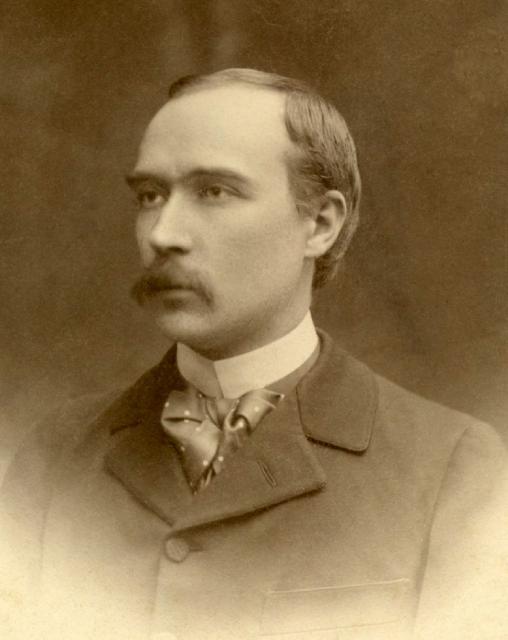
Bernard Carra de Vaux (1867-1953), also known as Baron Carra de Vaux, was a French orientalist of Islam. He was from an aristocratic family and pursued the scholarly study of Islam after completing his studies at the Polytechnique in 1886. He was appointed Professor at the Catholic Institute and mainly taught Arabic.[1] He spent much time travelling and his chief task was to spread French influence in the countries he went to. In 1900, De Vaux wrote a monograph on Ibn Sina (Avicenna) where he detailed his philosophy and the philosophy of Islam up until the philosopher’s death. Two years later, he wrote a monograph of Abū Ḥamid al-Ghazzālī and later translated his Tahāfut al-Falāsifah (Incoherence of the Philosophers). De Vaux wrote numerous books on Islam, including Le mahométisme; le génie sémitique et le génie aryen dans l’Islam and La doctrine de l’Islam where he attempted to trace the historical development of Islamic thought and sects. De Vaux saw the scientific contributions of Muslims as largely being indebted to the Greeks while acknowledging that some original contributions were of their own.

Bernard Carra de Vaux, 1867-1952.
Below is an excerpt from Bernard Carra de Vaux on his views about the future of Islam. The question was forwarded to him by Edmond Fazy (d. 1911), a Parisian journalist and editor of La Republic française. The newspaper which Fazy worked for, namely La Republique francaise, was and still is the government gazette of the French government where it took the position of the national Government of France and published its major official pieces. As a representative of France’s imperialist government in some ways, his strong anti-Ottoman feelings were of no surprise.[2]
The excerpt in question, which I translated from the original French below, was published in the French colonial journal Question diplomatique et coloniales in May of 1901 under the title L’Avenir de l’Islam[3] (The Future of Islam). Fazy sought to interview a number of orientalists on the future of Islam, a curiosity which was cued by his concern on Muslim population growth across the world. He sought knowledge on how the French republic could better ready itself, perhaps even counter, the danger which he felt Muslims posed to French and perhaps Western colonial power right at the turn of the twentieth century. The scanned document of the source can be found here.
Le grand et général danger qui menace les puissances chrétiennes dans leurs rapports avec le monde de l’Islam, vous l’avez nommé, Monsieur, c’est le Panislamisme. Une prise d’armes simultanée de tous les Musulmans, du Maghreb à l’Extrème-Orient, est une éventualité qui, pour n’être pas très probable, n’en est pas moins possible, et j’irai jusqu’à dire possible à n’importe quel moment et en l’absence de tout prétexte apparent. Nous pouvons à peine nous rendre compte des circonstances qui seraient capables de provoquer un mouvement de ce genre. Il y en a de fort mystérieuses, et dont l’action serait secrète. L’attente d’un Mahdi, d’une espèce de sauveur et de messie glorieux qui rendrait à l’Islam l’empire du monde, est un article de la foi mahométane, orthodoxe ou non. Il y a des prédictions qui fixent l’heure à laquelle doit paraître ce Mahdi. Mais ces prédictions, comme il arrive d’ordinaire, ne sont pas tellement claires qu’elles ne puissent être appliquées à n’importe quelle heure et à n’importe quel temps. L’histoire a déjà enregistré l’apparition de bien des faux Mahdis. La plupart de ces aventuriers ont préparé leur venue par des systèmes de propagande occulte, systèmes dans lesquels les Musulmans se sont toujours montrés très experts depuis le haut Moyen-age.
Il nous est évidemment très difficile de suivre ce qui se passe dans les milieux musulmans fanatiques de la Tripolitaine ou du Maroc, qui sont les contrées où la tradition comme l’histoire rendent l’apparition d’un Mahdi le plus probable. Néanmoins, je le répète, je ne crois pas que les chances d’un pareil accident soient fort nombreuses ; et en tout cas peut-on employer une certaine politique pour les réduire le plus possible et pour les rendre à peu près nulles. Il faut éviter les imprudences. Il ne faut pas injurier les Musulmans d’une façon gratuite, ni les importuner, ni les presser trop fort.
La colonisation est une oeuvre qui demande du temps, et dans laquelle toute brusquerie peut devenir fatale. La Chine vient de nous donner cette leçon sous une forme assez dramatique; et il parait bien dans cette histoire que c’est justement l’esprit de l’Islam qui a provoqué la résistance armée contre le progrès trop brusque des étrangers. Comme vue plus positive touchant la conduite à tenir par l’ensemble de la Chrétienté à l’égard de l’Islam, j’indiquerai celle-ci : je crois que l’on devrait s’appliquer à scinder le monde mahométan, à en rompre l’unité morale, en se servant à cet effet des divisions politiques et ethniques qui déjà s’y trouvent existantes. L’Islamisme des différentes races ne peut pas ne pas présenter certaines différences spécifiques; autre est celui des Soudanais, autre celui des Chinois; autre est celui des Persans, autre celui des Malais. Appliquons-nous donc à accentuer ces différences, de façon a augmenter le sentiment de la nationalité et à diminuer celui de la communauté religieuse dans les diverses races mahométanes.
Profitons pour cela des conditions politiques. L’Égypte, par exemple, aujour-d’hui régie par la puissance britannique, doit arriver à former un tout. moral clairement distinct du Soudan régi par la France ou de l’Arabie restée libre. Faisons de l’Égypte une barrière entre les foyers de l’Islamisme africain et ceux de l’Islamisme asiatique. En un mot, sectionnons l’Islam.
Puis, servons-nous encore de ses hérésies et de ses confréries. La plupart de ses hérésies ont des caractères ethniques qui les rendent plus aptes à se développer dans une contrée que dans une autre. Le Babisme notamment, qui est une religion fort intéressante et à tendances libérales, devrait être soutenu en Perse, et importé s’il se peut dans le voisinage des centres fanatiques Africains. Les confréries musulmanes sont d’esprits variés, les unes portées au libéralisme, les autres au fanatisme. Opposons les unes aux autres, soutenons les unes sur un point, les autres sur un autre. Sans doute cette politique pourrait avoir l’inconvénient de donner prétexte à quelques troubles locaux; mais, dans l’ensemble, elle serait tout à fait de nature à affaiblir l’Islam, à l’énerver, à l’engourdir, à le rendre à jamais incapable des grand réveils.
Voilà, Monsieur, ce que je puis vous répondre sans me mettre à composer un livre. Je souhaite que vous rencontriez d’autres prophètes plus sûr d’euxque moi-même, et j’espère que leurs prévisions ne seront pas trop en désaccord avec les miennes.
Baron CARRA DE VAUX
The great and general danger that threatens Christian powers in relation to the world of Islam, you named it Sir, is the world of Pan-Islamism. A simultaneous armed uprising of all Muslims, from the Greater Arab Maghreb to the Far East is an eventuality which, although not very probable, is no less possible and I would go as far as to say that it is possible at any moment in the absence of any obvious pretext. We can hardly realize the circumstances that would be able to provoke a movement of this kind. There are some mysterious ones whose actions would be secret. The expectation [of the coming] of the Mahdi, who is a sort of savior and glorified messiah who would give Islam the empire of the world, is an article of Muhammadan faith, be it orthodox or not. There are predictions that have fixed the hour in which this Mahdi must appear, but these predictions, as it usually happens, are not so clear that they cannot be applied to any hour or time. History has already recorded the appearance of many fake Mahdis. Most of these adventurers prepared their advent through occult propaganda systems which Muslims have always been experts at since the Middle Ages.
It is, of course, very difficult for us to follow what is happening among Muslim fanatics from Tripolitania[4] to Morocco which are regions where tradition, like history, render the apparition of the Mahdi more probable. Nevertheless, I repeat, I do not believe that the chances of such an accident are very numerous; and in any case we can employ a certain policy to reduce their likelihood as much as possible and to render them practically impossible. We must avoid imprudences. We must not insult Muslims freely nor harass them, nor press them too hard.
Colonization is a business that requires time, and in which any abruptness could become fatal. China has just given us this lesson in a rather dramatic form.[5] It appears very well in this story that that it is precisely the spirit of Islam that has provoked armed resistance against the abrupt progress of foreigners. As a more positive view of the way in which Christendom as a whole deals with Islam, I will indicate this: I believe that we should split the Muhammadan world, and break its moral unity, taking advantage of the political and ethnic divisions that already exist in it. The Islamism of different races cannot fail but present certain specific differences; one is that of the Sudanese, another is that of the Chinese, that of the Persians and the Malay [and so on and so forth]. We should accentuate these differences among the diverse Muhammadan races in such a way so as to increase nationalist sentiments and diminish those of religious communitarianism. [emphasis belongs to the original author]
Let’s take advantage of the political conditions. Egypt, for example, which is reigned today by British power, must come to be completely and clearly morally distinct from Sudan which is reigned by France or from Arabia which is [currently] free. Let us make Egypt a barrier between the homes of African Islamism and those of Asian Islamism. In one word, let us segment Islam. [emphasis belongs to the original author]
Then, let us serve again these heresies and [Sufi] brotherhoods. Most of these heresies have ethnic characteristics which make them more apt to develop in one region than in another. Babism,[6] which is a very interesting religion with liberal tendencies, should be supported in Persia and imported, if possible, in the neighboring African fanatical centers. Muslim brotherhoods are of different minds, some are taken by liberalism, others by fanaticism. Let us make one oppose the other, and let us support one on one point, and others on another. There is no doubt that this policy might have the inconvenience of giving pretext for some local troubles; but on the whole [this approach] would, by nature, absolutely be capable of weakening Islam, make it restless, numb it, and render it forever incapable of grand awakenings.
There you go Sir, what I could answer without having to write a book. I hope that you would meet other prophets surer of themselves than I, and I hope that their predictions would not disagree too much with mine.
Baron CARRA DE VAUX
[1] Shaykh Inayatullah, “Baron Carra De Vaux: His life and Works (1867-1953),” Islamic Studies, 10, no. 3 (September 1971): 201.
[2] Martin Kramer, Arab Awakening & Islamic Revival: The Politics of Ideas in the Middle East (New York: Routledge, 1996), 84 footnote #34.

[3]
 “L’Avenir de l’Islam,” enquête par Edmond Fazy, Questions diplomatiques et coloniales 11, no. 102 (15 May 1901): 587-88. For an excellent discussion on this piece, see Joseph Massad, Islam in Liberalism (Chicago: Chicago University Press, 2015), 65-66.
[4] A former province of Libya. It was a separate Italian colony from 1927 to 1934.
[5] De Vaux is most likely referring to the Boxer Rebellion (also known as the Yihetuan movement) in China which took place between 1899 and 1901 towards the end of the Qing dynasty. The group was largely formed in opposition to Western colonialism and Christian missionary activities.
[6] Babism was founded in 1844 by Ali Muhammad Shirazi (d. 1850). Shirazi, known as the Bāb (gate), is one of the main figures of the Bahá’í faith. Babism later opened the way to the founding of the Bahá’í faith in the 19th century by Bahá’u’lláh.

Taymaz Tabrizi

Taymaz Tabrizi is currently Director of Research at the Berkeley Institute for Islamic Studies. 
He holds a PhD from McMaster University, Canada from the Department of Religious Studies 
where he specialized in the anthropology of religion and Imāmī Islamic law. He also holds a 
doctoral diploma in Gender Studies and Feminist Research from McMaster University from 
the Department of English and Cultural Studies.