Showing posts with label 2020 presidential election. Show all posts

Wednesday, September 04, 2019

Trump is coming to an end!

By Hanif Ghaffari 

U.S. President Donald Trump is in the worst possible situation! New polls in the United States suggest that Trump will be defeated by all four Democratic candidates in next year's presidential election. The popularity of Trump has dropped in recent polls in the United States. Donald Trump's calculations have been incorrect in many cases! This has exacerbated Republican concerns over next year's presidential elections. An overview of the results of recent polls in the United States shows that Trump has a difficult path to re-election.
However, Trump appears to have lost the power to manage the crises at the White House. Trump is now worried about the upcoming presidential election. He will take any action in order to get public votes. Most of these actions have a populist aspect. The president of the United States is trying to implement the same formula for the presidential election of 2016 in 2020.
The main point is that the President of the United States of America, both at the state and public levels, has lost popularity with American citizens.
Undoubtedly, Trump will now take steps to win White's votes and gray votes for the 2020 presidential election. Meanwhile, opponents of the U.S. president have begun their campaign to defeat Trump.The popularity of Trump in crucial states such as Florida, Pennsylvania, Michigan and Wisconsin can make this change in the results of the presidential elections of 2020 at his own expense.
Trump thought his popularity in the economy could lead to a definite Republican victory in next year's presidential election, but recent polls show he was wrong!
Former US Vice President Joe Biden has also made efforts to confront Trump.
How can Biden really overcome this situation? Undoubtedly, the former vice-president of the United States will focus on social services, including health insurance, in the 2010 presidential election race. In this case, Biden can bring the middle and poor Americans. It should not be forgotten that Trump in the field of foreign policy is not well placed in the polls, and only about 40 percent of American citizens confirm their policies in the face of the international system. Biden, meanwhile, specializes in foreign policy, and his vision is more than approved by American citizens. Meanwhile, Biden's only concern is the tramp control in the economy.
Here's a look at some of the latest news and analysis on Trump and America's latest political situation:
Trump’s worst 2020 poll yet
As Washington Post reported, Trump hasn’t seen many good polls these days, but he might have just seen his worst of the 2020 election cycle.
A new Quinnipiac University poll has plenty of bad news for Trump — from his 2020 matchups with Democrats, to his own personal image, to his biggest asset in the 2020 race: the economy.
The poll shows him trailing all five Democrats tested by between nine and 16 points. He trails Joe Biden 54 to 38, Bernie Sanders 53 to 39, Elizabeth Warren 52 to 40, Kamala D. Harris 51 to 40 and Pete Buttigieg 49 to 40. These represent his biggest deficits to date against all five candidates, according to RealClearPolitics’s compilation of polls.
The poll also shows his approval/disapproval declining to 38/56, with just 27 percent approving of him strongly and 50 percent disapproving strongly. That’s the worst those splits have been in Quinnipiac polling since February 2018.
He earns the approval of just 32 percent of independents and the disapproval of 60 percent. In every matchup with a Democrat, he trails among independents by at least 18 points. This is a demographic that he won in 2016 by four points.
The bad news extends, perhaps most significantly, to the economy. While six in 10 registered voters still regard the economy as “excellent” (18 percent) or “good” (43 percent), for the first time since June 2016 more Americans say the economy is getting “worse” (37 percent) than say it’s getting “better” (31 percent). As recently as one year ago, more than twice as many people thought the economy was getting better as though it was getting worse. The poll also shows, for the first time, slightly more Americans say Trump’s policies are “hurting” the economy (41 percent) than say they are “helping” (37 percent).
The economic findings may be the most ominous of the entire poll for Trump. While we have yet to see a significant downturn in the American economy, there are increasing signs that it’s a possibility, and analysts are tying those growing odds to Trump’s trade war with China. The economy is by far Trump’s best issue: His approval is 38 percent or less on every other issue tested, including immigration and trade, but 46 percent on the economy. If it does decline, he’ll lose his most compelling case for reelection on an issue that is generally the most important to voters.
This is but one poll, and we’ll have to see if other polls suggest a similar decline for Trump. A Suffolk University/USA Today poll also released Sunday showed Trump’s approval remaining at 44 percent, and Trump has yet to trend downward in RealClearPolitics’s polling average.
But a new EPIC-MRA poll in Michigan on Wednesday also showed Trump trailing every Democrat in that crucial state, which Trump narrowly won in 2016, by between three and 10 points. And pretty much every high-quality national poll, including a Fox News poll earlier this month, has shown Trump trailing his top would-be 2020 opponents, including by large margins with the better-known ones.
There’s plenty of time, and polls aren’t predictive, but for now, it appears he’s starting from behind.
Trump trails Democrats by a historically large margin
As CNN reported, The Quinnipiac poll was the second probability poll that meets CNN standards and was conducted in August which found Trump down by at least 5 points against all his most likely challengers. In both the Fox News poll out earlier this month and Quinnipiac's latest, he trailed his most likely challenger, Biden, by double-digits. In fact, in an average of all the August polls (those that meet CNN standards and not), Biden was up by a 49% to 39% margin.
We're still over a year away from the 2020 general election, so don't take these polls to the bank.
Still, it's worth pointing out the historically bad position Trump is in. No incumbent president has ever polled this poorly against his likely challengers at this point in the campaign.
I went all the way back to World War II-era in the Roper Center archive to see how presidents were polling at this point against their eventual challengers. I selected the worst poll for the incumbent if there was more than one poll taken in order to give Trump the most generous comparison. In years in which no polls were taken in August the year before the election (i.e. when the last poll for 2020 was conducted), I chose the poll taken closest to this point.
What's clear is the vast majority of incumbents were ahead at this point in the campaign: nine of the 11 were ahead. And for the average incumbent, they led their eventual challenger by 12 points at this point.
Again, Trump trails Biden by 10 points in the average August poll. Trump has not been ahead of Biden in a single national poll taken this entire cycle.
Only two of 11 incumbents in past years, Jimmy Carter in 1979 and Barack Obama in 2011, were behind at this point. They were down by 4 points and 1 point respectively to their eventual challengers (Ronald Reagan and Mitt Romney). Carter went on to lose reelection.
Obama went on to win with a small reelection margin -- and there were many polls at this point that had him ahead. (Remember, I'm looking at the worst poll for past incumbents.)
Put another way, Trump's worst poll against any of the top five Democrats at this point is 5 points worse than the worst poll for any incumbent since World War II against his eventual challenger. It's 12 points worse against his most likely challenger, Biden.
As I've already mentioned, we don't know if these polls will hold. What is notable, though, is that Trump is not punching above his approval rating right now. Trump's approval rating has been consistently below his disapproval rating, just like he has been consistently been polling behind Biden. That lines up with what occurred in the 2018 midterms: Republican House candidates got the same share of the votes as Trump's approval rating, 45%.
Trump has time to turn his reelection ship in the right direction. But in the 10 months since the Republicans lost the House in 2018, he's in no better shape. You could even argue he's in a worse position.
Two polling methods, Two views of Trump’s 2020 re-election chances
As New York Times reported, There are two major theories about President Trump’s standing heading into his re-election campaign. Over the last few months, they have found backing from two very different kinds of polls.
One theory holds that Mr. Trump is fundamentally like any other president. This would be good news for his chances in 2020: Many presidents have gone on to win after having approval ratings like Mr. Trump’s today, and many presidents have won after a midterm drubbing. The state of the economy could be pivotal; if it stayed strong, he would have a real chance to win. His approval rating could rise, like that of prior presidents, once voters began to assess his presidency in comparison with the alternative. His relative advantage in the Electoral College could put him over the top.
Another theory holds that President Trump and this polarized era are unique. In this view, Mr. Trump is deeply unpopular, and opinions of his presidency are entrenched. The economy cannot save him from defeat. After all, his approval ratings are poor despite low unemployment; nothing short of fundamental changes in his conduct could improve them. In this view, the 2018 midterm election, when Democrats won the national House vote by almost nine percentage points, would be a harbinger of the general.
Of course, the truth could be somewhere in between (and probably is). But these two theories have different consequences for how to think about the campaign in 2020.
In the more traditional view, Mr. Trump would have a solid chance following the same playbook as George W. Bush and Barack Obama, at least if the economy stayed strong enough. He would attack his opponent and use wedge issues (like immigration) to both mobilize his base and lure back some voters who are dissatisfied with his performance. Democrats, meanwhile, would want someone who could keep voters focused on why they’re dissatisfied with the incumbent’s conduct, defuse wedge issues, and appeal to the sort of Obama-Trump voters who have soured on the president.
But if Mr. Trump and this era are unique, then 2020 might hinge on turnout: In a polarized environment with few persuadable voters left, little else would matter. Democrats might not need to worry about whom they nominate, as long as they can energize irregular voters. In the extreme, you could argue that the president has basically already lost re-election: Voters have made up their minds, and too many dislike him for him to win.
These theories are impossible to test before the election. But the main evidence for the polarization theory comes from the polls. They have always shown the president’s approval ratings well underwater, with around half of voters saying they strongly disapprove of his performance. If that ever stopped being true, it would essentially disprove the theory.
What Draws Hundreds to This Lake Bed? Spellbinding Crystals
‘I Looked Around and Saw a Man Holding His Phone Up Surreptitiously’
Leslie Jones Is Leaving ‘S.N.L.’ Here Are Her 10 Funniest Moments.
Since the end of the government shutdown, the president's approval rating has been stable in online polls, but far more variable in telephone surveys. Estimate is calculated using polls taken both before and after the date.That’s why movement in the polls has been particularly interesting lately. Over the last few months, online polls and live-interview polls have split in a way that would either support or undermine each of these theories, depending on which set of polls you believe.
The online polls support the polarization story: They show that the president’s approval rating has been astonishingly steady throughout his presidency, including over the last month.
But the telephone polls have been more variable, particularly over the last few months. In June and July, live-interview polls seemed to show the president’s approval rating matching the highest level of his term. If that’s accurate, it undermines the polarization theory and suggests the president still has the ability to broaden his appeal.
The president’s peak came in early July, just after the first Democratic debate, which could mean that the Democrats helped his cause, perhaps as a result of voters assessing his performance through the lens of the alternative. Democrats might have been particularly helpful to Mr. Trump if they repelled some persuadable voters by focusing on busing, ending private health insurance, extending health insurance to undocumented immigrants, or decriminalizing unauthorized entry into the United States.
Since then, the president’s ratings have dropped by several points, and there is no shortage of potential explanations: his verbal attacks on four congresswomen; mass shootings in El Paso and Dayton; growing concern about the economy and the trade war. A decline in the president’s ratings wouldn’t be good for his chances, of course, but it nonetheless suggests that public opinion is at least somewhat responsive to events, the economy and his conduct. If his ratings can go down, they can also go up.
It’s hard to know which set of polls is right. Live-interview polls have long been considered the gold standard in survey research. But they’re increasingly rare, which makes it harder to be sure of where they stand at any given time. They also aren’t typically weighted by a measure of partisanship, like party registration, so they’re more susceptible to shift with changes in which groups are likeliest to respond to polls.

Friday, August 30, 2019

Trump fears the presidential election

By Saeed Sobhani

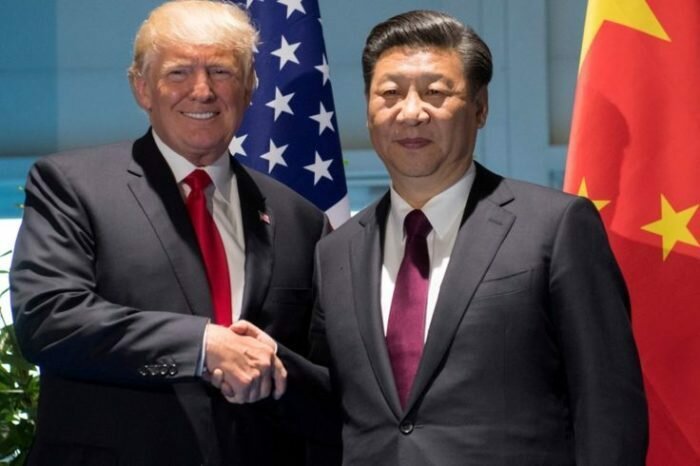
The China-US trade war has reached a critical stage. Many US analysts believe that in the near future, Beijing could defeat Washington in the trade war. This is undoubtedly the case in the upcoming presidential election. Exactly the same thing that Trump is terribly afraid of! Here's a look at the latest US-China trade battle:
Trump threatens to raise tariffs on Chinese goods to 30% amid escalating trade war
As CNN reported, President Donald Trump on Friday counterpunched against retaliatory tariffs announced by Beijing earlier in the day, pledging to hike the rates importers must pay on Chinese-made goods even higher.Trump said the US will raise tariffs from 25% to 30% on $250 billion in goods that are already being taxed starting October 1.
He also threatened to ratchet up promised tariffs on the remaining $300 billion in Chinese imports from 10% to 15%. Those tariffs, which would hit mostly consumer items, are set to begin taking effect September 1, though most goods will be duty-free until December 15 -- a move Trump made to avoid putting a damper on holiday retail sales. The President's announcement came after Beijing unveiled a new round of retaliatory tariffs on about $75 billion worth of US goods. China will place additional tariffs of 5% or 10% on US imports starting on September 1, according to a statement posted by China's Finance Ministry."We're having a little spat with China and we'll win it," Trump told reporters Friday night before departing for the annual G7 summit in Biarritz, France. "We put a lot of tariffs on China today, as you know. They put some on us, we put a lot of them."
"We're up to about $550 billion -- they've been hitting us for many, many years for over $500 billion a year, taking out of our country much more than 500 billion a year," he added. "So we want that stopped."
It was the latest escalation in an ongoing trade war that has triggered a worldwide economic slowdown and which, for the moment, shows no sign of quick resolution."China should not have put new Tariffs on 75 BILLION DOLLARS of United States product (politically motivated!)," Trump said on Twitter. The intensifying fight unnerved investors, sending the Dow dropping more than 700 points at its worst, closing down 2.4%, or 623 points. The US Trade Representative Office, which acts as the country's top trade negotiator, said it would "begin the process of increasing the tariff rate to 30% effective October 1 following a notice and comment period."
Earlier Friday, Trump ordered US companies doing business in China to find an "alternative" and had promised to deliver further action after he met with his economic team at the White House."We don't need China and, frankly, would be far better off without them," Trump tweeted. "Our great companies are ordered to immediately start looking for an alternative to China, including bringing your companies HOME."
China trade experts said the moves will only deepen the impasse between Washington and Beijing."Everyone knew this was coming," said Craig Allen, president of the US-China Business Council. "There was no doubt this was coming. The response to it is surprising and disappointing. "
Stocks finished a volatile trading day sharply in the red Friday, after a selloff driven by the new retaliatory tariffs from China and the President's criticism of Federal Reserve policy. Trump again attacked Federal Reserve Chairman Jerome Powell over interest rates, which Trump insists are too high even after a rate cut last month.
"My only question is, who is our bigger enemy, Jay Powell or Chairman Xi?" the president tweeted referring to Chinese leader Xi Jinping. Late Friday night, Trump told reporters he wouldn't stop Powell if the chairman wanted to resign.
Trump's China trade war spirals as 2020 looms
The dangerous new twist in the tariff war between the United States and China will heap ominous pressure on the global economy at a moment when it is already struggling in the undertow of their trade superpower showdown. China's announcement of new tariffs on $75 billion in US goods and an incandescent reaction from President Donald Trump and his swift increase in existing tariffs on Chinese products underscored that the dispute is escalating with no obvious way to calm hostilities. A long disagreement over China's trade and economic practices has now also become a personal duel and a matter of face between Trump and Chinese President Xi Jinping -- and a perilous pivot point for a volatile world order that is being reshaped by China's rise.
A day of trade war Friday dramatically increased the political stakes of the confrontation for Trump -- at the same time the new tariffs threaten to further damage the US economy."This has become a process without a clear objective and without a clear strategy and without a clear endpoint," said Craig Allen, president of the US-China Business Council. "And it's being played out in many worsening global economic circumstances. It is more uncertainty heaped upon already existing uncertainty."
The President's remark that trade wars are "good and easy to win" in 2018 is now looking even more ill-advised and leaves Trump looking as though he engineered a showdown with a rising economic superpower in which it will be difficult for him to prevail. If China's retaliation on Friday was calculated to further panic Trump about the state of the US economy -- amid growing fears of a slowdown that would complicate his reelection hopes next year -- it has already succeeded.
The new tariffs came at the end of the week when the White House's messaging on the economy has been incoherent. Assurances by the President's top advisers that growth is robust and there is no concern about the economy have been undermined by Trump's contradictory statements -- at various times he has said he's thinking about tax cuts to stimulate growth and then insisted he is not because there is no need for them.
The confusion has multiplied concerns that Trump's administration is ill prepared to mitigate a recession if one does come and lacks the stability and calmness needed to tackle any financial crisis.
Trump's increasingly furious attacks on Federal Reserve chief Jerome Powell amount to some of the most incendiary rhetoric by a President about the economy and the US central bank's policy-making in living memory. His insistence on an interest rate cut of 100 basis points would mean the Fed adopting policies that are usually put into practice only during a serious economic downturn. It also raises questions about Trump's understanding of the infrastructure of the US economy and the independence of the central bank, which is supposed to shield it from interference by presidents worried about their political prospects.
The latest tariff tit-for-tat also seems to trap Trump into an escalation with China that it will be difficult to control. If he goes ahead and responds with more tariffs, the President risks further rattling investors and damaging US consumers. He has already delayed a set of new tariffs worth $160 billion on Chinese imports until December to avoid harming the holiday shopping season. That decision was seen by many as an admission by Trump that Americans are hurt by paying higher prices for Chinese products despite his frequent and misleading assurances that only China was being harmed by the tariffs."The bottom is collapsing and this relationship is getting worse and worse," said Allen.
Since last year before Trump and Xi met over a steak dinner in Buenos Aires, experts have worried about the possibility of a new cold war between the world's two largest economies if they are unable to resolve their differences. The risk of so-called "decoupling" is likely to be more disruptive than the President's "America First" agenda, according to policy analysts who have carefully watched the on-again, off-again trade war that began last summer with the first tranche of tariffs. Hawks within the administration -- like Trump trade adviser Peter Navarro -- have strongly argued that a parting of ways with China is necessary to secure US dominance, while others in the wing have expressed concerns about China's military power or tensions with North Korea.
"I think really American-China policy is only unified with a single person in the White House," said Scott Kennedy, a senior adviser at the Center for Strategic and International Studies, a Washington-based think tank. "It's unpredictable. It can flip-flop. I don't think American policy has finally settled in one place where we have decided to treat China as an enemy across the board."
Former Treasury Secretary Hank Paulson warned of the risks of the world's two largest economies divorcing in a speech in Singapore last November."I fear that big parts of the global economy will ultimately be closed off to the free flow of investment and trade. And that is why I now see the prospect of an economic iron curtain -- one that throws up new walls on each side and unmakes the global economy, as we have known it," said Paulson, who served under President George W. Bush.
Trump has questioned why he must attend G7
China's recent action was unlikely to improve Trump's mood as he flew to France on Friday night for the G7 summit. He's been complaining about European trade policy as well and has a record of breaking china at international summits -- including last year's G7 in Canada, which saw him leave early. The next time Xi and Trump would be expected to meet would be at the Asia-Pacific Economic Cooperation summit in Chile in November. But with the trade war still worsening, hopes for a resolution then look farfetched. While Xi is often portrayed as a strongman authoritarian and China's most dominant leader for the last 30 years, he is not immune to domestic political pressures.
The wave of protests in Hong Kong is putting him under even greater scrutiny months before celebrations marking 70 years of Communist China -- a fact that gives Xi even less room for political maneuver. Two years after being hailed as a historic figure and removing term limits in a move that was seen as potentially letting him rule for life, Xi is enduring the worst year of his presidency so far. But the longer the trade war goes on, the more politically dicey it also gets for Trump -- a factor that might be helping to shape Chinese thinking. The showdown becomes a question of which side can endure the most pain. Trump has confidently predicted that Xi will have to give in because China won't be able to take the damage to its economy. It is true that the tariff war is having an effect -- it has helped push Chinese industrial output growth to its lowest rate in 17 years. But Xi is sitting atop an authoritarian system that can muzzle the public and mitigate the political damage of a trade war. He has no need to worry about reelection in 2020. Trump, by contrast, has been fuming at the media in recent days, accusing it of alarming consumers about the state of the economy and taking it into a recession. Beijing may be calculating that Trump will not be able to stand the political heat of the trade war as his reelection race ratchets up -- a position his increasingly angry outbursts tend to support -- and might be interested in stepping back from the brink. In a sign of political sophistication, Beijing has deliberately targeted farming -- an industry that is endemic to the Midwestern swing states that Trump needs to win reelection.
So the President faces a dilemma. Does he cool the rhetoric and seek a deal with Beijing -- and thereby turn his back on one of the central pillars of his entire political project? Or does he carry on the fight -- even if it has a serious impact on the US and world economy and creates a political backlash that could put his hopes of a second term in doubt?
Trump Asserts He Can Force U.S. Companies to Leave China
As New York Times reported, President Trump asserted on Saturday that he has the authority to make good on his threat to force all American businesses to leave China, citing a national security law that has been used mainly to target terrorists, drug traffickers and pariah states like Iran, Syria and North Korea. As he arrived in France for the annual meeting of the Group of 7 powers, Mr. Trump posted a message on Twitter citing the International Emergency Economic Powers Act of 1977, a law originally meant to enable a president to isolate criminal regimes not sever economic ties with a major trading partner over a tariff dispute.
“For all of the Fake News Reporters that don’t have a clue as to what the law is relative to Presidential powers, China, etc., try looking at the Emergency Economic Powers Act of 1977,” Mr. Trump wrote. “Case closed!”
The president’s threat to all but cut off one of America’s most important trading relationships could disrupt a global economy already on the edge of recession amid his trade war while further unsettling giant companies in the United States that rely on China in their production and sale of everything from clothing to smart telephones.Mr. Trump has often made drastic threats as a negotiating ploy to force a partner to offer concessions, as when he vowed to close the border with Mexico or impose tariffs on its goods to force action to halt illegal immigration. But if he were to follow through, it would be the most significant break with China since President Richard M. Nixon’s diplomatic opening to Beijing in the early 1970s.
Mr. Trump’s claim that he has the power to order American companies to pull out of China also represents the latest assertion of authority by a president who has repeatedly crossed lines that his predecessors have not. While he came to office criticizing President Barack Obama for exceeding the power of his office, Mr. Trump has gone even further in creative ways to take action on his priorities.“Any invocation of the International Emergency Economic Powers Act in these circumstances and for these purposes would be an abuse,” said Daniel M. Price, a former international economic adviser to President George W. Bush. “The act is intended to address extraordinary national security threats and true national emergencies not fits of presidential pique.”
Under the weight of Mr. Trump’s tariff war, China has already fallen from America’s largest trading partner last year to the third largest this year. The United States remains China’s largest trading partner. China said Friday that it would raise tariffs on American goods in retaliation for Mr. Trump’s latest levies and the president vowed hours later to increase tariffs even further.
China’s commerce ministry issued a strongly worded statement on Saturday warning the United States to turn back from ever-escalating confrontation, but it did not threaten any new trade measures.“This unilateral and bullying trade protectionism and extreme pressure violate the consensus of the heads of state of China and the United States, violate the principle of mutual respect, equality, and mutual benefit, seriously undermine the multilateral trading system and the normal international trade order,” the Chinese statement said.

Monday, July 15, 2019

Is Trump afraid of the future?

By Saeed Sobhani

While some polls in the United States announced the decline in the popularity of Donald Trump, the president is still trying to keep his hope for the future! However, Trump knows well that he will no longer remain in the White House in the case of failure in key and sensitive states such as Wisconsin, Pennsylvania, and Michigan, and Democrats will be at the head of the political and executive equations of the United States.
Trump approval rating slipping in Midwest
As The Hill reported, Trump's approval rating among his supporters in the Midwest appears to be declining, according to a series of Hill-HarrisX polls since July. Of those surveyed, 47 percent of Midwest voters said they approved of Trump's job in office last July, with his highest mark among those voters reaching 54 percent in the months of October and December. In the latest Hill-HarrisX survey in February that number had slipped to only 40 percent of Midwestern voters saying they approved of the president. The polls also show rising disapproval of Trump among Midwest states, with 53 percent saying they disapproved of Trump in July and 60 percent saying the same in February. The trend could end up being a problem for Trump, who scored crucial victories in 2016 in Midwest states like Wisconsin and Michigan, helping to propel him to an electoral college victory.
"When it gets down to it, the president is going to get re-elected or defeated on a state-by-state basis," Chris Wilson, chief strategist at WPA Intelligence, told Hill.TV'S Krystal Ball on Wednesday. "So the numbers I'm most concerned about are those in states like Michigan, and Pennsylvania, and Iowa, and Wisconsin. States that he won last time that Republicans hadn't won in a long time," he continued. Trump's approval ratings also saw a decline in the south, another political stronghold for him. Fifty-two percent of southern voters said they approved of him in July and now 46 percent say they approve of him in that region. 
There was also a rise in the president's disapproval rating in the south, with 48 percent saying they disapproved of him in July, and 54 percent saying the same in February. Trump's national approval rating currently sits at 45 percent, according to the latest poll, while his disapproval rating is at 55 percent. The states included in the Midwest category were Illinois, Indiana, Michigan, Ohio, Wisconsin, Iowa, Kansas, Minnesota, Missouri, Nebraska, North Dakota, and South Dakota. The Southern states were Delaware, Washington, D.C., Florida, Georgia, Maryland, North Carolina, South Carolina, Virginia, West Virginia, Alabama, Kentucky, Mississippi, Tennessee, Arkansas, Louisiana, Oklahoma, and Texas. 
The polls were conducted among statistically representative samples of about 1,000 registered voters. Each of them has a sampling margin of error of plus or minus 3.1 percentage points.
Trump’s rising poll numbers raise a question
As Bostonglobe reported, Looking at both the latest polling and the more precise picture of President Trump that has emerged since he took office, you arrive at a reluctant conclusion and a perplexing question. First, the 2020 presidential race will likely shape up not as a broom-out-a-buffoon sweep but as a tough, competitive election. So what, exactly, would it take for Republicans to abandon this dishonest, divisive, dysfunctional president?
Everyone should know by now that major aspects of Trump’s self-spun personal story are fraudulent. We’re all familiar with the narrative: An indomitable dynamo who by dint of his coruscating intellect won admission to an elite college and then, with the help of a (later repaid) $1 million loan from his father, built a billion-dollar business empire.
This week The Washington Post revealed as bogus another bit of that biography with its revelation that Trump’s admission to the Wharton School at the University of Pennsylvania was aided by a close friend of his older brother. James Nolan, now 81, told the Post’s Michael Kranish that when working in the university’s admissions office in 1966, he got a call from his very close friend Fred Trump Jr. seeking help with brother Donald’s hoped-for transfer from Fordham to the Wharton School. Nolan was accommodating, meeting with Donald and his father and then giving Trump a rating that apparently aided his application. Further, despite his many assertions about his intellect, Trump wasn’t even on the dean’s list his senior year, the Post reports. By itself, none of that is big or surprising news, but it does highlight once again the gap between Trump’s autobiographical boasts and the actual privileged nature of his advancement.
After graduating, Trump avoided the Vietnam War-era draft with the help of a diagnosis of bone spurs, which earned him a medical deferment. Except that, as The New York Times has reported, the daughters of the physician who diagnosed that supposed condition say he did it as a favor to father Fred Trump, who owned the building where the doctor had his office.
In fairness, that’s an anecdotal account, one without real proof. But The New York Times had documentation aplenty for its investigative report that, rather than parlaying his father’s $1 million loan into a fortune, as he has often claimed, Trump was the beneficiary of some $413 million (in today’s dollars) funneled his way by the family patriarch. Despite that, as a businessman, Trump still resorted to bankruptcy no fewer than six times. Imagine for a moment the derision the GOP would heap on a Democratic president with such a dubious record. And yet, most Republicans don’t seem to blink an eye at Trump’s history. Or his Potemkin village personal narrative.
Equally puzzling is the backing he receives from the evangelical community and other conservatives who, in different circumstances, claim that morality and character matter to them. After all, even if one doesn’t include the various allegations of forced or unwelcome lip kisses, at least 10 women have accused Trump of sexual misconduct over the years, including author and columnist E. Jean Carroll, who recently said that Trump attacked and (though she didn’t use the word) raped her in the mid-1990s in a luxury department store dressing room, an incident she told friends about at the time.
Even if assembling an anti-abortion majority on the Supreme Court is an important priority for someone, how, exactly, can he or she maintain support for a politician after such a litany of accusations? An amoralist’s response might be that, character notwithstanding, Trump at least steers by crucial Republican tenets. Except that he has abandoned as many as he’s upheld. Fiscal discipline? Free markets and free trade? A strong US-led Western alliance? All in exile. So, too, are broader American values such as a basic regard for the truth. Or respect for the rule of law. Or a commitment to transparent, ethical, non-nepotistic government. And yet, this president now seems positioned to run a competitive race in 2020. As discouraging as his presidency has been, that’s the truly dismaying commentary about our country.
Even when accounting for ‘Shy Trump Voters,’ the President needs his numbers to improve
National Review reported:  Is there a shy Trump voter factor the way they're used to be “shy Tory factor” in polls? Probably. The final polls in Michigan in 2016 put Hillary Clinton ahead by 4 to 5 percentage points, and Trump won by three-tenths of one percentage point. The final polls in Pennsylvania in 2016 put Hillary Clinton tied to leading by 4 points, and Trump won by seven-tenths of one percentage point. The final polls in Wisconsin in 2016 put Hillary Clinton ahead by 6 to 8 points, and Trump won by seven-tenths of one percentage point.
The good news for the Trump reelection campaign is that that they can feel reasonably optimistic that Trump will outperform the final polls conducted before Election Day 2020. The bad news is, we don’t know if this “shy Trump voter factor” will be good for one percentage point, 5 percentage points, or 10 percentage points.
Let’s say the shy Trump voters are worth a five-point swing in favor of Trump compared to the most recent numbers in key states. In a matchup against Joe Biden, Trump would still lose Michigan, lose Pennsylvania, and lose Wisconsin, as well as losing the national popular vote by a slightly larger margin than in 2016. If Biden won those three states and kept Hillary Clinton’s states, he’s at 278 electoral votes and Trump would be a one-term president. If you’re wondering about the other likely swing states, with a five-point swing, Trump would still win Ohio. The limited number of polls in Florida range from a tie to nine-point lead for Biden and North Carolina has an even wider range. Iowa would probably be close.
All of this is when the economy is rocking and rolling; there’s no guarantee that the economy will be doing as well in 15 months. To feel good about Trump’s odds in those states, you must assume his shy supporters are worth a swing of 8 to 10 percentage points from the current numbers. The “shy Trump voter” effect probably varies from state to state. The point is, in most of the big battleground states, Trump doesn’t need to do slightly better than his current poll numbers. He needs to do way better than his current poll numbers, even when you give him a generous assessment of hidden support that isn’t showing up in opinion surveys but will in show up polling places.
Will Biden, or any other Democratic nominee, be in weaker shape in autumn 2020 compared to now? Probably. Democrats look set to have a long, bruising primary. But that primary fight would have to get awfully nasty to persuade a significant number of self-identified Democrats to stay home and not vote. In a heavily polarized era, the vast majority of Biden supporters will end up supporting Kamala Harris if she’s the nominee and vice versa.
Trump can and probably will tie the Democratic nominee to the current radical policies being embraced during this primary — de facto open borders, elimination of private health insurance, taxpayer-funded health care and education for those who cross the border illegally. He and his team may feel confident about the potency of the message, “Even if you don’t like everything I’m doing, electing a Democrat means empowering someone who prioritizes other country’s citizens over American citizens.”Those positions or other flaws may well drag down Democratic candidates in head-to-head matchups against Trump — but they haven’t done so yet. Coaches sometimes tell athletes, “Even if you’re ahead by ten points, play as if you’re behind by ten points.” Considering his current ominous poll numbers, the Trump campaign should indeed work as if they’re 10 points behind.

Monday, January 28, 2019

Trump is afraid of the Sanders name

By Hanif Ghaffari 
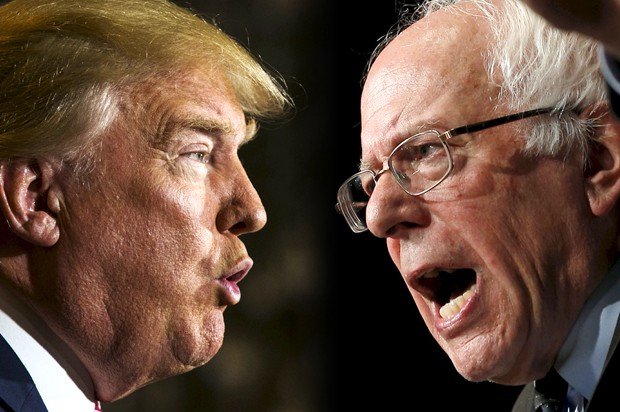
TEHRAN - Announcement of Barnie Sanders' candidacy in the 2020 presidential election is the worst possible news for Donald Trump and his entourage at the White House. Many American analysts believe that Sanders could be a serious rival for Trump in the upcoming presidential election.
Three years after fighting a surprisingly competitive Democratic primary race against Hillary Clinton, Sen. Bernie Sanders, the Vermont independent, is making another run for the White House.Two sources with direct knowledge of his plans told Yahoo News that Sanders, an independent and self-described “democratic socialist,” plans to announce his presidential bid imminently.
 While Sanders has been considering a bid for months, one of the sources said he was emboldened by early polls of the race that have consistently showed him as one of the top candidates in a crowded Democratic primary field. In particular, the source said Sanders was heartened to see numbers indicating he is one of the leading candidates among African American and Latino voters, two groups he was perceived as struggling with in 2016.
Bernie Sanders, the old American senator, continues to oppose U.S. President Donald Trump. This confrontation started at the time Trump entered the White House (by early 2017). Sanders, in one of his most recent positions against the White House, called for an end to Washington's support for Riyadh in the Yemeni war. Sanders also condemned Trump's stance on the murder of Jamal Khashoggi. At any rate, Sanders's recent position against Trump has led to the U.S. President's concerns.
Sen. Bernie Sanders says it would be an "impeachable offense" if President Trump were to fire Robert Mueller the special counsel leading the federal probe into ties between Trump campaign associates and Russia.
"I've been very reluctant to talk about impeachment until we have all the information coming in from the investigation. But that would be a major, major, major obstruction of justice. That would be an impeachable offense in my view," Sanders said in an interview for The Intercept's newly launched podcast "Deconstructed" released Friday.
Sanders now considers himself the United States' potential president! Some analysts in the United States note that Sanders's opposition to Donald Trump and the White House policies have paved the way for his re-appearance in the upcoming presidential election. Polls recently conducted in the United States indicate Sanders' proper position among Democratic voters. Accordingly, Joe Biden and Bernie Sanders have both a good position among Democrat supporters and they both have a good chance to reach the final round of the 2020 presidential elections.
If Sanders can defeat Joe Biden in Democrat elections, he will have a great chance to defeat Trump. The issue that the president of the United States looks very worried about! Trump clearly knows that in the previous presidential election many Sanders' votes came to the benefit of the Trump. In other words, many Sanders fans did not want to vote for Hillary Clinton. Undoubtedly, if the Sanders reaches the final competition with Trump in 2020, the equation will generally be different….