The China-US trade war has reached a critical stage. Many US analysts believe that in the near future, Beijing could defeat Washington in the trade war. This is undoubtedly the case in the upcoming presidential election. Exactly the same thing that Trump is terribly afraid of! Here's a look at the latest US-China trade battle:
Trump threatens to raise tariffs on Chinese goods to 30% amid escalating trade war
As CNN reported, President Donald Trump on Friday counterpunched against retaliatory tariffs announced by Beijing earlier in the day, pledging to hike the rates importers must pay on Chinese-made goods even higher.Trump said the US will raise tariffs from 25% to 30% on $250 billion in goods that are already being taxed starting October 1.
He also threatened to ratchet up promised tariffs on the remaining $300 billion in Chinese imports from 10% to 15%. Those tariffs, which would hit mostly consumer items, are set to begin taking effect September 1, though most goods will be duty-free until December 15 -- a move Trump made to avoid putting a damper on holiday retail sales. The President's announcement came after Beijing unveiled a new round of retaliatory tariffs on about $75 billion worth of US goods. China will place additional tariffs of 5% or 10% on US imports starting on September 1, according to a statement posted by China's Finance Ministry."We're having a little spat with China and we'll win it," Trump told reporters Friday night before departing for the annual G7 summit in Biarritz, France. "We put a lot of tariffs on China today, as you know. They put some on us, we put a lot of them."
"We're up to about $550 billion -- they've been hitting us for many, many years for over $500 billion a year, taking out of our country much more than 500 billion a year," he added. "So we want that stopped."
It was the latest escalation in an ongoing trade war that has triggered a worldwide economic slowdown and which, for the moment, shows no sign of quick resolution."China should not have put new Tariffs on 75 BILLION DOLLARS of United States product (politically motivated!)," Trump said on Twitter. The intensifying fight unnerved investors, sending the Dow dropping more than 700 points at its worst, closing down 2.4%, or 623 points. The US Trade Representative Office, which acts as the country's top trade negotiator, said it would "begin the process of increasing the tariff rate to 30% effective October 1 following a notice and comment period."
Earlier Friday, Trump ordered US companies doing business in China to find an "alternative" and had promised to deliver further action after he met with his economic team at the White House."We don't need China and, frankly, would be far better off without them," Trump tweeted. "Our great companies are ordered to immediately start looking for an alternative to China, including bringing your companies HOME."
China trade experts said the moves will only deepen the impasse between Washington and Beijing."Everyone knew this was coming," said Craig Allen, president of the US-China Business Council. "There was no doubt this was coming. The response to it is surprising and disappointing. "
Stocks finished a volatile trading day sharply in the red Friday, after a selloff driven by the new retaliatory tariffs from China and the President's criticism of Federal Reserve policy. Trump again attacked Federal Reserve Chairman Jerome Powell over interest rates, which Trump insists are too high even after a rate cut last month.
"My only question is, who is our bigger enemy, Jay Powell or Chairman Xi?" the president tweeted referring to Chinese leader Xi Jinping. Late Friday night, Trump told reporters he wouldn't stop Powell if the chairman wanted to resign.
Trump's China trade war spirals as 2020 looms
The dangerous new twist in the tariff war between the United States and China will heap ominous pressure on the global economy at a moment when it is already struggling in the undertow of their trade superpower showdown. China's announcement of new tariffs on $75 billion in US goods and an incandescent reaction from President Donald Trump and his swift increase in existing tariffs on Chinese products underscored that the dispute is escalating with no obvious way to calm hostilities. A long disagreement over China's trade and economic practices has now also become a personal duel and a matter of face between Trump and Chinese President Xi Jinping -- and a perilous pivot point for a volatile world order that is being reshaped by China's rise.
A day of trade war Friday dramatically increased the political stakes of the confrontation for Trump -- at the same time the new tariffs threaten to further damage the US economy."This has become a process without a clear objective and without a clear strategy and without a clear endpoint," said Craig Allen, president of the US-China Business Council. "And it's being played out in many worsening global economic circumstances. It is more uncertainty heaped upon already existing uncertainty."
The President's remark that trade wars are "good and easy to win" in 2018 is now looking even more ill-advised and leaves Trump looking as though he engineered a showdown with a rising economic superpower in which it will be difficult for him to prevail. If China's retaliation on Friday was calculated to further panic Trump about the state of the US economy -- amid growing fears of a slowdown that would complicate his reelection hopes next year -- it has already succeeded.
The new tariffs came at the end of the week when the White House's messaging on the economy has been incoherent. Assurances by the President's top advisers that growth is robust and there is no concern about the economy have been undermined by Trump's contradictory statements -- at various times he has said he's thinking about tax cuts to stimulate growth and then insisted he is not because there is no need for them.
The confusion has multiplied concerns that Trump's administration is ill prepared to mitigate a recession if one does come and lacks the stability and calmness needed to tackle any financial crisis.
Trump's increasingly furious attacks on Federal Reserve chief Jerome Powell amount to some of the most incendiary rhetoric by a President about the economy and the US central bank's policy-making in living memory. His insistence on an interest rate cut of 100 basis points would mean the Fed adopting policies that are usually put into practice only during a serious economic downturn. It also raises questions about Trump's understanding of the infrastructure of the US economy and the independence of the central bank, which is supposed to shield it from interference by presidents worried about their political prospects.
The latest tariff tit-for-tat also seems to trap Trump into an escalation with China that it will be difficult to control. If he goes ahead and responds with more tariffs, the President risks further rattling investors and damaging US consumers. He has already delayed a set of new tariffs worth $160 billion on Chinese imports until December to avoid harming the holiday shopping season. That decision was seen by many as an admission by Trump that Americans are hurt by paying higher prices for Chinese products despite his frequent and misleading assurances that only China was being harmed by the tariffs."The bottom is collapsing and this relationship is getting worse and worse," said Allen.
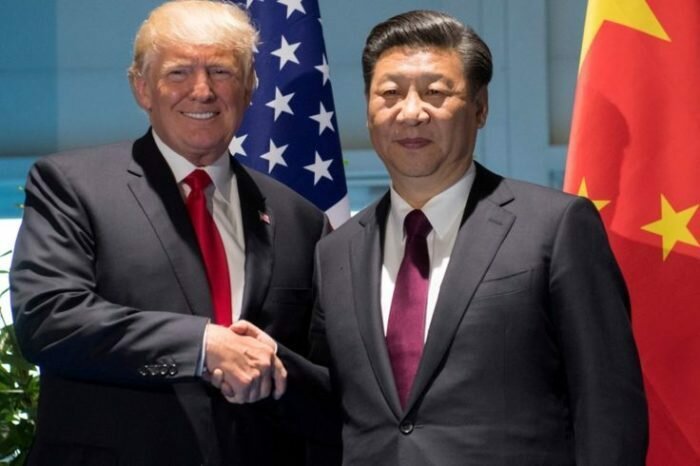
Since last year before Trump and Xi met over a steak dinner in Buenos Aires, experts have worried about the possibility of a new cold war between the world's two largest economies if they are unable to resolve their differences. The risk of so-called "decoupling" is likely to be more disruptive than the President's "America First" agenda, according to policy analysts who have carefully watched the on-again, off-again trade war that began last summer with the first tranche of tariffs. Hawks within the administration -- like Trump trade adviser Peter Navarro -- have strongly argued that a parting of ways with China is necessary to secure US dominance, while others in the wing have expressed concerns about China's military power or tensions with North Korea.
"I think really American-China policy is only unified with a single person in the White House," said Scott Kennedy, a senior adviser at the Center for Strategic and International Studies, a Washington-based think tank. "It's unpredictable. It can flip-flop. I don't think American policy has finally settled in one place where we have decided to treat China as an enemy across the board."
Former Treasury Secretary Hank Paulson warned of the risks of the world's two largest economies divorcing in a speech in Singapore last November."I fear that big parts of the global economy will ultimately be closed off to the free flow of investment and trade. And that is why I now see the prospect of an economic iron curtain -- one that throws up new walls on each side and unmakes the global economy, as we have known it," said Paulson, who served under President George W. Bush.
Trump has questioned why he must attend G7
China's recent action was unlikely to improve Trump's mood as he flew to France on Friday night for the G7 summit. He's been complaining about European trade policy as well and has a record of breaking china at international summits -- including last year's G7 in Canada, which saw him leave early. The next time Xi and Trump would be expected to meet would be at the Asia-Pacific Economic Cooperation summit in Chile in November. But with the trade war still worsening, hopes for a resolution then look farfetched. While Xi is often portrayed as a strongman authoritarian and China's most dominant leader for the last 30 years, he is not immune to domestic political pressures.
The wave of protests in Hong Kong is putting him under even greater scrutiny months before celebrations marking 70 years of Communist China -- a fact that gives Xi even less room for political maneuver. Two years after being hailed as a historic figure and removing term limits in a move that was seen as potentially letting him rule for life, Xi is enduring the worst year of his presidency so far. But the longer the trade war goes on, the more politically dicey it also gets for Trump -- a factor that might be helping to shape Chinese thinking. The showdown becomes a question of which side can endure the most pain. Trump has confidently predicted that Xi will have to give in because China won't be able to take the damage to its economy. It is true that the tariff war is having an effect -- it has helped push Chinese industrial output growth to its lowest rate in 17 years. But Xi is sitting atop an authoritarian system that can muzzle the public and mitigate the political damage of a trade war. He has no need to worry about reelection in 2020. Trump, by contrast, has been fuming at the media in recent days, accusing it of alarming consumers about the state of the economy and taking it into a recession. Beijing may be calculating that Trump will not be able to stand the political heat of the trade war as his reelection race ratchets up -- a position his increasingly angry outbursts tend to support -- and might be interested in stepping back from the brink. In a sign of political sophistication, Beijing has deliberately targeted farming -- an industry that is endemic to the Midwestern swing states that Trump needs to win reelection.
So the President faces a dilemma. Does he cool the rhetoric and seek a deal with Beijing -- and thereby turn his back on one of the central pillars of his entire political project? Or does he carry on the fight -- even if it has a serious impact on the US and world economy and creates a political backlash that could put his hopes of a second term in doubt?
Trump Asserts He Can Force U.S. Companies to Leave China
As New York Times reported, President Trump asserted on Saturday that he has the authority to make good on his threat to force all American businesses to leave China, citing a national security law that has been used mainly to target terrorists, drug traffickers and pariah states like Iran, Syria and North Korea. As he arrived in France for the annual meeting of the Group of 7 powers, Mr. Trump posted a message on Twitter citing the International Emergency Economic Powers Act of 1977, a law originally meant to enable a president to isolate criminal regimes not sever economic ties with a major trading partner over a tariff dispute.
“For all of the Fake News Reporters that don’t have a clue as to what the law is relative to Presidential powers, China, etc., try looking at the Emergency Economic Powers Act of 1977,” Mr. Trump wrote. “Case closed!”
The president’s threat to all but cut off one of America’s most important trading relationships could disrupt a global economy already on the edge of recession amid his trade war while further unsettling giant companies in the United States that rely on China in their production and sale of everything from clothing to smart telephones.Mr. Trump has often made drastic threats as a negotiating ploy to force a partner to offer concessions, as when he vowed to close the border with Mexico or impose tariffs on its goods to force action to halt illegal immigration. But if he were to follow through, it would be the most significant break with China since President Richard M. Nixon’s diplomatic opening to Beijing in the early 1970s.
Mr. Trump’s claim that he has the power to order American companies to pull out of China also represents the latest assertion of authority by a president who has repeatedly crossed lines that his predecessors have not. While he came to office criticizing President Barack Obama for exceeding the power of his office, Mr. Trump has gone even further in creative ways to take action on his priorities.“Any invocation of the International Emergency Economic Powers Act in these circumstances and for these purposes would be an abuse,” said Daniel M. Price, a former international economic adviser to President George W. Bush. “The act is intended to address extraordinary national security threats and true national emergencies not fits of presidential pique.”
Under the weight of Mr. Trump’s tariff war, China has already fallen from America’s largest trading partner last year to the third largest this year. The United States remains China’s largest trading partner. China said Friday that it would raise tariffs on American goods in retaliation for Mr. Trump’s latest levies and the president vowed hours later to increase tariffs even further.
China’s commerce ministry issued a strongly worded statement on Saturday warning the United States to turn back from ever-escalating confrontation, but it did not threaten any new trade measures.“This unilateral and bullying trade protectionism and extreme pressure violate the consensus of the heads of state of China and the United States, violate the principle of mutual respect, equality, and mutual benefit, seriously undermine the multilateral trading system and the normal international trade order,” the Chinese statement said.