Thursday, May 01, 2025

Vision 2030: A Decade after Plan Announcement, Riyadh Remains Reliant on Oil

Alwaght- While only five years are left to the date set for realization of lofty dream of Saudi Crown Prince Mohammed bin Salman for a modernized kingdom, the Saudi government on Friday published its annual report on the progress made towards the Vision 2030 on the 9th anniversary of announcement of the plan to show that it has managed to make a huge difference in many areas.

The report suggests that the Arab monarchy is "in a race against time" for a brighter future according to an ambitious vision. "Saudi Vision 2030 is built on three strategic pillars: ‘A Vibrant Society,’ which focuses on promoting culture, wellness, and quality of life for citizens and residents; ‘A Thriving Economy,’ which focuses on diversifying the economy, empowering the private sector, and creating job opportunities; and ‘An Ambitious Nation,’ which focuses on building an efficient, transparent government and encouraging civic engagement.

The report further said: "The country is experiencing a qualitative transformation at all levels, thanks to significant progress in the goals of Vision 2030 to date, and this vision charts a path that enhances the integration of culture and innovation, in a way that is in tune with rapid global changes and opens broader horizons for citizens, residents and visitors from around the world."

Three-phase vision 

The vision is designed for execution in three main phases, each taking five years. The first phase was launched based on structural, economic, financial and social reforms, the second phase focuses on accelerating progress and exploiting key priorities, and the third will seek to strengthen the sustainability of progress and exploit new growth opportunities.

According to the report, coinciding with the ninth year since the launch of the Saudi Vision, 85 percent of the initiatives have been fully implemented or are on track, with 674 initiatives fully implemented and 596 initiatives on track, from a total of 1,502 initiatives active.

In addition, 93 percent of the Vision indicators in national plans and strategies have achieved, exceeded or are close to their mid-term targets. Of these, 257 indicators have exceeded their annual target and 18 indicators have achieved their annual target, while 8 Vision objectives have been achieved ahead of schedule in 6 years.

The repot adds that some of the indicators have struck their targets ahead of the planning, including the number of the tourists that exceeded 100 million. Furthermore, 8 Saudi sites were registered on UNESCO global heritage list. The volunteers number increased to 1.2 million and the women's share from the labor market has increased to 33.5 percent, going beyond the 33-percent target under the vision. 

The report also suggested that the number of regional offices of global companies in Saudi Arabia reached more than 571 companies, exceeding the 2030 target. Saudi Arabia also recorded a new historical record of 16.92 million Umrah pilgrims, surpassing the annual target of 11.3 million pilgrims. The percentage of Saudi households owning a home reached 65.4 percent, up from 47 percent in 2016.

According to the report, Saudi Arabia has saw a historic drop in the unemployment rate, achieving the vision target of 7 percent, and has also improved its rank from 32 in the e-Participation Index since 2016 to 7th in the world, exceeding its 2030 target of reaching the top 10. It has also jumped from 30 in the UN e-Government Development Index to 6th in the world, close to the target of reaching the top 5.

Saudi Arabia has risen to second place among the G20 countries for the second consecutive time in the 2024 ICT Development Index published by the International Telecommunication Union (ITU).

It ranked second globally in key technology indicators according to the 2024 Global Competitiveness Yearbook. The country ranks second globally in the Digital Transformation Index for Enterprises, second globally in the Technology and Application Development Index, second globally in the Technology Development Financing Index, and fourth globally for the Development of Public Participation in the Technology Development Index.

The report also noted that the total assets under management of the Public Investment Fund more than tripled to 3.53 trillion Saudi rials, up from 2.6 trillion rials in 2016.

Achievements in economy 

According to the report, the non-oil GDP in 2024 reached 1.8 trillion Saudi rial with a 3.9 percent increase, accounting for 51 percent of the national GDP, which is the highest in the national economy. This historic growth is driven by 4.3 percent in the non-oil activities, especially in the wholesale and retail trade, restaurants, hotels, technology, and logistics. 

The report shows the growth of non-oil exports in 2024 to 26.84 percent of Saudi Arabia’s total exports, compared to 22.7 percent in 2023. Their value reached 307.4 billion Saudi rials in 2024, the second highest in Saudi history after 316 billion rials in 2022.

The private sector’s share of GDP also increased to 47 percent, and the percentage of military industry localization reached 19.35 percent. The report further emphasized that 437,000 people managed to find work in the private sector in 2024, and the percentage of Saudi women in mid-term and senior management positions reached 43.8 percent, and the participation rate of women in the labor market increased to 36 percent at the end of 2024, a significant jump compared to 17 percent in 2017.

In addition, the value of foreign direct investment into the Saudi economy reached 77.6 billion rials in 2024, and Vision 2030 aims for 109 billion rials by 2030. The report indicates the expansion and diversification of foreign investments in various economic sectors and cities in the country.

The Ministry of Industry and Mineral Resources is exploring and developing mineral wealth in line with Vision 2030 strategies, which aim to make mining the third pillar of the Saudi economy alongside oil, gas and petrochemicals. The value of discovered mineral wealth in Saudi Arabia has increased to 9.4 trillion rials, a 92 percent increase compared to the 2016 forecast.

In the rail transport sector, the number of passengers increased to 13 million, an increase of about 22 percent compared to 2023, and 28 million tons of cargo were transported. The Riyadh Metro also opened last year, which has significantly contributed to reducing traffic congestion in the capital.

Failure to cut reliance on oil revenues

Although the Saudis suggest the progresses are ahead of the schedule, the plans to cut dependence on oil revenues and diversification of the economy according to the 2016 document has failed to make a considerable success in many areas.

Initially, the goals of Vision 2030 focused on reducing reliance on oil and transforming the Saudi economy into a diversified economy with various sectors such as tourism, technology, and industry. In this regard, projects such as "NEOM" and the development of the tourism and IT sectors were introduced. However, many of these projects have faced various challenges and have not achieved tangible and sustainable results. Megaprojects such as NEOM, which was supposed to be an emerging economic hub, are still in the early stages of development and their economic impacts are not very tangible. 

One of the main barriers Saudi Arabia is facing in its push for reduced reliance on oil is its oil-dependant economy which has formed over decades. Despite efforts to attract foreign capital and diversify the economy, oil remains the country’s largest source of revenue, and global variables such as oil price fluctuations and global economic crises have a direct impact on the Saudi economy. According to the nine-year report, Saudi Arabia has only been able to reduce its dependence on oil resources by 4 percent, signaling that oil continues to play a vital role in meeting Saudi Arabia’s financial needs, a situation that may take decades to distance from. Oil prices have fluctuated wildly in recent years, and this continues to be a threat to achieving the goals of Vision 2030.

Additionally, the Saudi government faces substantial challenges for social and structural reforms, especially in the education and technology sectors. Private sector is yet far from managing to secure sustainable growth in many areas and many businesses and industries fall behind growth schedule due to traditional economic structures and shortage of skilled labor force. Though having made revenues, the tourism sector has not grown that big to drive cutting dependance on oil. 

The vision document shows that Saudi Arabia has achieved success only in some sectors, such as housing and tourism, which have short-term returns. However, in other economic and industrial sectors that require more time to develop, there are still challenges and tangible results have not been so impressive. This indicates the limitations of achieving the long-term goals of the vision.

In general, the steps taken by Saudi Arabia over the past decade to cut reliance on oil are yet to produce tangible results, making full realization of the goals of Vision 2030 shrouded in uncertainty. Ignoring economic diversification and the difficulty in implementing reform programs have kept the country from effectively preventing oil crises and achieving sustainable success in reducing its dependence on oil.

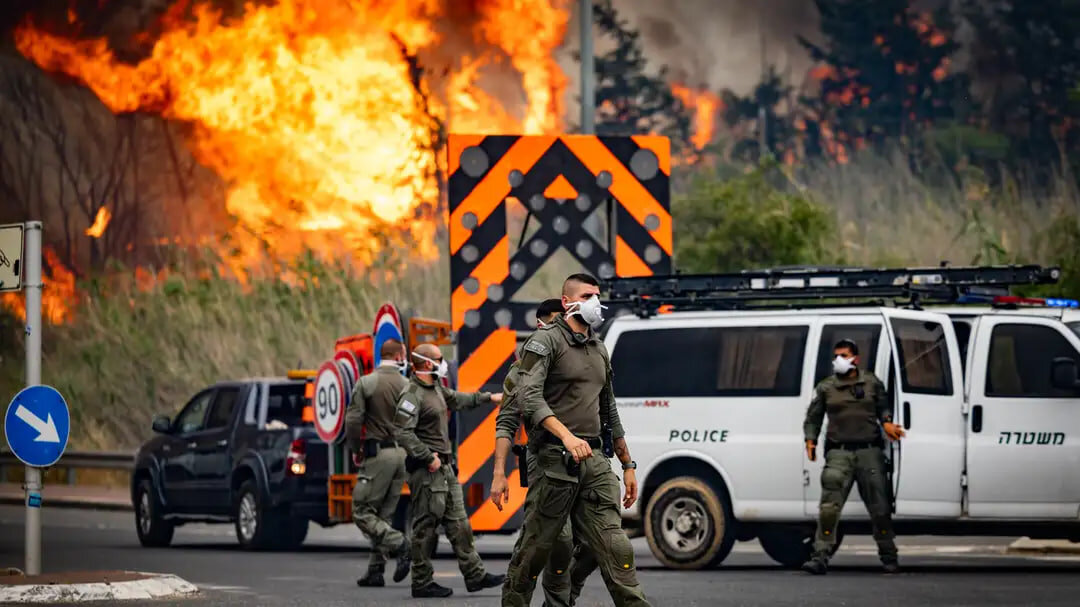
Massive wildfires near Jerusalem al-Quds

Dark plumes of smoke billowed above highways near Jerusalem al-Quds on Wednesday as rapidly spreading wildfires caused several injuries and prompted military minister Israel Katz to declare the situation a "national emergency".

Israel's Magen David Adom rescue agency reported that hundreds of civilians were at risk from the worst brushfires in years, as Katz ordered troops to deploy to support firefighters.

MDA said it had provided treatment to around 22 people, with 12 taken to hospital, the majority suffering from smoke inhalation. It added the alert level had been raised to the highest level.

"We are facing a national emergency, and all available forces must be mobilized to save lives and bring the fires under control," Katz said in a statement from his ministry.

Police closed the main Jerusalem-Tel Aviv highway and evacuated residents along the route as brushfires broke out in an area ravaged by blazes a week ago.

Persian Gulf National Day is a symbol of coexistence and civilization: Baqaei

Foreign Ministry spokesperson Esmaeil Baqaei says the Persian Gulf National Day is a symbol of coexistence, interaction, and civilization-building throughout history.

Foreign Ministry spokesperson Esmaeil Baqaei says the Persian Gulf National Day is a symbol of coexistence, interaction, and civilization-building throughout history.

Baqaei wrote on his X account on Wednesday that Persian Gulf National Day is a historical observance that is imprinted on the identity of Iran and the collective memory of the region, and is a symbol of coexistence, interaction, and civilization-building throughout history.

He added that the Persian Gulf National Day is an opportunity to review the common history of peoples of the region, reflect on the elements that make up the regional identity, and emphasize the need to further promote convergence and good neighborliness among the regional countries to achieve security and sustainable development for all countries in West Asia.

On April 30, Iran marks Persian Gulf Day, commemorating the liberation of the southern shores from Portuguese colonial occupation some 400 years ago.

The Persian Gulf is one of the three seas, besides the Caspian Sea and the Gulf of Oman, along which Iran has coastlines.

President Pezeshkian’s visit to Baku, an important event

By Mohsen Pakaein 

President Pezeshkian's official visit to Azerbaijan signals a potential turning point in Tehran-Baku relations.
Tehran and Baku are once again witnessing an important event. President Masoud Pezeshkian’s official visit to the Republic of Azerbaijan marks this significant occasion. Although the turbulent relations between Tehran and Baku have seen slow progress at times, the will of Pezeshkian’s administration to strengthen relations with its neighbors and the desire of the Republic of Azerbaijan to solidify friendly relations with Iran promise the beginning of a new chapter of strong ties.

The Islamic Republic of Iran’s president’s visit to Baku confirms that the two neighboring countries, with long borders and a history of deep friendship and historical kinship, are determined to enhance and improve relations and are fond of continuing their friendly ties in a positive and constructive direction.

On the bilateral level, the recent meeting of the Joint Economic Commission of the two countries, held in Baku with Iran’s Minister of Roads and Urban Development Farzaneh Sadegh in attendance, demonstrated that the two countries have numerous opportunities for cooperation.

In fact, the parties can engage in effective collaboration, especially in the fields of transportation, energy, trade, tourism, agriculture, banking, and coordination to tackle security threats and challenges such as terrorism, organized crime, and drug trafficking. These matters will naturally be followed up during the meeting between the presidents of the two countries, accelerating their implementation.

On the other hand, the visit of Iran’s president to Baku takes place at a time when the shadow of a thirty-year war between Azerbaijan and Armenia has been lifted. Following the recognition of the territorial integrity of the two countries and the resolution of the Karabakh conflict, the will of Baku and Yerevan is now focused on stabilizing internationally recognized borders, paving the way for final peace.

Of course, the establishment of stability and security in the South Caucasus, which has always been supported by Iran, can facilitate and institutionalize joint economic cooperation between Iran and the Republic of Azerbaijan, enabling the development of strategic relations. Under these circumstances, Tehran and Baku can secure their economic interests by adopting pragmatic approaches in an atmosphere of mutual trust and positive synergy based on abundant commonalities.

Completing the construction of the Rasht-Astara railway, removing customs and tariff barriers to increase trade, expanding tourism connections, finding solutions to exploit the joint oil field in the Caspian Sea, and cooperating to rebuild the liberated areas of Azerbaijan are among the topics likely to be discussed and agreed upon during Pezeshkian’s visit to Baku.

Finally, the officials of the two countries are well aware that good relations between them have sworn enemies, such as the Zionist regime, which will not hesitate to take any action to disrupt Tehran-Baku relations. In recent days, following the announcement of Pezeshkian’s visit to Baku, a series of psychological operations have been launched by the Israeli media and affiliated elements. However, the officials and media of the two countries, through intelligent and conscious management, will neutralize these efforts.

Overall, the president’s visit to the Republic of Azerbaijan is an important opportunity and a significant step that can strengthen bilateral and multilateral relations, symbolizing the success of the pragmatic diplomacy of the current administration in Iran.

Vice president says Iran is ready to renovate Sudan’s industry

First Vice President Mohammad-Reza Aref expressed Iran’s readiness to renovate Sudan’s industry.
Tehran, IRNA – First Vice President Mohammad-Reza Aref has stressed strengthening ties with Sudan and expressed Iran's readiness to collaborate on industrial renovation in Sudan.

Speaking in a meeting with visiting Minister of Industry of Sudan Mahasin Ali Yagoub, Aref expressed hopes for peace and stability Sudan.

The resumption of embassies’ activities over the past year heralds developing relations, he added.

We are ready to expand all-out ties with Sudan, he noted and appreciated Sudan’s cooperation in regional and international issues, especially on the issues of the Islamic world, including Palestine and Lebanon.

Meanwhile, the Sudanese minister said that her country's infrastructure has been bombed, and the people of Sudan have suffered greatly, calling for Iran's support to overcome these challenges.

She is in Iran to participate in the Third Iran-Africa Economic Cooperation Conference being held April 27 to May 1, 2025.

Iran’s U.N. envoy slams world’s ‘moral and legal failure’ to stop Israeli crimes in Gaza

Iran's ambassador to the United Nations has criticized the international community over its “deep moral and legal failure” to prevent the ongoing humanitarian catastrophe in Gaza

Iran's ambassador to the United Nations has criticized the international community over its “deep moral and legal failure” to prevent the ongoing humanitarian catastrophe in Gaza, caused by Israeli attacks and exacerbated by the support and impunity granted by the United States and its allies.

“Their continued provision of weapons, political backing, and financial support enables Israel to commit further atrocities in grave violation of international law,” Amir Saeid Iravani said in an address before the U.N. Security Council on Tuesday.

The following is the complete text of his address: 

Thank you, Mr. President.

We speak at a time of deep moral and legal failure. Gaza is enduring a severe humanitarian catastrophe, not solely due to Israeli military actions, but also because of the impunity granted by the United States and some Western countries. Their continued provision of weapons, political backing, and financial support enables Israel to commit further atrocities in grave violation of international law.​

The total blockade of food, water, fuel, and medicine imposed on Gaza constitutes collective punishment. It flagrantly violates the Fourth Geneva Convention and amounts to a war crime.​

At the same time, illegal settlements are expanding, Palestinians are being forced off their land, their homes demolished, their movement restricted, and subjected to settler attacks. These acts are part of a larger plan to annex land and erase Palestinian presence. Such illegal acts violate international law and Security Council resolutions.

Against this backdrop, I wish to emphasize the following points:

First, Gaza requires an immediate and unconditional ceasefire. Priorities must include humanitarian access, aid delivery, and prisoner exchanges.

Second, a permanent ceasefire must be followed by Gaza reconstruction. Reconstruction efforts must respect Palestinians' rights and reject any schemes involving forced displacement or resettlement in third countries. Palestinians must determine their own future, united.​

Third, it is time for Palestine to become a full UN member without conditions.  Palestine meets all membership criteria. The U.S. veto of Council’s resolution ignored the global community's will, which overwhelmingly supported Palestine's membership through a General Assembly resolution with 143 votes in favor.

Fourth, the Palestinian right to self-determination is non-negotiable. Establishing an independent, sovereign Palestinian state with Al-Quds as its capital remains the legitimate aspiration of the Palestinian people. It is essential that all Palestinian groups remain united; any division only serves Israel's interests.

Fifth, without ending the occupation and aggression, peace and stability in the region will remain elusive.​ The Security Council must compel Israel to withdraw its occupying forces from the Palestinian occupied territories, Lebanon, and Syria, and end its ongoing aggression and violations.

Mr. President,

In closing, the main threat to peace and stability in the region comes from the terrorist and destabilizing actions of the Israeli regime and its main sponsor, the United States. The existence of this regime is built on terror, murder, aggression, and occupation. It constantly fuels conflict, undermines regional stability, and violates international law.

Beyond its brutal attacks in Gaza, Israel commits near-daily acts of aggression against the sovereignty and territorial integrity of Lebanon and Syria. They are deliberate, systematic, and deeply destabilizing.

Israel continues its aggression and occupation only because of full political, military, and diplomatic support from the United States. If the U.S. stopped its support just today, Israel would be forced to follow international law and respect its obligations.

The Security Council must not stay silent. It must act now, firmly and urgently, to uphold international law, defend the UN Charter, and protect civilians from further harm.

I thank you, Mr. President.

Cooperation with IAEA is a step toward building trust with Europe

 TEHRAN PAPERS

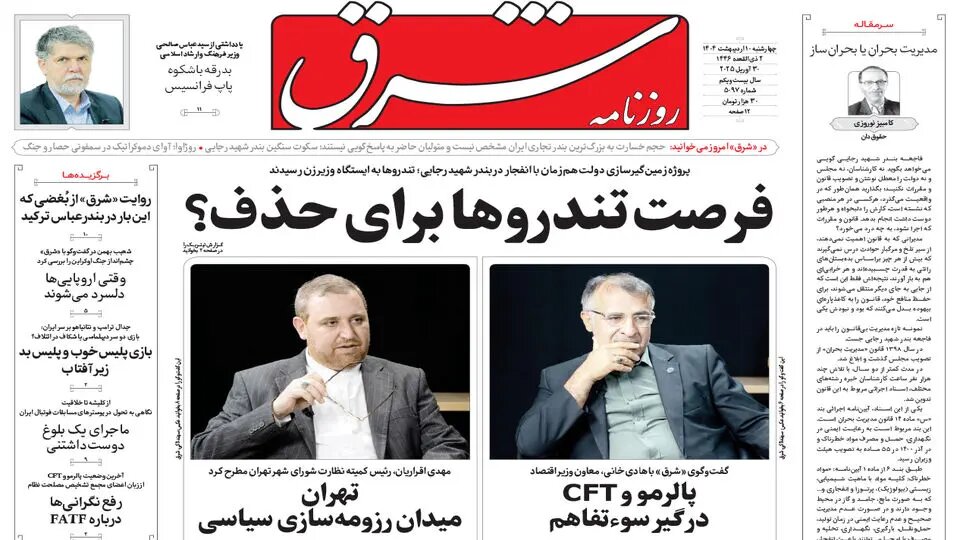
TEHRAN - In a note, Shargh addressed Iran’s proposal to hold a meeting with the European troika in Rome and said: The presence of the International Atomic Energy Agency’s technical team in Tehran, which was announced with Iran’s proposal for negotiations with Europe, shows Tehran’s determination to answer the Agency’s technical questions and control the tension with the European troika (France, Britain and Germany).

Inviting the Agency’s technical team could help clear up ambiguities about nuclear activities, such as undeclared materials, and prevent the issuance of a resolution against Iran at the Board of Governors. Iran’s proposal to negotiate with the European troika and cooperate with the Agency is part of a balanced strategy in nuclear diplomacy. Tehran, which is conducting indirect negotiations with the United States in Oman, is simultaneously seeking to reduce tensions with Europe and strengthen cooperation with the Agency to prevent the escalation of international pressure. This multilateral approach, although complex, demonstrates Iran’s understanding of the time and political limitations ahead. Negotiations with the U.S., held recently in Muscat with Oman’s mediation, have shown some progress, but still face obstacles such as disagreements over long-term guarantees.

Jam-e-Jam: Affecting the Caucasus developments through constructive interaction with Baku

Jam-e-Jam analyzed President Pezeshkian’s one-day visit to the Republic of Azerbaijan and wrote: This visit should be considered more than a typical diplomatic event. This visit can be considered a clear message from Tehran to reconsider its regional policies, especially towards the South Caucasus region. In recent years, the Caucasus has become one of the most important centers of geopolitical developments in the world, a region where the competition between great powers, from Russia and Turkey to Europe and the United States, can be clearly seen in the changing new world order. Expanding Tehran-Baku relations in various fields will allow Iran to influence Baku's regional policies, diminish the role of third parties, and further reduce security and political challenges in the region. Also, strengthening and improving relations with the Republic of Azerbaijan will provide Tehran with an opportunity to act as a mediator in the conflicts between Armenia and the Republic of Azerbaijan. This, in turn, can prevent the presence of extra-regional countries in the South Caucasus and ensure the interests and national security of the Islamic Republic of Iran.

Ettelaat: Israel is major obstacle to Iran-US agreement

Ettelaat spoke with Ahmad Naghibzadeh, a political science professor, about the progress in Iran-U.S. negotiations. He said: Apparently, our negotiations with the Americans are proceeding slowly and there have been many analyses about the positivity of the talks between the two sides. It must be admitted that both Iran and the U.S. have red lines that they don’t compromise under any circumstances. Therefore, the idea of ​​understanding and reaching a common ground seems far-fetched. Despite the efforts made by both sides and even Donald Trump commenting on the negotiations, the weapons that the U.S. has brought to the region are not for nothing. We also cannot be indifferent to Israel's moves against an agreement. In any case, any cooperation between Tehran and Washington is 100% in conflict with what is important to Israel, and for this reason, they are the main obstacle to realizing an agreement. Given the depth of the differences between Iran and the U.S., it should be said that the start of talks between the parties can be a sign of the serious will of both sides to end or reduce the differences, but reaching an agreement is very difficult.

Sobh-e-No: Aliyev should learn from Zelensky’s fate

The unfortunate truth is that in recent years, instead of focusing on regional relations, Baku has become a backyard of Washington and Tel Aviv. Even spy agencies affiliated with the U.S. and the Zionist regime have started planning security conspiracies in this context. In fact, Aliyev preferred that the security of the Republic of Azerbaijan be ensured under the political, military, and security plan of the U.S. and Israel, but now is the time to take a different approach after observing the fate of Zelensky. Baku, in the vicinity of an independent and strong neighbor like Tehran and with the goodwill of the Islamic Republic, can make the best use of the opportunities and capacities available by welcoming the strengthening of bilateral interactions. On this basis, Aliyev can choose the desired path for Baku's future at a fateful crossroads: political independence and improving relations with neighbors, or continuing to move along the goals of the U.S. and the Zionist regime.