Monday, November 01, 2021

Big Polluters Offer Little New on Climate

G20 Leaders Issue Watered-Down Final Statement

ROME (Reuters) -- Leaders of the Group of 20 major economies agreed on a final statement on Sunday that urges “meaningful and effective” action to limit global warming but offers few concrete commitments.

The statement represented “half-measures” rather than “concrete urgent action”, one non-governmental organization said.
The result of days of tough negotiation among diplomats leaves huge work to be done at a broader UN climate summit in Scotland, to where most of the G20 leaders will fly directly from Rome, and disappointed climate activists.
The stakes are huge - among them the very survival of low-lying countries, the impact on economic livelihoods the world over and the future stability of the global financial system.
The G20 bloc, which includes Brazil, China, India, Germany and the United States, accounts for an estimated 80% of global greenhouse gas emissions.

“This was a moment for the G20 to act with the responsibility they have as the biggest emitters, yet we only see half-measures rather than concrete urgent action,” said Friederike Roder, vice president of sustainable development advocacy group Global Citizen.
The final document says current national plans on how to curb emissions will have to be strengthened “if necessary” and makes no specific reference to 2050 as a date to achieve net zero carbon emissions.
“We recognize that the impacts of climate change at 1.5°C are much lower than at 2°C. Keeping 1.5°C within reach will require meaningful and effective actions and commitment by all countries,” the communique said.
The 1.5C threshold is what UN experts say must be met to avoid a dramatic acceleration of extreme climate events like droughts, storms and floods, and to reach it they recommend net zero emissions should be achieved by 2050.
The leaders only recognized “the key relevance” of halting net emissions “by or around mid-century”, a phrase that removed the 2050 date seen in previous versions of the final statement so as to make the target less specific.
China, the world’s biggest CO2 emitter, has set a target date of 2060, and other large polluters such as India and Russia have also not committed to the 2050 target date.
UN experts say that even if current national plans are fully implemented, the world is headed for global warming of 2.7C, with catastrophic consequences.
The final G20 statement includes a pledge to halt financing of overseas coal-fired power generation by the end of this year, but set no date for phasing out coal power, promising only to do so “as soon as possible”.
This replaced a goal set in a previous draft of the final statement


to achieve this by the end of the 2030s, showing how strong the push-back from some coal-dependent countries is.
The G20 also set no date for phasing out fossil fuel subsidies, saying they will aim to do so “over the medium term”.
On methane, which has a more potent but less lasting impact than carbon dioxide on global warming, they watered down their wording from a previous draft that pledged to “strive to reduce our collective methane emissions significantly”.
The final statement merely recognizes that reducing methane emissions is “one of the quickest, most feasible and most cost-effective ways to limit climate change”.
G20 sources said negotiations were tough over so-called “climate financing”, which refers to a 2009 pledge by rich nations to provide $100 billion per year by 2020 to help developing countries tackle climate change.
They have failed to meet the pledge, generating mistrust and a reluctance among some developing nations to accelerate their emissions reductions.
“We recall and reaffirm the commitment made by developed countries, to the goal of mobilizing jointly USD 100 billion per year by 2020 and annually through 2025 to address the needs of developing countries,” the G20 statement says.
The leaders “stress the importance of meeting that goal fully as soon as possible”.
World leaders will kick start COP26 on Monday with two days of speeches that could include some new emissions-cutting pledges, before technical negotiators lock horns over the rules of the 2015 Paris climate accord.
Any deal is likely to be struck hours or even days after the event’s Nov. 12 finish date.

Worsening of the Crisis in Sudan

By: Kayhan Int’l

Sudan is once again in flames as the military junta which recently dismissed the interim civilian cabinet whose survival was actually at the mercy of the generals in uniform, has turned a deaf ear to the democratic demands of the people and is trying to silence them through the barrels of its guns.
Sunday’s massive marches by the people in Khartoum and other towns and cities were met by brute military force resulting in more deaths of the peaceful demonstrators.
The pro-Israeli junta’s claim to seize power from the civilian government of Prime Minister Abdallah Hamdok as a precautionary move to avoid a civil war, has been dismissed as lies by the Sudanese people as well as by political analysts abroad.
General Abdel-Fattah al-Burhan, an Israeli stooge, who seized power in 2019 by toppling President Omar Hassan al-Bashir (shortly after the latter’s visit to Damascus and meeting with Syria’s President Bashar al-Assad), intends to turn Sudan into a US-Zionist base against the wishes of the Sudanese people.
The protesting masses say he does not represent the Sudanese Muslim people who are staunch supporters of the Palestinian people and their cause.
They point out that General Burhan takes orders from abroad. This means the protestors demanding civilian rule from the generals who rule it, will have to pay a heavy price.
In other words, the people should brace for more bullets and greater number of the dead and the wounded, to prove they possess the indomitable spirit of sacrifice to change the status quo.
It will be a gargantuan task for the Sudanese people, and only time will tell how determined the masses are in the face of the current economic and political crises.
This is all indicative of an intricate plot to spread the tentacles of Israel in Northeast Africa and the Red Sea region.
The Americans, though they have resorted to hypocrisy to denounce the latest coup, are no friends of the Muslim people of Sudan.
As a matter of fact, the US, along with Israel, will never allow Sudan to be a strong and independent Muslim country under an elected civilian government.
Under the circumstances, only the iron resolve of the Sudanese masses on the basis of Islam and national solidarity will enable them to deliver their country from the grip of the illegal military junta.

Israeli PM claims regime is in state of 'cold war' with Iran

The Israeli regime's prime minister claims the regime is in a state of "cold war" with Iran, in an apparent passive admission of the regime's inability to stage direct military action against the Islamic Republic.

“We have a cold war with Iran,” Naftali Bennett told The Sunday Times.

He acknowledged Iran's status as a "regional power," adding, “For the last 30 years, Iran positioned around us to distract us."

Bennett alleged that the regime would try to stay "ahead" of Iran so that it would not have to engage directly against the Islamic Republic.

"We will work against them, using all our energy, all our innovation and technology, and economy to get to a point where we are a number of steps ahead," he said.

“The parallel is what [former US president Ronald] Reagan did. Reagan didn’t have to bomb Moscow," the Israeli premier said.

His remarks came only a few days after Iran's top military general said direct military action had become difficult for the United States and the Israeli regime.

The US and its regional allies were going downhill, while Iranian forces were boosting their readiness to counter any threats, Chairman of the Chiefs of Staff of the Iranian Armed Forces, Major General Mohammad Baqeri said on Tuesday

“We thank God that after a difficult period of past threats, today we are witnessing a period of decline and weakness of the criminal US and its regional followers,” he stated.

Kashmir Black Day observed in Canada

Crescent International

View of the audience at the October 31 seminar on Kashmir Black Day observed in Toronto, Canada
October 27 is observed as Black Day in the history of Jammu and Kashmir. To join their voices with the people of Kashmir, Canadians of Kashmiri and Pakistani origins also observed this day on October 31 in Toronto.

A number of speakers shed light on various dimensions of the origins of the Kashmir dispute. Messages of support from Pakistan’s President Arif Alvi and Prime Minister Imran Khan were presented by Dr Najm us Sahar, First Secretary at the Consulate of Pakistan in Toronto.

Zafar Bangash, Director of the Institute of Contemporary Islamic Thought (ICIT) and member Friends of Kashmir Canada, highlighted the background to the October 27, 1947 episode when Indian army occupied the state.

It was an illegal act, based on a lie that maharaja Hari Singh had signed an instrument of accession.

In the 74-year period, India has not been able to produce the instrument of accession raising serious doubts about its existence.

A number of speakers of Kashmiri origin also spoke at the seminar sharing first-hand experiences of the suffering of the Kashmiris.

The people of Jammu and Kashmir have a simple demand: the right to self-determination as enshrined in at least 12 UN Security Council resolutions.

Pakistani Consul General in Toronto, Abdul Hameed also spoke and presented grim statistics about the number of people killed, women raped and the Kashmiris incarcerated in horrible conditions.

He said that Pakistan government would continue to offer political, moral and diplomatic support to the people of Kashmir.

India’s illegal occupation has continued since 1947.

How did Indian troops land in Srinagar when the state was not part of India?

When Britain was preparing to leave India to end colonial rule, left exhausted by the Second World War, it presented a partition formula that was accepted by the leaders of both the Hindu and Muslim communities.

Since co-existence was impossible because Hindu chauvinists were not prepared to guarantee the fundamental rights of the 30% Muslim minority, leaders of the two communities agreed upon a partition formula that was presented by the departing British colonialists.

Muslim majority areas would constitute Pakistan while Hindu majority areas would become part of India.

There were also some 500 princely states that enjoyed relative autonomy under British colonial rule.

The princely states were asked to join either Pakistan or India based on their demographic composition and geographic contiguity.

The situation of most states was straight forward.

There were three states where this was a little problematic.

The state of Jammu and Kashmir was one of them.

The maharaja happened to be Hindu while the state population was overwhelmingly Muslim.

The state was geographically, culturally and linguistically much closer to and contiguous to the new state of Pakistan than India.

The Kashmiris naturally assumed their state would become part of Pakistan.

When the maharaja prevaricated, the people rose up in revolt.

The ruler fled the capital, Srinagar.

When Indian troops landed in Srinagar, India’s rulers including governor general, Lord Mountbatten, and Prime Minister Jawahar Lal Nehru, announced that once law and order were restored, a referendum would be held to determine the wishes of the people.

The people had already spoken through their uprising that had resulted in the ruler fleeing the state.

Indian occupation troops carried out a massacre of Muslims in Jammu where between 200,000 (Horace Alexander’s account in the British magazine, The Spectator, January 16, 1948) to 500,000 Muslims (as reported by the British author Ian Stephen) were killed.

More than 350,000 other Kashmiris were forced to flee Jammu in panic, arriving in Pakistan.

This was the first ethnic cleansing of the Kashmiri Muslims.

From a 62% majority in Jammu, Muslims were reduced to a minority of 31%.

Indian army genocide, aided and abetted by the Hindu terrorist outfit and the RSS led to war between India and Pakistan.

As Pakistani forces backed by the people of Kashmir and tribesmen from Pakistan, made progress in pushing the Indian occupation forces out, India took the matter to the UN Security Council.

Both India and Pakistan agreed that a referendum should be held in Kashmir.

While it was India that took the matter to the Security Council, it was clear that its intentions were not sincere.

India merely wanted to buy time.

This is what India has done since 1948.

Instead of honoring its pledges to the people of Kashmir and the world, today it says Kashmir is an “integral” part of India.

The overwhelming majority of Kashmiri people reject this ludicrous claim.

The Kashmiris have been protesting against India’s illegal occupation ever since.

October 27 marks another grim anniversary in their long, painful struggle for the fundamental right to determine their own future.

A resolution of support for the Kashmiri people was presented by Ahmed Khawaja, the program moderator, that was unanimously approved by the seminar participants.

We must not fail the people of Jammu and Kashmir. We must do whatever we can to highlight their plight and become their voice to the outside world.

Indian occupied KashmirFriends of Kashmir Committee Canada (FKCC)Indian armyIndian crimesPakistan

Iran FM says Biden can issue ‘executive order’ if serious to return to nuclear deal

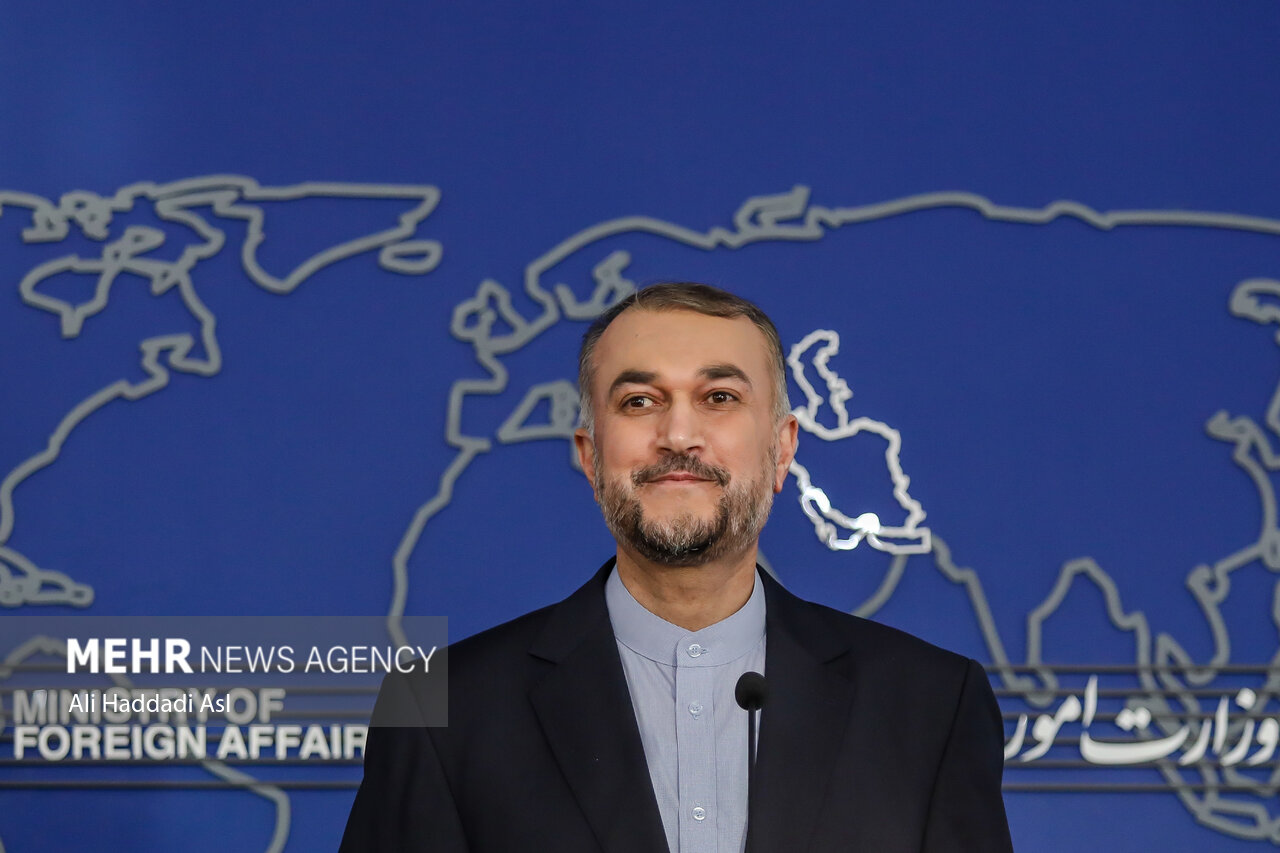
TEHRAN – Iranian Foreign Minister Hossein Amir Abdollahian has said that if the United States was serious about rejoining the 2015 nuclear deal, President Joe Biden could just issue an “executive order”, the Iran newspaper reported on Sunday.

The accord, under which Iran put limits on its nuclear work in exchange for a lifting of economic and financial sanctions, unraveled in 2018 after then-President Donald Trump withdrew the United States, prompting Tehran to breach limits on uranium enrichment set by the pact one year later.

“It is enough for Biden to issue an executive order tomorrow and they (U.S.) announce they are rejoining the pact from the point where his predecessor left the deal,” Amir-Abdollahian told the Iran newspaper.

“If there is a serious will in Washington to return to the deal, there is no need for all these negotiations at all.”

Tehran has said its nuclear steps since Trump abandoned the accord, are reversible “if Washington lifts sanctions in a verifiable process”.

According to Reuters, talks between Iran and world powers meant to salvage the deal, which started in April, are slated to resume at the end of November, Iran’s top nuclear negotiator Ali Bagheri said on Wednesday after his meeting with the European Union political director Enrique Mora in Brussels. The talks have been on hold since the election of Ebrahim Raisi as Iran’s president in June.

“Washington wants to continue a large part of the sanctions imposed by Trump on Iran. This is unacceptable for Iran,” Amir Abdollahian said.

The Iranian chief diplomat also said “neighbors and influential players in the region” should be informed about the details of the nuclear negotiations.

The foreign minister had already said the U.S. could prove its goodwill by releasing at least 10 billion dollars of Iranian assets frozen in foreign banks.

Iran: EU, Taliban asked to attend Tehran meeting on Afghanistan

TEHRAN – Iranian Foreign Ministry spokesman Saeed Khatibzadeh has said that the European Union and the Taliban had asked to participate in the meeting on Afghanistan in Tehran.

Foreign ministers of the countries neighboring Afghanistan met in Tehran on October 27.

The Taliban and other Afghan groups had expressed interest in attending the conference in Tehran, Khatibzadeh said when asked whether the Taliban had been invited to attend the meeting. 

He added that Iran had also received requests from others to attend the conference.

“We received requests for attendance in the Tehran summit, the European Union for example, was interested in attending the summit as an observer,” he said. 

The spokesman also said that all these requests were discussed at the Tehran summit, because the format of Afghanistan's neighboring countries is based on “consensus.”

The first meeting on Afghanistan was hosted by Pakistan in September. 

According to Khatibzadeh, all countries must reach a single decision on an issue. 

He said, “At the Tehran summit, the request of the governing body of Afghanistan [Taliban] was examined and the necessary decision was agreed to be made at the meeting of special representatives.”

China, which shares a 46-mile border with Afghanistan, is set host the next meeting on Afghanistan in 2022.

Meanwhile, Iranian Ambassador to China Mohammad Keshavarzzadeh has said that Tehran and Beijing share the same view on Afghanistan, underlining that they can work together to counter terrorism in the war-torn country.

Keshavarzzadeh told the Global Times that both Iran and China have the same view about rooting out terrorism in Afghanistan and its spillover to neighboring countries as well as honoring a non-interference policy and territorial integrity in the country.

He said Iran supported the use of the China-proposed Belt and Road Initiative to improve the economy and people's livelihoods in Afghanistan. The ambassador praised China's pledge to host the third round of the meeting of foreign ministers of neighboring countries of Afghanistan and noted that Iran will lend its support to China.

The foreign ministers of Iran, China, Pakistan, Tajikistan, Turkmenistan, Uzbekistan, along with Russia, held a meeting on Afghanistan in Tehran last week on Wednesday. 

The Tehran meeting resulted in an agreement to hold the next round of the meeting in 2022 in China, indicating that the neighboring countries of Afghanistan succeeded in establishing a credible platform to address issues related to peace and security in Afghanistan.

The meeting approved a ministerial joint statement that addressed a range of issues of much interest to all the participants of the Tehran gathering, formally known as the “Meeting of Foreign Ministers of Afghanistan’s Neighboring Countries + Russia.”

It was held in continuation of another meeting held in Pakistan in early September. During the Pakistan meeting, the participants agreed to hold the next meeting in Tehran.

The joint statement of the Tehran meeting noted that “an inclusive and broad-based political structure with the participation of all ethno-political groups is the only solution to the Afghanistan issues.”

It also called on “the international community to provide humanitarian assistance on urgent basis.” 

Furthermore, the statement called on the “international community to remain positively engaged with Afghanistan and develop long term roadmap to advance the agenda of political engagement, economic integration and regional connectivity.”

To make sure that the meeting serves the interests of all the participants, the statement took note of “the assurances and commitments of relevant responsible Afghan parties to the international community that the territory of Afghanistan will not pose any threats to the neighboring countries and will not be used by criminal, terrorist and separatist groups, and cut ties with all kinds of terrorist groups, strike and eliminate them in a decisive manner.”

The Taliban has welcomed the meeting. Zabihullah Mujahid, the Taliban's spokesman, told Fars News Agency that the Tehran meeting was positive.

“It was a meeting between Tehran and Afghanistan's neighbors that had positive results,” he said. 

He added: “The Taliban expect from this and other similar meetings to cooperate with the Afghans and to take steps to recognize the Taliban so that we can interact with the world, our neighbors and the region as a responsible party.”

Mujahid continued, “The Taliban's position on such meetings is that the international community and different countries should interact with the Taliban in various fields.”

Taliban deputy spokesman Ahmadullah Wasiq also praised the Tehran meeting and called it in Afghanistan's favor.

Responding to a request from foreign ministers of Afghanistan’s neighbors for a comprehensive government, he said there was a possibility of a change in the Taliban’s cabinet.

“We support this meeting, as it was expected, and it was positive and in Afghanistan's favor,” Wasiq added.

Keshavarzzadeh said the mechanism set up in the Tehran meeting would further enhance cooperation among neighboring countries of Afghanistan. “Iran, for its part will lend its support to China and believes that this mechanism will further increase cooperation and understanding among neighboring countries of Afghanistan and contribute effectively to their joint efforts toward helping Afghan people better safeguard their interests and step into the path of peace, inclusiveness, friendship and well-being,” he said. 

The ambassador added, “Iran is also supporting giving full play to the role that regional economic initiatives and organizations like the Belt and Road Initiative, SCO and ECO can have in improving the economy and the livelihood of the people of Afghanistan.”

According to the diplomat, the meeting mechanism of Afghanistan's neighboring countries serves as a “very important regional arrangement to support peace, reconciliation and national unity in Afghanistan.”

Keshavarzzadeh told the Global Times that all of the neighboring countries are very much concerned about terrorism in Afghanistan. He called on the Taliban to strive to fulfill its commitment to counter-terrorism.

Iran and China share common views on different regional and international issues, said the diplomat who stressed that an inclusive and broad-based political structure with the participation of all ethno-political groups is the only solution to the Afghan issue.

“Tehran's meeting was mainly concentrated on promoting the political solution to the Afghanistan crisis. Iran's position on this has been consistent and principled. We believe that forming an inclusive political structure that represents all ethnic and religious groups of this country is imperative and during this conference Iran has reaffirmed that international recognition would not fly without internal reconciliation and a full-fledged representative government at home. Regional countries and members of the international community at large should help bring about a consensus in Afghanistan to secure lasting peace and prosperity,” he said.

Another point of significance, the ambassador noted, is how to face the legacy of foreign interference in the region. "In this regard, any kind of action that could lead to renewal of irresponsible and bullying actions in Afghanistan should be avoided and the US and its NATO allies who created this chaotic situation should not shrink from their responsibilities," said the ambassador.

He mentioned that it's important for Afghanistan to have access to its financial resources in order to avoid further suffering, especially as winter approaches. "Last but not the least is the fundamental importance of observing human rights in Afghanistan, in particular, the rights of women and girls and all ethnic and religious groups," he said.

He pointed out, “Afghanistan's political structure and development path are up to the Afghan people to decide. All the ethno-political groups and parties should participate in an inclusive government that will lead to national reconciliation, peace and integrity.”

According to the ambassador, Iran now hopes to help with the urgent needs of the Afghan people. Sending humanitarian assistance, opening borders at the earliest possible time to facilitate and normalize trade activities, providing fuel for the coming cold season, paying due attention to refugees and displaced people and keeping the diplomatic missions functioning are all important actions taken by Iran in accordance with brotherly relations, he said.

He called on the international and regional organizations, in particular the UN and its agencies, to shoulder responsibilities and provide Afghanistan and its neighboring countries with necessary assistance. 

He said that Iran has declared its readiness to act as the hub for delivering goods and equipment into Afghanistan. “Since Iran has been hosting more than 3 million Afghan nationals for more than three decades and its economy is strained by illegal and oppressive sanctions by the US, Iran should be provided with support from members of the international community in facing the issue of refugees coming from Afghanistan,” he noted.

Saudi plot to overthrow Lebanese government thickens

TEHRAN — In a chain of events intended to bring Lebanon to its knees, Saudi Arabia and its allies have taken an old interview out of context, published it, and surfed on it to topple the Lebanese government.

Pilot: Set up an interview with a probable nominee

The first episode began when Al Jazeera, Qatar’s state TV, aired an old interview from George Kordahi. The interview was conducted on August 5, before Kordahi’s nomination for information minister. In the interview, Kordahi said that he believes the 7-year war in Yemen was “futile.”

He also said that the Ansarallah movement was merely “defending their country.”

It is important to remember when the interview was conducted. On August 5, Kordahi was just a TV presenter. He was appointed as the Lebanese Information Minister on September 10. 

So, why did Al Jazeera air an old interview at the most complicated time?

Episode 2: Examining possibility of cutting the cords

The answer lies within the Saudi coalition seeking to topple the Lebanese government. The Saudi officials have never hidden their ulterior motives that they are after toppling the Lebanese government, no matter who is in charge in Beirut. 

With a 230 million dollar worth of exports to Saudi Arabia, Lebanon doesn’t play an important role in the Saudi economy. Therefore, when they don’t see Lebanon as a strategic economic partner, they have no problem cutting cords with the country. All they need to do is to form a coalition. 

Episode 3: Let’s gather around the usual suspects 

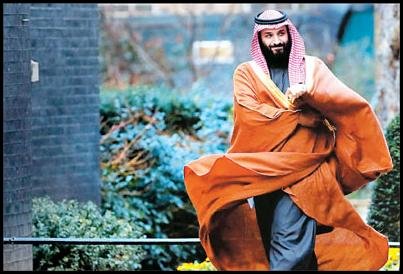
Riyadh gathered Kuwait, Qatar, the UAE, and Bahrain to follow the scenario step by step. Saudi Arabia's de facto ruler, Crown Prince Mohammed bin Salman had to make sure that they are on the same page. 
They were all briefed on what steps they must take. 

Episode 4: Let the games begin

The interview was aired on Al Jazeera. The bomb exploded. Saudi Arabia invited Walid Bukhari, its envoy to Beirut, for further consultation on the matter. Then, on October 27, the Saudi Foreign Ministry summoned the Lebanese ambassador to Riyadh for issuing a warning. Kuwait, Bahrain, and the UAE also summoned the Lebanese ambassadors to their capitals. They heard the explanations, and seemingly, tensions were de-escalated. 

Episode 5: Boom

On October 29, Saudi Arabia gave a 48-hour notice to the Lebanese envoy to leave Riyadh. According to the statement issued by the Saudi Foreign Ministry, the kingdom also banned imports from Lebanon. 

The decision was immediately followed by Kuwait, Bahrain and the UAE. They all gave a 48-hour notice to the Lebanese envoys to leave their capitals. For its part, the UAE also imposed a ban on its citizens traveling to Lebanon. 

The Lebanese Prime Minister, Najib Mikati, said that he regrets the decision taken by the Saudi Arabian government, and advised his information minister Kordahi to make an “appropriate decision” by considering the national interests, in order to solve the diplomatic crisis between Riyadh and Beirut. 

“We have always expressed our rejection of any abuse directed towards the Kingdom of Saudi Arabia, and we have called for correcting the flaws in the relations between the two brotherly countries during the last period, and we stressed in the ministerial statement that one of the priorities of our government is to work on restoring historical relations and ties between Lebanon and its brothers,” Mikati said on Saturday, trying to win the Saudi crown prince’s heart. 

Finale: 

The Saudi kingdom wants to overthrow the Mikati administration, in order to establish a government that serves its interests.