
By Palestine Chronicle Staff
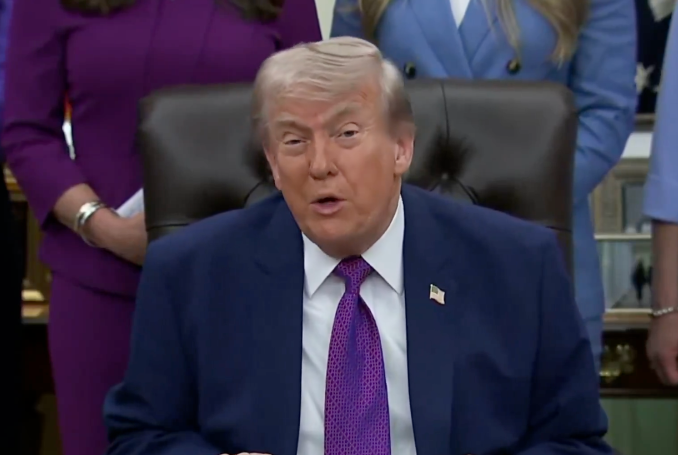 US President Donald Trump. (Photo: video grab)
A senior US military officer sought “creative and unconventional” ideas as bombing failed to force Iran into accepting Washington’s demands.
Key Takeaways
- A senior CENTCOM intelligence officer unusually solicited new ideas by email for ways to “pressure and punish Iran.”
- US intelligence agencies have assessed that the current bombing campaign is unlikely to alter Tehran’s negotiating position.
- Trump is weighing symbolic strikes, deeper escalation or an indefinite cycle of attacks, with no option likely to achieve his original objectives.
‘Creative, Unconventional Methods’
A senior officer at the US military command directing President Donald Trump’s war against Iran circulated an unusual email asking analysts to propose “creative and unconventional” methods of pressuring Tehran, according to a CNN report.
The request came as Washington’s weeks-long bombing campaign failed to force Iran back to negotiations on American terms, leaving the Trump administration with a narrowing range of military options and no clear strategy for ending the war.
“We are looking for new creative and unconventional ways to pressure and punish Iran,” an officer in US Central Command’s intelligence branch wrote in a message sent Wednesday to a broad group of military analysts, according to a source familiar with the email.
A second source confirmed that a senior military officer had sent the message soliciting new approaches to Iran.
Military officials reportedly regarded the crowdsourcing-style request as unusual, particularly because it was circulated through email.
According to one source, CENTCOM is now examining “everything” and recognizes the need to reassess its current strategy.
CENTCOM defended the request as part of its established practice of encouraging ideas from across the command.
“US Central Command has a long history of thinking and working in innovative ways,” CENTCOM Spokesman Captain Timothy Hawkins reportedly said, adding that “Admiral Cooper, in particular, reaches out to members of our great team, regardless of rank, to achieve the highest levels of operational performance possible.”
However, CNN reported that the email reflected a deeper strategic problem confronting the administration: the remaining options are either unlikely to achieve Trump’s objectives or carry severe political, military and humanitarian consequences.
“You need creative minds at times — especially if you’re running out of conventional options,” one source familiar with the planning discussions said.
The email preceded Trump’s latest threat to launch a major new attack on Iran.
The president ultimately suspended the operation over the weekend after regional officials, particularly Saudi Crown Prince Mohammed bin Salman, contacted him and urged de-escalation.
Bombing Fails to Shift Iran
The United States has carried out repeated airstrikes against Iran for weeks, claiming that the attacks are intended to weaken Tehran’s ability to threaten commercial shipping in the Strait of Hormuz and compel Iranian leaders to return to negotiations.
Yet no agreement has emerged.
Both the Central Intelligence Agency and the Defense Intelligence Agency have recently concluded that the current bombing campaign is unlikely to change Iran’s negotiating position, according to CNN.
General Dan Caine, chairman of the Joint Chiefs of Staff and Trump’s most senior military adviser, has also publicly acknowledged the limitations of continued airstrikes.
“Air power has its limits,” Caine told lawmakers last month.
US military officials have presented Trump with escalation options for months, while additional aircraft, ships and weapons have been transferred to the region in preparation for a possible order to intensify the campaign.
One CENTCOM plan reportedly calls for one or two weeks of heavy bombardment aimed at destroying Iran’s remaining missile capabilities.
Trump has so far resisted authorizing the plan, partly because Caine warned him about dwindling US supplies of air-defense interceptors.
Other officials have raised concerns that wider attacks could cause large-scale civilian casualties, particularly if Trump acts on threats to strike bridges, power facilities and water-desalination infrastructure.
Deeply Buried Nuclear Sites
Trump has also considered renewed attacks on Iranian nuclear facilities, including Pickaxe Mountain and other locations believed to contain nuclear material or equipment.
Two sources familiar with military planning said US forces were actively preparing options for strikes on those sites.
However, the installations are reportedly buried so deeply underground that even the most powerful conventional American weapons are unlikely to destroy them.
Successfully eliminating the sites would probably require US ground forces, an option Trump has so far been unwilling to pursue.
A ground operation would expose American troops to substantial risk while further intensifying scrutiny of the administration’s handling of military casualties.
At least eighteen US service members have been killed in the fighting, according to CNN. Deploying troops would also violate one of Trump’s central campaign promises.
“I will not send you to fight and die in stupid foreign wars that never ends,” Trump told supporters during a 2024 campaign rally in Pennsylvania.
A ‘Fireworks’ Display
Without a viable path to destroying Iran’s nuclear infrastructure, Trump has considered ordering strikes designed primarily to create the appearance of decisive action.
One source described the proposal as a “fireworks” display.
Such an operation could strike the same facilities attacked the previous year, or similar targets, while allowing Trump to claim a symbolic victory and seek an exit from the war.
The strikes, however, would not accomplish one of his original objectives: eliminating Iran’s nuclear program.
They would also be unlikely to resolve the dispute that has become central to the conflict—control and security in the Strait of Hormuz.
“At the end of the day, POTUS will want a deal, so he’ll continually look for ways to get tough and get out of this,” one source told CNN.
The comment captured the contradiction facing the administration: Trump wants to intensify pressure sufficiently to compel an agreement while avoiding the ground war or prolonged military commitment that might follow.
Saudi Intervention
Trump’s decision to suspend the latest planned attack reportedly followed direct intervention by Saudi Arabia and other regional governments.
According to reports, Saudi Crown Prince Mohammed bin Salman called Trump and urged him not to escalate.
Gulf countries have repeatedly warned that a broader conflict could trigger further Iranian attacks on energy facilities, desalination plants, ports and other vital infrastructure across the region.
Despite those warnings, the United States has continued bombing Iran, while Tehran has maintained its pressure in and around the Strait of Hormuz.
The Saudi intervention demonstrated the extent to which Washington’s regional partners fear that a new US escalation could expose them to retaliation without producing a political settlement.
No Clear Route to Victory
The report suggests that Trump now faces three broad choices, none of which provides a clear victory. He could authorize a larger bombing campaign, despite assessments that airstrikes alone are unlikely to change Iran’s position.
He could send American ground troops to seize strategic locations such as Kharg Island or remove Iran’s enriched uranium, risking a major and prolonged war.
Or he could accept an indefinite cycle of American strikes and Iranian retaliation, leaving the Strait of Hormuz in constant danger and creating the kind of “forever war” he has repeatedly denounced.
Few officials within Trump’s inner circle or the Pentagon believe the available escalation options would deliver the outcome the president wants, CNN reported.
Nevertheless, Trump continued to present military pressure as the path to victory.
“I think we just want to win,” he said during a Cabinet meeting on Friday. “We’ll be hitting them very hard, and you know, at some point, they’re going to say, ‘We just can’t take it anymore.’”
(PC, CNN)

No comments:
Post a Comment