Showing posts with label Tourist Attracions. Show all posts

Saturday, November 16, 2019

Borobudur Temple Compounds in Indonesia

By: Mohammad Ali Haqshenas

YOGYAKARTA, (MNA) – Built in the 8th and 9th centuries, Borobudur is one of the most famous Buddhist temples in the world. The site was abandoned in the 15th century and it took some 400 years to be re-discovered and restored with the help of UNESCO. The temple, inscribed in UNESCO World Heritage List in 1991, is now considered one of the major tourist attractions in Indonesia.
  • borobudur temple
  • borobudur temple
  • borobudur temple
  • borobudur temple
  • borobudur temple
  • borobudur temple
  • borobudur temple
  • borobudur temple
  • borobudur temple
  • borobudur temple
  • borobudur temple
  • borobudur temple
  • borobudur temple
  • borobudur temple
  • borobudur temple
  • borobudur temple
  • borobudur temple
  • borobudur temple
  • borobudur temple
  • borobudur temple
  • borobudur temple

Ta

Sunday, September 29, 2019

Nasir-ol-Molk Mosque, stunning whirling colors

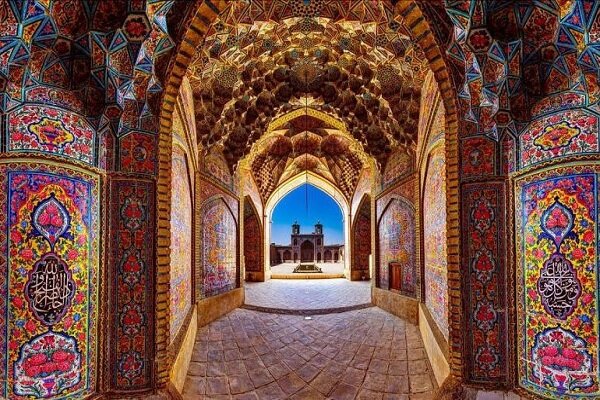
TEHRAN, (MNA) – One of the most beautiful and photographed pieces of architecture in southern Iran, is Nasir-ol-Molk Mosque. It is one of the tourist attractions of Iran’s historic city of Shiraz which is known for its colorful lights that are formed by stained glass windows.
Shiraz is one of the most beautiful cities in south of Iran, where many tourists visit it every year. It is one of the oldest cities of ancient Persia and is known as the city of poets, literature, flowers and gardens. It is one of the main tourism sites in Iran and its cultural heritage is of global importance. Due to many historical, cultural, religious and natural attractions, Shiraz has always attracted many tourists. One of these magnificent places is Nasir-ol-molk Mosque.
Nasir-ol-molk Mosque is one the tourist attractions of Shiraz which was built during the Qajar dynasty at the end of the 19th century. It is one of the most unique and different mosques in Iran. The mosque is famous for its colored glasses and its tiles are unique in their kind.
This mosque is called by many different names. Mostly known as the “Pink Mosque” because its tiles are beautifully decorated with a pre-eminently pinkish rose color, it is also called the “Mosque of colors,” the “Rainbow Mosque” or the “Kaleidoscope Mosque”.
It is located in a region in the southern part of Lotf Ali Khan Zand Street. The mosque was built by order of Mirza Hasan Ali Nasir ol Molk, a Qajar ruler. Mohammad Hasan-e-Memar, an Iranian architect, and Mohammad Reza KashiSaz were two designers of this mosque. The construction of this elegant mosque was finished after 12 years.
It is 2890 square meters and considered as one of the most valuable mosques in Iran in terms of construction, especially tiling and muqarnas (a form of ornamented vaulting in Islamic architecture). It has two shabestan (an underground space that can be usually found in traditional architecture of mosques, houses, and schools in ancient Iran which were usually used during summers) in east and west.  
The eastern Shabestan has seven columns that are located in the middle of the space and are in a row. The most amazing part of the mosque is the western Shabestan. There are twelve columns which are placed in two rows of six. Seven arches are located between the two pillars, and at the end, there is an attractive tiled altar. The floor of the altar is made of marble and its surface is lower than the floor of the Shabestan. The western Shabestan has seven wooden doors with colored glasses that open to the courtyard.
With dazzling stained glass, thousands of painted tiles on the ceiling and Persian rugs covering the floor, this place of worship is a gorgeous rainbow of color in every direction, like stepping into a kaleidoscope.
There is an open courtyard with a rectangular pool in the center of the mosque, surrounded by flowers. The building’s facade features dozens of Islamic arches, adding to the beauty of the light show from the stained glass.
Despite other mosques, Nasir-ol-molk Mosque has no dome, which indicates that this religious building was quite personal and not used by the public. The tiling of this mosque is unique and the use of pink color is one of the features of the mosque which is not usual in any other Iranian mosques.
In autumn and winter, when the sunlight shines through the colorful glasses, and reflexes it on blue mosaics, make a dazzling view inside this mosque which making this mosque outstandingly aesthetic among other mosques of Iran.
Recently, Nasir-ol-molk Mosque has been lighted at nights as well; the light passes through the colored glasses and spreads into the yard and all over the mosque.
Nasir-ol-molk Mosque is still used for worship. It was registered in Iran's National Heritage on February 1955 under the registration number of 369.
The best time to visit Nasir-ol-molk Mosque is early in the morning before 9 a.m when the hall and its Persian carpets are illuminated with a kaleidoscope of patterned flecks of light.  

Wednesday, September 18, 2019

Chehel Sotoun; a blend of prominent Persian garden, glorious palace

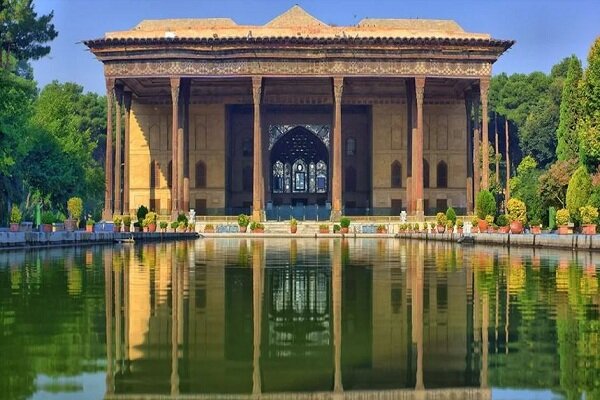
TEHRAN, (MNA) – Located next to Naqsh-e Jahan Square and Chahar Bagh, Chehel Sotoun Palace is considered as one of the tourist attractions of Isfahan, Iran.
The attractive Safavid architecture and world heritage sites have made Isfahan province a popular destination for both Iranian and international tourists.
Isfahan is Iran's most beautiful city, where it boasts the highest level of Islamic and Iranian architecture and, as a living museum; shows the culture and tradition of the Iranian people.
The artistic and historical city of Isfahan has over 22,000 historical sites and monuments, of which 850 are nationally registered and four have been designated by UNESCO as World Heritage Sites, namely Naqsh-e Jahan Square, Imam Mosque and Chehel Sotoun Palace.
Chehel Sotoun Palace is renowned for its unique paintings and mirrors and has once been the place of hosting greats from all over the world.
The palace dates back to Safavid Era in 1588, was established during the reign of Shah Abbas I, the first king of Safavid Empire, in the midst of a vast and lush garden. It was a small palace in the middle of a large garden and to be used for the Shah's resting. The immense halls of this palace used to be the selected places for official feasts of the country.
After his reign, Chehel Sotoun Palace was enlarged and inaugurated by Shah Abbas II for receptions and amusements.  Some porches, paintings, ornaments and various parts were added at the behest of Shah Abbas II, making it a glorious palace for the Safavid kings.
It was selected as the official venue for the usual political ceremonies and reception of other kings and officials.
The land of Chehel Sotoun Palace is 67000 square meters. The architecture of this palace is a blend of Iranian, Chinese and European arts and consists of a main porch on the east part of the palace. The 20 slender, ribbed wooden pillars of the palace rise to a superb wooden ceiling with crossbeams and exquisite inlay work.
The name, meaning "Forty Columns" in Persian, was inspired by the twenty slender wooden pillars supporting the entrance pavilion, which, when reflected in the waters of the fountain, are said to appear to be forty.
The main porch of the palace consists of two parts. The first part consists of 18 wooden pillars and 4 middle pillars on the stone lions. The second part of the palace is the Hall of Mirrors, which is on two columns and is decorated with a very wide and beautiful mirror.
The central hall of the Chehel Sotoun Palace is dedicated to guests and great figures from other countries and contains the beautiful paintings by the famous Safavid painter, Reza Abbasi. Each miniature here is depicting one certain time during Safavid dynasty.
In the paintings of the central hall which, in some cases, have been repainted in Qajar period on the previous paintings, we can see the depiction of “Shah Abbas I, Shah Abbas II and Shah Tahmasb entertaining Turkestan kings and Indian Homayoun” and “the battle of Shah Ismail and the Uzbek”. Two other illustrations one in front of the hall entrance opposite to the other depict a scene of Chaldiran Battle in shah Ismail’s period and Karnal Battle in Nader shah Afshar’s time. Dedicated to entertaining the guests and foreign ambassadors, this hall has a pretty dome with colorful corner motifs, golden and lucid details.
The doors and windows are all decorated with fretworks and cachet designs. In addition, the central hall of the palace includes some glamorous paintings on the walls that each refers to a special event on a specific period of time. All these elements are representative of the proficiency of the skillful Iranian masters and architectures.
Chehel Sotoun Palace is a great example of the royal gardens left over from the Safavid era. It was registered on UNESCO Cultural Heritage list in 2011.It is among the 9 Iranian Gardens which are collectively registered as one of the Iran’s 23 registered World Heritage Sites under the name of the Persian Garden.
The best time to visit Chehel Sotoun Palace is in spring and summer and visiting this palace will take one hour.

Wednesday, September 04, 2019

Eye-opening experience: As many Americans as possible should visit Iran

TEHRAN, (MNA) – Judith Bello, a long-time American peace activist, who has visited Iran for two times, believes such a journey “will be an eye-opening experience”.
“In these difficult times, we need as many people as possible from the US to go to Iran and see that Iranians are people not so different from ourselves, and they are the keepers of an ancient history that is not only theirs, but all of ours,” she said in an opinion article released by USA Today in August.
Bello has assessed her Iran’s adventures as “very rewarding”, finding its people “friendly and generous”. 
“I have traveled to Iran twice with similar delegations and had experiences that were very rewarding. The people there are friendly, down to earth and generous, and seeing Iran for yourself puts a whole new perspective on any prior information you might have. Many people there speak English and the food is excellent.”
She says that there are antiquities in Iran that are inconceivable for those who have not left the western hemisphere.
“There is a modern art museum in Iran and another museum with a mind boggling collection of gemstones along with medieval jeweled swords and gowns and whatnot. Iran is a mid-sized country, but they have a long and well preserved history that is just astounding.”
For several thousand years, Iran was at the epicenter of the civilized world. From Cyrus to Darius to the Mogul emperors in India, Iran was the center of the universe. They met and matched the Greeks and Romans, she noted.
“Zoroastrianism, the ancient religion of Iran, was the first religion with many of the characteristics of the three sisters, Judaism, Christianity and Islam: One God, a world of Good and Evil, and human choices. Poetry is popular in Iran and poets are revered especially mystics. They have a powerful and sophisticated film industry, and a complex political system with many democratic elements.”
Visiting Tehran Peace Museum, Bello comments “The Tehran Peace Museum is part of an international network of peace museums that are affiliated with the Hiroshima Peace Museum. It is run primarily by disabled veterans from the Iran-Iraq war, who like many veterans who joined the peace movement here, saw that war is not the way. They have a mission to find better ways to treat victims of toxic gas attacks, a weapon Saddam Hussein used against them again and again.”
“We all have something to learn about what is outside our own world. In these difficult times, we need as many people as possible from the US to go to Iran and see that Iranians are people not so different from ourselves, and they are the keepers of an ancient history that is not only theirs, but all of ours.”
Regarding to recent tensions between the Islamic Republic and the US, Bello hopes that it could ultimately be cooled by the means on dialogue not a war.
“I sincerely hope our government will use diplomacy rather than force to resolve their issues with the Iranians.”
Many travelers to Iran find their new perception of the country as totally different from that they previously thought based on mainstream Western media outlets.
For an example, Jenny Gray, the global product and operations manager of the Australia-based Intrepid Travel, said earlier this year that “It is a country that is often portrayed as unwelcoming, but the reality is quite the opposite… Iranians are warm, friendly and eager to show off their country to foreigners. The feedback from our travelers is a testament to this.”
As we know, the media play a pivotal role in informing the public about what happens in the world, including Iran as a lesser-known country for a majority of Western people. Media’s portrayals could be more effective in areas in which audiences do not possess direct knowledge or experience to construct public belief and attitudes.
The 2019 Travel Risk Map, which shows the risk level around the world, puts Iran among countries with “insignificant risk”, a category where the UK, Denmark, Switzerland, Norway, and Finland are placed in.
Decades of unresolved tensions between Iran and the US, ran high once again last year, when the Trump administration pulled the United States out of an international deal to give Iran access to world trade in return for curbs to its nuclear program, reinstated sanctions on the Islamic Republic.
Since then Washington’s major European allies Britain, France and Germany have been at odds with the US, believing that pulling out of the nuclear agreement was a mistake. The Europeans have warned that heightened confrontation could lead to an accidental war in the Persian Gulf.

Monday, August 12, 2019

Difficult but worthwhile ascent

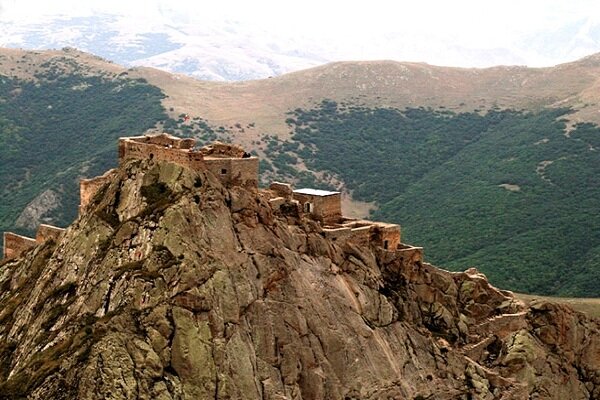
TEHRAN, Aug. 11 (MNA) – One of the mysterious places in Iran which its location made it impossible army of thousands men to pass, is Babak Fort. It sits attractively on a steep-sided mountain in north-western Iran.
Babak Fort, also known as the Immortal Castle or Republic Castle, in East Azarbaijan Province is located on top of a mountain with 2600 meter height in the Arasbaran forests, 6 km southwest of Kalibar City in northwestern Iran. It is known as the most glorious stone castle of Iran.
It is a magnificent and beautiful monument that was the stronghold of Babak Khoramdin, a patriot and militant leader against invaders.
Babak Khoramdin was one of the Iranian commanders of Azarbaijan and main Persian revolutionary leaders of the Iranian Khoramdinan, which was a local freedom movement fighting the Abbasid Caliphate. He persisted against Abbasid for 22 years and gave his life for it. 
The fort is one of the greatest examples of Iranian architecture. It consists of several stone towers and lodging areas stretched in an area of nearly ten thousand square meters, attributed to the Sassanid-era (224–651).
Babak Fort has a multi-story structure in which the main hall has been surrounded by seven rooms all of them ends up in the hall. It was constructed in two floors and has only one entrance gate. There exists a narrow passage about 100 meters high to reach the main fort before the entrance. This passage was under control of guardians in the past in order to check all traffic. There were towers in two sides of the entrance which were the headquarters of guards. The entrance was the only way to enter the fort because of the security issues.
On the eastern side of the fort, there are some reservoirs next to the rooms. The mortar was the materials which were used in building of reservoirs in order to prevent the rain and snow water penetration. In rainy and snowy seasons the tank become full of water that they use it in summer.
Most of the western part is now destroyed, but it seems that it was the place where the troops were guarding and monitoring everything. Staircase is the only way to reach the upper floors; it is located in the northwestern side of the fort. The roof of this reservoirs has been established by barrel and rib vault. 
The Babak Fort has been refurbished many times over the years, but its complete restoration is not easy given its geographical location and conditions. Much of the fort's walls have collapsed, and its current appearance is very different from past.
It was recorded in list of national, cultural and historical opuses in 1966 and has been repaired by The Cultural Heritage Organization of Iran.
Iranian archeologists have found many coins and potteries belonging to 13th century in Babak Fort. The objects and tools obtained from the Babak Fortress are carved and glazed potteries that are belonged to early seventh century A.H.
Given that Babak Fort is in a mountainous area, the best time to visit this glorious castle is from April to early June and also from September to October. Access to fort is challenging and involves one to two hours difficult uphill walk. The hike is not recommended for the infirm, elderly or those afraid of heights.
If you are interested in ancient Iranian history, continue your adventure up the Babak Fort on your journey to East Azerbaijan province.

Tuesday, July 09, 2019

Badab-e Surt, seven colors springs

Badab-e Surt, seven colors springs
TEHRAN, Jul. 07(MNA) – Badab-e Surt is a rare geologic place which attracts geology lovers to one of the most beautiful tourist attractions in Mazandaran province, northern Iran. It comprises a range of stepped travertine terrace formations that has been created over thousands of years as flowing water from two mineral hot springs cooled and deposited carbonate minerals on the mountainside.
The beautiful springs of Badab-e Surt, also known as color springs, attracts a lot of tourists to this place every year. It is located 95 kilometers south of Sari city, Capital of Mazandaran province and 7 kilometers west of Orost village. It sits at 1,840 meters above sea level and is the culmination of thousands of years of limestone deposited by water flowing from two mineral hot springs during Pleistocene and Pliocene geological periods.
Badab-e Surt includes two springs with different natural characteristics in terms of color, smell, taste and volume of the water. The first spring has very salty water that gathers in a small natural pool; its water is useful for medicinal properties, especially as a cure for rheumatism and some types of skin diseases, migraine and foot pain. It is appropriate at summer and also, will not freeze in winter due to its salt.
The second spring located in the northwest of the first spring has a sour taste and is mostly orange and red mainly due to the large iron oxide sediments at its outlet. In one part of a floor of the pond, there is a deep hole is called the Bermuda Erost. The depth of this hole is estimated 98 meters.
Badab-e Surt was recorded as the second Iran's natural heritage list in 2008. It is the second largest salt spring of the world after Turkey’s Pamukkale. It is one of the most important programs of Iranian authorities to register it on UNESCO World Heritage List as a unique natural place.
There are only six somewhat similar spring like Badab-e Surt in the world; Pamukkale in Turkey, Bagni San Filippo in Italy, Agoura El Hierro in Mexico, White-Water Terraces (Baishuitai) in China, yellow stones in the US and The Pink Terraces(Otukapuarangi) in New Zealand.
The place gets its name from a combination of the Persian words for “gassed water” and the old name of the nearest village, which means “intensity.”
The best time to visit Badab-e-Surt is April and May, Although it is beautiful in all seasons. The most breathtaking scenes and wonderful view of light reflection on the ponds are during sunset or sunrise. When the lights shine the traces, it makes the ponds glow with red, orange, brown and yellow.

Tuesday, February 26, 2019

Darak, where the desert meets the sea

TEHRAN, Feb. 23 (MNA) – The coastal village of ‘Darak’ can be found in the southernmost tip of Iran, on Mokran's shores, stretching along the Sea of Oman. It is one of the most stunningly pristine beaches in the country.
The village is a potential touristic site, which enjoys all three types of the cliff, sandy and coral beaches in the vicinity.
Darak or ‘Darag’ in the local language means settling along the sea. It is where the burning sands nestle in the arms of the free waters.
In the coastline, the waters of the Gulf of Oman and the Indian Ocean collide. The perceived coastlines of the sands and palm trees create wonderful scenes.
Location
The village forms a part of Zarabad County in the borders of Konarak. It is 19km from Johlou, the capital city of Zarabad. From the east, Darak is linked to the coastal village of Jod, and from the west it borders Poshti Village. Mountains embrace the village from the north and the sea from the south.
Abandoning the usual tourist routes, one could take an unknown route to venture into Sistan and Baluchestan. Trotting along the mild path, we will reach its sandy shore that offers a unique spectacle.
This village is located between two important southern port cities: Chabahar and Bandar Abbas.
he sand hills, shores, corals, rocks, mountains and surrounding forests, and the unspoiled and domesticated nature can all be seen in the same place.
Thanks to the efforts of the indigenous people and officials, this village has kept its purity and beauty. Interestingly, it does not appear on Iranian maps and you have to look in English maps, or look for the term "Darak Coast" in English or Darak Beach to geolocate.
Tourist sites and entertainment
Darak has a pristine shoreline. It is known for its extraordinary beaches. However, fortunately or unfortunately, its tourist potential has never been exploited and no tourist development has been realized. It is a site for those who are looking for the authenticity and charm of this unspoiled coastline.
The sand dunes and the extended coast are a good combination for cycling enthusiasts. Roads in this region are also suitable for motorized leisure activities, including off-road.
Along the Chabahar road in the village of Darak are temporary signs indicating access to one of the most beautiful coasts of Iran. This road is itself a tourist attraction by the landscapes that it presents to the eyes, but also by the sporty driving that it requires - it is thus preferable to take this road with a car adapted to all types of ground.
The most obvious recreation at the seaside is swimming. The place is also very good for all kinds of water activities, from surfing to diving. But again, no development has been done and it must become equipped.
Picnics, photography and hiking
The village, in itself, is worth seeing. Do not hesitate on the way to stop for a picnic under the shade of a palm tree. Hiking trails abound and compete with the coastal path. The hikes are made in forests and palm groves up to the sky, always with a view of the coast of sand and coral. The sunsets are also of unique beauty.
Best season to travel
The province of Sistan and Baluchestan is one of the hottest provinces of Iran. It rarely rains there, let alone in the years of drought. Nevertheless, the Darak village enjoys a spring climate most of the year. It is due to the refreshing winds that come from the Indian Ocean.
The best time to visit Darak is spring, from early to mid-season. After that, the heat of summer may reduce the pleasure of this trip. Summer remains a season to avoid due to high temperatures.
The beginning of autumn is still warm in the province, but the monsoon winds allow Chabahar and the littoral zones to benefit from a little more freshness. It is quite possible to go there in the fall, although it is better to wait until the second half of the season. Winter is also a good season to visit the village of Darak.
Inhabitants of Darak
The inhabitants of Darak belong to the Balouch ethnicity and speak Baluchi. Men's clothing consists of shalwar kameez. It consists of very baggy pants. The kameez is also loose, which traditionally is long with long sleeves. The Balochi shalwar kameez is similar to the styles worn in Afghanistan. 
The female Balochi suit consists of the head scarf, long dress and a shalwar. Balochi women wear loose dresses which are embroidered in colorful designs that are particularly renowned for the finesse of their embroidery.
The inhabitants of Darak mainly do fishing, but they also practice agriculture as a secondary activity. The kindness of these people is proverbial. It is common that visitors and travelers are invited to enjoy delicious local dishes, seasoned with traditional spices, where the ancestral culinary know-how of the women of the village is tasted. According to the latest censuses, Darak is populated by less than 500 people, making up over a hundred households.
Therapeutic virtues of Darak coastal dunes
One of the interesting aspects of the coast of Darak village is the existence of white sand hills that, according to locals, have healing properties for muscular and bone pains. In order to cure these pains, they lie on the sand early in the morning, when the sun shines high in the sky.
Darak is a rather green place, and one wonders how the palms grew on this hot desert coast. This is another oddity of the village: this place nestled near the sea and located in a hot and dry area has fresh water, just a few tens of meters from the sea. fresh water exists less than two meters deep.
This water is the origin of the forest and the variety of tropical species existing there. The inhabitants use fresh water to cultivate and harvest watermelon, corn, palm trees, etc. Side by side with these fruits, you will also see different species of acacia nilotica and fig trees pagodas.
Acacia nilotica (the red gum) is a species native to East Africa and the Indian subcontinent of the family Fabaceae, which also grows in Tchabahar in southern Iran. This tree has therapeutic virtues.
The fig tree of the pagodas is a tree belonging to the genus Ficus religiosa of the Moraceae family. It is a sacred tree according to Hinduism and Buddhism.