Showing posts with label Cuba. Show all posts

Sunday, December 08, 2019

‘I am Fidel’ – the Cuban Response to US Hopes of Destabilising Cuba

Ramona WADI

Three years since Cuban revolutionary leader Fidel Castro died at age 90 of natural causes, the Cuban Revolution has withstood ongoing destabilisation efforts to turn the island once again into an imperialist playground. Indeed, as Latin American countries grapple with the ramifications of historical and current US intervention, Cuba has steadfastly held on to the principles which Fidel imparted to the Cuban people throughout the revolutionary process. The participatory aspect of memory in Cuba has been sustained through Fidel’s emphasis on education as an integral component of the revolution.
The US might have harboured the intention that Fidel’s departure would facilitate the process for a counter-revolutionary period in Cuba and the fall of the ideals that have transformed Cuban politics and society. However, the Cuban Revolution was always bigger than Fidel. It encompassed the link between leadership and the people, built upon the historical foundations which Fidel himself articulated. Defining revolution, for Fidel, was an endorsement and affirmation of Jose Martí as the “intellectual author of the Cuban Revolution”. What Fidel achieved was a continuation which now lies in the hands of generations of Cubans who are well versed in the importance of unifying education with revolution.
This is why, despite the attempts to sabotage the Cuban Revolution, the US blockade on Cuba and its transgressions against the island – a recent USAID conspiracy involved the tarnishing of the Cuban medical contingents – have not succeeded in changing the island’s course. Indeed, as Chile and Bolivia grapple with the ramifications of neoliberalism and a military coup respectively, Cuba remains a standing bastion in the region, just as much as it did when Fidel was alive and deemed the main obstacle to US plans for the island.
The Cuban resolve to remain independent and free of colonialism necessitated a radical change – namely prioritising education within the construction of revolutionary goals. Even prior to the triumph of the revolution, Fidel exhibited awareness of implementing the continuity. As can be gleaned from the Manifesto of the Sierra Maestra (1957), as well as the First and Second Declarations of Havana (1960, 1962), Fidel’s concept of education is inclusive of Cuban independence from imperial motives in Latin America. The Manifesto declared ‘an immediate initiation of an intensive campaign against illiteracy, and civic education emphasising the duties and rights of each citizen to his society and fatherland’. Furthermore, in condemning ‘the exploitation of man by man and the exploitation of underdeveloped countries by imperialistic finance capital,’ an awareness of rights in association with education was asserted – a statement reminiscent of Fidel’s early memories concerning the link between illiteracy and exploitation. Prior to its triumph, the revolution considered education as the vehicle through which Cubans could fight for economic, social and political rights. Therefore, education as a right and duty affirmed the Cuban Revolution’s stand against imperial exploitation of people and natural resources.
Revolutionary education contrasted with the colonial and military functions of the Batista regime. Several speeches of Fidel attest to this fact. Using a metaphor of armies during a 1961 address in Havana which recapitulated the revolution’s achievements in education and a goal to eradicate illiteracy in just one year, Fidel invoked the differences between Cuba’s ‘army of educators’ and the army of ‘exploiters’. Furthermore, Fidel declared: “The resentment of imperialism is so profound, its hatred of our revolution so great, that the imperialists refuse to resign themselves.” Eradicating illiteracy was perceived as a fundamental battle against imperial and counter-revolutionary actions against Cuba, also allowing Cubans to become active participants against imperial intervention. Throughout the revolutionary phases, there is ample evidence that Cuba not only consolidated its anti-imperialist values at a national level, but also, through Fidel, managed to impart internationalism based upon education and revolutionary consciousness.
Education, therefore, has contributed to the empowerment and organisation of Cuban society. This dynamic has contributed to awareness, and termination of, the relationship between subjugation and exploitation, while striving to complete an evolution of humanity within the context of socialist revolution.
The US, which only understands the language of coercion and intervention, will not comprehend the insoluble bond not only between Fidel and the people, but also between the people and the revolution. This unity has enabled Cubans to stand principled in defense of the revolution, while also providing an internationalist example for the rest of the world to emulate.

Friday, December 06, 2019

OUR AMERICA IN FACE OF ONSLAUGHT OF IMPERIALISM AND OLIGARCHIES

A statement issued by the Cuban Foreign Ministry on Tuesday rejects any responsibility for the popular mobilizations currently rocking several Latin American countries. 

Declaration of the Ministry of Foreign Affairs
The most recent events in the region confirm that the US government and the reactionary oligarchies bear the primary responsibility for the dangerous unrest and political and social instability that broke out in Latin America and the Caribbean.
As was anticipated by the First Secretary of the Communist Party of Cuba, Army General Raúl Castro Ruz, on January 1, 2019: Those who entertained the illusion of the restoration of imperialist domination in our region should understand that Latin America and the Caribbean have changed and so has the world (…) The region resembles a large prairie in times of drought.  A single spark could cause an uncontrollable fire that would damage the national interests of all.”
President Donald Trump proclaims the validity of the Monroe Doctrine and resorts to McCarthyism to maintain the imperialist domination over the natural resources of the region; prevent the exercise of the national sovereignty and the aspirations of regional  integration and cooperation; attempt to re-establish his unipolar and hemispheric  hegemony; eliminate progressive, revolutionary and alternative models to wild capitalism; revert political and social achievements and impose neo-liberal models, with full disregard for International Law, the rules of the game of representative democracy, the environment or the wellbeing of peoples.
This Monday, December 2, Secretary of State Mike Pompeo threateningly accused Cuba and Venezuela of benefiting from and helping to stir up unrest in the countries of the region.  He distorts and manipulates reality and conceals the main reason for the instability in the region, which is the US permanent interference in Latin America and the Caribbean.
The legitimate protests and peoples’ massive demonstrations  that are going on in the continent, particularly in the Plurinational State of Bolivia, Chile, Colombia, Ecuador and Brazil are caused by poverty and the increasingly unequal distribution of wealth; the certainty that neo-liberal formulas are worsening the exclusive and unsustainable situation of  social vulnerability; the absence or precarious situation of health care, education and social security services; the abuses against human dignity; unemployment and restriction of labor rights; privatization; the increasing cost and cancellation of public services and the increased public insecurity.
They reveal the crisis of political systems, the lack of true democracy, the discredit of traditional conservative parties, the protest against the typical historical corruption of military dictatorships and right-wing governments, the scarce popular support to official authorities, the lack of confidence in institutions and the system of justice.
They also protest against the brutal police repression, the militarization of it using as a pretext the protection of critical infrastructures; the exemption of repressors from criminal liability; the use of military and anti-riot weapons that cause deaths, serious injuries, including hundreds of youths suffering from irreversible eye injuries caused by shotgun pellets; the criminalization of demonstrations; violations, beatings and violence against detainees , among them minors; and even the assassination of social leaders, demobilized guerrillas and journalists.
The United States advocates and supports repression against demonstrators under the pretext of safeguarding the alleged “democratic order”. The complicit silence of several governments, institutions and personalities, that turn out to be very active and critical against the left, is a shame. The complicity of the big corporate media is shameful.
Peoples are very rightly wondering: Where is democracy and the rule of law? What are the institutions that are supposedly devoted to the protection of human rights doing? Where is the justice system whose independence is so much trumpeted?
Let’s review some facts.  In March, 2015, President Barack Obama signed an unheard-of Executive Order declaring the Bolivarian Republic of Venezuela as an “unusual and extraordinary threat to the national security, the economy and foreign policy” of that big power. In November, 2015, the costly electoral defeat of the left-wing in Argentina occurred.
The neo-liberal offensive had its momentum in August, 2016, with the judicial and parliamentary coup in Brazil against President Dilma Rousseff; the criminalization and incarceration of the leaders of the Workers’ Party and later on of ex President Luis Inacio Lula Da Silva himself; the prompt participation of the Department of Justice of the United States, by virtue of the Foreign Corrupt Practices Act, to install a dependent government, ready to revert important social achievements through neo-liberal adjustments, introduce a nefarious change in the development model, allow the destruction of national businesses and a predatory privatization and  sell  the resources and infrastructure of the country to American transnationals at a cheap price .
By the end of 2017 there was a protest against the electoral results in Honduras that was terribly repressed.
In January, 2018, the United States aborted the signing of an agreement between the government of Venezuela and the Washington-controlled opposition. One month later, the Secretary of State proclaimed the validity of the Monroe Doctrine and called for a military coup against the Bolivarian and Chavista Revolution.
In March, 2018, the Brazilian councilwoman Marielle Franco was atrociously murdered.  This action aroused a wave of anger in her country and the whole world.  The obscure involvement of the powers that be in this event has not been disclosed.  In April, Lula is sent to prison through spurious judicial maneuvers.  There is abundant evidence of the US interference in the Brazilian elections through specialized companies using technologies such as “big data” and polymetry to manipulate, on a case by case basis, the will of voters, such as the ones used by the ultra-reactionary Steve Bannon and others designed by Israel.
During this period, legal proceedings were initiated against ex presidents Cristina Fernández de Kirchner and Rafael Correa. In April, 2018, there was an attempt to destabilize Nicaragua through foreign interference and the implementation of unilateral coercive measures.
On August 4, 2018, an attempt against the life of President Nicolas Maduro Moros was perpetrated.  In January, 2019, the self-proclamation of the barely-known and corrupt Juan Guaidó, organized in Washington, took place.  In March, 2019, president Trump ratified the Executive Order considering Venezuela a threat.  On April 30 there was an attempted military coup in Caracas, which happened to be a resounding failure, and the United States, in revenge, escalated its non-conventional war against that South American nation that has been putting up a tenacious and heroic resistance based on the civic and military union of its people.
During this whole period, the US government has been applying savage anti-immigrant policies and has adopted an aggressive behavior, full of hatred, to fuel fear and division among voters.  It is attempting to build a xenophobic wall in the border with Mexico and is threatening this country and the entire Central America with the imposition of terrible tariffs and sanctions if they do not stop those who flee from poverty and insecurity.  It has also increased deportations.  It cruelly separates thousands of children from their parents; it has arrested 69 000 minors and is trying to expel the children of immigrant parents who were born and raised in the US territory.
The ultra right-wing government of Brazil, headed by Jair Bolsonaro, showing a shameful subordination to the United States, has resorted to lies and a xenophobic, racist, misogynist and homophobic discourse, combined with delirious  projections about social and political phenomena, such as climate change, indigenous populations, the Amazon fires and emigration, which have aroused the rejection of numerous leaders and organizations. Under his government, the social policies that led Brazil to dramatically reduce the levels of poverty and social exclusion under the Workers’ Party governments are being dismantled.
Since May, 2019, tens of thousands of demonstrators have taken to the streets to protest against budget cuts in education, the reforms to the pension system, the discriminatory policies and gender violence.
The Brazilian government has interfered in the internal affairs of neighboring countries, such as Venezuela, Argentina, Paraguay and Uruguay and has adopted hostile positions against Cuba in violation of International Law.  As was published by the Brazilian media in April, 2019, the foreign ministry of that country instructed 15 of its embassies to coordinate with US embassies with the purpose of encouraging recipient governments to condemn Cuba at international fora.
For the first time since 1992, Brazil, only joined by the United States and Israel, voted this year against the UN General Assembly Resolution calling for an end to the economic, commercial and financial blockade -that the US has further tightened against Cuba-, and the cessation of the extraterritorial implementation of U laws against third States.
In the same vein, the government of Colombia abstained in the vote of the resolution it had supported since 1992 which calls for the ceasing of the genocidal blockade imposed by the United States against Cuba –at a moment when it is being tightened- and its extraterritorial character. In order to justify such reprehensible decision, the authorities of that country has resorted to the politically motivated and ungrateful manipulation of the altruistic, dedicated, discreet and unquestionable contribution of Cuba to peace in Colombia, for which our country’s behavior has received universal recognition. It is well known that this decision generated a broad and critical debate in that nation but, despite all odds, we will continue to accompany that nation in its efforts to achieve peace.
The US slander attributing Cuba alleged responsibilities in the organization of popular demonstrations against neo-liberalism in South America is a barely credible excuse to justify and tighten the blockade and the hostile policy against our people. It is likewise useless to conceal the failure of the capitalist system, protect teetering and repressive governments, conceal parliamentary, judicial and police coups; and stir up the ghost of socialism to terrify peoples.  By doing this it also intends to justify repression and the criminalization of social protests.
Cuba’s only responsibility is the one that emanates  from the example set by its heroic people in the defense of their sovereignty, in their resistance against the most brutal and systematic aggressions, in the invariable practice of solidarity and cooperation with all sister nations of Latin America and the Caribbean.
Imperialism is hurting because Cuba has proved that another world is certainly possible and that it is indeed possible to build an alternative model to neo-liberalism, based on solidarity, cooperation, dignity, a fair distribution of wealth, equitable access to professional upgrading, citizens’ safety and protection and the absolute freedom of human beings.
The Cuban Revolution has also been a proof that a people that is closely united, that has become the owner of their country and institutions, living in a permanent and profound democracy, can successfully resist and develop in the face of  the longest-lasting  aggression and blockade in history.
The coup d’état in Bolivia, orchestrated by the United States, using  the local oligarchy and the OAS as an instrument, is an evidence of the aggressive character of the imperialist onslaught.  Cuba once again condemns the coup d’état and the brutal repression that has been unleashed in that country and expresses its solidarity with comrade Evo Morales Ayma and the Bolivian people.
While the US government continues its non-conventional war to attempt to overthrow the legitimate government of President Nicolás Maduro Moros and invokes the Inter-American Treaty of Reciprocal Assistance (TIAR), Cuba ratifies its unshakable determination to maintain its cooperation with the government and the people of Venezuela.
We reiterate our solidarity with the Sandinista government and people of Nicaragua, led by President Daniel Ortega, who is facing the US attempts of destabilization and unilateral coercive measures.
The legitimate government of the Commonwealth o Dominica and its Prime Minister Roosevelt Skerrit deserve international solidarity and can, as from now, count on the solidarity of the Cuban people at a moment when that island nation is a victim of foreign interference that is already causing violence and is attempting to thwart the electoral process.
In this complex scenario, the government headed by Andrés Manuel López Obrador in Mexico is coping with neo-liberalism and defending the principles of non-interference and respect for the national sovereignty, while the election of Alberto Fernández and Cristina Fernández as President and Vice-president of Argentina evidence the unequivocal rejection of that nation against neo-liberal formulas that impoverished and indebted that nation and seriously harmed its people. Lula’s release from prison is a victory of all peoples and Cuba, once again, calls for a global mobilization to demand his complete freedom and the reinstatement of his innocence and his political rights.
The corruption that characterizes the behavior of the current US administration can be hidden no more.  Its impact on the peoples of Latin America and the Caribbean has taken a toll on human lives and has caused hardships, instability and economic damages.
In view of the tragic juncture that the region and the world are going through, Cuba reaffirms the principles of sovereignty, non-interference in the internal affairs of other States and the right of every people to freely choose and create a political system of their own, in a climate of peace, stability and justice, without threats or aggressions or unilateral coercive measures;  and encourages compliance with the principles enshrined in  the Proclamation of Latin America and the Caribbean as a Zone of Peace.
Cuba will continue to work towards the integration of Our America, which includes all efforts so that the Community of Latin American and Caribbean States (CELAC), which will be very soon presided over by Mexico, would continue to promote the common interests of our nations by strengthening unity amidst diversity.
In the face of the implacable onslaught of the most reactionary forces in the hemisphere, Cuba will oppose the unshakable resistance of its people and its determination to defend the unity of the nation, its social achievements, its sovereignty and independence and socialism whatever the cost.  We do it with the unswerving optimism and confidence in victory that we inherited from the Commander in Chief of the Cuban Revolution, Fidel Castro Ruz, under the leadership of the First Secretary of our Party, Army General Raúl Castro and the guidance of President Miguel Díaz-Canel.
Havana, December 3, 2019.

Sunday, November 17, 2019

Consequences of the Trump coup in Bolivia

By Hanif Ghaffari

The recent US government coup in Bolivia will have severe consequences for Washington and its allies. This coup will not only weaken socialism and anti-imperialism in Central America and South America, but will also strengthen the opposition of the United States in Latin America.
The presence of White House opponents in the governments of Venezuela, Cuba, and Nicaragua has led White House officials to officially name them the "Triangle of Evil" and to refrain from any direct confrontation with these governments and their people. Trump's continued effort to overthrow Maduro's government in Caracas is an indication of this fact. However, the recent victory of Bolivia's Evo Morales and the victory of Fernandez, an anti-American left-wing candidate in Argentina's general election, shocked the White House. . These were indicative of Trump's total failure to deal with anti-imperialist currents in Latin America. The US president, who has been contemplating the collapse of the Cuban, Venezuelan and Nicaraguan governments since his inauguration, has not only achieved this goal but has witnessed the spread of American opposition in other countries. He did a stupid act and designed and executed a coup in Bolivia.
The President of the United States knows very well how expensive his recent move to Bolivia will be for Washington, yet Trump has shown that he always makes the worst decisions at the White House!
Anti-imperialist currents are rooted in Latin America. Leaders such as Castro, Che Guevara, Ortega, Hugo Chavez, and Morales have maintained anti-imperialism through their actions over the years and decades and past decades.
Undoubtedly, American fascism will not eventually open up to the citizens of the countries in the region. In the very near future, institutionalized socialism in Bolivia will overturn American fascism and end the life of this deterrent, dangerous Western thinking. It must be remembered that today the confrontation with US domination is not limited to countries such as Venezuela, Cuba and Nicaragua and anti-American currents are intensely active in countries such as Chile, Ecuador, Peru, Argentina, and Bolivia. Trump's recent move in Bolivia will further awaken these currents to Washington and its allies.

Friday, November 08, 2019

Iran, Cuba paying the price for resistance against US colonialist policies: UN envoy

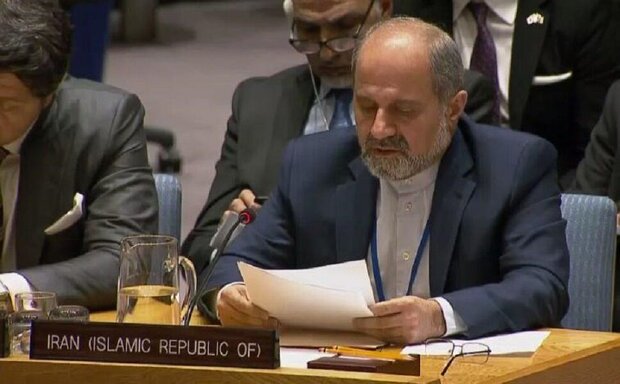
Iran, Cuba paying the price for resistance against US colonialist policies: UN envoyTEHRAN, (MNA) – Iran’s Deputy Permanent Representative to the UN on Thu. censured the US unilateral embargoes and coercive sanctions against independent states such as Iran and Cuba, stressing his country's resolve to offset the US unlawful measures.

Iran’s Deputy Permanent Representative to the United Nations, Es'hagh Al Habib made the remarks on Thursday in his address to the UN General Assembly focusing on "Necessity of ending the economic, commercial and financial embargo imposed by the United States of America against Cuba".
Full text of the statement reads as follows:
"Mr. President,
At the outset, I wish to take this opportunity to offer our warm welcome to Mr. Bruno Eduardo Rodríguez Parrilla, the Foreign Minister of Cuba.
My delegation associates itself with the statements delivered yesterday by the representatives of Palestine, Azerbaijan and Uganda, on behalf of Group of 77 and China, the Movement of Non-Aligned Countries as well as Organization of Islamic Conference. However, I would also like to add the following remarks in my national capacity.
Today, we are witnessing that the expansionist and arrogant approach of a certain Government presents the greatest threat and challenge to the world peace and security. The growing resort to unilateral coercive measures is one of the clear symptoms of unilateralism coupled with an interventionist, flawed and short-sighted foreign policy.
Among others, unilateral embargoes and coercive sanctions, as a means to achieving national policy objectives, have a seriously adverse impact on the promotion of peace at the regional and international levels. They are fundamental impediments to establishing not only a peaceful and prosperous world but also a just and equitable international order which is a vital prerequisite for sustainable development.
The inhumane sanctions and blockade imposed by the United States against Cuba for almost six decades is the most unjust and prolonged system of unilateral sanctions applied against any country. These aggressive measures constitute a gross violation of the norms and principles underpinning the international relations order. No Cuban citizen or sector of the economy has been immune from the negative effects of this unilateral policy which hinders the development that every country is entitled to construct in a sovereign manner.
In the past year, tightening of the blockade has continued to be the central pivot of US government policy towards Cuba, with ever more notable effects in its extraterritorial application. 
Regretfully, we have observed that the US Department of State has on different occasions expanded the “Restricted List of Cuban Entities”, to the blockade regulations, which caused considerable damage to the country’s economy because of its effects of intimidating the international business community.
In fact, the US has been addicted to imposing unilateral sanctions when it comes to states that do not submit to or follow its contradictory and expansionist policies. In reality, Iran and Cuba are paying the price for their resistance and insistence on their independence from the United States’ colonialist policies. Iran has experienced the US unlawful sanctions since the triumph of the Islamic Revolution 40 years ago.
Within the last four decades, the US has imposed unilateral coercive measures on the Iranian people at an increasing rate to the extent that the current US Administration, defiant of the established norms, has even targeted importation of medicine and medical equipment. Thus, patients, women and children, refugees, poor and those in vulnerable situations have become the prime target of the US genocidal economic terrorism--against all principles of international law.
The US Administration wants the world to believe that it is concerned about the Iranian people. Yet the very first sanctions it reimposed have cancelled licenses for sales of more than 200 passenger jets under absurd pretexts, endangering ordinary Iranians. US hypocrisy knows no bounds.
The economic war that the United States has initiated under the rubric of putting “Maximum Pressure” through imposing new sanctions, not only targets the Iranian public but also has harmful repercussions for the peoples of other countries, and has disrupted the state of global trade.
The message of today’s meeting is a reaffirmation of the fact that the time for interventionist policies and interference in the farthest reaches of the world is long over.
Mr. President,
Iran will keep working with its partners to create a new environment in which self-respecting nations can pursue their own interests and international obligations. We will continue to work to offset unlawful US sanctions and irrevocably eliminate the destabilizing phenomenon of the US extraterritorial application of domestic legislation.
The world needs to find solutions against such destructive interventions and unilateralism.
Iran strongly believes in cooperating with friendly countries, including Cuba to address this challenge prudently and will not allow the US Administration, which has stripped the US foreign policy of any principles, to achieve its illegitimate objectives.

Monday, November 04, 2019

Cuban diplomat says U.S. sanctions are crime against humanity

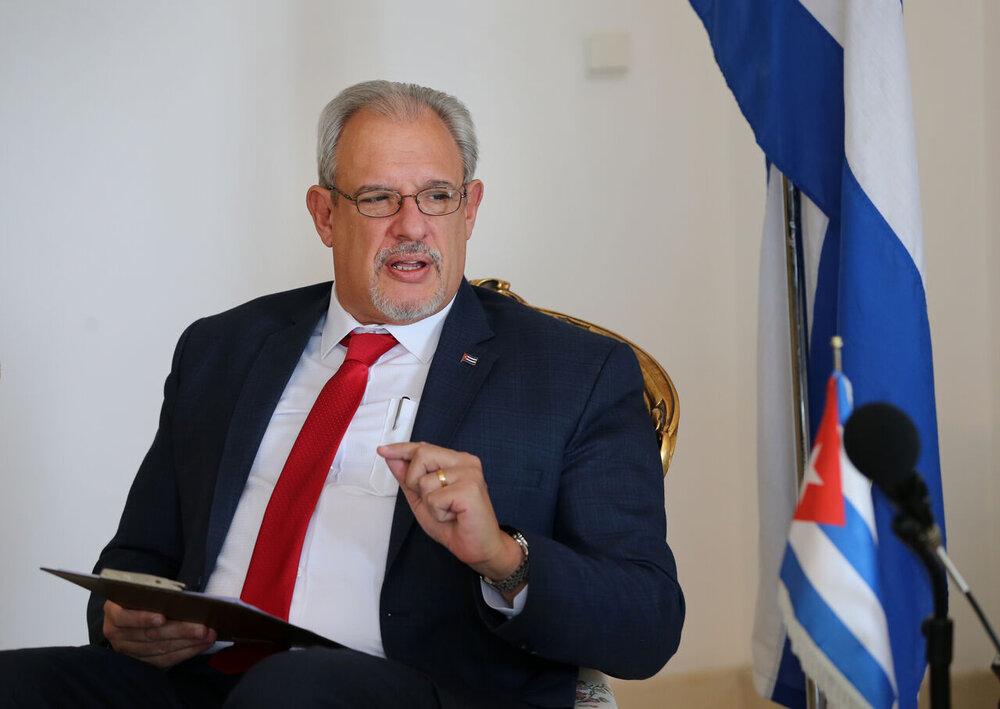
TEHRAN – Cuban Ambassador to Tehran Alexis Bandrich Vega said on Sunday that the United States’ sanctions are an “insult to the international community” and crime against humanity.
During a press conference, the ambassador said that the economic sanctions by the U.S. have made it necessary to form an international front to counter U.S. unilateralism.
He described sanctions as “economic war” and noted that international action is required to fight this war.
President Hassan Rouhani said on October 15 that the U.S. has committed “crime against humanity” by its “economic terrorism” against the Iranians.
“Undoubtedly, the United States’ administration has committed a crime against humanity. The United States’ action is economic terrorism,” he said during a speech at a meeting of the health ministers from the Eastern Mediterranean region.
Cuban envoy condemns U.S. withdrawal from JCPOA 
Ambassador Bandrich Vega also condemned the U.S. withdrawal from the 2015 nuclear deal, formally known as the Joint Comprehensive Plan of Action (JCPOA).
“It took long time and efforts to hold nuclear talks and reach a deal. This agreement was not reached in one night. International deals must be implemented,” he suggested.
Elsewhere, the ambassador said his country attaches great importance to security in the Persian Gulf region.
“Havana and Tehran have always said that no country should interfere in other countries’ affairs,” he pointed out.
President Hassan Rouhani said in August that Iran’s position is that there is no need to foreign forces to maintain security in the Persian Gulf region.
“Major powers, especially America, seek nothing except causing division and emptying treasury of the Islamic countries. The Persian Gulf littoral states can maintain security and stability in the region,” Rouhani said during a cabinet meeting.
In an interview with Al Jazeera in August, Iranian Foreign Minister Javad Zarif said, “We believe that the best the U.S. can do for the protection of maritime navigation is to just leave people alone; don’t interfere.”

Saturday, September 14, 2019

Iran – a Club of Sanctioned Countries – In Solidarity Against US Economic Terrorism


PressTV Interview – 
transcript Excerpts:
An Iranian parliamentary faction has come up with the idea of establishing a club of sanctioned countries for concerted action against the US economic terrorism.
The chairman of the Parliament’s faction on countering sanctions, Poormokhtar, gave a report on the formation of the faction and its activities, as well as the ongoing efforts to establish the club of sanctioned countries. Iran’s FM, Zaraf, said this would be enhancing the already existing alliance of Russia, China, Syria, Iran, Cuba, Venezuela against US economic terrorism.
PressTV Questions:1. Russia, China, Iran, Syria, Cuba, and Venezuela are among the nations that have come out against the United States’ use of sanctions to enforce its foreign policy around the world. In what ways can they fight these US sanctions as a group?
PKBrilliant idea.
Solidarity makes stronger and eventually will attract other countries who are sick and tired of the US sanction regime, and since they have the backing of Russia and China – that’s a very strong alliance, especially an economic alliance. The sanction regime can only be broken through economics, meaning decoupling from the western monetary system. I said this before and say it again, at the risk of repeating myself.
After all, China is the world’s largest and strongest economy in Purchasing Power GDP measures – which is the only comparison that really counts. I believe this solidarity alliance against US sanctions is certainly worth a trial.
And personally, I think it will be a successful trial, as more countries will join, possibly even non-sanctioned ones, out of solidarity against a common tyrant.
The countries in solidarity against sanctions, in addition to ignoring them – and the more they ignore them, the more other countries will follow-suit, that’s logical as fear disappears and solidarity grows.
For example, Iran and Venezuela, oil exporting countries, could accompany their tankers by war ships. Yes, it’s an extra cost, but think of it as temporary and as a long-term gain. Would “Grace I” have been accompanied by an Iranian war ship – the Brits would not have dared confiscating it. That’s for sure.
PressTV:
2. Many of the US sanctions have led to death of civilians in those particular countries. At the same time, sanctions have also led to the improvement of these countries to the point where domestic production in various fields advanced. Don’t sanctions become country-productive to US aims?’
PKOf course, the sanctions arecounter-productive. They have helped Russia to become food-self-sufficient, for example. That was not Washington’s intention and less so the intention of the EU, who followed Washington’s dictate like puppets.
Sanctions arelike a last effort before the fall of the empire, to cause as much human damage aspossible, to pull other nations down with the dying beast.It has always been like that – starting with the Romans through the Ottoman’s. They realize their time has come – but can’t see a world living in peace. So, they must plant as much unrest and misery as possible before they disappear.
That’s precisely what’s happening with the US.
Intimidation, building more and more military bases, all with fake money, as we know the dollar is worth nothing – FIAT money – that the world still accepts – but less and less so, therefore military bases, deadly sanctions – and trade wars –
Trump knows that a trade war against China is a lost cause. Still, he can intimidate other countries by insisting on a trade war with China – or that’s what he thinks.
PressTV3. The more countries US sanctions, illegally, more people turn against the US: doesn’t that defeat the US so-called fight against terrorism and violence?
PKWell, US sanction and the entire scheme of US aggression has nothing to do with fighting terrorism,as you know. It’s nothing but expanding US hegemony over the world,and if needed, and more often than not,the US finances terrorism to fight proxy wars against their so-called enemies, meaning anybody not conforming to their wishes and not wanting to submit to their orders and notletting them exploit – or rather steal – their natural resources.
Syria is a case in point. ISILis funded and armed by the Pentagon,who buys Serbian produced weapon to channel them through the Mid-East allies to Syrian terrorists, the ISIL or similar kinds with different names -just to confuse.
Venezuela too – the opposition consist basically of US trained, financed and armed opposition “leaders” – who do not want to participate in totally democratic elections – order of the US – boycott them. But as we have seen as of this day, the various coup attempts by the US against their legitimate and democratically elected President, Nicolás Maduro, have failed bitterly – and this despite the most severe sanctions regime South American has known, except for Cuba, against whom the US crime has been perpetuated for 60 years.
So, nobody should have the illusion that Washington’s wars are against terrorism. Washington is THE terrorist regime that fights for world hegemony.
Peter Koenig is an economist and geopolitical analyst. He is also a water resources and environmental specialist. He worked for over 30 years with the World Bank and the World Health Organization around the world in the fields of environment and water. He lectures at universities in the US, Europe and South America. He writes regularly for Global Research; ICH; RT; Sputnik; PressTV; The 21st Century; TeleSUR; The Saker Blog, the New Eastern Outlook (NEO); and other internet sites. He is the author of Implosion – An Economic Thriller about War, Environmental Destruction and Corporate Greed – fiction based on facts and on 30 years of World Bank experience around the globe. He is also a co-author of The World Order and Revolution! – Essays from the Resistance.

Peter Koenig is a Research Associate of the Centre for Research on Globalization.

Monday, July 29, 2019

America’s Enemies, Who’s On the List?

Prospects and Perspectives

For almost 2 decades, the US pursued a list of ‘enemy countries’ to confront, attack, weaken and overthrow. 
This imperial quest to overthrow ‘enemy countries’ operated at various levels of intensity, depending on two considerations:  the level of priority and the degree of vulnerability for a ‘regime change’ operation.
The criteria for determining an ‘enemy country’ and its place on the list of priority targets in the US quest for greater global dominance, as well as its vulnerability to a ‘successfully’ regime change will be the focus of this essay.
We will conclude by discussing the realistic perspectives of future imperial options.
Prioritizing US Adversaries
Imperial strategists consider military, economic and political criteria in identifying high priority adversaries.
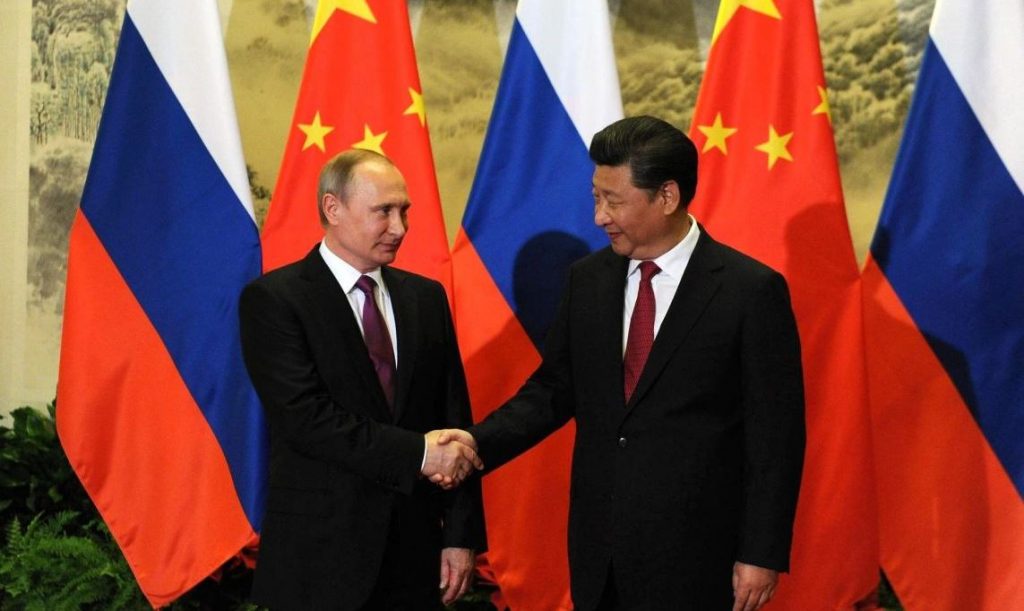
The following are high on the US ‘enemy list’:
1) Russia, because of its military power, is a nuclear counterweight to US global domination.  It has a huge, well-equipped armed force with a European, Asian and Middle East presence.  Its global oil and gas resources shield it from US economic blackmail and its growing geo-political alliances limit US expansion.
2) China, because of its global economic power and the growing scope of its trade, investment and technological networks.  China’s growing defensive military capability, particularly with regard to protecting its interests in the South China Sea serve to counter US domination in Asia.
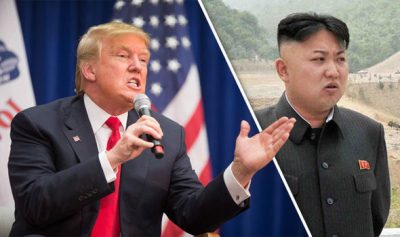
3) North Korea, because of its nuclear and ballistic missile capability, its fierce independent foreign policies and its strategic geo-political location, is seen as a threat to the US military bases in Asia and Washington’s regional allies and proxies.
4) Venezuela, because of its oil resources and socio-political policies, challenge the US centered neo-liberal model in Latin America.
5) Iran, because of its oil resources, political independence and geo-political alliances in the Middle East, challenge US, Israeli and Saudi Arabia domination of the region and present an independent alternative.
6) Syria, because of its strategic position in the Middle East, its secular nationalist ruling party and its alliances with Iran, Palestine, Iraq and Russia, is a counterweight to US-Israeli plans to balkanize the Middle East into warring ethno-tribal states.
US  Middle-level Adversaries :
1)  Cuba, because of its independent foreign policies and its alternative socio-economic system stands in contrast to the US-centered neo-liberal regimes in the Caribbean, Central and South America.
2) Lebanon, because of its strategic location on the Mediterranean and the coalition government’s power sharing arrangement with the political party, Hezbollah, which is increasingly influential in Lebanese civil society in part because of its militia’s proven capacity to protect Lebanese national sovereignty by expelling the invading Israeli army and helping to defeat the ISIS/al Queda mercenaries in neighboring Syria.
3) Yemen, because of its independent, nationalist Houthi-led movement opposed to the Saudi-imposed puppet government as well as its relations with Iran.
Low Level Adversaries
1) Bolivia, because of its independent foreign policy, support for the Chavista government in Venezuela and advocacy of a mixed economy;  mining wealth and  defense of indigenous people’s territorial claims.
2) Nicaragua, because of its independent foreign policy and criticism of US aggression toward Cuba and Venezuela.
US hostility to high priority adversaries is expressed through economic sanctions military encirclement, provocations and intense propaganda wars toward North Korea, Russia, Venezuela, Iran and Syria.
Because of China’s powerful global market linkages, the US has applied few sanctions.  Instead, the US relies on military encirclement, separatist provocations and intense hostile propaganda when dealing with China.
Priority Adversaries, Low Vulnerability and Unreal Expectations
With the exception of Venezuela, Washington’s ‘high priority targets’ have limited strategic vulnerabilities. Venezuela is the most vulnerable because of its high dependence on oil revenues with its major refineries located in the US, and its high levels of indebtedness, verging on default.   In addition, there are the domestic opposition groups, all acting as US clients and Caracas’ growing isolation within Latin America due to orchestrated hostility by important US clients, Argentina, Brazil, Colombia and Mexico.
Iran is far less vulnerable: It is a strong strategic regional military power linked to neighboring countries and similar religious-nationalist movements.  Despite its dependence on oil exports, Iran has developed alternative markets, like China, free from US blackmail and is relatively safe from US or EU initiated creditor attacks.
North Korea, despite the crippling economic sanctions imposed on its regime and civilian population, has ‘the bomb’ as a deterrent to a US military attack and has shown no reluctance to defend itself.  Unlike Venezuela, neither Iran nor North Korea face significant internal attacks from US-funded or armed domestic opposition.
Russia has full military capacity – nuclear weapons, ICBM and a huge, well-trained armed force – to deter any direct US military threat.  Moscow is politically vulnerable to US-backed propaganda, opposition political parties and Western-funded NGO’s.  Russian oligarch-billionaires, linked to London and Wall Street, exercise some pressure against independent economic initiatives.
To a limited degree, US sanctions exploited Russia’s earlier dependence on Western markets, butsince the imposition of draconian sanctions by the Obama regime, Moscow has effectively counteredWashington’s offensive by diversifying its markets to Asia and strengthening domestic self-reliance in its agriculture, industry and high technology.
China has a world-class economy and is on course to become the world’s economic leader.  Feeble threats to ‘sanction’ China have merely exposed Washington’s weakness rather intimidating Beijing.  China has countered US military provocations and threats by expanding its economic market power, increasing its strategic military capacity and shedding dependence on the dollar.
Washington’s high priority targets are not vulnerable to frontal attack: They retain or are increasing their domestic cohesion and economic networks, while upgrading their military capacity to impose completely unacceptable costs on the US for any direct assault.
As a result, the US leaders are forced to rely on incremental, peripheral and proxy attacks with limited results against its high priority adversaries.
Washington will tighten sanctions on North Korea and Venezuela, with dubious prospects of success in the former and a possible pyrrhic victory in the case of Caracas. Iran and Russia can easily overcome proxy interventions.  US allies, like Saudi Arabia and Israel, can badger, propagandize and rail the Persians, but their fears that an out-and-out war against Iran, could quickly destroy Riyadh and Tel Aviv forces them to work in tandem to induce the corrupt US political establishment to push for war over the objections of a war-weary US military and population. Saudi and Israelis can bomb and starve the populations of Yemen and Gaza, which lack any capacity to reply in kind, but Teheran is another matter.
The politicians and propagandists in Washington can blather about Russia’s interference in the US’s corrupt electoral theater and scuttle moves to improve diplomatic ties, but they cannot counter Russia’s growing influence in the Middle East and its expanding trade with Asia, especially China.
In summary, at the global level, the US ‘priority’ targets are unattainable and invulnerable.  In the midst of the on-going inter-elite dogfight within the US, it may be too much to hope for the emergence of any rational policymakers in Washington who could rethink strategic priorities and calibrate policies of mutual accommodation to fit in with global realities.
Medium and Low Priorities, Vulnerabilities and Expectations
Washington can intervene and perhaps inflict severe damage on middle and low priority countries.  However, there are several drawbacks to a full-scale attack.
Yemen, Cuba, Lebanon, Bolivia and Syria are not nations capable of shaping global political and economic alignments.  The most the US can secure in these vulnerable countries are destructive regime changes with massive loss of life, infrastructure and millions of desperate refugees . . . but at great political cost, with prolonged instability and with severe economic losses.
Yemen
The US can push for a total Saudi Royal victory over the starving, cholera-stricken people of Yemen.  But who benefits?  Saudi Arabia is in the midst of a palace upheaval and has no ability to exercise hegemony, despite hundreds of billions of  dollars of US/NATO arms, trainers and bases.  Colonial occupations are costly and yield few, if any, economic benefits, especially from a poor, geographically isolated devastated nation like Yemen.
Cuba
Cuba has a powerful highly professional military backed by a million-member militia.  They are capable of prolonged resistance and can count on international support.  A US invasion of Cuba would require a prolonged occupation and heavy losses.  Decades of economic sanctions haven’t worked and their re-imposition by Trump have not affected the key tourist growth sectors.
President Trump’s ‘symbolic hostility’ does not cut any ice with the major US agro-business groups, which saw Cuba as a market. Over half of the so-called ‘overseas Cubans’ now oppose direct US intervention.
US-funded NGOs can provide some marginal propaganda points but they cannot reverse popular support for Cuba’s mixed ‘socialized’ economy, its excellent public education and health care and its independent foreign policy.
Lebanon
A joint US-Saudi economic blockade and Israeli bombs can destabilize Lebanon.  However, a full-scale prolonged Israeli invasion will cost Jewish lives and foment domestic unrest.  Hezbollah has missiles to counter Israeli bombs.  The Saudi economic blockade will radicalize Lebanese nationalists, especially among the Shia and the Christian populations.  The Washington’s ‘invasion’ of Libya, which did not lose a single US soldier, demonstrates that destructive invasions result in long-term, continent-wide chaos.
A US-Israeli-Saudi war would totally destroy Lebanon but it will destabilize the region and exacerbate conflicts in neighboring countries – Syria, Iran and possibly Iraq.  And Europe will be flooded with millions more desperate refugees.
Syria
The US-Saudi proxy war in Syria suffered serious defeats and the loss of political assets.  Russia gained influence, bases and allies.  Syria retained its sovereignty and forged a battle-hardened national armed force.  Washington can sanction Syria, grab some bases in a few phony ‘Kurdish enclaves’ but it will not advance beyond a stalemate and will be widely viewed as an occupying invader.
Syria is vulnerable and continues to be a middle-range target on the US enemy list but it offers few prospects of advancing US imperial power, beyond some limited ties with an unstable Kurd enclave, susceptible to internecine warfare, and risking major Turkish retaliation.
Bolivia and Nicaragua
Bolivia and Nicaragua are minor irritants on the US enemy list. US regional policymakers recognize that neither country exercises global or even regional power.  Moreover, both regimes rejected radical politics in practice and co-exist with powerful and influential local oligarchs and international MNC’s linked to the US.
Their foreign policy critiques, which are mostly for domestic consumption, are neutralized by the near total US influence in the OAS and the major neo-liberal regimes in Latin America.  It appears that the US will accommodate these marginalized rhetorical adversaries rather than risk provoking any revival of radical nationalist or socialist mass movements erupting in La Paz or Managua.
Conclusion
A brief examination of Washington’s ‘list of enemies’ reveals that the limited chances of success even among vulnerable targets.  Clearly, in this evolving world power configuration, US money and markets will not alter the power equation.
US allies, like Saudi Arabia, spend enormous amounts of money attacking a devastated nation, but they destroy markets while losing wars.  Powerful adversaries, like China, Russia and Iran, are not vulnerable and offer the Pentagon few prospects of military conquest in the foreseeable future.
Sanctions, or economic wars have failed to subdue adversaries in North Korea, Russia, Cuba and Iran.  The ‘enemy list’ has cost the US prestige, money and markets – a very peculiar imperialist balance sheet.  Russia now exceeds the US in wheat production and exports.  Gone are the days when US agro-exports dominated world trade including trade with Moscow.
Enemy lists are easy to compose, but effective policies are difficult to implement against rivals with dynamic economies and powerful military preparedness.
The US would regain some of its credibility if it operated within the contexts of global realities and pursued a win-win agenda instead of remaining a consistent loser in a zero-sum game.
Rational leaders could negotiate reciprocal trade agreements with China, which would develop high tech, finance and agro-commercial ties with manufacturers and services.  Rational leaders could develop joint Middle East economic and peace agreements, recognizing the reality of a Russian-Iranian-Lebanese Hezbollah and Syrian alliance.
As it stands, Washington’s ‘enemy list’ continues to be composed and imposed by its own irrational leaders, pro-Israel maniacs and Russophobes in the Democratic Party – with no acknowledgement of current realities.
For Americans, the list of domestic enemies is long and well known, what we lack is a civilian political leadership to replace these serial mis-leaders.