Showing posts with label U.S. sanctions on Iran. Show all posts

Tuesday, October 15, 2019

Continuous duality by Washington

*By Mohammad Ghaderi

The U.S. Special Representative for Iran, Brian Hook, claimed in an interview with Alhurra recently that Iran should decide between its economy or talks with the United States. 
The official has called Trump’s policies against Iran “diplomatic” and that Trump has acted so “generously” in this regard!
Hook also said Washington should not reduce sanctions to have a meeting with Iran. 
It is obvious that after a nearly three-year failure against Iran’s power, U.S. officials have resorted to a dichotomous approach.   
Early in his presidency, Trump and his supporters warned Iran to choose between a complete breakdown of its system or meet U.S. demands. But today following the heavy defeat of the “maximum pressure” strategy against Tehran, the White House’s officials have taken a few steps back and are talking about wrecking Iran’s economy. 
On the other hand, many U.S. officials’ measures for confronting Iran have turned out to be wrong, since Trump sought to overthrow the Islamic Republic system by implementing John Bolton’s anti-Iran plans. But, he was finally forced to dismiss Bolton after lots of strategic and tactical blunders. This situation got to the point that Trump, who had appointed Bolton as his national security adviser, blamed him for the mess. 
Hook’s recent remarks, also repeated by U.S. Secretary of State Mike Pompeo, are just an absurd and useless attempt to create duality and dilemma for Iran.
“The Iranian regime must fundamentally change its behavior and act like a normal nation. Or it can watch its economy collapse,” Pompeo said in a tweet on Friday. In remarks almost a year ago, Pompeo also said Iranian officials must listen to Washington “if they want their people to eat”
Obviously, there is no dilemma as Iran has rebuffed U.S. demands and its economy has not collapsed. In contrast, there is the dichotomy of Trump’s fall and unconditional acknowledgment to Iranian power.
Now, it is Trump’s turn to choose one of these options.
Indeed, the harder the U.S. tries to deal with Iran dichotomously, the costs of United States’ defeat against a “powerful Iran” will be increased. This is a matter that many U.S. foreign policy strategists have confirmed. 
* Author: Mohammad Ghaderi , Tehran Times editor in chie

Tuesday, September 17, 2019

Attack on Saudi oil facilities: consequences and solutions

BY: Ebrahim Fallahi

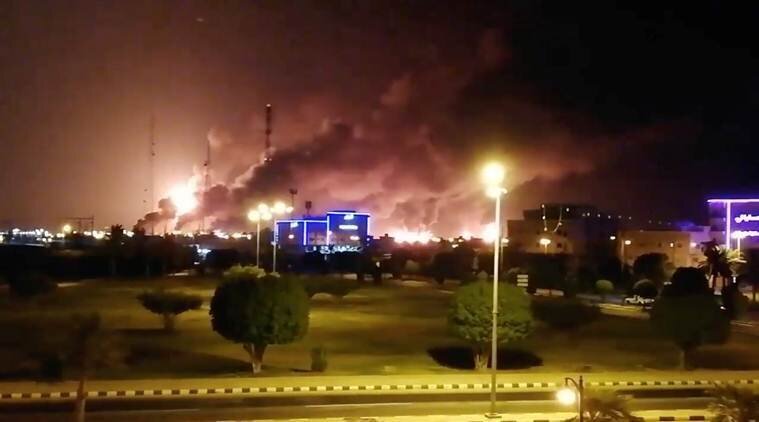
TEHRAN – As expected, oil markets started Monday trading with an unprecedented jump in prices following the attacks on Saudi Arabia’s oil facilities which wiped nearly five percent of the global oil supply from the market.
Drone attacks claimed by Yemen’s Houthi rebels on Saturday struck two of Saudi Aramco’s major oil facilities in Khurais and Abqaiq - the world's largest oil processing facility and crude oil stabilization plant.
Now, few days after the attacks, global oil markets are waiting to see how the disrupted oil is going to be compensated for.
 Will Saudis be able to get their production back to its full capacity in a short period of time? If not, what are the options for replacing the lost barrels to keep the market in balance?
The market’s reaction
A few hours after the strikes, Aramco released a statement confirming that production of 5.7 million barrels of crude (more than half of the kingdom’s output) was affected by the attacks.
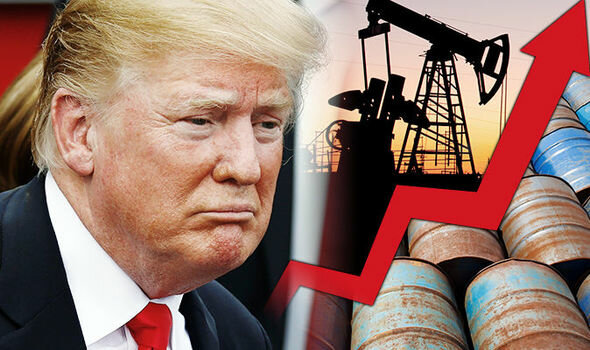
Aramco’s statement sparked a wave of panic in the oil markets across the globe, causing for bets on oil prices to go as high as $100. 
As it was expected, in the first minutes of the Monday morning trades, Brent crude jumped $12 to reach $71 per barrel, posting its biggest ever surge in a day.
The market’s significant reaction to the incident could also be translated as an indication of the skepticism about the promises of recovery by the Saudis or vows of taping into emergency oil reserves by the United States. 
It is also a manifestation of yet another aspect of the world’s energy cycle, that is the realization a
bout the vulnerability of the global oil market and the magnitude of the impact of geopolitical factors on this market.
As Ed Morse from Citigroup Inc. wrote in a research note, “No matter whether it takes Saudi Arabia five days or a lot longer to get oil back into production, there is but one rational takeaway from this weekend’s drone attacks on the Kingdom’s infrastructure -- that infrastructure is highly vulnerable to attack, and the market has been persistently mispricing oil.” 
So, despite all the reassurance, oil markets around the world are once again overshadowed by the geopolitical risks and at least for some time the geopolitical risk premium will be seen in the oil prices.
Replacements for the lost oil
Many analysts and experts believe that Saudi Aramco won’t be able to get all the lost capacity back over a short period of time and it would at least take a couple of weeks to get back to the full capacity.
Considering the worst case scenario, some analysts believe that the oil market should be looking for new sources of crude supply in case the damage to the Aramco facilities turn out to be more than what is seems and the Saudi’s oil production takes more time than expected to get back to its full capacity.
One option, as previously mentioned, is the U.S. emergency reserves which Trump has promised to release to balance the market. However, analysts believe that such an action will likely not be taken in the short term.
"I don't think a release is imminent," Bob McNally, president of Rapidan Energy Group, told S&P Global Platts. "Everything depends on how much damage has been done and how long will it last."
There is also the matter of distance and time, as Sandy Fielden, analyst at Morningstar puts it, “It takes 19-20 days to ship Ras Tanura (Saudi) to Singapore, but 54 days from Houston to Singapore. So U.S. ‘relief’ will take time.”
It should also be mentioned that, although the U.S. strategic reserves are estimated at about 625 million barrels, but its offshore borders have restrictions on oil transportation. As the U.S. Department of Energy said in a report in 2016, the United States could release up to 2.1 million barrels a day from its strategic reserves.
Another option which is more likely in the short term is Saudi Arabia’s own reserves in countries like China and Japan, but with the kingdom’s limited reserves, the loss could only be replaced for approximately 30-45 days, according to McNally.
“Saudi Arabia has about 188 million barrels of oil stockpiled, which can offset the 5-million-barrels of lost oil only for about 37 days,” McNally said.
Even if Aramco manages to recover 2 million barrels of the disrupted capacity in short term (as they have claimed), the other 3.7 million barrels should be supplied from the reserves.
So if the oil which has been disrupted is not replaced before the company’s stored supplies end, the market would go into an even more complicated situation.
Finally, some other believe that the easiest solution is to waiver the Iranian oil.
 “The obvious short-term fix would be waivers on Iran sanctions, but politically that’s a hard pill for the Trump administration to swallow. By all accounts the Iranians have tankers full of storage ready to go,” Sandy Fielden said.
Jason Bordoff, founding director of the Center on Global Energy Policy at Columbia University also believes that Iran could be a reliable source of additional supply in case the disruptions prolong.

Wednesday, September 04, 2019

Escalating U.S.-China trade war, a blessing in disguise for Iran’s oil industry?!

TEHRAN – The U.S.-China trade war, which has been going on for more than a year, entered a new phase last week as China not only imposed new tariffs on U.S. goods in retaliation against Trump's actions, but took the matter a step forward by putting "crude oil" on its tariff list.
The five percent import tariff, which Beijing has imposed on U.S. oil, means that the price of a barrel of oil for Chinese refiners will rise by about $3 per barrel. This would make U.S. oil imports not economically viable in long term.
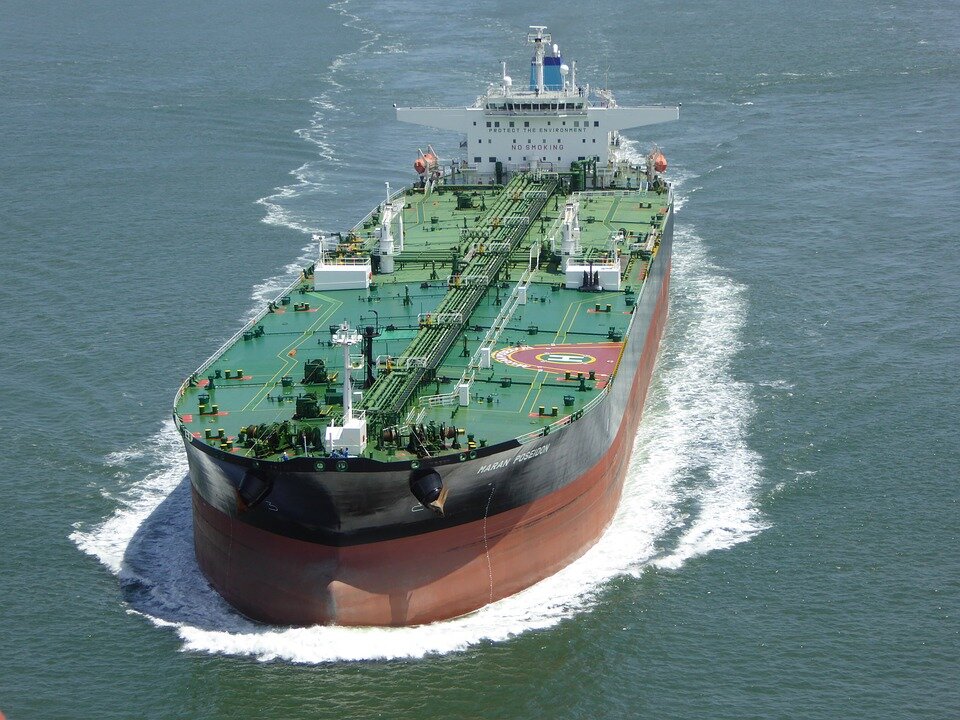
The new tariffs on the U.S. crude oil, along with the heavy prices of shipping oil from North America, could push the Chinese buyers back toward Iranian crude oil.
As they are already buying oil from the Islamic country despite U.S. sanctions, the Chinese refineries might find it risk worthy to even increase their purchase of cheaper and more accessible Iranian oil rather than the more expensive and hard-to-get U.S. crude.
Trade war and new tariffs
Since more than a year ago, when the tension between the world’s two biggest economies started to escalate, global markets have been shadowed by the concerns of a dismal economic future. Oil prices have been following a downward pattern in the past few months, as the tension between the two sides has been escalating even more.
On Sunday, the new tariffs that the United States and China imposed on each other last month, came into force and for the first time since the beginning of the row, China officially started targeting U.S. crude oil in its tariffs.
In late-August, the U.S. imposed 15 percent tariffs on several Chinese goods - including footwear, smart watches and flat-panel televisions, and China levied five percent tariffs on the U.S crude oil. The issue of imposing tariffs on U.S. oil has come up so many times since the trade war started, however this is the first time that it is coming into effect officially.
Back in June 2018, China announced that it is considering new tariffs on U.S. oil imports. Following that announcement Chinese refiners halted all their imports and China’s imports of U.S. crude oil hit nearly zero in July 2018.
A look at the 2018 situation can tell a lot about the probable reaction of Chinese refineries to the new, actual tariffs. So it won’t be inconsequent to expect them to consider Iranian oil as a reliable and economically reasonable source for supplying their needs.
The latest data released by the Chinese customs indicates that the imports of U.S. oil in the first seven months of 2019 stood at 126,000 barrels per day, a 63 percent fall from the figure for the last year’s January-July period.
The cuts clearly reflect the impact of the trade war on Chinese oil imports from the U.S. even before Beijing imposed the new tariffs.
An opportunity for Iran
A few days after Beijing announced its decision on imposing new tariffs on U.S. crude, the country’s refineries started to look for ways to evade the consequences of the decision.
For instance, in late August, China Petroleum & Chemical Corp (Sinopec) asked the government to be exempted from the tariffs imposed on the U.S. oil.
According to the data from analytics companies Refinitiv and Kpler, Sinopec is expected to ship in eight million barrels of U.S. crude in September and October.
So, if Asia’s biggest refiner doesn’t manage to get a waiver on U.S. oil imports, it would definitely seek to replace the U.S. oil with crude from other sources, and Iran would be the most probable option.
Less expensive and more accessible Iranian oil makes it so attractive that it would be hard not to consider it at the time that the increase in the U.S. oil prices and the distance from the United States is making the American crude less and less attractive for the Asian country’s market.
Let’s not forget that, despite all the Trump’s attempts and threats, China hasn’t stopped its oil imports from Iran even after the waivers on imports of oil from Iran expires in May.
Now considering the recent escalations of the trade war between U.S. and China, it is more than likely that China would not only supply the needs of its refineries by increasing oil purchases from Iran, but also challenge one of Trump's most important foreign policies.

Friday, July 19, 2019

The ball is in Europe’s court to save Iran nuclear deal

WHY WE WROTE THIS

When tensions threaten to boil over between two rivals, sometimes the party best positioned to cool things off is the one stuck between them. In the case of the current standoff between Iran and the U.S., that’s Europe.
While Tehran and Washington engage in a high-stakes game of brinkmanship in the Persian Gulf, the future of the Iran nuclear deal may end up being determined not by either of those parties, but by Europe.
In May, a year after the United States pulled out of the Joint Comprehensive Plan of Action (JCPOA), Tehran warned it would gradually decrease compliance with the deal. The posture shift was a reaction to what Iran perceives as the failure among the remaining parties – namely France, Germany, and the United Kingdom (the so-called E-3) along with Russia and China – to honor their economic commitments under the deal.
The fact that Iran is phasing its steps out of compliance – setting 60-day deadlines for each successive move such as going to higher enrichment levels – has raised hopes that Tehran could be persuaded to reverse course if Europe takes small but meaningful steps. So now European officials are desperate to keep the deal alive.
“What the Iranians want at this stage is really for the Europeans to put their neck on the line and stand up to the U.S.,” says Dina Esfandiary, an Iran specialist serving as a fellow at the Harvard Belfer Center and the Century Foundation. “If the Iranians are able to witness the Europeans doing something like that, I think that’ll go a long way towards at least making Tehran more amenable to more discussions with Europe on how to freeze the escalation that’s going on at the moment.”

Spurring Europe to act

Iran, analysts concur, has given up on strategic patience. It wants Europe and the remaining parties in the JCPOA to do more to offset U.S. sanctions. Last week, the United Nations’ nuclear watchdog confirmed that Iran had exceeded its uranium enrichment cap of 3.67% to just below 5%. Tehran has threatened to increase that to 20% enrichment or higher, a prospect that worries nuclear nonproliferation experts.
In response, foreign ministers gathered in Brussels on Monday to brainstorm ways to deescalate tensions and keep the 2015 deal afloat despite the withdrawal of the United States and a relentless maximalist campaign of U.S. sanctions.
“The risks are such that it is necessary for all stakeholders to pause, and consider the possible consequences of their actions,” the leaders of France, Germany, and the United Kingdom said in a statement Monday. “We believe that the time has come to act responsibly and to look for ways to stop the escalation of tension and resume dialogue.”
Iran expert Esfandyar Batmanghelidj sees Tehran’s move as “a gamble” that succeeded making Iran a priority at the highest level in Europe – the focal point of Monday’s meeting and high-level diplomacy by France. French President Emmanuel Macron dispatched his top diplomatic adviser to Tehran in a bid to jump-start talks to avoid uncontrolled escalation or even an accident.
The most tangible and visible step that Europe has taken to date is the establishment of Instrument in Support of Trade Exchanges (INSTEX), a complex bartering mechanism to facilitate humanitarian trade between Iran and Europe that deliberately skirts U.S. measures. This solution was developed by the governments of the E-3 in consultation with the European Union after European banks signaled their unwillingness to risk cross-border transactions with Iran in the face of U.S. sanctions pressure. Getting it off the ground has been technically complex.
“From a European perspective, this is unparalleled,” notes Ms. Esfandiary. “They’ve never had to set up this kind of mechanism before. They’ve never had to stand up to U.S. sanctions before.”
It has also been politically fraught with the United States even threatening to sanction EU officials connected to INSTEX. This complicates buy-in from companies that might have U.S. interests, although it would be a good instrument for multinationals already present in Iran. Even a scaled-up INSTEX, the analysts concur, can only help mitigate – not completely offset – the impact of U.S. sanctions on Iran.

The limits of INSTEX

But while INSTEX became operational at the end of June when test transactions were carried out, it has simply not worked fast enough in the eyes of Tehran.
“Iranians understand that Europe is making some efforts, but there is this sense that it is simply not enough in view of the economic hardship that is being caused for the country,” says Mr. Batmanghelidj, founder of media company Bourse & Bazaar, which tracks economic developments in Iran. “There are inherent limits on what Europe can do particularly because the focus of what Iran is looking for is on the economic side.”
And it is unlikely, for both technical and political reasons, that oil exports will be plugged into the system as Iran would like.
“INSTEX alone is not going to be the silver bullet that convinces Iran to reverse or remedy its actions that are not compliant,” says Ellie Geranmayeh, deputy director of the Middle East and North Africa Program at the European Council on Foreign Relations. “It is going to require a package.”
That package would have to include Chinese purchases of Iranian oil at a price and under conditions that don’t completely undermine Iranian interests. It is also going to require nuclear countries like Russia and China to continue the cooperation on Iran’s nuclear facilities. And it is going to require some of the new rounds of Iranian sanctions since April to at least be eased for a period of time, she says.

“The least worst option”

A challenge is the different strategic outlooks between Europe and Iran. For Iran, the JCPOA is a priority issue. Not so for the Europeans who need to keep the United States on their side strategically – especially on defense issues and NATO.
“If the Europeans are not willing or able to deliver something substantial to Iran, it means we need to get pragmatic and choose the least worst option ahead,” adds Ms. Geranmayeh.
“In my view that’s about a kind of JCPOA-lite arrangement where you keep the cornerstones of the deal in place. That means that at least some period of time … you get a freeze on Iran’s nuclear escalation and in return you give Iran the minimal, marginal economic steps that you are able to give.”
The EU is a major trading partner for Iran, with almost 21 billion euros’ worth of imports and exports in 2017. The bloc, says Mr. Batmanghelidj, needs to signal to Iran that there is a road map and institutional support for a continued Europe-Iran economic relationship and a growing one in the future.
Besides INSTEX, the European Union has adopted a financial support package for Iran. The governments of Austria, the Netherlands, and Sweden have also pushed forward with economic cooperation with Tehran.
“The problem is that all of these disparate efforts have not been packaged in a strategy,” says Mr. Batmanghelidj.

Snapbacks

While Europe is quietly sympathetic to the logic of Iran’s gambit, it could also trigger the JCPOA’s “dispute resolution mechanism” if pushed too far. The mechanism allows signatories to “snap back” economic sanctions on Tehran if they find that it wasn’t meeting its commitments under the agreement.
The analysts say this would be premature given that Iran waited more than a year after the U.S. pullout from the deal to reduce its compliance. But Iran’s gradual and calculated escalation also provides justification for voices within European governments that the deal with Iran is no longer viable.
“European officials cannot appear as lenient to an Iran that has violated the deal to its domestic constituents,” adds Mr. Batmanghelidj. In the long term, Iran risks sanctions snapback, whether that’s European Union or United Nations sanctions.
This scenario would bring joy to the anti-Iran hawks in Washington and Tel Aviv who are drumming for military confrontation with Tehran. It appears unlikely in the short term, as President Donald Trump and Iranian leader Hassan Rouhani have both signaled their aversion to an all-out confrontation. Nonetheless, the growing rift between Washington and Tehran has severely tested the diplomatic wherewithal of European powers.
As united as they are on wanting to salvage the JCPOA, there is only so much they can achieve in the absence of a change of heart in the White House.
“I don’t think the Europeans stand a chance reasoning with the U.S.,” says Ms. Esfandiary. “Their best bet is to unify and stand strong … a) to defend their own interests and b) to show that, OK, the appeasement period is over and now we disagree with Washington, so we’re going to do what’s best for us.”

Wednesday, April 24, 2019

Would Saudis play the U.S. puppet in Iran sanctions scenario?

The U.S. announced on Monday that the country is not going to extend the sanctions waivers which were granted to some of Iran’s oil customers in November 2018.
Many analysts believe that Trump’s decision on ending the exemptions is a double-edged sword and the U.S. president might well be shooting himself in the leg by doing so, since on one hand, he doesn’t want the prices to follow their current upward trend and on the other hand he is willing to raise the pressure on Iran to its utmost level.
Finding the solution to make both these scenarios happen hasn’t been easy for the U.S. government and clearly by announcing the end of waivers on Iranian sanctions, Washington is betting big on its allies in the region for preventing the situation to get out of hand.
In this regard, Saudi Arabia’s announcement on Monday about the possibility of a boost in production is a clear indication of the fact that like many other times, this time too, the U.S. expect Saudi Arabia to play the oil-rich puppet which is ready to offset the losses from Iranian oil.
Now the question is, would Saudis really fill the gap? To answer this question one should have a clear understanding of the market statistics these days. In theory it might be possible for the Arab country to raise its output to a certain level but for how long and at what cost? (Both figuratively and literary) 
Saudi Arabia and the repeating scenario
As OPEC’s biggest exporter, Saudi Arabia is currently producing around 9.8 million barrels of oil and the country has been trying hard to maintain a production cut deal which has held OPEC producers alongside nations outside the cartel in a battle to keep the prices from falling.
This is not the first time that the Saudis are being ordered to play obedient executor in the region. Trump has been constantly criticizing OPEC for its actions regarding its activities to maintain the prices and the Saudis have been pressured to increase production again and again.
In July 2018, when Trump was planning on leaving Iran’s nuclear deal, he had asked the Saudis to rise their production to compensate the Iranian oil which was supposed to be wiped out of the market.
The kingdom promised to increase production to 12 million barrels per day, a dream that never came true.
At the time many experts and analysts pointed out the unrealistic nature of Saudi Arabia’s claims.
Gary Ross, head of global oil analytics at S&P Global said “The Saudis do not have 2 million bpd of spare capacity as it would imply production of 12 million bpd. They can likely produce a maximum of 11 million and even that will be running their system at stress levels,” 
“I do not believe that Saudi can increase production to 12 million bpd but they can increase exports by digging into their reserves.” Ole Hansen, head of commodities research at Saxo Bank said.
However, this time the situation is a little different. Considering the kingdom’s current production which is under 10 million bpd, the possibility of an increase to 11 million bpd is not that far from the reality.
But would the Saudi’s be able to go through with this promise?
Saudis and OPEC: The pact
Despite clear opposition from Trump, in December 2018, Saudi Arabia and its other fellow OPEC members along with the non-OPEC oil producers reached an agreement based on which all the signees would commit to a certain level of production cuts to take 1.2 million barrels per day off the market for the first six months of 2019. The 15-members of OPEC agreed to reduce their output by 800,000 bpd, while non-OPEC allies including agreed to contribute a 400,000 bpd reduction.
Since the beginning, all the OPEC+ members showed significant commitment to the deal and their efforts led to an almost balanced market in which the prices started to rise from their low levels.
In the meantime, Saudi Arabia has been pressured multiple times by the U.S. to end the accord and to increase production, however since the kingdom desperately needs the prices above $50 to maintain its precious Aramco’s value, the Saudis have resisted the U.S. requests for cooperation.
If the Saudis go through with Trump’s request this time, the kingdom would not only be ending a deal which has kept the prices from falling for so long, but it will also negate its position of strength within OPEC.
Despite all the pressures from the U.S., Saudi Arabia wants to make sure that in the next OPEC+ meeting in June, the pack would stay committed to the cuts deal. And if Saudi Arabia goes through with the commitment to rise its production under the U.S. pressure, it would definitely come to the OPEC+ gathering empty handed and it cannot expect other signees to stay in a deal which needed all the members to cut to certain levels.
Considering the fact that other members of OPEC+ deal are not at a position which could be able to increase production, the U.S. is expecting Saudi Arabia and the UAE to shoulder the burden.
If they do so, this would be a clear indication for the OPEC+ deal to end and that would not be good news for the Saudis that do not want to go back to the bad old days of under-$50 oil.
That’s why Saudis haven’t been clear about their position in all these, they have said that the kingdom is going to assess the impact of the U.S. decision on the oil market before any raise in output.
Let’s not forget Iran’s ability to maintain some level of its oil exports under any circumstances. Iran has proven multiple times that it has its own strategies and approaches for seeing its oil in the global markets and many oil experts and analysts alongside Iranian officials including Iranian Oil Minister Bijan Namdar Zanganeh have clearly asserted that the U.S. cannot realize its dream of “zero Iranian oil”.
So with some portion of Iranian oil added to the mixture, and despite the short-term spike in the prices for now, the markets could be awaiting a downfall for oil prices if Saudis go through with the U.S. plans.
there is also the possibility of a conflict in the region, since Iran could potentially close the strategic Strait of Hormuz.

Monday, April 22, 2019

Trump’s dilemma with Iran: to extend waivers or not!

These days one of the major factors which is affecting the oil market is the U.S. President Donald Trump’s actions and their consequences. The imposition of sanctions on Venezuela, reimposition of sanctions on Iran, comments on Libya, the impact on Saudi Arabia and OPEC decision making, are just some of the scenarios in which Trump is the lead actor.
In November 2018, when the U.S. president announced withdrawing from the 2015 nuclear accord between the Islamic Republic and six world powers, he made another announcement saying that the U.S. is going to cut Iranian oil exports to zero!
The sanctions targeted Iran's oil sector, financial transactions and banks, as well as shipping and ship-building industries in order to cut off the country’s revenue sources and to make Trump’s announcement come true.
However, shortly after Trump’s blatant remarks, Secretary of State Mike Pompeo announced that the United States has granted exemptions to eight countries allowing them to temporarily continue buying Iranian oil.
Clearly Trump hadn’t included the importance of Iranian oil for the market balance in his calculations. In the absence of Iranian oil in the market, the prices skyrocketed and that unleashed a wave of panic among the U.S. gasoline consumers which were facing prices going up.
On the other hand, Saudi Arabia which had been under Trump’s tweet bombarding since April 2018, for cutting oil production, pushed back at him and went on with the plan for extending the OPEC+ cuts deal.
The market statistics were all against Trump’s visions and that made him retreat for the time being, adjourning the execution of the “zero Iranian oil” for a six-month period.
Now, with the waivers expiration due nearing, once again Trump is facing a dilemma regarding his Iran policies.
Earlier in April, Saudi Arabia’s Energy Minister Khalid al-Falih noted that OPEC was leaning toward an extension of the production cuts after June.
He also mentioned Trump’s tweet from earlier that month in which he called on OPEC “to take it easy,” al-Falih told CNBC on the sidelines of an OPEC symposium in Riyadh that “We are taking it easy.”
The possibility of an extension on the OPEC+ cuts deal is very high and that means the traders would be expecting a much tighter market in the Q3 and Q4 2019. With the U.S. sanctions on Venezuela and disruptions in Libya added to the equation, the prices could go as high as $100.
The situation has put Trump in a very difficult position, if he agrees to extend waivers on Iran; that would be a clear acceptance of defeat and admitting to the fact that Iranian oil could not be wiped out of the market without huge consequences.
On the other hand, if he doesn’t allow the exempted countries to keep buying Iranian oil, he would actually be adding yet another factor to the oil market’s already bullish nature.
A more likely scenario is that the waivers will be extended only for some of the exempted countries and most probably the European countries won’t be included in the new round of waivers due to the current trade war between the U.S. and Europe.
Considering this scenario, Iranian oil exports won’t fall much from their current levels, since most of the recent raises in the county’s exports has been due to the increase in shippings to Asian buyers.
Trump has until early May to decide whether to grant new waivers to eight countries -- China, India, Japan, Turkey, Italy, Greece, South Korea and Taiwan -- that were exempted from sanctions on Iranian oil imports. 

Monday, January 28, 2019

Multipolar strategy of Iran

By Damir Nazarov
Mohammad Ghaderi, chief editor of the Tehran Times, says Iran and Russia can establish strategic partnership in the multipolar world.
Following is the text of his interview with Ghaderi posted on geopolitica.ru:
Q: Do you think American sanctions on Iran have succeeded or not?
A: Definitely not. Of course, we need to examine this issue at two levels: the first level of short impact and the second-level of lasting impact. Accordingly, there may be pressure on the people and the Iranian government for a time, but ultimately what is the main purpose of the United States in imposing sanctions would not be met. The reason for this is clear: America has been hostile to the Iranian nation for 40 years, but the Islamic Republic of Iran has been getting stronger and the voice of the Islamic Revolution has gained more influence in the world's public opinion every day.
Q: Is the EU independent in dialogue with the Islamic Republic?
A: The answer to this question is also clear: definitely not. Of course, the important point that should be clarified here is: Europe can’t be independent or unwilling? In my opinion, some European countries want independence from the United States, but they can’t, since they have accepted America's hegemony for many years, and everything has become American. Some other European countries do not essentially want to be independent from the United States. As far as negotiations with Iran are concerned, in my opinion, the EU can’t decide independently, because of the widespread influence of the United States on the infrastructure of decision-making in Europe and because of their high level political and economic relations. Of course, it should be noted that Europe is losing ground because the United States, particularly Donald Trump, don't want a united powerful Europe; they prefer collapse of united Europe in order to be able to assert themselves as the only supreme power in the world.
Q: Western propaganda machine every day releases rumors about "China threat", but there is no proof about Chinese expansion. What do you think about that?
A: This is natural. As it sees the Islamic Revolution of Iran as its ideological enemy, the United States also sees China its commercial and political enemy. In other words, the United States wants to be the premier hegemon in the world and does not endure any competitor to achieve this goal. So, with negative propaganda, it tries to convey a bad image of its competitors to the world's public opinion, similar to what it used against communism.
Q: Iran and Russia have good cooperation in Syria. How do you think that "cooperation" can serve as a potential in other areas?
A: Yes, Sure. I think that Russia and Iran can have strategic partnership for many reasons. I mean, there are a lot of points of contact between the two countries that can provide the basis for these partnerships, so some issues should not preclude such cooperation. The example of cooperation in Syria is good evidence that the two countries together can play a very effective role in international developments and prevent Western interference.
(Source: www.geopolitica.ru)

Saturday, December 08, 2018

Arm-twisting tactics

U.S. SANCTIONS ON IRAN
JOHN CHERIAN
The unilateral sanctions imposed against Iran by the United States kick in, but major European Union countries are looking for alternative ways of trading with Iran.

The draconian sanctions that were reinstated by the Donald Trump administration against Iran came into force in the first week of November. Trump administration officials described it as the “biggest sanctions action ever” the United States government has implemented against Iran so far. The new sanctions specifically target more than 700 Iranian entities. They include banks, companies, the national carrier Iran Air, Iranian shipping, and high-level officials and businessmen.
Iran’s President, Hassan Rouhani, described the U.S. action as “an act of war” from which his country would emerge triumphant. He vowed that his country would not succumb “to the language of force, pressure and threats” even as he expressed confidence about Iran’s ability to defeat “the economic war” being waged by the U.S. Soon after the sanctions went into force, Iran test-fired a barrage of new short-range missiles. It was part of a large military exercise and a signal of Tehran’s defiance. Among the Trump administration’s demands is that Iran give up its missile defence programme.

Mike Pompeo, the U.S. Secretary of State and a long-standing Iran baiter, said that the only option Iran had was “to either do a 180 degree turn” from its current policies or see “its economy crumble”. Pompeo said Washington would continue with its policy of “maximum pressure” until Tehran bowed to the diktats of the Trump administration. The other key demands from the U.S. are that Iran end its support to the Syrian government and the Hizbollah in Lebanon.
The European Union (E.U.) and some of the U.S’ close allies have been critical of President Trump’s decision to scuttle the landmark U.S.-Iran nuclear deal of 2015. The nuclear agreement, as the Iranians point out, was signed not just by the U.S. but also by five other countries—Britain, China, Russia, France and Germany. All these countries stand solidly behind the accord and have criticised Trump’s decision to scrap it. The United Nations Security Council had also approved unanimously the U.S.-Iran nuclear deal. Iranian Foreign Minister Mohammad Javad Zarif said the reimposition of sanctions would only lead to the further isolation of the U.S. in the international community.
The U.S. has alternately threatened and cajoled key countries to stop all oil imports from Iran by the unilateral November deadline it had set. Top Trump officials such as Pompeo and Secretary of Defence James Mattis had paid visits to New Delhi in order to persuade India to adhere to the sanctions, including the purchase of oil and gas. India’s National Security Adviser, N.K. Doval, was in Washington recently to meet senior Trump administration officials to plead for a “special waiver”. The U.S. had also threatened to impose sanctions against India on the purchase of the S-400 missile defence systems from Russia. India and China are the two biggest buyers of Iranian oil.

Six-month waiver

The Trump administration finally gave “a six-month waiver” to both countries along with South Korea, Japan, Turkey, Italy, Greece and Taiwan. Under the terms of the waiver, all these countries have to start progressively reducing the import of Iranian oil during the six-month period. Pompeo, while announcing the granting of the temporary waiver, said Washington was determined to bring down Iranian oil exports to “zero” in the near future. He also said the countries that were given waivers had already slashed their oil imports from Iran. According to him, countries that had been given waivers had promised to further cut down oil imports from Iran in the coming months.
Pompeo, however, admitted that an important reason for the waiver was to avoid a spike in global oil prices. Pompeo and U.S. Treasury Secretary Steven Mnuchin bragged to the American media that because of U.S. sanctions more than 200 foreign firms had ceased to do business in Iran and around 20 nations had stopped the import of Iranian oil even before the sanctions took effect. Iranian oil exports have, in fact, fallen by 40 per cent. Oil is the main source of foreign exchange for Iran. In the past couple of months, the Iranian currency has lost more than 50 per cent of its value. The U.S. has not yet imposed sanctions on the Society for Worldwide Interbank Financial Telecommunications (SWIFT). It wants all Iranian banks to be excluded from SWIFT.
China said it would not be bulldozed into complying with the U.S. sanctions against Iran. Russia’s Energy Minister, Alexander Novak, said Moscow considered the U.S. sanctions on Iran illegal. India, on the other hand, drastically cut its oil imports from Iran. All the privately owned Indian companies were quick to comply with Washington’s demands. Most observers, however, are of the view that India and China will never completely stop buying Iranian oil.

The Iranians had politely warned the Indian side that there would be a price to pay if it completely capitulated to the Trump administration. Cooperation in the Chabahar port, which India and Iran are jointly developing, could have been a casualty. According to reports, the Indian side had to work overtime to gain the “waiver” on Chabahar. The Afghan government, too, lobbied with Washington to exempt Chabahar from sanctions. New Delhi and Kabul, according to the reports, were successful in convincing the Trump administration that Chabahar was India’s gateway to Central Asia and an access to Afghanistan via Iran.

Gateway to Central Asia

India and Iran are not only bound by a shared history and culture. Iran is the gateway for the lucrative Central Asian market and beyond. Iran will have a key role to play in the events unfolding fast in Afghanistan and in the wider region. The country shares a long border with Pakistan. Relations between Tehran and Islamabad have got a little tense following the recent serious terrorist incidents in Iran. Iran has blamed Sunni insurgents who have a base across the border in Pakistan for the incidents. It is in India’s national interest to maintain good relations with Iran, which shares borders with both Afghanistan and Pakistan. Iran is also a leading member of the Non-Aligned Movement.
India should have adopted a much tougher stance against the Trump administration’s unilateral and foolhardy decision on Iran, like the Europeans did. Major E.U. countries such as Germany, France and Britain are looking for alternative ways of trading with Iran. There are reports that a special clearing house designed to allow European companies to trade with Iran is being set up. This will allow them to bypass the U.S. sanctions against Iran. The clearing house, known as a special purpose vehicle (SPV), is being created specifically to assure Iran that the Europeans continue to support the nuclear deal and will go on expanding business ties with the country. The Iranians want the Europeans to accelerate the setting up of the SPV.

Many European firms such as Total and Airbus, meanwhile, pulled out of deals they had signed with Iran, citing fears of secondary U.S. sanctions. Many European governments felt that the imposition of secondary sanctions by the U.S. government in pursuit of its foreign policy goals was a clear illustration of economic imperialism. The E.U’s Foreign Affairs chief, Federica Mogherini, said that trade between the E.U. and Iran was “a fundamental aspect of Iran’s right to have an economic advantage in exchange for what they have done so far, which is being compliant with all their nuclear-related commitments”. The International Atomic Energy Agency (IAEA) has reiterated that Iran has been in full compliance with the terms of the nuclear deal it signed in 2015.
In a joint statement, the E.U. Foreign Policy chief, along with the Foreign and Economic Ministers of Britain, France and Germany, said that they “deeply regret” the reimposition of U.S. sanctions on Iran and that they would set up an SPV soon. The statement pledged to implement the nuclear deal, saying that it was a question “of respecting international agreements and of our shared international security”. On the Iran issue at least, the Europeans seem to be working in tandem with Russia and China. Russia has said that it will continue to buy and sell oil from Iran to third countries.

Fake terrorism plots

Meanwhile, moves are afoot in Europe to drag Iran into “false flag” terror acts. The Israeli intelligence agency, Mossad, is working overtime to implicate Iran in fake terrorism plots. The government of Denmark, without providing any convincing evidence, said that Iran was involved in the hatching of an assassination plot against a leader of an Arab separatist group living in that country. In September, the Daesh (Islamic State) had carried out a terrorist attack in Khuzestan province in Iran, killing 30 people. The Arab separatist movement, whose leader is based in Denmark, had initially claimed credit for the September 22 terrorist attack. Iran’s Foreign Ministry had summoned the Ambassadors of Denmark, the Netherlands and Britain in Tehran after the attack. Iran’s Foreign Ministry said “it was unacceptable” that members of terrorist groupings were given safe haven there.
The French government provides sanctuary to many leaders of the Iranian group Mujahedin-e-Khalq (MEK). Although it is still on the terrorist list of many Western governments, it has become a favourite of the Trump administration. Trump’s National Security Adviser John Bolton has been very close to the group for decades and has featured as a keynote speaker in many of its international conferences. The MEK these days is being projected by the Trump administration as an alternative to the Islamic government in Tehran.
The new sanctions have already adversely impacted the poorer sections of Iranian society. Life-saving drugs and medical equipment are once again in short supply. Firms manufacturing life-saving drugs are reluctant to do business with Iran fearing the reach of the U.S. government. But the Iranian government is confident that it will be able to weather the sanctions this time too.
The last round of sanctions did not inhibit the exercise of its foreign policy. The U.N. sanctions on Iran lasted from 2006 to 2015. These sanctions in that period had broad international support but did not inhibit the spread of Iranian influence in the region. This time the U.S. is isolated as even its North Atlantic Treaty Organisation allies are trying to salvage the Iran deal known as the Joint Comprehensive Plan of Action (JCPOA).

Monday, September 03, 2018

Europe able to resist U.S. sanctions on Iran, but unwilling to do: Chomsky

By Javad Heirannia


TEHRAN – Noam Chomsky asserts that Europe is able to resist U.S. sanctions on Iran, but will probably be unwilling to do so.
In an exclusive and yet short interview with the Tehran Times, the renowned U.S. academic also says Europe is unlikely to confront with a “very dangerous U.S.”

Following is the text of Tehran Times’ interview with Chomsky:

Q: Some argue that the European Union law cannot protect Iran against the impact of U.S. sanctions. In other words, the law is a new version of the "Blocking Statute" that the European Union approved in 1996 to protect Cuba against U.S. sanctions. In your opinion, how much this law is effective to protect Iran against U.S. sanctions?
A: It could be effective if the EU were willing to employ it, but that would mean a direct confrontation with a very dangerous U.S., which Europe is unlikely to be willing to pursue.
Q: Previously, in 1996, without the European support, the U.S. put sanctions on Cuba. Is Europe now able to resist U.S. sanctions against Iran?
A: It’s not at all clear that Europe did not accept the Cuba sanctions in practice, whatever they may have said in words.  Europe is able to resist U.S. sanctions, but will probably be unwilling to do so.
Q: In Europe companies have the right to choose where to do business activities, and Europe also does not want to restrict their freedom. Does the EU can push the companies to work with Iran? How the EU can force the companies to cooperate with Iran?
A: Probably not, but the situation is unlikely to arise.