Showing posts with label Mohammad Ghaderi. Show all posts

Thursday, October 31, 2019

West scenario to overthrow Iraqi government: A plot that has been foiled

*By Mohammad Ghaderi
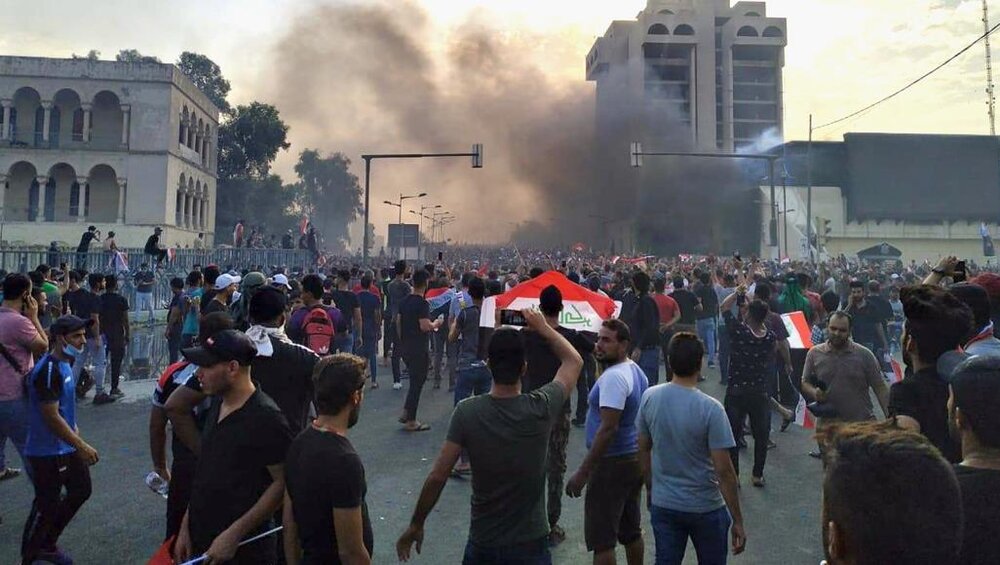
TEHRAN - After almost a 10-day pause, the popular protests in Iraq resumed on Friday in various cities. Although the protests led to clashes and killing of some people by intervention of infiltrators, ultimately it became an opportunity for Iraq’s government to put the demonstrators’ demands on their agenda while maintaining political independence and sovereignty.
In this regard, there are some important points that should be noticed:
1.    The popular protests have been prompted over corruption, bribery of some political parties, and government’s incompetence, which have led to class gap. Therefore, as stipulated in the constitution, public protest is a right that none of Iraqi authorities are opposed to. 
2.    The issues that have been considered as the cause of the protests are not the result of the current government’s performance alone, but the result of years of foreign intervention and sabotage by infiltrators, who have fallen short of Iraq’s national wealth after the fall of Saddam’s regime, and have put the country in many crises in different ways. Creating and backing ISIS and causing a major security crisis is only a simple example of Western hostile actions. 
3.    Some individuals in the new generation (15-25 years old), who are one of key actors in recent protests, hold the sitting government, which has adopted anti-Israeli and anti-U.S. approach, responsible for the uprising. These Iraqi youth are not aware of the problems that the West and infiltrators have caused for their country, and are influenced by social media and anti-resistance media. But what has so far prevented stability and peace in the country is the result of the policies of the West and its regional actors who are seeking to take advantage of Iraq’s insecurity. 
4.    The role of some powerful political currents in fueling the protests, with the aim of undermining Iraq’s government and seeking a share in the government, is obvious. It is a matter which has caused some conflicts, without taking Iraq’s interests into account.  
5.    The exploitation of the protests by foreign elements, who have sought revenge of axis of resistance in Iraq, is an important factor that should not be overlooked. In other words, the context prepared for legitimate protests has provided the opportunity for these elements to use all of their financial, media and intelligence facilities, as well as their embassies in Baghdad to reach their goals in three areas, including:
A.    Establishing a nationwide revolution to overthrow the current Iraqi government and pave the way for future plans. 
B.    Defaming the resistance groups and true friends of the Iraq among the youth. These groups have been the most important factor in fighting against Western proxy terrorism and have prevented the fragmentation of the country. 
C.    Assassination of key and influential figures of the resistance movement.
Accordingly, all the focus of the Western media was to portray traitor as a friend in the public opinion among the youth.  
Of course, this scenario reduced the presence of protestors in Baghdad and changed the slogans from “the fall of the government” to “reforms” by clever leadership of the religious authority, government’s great measures and cooperation of parties, as well as continued efforts by domestic media to enlighten the public opinion.  The important point is that on Friday and Saturday, the main group of protestors separated their way from rioters, following Ayatollah Sistani’s statement and trusting government’s promises to solve the problems.
Therefore, what happened in southern cities was not a demonstration, but brutal attack on parties’ headquarters and government departments by infiltrators.  It seems that this event, despite all problems, provided some significant opportunities and foiled agitators’ plots.
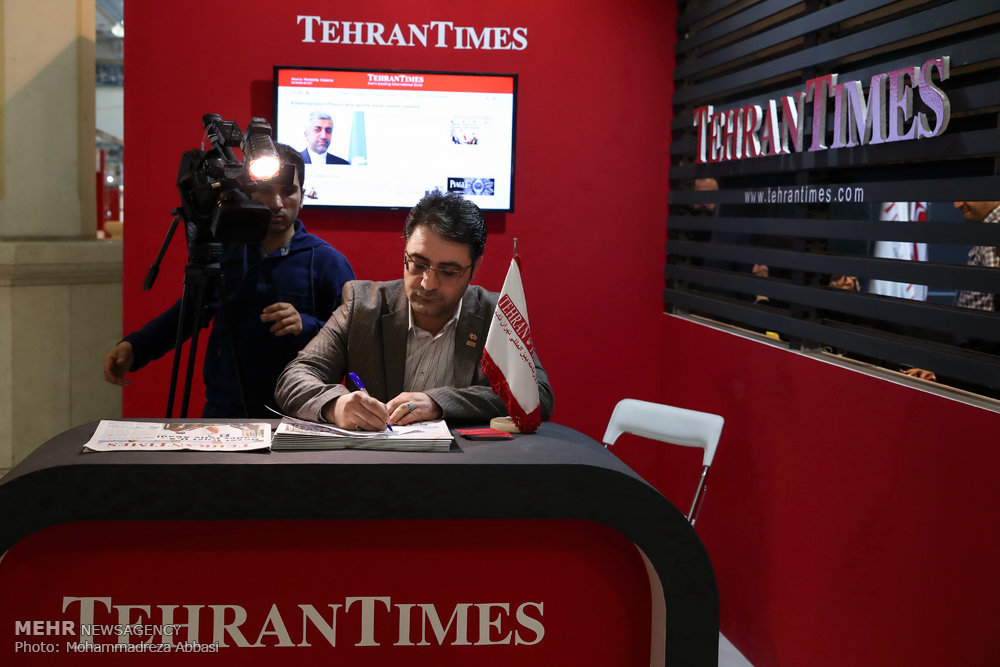
* Author: Mohammad Ghaderi , Tehran Times editor in chief 

Saturday, August 17, 2019

The message behind the release of Iranian oil tanker

* By Mohammad Ghaderi

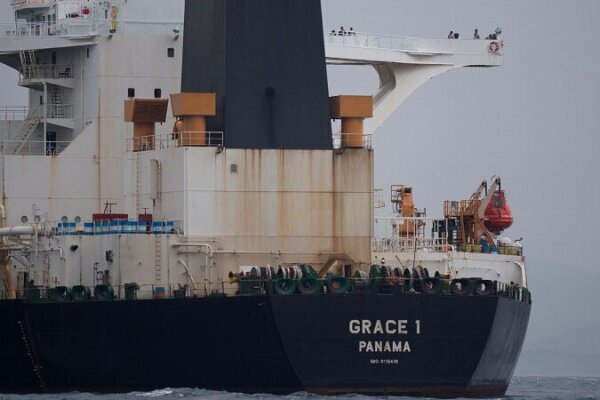
TEHRAN - The Gibraltar court ordered the Iranian oil tanker Grace 1 to be released. The tanker was seized by the British Royal Marines about a month ago. 
This verdict was the ending of an elaborate game designed by John Bolton National Security Advisor of the United States and Mike Pompeo, carried out by the Britain government. 
With seizing the tanker, Bolton was trying to put psychological and political pressures on Iran and force other countries to form a consensus against Iran, but he couldn’t fulfill any of these goals. 
Iran’s firm, logical and wise answer to the seizure of Grace 1 (like making solid legal arguments) and the seriousness of our country’s armed forces in giving a proper response to Britain’s contemptuous act, made the White House lose the lead on reaching its ends. 
Washington imagined that the seizure of Grace 1 will become Trump’s winning card against Iran, but the release of the tanker (despite disagreement of the U.S.) became another failure for the White House in dealing with Iran.  
Obviously, London was also a total loser in this game. It is worth noting that U.S. was so persistent about keeping the oil tanker in custody that John Bolton traveled to London and insisted on British officials to continue the seizure of the ship. Their failure, however, clearly shows that the White House and its traditional ally, Britain, have lost a big part of their power in their relations with Iran. 
Clearly, the illegal seizure of the Iranian oil tanker by Britain proceeded by the seizure of a British tanker by Iran and the following interactions between the two countries is not the whole story and there is more to it that will be revealed in coming days. 
What we know for sure is that London has to pay for its recent anti-Iran plot in order to satisfy Washington; the smallest of these consequences was that Britain lost some of its legal credibility in international arena as it illegally captured an Iranian oil tanker. 
The order of the Gibraltarian court revealed that London had no legal right to seize the Iranian oil tanker and nobody can defend this unlawful action. Surely, Iran will take all necessary legal actions to further pursue the matter.  
In this situation, the Islamic Republic of Iran is firm on its position that it doesn’t have to follow the sanctions imposed by the European Union on other countries (including Syria). 
No entity can undermine this argument as it is based on legal terms; therefore, Iran will keep supporting Syrian nation and government to fight terrorism. This is the strategic policy of the Islamic Republic and will not be changed under the pressure or influence of any other third country. 
Finally, it should be noted that the release of Grace 1 oil tanker was not only a legal and political failure for Washington and London and their allies but it was also a strategic failure. Undoubtedly, the vast consequences of this failure will be revealed in near future. 
* Author: Mohammad Ghaderi , Tehran Times editor in chief 
Friday, August 02, 2019

How plans for restraining Iran backfired

By Mohammad Ghaderi

Iran’s active resistance and strategic patience have nullified all plans of western opponents to restrain Iran. In the latest meeting on Joint Comprehensive Plan of Action (JCPOA), the western countries stepped back from their previously harsh policies. It seems that Iran has been successful in restraining the west, as the remaining members of JCPOA Committee stopped talking about using the trigger mechanism.
Based on Paragraph 37 of JCPOA, the trigger mechanism can automatically reactivate previous international sanctions against Iran.
In fact, Europe did not do much to offset the damage inflicted on Iran by withdrawal of the United States from JCPOA, as Europeans had wrongly interpreted Iran’s strategic patience as being passive. Europe though it has nothing to worry about; on the one hand, JCPOA seemed like a good block to Iran’s nuclear activities and on the other, U.S. was putting pressure on Iran to stop its economic and political progress and weaken its stance in the region.
With the end of Iran’s strategic patience, a new chapter was opened and Iran revealed its new strategy that is active resistance.
Tehran announced that it will gradually decrease its commitment to the JCPOA and gives the other side some time to compensate for its former inactivity. At first, it was hard for Europe to believe such thing as they had grown accustomed to Iran’s patience, but with Iran’s threats, Europe woke up from its former ignorance and started threatening Iran.
However, these threats did not change Iran’s decision, and Tehran took two major steps in its way toward reducing its commitments to the JCPOA.
Tensions over JCPOA coincided with new conflicts in the region. Americans did not think that Iran will show a reaction after they drove their spying drone into Iran’s territory, but Iran seized the drone and changed all former plans of the West powers.
This time, U.S. president who was under a lot of pressure over the negative public opinion, did not show any reaction out of fear of rising war and thanked Iranians for not targeting a passenger flight.
The capture of the American drone and U.S. inability to give a firm response crucially changed Iran’s position in the region and gave Iran a winning edge. After this, Americans tried to impede Iran’s progress by using Britain.
London, who was dealing with its own internal elections, seized an Iranian oil tanker to support the U.S. Following this incident, London received loads of internal criticism for blindly following U.S. in this game, Iran lost a ship, but Britain lost much more because the country claims to be an international influencer.
After this, other players in the region, including some Arab countries became aware of Iran’s new strategy of active resistance. This was a great distress to these countries as they realized if the West puts extra pressures on Iran or attack the country, they will also have to suffer the consequences.
The West political and economic war against Iran was supposed to crush the country, but Iran’s active resistance changed all these plans. West which was trying to restrain Iran, got restrained itself; now they can neither increase tensions by taking the risk of starting a new war nor can they tolerate the humiliation of being passive and having their powerful image ruined.
Recent incidents not only changed the power balance in the region, but it was also a test for the war option. The capture of American drone showed that the U.S., contrary to all its advertisements, is extremely afraid of starting a war, especially now that Donald Trump is on the verge of the new round of presidential elections. The incident also proved another point, that Iran is not afraid of war.
The West policy for restraining Iran backfired on them and put Tehran in a position to restrain the West. Finally, the Leader of the Islamic Revolution Ayatollah Ali Khamenei has best describe this situation by saying “there will be no war and no negotiations.” The drone incident proved the first part of this statement and Iran’s firm stand so far has proved the second part.
* Author: Mohammad Ghaderi , Tehran Times editor-in-chief 

Thursday, April 25, 2019

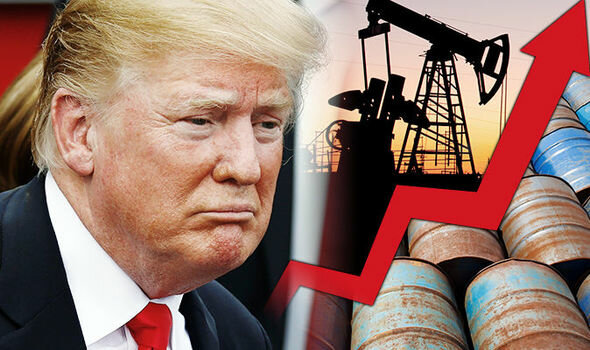
How Trump’s oil plans backfires on him

By Mohammad Ghaderi
TEHRAN - As expected, Donald Trump, the U.S. president didn’t extend sanctions exemptions to nine countries importing oil from Iran including India, China, Turkey, South Korea and Japan.
U.S. Secretary of State Mike Pompeo said the decision was intended to bring Iran's oil exports to zero and dial up economic pressure on the country.
The decision led to grave consequences from the very beginning: oil price jumped by 3% and the oil experts expressed strong doubt that Saudi Arabia and the United Arab Emirates can make up the difference in oil to ensure that global markets were not unsettled.
Here there are some point that are worth mentioning:
1.     The Washington’s recent blatant move to hamper Iran’s oil sales was based on Washington’s unilateral sanctions against Iran, rather than universal  multilateral sanctions; this will not only undermine the legality and credibility of the Trump’s decision but it will also restrain its real practical effects. In such an environment, the Islamic Republic of Iran will have more freedom to sell oil “indirectly” or “with using mediators” and this means that Trump, Pompeo and Bolton will not reach their goal that is to reduce Iran’s oil exports to zero.
2.    Washington’s move to end sanctions exemptions has led to objections from countries importing oil from Iran. Even countries such as Japan and South Korea that are Washington’s allies in East Asia have voiced their objections to this decision and insist to continue negotiating with the White House, so that importing oil from Iran will get back to its normal routine.
Countries such as Turkey and China have taken a stronger stand, saying that they will not follow Trump’s scandalous decision. They are, on one hand, worried about the oil market’s future conditions and on the other hand think that the White House decision is against the principle of making multilateral decisions in international arena.  
3.    The story doesn’t end here! Even though it seems that the conflict between Iran, U.S. and its two followers, Saudi Arabia and UAE, is only about oil but the conflict can expand to other fields as well. Washington, Riyadh and Abu Dhabi can’t possibly expect that after their activities against Iran in oil market, Iran’s response will be limited to “oil and energy sector”! Iran will make smart, calculated moves to ensure that U.S. and its allies will face the consequences of their activities in other fields. The Islamic Republic of Iran’s meaningful silence is just a preliminary stage when Iran prepares its serious and effective response for the ones who devised this oil scheme against it.
4.    The U.S. recent move against Iran by ending sanctions exemption is an official end to the Joint Comprehensive Plan of Action (JCPOA). After Trump unilaterally abandoned the JCPOA in May, the agreement lost most of its effects, but it was still in place; anyhow, now that the U.S. has imposed extensive sanctions against Iran’s oil, there is no reason for the Islam Republic to stay in this agreement.
On the other hand, the reaction of European Union to the U.S. recent decision shows that the European troika has no intention to maintain its nuclear agreement with Iran. In the meantime, Federica Mogherini, the president of the UN Foreign Affairs Council and the chairwoman of JCPOA Joint Commission, had the audacity to remain completely silent. This indicates that there has been a clandestine agreement between Washington and the European Union member states in regard to sanctions against Iran’s oil. Clearly, in this situation, Iran’s foreign ministry should officially stop JCPOA talks with the Europe and prepare to totally withdraw from JCPOA.  
5.    Considering the strong role of “mediators” in selling Iran’s oil in unofficial international markets, it seems that under current circumstances, approving the four bills to join the Financial Action Task Force (FATF) will only strengthen the West in using repressive measures and controlling tools to further prevent Iran from selling its oil.
Ending the sanctions exemptions to countries importing oil from Iran and designation of the Islamic Revolution Guard Corps as a terrorist organization by Trump administration leaves no room for anybody in Iran to defend the approval of FATF bills.
In this regard, Iran needs to take a strong stand and rule out the possibility of approving the UN Convention on Transnational Crime (Palermo bill) and Combatting the Financing of Terrorism (CFT), unless U.S. revise its two recent anti-Iran measures.
6.    Evidently, Trump has started a dangerous game against the Islamic Republic of Iran; a game that the White House started but its end will not be determined by Trump or his allies. Let’s remember that Washington has already made wrong predictions about reaching its goals with pressuring Iran’s economy. Following Washington’s withdrawal from JCPOA in May, Trump had claimed two critical time periods that would force Iran into economic collapse, predicting that they are likely to be in August and November. Washington high-ranking officials had also claimed that based on realistic and expert analysis that they have made, Iran will experience a major economic and political collapse by November 2018! It goes without doubt that once again Washington is doing another ill-fated attempt in starting an oil conflict with Iran. However, this failure will have far heavier costs for the U.S. compared to the last year.

Thursday, February 07, 2019

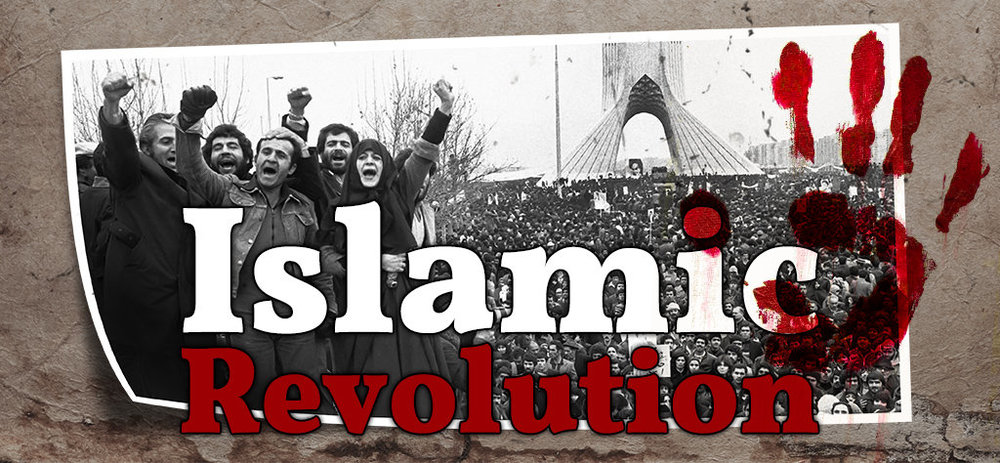
40 years of America's failure against Islamic Revolution

By Mohammad Ghaderi
TEHRAN - This year is on the eve of the 40th anniversary of the victory of the Islamic Revolution of Iran. Trump, like other U.S. presidents, has been defeated in opposition to the Iranian nation. Today, the Islamic Republic of Iran continues to grow in the region and the world. Undoubtedly, in the future, a much worse defeat awaits the president of the United States.
Over the past 40 years, the presidents of the United States have tried different ways in contrast to the Iranian nation: to support the dictatorial regime of Saddam Hussein in the war with Iran to impose a variety of unilateral and multilateral sanctions against Iran!
But today, the Islamic Republic of Iran continues to be strong in its movement in the world. Undoubtedly, Donald Trump will be defeated like any other U.S. official.
Over the past 40 years, the Islamic Republic of Iran has shown that it will resist the pressure of the enemies, especially the United States. Iran will not fail on this path. The message of the Iranian nation to Tramp is also very clear in this regard.
The president of the United States is having difficult days. It is now about nine months since Tramp left the nuclear deal. Trump and his advisor, John Bolton, thought that Iran would be willing to give the United States a great deal during this time, but the passage of time showed that the United States was isolated in confrontation with Iran!
The strategic and unjustifiable mistake of the United States President, Donald Trump, in his withdrawal from the nuclear deal and imposing secondary sanctions against Iran, is now discussed in different circles. Many western media and news sources speak of Trump's terrible mistake in this regard.
 They believe that by this decision, Trump was isolated in the international system, and failed to have other players' agreement in cooperating with him to put sanctions on Iran, and thus failed to achieve his economic goals against the Islamic Republic. In other words, Western media and analysts believe that, despite the fact that Trump's economic pressures on Iran are more severe than in the time of Obama, he will be less successful than his predecessor in pursuing his economic goals in confrontation with Tehran.
Trump's mistake in pulling out of the nuclear deal and opposing Iran can be analyzed both politically and economically. Trump's European allies believe that by walking out of the nuclear deal, the U.S. president, has actually put the principle of multilateralism in the international system under question.
The isolation of Washington in the international system has now reached its peak. So far, many American analysts have warned about Trump's deterrent policies in the U.S. foreign policy and economics. However, by picking up people such as Bolton and Pompeo, Trump has shown that he isn't basically paying any attention to these warnings, and once he realizes that, there is no longer any opportunities to make up for his mistakes.
Finally, the United States has been defeated by Iran over the past 40 years and the trend will continue in the future. Meanwhile, the current president of the United States, Donald Trump, will become one of the symbols of the country's failure to confront the Iranian people and the Islamic Revolution.

Monday, January 28, 2019

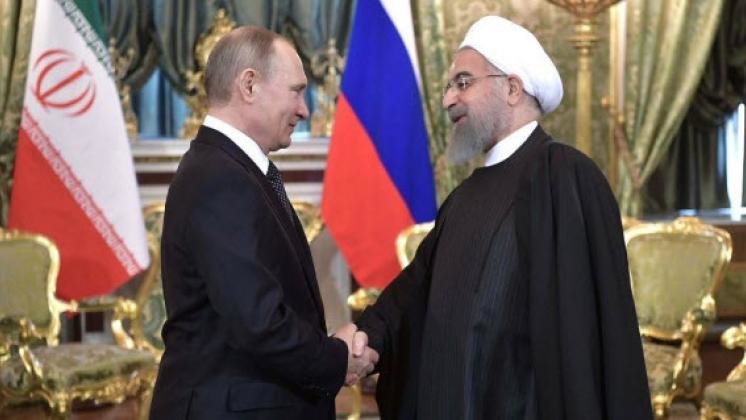
Multipolar strategy of Iran

By Damir Nazarov
Mohammad Ghaderi, chief editor of the Tehran Times, says Iran and Russia can establish strategic partnership in the multipolar world.
Following is the text of his interview with Ghaderi posted on geopolitica.ru:
Q: Do you think American sanctions on Iran have succeeded or not?
A: Definitely not. Of course, we need to examine this issue at two levels: the first level of short impact and the second-level of lasting impact. Accordingly, there may be pressure on the people and the Iranian government for a time, but ultimately what is the main purpose of the United States in imposing sanctions would not be met. The reason for this is clear: America has been hostile to the Iranian nation for 40 years, but the Islamic Republic of Iran has been getting stronger and the voice of the Islamic Revolution has gained more influence in the world's public opinion every day.
Q: Is the EU independent in dialogue with the Islamic Republic?
A: The answer to this question is also clear: definitely not. Of course, the important point that should be clarified here is: Europe can’t be independent or unwilling? In my opinion, some European countries want independence from the United States, but they can’t, since they have accepted America's hegemony for many years, and everything has become American. Some other European countries do not essentially want to be independent from the United States. As far as negotiations with Iran are concerned, in my opinion, the EU can’t decide independently, because of the widespread influence of the United States on the infrastructure of decision-making in Europe and because of their high level political and economic relations. Of course, it should be noted that Europe is losing ground because the United States, particularly Donald Trump, don't want a united powerful Europe; they prefer collapse of united Europe in order to be able to assert themselves as the only supreme power in the world.
Q: Western propaganda machine every day releases rumors about "China threat", but there is no proof about Chinese expansion. What do you think about that?
A: This is natural. As it sees the Islamic Revolution of Iran as its ideological enemy, the United States also sees China its commercial and political enemy. In other words, the United States wants to be the premier hegemon in the world and does not endure any competitor to achieve this goal. So, with negative propaganda, it tries to convey a bad image of its competitors to the world's public opinion, similar to what it used against communism.
Q: Iran and Russia have good cooperation in Syria. How do you think that "cooperation" can serve as a potential in other areas?
A: Yes, Sure. I think that Russia and Iran can have strategic partnership for many reasons. I mean, there are a lot of points of contact between the two countries that can provide the basis for these partnerships, so some issues should not preclude such cooperation. The example of cooperation in Syria is good evidence that the two countries together can play a very effective role in international developments and prevent Western interference.
(Source: www.geopolitica.ru)

Wednesday, January 16, 2019

Poland will lose intl. prestige after US-orchestrated game

By: Mohammad Ghaderi


Poland will lose intl. prestige after US-orchestrated game

TEHRAN, Jan. 15 (MNA) – Polish officials have closed their eyes to the realities of international relations regarding the hosting of an anti-Iran conference. They still do not know that at the end of this game Warsaw will lose its international prestige and respect and the US will finally abandon them.
In 1939, when World War II began, Poland came under attacks by both Nazi Germany and the Soviet Union. The attacks led to starvation, displacement, and mass execution of Polish people.
It was between the years 1941 to 1943 that about 150,000 Poles took refuge in Iran. During their three-year stay in Iran, the Iranians’ hospitality toward the Poles won the praise of the international community, especially the Poles themselves.
At the time, Poland’s officials had said that the Iranians’ kindness toward the Polish refugees will not be forgotten from their memory.
Now, at the beginning of 2019, some Poles who spent their childhood in Iran during World War II, are still alive. They are narrators of a nation that while themselves were grappling with starvation, they did whatever they could for their guests who had fled the war and punishment. However, today there is an open and secret relationship between the Polish and US governments aimed against Iran. 
The point is that Warsaw has not been an independent power player at the international scene in recent decades. Persons such as Jaroslaw Kaczynski to Donald Tusk and Mateusz Morawiecki have all been turned into submissive politicians who have preferred playing at the US court. 
It is not without reason that many analysts view Poland as a country with limited international influence.
Today, at a time when the Iranian nation is struggling with illegal sanctions by the Trump administration, officials in Warsaw have agreed to host an anti-Iran conference. Though this joint Washington-Warsaw measure against the Iranian nation will reach nowhere, the great treason of this European country will not be wiped from the Iranians’ minds.
The reasons that the Polish officials are doing against Iranians are not just limited to this move.
In 2018, when Trump unilaterally withdrew the US from the 2015 nuclear agreement, Poland was the only country in Europe that tacitly supported the move.
The Polish officials claimed that Trump’s concerns about the JCPOA (the official name for the nuclear agreement) was understandable and called on fellow European countries to consider these concerns. Moreover, Poland announced that it is ready to bring the views of Europeans and the US closer together over the JCPOA after Washington’s pullout from the nuclear pact. 
Now, Poland has the illusion that it has received the benefits of its subservience to the US and the selection of Warsaw as a venue for the anti-Iran conference is a positive signal that has been sent to Poland by Mike Pompeo and other US officials. 
Polish officials have closed their eyes to the realities of international relations. They still do not know that at the end of this game Warsaw will lose its international prestige and respect and the US will finally abandon them.

Thursday, September 13, 2018

Europe's hollow threats

Europe's hollow threats
TEHRAN, Sep. 12 (MNA) – Although there has recently been lots of controversies on issues such as developing an "independent payment system" Europe and a "pseudo-swift structure" to maintain the nuclear deal with Iran, many analysts and experts in economic affairs believe that there's no real intention to actualize this idea among the EU authorities.
In the meantime, there are deterrent factors that have hampered European independence from the United States, and it seems that these factors are now highlighted under the presidency of Donald Trump.
The fact is that European politicians, and especially the current generation of European rulers act as the main barrier in this way. While some left-wing and Social-Democrats are about to put the idea into practice, some politicians such as the  German Chancellor Angela Merkel, French President Emmanuel Macron and the British Prime Minister Theresa May are opposed to this idea.
They were committed to maintaining Europe's economic and security dependence on Washington. However, the key question is whether the European countries will succeed on this path or not? Is there really a will to develop an independent payment system from the United States in Europe? The answer to this question is negative!
One of the most important prerequisites for the formation of an "independent payment system in Europe" is the consensus of the right-wing and left-wing parties on this issue. However, the European officials don't seem to have such intention. On the contrary, they have become major obstacles to realizing this goal themselves.
It's interesting that such a fact has been taken into consideration by many Western sources. For example, Foreign Policy writes in this regard:
“What’s different today is that the US is imposing sanctions contrary to the foreign policies not just of Russia and China, which have long chafed against the sanctions tool, but against the fundamental foreign policy of our closest allies in Europe and elsewhere,” Smith said. “That is what has brought us to this situation.”
It continues; "with their access to the US financial system hanging in the balance, European banks know that, in the end, the EU must satisfy Trump’s demands to fix the deal or be prepared to fully comply when US sanctions return."
Recently, the Chancellor of Germany has announced her opposition to the creation of an independent payment system in Europe (to save the Joint Comprehensive Plan of Action). Angela Merkel believes that the US-EU security relationship is a priority and this should be considered in all the EU calculations! In other words, the German Chancellor has actually preferred "to play on the US ground", and this she considers above all other options including "Europe's financial independence from the United States."
Theresa May, the British prime minister, has exactly the same opinion. She believes that, instead of confronting Trump's financial and economic policies, and even its illegal measures such as the White House's withdrawal from then nuclear deal, Europe should think about holding negotiations and interactions with Washington!
As for the French President Emmanuel Macron, his policies suggest that he has a strong desire to interact with United States under any conditions! In 2017 and during the joint-American-European Project on changing the JCPOA, he played an extremely important and highlighted role, though Trump had eventually pulled out of the nuclear deal.
Finally, it should be noted that the main obstacle to "Europe's independence from the United States" are the European authorities. As long as the current generation of European politicians are in office, such independence (in terms of security and finance) won't be actualized. When it comes to Iran sanctions, the EU seeks to satisfy Trump’s demands, and this a rule which is not going to change.

Monday, September 03, 2018

Reasons for U.S. fear of Idlib operation

By Mohammad Ghaderi

TEHRAN - Developments in Idlib are accelerating and Damascus and its allies are ready to attack the terrorists. The Syrian army has deployed its forces and equipment around Idlib during recent weeks.

Meanwhile, three Western countries, the U.S., France and Britain have threatened to launch a military strike against Syria, and plan to use a potential false flag chemical attack as a pretext to launch an offensive against Syria.
Meanwhile, some analysts believe that if Hay'at Tahrir al-Sham has been dissolved, that there is no need for military operations in Idlib. It has been argued that Turkey may be involved in convincing Tahrir al-Sham (called also Jabhat al-Nusra) to merge with other armed groups.
“We would probably dissolve Tahrir al-Sham because it faces the pressure of Russia and even Turkey. If the Russians and the Syrian government attack Idlib, the door to Hell will open in the region because of all the Syrian dissident terrorists gathered in Idlib and its suburbs,” said one of Syrian. But Hayat Tahrir al-Sham spokesperson Emad Eddin Mujahid, denied any intention to dissolve Tahrir al-Sham.
At joint news conference, Syrian Foreign Minister Walid al-Moualem met his Russian counterpart Sergei Lavrov in Moscow on August 30, and said: “We will go all the way” in Idlib. Lavrov also warned the western powers against military action in Syria.
Abdel Bari Atwan, an analyst of the Arab world, wrote: “The sudden emergence of Staffan de Mistura, the UN Special Envoy for Syria, and his position regarding the complex crisis in Idlib suggests a repetition of the eastern Aleppo scenario, with the difference that there will be no other Idlib situation afterwards. Two years ago, at a news conference in Geneva, he made a similar offer to terrorist groups in Aleppo. He announced his readiness to go to Idlib to help provide safe passage out for civilians.
The danger, said de Mistura, is that al-Nusra terrorists number 10,000 or more fighters, and that they deserve to be destroyed. Two points can be drawn from the words of the UN Representative for the Syrian affairs: first, the description of the Tahrir al-Sham (Jabhat al-Nusra) group as a terrorist group, which can be considered a green light to break them up and exclude them from any settlement plans.
Second is the position of de Mistura about chemical weapons. He sees  the use of chemical weapons as a dangerous ploy to justify a U.S., UK and French attack as insane.
On June 23, 2014 all of Syria's chemical weapons had been destroyed. However, the official announcement by the Organization for the Prohibition of Chemical Weapons on the extensive cooperation of the Damascus government with the organization has not prevented continued western allegations. The U.S. has deployed its navy in the Mediterranean to attack Syria with Tomahawk missiles while Russia has also deployed its warships in front of the U.S. warships.
The terrorists have said that there will be no dialogue with the Russians and the Syrian government to give up Idlib and its suburbs.
The U.S. is worried that the Syrian army will eliminate all the weapons that it and its regional allies can use to exert pressure on Damascus, especially since the battle of Idlib is the last stage of the liberation of Syria's entire geography. With the liberation of Idlib, the Syrian government will return to pre-crisis conditions, and those who launched the war over Syria for seven years will be defeated and Damascus will be victorious.
Russian analyst Andrei Ontikov spoke with Sputnik about Russia's reaction to a possible strike and said: “Russia has equipped the Syrian army with advanced missiles. In addition, Russian experts are among the Syrians. In particular, most of the U.S. missiles were destroyed in the previous attacks.”
The former commander of the Baltic Fleet Adm. Vladimir Valuev has announced in speaking with Sputnik: “ Russian forces in the Mediterranean aim to counter a possible missile strike against Syrian government forces. The massive presence of the Russian Navy is a necessary step in preventing an attack on Syria.”
It is certain in any event that the battle for the liberation of Idlib by the Syrian army and its allies will begin soon.