Showing posts with label U.S.-China Trade War. Show all posts

Wednesday, September 04, 2019

Escalating U.S.-China trade war, a blessing in disguise for Iran’s oil industry?!

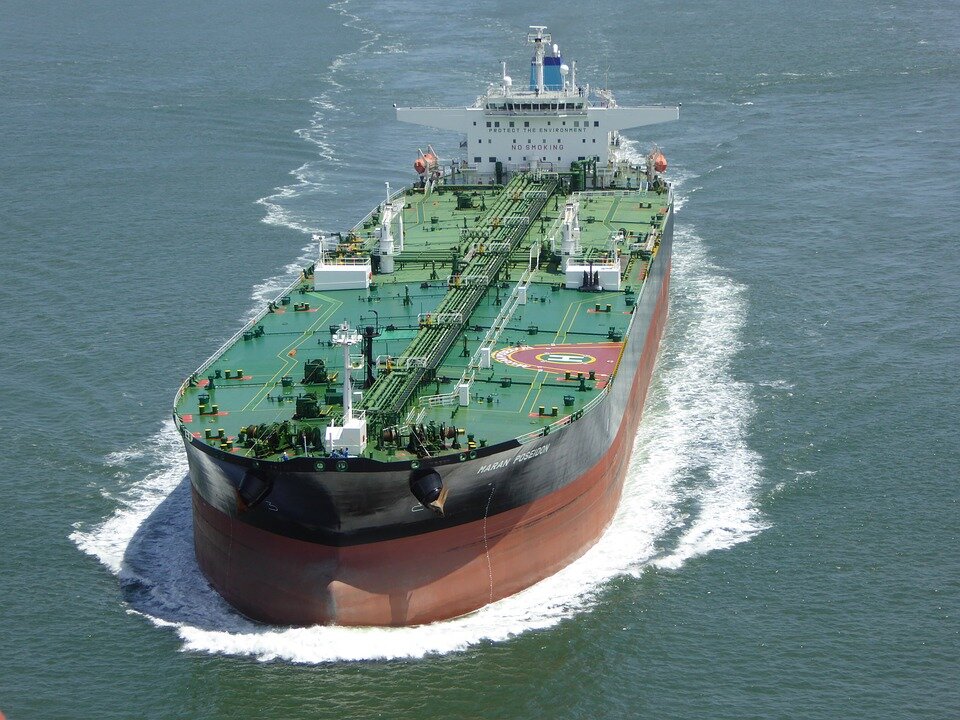
TEHRAN – The U.S.-China trade war, which has been going on for more than a year, entered a new phase last week as China not only imposed new tariffs on U.S. goods in retaliation against Trump's actions, but took the matter a step forward by putting "crude oil" on its tariff list.
The five percent import tariff, which Beijing has imposed on U.S. oil, means that the price of a barrel of oil for Chinese refiners will rise by about $3 per barrel. This would make U.S. oil imports not economically viable in long term.
The new tariffs on the U.S. crude oil, along with the heavy prices of shipping oil from North America, could push the Chinese buyers back toward Iranian crude oil.
As they are already buying oil from the Islamic country despite U.S. sanctions, the Chinese refineries might find it risk worthy to even increase their purchase of cheaper and more accessible Iranian oil rather than the more expensive and hard-to-get U.S. crude.
Trade war and new tariffs
Since more than a year ago, when the tension between the world’s two biggest economies started to escalate, global markets have been shadowed by the concerns of a dismal economic future. Oil prices have been following a downward pattern in the past few months, as the tension between the two sides has been escalating even more.
On Sunday, the new tariffs that the United States and China imposed on each other last month, came into force and for the first time since the beginning of the row, China officially started targeting U.S. crude oil in its tariffs.
In late-August, the U.S. imposed 15 percent tariffs on several Chinese goods - including footwear, smart watches and flat-panel televisions, and China levied five percent tariffs on the U.S crude oil. The issue of imposing tariffs on U.S. oil has come up so many times since the trade war started, however this is the first time that it is coming into effect officially.
Back in June 2018, China announced that it is considering new tariffs on U.S. oil imports. Following that announcement Chinese refiners halted all their imports and China’s imports of U.S. crude oil hit nearly zero in July 2018.
A look at the 2018 situation can tell a lot about the probable reaction of Chinese refineries to the new, actual tariffs. So it won’t be inconsequent to expect them to consider Iranian oil as a reliable and economically reasonable source for supplying their needs.
The latest data released by the Chinese customs indicates that the imports of U.S. oil in the first seven months of 2019 stood at 126,000 barrels per day, a 63 percent fall from the figure for the last year’s January-July period.
The cuts clearly reflect the impact of the trade war on Chinese oil imports from the U.S. even before Beijing imposed the new tariffs.
An opportunity for Iran
A few days after Beijing announced its decision on imposing new tariffs on U.S. crude, the country’s refineries started to look for ways to evade the consequences of the decision.
For instance, in late August, China Petroleum & Chemical Corp (Sinopec) asked the government to be exempted from the tariffs imposed on the U.S. oil.
According to the data from analytics companies Refinitiv and Kpler, Sinopec is expected to ship in eight million barrels of U.S. crude in September and October.
So, if Asia’s biggest refiner doesn’t manage to get a waiver on U.S. oil imports, it would definitely seek to replace the U.S. oil with crude from other sources, and Iran would be the most probable option.
Less expensive and more accessible Iranian oil makes it so attractive that it would be hard not to consider it at the time that the increase in the U.S. oil prices and the distance from the United States is making the American crude less and less attractive for the Asian country’s market.
Let’s not forget that, despite all the Trump’s attempts and threats, China hasn’t stopped its oil imports from Iran even after the waivers on imports of oil from Iran expires in May.
Now considering the recent escalations of the trade war between U.S. and China, it is more than likely that China would not only supply the needs of its refineries by increasing oil purchases from Iran, but also challenge one of Trump's most important foreign policies.

Saturday, August 31, 2019

Trump at the point below zero

By Hanif Ghaffari

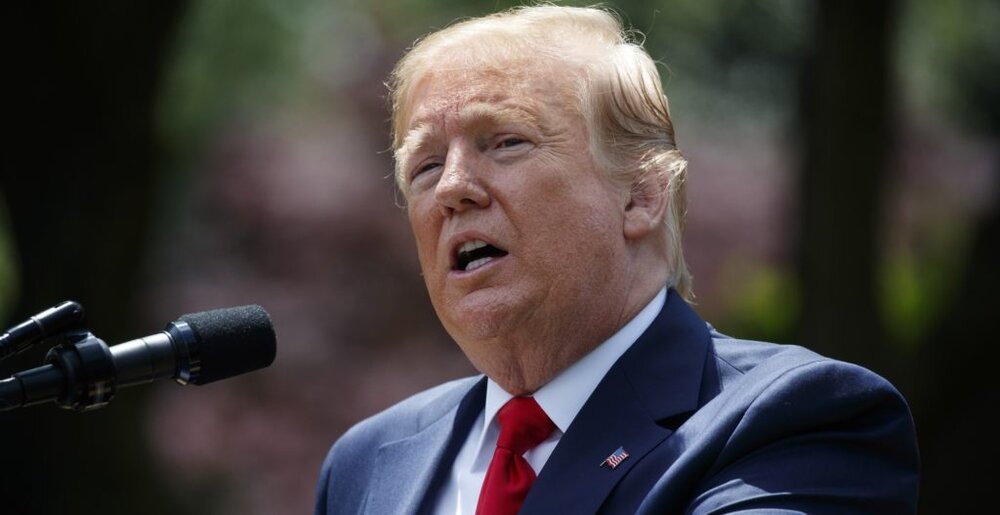
U.S. President Donald Trump is having a hard time. He lost the trade war with Beijing after three years of trying! Failure to align US businesses, farmers and citizens with Trump policies, along with warnings from US analysts and economists, have led the US president to defeat his main economic competitor. If the trend continues until next year's presidential election, Trump will surely lose the election. Polls in the states of Wisconsin, Pennsylvania, Florida, Michigan and Ohio show that the US president has little chance of winning in those states. Even in some US states, like Texas, Trump has little chance of winning.
Undoubtedly, one of the main factors that has reduced Trump's power is his economic defeat against Beijing. The President of the United States of America is now back below zero, even before Year 2016. America's trade deficit with China has grown from $ 346 billion(2016)  to $ 419 billion(2019). On the other hand, by the end of the 2018, we saw a 7 percent increase in Chinese imports to the United States.
The Chinese have undoubtedly suffered the worst blow to Washington with the clever devaluation of the yuan and its important decision not to buy American agricultural products. However, Beijing has not yet entered US assets in China (worth over a trillion dollars)!
At present, the United States is trying to use all its means  to fight China: from insuring Taiwan to interfering with Hong Kong protests and consulting with Tibet! Even the United States is trying to pressure China in the face of the crisis in North Korea. Essentially one of the main reasons for the US's negative and deterrent intervention in the Korean Peninsula, as well as Washington's blocking of direct talks with Pyongyang and Seoul, is confrontation with Chinese power in East Asia.
Finally, the United States will definitely lose the game to Beijing! The cost of a defeat for Donald Trump will be very heavy, and even that could be one of the major reasons for the failure of the US president in next year's presidential election.

Tuesday, August 13, 2019

U.S.-China Trade war: What does it mean for Iran?

By Mohammad Eslami

TEHRAN – U.S.-China trade war has been one of the game changers among the geopolitical factors affecting the international political and economic sphere. The 10pc tariff will be imposed on the $300bn/yr of imports from China not yet subject to any duties, Trump announced via Twitter a day after the latest round of talks, which concluded in Shanghai.
 As a result, China’s yuan tumbled to the weaker side of the key 7-per-dollar threshold, hitting its weakest since 2008, against the backdrop of a sharp escalation in the protracted U.S.-Sino trade war. The United States has accused China of manipulating Yuan and the U.S. Treasury Department designated China a currency manipulator, a historic move that no White House had exercised since the Clinton administration.
While Iran is under the pressure of the toughest sanctions policy in international history, Tehran declares the sanctions as "economic terrorism" and China is still buying the Iranian heavy crude oil, Ups and downs of trade negotiations and confronting economic policies had occurred between two world powers, does specific meanings to Iran.
 Political Aspects
The U.S. and China, two UNSC permanent members, are among the signatories of the Joint Comprehensive Plan of Action. The violation of the deal by the Trump administration and the decision to impose more extraterritorial sanctions made an either-with-us-or-against-us dilemma which is not followed by the Chinese government. The Iranian question here refers to two possibilities. Whether China would leave the position to confront the U.S. sanctions and stop buying Iranian oil in order to be more concentrated on the trade war, or consequently got mere serious in bypassing the sanctions against Iran legally and practically.
 After 8th May 2018, China declared that it would stop buying oil from Iran due to the legal and financial concerns over the sanctions. When hopes for an early settlement of the yearlong U.S.-China trade war dimmed, the route changed. While China has not imposed levies on crude oil imports from the United States, it’s purchases of U.S. crude have dropped sharply from record levels last year.
 Simultaneously, it is continuing Iran oil imports. China imported Iranian crude oil in July for the second month since a U.S. sanctions waiver ended, according to research from three data firms, with one estimate showing some oil entered tanks holding the country’s strategic reserves.
 Economic factors
However, the political dimension is not the only important consequence of the trade war. Yuan historic drop affects the cost and benefit of bilateral trade between Iran and China. Iran's revenues from exports (U.S. dollar-based revenue) would expand compared with imports costs (Yuan-based).
 Although the long term effects of the trade war could lead to inflation in the Chinese domestic market and worsening of trade tensions would reduce China’s growth by around 0.8 percentage points over the following 12 months, which would mean the reduction of the demand for crude oil too. The growth reduction and reduction of demand will make the freight costs more important and the competitive price of Iranian oil will be more attractive. 
 Strategic Planning
Above all, the future of the trade war is the fate of the hegemonic U.S., from the Iranian point of view. It can be meant as the end of the age of U.S. dominance. A range of problematic dilemmas both domestic and internationally including the sanction regime, the maritime security and the security of the Strait of Hormuz, Iran's engagement in the international financial and banking system, the flow of foreign investment, and so on would be affected by the future of the U.S.-China trade war more or less.
The dynamics of the crisis shows that Iran would benefit in the either-with-us-or-against-us playground which is designed by the OFAC regulations. Although Iran's policy for engaging the international community as the outcome of the JCPOA is ruined by the destructive policies of the White House, the evidence confirms that Trump's long-term presidential effects will benefit Iran.

Sunday, August 11, 2019

Beijing's expanding power over Washington

By Hanif Ghaffari

The President of the United States continues to feel weak and helpless against China. At the beginning of 2017, Donald Trump tried to contain Beijing by restrictive economic policies.
At the time, Trump stated that the $ 346 billion US trade deficit was due to trade with China. We are now in year 2019 and this trade deficit has reached $ 419 billion! This shows well that Trump's economic policies toward Beijing have failed. This will undoubtedly have an impact on the presidential election of the year. Many US citizens thought that Trump could reach a deal with Beijing by the end of the2017  (in the interests of US economic interests), but the White House has practically failed to confront China.
China's stoppage of US agricultural products and Beijing's imposition of reciprocal tariffs on American products indicate that this Asian power does not intend to surrender to the United States. In such circumstances, there will be no opportunity for President Donald Trump and his companions to maneuver.
Many US economic and policy analysts believe that in year2020, China will be one of the actors that will hurt Trump in the presidential race. However, China has now become a symbol of America's economic and political failure in the world.The popularity of Trump has dropped in recent polls in the United States. Donald Trump's calculations have been incorrect in many cases! This has exacerbated Republican concerns over next year's presidential elections. An overview of the results of recent polls in the United States shows that Trump has a difficult path to re-election.
As The Hill reported, More than 50 percent of respondents in a new survey say they will not vote for President Trump when he seeks reelection in 2020. The ABC News–Washington Post poll released Monday found that 55 percent of respondents said they will not vote for Trump next year, with only 39 percent approving of his work since taking office .Of respondents who were asked if they would vote from Trump in 2020, 14 percent said they would consider it and 28 percent said they definitely would vote for him to have a second term in the White House.