Showing posts with label extend waivers on Iran sanctions. Show all posts

Saturday, April 27, 2019

‘U.S. sanctions doesn’t affect Iraq’s energy ties with Iran’

By Ebrahim Fallahi
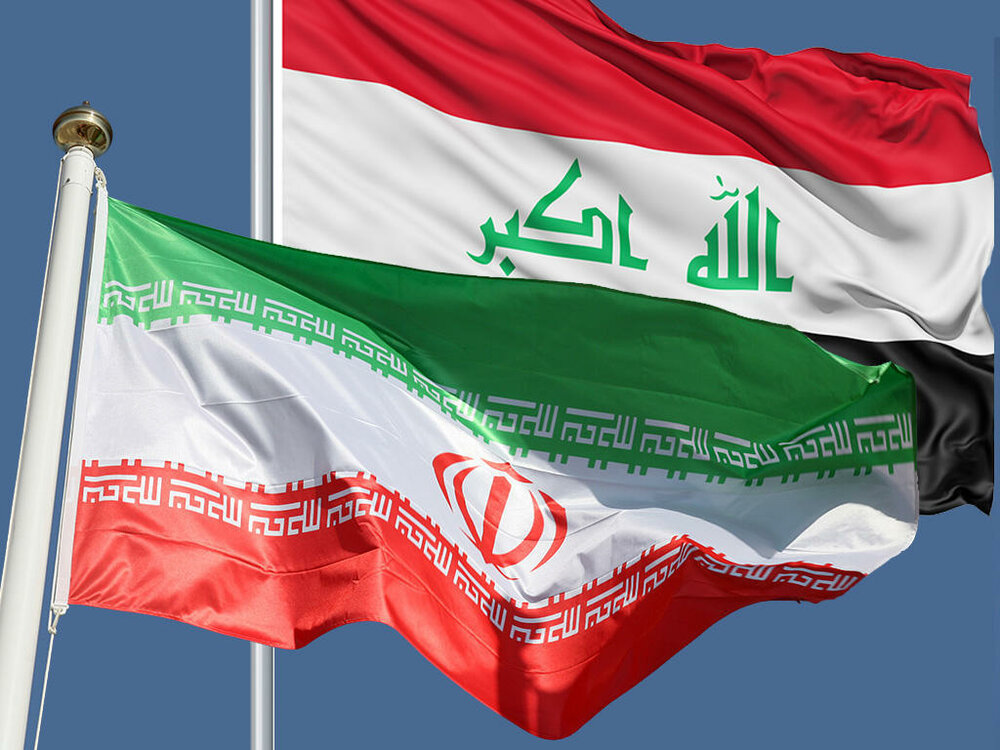
TEHRAN – Deputy prime minister of Iraq for energy affairs said the U.S. decision on ending waivers on Iran sanctions does not affect Iraq’s energy ties with Iran since the country does not import oil from Iran, IRNA reported on Friday.
Thamer Ghadhban, who is also the country’s oil minister, made the remarks in a joint press conference with Executive Director of the International Energy Agency Fatih Birol in Baghdad.
“Iraq is an exporter of crude oil to other countries and therefore is not subject to the new decision of the U.S. president” the official said. 
The oil minister said on Thursday that although his country had the capacity to increase its oil production to six million barrels per day (bpd) if necessary, but it is committed to OPEC-led output cuts and would not take unilateral action to boost supply.
Iraq’s electricity ministry has also announced that despite the recent decision by Donald Trump to end sanctions exemptions on Iran oil, Iraq will continue to import gas from Iran.
As reported by Mehr news agency, the spokesman of Iraqi Ministry of Electricity Musab Al-Mpdares told a talk show on Wednesday that “Iraq now imports about 28 million cubic feet of gas from Iran which feed a number of power stations that produce about 2,800 MW.”
The official further noted that his country plans to increase its gas imports from Iran to 35 million cubic feet per day as of early June in order to increase electricity production to 3,500 MW.
The spokesman also said that the Iraq ministry is going to supply 18,000 MW during hot summer as its main aim, adding that Iran will continue to export 1,200 MW per day to Iraq as before.
He further pointed out that Iran and Iraq use their local currencies to carry out the contract payments.
The United States on Monday demanded that buyers of Iranian oil stop purchases by May 1 or face sanctions, ending six months of waivers which allowed Iran’s eight biggest buyers, most of them in Asia, to continue importing limited volumes.
The White House said after its Iran move it was working with Saudi Arabia and the United Arab Emirates to ensure oil markets were “adequately supplied” but traders worried about tight supplies.

Wednesday, April 24, 2019

Would Saudis play the U.S. puppet in Iran sanctions scenario?

The U.S. announced on Monday that the country is not going to extend the sanctions waivers which were granted to some of Iran’s oil customers in November 2018.
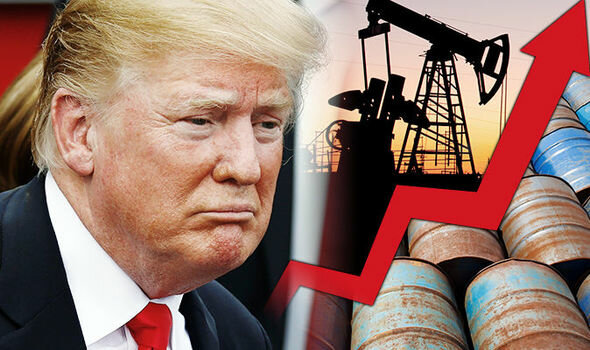
Many analysts believe that Trump’s decision on ending the exemptions is a double-edged sword and the U.S. president might well be shooting himself in the leg by doing so, since on one hand, he doesn’t want the prices to follow their current upward trend and on the other hand he is willing to raise the pressure on Iran to its utmost level.
Finding the solution to make both these scenarios happen hasn’t been easy for the U.S. government and clearly by announcing the end of waivers on Iranian sanctions, Washington is betting big on its allies in the region for preventing the situation to get out of hand.
In this regard, Saudi Arabia’s announcement on Monday about the possibility of a boost in production is a clear indication of the fact that like many other times, this time too, the U.S. expect Saudi Arabia to play the oil-rich puppet which is ready to offset the losses from Iranian oil.
Now the question is, would Saudis really fill the gap? To answer this question one should have a clear understanding of the market statistics these days. In theory it might be possible for the Arab country to raise its output to a certain level but for how long and at what cost? (Both figuratively and literary) 
Saudi Arabia and the repeating scenario
As OPEC’s biggest exporter, Saudi Arabia is currently producing around 9.8 million barrels of oil and the country has been trying hard to maintain a production cut deal which has held OPEC producers alongside nations outside the cartel in a battle to keep the prices from falling.
This is not the first time that the Saudis are being ordered to play obedient executor in the region. Trump has been constantly criticizing OPEC for its actions regarding its activities to maintain the prices and the Saudis have been pressured to increase production again and again.
In July 2018, when Trump was planning on leaving Iran’s nuclear deal, he had asked the Saudis to rise their production to compensate the Iranian oil which was supposed to be wiped out of the market.
The kingdom promised to increase production to 12 million barrels per day, a dream that never came true.
At the time many experts and analysts pointed out the unrealistic nature of Saudi Arabia’s claims.
Gary Ross, head of global oil analytics at S&P Global said “The Saudis do not have 2 million bpd of spare capacity as it would imply production of 12 million bpd. They can likely produce a maximum of 11 million and even that will be running their system at stress levels,” 
“I do not believe that Saudi can increase production to 12 million bpd but they can increase exports by digging into their reserves.” Ole Hansen, head of commodities research at Saxo Bank said.
However, this time the situation is a little different. Considering the kingdom’s current production which is under 10 million bpd, the possibility of an increase to 11 million bpd is not that far from the reality.
But would the Saudi’s be able to go through with this promise?
Saudis and OPEC: The pact
Despite clear opposition from Trump, in December 2018, Saudi Arabia and its other fellow OPEC members along with the non-OPEC oil producers reached an agreement based on which all the signees would commit to a certain level of production cuts to take 1.2 million barrels per day off the market for the first six months of 2019. The 15-members of OPEC agreed to reduce their output by 800,000 bpd, while non-OPEC allies including agreed to contribute a 400,000 bpd reduction.
Since the beginning, all the OPEC+ members showed significant commitment to the deal and their efforts led to an almost balanced market in which the prices started to rise from their low levels.
In the meantime, Saudi Arabia has been pressured multiple times by the U.S. to end the accord and to increase production, however since the kingdom desperately needs the prices above $50 to maintain its precious Aramco’s value, the Saudis have resisted the U.S. requests for cooperation.
If the Saudis go through with Trump’s request this time, the kingdom would not only be ending a deal which has kept the prices from falling for so long, but it will also negate its position of strength within OPEC.
Despite all the pressures from the U.S., Saudi Arabia wants to make sure that in the next OPEC+ meeting in June, the pack would stay committed to the cuts deal. And if Saudi Arabia goes through with the commitment to rise its production under the U.S. pressure, it would definitely come to the OPEC+ gathering empty handed and it cannot expect other signees to stay in a deal which needed all the members to cut to certain levels.
Considering the fact that other members of OPEC+ deal are not at a position which could be able to increase production, the U.S. is expecting Saudi Arabia and the UAE to shoulder the burden.
If they do so, this would be a clear indication for the OPEC+ deal to end and that would not be good news for the Saudis that do not want to go back to the bad old days of under-$50 oil.
That’s why Saudis haven’t been clear about their position in all these, they have said that the kingdom is going to assess the impact of the U.S. decision on the oil market before any raise in output.
Let’s not forget Iran’s ability to maintain some level of its oil exports under any circumstances. Iran has proven multiple times that it has its own strategies and approaches for seeing its oil in the global markets and many oil experts and analysts alongside Iranian officials including Iranian Oil Minister Bijan Namdar Zanganeh have clearly asserted that the U.S. cannot realize its dream of “zero Iranian oil”.
So with some portion of Iranian oil added to the mixture, and despite the short-term spike in the prices for now, the markets could be awaiting a downfall for oil prices if Saudis go through with the U.S. plans.
there is also the possibility of a conflict in the region, since Iran could potentially close the strategic Strait of Hormuz.

Monday, April 22, 2019

Trump’s dilemma with Iran: to extend waivers or not!

These days one of the major factors which is affecting the oil market is the U.S. President Donald Trump’s actions and their consequences. The imposition of sanctions on Venezuela, reimposition of sanctions on Iran, comments on Libya, the impact on Saudi Arabia and OPEC decision making, are just some of the scenarios in which Trump is the lead actor.
In November 2018, when the U.S. president announced withdrawing from the 2015 nuclear accord between the Islamic Republic and six world powers, he made another announcement saying that the U.S. is going to cut Iranian oil exports to zero!
The sanctions targeted Iran's oil sector, financial transactions and banks, as well as shipping and ship-building industries in order to cut off the country’s revenue sources and to make Trump’s announcement come true.
However, shortly after Trump’s blatant remarks, Secretary of State Mike Pompeo announced that the United States has granted exemptions to eight countries allowing them to temporarily continue buying Iranian oil.
Clearly Trump hadn’t included the importance of Iranian oil for the market balance in his calculations. In the absence of Iranian oil in the market, the prices skyrocketed and that unleashed a wave of panic among the U.S. gasoline consumers which were facing prices going up.
On the other hand, Saudi Arabia which had been under Trump’s tweet bombarding since April 2018, for cutting oil production, pushed back at him and went on with the plan for extending the OPEC+ cuts deal.
The market statistics were all against Trump’s visions and that made him retreat for the time being, adjourning the execution of the “zero Iranian oil” for a six-month period.
Now, with the waivers expiration due nearing, once again Trump is facing a dilemma regarding his Iran policies.
Earlier in April, Saudi Arabia’s Energy Minister Khalid al-Falih noted that OPEC was leaning toward an extension of the production cuts after June.
He also mentioned Trump’s tweet from earlier that month in which he called on OPEC “to take it easy,” al-Falih told CNBC on the sidelines of an OPEC symposium in Riyadh that “We are taking it easy.”
The possibility of an extension on the OPEC+ cuts deal is very high and that means the traders would be expecting a much tighter market in the Q3 and Q4 2019. With the U.S. sanctions on Venezuela and disruptions in Libya added to the equation, the prices could go as high as $100.
The situation has put Trump in a very difficult position, if he agrees to extend waivers on Iran; that would be a clear acceptance of defeat and admitting to the fact that Iranian oil could not be wiped out of the market without huge consequences.
On the other hand, if he doesn’t allow the exempted countries to keep buying Iranian oil, he would actually be adding yet another factor to the oil market’s already bullish nature.
A more likely scenario is that the waivers will be extended only for some of the exempted countries and most probably the European countries won’t be included in the new round of waivers due to the current trade war between the U.S. and Europe.
Considering this scenario, Iranian oil exports won’t fall much from their current levels, since most of the recent raises in the county’s exports has been due to the increase in shippings to Asian buyers.
Trump has until early May to decide whether to grant new waivers to eight countries -- China, India, Japan, Turkey, Italy, Greece, South Korea and Taiwan -- that were exempted from sanctions on Iranian oil imports.