The lifespan of the Persian Empire is several times longer than the whole history of the United States: Zarif

News And Views
Showing posts with label Mohammad Javad Zarif. Show all posts
Showing posts with label Mohammad Javad Zarif. Show all posts
Thursday, August 08, 2019

Tuesday, June 18, 2019
US, Israel and Saudis Pushing for War on Iran?

WHAT’S GOING ON IN WASHINGTON AND THE MIDDLE EAST IS EERILY REMINISCENT OF WHAT PRECEDED BUSH/CHENEY’S 2003 WAR ON IRAQ — WEAPONS OF MASS DECEPTION THE PRETEXT.
All wars are based on Big Lies and deception, truth-telling the ally of peace and stability, why aggressors go all-out to suppress it, establishment media serving their interests.
Pretexts are needed to sell wars. When none exist they’re invented. Secretary of State Colin Powell was Bush/Cheney’s point man for selling war on Iraq.
He faked evidence in Security Council remarks, falsely accusing Saddam Hussein of “concealing…efforts to produce” WMDs. He lied claiming:
“(E)very statement I make today is backed up by sources, solid sources. These are not assertions. What we’re giving you are the facts and conclusions based on solid intelligence,” adding:
“The gravity of this moment is matched by the gravity of the threat that Iraq’s weapons of mass destruction pose to the world.”
No WMDs existed, no Iraqi threat “to the world.” Powell sold US aggression on Iraq based on bald-faced Big Lies and mass deception.
Mike Pompeo is Trump’s Colin Powell, falsely blaming Iran for last week’s Gulf of Oman incident and earlier regional ones in May. Despite no credible evidence proving his accusation, he said the following:
The Trump regime’s “assessment (about Iran) is based on intelligence (sic), the weapons used (sic), the level of expertise needed to execute the operation (sic), recent similar Iranian attacks on shipping (sic), and the fact that no proxy group operating in the area has the resources and proficiency to act with such a high degree of sophistication (sic).”
The above bald-faced Big Lies reflected his Colin Powell moment, compounded by falsely blaming Iran for “attack(ing) four (UAE, Saudi, Norwegian) commercial ships near the Strait of Hormuz” last month no evidence suggests it had anything to do with.
Despite the madness of war on Iran, risking the Middle East boiling more than already over if launched, rage by hardliners in Washington to transform Iran into a US client state could make the unthinkable reality.
On Friday, acting US war secretary Patrick Shanahan said he, Pompeo, and John Bolton are working on “build(ing) international consensus to this international problem” — referring to falsely blaming Iran for the Gulf of Oman and earlier regional incidents no evidence suggests it had anything to do with.
Asked if the Trump regime intends sending more US forces to the region, Shanahan said “we’re always planning various contingencies…should the situation deteriorate.”
Iranian Foreign Minister Mohammad Javad Zarif slammed false Trump regime accusations, saying the US “immediately jumped to make allegations against Iran without a shred of factual or circumstantial evidence” — nothing but Big Lies about incidents with US and perhaps Israeli fingerprints all over them.
On Saturday, Saudi energy minister Khalid al-Falih called for “a rapid and decisive response to the threat,” falsely pointing fingers at Iran.
Saudi crown prince Mohammed bin Salman turned truth on its head, falsely blaming Iran for the Gulf of Oman incident, urging a “decisive stand” against the country, adding:
“We do not want a war in the region (sic). But we won’t hesitate to deal with any threat to our people, our sovereignty, our territorial integrity and our vital interests.”
Israeli military intelligence-connected DEBKAfile falsely accused Iran of “pulling off half a dozen attacks on US allies in the past month (sic), peaking in the sabotage of two oil tankers in the Gulf of Oman on Thursday, June 13 (sic),” adding:
“Tehran managed to keep its plans hidden from the eyes of hostile spy agencies and catch them all by surprise.”
Israel and the Saudis are itching for the US to wage war on Iran. Haaretz is part of the propaganda war on the country, saying:
“Iran was responsible for Thursday’s attack on oil tankers in the Gulf of Oman, as it was for other incidents in recent weeks in the area” — short of evidence proving it, adding:
“…Iranian denials don’t sound convincing.” Netanyahu so far said little publicly about last week’s incident.
Former Israeli national security advisor Yaakov Amidror said it’s important for Israel not to (publicly) interfere with Trump regime policies toward Iran.
What’s discussed privately is another matter. There’s no ambiguity about longstanding Israeli rage for wanting Iran eliminated as its key regional rival, wanting the US to serve its interests.
Separately, the Taliban claimed responsibility for a May 31 Kabul, Afghanistan suicide bombing, wounding four US military personnel and at least three civilians.
Pompeo falsely blamed Iran for the incident, calling it one “in a series of attacks instigated by the Islamic Republic of Iran and its surrogates against American and allied interests” — adding another reason to sell war on the country.
Deputy director of the right wing Wilson Center’s Asia program Michael Kugelman was skeptical about the above accusation, saying:
Trump regime hardliners are “itching for a fight with Iran. Unfortunately, that sometimes entails making some accusations against Iran that are somewhat questionable.”
Blaming Iran for a Kabul attack “seems like a bit of a stretch,” his remarks a clear understatement about another incident no evidence suggests Iran had anything to do with.
Making accusations is easy, proving them another matter entirely. Most important is world community and public perception as well as consensus.
Clearly Trump regime hardliners are trying to build a case for war on Iran or at minimum gain consensus to isolate the country, including by getting Brussels to cease supporting the JCPOA nuclear deal even though Britain, France and Germany have done little to enforce it after Trump’s May 2018 pullout.
The US wants Iran brought to its knees, its oil, gas, and other revenues from international trade cut off, forcing it to bend to Washington’s will.
If its war by other means fails, what’s been the case for decades, war may be the Trump regime’s fallback option.
That’s why it’s crucial for the world community to unite against the greatest threat to world peace in the post-9/11 era.

Tuesday, June 04, 2019
US Economic Terrorism, Trade Wars Have Consequences

TEHRAN (FNA)- Iran’s Foreign Minister Mohammad Javad Zarif couldn’t be more accurate when he described new US sanctions against Iran as "economic terrorism," warning of “consequences" if the US keeps up its pressure against the Iranian nation.
In his words, "If the United States decides to cause so much pain on the Iranian people by imposing economic warfare, by engaging in economic terrorism against Iran, then there will be consequences. We don't differentiate between economic war and military war. The US is engaged in war against us, and a war is painful to participants. We have a very clear notion that in a war, nobody wins. In a war, everybody loses, [but] the loss of some will be greater than the loss of others."
This is not the first time that the US is torching the international order and it won’t be the last.
The US is no longer playing an internationalist role it used to play in trade and finance, security and environment. This new policy has had profound effects on global security and prosperity, while friends and foes bear the consequences.
Courtesy of the Trump administration, the US has torn up many international pacts. It has walked out of the nuclear arms control treaty with Russia, called the Intermediate-Range Nuclear Forces treaty, even if it risks sparking a new nuclear arms race.
To this end, Trump cares little if in his ruinous trade war with China there are also losers on both sides of the Pacific, or global markets grapple with a tariff war that seems to benefit no one or protectionism in the form of tariffs on Chinese goods is actually hurting the US economy, companies, and consumers. He likewise doesn’t care if the International Monetary Fund is warning that his trade wars and economic terrorism could sink business and financial market sentiment, derail global energy supply chains, and subtract the projected recovery in global growth.
Regrettably, Trump's one-man foreign policy, executive orders, disruptions, and measures against the rules-based international order are not limited to trade wars and economic terrorism. Under pressure from Washington, Japan and Russia are yet to formally end their World War Two hostilities. Japan refuses to conclude a peace treaty with Russia, which depends on the fate of the islands of the South Kuril Ridge. Tokyo refuses to guarantee that after a deal is reached the islands won't be populated by US military personnel.
In this hostile environment, if you think that's all there is to it, you are mistaken. The 11th Ministerial Meeting of the Arctic Council on May 6-7 in Rovaniemi, Finland, was all about "scientific collaboration, cultural matters, and environmental research trade" before the Trump administration pushed it off the cliff.
Secretary of State Mike Pompeo showed up and trashed the party by a brash speech plagued with lies and baseless accusations against Russia, China, and Arctic countries. He even threw the kitchen sink at the participants to make sure they didn't reach a formal Ministerial Declaration at the end of the long-anticipated meeting.
These are just some of the recent examples that discern how the Trump administration is doing everything it can to uptick the international order through diplomatic vandalism. They put in view how the US has become a rogue state and trashed its own leadership and engagement in international affairs. The US government is increasingly playing a confrontational role in the world, making sure countries do not get along with each other on any issue of regional and international concern.
This provocative policy is designed to maintain unipolarity and prolong geopolitical tensions in the Middle East as well. The disorders and distrusts the core axis of this policy has created, or the way regional institutions and treaties have been made obsolete, will only worsen in places like Iraq, Syria, Afghanistan and Yemen.
The official Washington should realize that in this hostile environment, other countries won’t sit on their hands. They will adopt a similar confrontational strategy toward the US and its wasteful agendas in trade, security, and energy. It makes no sense for other countries to conduct their activities in accordance with international law, regional security arrangements, and trade agreements, if the same shared commitment doesn't exist in Washington.
In response to Trump's decision to bin the nuclear deal and impose sanctions, Iran has warned to end its compliance with two particular obligations of the 2015 nuclear deal in coming weeks. Russia has slapped economic and financial sanctions on American businesses and officials, and might restart low-yield nuclear tests. China has imposed tariffs on American goods and might cut off rare earth minerals exports to the US as a countermeasure in the escalated trade conflict. Others are also imposing their own tariffs on American goods.
As it turned out, foreign policy changes along with circumstances. In most cases, many countries cannot control the behavior of Washington and its economic terrorism, trade wars, diplomatic shenanigans, and insecurity arrangements and policies, but they can always choose how they respond to them. Many are responding in kind.
Saturday, January 12, 2019
IRAN TURNS DOWN TRUMP OBJECTION TO SPACE ROCKETS REMINDING US REVOKED N-DEAL
Written by Reporter GH

Foreign Minister Mohammad Javad Zarif has rejecetd a new US claim that Iran's launch of space rockets and missiles breaches a Security Council resolution that endorsed the 2015 nuclear deal, saying Washington has already violated that UN document and thus cannot comment on it.
Zarif, however, said in a tweet hours later, "Iran's launch of space vehicles— & missile tests—are NOT in violation of Res 2231. The US is in material breach of same & as such it is in no position to lecture nyone on it."
The top Iranian diplomat was referring the Washington's unilateral withdrawal from the multilateral nuclear deal in defiance of international objections as well as the resolution, to which it itself had voted 'Yes.'
The US then re-imposed all the anti-Iran sanctions it had lifted under the deal, officially called the Joint Comprehensive Plan of Action (JCPOA), with which Iran has fully complied as repeatedly confirmed by the International Atomic Energy Agency (IAEA).
Resolution 2231 terminated the provisions of previous UNSC resolutions against Iran, some of which had imposed restrictions on Iranian missile activities. Such activities are not prohibited under Resolution 2231, which merely calls on Iran “to refrain from any activity related to ballistic missiles designed to be capable of delivering nuclear weapons.”
Tehran has always emphasized that it has no nuclear warheads and that none of its missiles have been designed to carry nuclear weapons.
Zarif further reminded Pompeo that the US cannot base its claims on Resolution 1929 of 2010, which is no longer valid.
In mid-December 2018, the Security Council held a meeting at the request of France and Britain -- which have repeatedly voiced "concerns" along with the US over Iran's national missile program -- days after Tehran tested a conventional ballistic missile.
That meeting, however, turned into a show of support for the JCPOA in the face of Washington's exit, with the Europeans stopping short of claiming that Iran was violating Resolution 2231.
Iran has repeatedly said its missile activities are in line with its deterrence doctrine, and that it will continue testing conventional missiles.
Zarif was responding to remarks on Thursday by his American counterpart, Mike Pompeo on Iran's planned launch of three Space Launch Vehicles (SLV).
Pompeo said the SLVs incorporate technology that is "virtually identical" to that used in intercontinental ballistic missiles, claiming that such rocket launches would violate UN Security Council Resolution 2231.
Zarif, however, said in a tweet hours later, "Iran's launch of space vehicles— & missile tests—are NOT in violation of Res 2231. The US is in material breach of same & as such it is in no position to lecture nyone on it."
The top Iranian diplomat was referring the Washington's unilateral withdrawal from the multilateral nuclear deal in defiance of international objections as well as the resolution, to which it itself had voted 'Yes.'
The US then re-imposed all the anti-Iran sanctions it had lifted under the deal, officially called the Joint Comprehensive Plan of Action (JCPOA), with which Iran has fully complied as repeatedly confirmed by the International Atomic Energy Agency (IAEA).
Resolution 2231 terminated the provisions of previous UNSC resolutions against Iran, some of which had imposed restrictions on Iranian missile activities. Such activities are not prohibited under Resolution 2231, which merely calls on Iran “to refrain from any activity related to ballistic missiles designed to be capable of delivering nuclear weapons.”
Tehran has always emphasized that it has no nuclear warheads and that none of its missiles have been designed to carry nuclear weapons.
Zarif further reminded Pompeo that the US cannot base its claims on Resolution 1929 of 2010, which is no longer valid.
In mid-December 2018, the Security Council held a meeting at the request of France and Britain -- which have repeatedly voiced "concerns" along with the US over Iran's national missile program -- days after Tehran tested a conventional ballistic missile.
That meeting, however, turned into a show of support for the JCPOA in the face of Washington's exit, with the Europeans stopping short of claiming that Iran was violating Resolution 2231.
Iran has repeatedly said its missile activities are in line with its deterrence doctrine, and that it will continue testing conventional missiles.
Tuesday, January 08, 2019
Wisdom of Indian government in relations with Iran
By: Ramezan Ali Youssefi*
Tehran, Jan 7, IRNA - Iranian Foreign Minister Mohammad Javad Zarif is visiting India while the Indian government, headed by Narendra Modi, has shown remarkable wisdom in managing relations with Tehran.

The exchange of visits by Iranian and Indian officials has always been important, but Zarif is in India when the crisis related to unilateral sanctions by Trump government has shaded on diplomacy in the region”.
A look at the Indian foreign policy of Prime Minister Modi's Bharatiya Janata Party (BJP) indicates that Indian elites, despite the government's pressure, try to balance their relations with important regional countries, including the Islamic Republic of Iran.
While some experts consider the ties between Tehran and New Delhi just from the angle of oil diplomacy, rapid regional developments, especially in recent months, have expanded relations between the two countries and increased their importance.
The recent policies of the Indian government and the stand against anti-Iranian policies of the Trump government show that the Indian politicians have become more aware of the depth in negative role of the US government in the region.
It is true that India relies on Iran's oil to meet the energy needs for a sound economic growth, but the pragmatic government of Modi has shown that he cannot ignore counter-peace and security measures in the region.
Modi's government is responsible vis-à-vis the civilized Indian people before acting against the unilateral measures of the Trump administration, and history has always witnessed that humanitarian and peaceful gestures by American officials have never been accepted by the people of the vast Indian country.
Recent developments in Tehran-New Delhi ties, including trade openings, are of great importance and Zarif's visit on Monday will also have its own achievements.
But what has more manifestation with regard to international relations is strengthening independence in the bilateral relations of the civilized nations of the region and not the extremist measures of the Trump government.
The terms of the unilateral sanctions imposed by the Trump government on Iran and the efforts of the Indians to achieve mechanisms for maintaining business relations with the Iranian nation should be assessed in this regard.
India's prime minister, known as the “Mr. of development” in his country, has given special attention to relations with Iran.
Business investment of Indians in Chabahar Port portrayed the importance of Iran and India to complement each other in regional and international diplomacy, and the two countries have taken good steps towards a new relationship.
*International relations expert and former head IRNA Bureau in New Delhi
A look at the Indian foreign policy of Prime Minister Modi's Bharatiya Janata Party (BJP) indicates that Indian elites, despite the government's pressure, try to balance their relations with important regional countries, including the Islamic Republic of Iran.
While some experts consider the ties between Tehran and New Delhi just from the angle of oil diplomacy, rapid regional developments, especially in recent months, have expanded relations between the two countries and increased their importance.
The recent policies of the Indian government and the stand against anti-Iranian policies of the Trump government show that the Indian politicians have become more aware of the depth in negative role of the US government in the region.
It is true that India relies on Iran's oil to meet the energy needs for a sound economic growth, but the pragmatic government of Modi has shown that he cannot ignore counter-peace and security measures in the region.
Modi's government is responsible vis-à-vis the civilized Indian people before acting against the unilateral measures of the Trump administration, and history has always witnessed that humanitarian and peaceful gestures by American officials have never been accepted by the people of the vast Indian country.
Recent developments in Tehran-New Delhi ties, including trade openings, are of great importance and Zarif's visit on Monday will also have its own achievements.
But what has more manifestation with regard to international relations is strengthening independence in the bilateral relations of the civilized nations of the region and not the extremist measures of the Trump government.
The terms of the unilateral sanctions imposed by the Trump government on Iran and the efforts of the Indians to achieve mechanisms for maintaining business relations with the Iranian nation should be assessed in this regard.
India's prime minister, known as the “Mr. of development” in his country, has given special attention to relations with Iran.
Business investment of Indians in Chabahar Port portrayed the importance of Iran and India to complement each other in regional and international diplomacy, and the two countries have taken good steps towards a new relationship.
*International relations expert and former head IRNA Bureau in New Delhi
Saturday, December 08, 2018
Arm-twisting tactics
U.S. SANCTIONS ON IRAN

JOHN CHERIAN
The unilateral sanctions imposed against Iran by the United States kick in, but major European Union countries are looking for alternative ways of trading with Iran.
The draconian sanctions that were reinstated by the Donald Trump administration against Iran came into force in the first week of November. Trump administration officials described it as the “biggest sanctions action ever” the United States government has implemented against Iran so far. The new sanctions specifically target more than 700 Iranian entities. They include banks, companies, the national carrier Iran Air, Iranian shipping, and high-level officials and businessmen.
Iran’s President, Hassan Rouhani, described the U.S. action as “an act of war” from which his country would emerge triumphant. He vowed that his country would not succumb “to the language of force, pressure and threats” even as he expressed confidence about Iran’s ability to defeat “the economic war” being waged by the U.S. Soon after the sanctions went into force, Iran test-fired a barrage of new short-range missiles. It was part of a large military exercise and a signal of Tehran’s defiance. Among the Trump administration’s demands is that Iran give up its missile defence programme.

Mike Pompeo, the U.S. Secretary of State and a long-standing Iran baiter, said that the only option Iran had was “to either do a 180 degree turn” from its current policies or see “its economy crumble”. Pompeo said Washington would continue with its policy of “maximum pressure” until Tehran bowed to the diktats of the Trump administration. The other key demands from the U.S. are that Iran end its support to the Syrian government and the Hizbollah in Lebanon.
The European Union (E.U.) and some of the U.S’ close allies have been critical of President Trump’s decision to scuttle the landmark U.S.-Iran nuclear deal of 2015. The nuclear agreement, as the Iranians point out, was signed not just by the U.S. but also by five other countries—Britain, China, Russia, France and Germany. All these countries stand solidly behind the accord and have criticised Trump’s decision to scrap it. The United Nations Security Council had also approved unanimously the U.S.-Iran nuclear deal. Iranian Foreign Minister Mohammad Javad Zarif said the reimposition of sanctions would only lead to the further isolation of the U.S. in the international community.
The U.S. has alternately threatened and cajoled key countries to stop all oil imports from Iran by the unilateral November deadline it had set. Top Trump officials such as Pompeo and Secretary of Defence James Mattis had paid visits to New Delhi in order to persuade India to adhere to the sanctions, including the purchase of oil and gas. India’s National Security Adviser, N.K. Doval, was in Washington recently to meet senior Trump administration officials to plead for a “special waiver”. The U.S. had also threatened to impose sanctions against India on the purchase of the S-400 missile defence systems from Russia. India and China are the two biggest buyers of Iranian oil.
Six-month waiver
The Trump administration finally gave “a six-month waiver” to both countries along with South Korea, Japan, Turkey, Italy, Greece and Taiwan. Under the terms of the waiver, all these countries have to start progressively reducing the import of Iranian oil during the six-month period. Pompeo, while announcing the granting of the temporary waiver, said Washington was determined to bring down Iranian oil exports to “zero” in the near future. He also said the countries that were given waivers had already slashed their oil imports from Iran. According to him, countries that had been given waivers had promised to further cut down oil imports from Iran in the coming months.
Pompeo, however, admitted that an important reason for the waiver was to avoid a spike in global oil prices. Pompeo and U.S. Treasury Secretary Steven Mnuchin bragged to the American media that because of U.S. sanctions more than 200 foreign firms had ceased to do business in Iran and around 20 nations had stopped the import of Iranian oil even before the sanctions took effect. Iranian oil exports have, in fact, fallen by 40 per cent. Oil is the main source of foreign exchange for Iran. In the past couple of months, the Iranian currency has lost more than 50 per cent of its value. The U.S. has not yet imposed sanctions on the Society for Worldwide Interbank Financial Telecommunications (SWIFT). It wants all Iranian banks to be excluded from SWIFT.
China said it would not be bulldozed into complying with the U.S. sanctions against Iran. Russia’s Energy Minister, Alexander Novak, said Moscow considered the U.S. sanctions on Iran illegal. India, on the other hand, drastically cut its oil imports from Iran. All the privately owned Indian companies were quick to comply with Washington’s demands. Most observers, however, are of the view that India and China will never completely stop buying Iranian oil.

The Iranians had politely warned the Indian side that there would be a price to pay if it completely capitulated to the Trump administration. Cooperation in the Chabahar port, which India and Iran are jointly developing, could have been a casualty. According to reports, the Indian side had to work overtime to gain the “waiver” on Chabahar. The Afghan government, too, lobbied with Washington to exempt Chabahar from sanctions. New Delhi and Kabul, according to the reports, were successful in convincing the Trump administration that Chabahar was India’s gateway to Central Asia and an access to Afghanistan via Iran.
Gateway to Central Asia
India and Iran are not only bound by a shared history and culture. Iran is the gateway for the lucrative Central Asian market and beyond. Iran will have a key role to play in the events unfolding fast in Afghanistan and in the wider region. The country shares a long border with Pakistan. Relations between Tehran and Islamabad have got a little tense following the recent serious terrorist incidents in Iran. Iran has blamed Sunni insurgents who have a base across the border in Pakistan for the incidents. It is in India’s national interest to maintain good relations with Iran, which shares borders with both Afghanistan and Pakistan. Iran is also a leading member of the Non-Aligned Movement.
India should have adopted a much tougher stance against the Trump administration’s unilateral and foolhardy decision on Iran, like the Europeans did. Major E.U. countries such as Germany, France and Britain are looking for alternative ways of trading with Iran. There are reports that a special clearing house designed to allow European companies to trade with Iran is being set up. This will allow them to bypass the U.S. sanctions against Iran. The clearing house, known as a special purpose vehicle (SPV), is being created specifically to assure Iran that the Europeans continue to support the nuclear deal and will go on expanding business ties with the country. The Iranians want the Europeans to accelerate the setting up of the SPV.

Many European firms such as Total and Airbus, meanwhile, pulled out of deals they had signed with Iran, citing fears of secondary U.S. sanctions. Many European governments felt that the imposition of secondary sanctions by the U.S. government in pursuit of its foreign policy goals was a clear illustration of economic imperialism. The E.U’s Foreign Affairs chief, Federica Mogherini, said that trade between the E.U. and Iran was “a fundamental aspect of Iran’s right to have an economic advantage in exchange for what they have done so far, which is being compliant with all their nuclear-related commitments”. The International Atomic Energy Agency (IAEA) has reiterated that Iran has been in full compliance with the terms of the nuclear deal it signed in 2015.
In a joint statement, the E.U. Foreign Policy chief, along with the Foreign and Economic Ministers of Britain, France and Germany, said that they “deeply regret” the reimposition of U.S. sanctions on Iran and that they would set up an SPV soon. The statement pledged to implement the nuclear deal, saying that it was a question “of respecting international agreements and of our shared international security”. On the Iran issue at least, the Europeans seem to be working in tandem with Russia and China. Russia has said that it will continue to buy and sell oil from Iran to third countries.
Fake terrorism plots
Meanwhile, moves are afoot in Europe to drag Iran into “false flag” terror acts. The Israeli intelligence agency, Mossad, is working overtime to implicate Iran in fake terrorism plots. The government of Denmark, without providing any convincing evidence, said that Iran was involved in the hatching of an assassination plot against a leader of an Arab separatist group living in that country. In September, the Daesh (Islamic State) had carried out a terrorist attack in Khuzestan province in Iran, killing 30 people. The Arab separatist movement, whose leader is based in Denmark, had initially claimed credit for the September 22 terrorist attack. Iran’s Foreign Ministry had summoned the Ambassadors of Denmark, the Netherlands and Britain in Tehran after the attack. Iran’s Foreign Ministry said “it was unacceptable” that members of terrorist groupings were given safe haven there.
The French government provides sanctuary to many leaders of the Iranian group Mujahedin-e-Khalq (MEK). Although it is still on the terrorist list of many Western governments, it has become a favourite of the Trump administration. Trump’s National Security Adviser John Bolton has been very close to the group for decades and has featured as a keynote speaker in many of its international conferences. The MEK these days is being projected by the Trump administration as an alternative to the Islamic government in Tehran.
The new sanctions have already adversely impacted the poorer sections of Iranian society. Life-saving drugs and medical equipment are once again in short supply. Firms manufacturing life-saving drugs are reluctant to do business with Iran fearing the reach of the U.S. government. But the Iranian government is confident that it will be able to weather the sanctions this time too.
The last round of sanctions did not inhibit the exercise of its foreign policy. The U.N. sanctions on Iran lasted from 2006 to 2015. These sanctions in that period had broad international support but did not inhibit the spread of Iranian influence in the region. This time the U.S. is isolated as even its North Atlantic Treaty Organisation allies are trying to salvage the Iran deal known as the Joint Comprehensive Plan of Action (JCPOA).
Wednesday, November 21, 2018
Threat of war and famine on Iran: False imagination
By Hanif Ghaffari
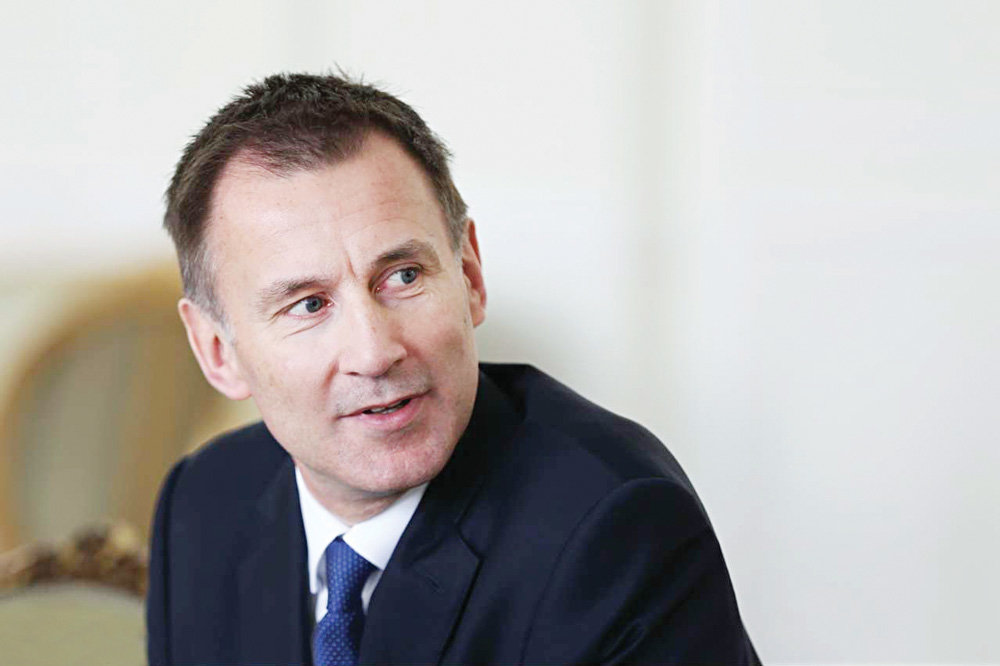
TEHRAN - The Guardian newspaper in a report on Jeremy Hunt’s trip to Iran wrote, “In his visit with Mohammad Javad Zarif, Hunt said that “Repetition of the first WWI in Iran is a possibility.”
Hunt, Secretary of State for Foreign Affairs of the UK in an interview with the Guardian, threatened: “We are not a small power in the Middle East but a major actor.”
Hunt added that “Saudi Arabia, not Iran, is Britain’s strategic partner in the Middle East.”
It is clear that the report, broadcast on the BBC on November 9, 2018, on the Great Persian Famine and the widespread mass starvation and disease in Iran under rule of the Qajar dynasty during World War I was not accidental and was a reminder of one of the greatest genocides of the 20th century which was used as an introduction to Hunt-Zarif visit.
The Guardian writes: “The great and powerful Iran today is the most popular revolution in contemporary history. Iran was invaded by Saddam's Iraqi regime years ago, which, according to numerous documents, including the official report of the "Matrix Churchill Scandal", enjoyed widespread and covert weapons protection by British big companies.”
Today, Iran is so powerful that it disrupted Kissinger's Balkanization plan - Tony Blair’s plan in Syria and Iraq - and did away with the ISIS. Iran today is not the same country as it was during the First World War when it was faced with famine and a crippling, deep financial crisis.
Iran was turned into a dead society through the Imperial Bank of Persia, a British bank that operated as the state bank and bank of issue in Iran between 1889 and 1929. Then at one point, 2500 Kazakhs occupied Tehran, and a “regime change” occurred.
Saudi Arabia and allies, who enjoy the most expensive and modern British-American weapons, still are struggling with the Yemeni war and its primitive tribes. It is preposterous that Jeremy Hunt thought of threatening prestigious Iran by recalling the tragedy of the genocide of the First World War.
Subscribe to:
Posts (Atom)