
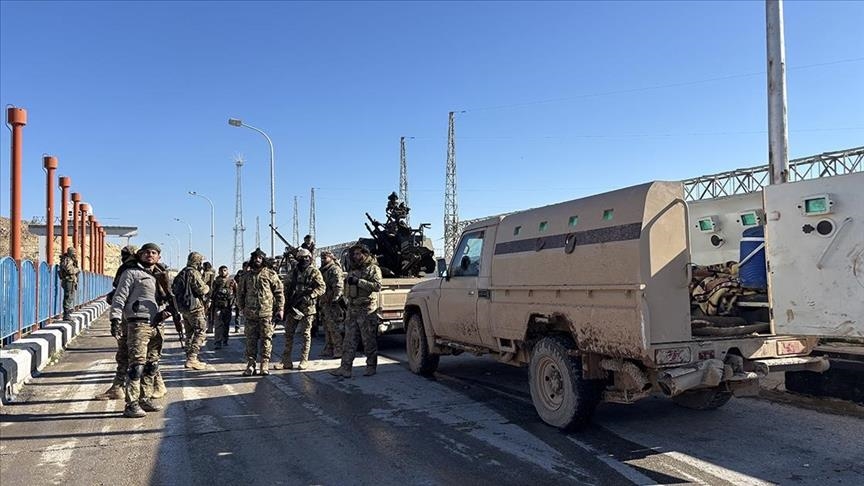
Strategic Council Online – Opinion: Numerous documents and pieces of evidence indicate that ISIS, which in recent years has been the region's biggest threat to security and stability after the Zionist regime, has once again in recent months become a focal point for political and security exploitation by American and Zionist regime security, intelligence, and political circles.
Barsam Mohammadi – Regional Affairs Expert
The negligence of the so-called US-led International Coalition in completely destroying ISIS at a certain point and its focus on confronting the Bashar al-Assad government in Syria demonstrates the “strategic exploitation” of Takfiri terrorists to “weaken opposing governments” and “create consensus for a permanent military presence in the region.” This approach represents a “repetitive pattern” of instrumentalizing terrorism to advance geopolitical goals, which is currently being pursued.
Recent events in Syria, for which America and the Israeli regime are the “primary organizers,” have once again sounded the “alarm bells for the revival of ISIS” in Syria, Iraq, and their surrounding areas.Recent developments in northeastern Syria, which coincided with an agreement between the Syrian Democratic Forces (SDF) and the central Damascus government and the escape of hundreds of ISIS elements from prisons under SDF control, have raised serious alarms about the potential revival of ISIS terrorist networks.
These security developments are occurring while statistics indicate the presence of tens of thousands of terrorist detainees in detention centers in these areas, with at least 12,000 of them being affiliated with ISIS elements. This situation has created a multi-dimensional threat to the security and stability of Syria, Iraq, and the entire West Asia region.
Al Jazeera conducted a tour on January 20th of the prison from which the most dangerous ISIS members escaped. Part of the Al Jazeera report states that a large number of ISIS elements fled this prison. Meanwhile, the Kurdish website “Rudaw” reported, citing the Syrian Democratic Forces (SDF), that approximately 1,500 of the most dangerous members of ISIS, held in the “al-Shaddadi prison” in al-Hasakah, had escaped. The dissemination of this news alone is sufficient to put not only the surrounding cities of al-Hasakah but the whole of Syria and even neighboring countries in a state of emergency.
The case of al-Shaddadi prison and the fate of ISIS prisoners has become one of the most sensitive points of contention between Damascus and the SDF at a time when field conflicts and political disputes between the two sides are increasing, heightening regional and international concerns about the revival of the ISIS threat.
Accordingly, attention to the following points is essential:
One: Recent political-military developments in northern Syria, particularly clashes between government forces and the Syrian Democratic Forces (SDF) and the SDF’s withdrawal from key areas such as Raqqa and Deir ez-Zor, have opened the most direct path for the revival of ISIS. This instability has severely weakened control over prisons holding thousands of ISIS members (including al-Shaddadi prison) and led to their mass escape. The Autonomous Administration of North and East Syria has explicitly warned that the continuation of these conflicts risks collapsing prison security and “reactivating terrorist cells.”
Two: The escape of a significant number of dangerous ISIS elements is a “multi-layered threat” to the stability of Syria and Iraq. In Syria, these individuals directly join active underground ISIS networks, which, according to UN reports, currently have between 1,500 and 3,000 fighters in the country’s deserts capable of carrying out complex operations. These escapees represent an “immediate danger” to Iraq. Iraqi authorities, anticipating such an event, have reinforced their borders with Syria with trenches, concrete walls, thermal cameras, and troop readiness, declaring that any approach to these barriers will be met with direct fire. However, the risk of infiltration and sabotage attacks in the cities of both countries has greatly increased.
Three: The international community is on the verge of repeating a “strategic mistake.” Focusing on other regional crises, some of which are contrived, should not come at the cost of “neglecting” the persistent threat of ISIS. Existing evidence and some security reports in the region clearly show that ISIS is not only not destroyed but is being rebuilt, reorganized, exploiting leftover weaponry, and radicalizing a new generation in camps like al-Hol, managed behind the scenes by the US government, which is bound by no ethical, legal, or political constraint and resorts to any means to achieve its interests. Disregarding these warnings through “facilitating the process of ISIS revival,” which is one of the complex and hidden programs of the Zionist regime and the United States, will once again confront the region and the world with a wave of terrorism and instability.
Four: Managing this shared threat hinges on understanding the hidden dimensions of ISIS’s revival, the hands behind it, the interests of international and regional “stakeholders” that benefit from it, and the immediate, practical cooperation of all regional and international actors. Experience has proven that effective combat against ISIS is only possible when political differences are set aside.
Countries in the region and around the world must turn to commitments beyond declared positions and implement “practical” measures and mechanisms to address what is happening on the agenda. Commitments must be transformed into “practical and deterrent action,” exchange of security intelligence, coordination of border operations, and international pressure to organize the disastrous situation of prisons and camps.

No comments:
Post a Comment