
By Shima Naseri
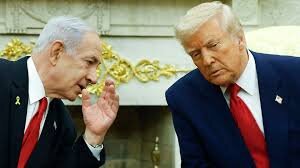
TEHRAN - The events of January 8 and 9 once again revealed the operational and structural linkage between the Zionist regime and the United States within the context of regional armed conflicts. These events were not merely a series of field or military developments; rather, they carry profound legal implications that, from the perspective of international law—particularly international humanitarian law and human rights law—require serious examination. Neglecting these legal dimensions means normalizing violations of the very principles upon which the foundation of the international legal order rests.
At the heart of this legal assessment lies the fundamental principle of distinction between military and civilian objectives—a principle explicitly enshrined in the Fourth Geneva Convention of 1949 and its Additional Protocol I. According to this principle, parties engaged in armed conflict are obligated, under all circumstances, to distinguish between civilian and military populations, as well as between civilian property and military objectives. This obligation is binding in nature and cannot be suspended even under claims of self-defense or military necessity.
Alongside the principle of distinction, international humanitarian law emphasizes the principle of proportionality. According to this principle, even if a target is of a military nature, an attack that is expected to cause disproportionate collateral harm to civilians is prohibited. The events of January 8 and 9, given their human toll and civilian consequences, raise serious questions about the observance of these principles—questions whose answers cannot be sought solely within the framework of political justifications or military narratives.
Concepts such as "military necessity" or "self-defense" in international law have clearly defined limits and are not subject to broad interpretation. None of these concepts provides a general license to disregard civilian lives or cause widespread destruction of civilian infrastructure. The International Court of Justice has repeatedly emphasized in its rulings that even in the most intense armed conflicts, the fundamental rules of humanitarian law must be respected.
In this context, the international responsibility of the United States plays a key role in the legal analysis of the January 8 and 9 events. According to the Draft Articles on "Responsibility of States for Internationally Wrongful Acts" adopted by the International Law Commission, any state that, with knowledge of the circumstances, provides effective assistance in the commission of an internationally wrongful act bears responsibility for that act. The continuous military, intelligence, and political support provided by the United States to the Zionist regime removes this country from the position of a neutral actor and places it within the framework of shared responsibility.
Accordingly, the events of January 8 and 9 cannot be analyzed merely as unilateral actions of the Zionist regime. The ongoing supply of weapons, intelligence support, and political backing in international institutions, particularly the Security Council, demonstrates the effective participation of the United States in shaping and perpetuating this pattern of behavior. From the perspective of international law, such participation carries direct responsibility for the U.S. government.
From a human rights perspective, the fundamental right to life remains binding. The International Covenant on Civil and Political Rights explicitly states that no one shall be arbitrarily deprived of life. The jurisprudence of the International Court of Justice also shows that human rights and international humanitarian law apply simultaneously and complementarily during armed conflicts. Consequently, the widespread deprivation of civilian lives, even in the context of war, may constitute a gross violation of human rights obligations.
Another dimension of the January 8 and 9 events is the undermining of the international accountability system. The repeated use of the veto power to prevent the adoption of binding resolutions, or disregard for provisional measures issued by international judicial bodies, not only fails to absolve states of their legal responsibility but also fosters a culture of impunity in the international system. This trend seriously threatens the principle of the rule of law at the global level.
In summary, the events of January 8 and 9 should not be viewed as isolated or exceptional incidents. They are part of a persistent pattern of wrongful behavior that has been sustained through the active or effective support of the United States. The indifference of the international community to such actions means normalizing violations of the principles established after the horrors of the world wars to protect civilians and curb unrestrained violence.
The true test of international law lies not in the abundance of documents and treaties but in their impartial and non-selective implementation. The events of January 8 and 9 once again demonstrated that the selective application of legal rules has placed the ethical and legal foundations of the international order in serious jeopardy—a challenge whose consequences will not be confined to a single conflict or region.

No comments:
Post a Comment