
Ali Baman Eqbali Zarche – Senior Eurasia Studies Expert
The unfulfilled promise of providing an ideal order in Western liberalism
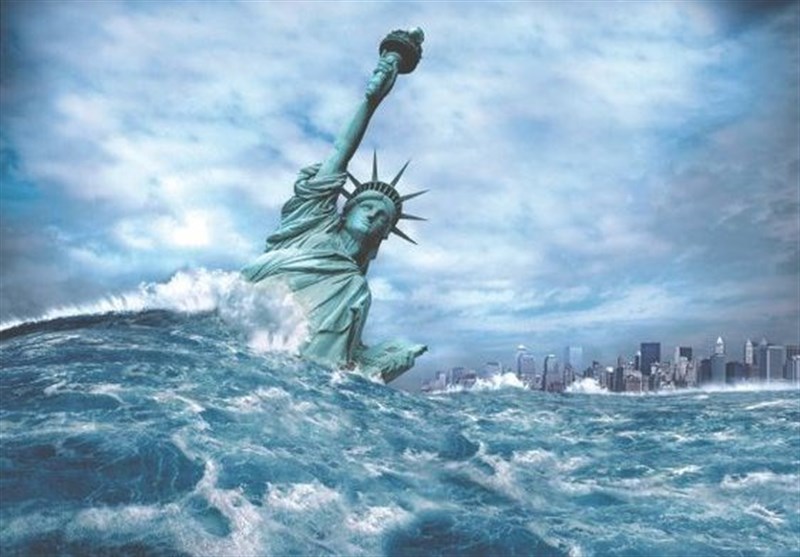
“The world of liberalism or Western liberalism in the late twentieth century, especially in the final decade, with the collapse of communism, promised a dreamy and comprehensive era in various political, economic, welfare, and cultural dimensions for the countries under its umbrella and was, in fact, keen on presenting a model for countries freed from the communist camp and other countries in the world, particularly in West Asia, Africa, and even Latin America. However, a series of developments in the twenty-first century encountered this aspiration and the operationalization of the roadmap they had designed with significant obstacles. The Second Gulf War, the fall of Saddam Hussein, the September 11 attacks, the occupation of Afghanistan, the developments in Syria, and the developments in Libya created a fundamental transformation in the reform of the political discourse of Western liberalism. It once again turned the component of security into one of the serious priorities and major concerns of the people, politicians, and statesmen in this domain.”
Today, concerns, especially in the Green Continent (Europe), have become intensely prominent in the security domain. This issue has taken on a stronger hue during the Trump era, making security provision somewhat conditional on cost payment, and naturally, these conditions have become tough for Europe. The people of the Green Continent considered one of their luckiest aspects to be that, in the security domain, they were actually under the NATO umbrella, but from the third decade of the twenty-first century, this has undergone a fundamental transformation. Today, throughout Europe, especially within the European Union, countries are seriously facing significant and fundamental concerns in security discussions.
The questioning of the claim of effectiveness of the unipolar order and international institutions
Western liberalism is a process that has its own life cycle and is proceeding through its post-middle-age period, facing many challenges; therefore, in political analyses today, the prevailing theory is that the world’s situation is one of transition, moving from a unipolar order towards a multipolar and multifaceted order. This multipolar order still lacks a clear definition. On the other hand, although Westerners promote discussion of the China-Russia-Iran triangle to pressure these three countries, the reality is that many countries worldwide are deeply dissatisfied with the prevailing situation and the conditions governing international forums, especially the United Nations. Everyone is seeking a future in which many of the components mentioned in international conventions and the UN Charter, based on the goals of human society, are operationalized.
Today, international forums are at their least effective. In events occurring across Europe, Latin America, West Asia, or Africa, these organizations take no effective action to prevent them, or, if they do, the actions are not accompanied by tangible results. The type of interventions by international organizations is not very effective in ending crises, as can be seen in the Ukraine war, the massacre of the oppressed Palestinian people in Gaza, developments in Latin America, especially Venezuela, etc.; all these confirm that today, international forums have lost their effectiveness.
The leadership crisis and identity divide in the West, and Trump’s role in exacerbating distrust.
The more important issue is that today’s world lacks capable and charismatic figures in the domain of statesmen and politicians, just as there is a serious crisis of management or political leadership in Europe and America as well. The arrival of Trump has challenged many governing components and standards. At the same time, regarding China, Russia, and Iran, given the efforts and success of these countries in regional organizations such as Shanghai and BRICS, Westerners engage in propaganda that is far from reality.
Essentially, the transition period mentioned includes cultural components, especially media, beliefs, religion, identity, social values, and family cohesion. These components are tangibly undergoing this transition period and experiencing it. The new generation, given access to a very tempting virtual space that simultaneously possesses contradictory characteristics, faces difficult conditions for making superior choices in domains such as media, beliefs, national identity, etc.
Like many parts of human society, there are many contradictions in the relevant domains; on one hand, attention is paid to utilizing media and increasing the role of this tool in human life, and on the other hand, a tendency towards components and religious beliefs, especially in monotheistic religions and so-called nationalism and nationality issues, which have intensified in Europe today, is observed; to the extent that its manifestation is the emergence and appearance of extreme nationalist tendencies in Germany, France, and other European countries, and all these confirm that these issues or the overall cultural atmosphere of societies have undergone fundamental and serious changes.
Cultural transition, identity crisis, and Trump’s impact on the liberal order
Undoubtedly, these components will play a significant role in shaping the new order the world seeks, and alongside them, the roles of non-governmental organizations, large multinational corporations, etc., cannot be ignored, as these factors are effective in shaping the new cultural atmosphere and the evolving order.
Trump is an exceptional phenomenon who, both in his first term in the White House, challenged many norms, and now in his second term, a set of decisions and actions he takes are disruptive to norms, components, and standards that are tangibly observable in the governing structure of America, not only in the domestic arena but also at regional, international, and transatlantic levels.
Of course, the set of Trump’s actions may have the most impact on geostrategic and security discussions within the NATO framework, because after all, NATO, as the world’s largest military organization, has today confronted its members with a fundamental concern. Western liberalism has one of its fundamental pillars in NATO, but the organization is not in a very suitable condition today. On Ukraine, European security provision, and European security-defense autonomy, there are serious disagreements within NATO.
The set of Trump’s actions has, in a way, seriously challenged the foundation and security-political structure of Western liberalism, although it must be seen what changes will result from the midterm congressional elections; because Trump’s second term had an additional characteristic, which was the Republicans gaining a majority in both houses, which provided space for Trump’s abnormal decisions; but the midterm elections, just as municipal elections, including New York’s, changed the atmosphere in America in favor of the Democrats and against the Republicans, will likely bring about changes that we must wait for.
The continuation of change in America can have a very significant impact on how the fate of Western liberalism is determined. The reality is that if in the twentieth century, ultimately, one major project or crisis occurred every ten years—for example, after World War II, the Prague Spring, the victory of the Islamic Revolution, the Cuban Missile Crisis, or the collapse of communism occurred—but from 2000 onwards, the time for the emergence of important global challenges has reached a year and even a month. The world has faced a major crisis with short timelines that will certainly have a significant impact on the world’s fate and future order.

No comments:
Post a Comment