Showing posts with label Tabriz. Show all posts

Saturday, August 03, 2019

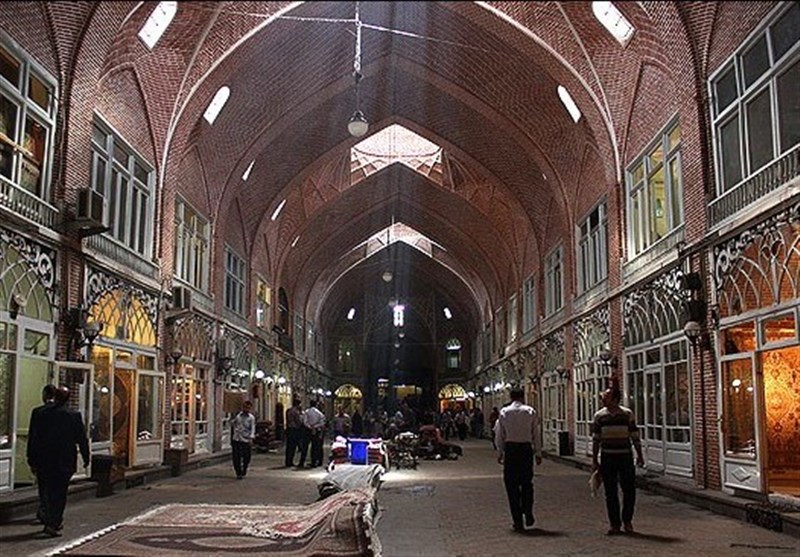
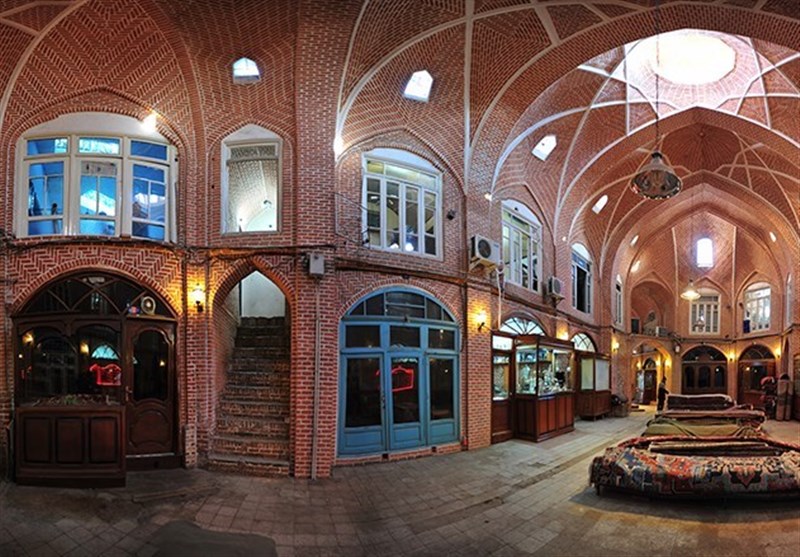
Tabriz historic bazaar complex: A melting pot of tradition, trade, and culture

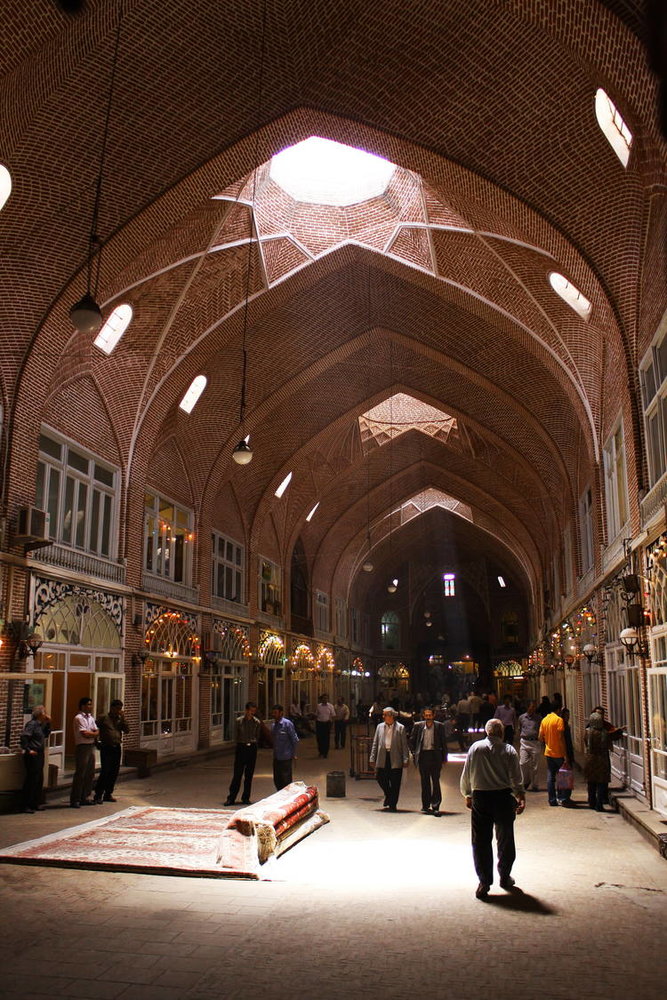
TEHRAN - Tabriz historic bazaar complex, a labyrinth of interconnected covered passages that adds up to about 5 kms, has been a melting pot of cultural exchange since antiquity and once a hot spot on the ancient Silk Road.
The bazaar, which has been inscribed on the UNESCO World Heritage list, embraces countless shops, over 20 caravanserais and inns, some 20 vast domed halls, bathhouses, and mosques, as well as other brick structures and enclosed spaces for different functions.
Tabriz is the capital of northwestern province of East Azarbaijan.
The history of the Tabriz bazaar dates back to over a millennium ago, however majority of fine brick vaults that capture most visitor’s eyes date from the 15th century.
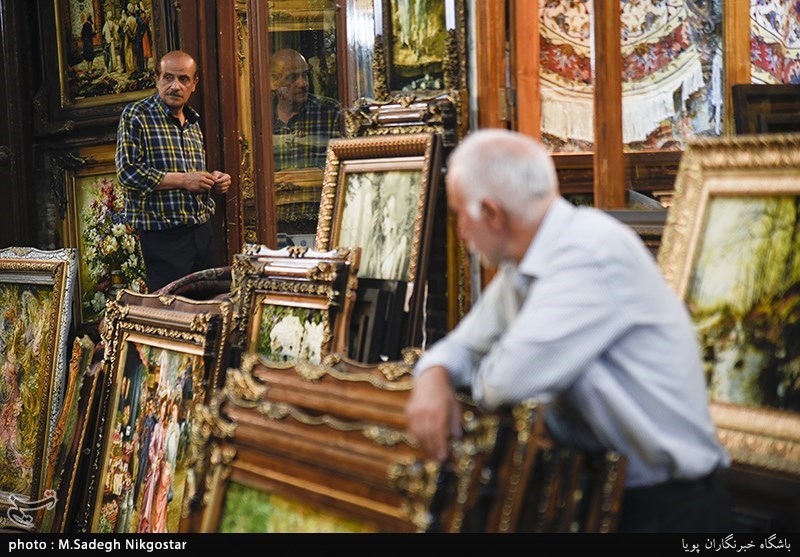
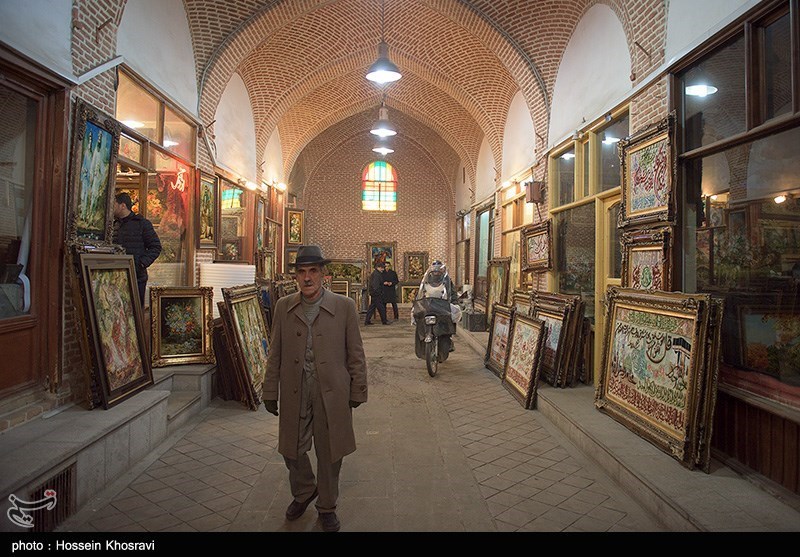
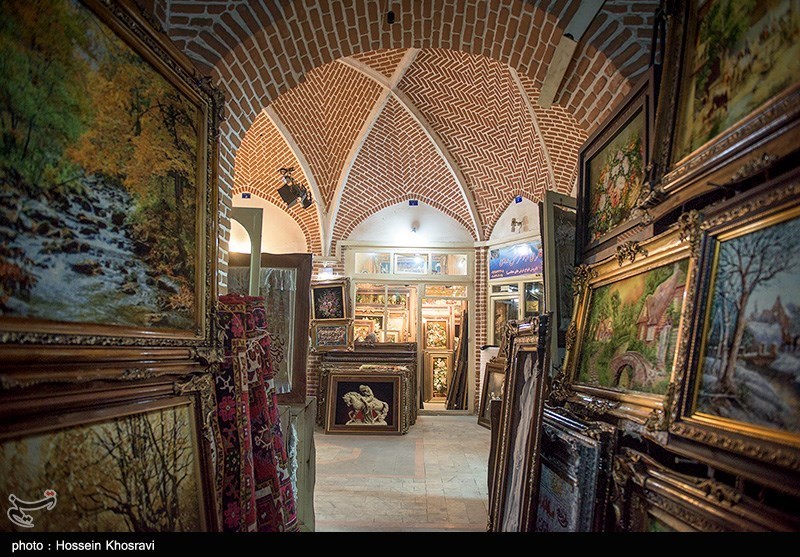
Most mazes and passages offer certain commodities such as carpets, metalwork, toys, clothing, jewelry, and kitchen appliances, traditional spices, herbal remedies and natural perfumes.
One can also bump into colorful grocery stores, bookbinders, blacksmiths, tinsmiths, coppersmiths, tobacconists, tailors, flag sellers, broadcloth sellers, carpenters, shoemakers, and knife-makers.
There are several divided carpet sections across the bazaar that enable visitors to watch or buy hand-woven Persian carpets and rugs with different knot density and other features.
The bazaar was also well-known and prosperous during the 13th century when Tabriz became the capital of the Safavid Dynasty (1501–1736).
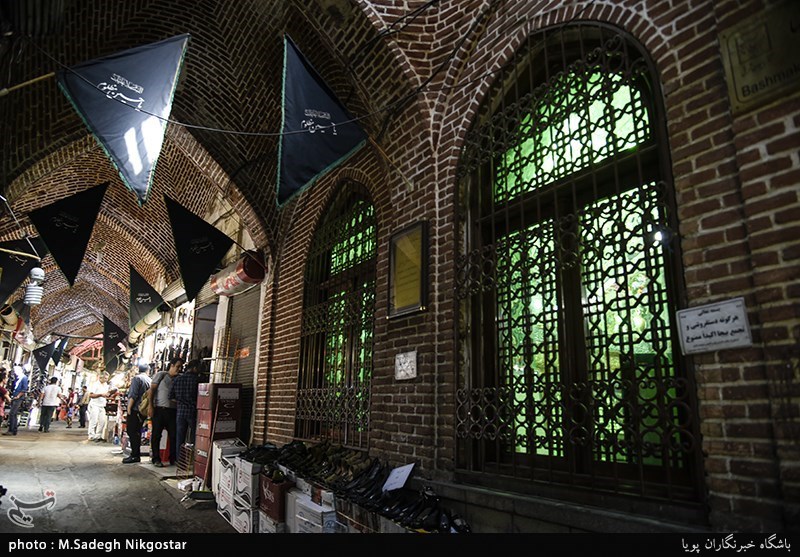
The city lost its status as capital in the 16th century, but remained important as a commercial hub until the end of the 18th century, with the expansion of Ottoman power. It is one of the most complete examples of the traditional commercial and cultural system of Iran.
By the way, the city distanced its heyday as the capital was transferred eastward to Qazvin in the 16th century, but the bazaar remained vital as a commercial hub more or less.

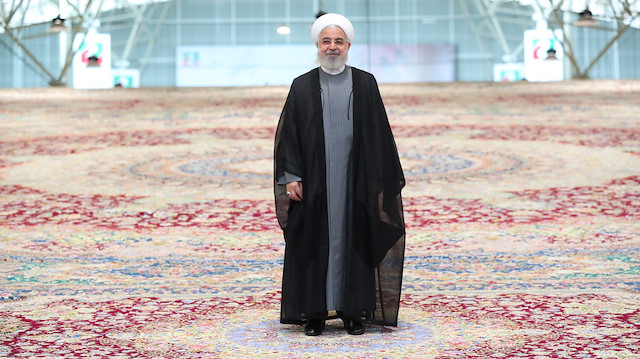
Iran introduces world’s largest handwoven carpet

Iran’s President Hassan Rouhani introduced the world's largest handwoven carpet Thursday at the opening of the Tabriz International Carpet Fair.
According to local media, 70 different dyes were used for the 600-square-meter carpet, which weighs three tons.
The carpet, which took six years to complete, will be on display at the fair, which runs until Aug. 4 in Tabriz, the capital city of northwestern Iran’s East Azerbaijan province.
Producers of handwoven carpets from Isfahan, Gilan, Qom, Tehran and East and West Azerbaijan provinces as well several foreign countries also showcased their latest products.

Tuesday, March 12, 2019

Poets’ Mausoleum, a prime cultural destination

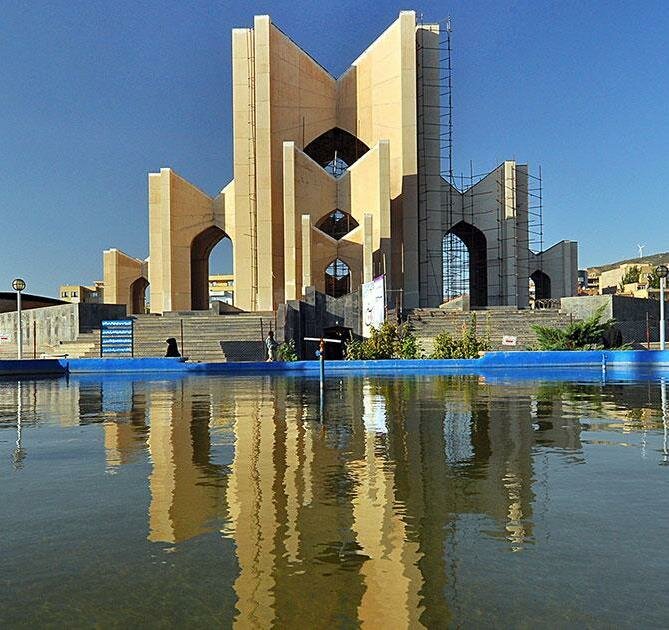
TEHRAN – Poets’ Mausoleum or Maqbaratoshoara is a prime cultural destination for travelers to Tabriz. It attracts a great number of Iranian and foreign visitors interested in literature and art.
Some visitors say the site is photography heaven. Scenic, angular and interlocking concrete arches of the mausoleum maybe best viewed through a reflecting pool from the south.
Located in Sorkhab district, Maqbaratoshoara is where over 400 writers, poets, mystics and linguists are buried from the 11th century onwards. It is a testimony to the glorious cultural scene of the northwestern Iranian city.
Formerly known as Sorkhab cemetery, its original texture was hurt by earthquakes and floods over the course of time until it was renovated and adorned with a memorial monument in the 1970s. The precise date of its establishment is not known.
Its modern design was developed by Iranian architect Gholamreza Farzanmehr who made an amalgam of modern and traditional elements of Persian architecture. Construction operation started in 1972 and was completed in 1982.
Iranian poet, linguists, and author Abu Mansur Ali ibn Ahmad Asadi Tusi is believed to be the first literary figure buried at the mausoleum. Narratives say that a tradition was established by entombing other prominent classical poets such as Khaqani, Anvari Abivardi, and Qatran Tabrizi.
Poets Shamseddin Sojasi, Shapur Nishapuri, and Homam Tabrizi are other examples of literary and cultural figures buried there.
Mohammad-Hossein Shahriar (1906 – September 18, 1988) is probably the most renowned contemporary Iranian poet being laid to rest at the site. His mausoleum is situated in the middle of the complex with almost 30 meters in height.
Soaked in history and dotted with splendid vibrant historical sites, Tabriz has much to offer its visitors such as Azarbaijan Museum, Arg-e Tabriz, Elgoli Park, Shahriyar House Museum, Municipal Hall, St Mary’s Church, Qajar Museum, Constitution House, Khaqani Park, and Sarkis Church just to name a few.
Tabriz has long been a place of cultural exchange since antiquity. Its UNESCO-registered bazaar complex gives reference to the city’s glorious past when it was a peak commercial center on the Silk Road.
It is also famous for having hospitable people, ubiquitous carpet shops, abundant public places and efficient transport system.
Under travelers’ eyes
Here is a select of comments that visitors to the Poet’s Mausoleum have posted to TripAdvisor, one of the most popular travel websites in the world:
“Tombs of poets”
The structure of the monument catches your eye from a far and you wouldn't know at once that you are entering a sepulcher. The places is the resting place for a large number of Tabrizi poets, the most famous of whom is Shahriar. Now, due to renovation process, one may not be able to get the photos he wishes to outside of the building. (Reza Sattarzadeh from Muscat, Oman; Reviewed September 2018)
“Visit the tombs”
After my visit I would say the outside of the building was more impressive then the inside. There are only a few tombs inside. (Leovanstraten2015 from Leeuwarden, the Netherlands; Reviewed April 2018)
“Not interesting”
The monument itself is not worth visiting, but the climb uphill and the view over Tabriz and its surrounding areas is splendid. If you decide to climb uphill together with a lot of locals you should do it in the early morning before it becomes too hot. (Rsmidt1959 from Amsterdam, the Netherlands; Reviewed December 2017)
“Very interesting”
Not somewhere we would normally visit but we did to try and better understand the Iran people, we are glad we went. Unfortunately work is being done outside which restricts the views but inside was very interesting. (Youngone51 from New Plymouth, New Zealand; Reviewed October 2017)