Showing posts with label Spain. Show all posts

Wednesday, December 11, 2019

Foreign tour operators, travel marketers astonished by safe, modern Iran

TEHRAN – International tour operators and travel marketers, who have recently made a familiarization tour across Iran, are astonished by seeing a country that is far more safe and modern than that they previously thought.
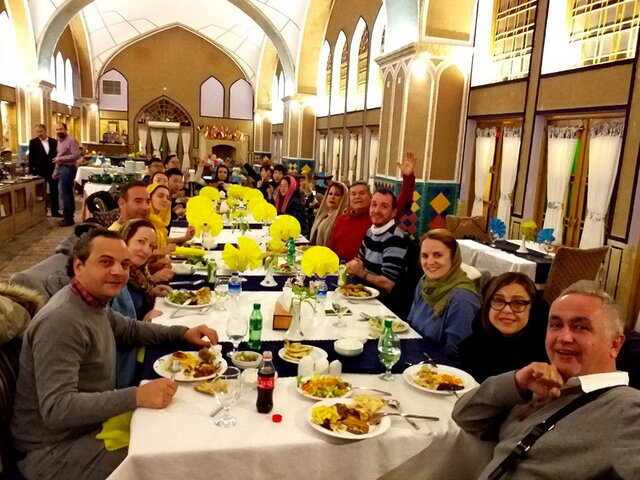
A weeklong Famtrip organized by an Iranian tour operator brought 17 travelers from Spain, Portugal, Italy, Turkey, Peru and China.
“Iran is more modern, cleaner and even quieter than what the media picture,” ISNA quoted one of the travelers as saying on Monday.
Julian, the representative a Spanish travel agency, reminded recent remonstrations in Iran to saying that protests are not unusual in the world as Spain, France and even Lebanon have experienced protests.
“We all continue life and the tourists are still coming.”
Joao, who presides over a Portuguese travel agency, said to ISNA, “I am in Iran, and my clients are surprised that I have traveled to such a country. They constantly ask me about the safety in here. I have sent some videos from the [Iranian] streets and people to show that everything is safe but they hardly believed that.”
Saeid Fekri, organizer of the Famtrip, noted that 30 people were initially invited to take part in the event, but some of them preferred to exercise caution and postponed their trips, so that 17 people took part in the Famtrip ultimately.
“From the hotels to the restaurants, Iran was beyond the group’s expectations. They did not think Iran to only have a modern city or a single modern hotel.”
Almost everything was incredible for them. Even about news of the unrest that they had heard, they asked where this was happening in such a way that everything is so calm now, Fekri explained.  
“This seemed even strange to their clients how managers of travel agencies could go to Iran under so-called circumstance.”
Deputy tourism minister Vali Teymouri said in October, “We need a good image of Iran to be displayed by the world media, thus, we would pursue any method perceived to be easy or less costly in compliance with the Islamic Republic of Iran’s regulations.”
“We do our best to create a good image of Iran in the minds of the world people,” he noted.
The 2019 Travel Risk Map, which shows the risk level around the world, puts Iran among countries with “insignificant risk”, a category where the UK, Denmark, Switzerland, Norway, and Finland are placed in.
Some 6.7 million foreign nationals have visited the country since the beginning of the current Iranian calendar year, Mojtaba Karimi, who presides over Foreign Ministry’s visa and passport department, was quoted by IRNA as saying on December 4.
Iran welcomed some 7.8 million foreign nationals last year, achieving 52.5 percent increase year on year. According to the World Travel & Tourism Council, Iraq was the main source of tourism for Iran in 2018, constituting 24% of all inbound visitors. Azerbaijan with (17%), Turkey (8%), Pakistan (4%) and Bahrain (2%) constituted other major sources while the remaining 46% came from the rest of the world.
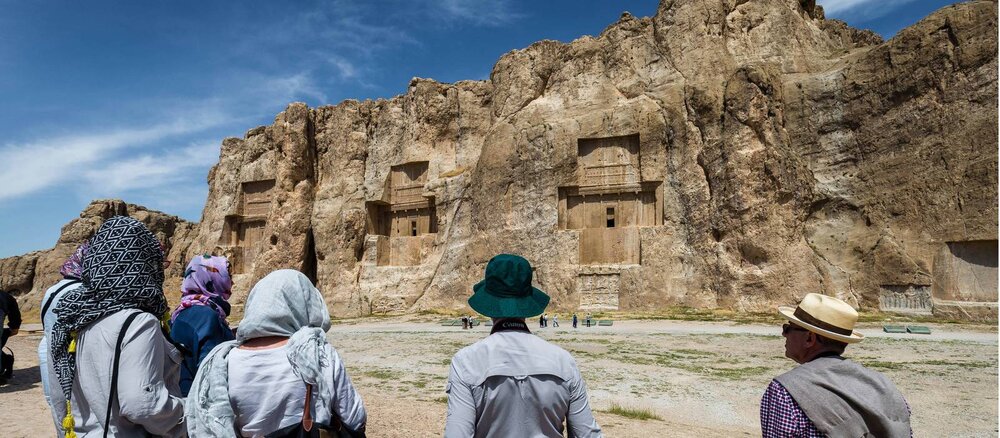
The Islamic Republic expects to reap a bonanza from its numerous tourist spots, including 22 ones that have been placed on the UNESCO World Heritage list.

Monday, October 28, 2019

A Tale of Two Protests

A Tale of Two Protests
TEHRAN (FNA)- Peaceful marches, a general strike and violent unrest have convulsed Catalonia, in Northeastern Spain, this week after a group of Catalan leaders received long prison sentences.
On Monday, Spain's Supreme Court convicted 12 politicians and prominent activists for their part in a 2017 push to declare Catalonia an independent republic. Nine of the leaders, including the former vice president of the Catalan government, were sentenced to between nine and 13 years in prison for sedition. Four of them also were charged with misuse of public funds. Yet while many Catalans are outraged at the central government in Madrid for the harsh crackdown on the independence movement, the huge demonstrations have obscured deep divisions in Catalan society.

The issue of Catalan independence is one that has never been far from the heart of Iberian politics for a combination of historical, cultural and economic reasons. Catalonia's grievances against Madrid are, in a legal sense, a wholly internal matter. The same is true of Hong Kong. Hong Kong is not a disputed territory, but one which incidentally has far more autonomy within China than Catalonia does within Spain.

Critics of the independence drive often point to Spain's 1978 constitution, which says Spain is "indivisible" but it gives Catalonia some administrative and legal powers as an "autonomous community." For obvious reasons, however, both the riots in Hong Kong and more recent developments in Catalonia are making international news, but major Western media outlets have reported the stories in very different ways.

By objective standards, Spain has been consistent in its treatment of separatist political leaders from Catalonia. The combination of public humiliation of Catalan officials, formal disqualifications from holding office, and lengthy prison sentences have made pro-independence Catalans feel supremely agitated. As Madrid has never given way to Catalan agitators, this is unlikely to change. Incidentally, both conservative and socialist-led Spanish governments have taken a remarkably similar line against Catalan separatists.
In Hong Kong, one sees an inverse issue. No one in Beijing nor in Hong Kong's autonomous legislature has proposed a reduction in Hong Kong's autonomous status under the "one country, two systems" for governance. By contrast, Madrid has, in the recent past, suspended the sittings of the autonomous parliament in Barcelona at will.

Another difference is that whilst Madrid is not giving any way in terms of heeding the grievances of the Catalan demonstrators, Hong Kong's assembly has killed off the proposed “fugitive bill” that was the self-described original catalyst for protests this summer.

And yet, in Hong Kong, once the demand of the protesters was met, the situation quickly escalated into full-scale riots even though logic would dictate that the opposite ought to have happened. Thanks largely to the ongoing support from the US and Europe, the rioters continue to target civilians, government property, the police, private property, and train stations throughout Hong Kong.

Dangerous weapons have been found on the Hong Kong rioters whilst some of the ringleaders have been photographed with Western political and diplomatic officials – thus suggesting highly irresponsible and unlawful foreign interference into China's internal security and development.
By contrast, the international community, including the European Union, has remained largely silent on the Catalan issue in spite of the fact that the protests continue to be carried out by unarmed and primarily peaceful demonstrators. Meanwhile, Hong Kong's increasingly violent rioters are portrayed by Western media outlets as virtuous when no cause in the world could justify arson, assault, and in some cases, torture.

Ultimately, violence solves nothing in politics because, by definition, violence is the antithesis of a lawful political system. Because of this, it is highly irresponsible for Western media outlets to portray riots in Hong Kong through rose-tinted lenses. In reality, no riots are a positive development.
Many businesses in Hong Kong have suffered greatly from the riots whilst news about the closure of some of Catalonia's major tourist locations and international sporting events due to events on the ground, is a grim testament to the fact that street agitations have uniformly negative economic consequences. With this in mind, it is reckless for external forces to encourage strife in either place. Instead, external observers ought to quietly encourage calm and respect for peace and dignity.

Saturday, September 14, 2019

Iran ranks 1st globally as a pocket-friendly destination: WEF

TEHRAN – The World Economic Forum (WEF) has ranked Iran first in the world as a pocket-friendly destination.
“Iran ranks 1st globally [in the category of Price Competitiveness], thanks to low ticket taxes and airport charges (7th), fuel prices (5th) and high purchasing power (5th),” according to WEF’s Travel & Tourism Competitiveness Report 2019, which was released earlier this month.
The Forum also categorized the Islamic Republic in “The Middle East and North Africa (MENA)” region, saying “In fact, no MENA country scores above the global average for natural resources and only Egypt and Iran score above for cultural resources.”
“The MENA region improved its T&T [travel and tourism] competitiveness since the last edition of the TTCI [Travel and Tourism Competitiveness Index]. With 12 of the 15 MENA economies covered by this year’s index increasing their score compared to 2017, the region was able to slightly outpace the global average in competitiveness growth. This is particularly important given that, in the aggregate, T&T accounts for a greater share of regional GDP than in any of the other four regions.”
Regarding tourism expenditure, the report says “MENA is also the only region where international visitor spending is greater than domestic visitor spending. Yet despite improved competitiveness and a strong reliance on T&T for overall economic growth, MENA continues to underperform the global TTCI score average.”
Spain, France, Germany, Japan and the United States are considered as the world’s most travel-ready nations, according to the latest travel and tourism ranking of the World Economic Forum.
“There’s little change since the last edition was released two years ago, with only one country altering its position: the United Kingdom has slid to sixth place, behind the United States.”
Tourism on the rise
The travel and tourism industry contributes 5% towards Spain's overall GDP, a figure that looks set to rise over the next decade as the global middle class – particularly in regions such as Asia – continues to grow, weforum.org wrote.
In fact, travel and tourism as a global industry has flourished since the last report in 2017, and its contribution to global GDP (currently at 10%) is expected to rise by as much as 50% over the next decade. At the same time, one of the big findings of this year’s report was that growth in tourism-friendly infrastructure – roads, ports, airports and hotel accommodation, for example – has languished at only 1.4%.
“As international connectedness continues to rise, we see travel and tourism competitiveness continue to grow,” says Christoph Wolff, World Economic Forum’s Head of Mobility. “Increased tourism is bringing great benefits to many economies but must be managed properly by both policymakers and businesses for a sustainable future.”
For over a decade the World Economic Forum engaged leaders in travel and tourism to carry out an in-depth analysis of the travel and tourism (T&T) competitiveness. Published biennially, Travel & Tourism Competitiveness Report and Index benchmarks the T&T competitiveness of 140 economies and measures the set of factors and policies that enable the sustainable development of the Travel & Tourism (T&T) sector, which in turn, contributes to the development and competitiveness of a country.
Tourism in Iran
Last November, the Trump administration reinstated sanctions on Iran, mainly the ones that had been lifted under the 2015 nuclear deal, in order to batter Iran’s economy, however, according to official data, they have so far failed to lessen foreign arrivals to the Islamic Republic.
Although the sanctions together with anti-Iran propaganda campaigns have decreased Western tourists but the country has managed to compensate and even improve by doing its best to attract more from neighboring states.
“Nearly 7.8 million foreign nationals visited Iran over the past year that shows a 52.5 percent increase year on year. The country hosted 5.1 million travelers in 1396 (March 2017-18),” deputy tourism chief Vali Teymouri said in April.
Iran also eyes to have a bigger share of Chinese tourism, as it, in a unilateral measure, recently approved to waive the visa requirement for the Chinese passport holders. To encourage and reassure sightseers, the Iranian government has decided not to stamp the passports of foreign tourists to help them skip the U.S. travel ban.
Iran hosted a record high of nearly 600,000 medical travelers during the first four months of the current Iranian calendar year (March 21-July 21), nearly equal to the figure for the whole past year, according to an Iranian association for the health tourism promotion. It has set its goals to exceed its yearly medical travelers to around 2 million in [calendar year] 1404 (March 2025-March 2026).
The 2019 Travel Risk Map, which shows the risk level around the world, puts Iran among countries with “insignificant risk”, a category where the UK, Denmark, Switzerland, Norway, and Finland are placed in.
The Islamic Republic boasts hundreds of historical sites such as bazaars, museums, mosques, bridges, bathhouses, madrasas, mausoleums, churches, towers, and mansions, of which 22 being inscribed on the UNESCO World Heritage list.
Tuesday, August 13, 2019

Healthy economy is antidote to sanctions on Iran: scholar

By Negar Asadi

TEHRAN - A prominent scholar, believes that fighting corruption and building a healthy foundation for economy are catalysts to resist sanctions and external pressure on Iran.
“What is important is to adopt policies to have a foundation of a healthy economy in order to be able to counter external pressure,” Modjtaba Sadria told the Tehran Times in an interview on Thursday.
Sadria, an expert on East Asia, cited China and its resistance against the U.S. sanctions as an example.
China has adopted clear and coherent policies which resulted in a “strong foundation for national economy” and also a very “strong social base” to counter the U.S. pressure, Sadria explained.
“Between 1848 (opium war) and 1949 (Chinese revolution), a deep desire of independence grew in China. Xi Jinping [the Chinese president] has undertaken huge program of economic transformation of China in order not to depend on Chinese trade with the United States,” he explained.
He said that the U.S. pressure is not tolerated in China.
“The U.S. efforts to form alliance in the Persian Gulf is more a show of a bargaining strategy which cannot pose a threat against Iran.”Referring to China’s act in suspending purchases of U.S. agricultural products, Sadria said, “This is one of the examples of Chinese tools to retaliate the Trump administration’s show of force to China.”
China announced on Tuesday that it has suspended purchases of U.S. agricultural products in retaliation for a “serious violation” of agreements between President Xi Jinping and his counterpart Donald Trump.
Sadria said, “On the sidelines of a G20 summit in Osaka, Japan, Trump and Xi met and reached agreement on reducing sanctions by the U.S. However, Trump restored those sanctions. These actions which are unilateralism in the international relations are not tolerated by China. Trump cannot use sanctions as bargaining tools against a country which is the second largest economy in the world.”
“Today, China is a society to which you cannot show off power with the game of sanctions,” he added.
He also said that the U.S. has not any leverage to impose sanctions on other countries unilaterally and act as the “lone superpower”.
“When China takes retaliatory action against the U.S. unilateralism and pressure, it affects not only the U.S. economy, but the whole global economy,” he pointed out.
He noted that China has adopted policies in line with the growth of its national economy that the U.S. cannot harm it by imposing sanctions or exerting pressure.
Trump and Xi held a summit during the G20 in Osaka, Japan in June.
Xinhua reported that the two leaders had agreed to resume economic and trade negotiations, and that the U.S. said it would not impose any new tariffs on Chinese products.
However, Trump announced last week that the U.S. would put a new 10 percent tariff on $300 billion worth of imports from China.
China “has not ruled out import tariffs on U.S. agricultural products purchased after August 3, and related Chinese companies have suspended purchasing U.S. agricultural products,” Xinhua said.
American Farm Bureau Federation President Zippy Duvall said in a statement issued after news of China’s retaliatory measures, “China’s announcement that it will not buy any agricultural products from the United States is a body blow to thousands of farmers and ranchers who are already struggling to get by.”
‘U.S. move to form coalition in Persian Gulf is show of bargaining strategy’
Sadria also said that the U.S. move to form a maritime coalition in the Persian Gulf is a “show of bargaining strategy rather than execution of threats” and is not based on realities in the world.
“Washington is trying to apply its bargaining policies against Iran and form a coalition like it created against Iraq in 2003,” he said.
He added that under the current global economic situation major powers are in crisis, therefore the U.S. does not have the power to make them join the coalition.
“In 2003, other countries had the [financial] resources and the U.S. had the power to extract those resources in order to form a coalition against Iraq. Today, the other countries do not have the resources because they are on the edge of crisis and the U.S. is not powerful enough to extract the resources,” he opined.
He noted, “So, the U.S. efforts to form alliance in the Persian Gulf is more a show of a bargaining strategy which cannot pose a threat against Iran.”
Commenting on the UK’s participation in the U.S. Persian Gulf mission, Sadria said that Britain is in a very fragile situation and seeks to gain Washington’s support.
The U.S. has announced plans to form a Washington-led maritime force to supposedly secure the Strait of Hormuz in the Persian Gulf, which hosts considerable international oil shipments.
German Foreign Minister Heiko Maas said in a press conference on July 31 that his country “would not participate in the mission the United States plans to form.”
A German government spokeswoman also said on August 5 that Chancellor Angela Merkel and the whole German government do not see Germany taking part in a U.S-led naval mission in the Strait of Hormuz.
“The chancellor does not see a participation in a U.S-led mission in the current situation and at the current time - everyone in the German government agrees on that,” a government spokeswoman told a news conference, according to Reuters.
Madrid and Tokyo have also rejected an official request from Washington to participate in the naval coalition.
Spanish newspaper El Confidencial said on August 1, Madrid had received an official request from the United States to participate in these forces. However, the same sources said that “the Spanish government has currently no intention to participate in joint U.S.-led forces,” Middle East Monitor reported.
Japan’s Mainichi Shimbun also reported that Tokyo won’t send ships to join the U.S.-led maritime force.
The UK announced on August 5 that the Royal Navy will join the coalition.

Monday, December 24, 2018

Europe stuck in crises

By Hanif Ghaffari
Protests are still going on in France. France's protests has reached other countries such as Italy, Spain, Belgium, the Netherlands and Hungary, and this has doubled the concerns of European authorities over EU's future. The combination of security, political, social and economic crises in the European Union (as a united block) will affect all the 28 member states.
Meanwhile, the silence of European leaders such as German Chancellor Angela Merkel in the face of recent unrests, indicate that they're seriously worried about the future of the European Union and the Eurozone. At any rate, determining the relevance between recent protests in France and current and future changes in the united Europe has become one of the main concerns of analysts of the European and international affairs.
Meanwhile, some European politicians are trying to analyze the France protests as an infrastructural and skin-deep objection. However, the kind of slogans that the yellow vests are using against the capitalist system, and the generalization of protests to other parts of Europe, suggest that this phenomenon can't be regarded as a transitory, infrastructural and shallow crisis. On the contrary, it's obvious that the ongoing protests in France have a fundamental and basilar nature.
Another argument that should be taken into consideration in this regard is the analysis of the "action" and "reaction" of the French protesters and statesmen. It's not without a reason that in spite of Macron's withdrawal before the yellow vests protests (for three times), the demonstrations are still continued in France. It should be noted that in the first days of their presence in the streets of Paris and other cities, the yellow vests were merely a "protesting" population with some determined demand. But in a short time they became the "symbol of structural change in France" and even "the symbol of change in the European Union." If the protest of the yellow vests was only at the surface level, it would have to be stopped by the early withdrawal of Macron from his previous positions. Also, the use of "yellow vests" as a symbol indicate that the current protests target the ruling system in France.
Another point here is about the addresses of yellow vests protests. These addressees can't be limited to the French authorities! Even at the domestic level, the addresses of the demonstrators are not merely Macron and his administration, but other parties and groups, both socialist and conservative are included. In recent decades, especially after the formation of EU, these political parties were incapable of digesting the people's demands. Therefore, the yellow vests protest can't be limited to a simple protest against a right-wing or left-wing party. And at a greater level, the addressees of French protesters are the men in power in the united Europe; those who, since 2007, and through setting austerity policies, have made it difficult for the French and European citizens, and thus prepared the ground for continuous and extensive protests.
Third, we should pay attention to the flow of the protests in Europe. In 2007, when the economic crisis broke out in Europe, we saw that the protests primarily began in countries such as Greece and Spain. In other words, protests began to take place in weak and vulnerable countries in the Eurozone, and then it spread to other countries. However, at that time, countries such as France and Germany were not involved in the crisis and there were few protests. Today, we see that protests have begun in France, which is considered the second largest economic power in the Eurozone and is one of the leaders of the European Union. But the rallies didn't stop in France and other countries were involved. Obviously, curbing these protests is far more difficult than in 2007, and the range of protests is also wider than that time. Even if the yellow vests rallies stop in France, the opposition of the French citizens towards the EU leaders will remain strong. This opposition will show itself in the European Parliamentary elections in 2019, or in national and local elections in the EU member states. In any case, the EU has faced the worst crisis over its popularity in its history, a crisis that the European authorities are incapable of solving.