Showing posts with label Shireen Tahmaasb Hunter. Show all posts

Monday, April 15, 2019

‘IRGC has always been target of American and regional states animosity’

By Javad Heirannia
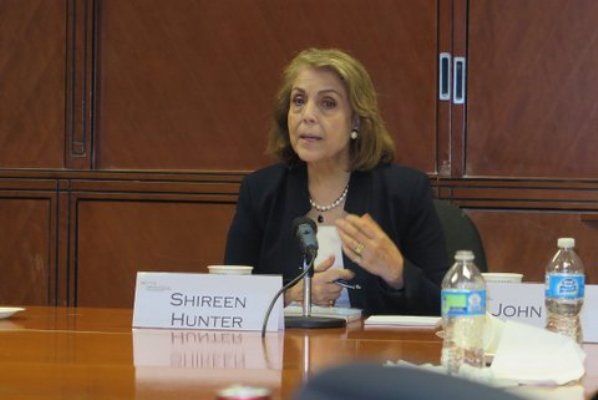
TEHRAN - Shireen Tahmaasb Hunter, a professor of political science at Georgetown University, tells the Tehran Times that “The designation of IRGC as a terrorist organization by the Trump administration is another step in Washington's policy of incrementally increasing pressure on Iran in the hope of forcing it to negotiate, and in the process agree to change some aspects of its foreign policy, notably those vis a vis the Arab-Israeli conflict.”
“I suppose who persuaded Trump to declare the IRGC a terrorist organization are trying to create a situation wherein war becomes inevitable,” Hunter says.
She adds that “IRGC has always been the target of American and regional states animosity.”
Following is the text of the interview:
Q: What was the goal of the designation of IRGC as a foreign terrorist group?
A: The designation of IRGC as a terrorist organization by the Trump administration is another step in Washington's policy of incrementally increasing pressure on Iran in the hope of forcing it to negotiate, and in the process agree to change some aspects of its foreign policy, notably those vis a vis the Arab-Israeli conflict. Washington hopes that these pressure would convince Iran to stop its financial and military help to groups such as the Hizbollah and the Houthis in Yemen and, in general, end its hostile policies toward America. Because the IRGC has been active in places such as Lebanon, Iraq and Syria and its Quds branch is committed to liberating Palestine, it has always been the target of American and regional states animosity. Moreover, America believes that the IRGC yields the real power in Iran rather than the official government. So they want the IRGC to begin feeling the pain of sanctions more directly. By designating IRGC as a terrorist organization America, or at least John Bolton and Michael Pompeo, are also signaling to Tehran that US is determined to increase pressure on Iran, including possibly running the risk of direct military confrontation with it.
Q: What will be the impact of this decision on regional security?
A: Much would depend on the response of the Iranian government and the IRGC. If the IRGC carries through with its promise of making the region unsafe for American troops, then the risk of an all-out regional conflict will sharply increase. Any attack by the IRGC on American forces will create irresistible pressure in Washington for American retaliatory attack on Iranian targets. This could easily escalate to a much broader conflict. I fear that any military encounter between the IRGC and the American forces would lead to US attacks on Iran. However, the extent of these attacks cannot be predicted. I suppose who persuaded Trump to declare the IRGC a terrorist organization are trying to create a situation wherein war becomes inevitable.
Q: Some argue that “This is the first time in the history of international relations when the government of one nation-state single-handedly has designated a military segment of another recognized nation-state as a terrorist organization”. What is your opinion?
A: I am not aware of any previous situation where a branch of a country's army was designated as a terrorist organization. However, America sees the IRGC more as a para-military outfit specifically designed to export Iran's Islamic revolution to the rest of the Middle East and the Muslim world. It also sees it as guilty of carrying out mots of Iran's military operations in places like Iraq, Syria and Lebanon. It does not see it as a legitimate part of Iran's Armed Forces (Artesh).
Q: Can we see more sanctions from President Trump administration against Iran?
A: Pompeo /Bolton policy towards Iran has been that of pressuring it to a point where it could no longer resist and thus is forced to accept America's conditions. Failing that, they hope that more pressure will result in the toppling of the current regime from within. Therefore, they will try whatever instruments of pressure that remain against Iran. However, it is difficult to see what more America can do to pressure Iran short of launching a military attack. A naval blockade perhaps? But that is an act of war and will certainly lead to armed conflict. In general, the current escalation of crisis between US and Iran does not bode well for the future. Authorities in Tehran should not wait for Trump's departure to de-escalate the crisis. Most probably he will be reelected.

Monday, April 08, 2019

America will strengthen its presence in the Persian Gulf: Shireen Hunter

By Javad Heirannia
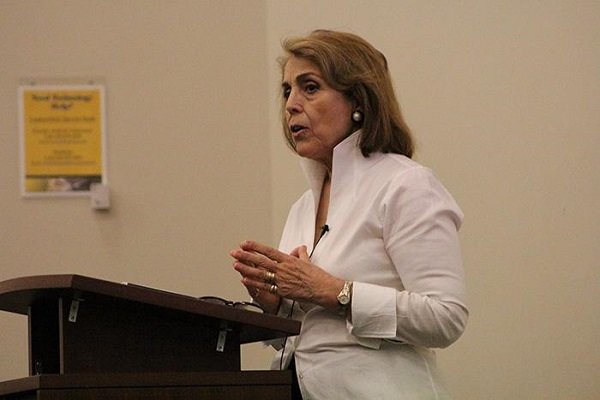
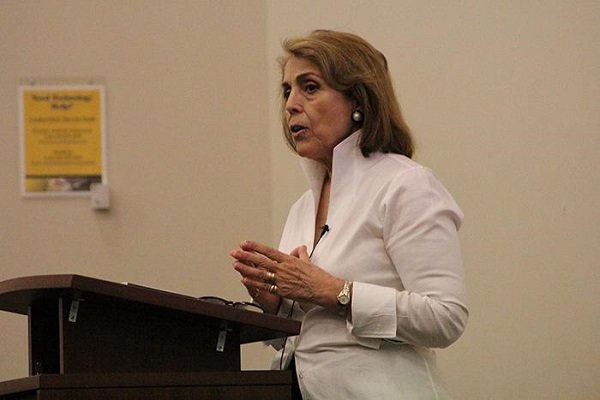
TEHRAN - Shireen Tahmaasb Hunter, a professor of political science at Georgetown University, tells the Tehran Times that “there is no way Oman can balance relations with Iran and the U.S.”
“Oman needs American security umbrella,” Hunter says.
She adds that “in future, while perhaps withdrawing from parts of Middle East America will strengthen its presence in the Persian Gulf.”
Following is the text of the interview:
Q: The United States clinched a strategic port deal with Oman which U.S. officials say will allow the U.S. military better access the Persian Gulf region and reduce the need to send ships through the Strait of Hormuz, a maritime choke point off Iran. What is the importance of this deal for U.S. from strategic aspects?
A: The United States would like to have a military, political and strategic supremacy in the Persian Gulf. The ability to prevent Iran from using the Strait of Hormuz to prevent shipping in the strait is part of this desire. It is also part of the U.S. strategy of containing Iran and forcing it to accept its terms for better relations in the future. In addition, looking to the long-term, control of the Persian Gulf is important for the United States, and indeed Europe, in terms of competition with China. Because China depends for a large part of its energy needs on the Persian Gulf region, by controlling the Gulf's energy resources and its trade routes, the United States could pressure China should the need arise. Thus, in future, while perhaps withdrawing from parts of Middle East America will strengthen its presence in the Persian Gulf.
Q: Why does Oman accept this deal on this time?
A: Oman is a small country dependent on American and British security guarantees. Consequently, Muscat is no position to refuse U.S. demands for port facilities of bases. Moreover, Oman, too, wants to enhance the position of its own ports at the expense of those of Iran. Oman has tried to use Iran as a counterweight to other Arab states, especially Saudi Arabia. However, it has no particular love for Iran. With the passage of time, the memory of Iran's help to defeat the Dhoffari rebels in the 1970s is fading. Thus, Oman, too, is reassessing its relations with Tehran in light of new strategic conditions a calculation. Much of Oman -Iran friendship were the legacy of close ties between the Shah and Sultan Qabus.
Q: How can Oman balance its foreign policy with Iran and U.S. under this deal?
A: There is no way Oman can balance relations with Iran and the U.S. As mentioned above, Oman needs an American security umbrella. Iran is in no position to provide for Oman's security. Moreover, as Iran-Arab relations have deteriorated, Oman is finding itself in a difficult position. Therefore, it might be considering some distancing from Iran.
Q: Will this deal impact on Oman relation with Iran?
A: The impact of the deal on Iran-Oman relations wild depend on Tehran's reaction. If Tehran reacts negatively, then relations will suffer. However, if Iran reacts calmly as it did when Netanyahu visited Muscat, then relations will not suffer much. The fact is, in the Persian Gulf, Iran is not in a position to compete with America. The United States is militarily preponderant. In addition, because of their anti-Iran sentiments and their weak positions, Arab states prefer American presence to that of Iran.

Wednesday, November 14, 2018

Religion is not major determinant of international actors' behavior: Hunter

Religion is not major determinant of international actors' behavior: Hunter

TEHRAN, Nov. 13 (MNA) – Shireen Tahmaasb Hunter, a professor of political science at Georgetown University, says that Analysis of international relations has shown that very seldom religion per se determines behavior, whenever it does, it is by being part of the states' and non-state actors' ideational, ideological and value systems.
“All IR theories, including the realist theory that emphasizes the role of power and search for security, account for the impact of ideational and value related factors and thus they can address the role of religion as well. The problem is that religion as such is not a major determinant of international actors' behavior,” Hunter tells the Tehran Times.
Following is the text the interview:
When did the religious issues has been a matter of great in Theorizing of International Relations?
Focus on religion and its role in international affairs occurred after the fall the USSR and the end of an ideological era in international relations best exemplified in the Cold War. The end of ideology left a paradigmatic vacuum which was filled by theories such as the Clash of Civilizations. Prior to that, the ideologization of religion especially in Muslim societies increased its impact on the domestic politics of some countries and on their foreign policy. However, this ideologized religion is different from the traditional religion and is similar to secular ideologies and plays the same role.
Some argue that if the theory of International Relations means a constitutive and critical theory, then bringing religion into International Relations is possible, but if the theory of International Relations is an explanatory-empirical theory, the theorizing religion in International Relations is not possible and, in fact, there is not theological positivism theory in International Relations. What is your opinion?
Most theories, certainly those related to social sciences, which includes international relations, are explanatory. They try to make sense of what is happening and identify consistent patterns and factors that help shape these patterns. If the observations show that religion is impacting the behavior of international actors, then they will factor that in. So far, however, analysis of international relations has shown that very seldom religion per se determines behavior. Whenever it does, it is by being part of the states' and non-state actors' ideational, ideological and value systems. All IR theories, including the realist theory that emphasizes the role of power and search for security, account for the impact of ideational and value related factors and thus they can address the role of religion as well. The problem is that religion as such is not a major determinant of international actors' behavior.
Some scholars such as “Michael Allen Gillespie” in the book “The Theological Origins of Modernity” believe that modernity was not initially against religion, and in later years, as a result of social, cultural and political conditions, it has led to secularism. So Based on this conception, religion is not in conflict with modernity, so can it be said that religion is not in conflict with the International Relations theory stemming from modernity?
The foundation of modernity is based on rational thinking. According to this way of thinking, the reason is the source of knowledge and there is no magical explanation for natural phenomena. Religion, by contrast, believes that revelation is the source of knowledge. As such, all religions are at odds with rational thinking. The other foundation of modernity is secularism. Secularism is not against religion. However, it believes that it should be relegated to the private sphere of life. In public life, religious people can express their views, but they cannot demand special privileges as representatives of a higher truth or value. The foundation of legitimacy in modern societies is the will of the people and not some divine source and those who claim they represent this divine source. Thus a modern society is one that as Max Weber puts it is disenchanted and does not rely on metaphysical explanations for natural phenomenon.
Some argue that the current International Relations theory cannot explain some of the current phenomena of international relations and we need a religious theory of International Relations, especially with regard to religious issues. What is your opinion? In general, theorizing Religion in International Relations is feasible?
I do not agree with this view. Exiting theories of international relations do explain the current phenomenon. In particular, the realist theory based on the centrality of power and security is still valid. Most of the post -Soviet era developments have their roots in states' quest for regional and international hegemony and other states' efforts to prevent and defeat their ambitions. I don't see how religion can explain these realities unless we accept Huntington's thesis of the clash of civilization and his contention that all civilizations are based on religion.
If theorizing Religion in International Relations is possible, can this religious theory in International Relations explain all the unresolved issues and problems?
Religion cannot solve today's problems any more than it was able to solve problems of bygone eras. Some of the most terrible wars in history were caused by religious differences and zealotry. Remember the Crusades, the thirty years wars, the Sunni-Shia conflicts etc. Religion tends to make compromise more difficult because adherents of every religion believe that they alone are the representative of God's word. If religion was a source of unity, the Christian world would not have been divided into states nor Muslims would have been fighting one another. To some extent conflict is inevitable. The important thing is how to create a condition that actors' would be inhibited from acting in violent ways. This is best achieved through an adequate balance of power and the cultivation of a culture of compromise.
Interview by Javad Heirannia

Wednesday, September 05, 2018

EU help to Iran is not serious: Hunter

By Javad Heirannia


TEHRAN - Shireen Tahmaasb Hunter, a professor of political science at Georgetown University, tells the Tehran Times that that “Europe wants to keep Iran committed to JCPOA, and thus makes some vague promises, but it is not willing to give Iran serious help.”
“It was recently reported that the EU will offer 18million euros for some projects in Iran. This is not serious,” Hunter tells the Tehran Times.

She adds the Europe does not want to escalate confrontation with America for the sake of Iran.

Following is the text the interview:

Q: Some argue that the European Union laws does not have an effect to protect Iran against the impact of U.S. sanctions. In other words, the law is a new version of the "Blocking Statute" that the European Union approved in 1996 to protect Cuba against U.S. sanctions. In your opinion, how much this law is effectiveness to protect Iran against U.S. sanctions?
A: The current laws are not very effective in countering American sanctions. Moreover, the real issue is that Europe does not want to escalate confrontation with America for the sake of Iran. Economic relations between U.S. and Europe are very extensive and any gain with Iran cannot compensate for the loss of U.S. markets. I believe Europe is using the Iran issue to discredit Trump and increase its own bargaining power in matters more important for Europe. Iran is becoming a tool in Europe's hands in confrontation with Trump.
Q: Previously, in 1996, without the Europe support, America put sanction on Cuba, and Europe did not accept these sanctions. Nowadays Is Europe still able to resist U.S. sanctions against Iran?
A: Iran issue is more complicated than Cuba because it is linked to other Middle East -related issues. Europe has very little economic relations with Cuba. Moreover, America was not so keen in getting European cooperation regarding Cuba than it has been vis a vis Iran. The main issue is that Europe does not want to endanger its economic interests in America for Iran's sake.
Q: In Europe, economic companies have the right to choose and freedom, and the EU also does not want to restrict this freedom. Does the EU can push the companies to work with Iran? How the EU can force the companies to cooperate with Iran?
A: European countries can encourage their companies to invest in some countries, but they cannot force them. Moreover, given the current conditions, European governments are not themselves interested in seriously helping Iran. It was recently reported that the EU will offer 18million euros for some projects in Iran. This is not serious. Europe wants to keep Iran committed to JCPOA, and thus makes some vague promises, but it is not willing to give Iran serious help. This is because Europe, too, is unhappy with many aspects of Iran's foreign policy behavior. The fact is that Iran's options are very limited. If it exits JCPOA, it could face military attack or more severe sanctions and other economic pressures.