Showing posts with label British presence in the Persian Gulf. Show all posts

Monday, August 19, 2019

IRAN’S DANGEROUS DETERRENCE POLICY: TRADING TANKERS- AND ANOTHER PARTIAL WITHDRAWAL FROM THE JCPOA

By Elijah J. Magnier
The UK acknowledged its first defeat by Iran when it released the Iranian super tanker “Grace 1” captured by 30 Royal Navy commandos in the first week of July in response to a US request, as the Spanish Foreign Minister Josep Borrell revealed. In response, Iran will release the British-flagged tanker “Stena Impero”, captured by the “Iran Revolutionary Guard Corps” (IRGC) Special Forces before Saturday mid-day. This tit-for-tat response by Iran showed its determined deterrence policy towards the west:  Iran is ready to accept any consequences, including a possible war if necessary.
Moreover, Iran is prepared for another partial withdrawal from the nuclear deal three weeks from today as a counter reaction to the insufficient response of western signatory countries and their failure to effectively oppose the illegal actions of US President Donald Trump. The US unilaterally decided to revoke the deal, persuaded by Israeli Prime Minister Benyamin Netanyahu- even though its Chief of Staff acknowledged the nuclear deal was working. The bras-de-fer between Iran and the west is transforming the Middle East into a powder keg, ready to blow-up after the next challenging decision.
What is reducing the possibilities of war in the Persian Gulf are the 2020 US presidential elections. Indeed, Trump seems no longer willing to challenge Iran directly nor does he aim to push the conflict to a dangerous level. He is avoiding putting the US in the first line of confrontation against Iran for another year until he sees bailout results in his favour (at the end of the year 2020). In the meantime, the US administration is increasing sanctions on Iran and is trying to gather naval forces to police the Persian Gulf, contributing to an increase in the tension. Israel came forward overtly, challenging its sworn enemy Iran, by offering its direct participation in the US-proposed naval mission in the Persian Gulf. Now already Israel is involved in the US plans in the Gulf. Sources knowledgeable of the dynamic in the Gulf-Iran tension have said “Israel has drones in the area, and is involved by being present in many countries around Iran, providing military and logistic support”.
The Israeli “offer” is regarded as a clear provocation to Iran. It is sending a challenging message to the “Axis of the resistance” that has been threatening to attack Israel in case of all-out war on Iran. It shows the readiness of Israel to wage war on Iran whenever the US or a US led coalition decides, quite possiblyafterthe US election next year. Israel in any war-like decision balances the benefits and the consequences. It looks like this time the Israeli leadership should explain to their citizens why a war with Iran is worth major destruction to its infrastructure and domestic casualties. Hezbollah vows to attack Israel in case of war and the head of its Parliamentary delegation said the quasi-state actor believes that a war is under preparation against Lebanon. A Middle Eastern war is certainly not to the advantage of the nearby European continent. Unfortunately itis doing very little to influence or to cool down the levels of tension Trump is creating in the Midle East.
Among European countries, only the UK has agreed to join the US in patrolling and protecting oil tankers navigating in the Gulf. The UK is shifting away from the European stand towards Iran and seems willing to take the role of a US shield to keep earning US favour, as shown by its capture of “Grace 1”. The Trump administration is showing greater wisdom than the UK by keeping its jet carrier the USS Abraham Lincoln and other warships in Bahrein, away from the Persian Gulf.
Iran is showing further determination to protect its interests by rejecting harsh US sanctions and disrupting the exports if its own oil cannot be sold on the world market. On the other hand, Europe is aware of the danger and the possibility of a military confrontation, which means only losers. The UK insistence to have the first row position against Iran by sending a third warship to the Gulf is apparently not taking into account that the IRGC considers the western ships gathering in the area as proximate targets and floating coffins in case of war. Iran has cruise missiles, anti-ship precision missiles and armed drones enough to damage and destroy any naval ship, even one hiding behind an island, Bahrein, in the Persian Gulf.
Iraq played an important role in de-escalating the tension between Iran and the UK and for the release of the two tankers “Grace 1” and “Stena Impero”. The US administration is trying to look for ways to increase its maximum pressure on Iran in the hope of bringing Iranian officials to their knees, a goal far from realization. Baghdad will not be side-lined in case of war, and Iran’s allies in Iraq, Lebanon, Syria and Yemen will not stand idle. They are preparing for the worst-case scenario. The war of tankers is far from ending, it is just  beginning.

Tuesday, November 27, 2018

British permanent military base in Oman; Britain’s return to Persian Gulf

BY: Javad Heirannia

British permanent military base in Oman; Britain’s return to Persian Gulf
TEHRAN, Nov. 26 (MNA) – A significant increase in recent British activities in the Gulf is to strengthen its military presence in the Persian Gulf region and to strengthen military ties with Arab countries, in particular Kuwait, Oman and Bahrain.
Recently, Britain has raised its activities in the Persian Gulf region.
A significant increase in recent British activities in the Gulf is to strengthen its military presence in the Persian Gulf region and to strengthen military ties with Arab countries, in particular Kuwait, Oman and Bahrain.
In fact, rise of British military activities in the Persian Gulf represents that Britain follows its domestic and foreign interests in the Persian Gulf.
Earlier, officials in London was announced their decision to create three new military bases in the Persian Gulf to battle with ISIL fighters in September 2014.
Furthermore, Britain has decided to strengthen its military presence in Oman's Duqm port and in Bahrain.
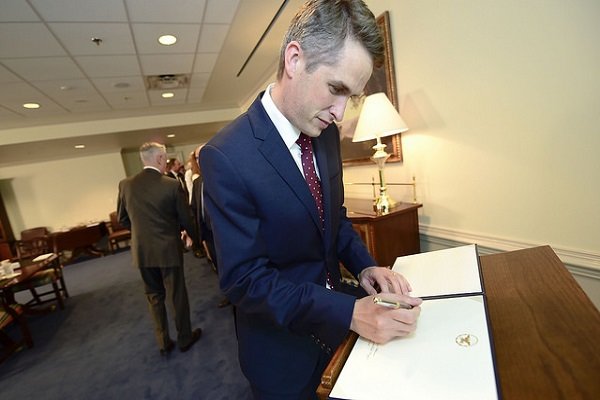
The opening news of the British permanent military base in Oman is announced by Britain's Defense Minister, Gavin Williamson.
Williamson was gone to Oman to visit from one of the Britain's Greatest Military Maneuver in Oman.
Williamson went among British troops in Oman, where more than 5,000 British troops are stationed and he announced that the British permanent base in Oman will open in March 2019. On the other hand, the UK will leave Europe in March.
On this basis, it seems that the approximate synchronization of opening the British permanent military base with the date of British withdrawal from the European Union in the same month is indicative of London's efforts to expand its influence over the post-Brexit period in Persian Gulf region.
So expect Hundreds of new British military forces transfer to Oman in March.
The British Secretary of Defense also said that the "hostile countries and extremist organizations" are the important reasons of establishing this military base in Oman."
At the same time that the British Secretary of Defense was in Oman, two countries also signed a joint defense treaty in the framework of their military cooperation in Persian Gulf region.
Meanwhile, this year, Britain has also established another military base in the region and in Bahrain.
Prior to that, London and Manama had signed an agreement to develop the British naval presence in the Persian Gulf, and in 2017, during the visit of Theresa Mary, British Prime Minister to Bahrain, UK opens permanent military base in Bahrain to strengthen Middle East presence.
In fact, British recent efforts to strengthen relations with the Persian Gulf rich states and London's efforts to strengthen its military presence in these countries prove that Britain is trying to return to its former position in the Persian Gulf region.
In other words, Britain withdrawal of the European Union, and in this situation, London seeks new partners for trade, and now the wealthy Arab countries in the Gulf Cooperation Council are a good marketplace for selling British weapons.
In fact, British recent efforts to strengthen relations with the Persian Gulf rich states and London's efforts to strengthen its military presence in these countries prove that Britain is trying to return to its former position in the Persian Gulf region.
In other words, at the same time as Britain withdrawal from the European Union, London seeks new partners for trade, and now the wealthy Arab countries in the Gulf Cooperation Council are a good marketplace for selling British weapons.
Over the past two decades, Britain has expanded its trade, economic, and military ties with the Arab countries in Persian Gulf region and Britain efforts for boost relations with Arabs were been more than any other EU member state.
These efforts, especially after David Cameron came to power in 2010, have become much bigger and Britain's focus on Arab countries has doubled.
When we look at the trade between Britain and the Arab countries of the region, we also find that the volume of exchanges has been steadily increasing.
For example, in 2009 the volume of trade between British and United Arab Emirates was about $ 9 billion, and in 2013 it was about $ 13 billion, and it's expected to reach $ 25 billion by 2020.
This increase in exchanges proves expansion of British relations with Arab countries in the Persian Gulf region.
In other words, in recent years, Britain's exports to the six Gulf Cooperation Council countries (Saudi Arabia, UAE, Qatar, Bahrain, Oman and Kuwait) have been around 18% higher than the past, and it expects to increase exchanges the trade between Britain and the Arab countries will continue for years to come.
In fact, Britain plans to strengthen its relationship with Arab countries, through investment on smart and sustainable infrastructure, which requires investment of 250 billion pounds.
Britain is seeking to trade and invest $ 2 trillion in thePersian Gulf region in the next decade (2020-2030).
The very license is in fact other than the overt agreement which the UK is in contract with these countries in the case of weapons export.
Historically, before the departure of Britain from the Persian Gulf region in 1971, the Persian Gulf security order was fully governed by the United Kingdom and this had caused the region's security and order not be stable and natural.
Even today's turmoil in the region is affected by Britain's historical presence, because the British presence in the region has led a independent security order does not take shape and in fact the current order of the region is dependent on the foreign countries and it means that current region order is not indigenous.
Over the past few years, Britain has made significant efforts to strengthen its military presence in the Persian Gulf region, efforts such as joint military maneuvers with Arab countries and the creation of military bases in these countries, in particular Kuwait, Bahrain and Oman, and the transfer of British troops to these countries.
The most important goals of Britain to strengthen its military presence in the Gulf are:
  Selling more weapons to the Arabs without regard to human rights concerns, gaining economic benefits after Britain withdraw from EU and trying to create a new regional order, although this new regional order will not be suitable and efficient through foreign intervention.
Currently, the Persian Gulf does not have a stable, reliable model due to the presence of foreign intervention powers.
The Persian Gulf's current security model is affected by the security model of interventionist actors and therefore the security mechanisms of the region are not routine.
In fact, the rivalry between the great powers in the Persian Gulf exacerbates regional rivalries between the Persian Gulf states so we rarely be able to change or reformed the current security model in Persian Gulf.
Conclusion
Arab countries in the Persian Gulf have many dissension with each other and at same of time they try to approaching to foreign and western countries in order to confront their potential enemies because they think that need to the West support.
For this reason, many Arab countries in the region are making contracts with western countries for coming closer to western countries through large purchases of weapons and concluding joint military cooperation agreements and the establishment of military bases.
Today, the Persian Gulf needs a comprehensive security order that have to be free of foreign interference.
This new security order have to be based on the role of all actors in the region and their cooperation between them.
The present order of the Persian Gulf region is based on the balance of power, which Due to the historical experience, this order does not have effectiveness to maintain security and stability in the region.
In other words, the present security order in the Persian Gulf region is based on the Zero-sum game (loss-wins game).
In the present order, each of the actors and countries alone is racing to increase their power and are pessimistic about each other.
Therefore, the present order in the Persian Gulf region is inefficient, and it is necessary to replace the new security order which it emphasizes on the cooperation of all the countries of the region.
Republished from: American Herald Tribune
Photo depicts United Kingdom’s Secretary of State for Defence.