Showing posts with label Iranian oil tanker. Show all posts

Thursday, September 12, 2019

Oil Tanker Off Syria: Sanctions-Busting or “US-Ego-Busting?”

Seth Ferris
ADRIA3534522

An oil tanker has been spotted off the coast of Syria and with that comes the latest news flash. This is hardly news, given the leading export of that region. But it was an IRANIAN oil tanker! Shock horror! Iran is again breaching sanctions it maintains it is not subject to! Is there no limit to its perfidy?
It is true that the US has previously detained the Adrian Darya 1, and that it now appears to have entered the Syrian port of Tartus, which is described as “Russian-controlled”, in violation of assurances Iranian Foreign Minister Mohammad Javad Zarif gave that it would not sail to Syria There also appears to be some confusion over whether it has actually delivered any oil, but the fact the tanker was seen off the Syrian coast, when the US had tried its best to prevent it going there, has caused an international outcry.
The US still has never forgiven Iran for conducting a revolution, a well justified one at that, when the State Department didn’t see it coming forty years ago. Revolutions are perfectly alright if the US promotes them, funds them or can anticipate them, highjack them and have a PR and humanitarian response ready. They are only a problem to the US, a country founded by revolution, if the revolutionaries take advantage of an opportunity others did not see – prove themselves better businessmen, in other words.
This is exactly what Iran is doing with its oil. The West wants it, the West claims it needs it. However, more is involved, as the US has bigger concerns about Iran, foremost of which is its alleged non-peaceful nuclear programme.
So Iran has taken to trading nuclear power for oil. It is prepared to make concessions on its nuclear programme in exchange for the ability to sell its oil products to significant markets. This makes sound business sense from an Iranian point of view, regardless of the importance of its domestic nuclear programme.
Iran is not planning to export its nuclear power, or sell nuclear weapons if it has them, but is not going to turn down oil export income when it can use this, Chinese-style, to hold potential enemies economic hostage. It is again taking advantage of an opportunity. Like any other business, it is pushing as far as it can to see what the political market can bear, with increased nuclear capacity, real or perceived, its counter to any objection by its opponents/customers.
So what now?

The tanker was told not to go to Syria, the Foreign Minister promised it would not go, but it has. Are the EU and US going to spell out exactly what their sanctions say, what authority they have and how they are going to be implemented, which they have consistently refused to do when challenged, merely repeating that “sanctions” are whatever the speaker says they are at any given time?
Hence the reason the US has a problem with the Adrian Darya is not that it is delivering oil to Syria, and by implication to its enemies there. It is because it is exposing US hypocrisy once again.
This has long been alleged to be a Russian tactic – wait for the US to compromise itself by acting contrary to its own values, then do the same thing the US just did and ask what it is doing wrong. Now Iran is getting away with the same thing, it puts the web of lies US foreign policy is based on under considerable strain – and other countries might be allowed to get away with doing that, but not Iran, the branded pariah state.

My lies and your lies

What hypocrisy is Iran exposing? This is revealed in one of the details of this story, which most reports only mention in passing, as if there is nothing extraordinary about it.
The tanker is captained by an Indian, not an Iranian. He is not an Iranian government functionary, or he would have Iranian nationality and diplomatic status. He is a merchant seaman doing his job for whoever hires him, as everyone in that profession, like Christopher Columbus, has done for centuries.
Obviously he has been paid by whoever is in charge of this tanker, whether it is the Iranian government, a maritime transport company or an oil company, to take the ship to a certain place carrying a certain agreed load. If he did not agree with the terms of his engagement, he wouldn’t have taken on the job, as the only people who would subsequently employ him would be criminals, who are not the most reliable or transparent of employers.
No one knows how much the captain was paid to take this ship to Syria, if this was even the original intention. But what we do know, because the US has admitted it, is that he was offered millions of dollars to take the ship to a different destination, where the US could seize its cargo.
You don’t offer people less money than they are already getting if you want them to do a special favour. Iran would have known when the tanker set out that any suspicion that is oil was bound for Syria would arouse US interest. It was the UK which detained the firsts ship, but ultimately had to let it go because it had no grounds for doing so, despite US objections. So if the US wanted to stop the ship it could not use legal means, leaving bribery as the best option.
It is highly unlikely that the captain would have been allowed to keep any millions he might have made from being bribed by the US to divert the ship. His employers would have taken the lion’s share, although he would doubtless have been given a consideration. So those employers knew that there were two ways of earning big money from commissioning this tanker: either they could sell the oil to Syria, in alleged defiance of sanctions, or earn more by getting the US to pay them not to do so.
The US complains, rightly, about Somali “pirates”. Yet here it is supporting a system which actively encourages piracy—American made kind. Let’s not forget America’s claim as why it went to war with Britain for the second time in 1812. It too was about the seas and allegations that American ships were being stopped on the high seas. However, that too is what fairy tales are made of.
If the captain had accepted the offered millions of US taxpayer dollars, he would have gained his employers a return on their investment without breaching any sanctions, and won US trust, encouraging further bribery and corruption. By not doing so, he guarantees the original earnings projection, but leaves the door open for future bribery. It is win-win for the ship owners, and would have been regarded as good business if a US company had done it – but it is criminality if Iran does it, simply because Iran is not allowed to be as clever as the US.
Over the limit, under the counter

Say the captain had taken the bribe, and steered the tanker to a US-controlled port. He would hardly have been arrested, as he had voluntarily given up his cargo to the US authorities. The oil itself would also have been cleansed of criminal associations, as no one could have proved that it had been destined for Syria, or terrorists or Russians, if it never reached there.
What would then have happened to the oil? Would the US have held it in a stockpile, or burnt it or thrown it in the sea? Is it not more likely that it would have used the oil, or sold it on to gain a return on its investment?
This opens up a third front in the bribery business. Many US operations are funded by illicit oil and drug sales, made through the ports of client states, at least in terms of the paperwork, such as Georgia It is no coincidence that the biggest of the internal rows of the Saakashvili government was over whether his uncle, or a third party, would control the Kulevi oil terminal, or that Saakashvili was put in charge of Odessa, a major port with a huge oil terminal, after he was spirited out of Georgia and into Ukraine, like many other aspects of the CIA operation in the region.
Oil seized from an Iranian oil tanker is not likely to be officially accounted for, as it has neither been bought on the open market nor become the proceeds of crime, the “crime” having been averted. So ships seized by the US can supply the illicit operations as well as earning money, like drugs and weapons.
Organised supplies would attract different bribery rates – probably smaller, but guaranteed in consequence. This is how groups like Daesh can mount long term operations, via secured supply lines protected by CIA operatives.
It would be no surprise if we suddenly saw a significant increase in oil tankers being “intercepted” by the US, in great victories for democracy, and then discovered the US had chartered them, via the usual suspects who supply the fake end user certificates for the arms deals. This may be the only way the US can recover from its embarrassment at being outsmarted by another Third World nation.
It is the US which insists that Iran’s domestic nuclear programme is a threat. So the US is keeping that issue on the table, and thus giving Iran the opportunity to win oil export concessions.
In this way Iran can hand control of its purported oil smuggling to the US in exchange for regular cash, without the US having to explain why it is dealing officially with Iranian oil. Another win-win situation for Iran, like Iran Contra, but this one works for the US too.

Floating allegiances

Of course organised bribery only works if you can find enough people to bribe and the right people. If you were going to look in any legitimate business to find them, it would be the maritime industry.
The individuals who work in this industry are not inherently corrupt. But the industry has thrived on selling itself to the highest bidder for many years. It knows how to play this game as standard business practice, and those who want to get ahead in it are schooled in its playbook.
The evolution of speedboats has been driven by the drug smuggling industry. The smugglers buy the latest and swiftest models, even subs. They even buy vessels, better ones are developed for the coastguards, then the smugglers want better ones, and on and one it goes.
How can you prove that a boat designer, manufacturer or retailer knew that their client was a drug smuggler? So the speedboat business is funded by the proceeds of crime, when it could not be from government contracts alone.
Larger ships operate the same way. They have bills of lading and inventories, but also unofficial cargo such as the weapons which did not appear on the Lusitania’s cargo list. The sinking of the civilian luxury liner was used as grounds for bringing the Yanks into WW1.
Obviously this contraband is not paid for at the normal rates, and deals have to be made at the highest levels of companies to enable such practices to be introduced – if there is a problem, paths have to be smoothed by people in authority. Ship = smuggling opportunity, and it cannot be otherwise, as they are difficult to stop or search without justification whilst at sea.
None of this has resulted in the maritime industry gaining a negative reputation. Quite the contrary, it is regarded as an important national resource in every country, and few comment on the deals made to support it. Most of it is indeed fully legitimate, so the side deals are not considered too unusual or important, unless a country like Iran is making them.
A certain level of corruption is considered necessary in most areas of life. But only the US and its allies are allowed to take advantage of it. This demonstrates to them that they are at the top of the tree on merit, because they are cleverer than lesser nations.
Only when that perception is challenged by the likes of Iran and North Korea does corruption pose a wider problem. When the US has given these countries the opportunity to challenge them by its own misconduct, it merely amplifies the problem. But the definition of “superpower” is a state which can consistently make sure that its problems are turned into somebody else’s—at least the blamed is fixed.

Seth Ferris, investigative journalist and political scientist, expert on Middle Eastern affairs, exclusively for the online magazine “New Eastern Outlook”.

Saturday, August 17, 2019

The message behind the release of Iranian oil tanker

* By Mohammad Ghaderi

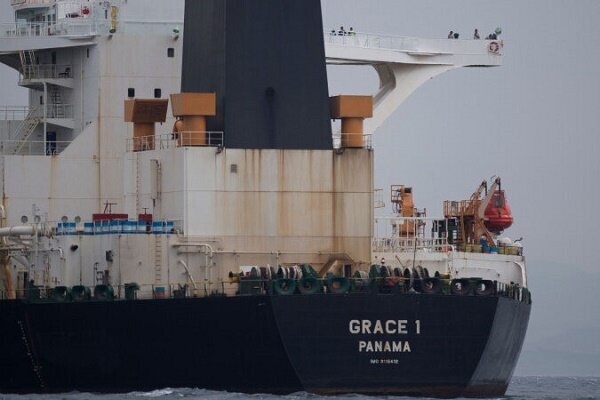
TEHRAN - The Gibraltar court ordered the Iranian oil tanker Grace 1 to be released. The tanker was seized by the British Royal Marines about a month ago. 
This verdict was the ending of an elaborate game designed by John Bolton National Security Advisor of the United States and Mike Pompeo, carried out by the Britain government. 
With seizing the tanker, Bolton was trying to put psychological and political pressures on Iran and force other countries to form a consensus against Iran, but he couldn’t fulfill any of these goals. 
Iran’s firm, logical and wise answer to the seizure of Grace 1 (like making solid legal arguments) and the seriousness of our country’s armed forces in giving a proper response to Britain’s contemptuous act, made the White House lose the lead on reaching its ends. 
Washington imagined that the seizure of Grace 1 will become Trump’s winning card against Iran, but the release of the tanker (despite disagreement of the U.S.) became another failure for the White House in dealing with Iran.  
Obviously, London was also a total loser in this game. It is worth noting that U.S. was so persistent about keeping the oil tanker in custody that John Bolton traveled to London and insisted on British officials to continue the seizure of the ship. Their failure, however, clearly shows that the White House and its traditional ally, Britain, have lost a big part of their power in their relations with Iran. 
Clearly, the illegal seizure of the Iranian oil tanker by Britain proceeded by the seizure of a British tanker by Iran and the following interactions between the two countries is not the whole story and there is more to it that will be revealed in coming days. 
What we know for sure is that London has to pay for its recent anti-Iran plot in order to satisfy Washington; the smallest of these consequences was that Britain lost some of its legal credibility in international arena as it illegally captured an Iranian oil tanker. 
The order of the Gibraltarian court revealed that London had no legal right to seize the Iranian oil tanker and nobody can defend this unlawful action. Surely, Iran will take all necessary legal actions to further pursue the matter.  
In this situation, the Islamic Republic of Iran is firm on its position that it doesn’t have to follow the sanctions imposed by the European Union on other countries (including Syria). 
No entity can undermine this argument as it is based on legal terms; therefore, Iran will keep supporting Syrian nation and government to fight terrorism. This is the strategic policy of the Islamic Republic and will not be changed under the pressure or influence of any other third country. 
Finally, it should be noted that the release of Grace 1 oil tanker was not only a legal and political failure for Washington and London and their allies but it was also a strategic failure. Undoubtedly, the vast consequences of this failure will be revealed in near future. 
* Author: Mohammad Ghaderi , Tehran Times editor in chief 

Friday, August 16, 2019

Iranian oil tanker row has left everyone with a win – except bungling Bolton and US hawks

Iranian oil tanker row has left everyone with a win – except bungling Bolton and US hawks
The Iranian oil tanker Grace 1 at anchor after it was seized by
British Royal Marines in the strait of Gibraltar in July.
Photograph: Jon Nazca/Reuters


By Ahmed Aboudouh*

When Iranian President Hassan Rouhani was wagging his finger at the UK earlier this month shouting “peace for peace, war for war and oil for oil”, he clearly knew very well the vulnerabilities of his British counterparts. He was talking to a rusty political class wearied by Brexit, and decided to play them like a fiddle.
The Gibraltar high court decided on Thursday to release the supertanker Grace 1 [carrying Iranian oil] after a fierce legal battle, in which President Trump’s administration wanted to nudge the UK further into its pocket, but came out with a bruising humiliation.
Theresa May’s government helped seize the tanker at the beginning of July at the apparent behest of the US. It looked amateurish at first glance, and there is little surprise that it backfired. The claim was that the ship was taken to prevent a breach of EU sanctions on selling oil into Syria, but there was much speculation that the UK wanted to block Iran’s right to sell its oil to other nations simply to appease Trump.
It appears this week that Iran has ended up in a better position. Now it can sell oil with the legal power of a court ruling in an EU member state.
Meanwhile in London, Boris Johnson has focused his so-called “war cabinet” on one single target: Getting the UK out of the EU by October 31. Brexit sweeps everything else from its path. There seems to be little thought given to foreign policy: Over Iran, Hong Kong, Russia or Kashmir.
The tanker squabble must seem like a needless distraction in this context: A can ripe for kicking down the road. And so by distancing itself from this protracted standoff, and throwing the ball in the hands of the Gibraltar court, the government in London has sought to avoid a diplomatic backlash from Washington.
In the background, the UK is under tremendous pressure from the US to withdraw from the Iran nuclear deal. During his visit to London this week, Trump’s arch-hawk national security adviser John Bolton encouraged the government to harden its position on Iran and the Chinese communications giant Huawei.
The UK can perhaps use its relationship with Huawei as leverage in future trade deal negotiations with the US, but the release of the Grace 1 will be a painful blow to Bolton.
And more might follow. Iran is incrementally scaling back its compliance with the nuclear deal, but Britain and other European signatories want to step in. There has been a smaller row over European plans to pursue a solution with Iran during the forthcoming G7 summit in Biarritz, which would represent a second major blow to the United States’ Iran policy in one month.
The release of the Grace 1 is expected to set the course for the release of the Stena Empero, the British-flagged tanker which was impounded by Iran’s [Islamic] Revolution Guards [Corps] in the Strait of Hormuz as a retaliatory measure. Its release now would give weight to Rouhani’s new “oil-for-oil” doctrine.
At the same time a message has been sent that Europe will not tolerate the harassment of ships in its waters. The new rules play in Iran’s hands, reflecting a desire in Europe to dent the Trump administration’s credibility in this area. From here, after all, who will take Trump’s policy on Iran with any degree of seriousness? 
The UK was cannier. By stepping aside in the legal dispute, it convinced the Iranians that, unlike the US, it seized their tanker on concerns about the destination (Syria) not the oil source (Iran).
This offers a perfect exit for Iran, which might have worried it was trapped in a vicious cycle. The Europeans too have some leverage to push Iran to restore security norms in Persian Gulf waters.
And slap bang in the middle of the tug-of-war between the US and Iran, the UK will remain. For now, it will grant marginal advantage to whichever side it appears to favor, but in the long run, the UK might be doomed to slip into the US orbit.
In the midst of national desperation around Brexit, it is hard to see the UK wrestling giants. The need for a trade deal with the US may send the country scurrying into Trump’s embrace, and maybe forced to take on his values too.
The tanker row showed that the UK still has some cards to play. By ignoring John Bolton, London proved to be central to maintaining peace in the Persian Gulf.
Now, the UK needs to stop being the fiddle others play.

* Ahmed Aboudouh is a consultant editor and columnist on Middle East affairs at The Independent.

Gibraltar releases Iran-operated tanker despite US pressure


Press TV – Gibraltar’s government has released an Iranian-operated supertanker, which was seized by British marines in the Strait of Gibraltar on July 4, despite pressure from the United States for the vessel’s continued detainment.
“Authorities in Gibraltar have released the Iranian supertanker Grace 1, which was seized on July 4 on suspicion it was shipping 2.1 million barrels of crude oil to Syria in breach of EU sanctions,” Reuters quoted the Gibraltar Chronicle as reporting on Thursday.
According to the report, the chief justice of Gibraltar’s supreme court, Anthony Dudley, said there was no US application currently before the court.
Chief Justice Anthony Dudley said that since Iran had guaranteed in writing that the destination of the Grace 1 would not be a country “subject to European Union sanctions… there are no longer reasonable grounds to suspect that the detention of the Vessel is required.”
Spain’s Foreign Ministry reported after the incident that the UK had seized the vessel at the request of the US, which has been trying to trouble Iran’s international oil vessels as part of its campaign of economic pressure against the Islamic Republic.
Earlier on Thursday, Gibraltar said that the US had applied to seize the Iranian-operated oil tanker after British media reported that the vessel’s release was imminent following a set of diplomatic exchanges between Tehran and London.
“The US Department of Justice has applied to seize the Grace 1 on a number of allegations which are now being considered,” the Gibraltar government said in a statement.
It added that the “matter will return to the Supreme Court of Gibraltar at 4 p.m. (1400 GMT) today.”
A diplomatic dispute broke out between Iran and the UK on July 4, when Britain’s naval forces unlawfully seized Grace 1 and its cargo of 2.1 million barrels of oil in the Strait of Gibraltar under the pretext that the supertanker had been suspected of carrying crude to Syria in violation of the European Union’s unilateral sanctions against the Arab country.
However, reports show the confiscation took place upon a call by the US.
Tehran rejected London’s claim that the tanker was heading to Syria, slamming the seizure as “maritime piracy.”
Iran’s Ports and Maritime Organization said Tuesday that Britain was expected to soon free Grace 1, after the two sides exchanged certain documents to pave the way for the supertanker’s release.
Iran’s FM: Trump’s piracy attempt indicates his contempt for law
Soon after the report emerged about the release of the Iranian-operated tanker, Iran’s Foreign Minister Mohammad Javad Zarif took to Twitter noting that the seizure of the tanker proved the Trump administration’s contempt for the law.
“This piracy attempt is indicative of Trump admin’s contempt for the law,” Iran’s top diplomat said.
Zarif added that the US effort to prevent release of the Iranian tanker was aimed at abusing “the legal system to steal our property on the high seas.”
He said this vain attempt followed the US failure in achieving its anti-Iranian goals through economic terrorism.
‘US faced humiliating defeat in its effort to prevent tanker’s release’
Following the decision by the Gibraltar court, Iran’s Ambassador to UK Hamid Baeidinejad said in a tweet on his official Twitter page that the decision by the officials of Gibraltar put an end to 40 days of illegal seizure of the tanker, which carries the Iranian oil.
“Up to the last minute, the United States tried in vain to prevent the release of the tanker, but was faced with a humiliating defeat,” Iran’s UK envoy added.
Baeidinejad stated that all preliminary steps have been taken to ensure the tanker’s movement toward free waters and “the vessel will soon leave the Gibraltar region.”

Wednesday, July 24, 2019

Trump Is Back Under Bolton’s Thumb

By Paul Craig Roberts

July 22, 2019 "Information Clearing House" -   President Trump might be his own man, but not when it comes to John Bolton and Israel.  Trump is their man and is again being manipulated into starting a fisticuffs with Iran.
Someone in Washington, most likely Ziocon warmonger Bolton, got the UK to commit an act of piracy on the high seas and seize an Iranian oil tanker, Grace 1, on the grounds that Iran intended to deliver the oil to Syria in violation of US sanctions.
Iran’s leader, Khamenei, denounced Washington’s British stooge for “maritime banditry” and said there would be consequences.  Today there were. Iran detained two British tankers.
This is what Bolton and Netanyahu wanted.  They used it to wind up Trump’s fulminations against Iran. The trouble that the idiot British started with Iran is no concern of ours, but Trump’s threats are nevertheless issuing at a rapid pace.

The British call Iran’s response to their banditry “an escalation” that requires “further protection for merchant vessels . . . to ensure enhanced security to guarantee free flow of trade in the region.”  Of course, the British did not think their act of banditry caused a need for “enhanced security to guarantee free flow of trade in the region.”  It is quite alright for Britain to seize ships but not for Iran.
The British Foreign Secretary offered Iran the release of Grace 1 if Iran guaranteed it would not breach Washington’s sanctions on Syria by delivering oil.  Washington’s sanctions, of course, are totally illegal and devoid of any basis in international law, as is the British enforcement of Washington’s illegal sanctions.  One wonders why Russia doesn’t stop this escalation by taking over the delivery of oil supplies to Syria.  

Dr. Paul Craig Roberts was Assistant Secretary of the Treasury for Economic Policy and associate editor of the Wall Street Journal. He was columnist for Business Week, Scripps Howard News Service, and Creators Syndicate. He has had many university appointments. His internet columns have attracted a worldwide following. Roberts' latest books are The Failure of Laissez Faire Capitalism and Economic Dissolution of the West, How America Was Lost, and The Neoconservative Threat to World Order. Donateand support Dr, Roberts Work.


Thursday, July 11, 2019

Iran won’t tolerate British piracy: Hatami

TEHRAN - Iranian Defense Minister Amir Hatami said on Monday that Britain’ act in seizing Iranian oil tanker was an act of piracy which will not be tolerated.
“On these days, we have witnessed a provocative act by the British government against the Islamic Republic of Iran’s oil tanker in Gibraltar. This action is against international regulation and the Europeans commitments under the JCPOA and is also a kind of piracy,” Hatami said.
On early Thursday morning, British Royal Marines in Gibraltar stormed the 300,000-ton Grace 1 and detained it, accusing it of carrying oil to Syria in possible violation of the European Union’s sanctions on the war-torn Arab country.
Iran has condemned the move as “maritime piracy” and summoned Britain’s ambassador for three times in protest. Tehran has vowed to employ all its political and legal capacities to secure the release of the vessel and uphold its rights.
On Sunday, Iranian Deputy Foreign Minister Abbas Araqchi denied reports that the supertanker was carrying oil to Syria.
“Contrary to Britain’s announcement, the tanker was not bound for Syria, and the port mentioned is not capable of receiving such a tanker,” Araqchi told reporters at a news conference in Tehran.
The seized tanker is a 2 million barrel capacity very large crude carrier (VLCC), Araqchi said, adding it could not pass through the Suez Canal and that was why it had to go the extra mile through Gibraltar.
A top court in the British overseas territory of Gibraltar ruled late Friday that the Iranian supertanker could be detained for up to 14 more days.
“The Supreme Court has issued today’s order on the basis that there are reasonable grounds to consider that the detention of the Grace 1 is required for the purposes of compliance with the European Union (EU) Regulation 36/2012 on sanctions on Syria,” Gibraltar’s government said in a statement.
Earlier on Friday, the Associated Press reported that the vessel’s 28 crew members were being held on the ship for questioning and had not been detained under criminal procedures, citing an unnamed spokesperson for the Gibraltar government.
Spain, which challenges the British ownership of Gibraltar, has said the seizure was prompted by a U.S. request to Britain and appeared to have taken place in Spanish waters.
Spain’s acting Foreign Minister Josep Borrell said on Friday that Madrid was planning to lodge a formal complaint against the UK and was studying the circumstances and looking at how the incident is affecting its sovereignty.
U.S. National Security Advisor John Bolton — an ardent hawk behind the White House’s highly hostile Iran policy — has praised the measure.

Sunday, July 07, 2019

Seizing Grace 1 tanker: An outright theft with no legal justification

By Mohammad Ghaderi 

TEHRAN - Seizing the oil tanker Grace 1 is a new event that has heated up the tension between Iran and the United States, but it can also be related to the current disagreements between United Kingdom and the European Union. 
British Royal Marines seized the Iranian oil supertanker, Grace 1, in Gibraltar on Thursday, saying that the tanker was taking oil to Syria that is in violation of EU sanctions.
UK is supposed to leave the European Union within four months and in Britain, the top conservative party members seem inclined to get closer to U.S. and drift apart from other European countries. 
In addition, Boris Johnson and Jeremy Hunt, who are likely to replace Teresa May as Britain’s next prime minister, both have taken a quite aggressive stand against Iran, a policy that seems closer to that of Donald Trump’s rather than to the leaders of other European countries.
It would have made much more sense if UK had seized the ship for carrying weapons, but it was merely carrying oil for the 17 million Syrians who are having a fuel crisis and have to stand in fuel stations for several hours before getting a little fuel. Blocking transportation of oil to Syria is an obvious violation of human rights and is against all moral values; specially because the sanctions against transferring oil to Syria are unilateral ones and are not approved by the United Nations. 
On the other hand, it is quite surprising that U.S. and other western countries who send their fighter jets to Syria and Iraq as part of their so called “coalition against terrorism” can spot a fly in Syria’s sky but they never seem to notice the tons of oil that ISIS is moving around.  
The Syrian nation have to suffer under a cruel siege conducted by Europeans. Posing these sanctions on Syria and preventing the fuel from getting into the country shows the depth of Europeans’ hypocrisy and unveils the true face behind all their seemingly humanitarian gestures. 
Continuing this blockage means that either more Syrians travel to European countries to get rid of the siege, or they start to bear more grudge against the countries that have laid the siege. Therefore, saying that seizing the ship was in breach of European sanctions against Damascus is only a pretext. 
On the other hand, the sanctions against Damascus is imposed by the European Union and U.S., not the UN, so other countries don’t have to observe these sanctions; therefore Iran has done nothing wrong because the EU and U.S. are not allowed to force other countries into following these sanctions; the sanctions are supposed to be followed by the countries who have imposed them, not others, so Iran has not done anything against the international law. 
Following the blatant stealing of the Iranian oil tanker in international waters, the UK ambassador to Iran, Robert Macaire was summoned to Iranian Foreign Ministry on Thursday, July fourth. 
The Iranian Foreign Ministry condemned the seizure of the oil tanker, saying that UK has obviously seized the tanker under U.S. orders and asked for the immediate release of the tanker. 
Iran’s Foreign Ministry announced that seizing the oil tanker was the same as stealing because the sanctions imposed by UK or the European Union do not apply to other countries and UK was not allowed to force them on Iran. This is U.S. bullying other countries, something that European countries had long protested. 
Over the meeting, all the documents that showed the movement of the tanker and the goods it carried where completely legal were handed to the UK ambassador. 
Iran also announced that it will use all of its legal capacities to release the tanker and ensure that the country’s rights are safeguarded. 
The UK ambassador to Tehran said that he will inform London immediately, underlining that UK does not abide by U.S. unilateral sanctions against Iran.