Showing posts with label Iraqi protests. Show all posts

Tuesday, November 05, 2019

Roadmap by religious authority for Iraq’s political future

By Fatemeh Salehi

TEHRAN - Ayatollah Ali Sistani’s last statement on Friday about recent developments in Iraq sends several messages. The grand ayatollah warned in his statement that the current situation in Iraq may drag the country into chaos.
In his statement, the ayatollah stated that the lost lives on both sides - protesters and security forces - are valuable to the religious authority and that the country must not degenerate into chaos. 
The religious authority has always respected the will of the Iraqi people to determine their political and administrative system through holding referendums on the constitution and regular parliamentary elections. Since the toppling of the former regime, the religious authority has constantly emphasized that reforms are a necessity. 
"No person or group, no side with a particular view, no regional or international actor may seize the will of the Iraqi people and impose its will on them," Ayatollah Sistani said.
After the statement was issued, Iraqi political groups and figures greatly backed it. For example, Speaker Mohamed al-Halbousi said that the parliament supports solutions put forward by the religious authority. 
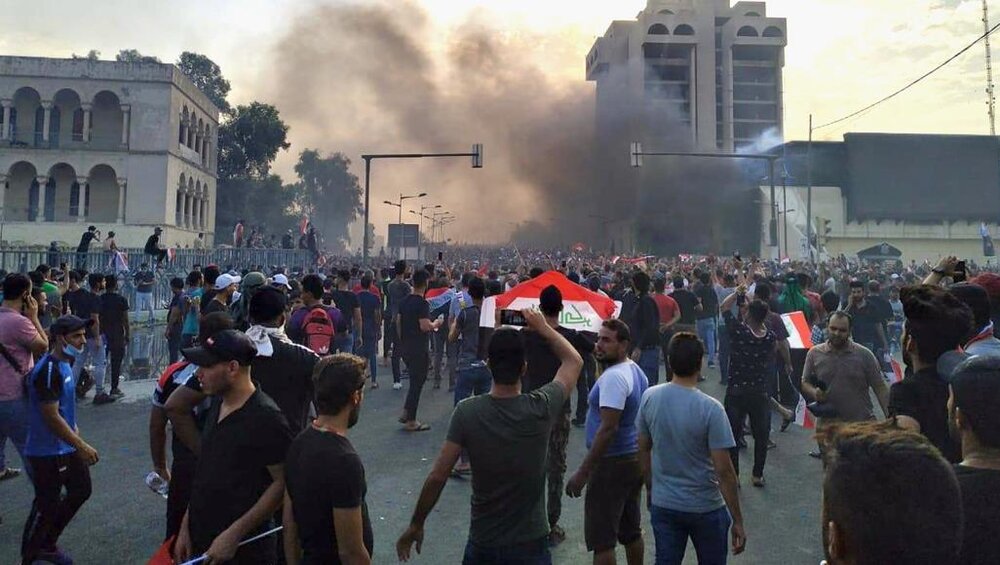
The Iraqi people, who are well aware of the political situation in their country, took to the al-Tahrir Square in Baghdad to declare support for the religious authority. Iraqis burned U.S. and Israeli flags, chanting slogans against the U.S., the Zionist regime, Saudi Arabia and the Ba’ath party. They also protested against the meddling of foreign countries which seek to create chaos and incite the protests.
 The study of recent developments represents two important points: the first point is that political groups should pay attention to the statement of Ayatollah Sistani. 
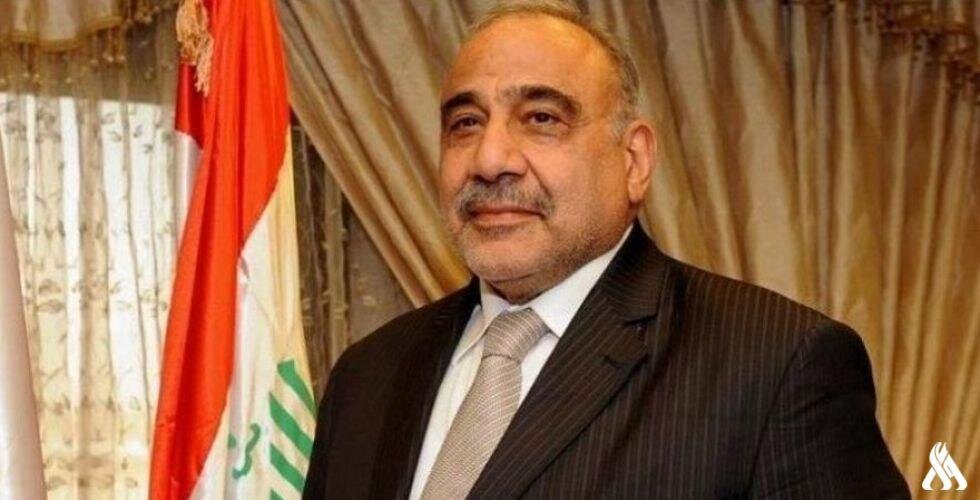
Those political groups in Iraq, which are trying to hold the current government and Prime Minister Adil Abdul Mahdi responsible for corruption and agitate the situation to defame the government, should take the statement into account.
Some political parties are seeking to use popular protests in their own favor to achieve their political goals. These parties, influenced by the U.S. and Saudi Arabia, are pursuing other goals than pushing for reforms in the country. 
The second point is the failure of efforts by some foreign countries to exploit protests in Iraq. Foreign media, especially those affiliated with the U.S., have worked hard in recent days to show that the demonstrators have chanted slogans against the religious authority and even have attacked some of their offices during the protests. 
In addition, some Arab media are trying to show that there is a gap between the Iraqi people and the religious authority. But an examination of the position of the religious authority since the beginning of the protests shows that the religious authority urges the government to meet people’s demands and calls for peaceful protests by the demonstrators. 
In should be noted that implementation of political and economic reforms will not take place without stability and security in any country. That is why Iraqi political groups should stop politicking and not be tempted to settle scores. Instead, they should join hands to do reforms until the country leaves this critical stage behind.

Monday, November 04, 2019

Intensifying pressure on Abdul Mahdi to resign

By Ramin Hossein Abadian
Domestic and foreign pressure for ousting Iraqi Prime Minister Adil Abdul Mahdi appear to have increased more than ever.
Iraq’s President Barham Salih has also recently made a statement in this regard, saying, “The prime minister had previously agreed to submit his resignation if the blocs agree on an acceptable replacement in order to adhere to constitutional and legal frameworks”.
Condemning the violence against the protesters, Salih claimed that he will stand beside the Iraqi people.
The prime minister added that he is against quelling the protesters. Addressing the protesters, he said the Iraqi people and security forces are on the same side. Noting that forcible action is not the way to deal with the protestors, Salih said that reforms is the only solution.
There are two-point regarding the remarks by the Iraqi president. The first point is that Abdul Mahdi has only announced his consent for resignation, and considered its dependent on the agreement of political parties about a replacement.  Therefore, as some foreign media have suggested, a resignation of Abdul Mahdi cannot be considered inevitable.
 The second point in Salih’s remarks is that Adul Mahdi is well aware of Iraq’s political situation. He knows that even if he resigns, political parties will not come to an agreement about a replacement, at least in the short run, and this matter will emerge as a serious problem. The prime minister has agreed to “conditional resignation” to prevent Iraq from facing a “power vacuum”.
Currently, it is obvious that domestic and foreign pressure has increased on the Iraqi government to make Abdul Mahdi step down.  Domestic pressure mainly comes from a particular political current that has repeatedly asked for the resignation of the prime minister and hold an early election. In such a situation, Iraqi Shi'ite leader Muqtada al-Sadr had earlier announced if Abdul Mahdi did not step down, Iraq would become like Yemen and Syria.
The pressure by political parties and figures such as Muqtada al-Sadr on the prime minister is taking place while the government has taken great steps to carry out reforms, and has also established good cooperation with the parliament. To this end, one of the latest government’s reform plans includes training job seekers, reducing retirement age, cutting taxes for small businesses and industries and removing their income tax.
According to a recent statement issued by the government, it is stated in the new reform package that the Ministry of Energy should train job seekers and provide them with financial aid so that they can get a job in government organizations, or help them to launch small businesses. The government put Civil Servants Pension Organization in charge of developing a plan to reduce retirement age in government jobs and to provide more employment opportunities for the youth.
Last week, Abdul Mahdi released an important message about reforms, stating that the government had emphasized the importance of creating a special anti-corruption court to prosecute the corrupt.
In addition to domestic pressure, the U.S. applied its pressure since the very first days of the protests to force Iraq’s prime minister to resign. Americans have played an important role in Iraq’s uprising through their embassy in Baghdad.
Earlier, the Lebanese newspaper Al-Akhbar wrote, “Attempts for political coup are supported by the United States.” The newspaper also said the cost of the coup is $150 million, which Saudi Arabia has pledged to provide, and its implementation is on Iraqi civil society organizations backed by the U.S. embassy in Iraq.
The U.S. ambassador to Iraq, Matthew Tueller, is also involved in foreign pressure on the prime minister. This matter can be easily understood in the remarks of the ambassador about the recent unrest. For example, Tuller recently said that it “appears inevitable” that Abdul Mahdi would resign.
In addition, about three weeks ago the American newspaper Task and Purpose revealed Tuller’s correspondence with Washington officials about Abdul Mahdi’s resignation.
According to the newspaper, in a classified email sent to U.S. military leaders on Saturday morning, Tueller wrote, “We assess Moqtada al-Sadr is seeking to take advantage of this crisis by giving demonstrators a dramatic response to their anger against the government and strengthening his own hand. Subsequently, former PM Haider al-Abadi also issued a call for early elections. With these drastic developments, the resignation of [Adil Abdul-Mahdi] by as early as today appears inevitable and Iraq's government will enter unchartered [sic] and fraught political territory.”
In view of all these things, it is clear that domestic and foreign pressure is intensifying on the government.

Thursday, October 31, 2019

West scenario to overthrow Iraqi government: A plot that has been foiled

*By Mohammad Ghaderi

TEHRAN - After almost a 10-day pause, the popular protests in Iraq resumed on Friday in various cities. Although the protests led to clashes and killing of some people by intervention of infiltrators, ultimately it became an opportunity for Iraq’s government to put the demonstrators’ demands on their agenda while maintaining political independence and sovereignty.
In this regard, there are some important points that should be noticed:
1.    The popular protests have been prompted over corruption, bribery of some political parties, and government’s incompetence, which have led to class gap. Therefore, as stipulated in the constitution, public protest is a right that none of Iraqi authorities are opposed to. 
2.    The issues that have been considered as the cause of the protests are not the result of the current government’s performance alone, but the result of years of foreign intervention and sabotage by infiltrators, who have fallen short of Iraq’s national wealth after the fall of Saddam’s regime, and have put the country in many crises in different ways. Creating and backing ISIS and causing a major security crisis is only a simple example of Western hostile actions. 
3.    Some individuals in the new generation (15-25 years old), who are one of key actors in recent protests, hold the sitting government, which has adopted anti-Israeli and anti-U.S. approach, responsible for the uprising. These Iraqi youth are not aware of the problems that the West and infiltrators have caused for their country, and are influenced by social media and anti-resistance media. But what has so far prevented stability and peace in the country is the result of the policies of the West and its regional actors who are seeking to take advantage of Iraq’s insecurity. 
4.    The role of some powerful political currents in fueling the protests, with the aim of undermining Iraq’s government and seeking a share in the government, is obvious. It is a matter which has caused some conflicts, without taking Iraq’s interests into account.  
5.    The exploitation of the protests by foreign elements, who have sought revenge of axis of resistance in Iraq, is an important factor that should not be overlooked. In other words, the context prepared for legitimate protests has provided the opportunity for these elements to use all of their financial, media and intelligence facilities, as well as their embassies in Baghdad to reach their goals in three areas, including:
A.    Establishing a nationwide revolution to overthrow the current Iraqi government and pave the way for future plans. 
B.    Defaming the resistance groups and true friends of the Iraq among the youth. These groups have been the most important factor in fighting against Western proxy terrorism and have prevented the fragmentation of the country. 
C.    Assassination of key and influential figures of the resistance movement.
Accordingly, all the focus of the Western media was to portray traitor as a friend in the public opinion among the youth.  
Of course, this scenario reduced the presence of protestors in Baghdad and changed the slogans from “the fall of the government” to “reforms” by clever leadership of the religious authority, government’s great measures and cooperation of parties, as well as continued efforts by domestic media to enlighten the public opinion.  The important point is that on Friday and Saturday, the main group of protestors separated their way from rioters, following Ayatollah Sistani’s statement and trusting government’s promises to solve the problems.
Therefore, what happened in southern cities was not a demonstration, but brutal attack on parties’ headquarters and government departments by infiltrators.  It seems that this event, despite all problems, provided some significant opportunities and foiled agitators’ plots.
* Author: Mohammad Ghaderi , Tehran Times editor in chief 

Wednesday, October 09, 2019

Iraqi protests, spontaneous or conspiracy?

By Hossein Amiri
Iraq witnessed protests in recent days about the inadequate public service situation, lack of job opportunities and corruption, but these protests have turned violent and have killed and injured dozens.
There are shreds of evidence indicates that what is happening in Iraq is a "goal-oriented-conspiracy". There are several reasons for this.
First, there are pictures on social networks from Iraqi protesters that are both fake and completely suspicious. Some images of the protesters have slogans against the Shia clerics and Ayatollahs. At the same time, there are mottos in which people demanding the overthrow of the Iraqi government. This is while the Iraqi people deeply believe in Shia's religious authority and its constructive role in the country, and the best example for this the Iraqi people's welcoming to Ayatollah Sistani's 2014 fatwa to mobilize people to fight against ISIL terrorism. On the other hand, the government in Iraq has won the elections and its people have voted for Shia groups to form a government.
Second, the demonstrations in Iraq coincided with the Arba'een Trek. It seems that these demonstrations have targeted Arb'aeen's Trek. The goal is to prevent the Grand March being held in Iraq, on the one hand, and to prevent people from other countries, especially Iran, to go to Iraq to attend the indelible event. This is one of the reasons behind the anti-Iranian slogans in demonstrations in some Iraqi cities.
Third, the demonstrations in Iraq coincided with the Yemeni hegemony against Saudi Arabia as well as with the political stalemate in the occupied territories to form a cabinet.
Iraq is one of those countries that has an independent foreign policy and opposes the Saudi war against Yemen and it is also against the normalization of the ties between some Arab countries with the Zionist regime.
On the other hand, the Popular Mobilization Forces (PMF) "al-Hashd ash-Shaabi" has close relations with the Islamic Republic of Iran. Due to these ties, Iraq has been targeting by the Arab-Israeli-Western axis.
Secretary-general of Asa'ib Ahl al-Haq, Qais al-Khazali an Iraqi Shi'a paramilitary group, said last August that some political opponents in Iraq are preparing to hold demonstrations with the support of foreign powers because they are unhappy with Iraqi foreign policy. The problem is "Deal of the Century". They want to obey the Iraqi government ... so we will see demonstrations in Iraq again. The demonstrations are scheduled to begin in October.
Fourth, the demonstrations in Iraq also coincided with the government announcing an inquiry's output into the bombing of PMF's garrisons and Iraqi Prime Minister Adel Abdul Mahdi's emphasis on the direct role of the Zionist regime in the incident.
Meanwhile, in the ongoing violence in Iraqi, Western and Arab media focused on inducing PMF as a force against the protesters. The behavior of the main media stream also shows that what is going on in Iraq is a "concerted conspiracy", which is aimed at weakening the Iraqi security and military forces, especially the PMF.
Fifth, the protests in Iraq were backed by some elements of the Ba'athist regime. As the protests began, the daughter of Iraq's ousted dictator Raghad Saddam, tweeted in support of the protests, calling them "the generation of Qadisiyah" and writing "The whole of Iraq is with you" and "God bless our martyrs."
It is real that the economic problems and corruption exist in Iraq and that is undeniable, but the violence that occurred during the recent protests and the way the Western and Arab media reported and covered the protests suggests that Iraqis should be vigilant.