Showing posts with label Javad Zarif. Show all posts

Sunday, July 28, 2019

Iranian Foreign Minister Calls for Global Unity Against US Radical Unilateralism

Iranian Foreign Minister Calls for Global Unity Against US Radical Unilateralism
by Stephen Lendman

US rage to control other nations, their resources and populations is the greatest threat to world peace, stability and security.

Its imperial agenda threatens everyone everywhere, risking potential destruction of planet earth to own it, all life forms endangered by its rage.

Bipartisan US ruling authorities, including congressional war party leaders, want pro-Western puppet regimes installed everywhere, sovereign independence of all nations eliminated.

They want ruler-serf societies everywhere they control, US-dominated NATO transformed into a global military on every continent - enforcing US interests, along with official narrative mind control, alternative views eliminated.

They want global societies unfit and unsafe to live in, US-headquartered masters of the universe enforcing the will of Wall Street; the military, industrial, security, controlled media complex; and other corporate predators.
Orwell's 1984 no longer is fiction. Big Brother watches everyone. Endless wars rage against invented enemies, planned new ones on the drawing board to be launched at the whim of the US ruling class.

The nation I grew up in long ago no longer exists. The American dream members of my generation enjoyed is gone. You have to be asleep to believe otherwise, the late George Carlin explained.

An increasingly totalitarian/tyrannical oligarchic plutocracy replaced the US of my youth - intolerant of democratic values and the rule of law everywhere, especially not at home.
Iranian Foreign Minister Zarif is participating in the July 20-21 Ministerial Meeting of the Coordination Bureau of the Non-Aligned Movement (NAM), taking place in Caracas - Venezuela the host country, enhancing the Bolivarian Republic's sovereign independence and prestige on the world stage.

Some 120 nations comprise the NAM, two-thirds of UN member states.
The organization was established in 1961, an initiative of Indian Prime Minister Jawaharlal Nehru and Yugoslav President Josip Broz Tito.
In his 1979 Havana Declaration, Fidel Castro defined the organization's purpose, saying the following.

It's to insure "the national independence, sovereignty, territorial integrity, and security of non-aligned countries (in their) struggle against imperialism, colonialism, neo-colonialism, racism, and all forms of foreign aggression, occupation, domination, interference or hegemony, as well as against great power and bloc politics."

NAM's founding Declaration said "(p)eace cannot achieved with separation, but with the aspiration towards collective security in global terms and expansion of freedom, as well as terminating the domination of one country over another."

The movement's five principles include:

Mutual respect for each other's territorial integrity and sovereignty.

Mutual non-aggression.

Mutual non-interference in domestic affairs.

Equality and mutual benefit.

Peaceful co-existence.

All of the above are contrary to the imperial aims of US-dominated NATO and partners.
NAM member state ministers are discussing international law principles, the right of sovereign independence for all nations, decolonization processes, Venezuelan and Iranian resistance against US aggression, along with other relevant topics.

Iran's Foreign Minister Zarif sounded the alarm about what he called a "new wave of US radical unilateralism," the world community of nations threatened by its rage for global dominance - pursued by economic, financial, trade, sanctions, and preemptive hot wars.
"This challenge is weakening the rule of law in the world and is threatening global peace and stability," Zarif stressed, adding:

"Even many US allies are being exposed to the unprecedented US interference in their internal affairs."

Zarif called for NAM member states to "resist this new (US) wave and push it back." He hailed Iran's "pioneering in resisting (US) economic terrorism."

"Our sincere efforts to respond to unfounded concerns about our peaceful nuclear program is one of the many victims of the new unilateralism," he stressed. 

He slammed the Trump regime's aim "to push the nuclear deal to the brink of collapse despite the world's investment in" preserving it, adding:

"Not only did the US violate the UNSC resolution, but also has sanctioned the countries that wanted to stick to the agreement" - namely Iran, Russia and China.

Zarif expressed solidarity with Venezuela's democratically elected and reelected President Maduro.

He denounced Trump and Netanyahu regime aims to deny Palestinians their universally recognized right of self-determination.

The US "brings insecurity and instability to anywhere it sets foot. Today it has taken insecurity to the Persian Gulf, Middle East, as well as South and Latin America by its presence," he stressed, adding:

"We don't know anywhere in the world to which US presence has brought stability. Anywhere they have set foot, they caused extremism and terrorism and put people under pressure."

While in Latin America, Zarif will also visit Nicaragua and Bolivia to express solidarity with their sovereign independence and leadership.

He warned Trump regime hardliners against "playing with Iran. We always respond...We say you may start a war, but you won't be the ones who end it" - adding loud and clear:
"We will survive. We will prosper long after...Trump is gone. Our time slots are in millennia."

Friday, July 26, 2019

Iran – Seizure of a British Tanker – more than Tit for Tat

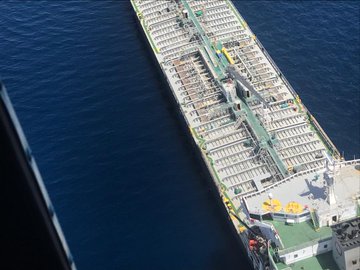
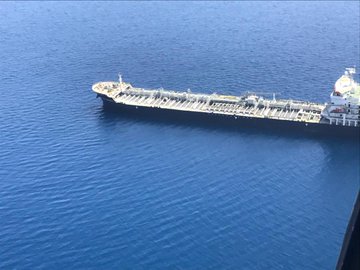
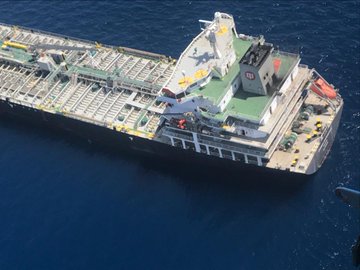
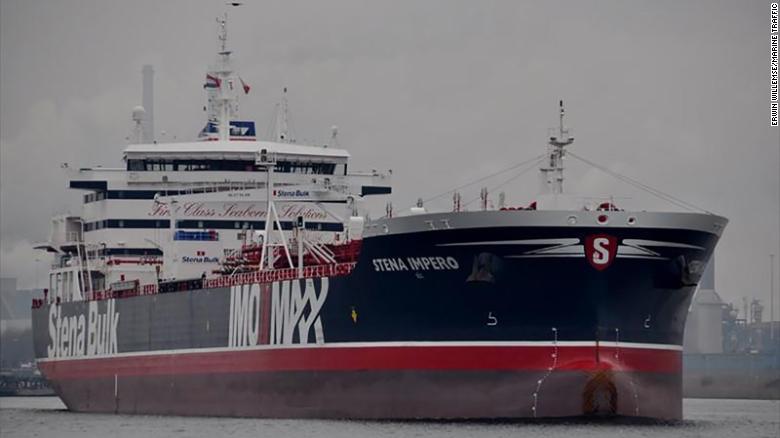
The British-flagged tanker “Steno Impero”, heading for Saudi Arabia, was seized on Friday, 19 July 2019, by the Islamic Revolutionary Guard Corps (IRGC), in the Strait of Hormuz, after it rammed an Iranian fishing boat, whose distress call it ignored.
The tanker was taken to an Iranian port, because it was not complying with “international maritime laws and regulations,” Iran’s Revolutionary Guard said. Most importantly, the ship did not respond to several warnings from helicopters and Iranian boats, as apparently it turned off its transponder. How could that happen under control of professional sailors, other than as an open provocation.
Shipping safety in the Strait of Hormuz is crucial. Between 20% and 30% of the world’s hydrocarbons are shipped through this narrow passage of international water way before entering the Gulf of Oman. The strait is closely watched by Iran, as it is of utmost security concern for Iran.If this passage were to be closed due to conflict, it could bring down the world economy.
Do those that play these provocations, the UK as a handler dancing to the strings pulled by of Washington, realize what’s at stake? – Do they want to bring the Middle East to the brink of war? A regional war that could easily convert into a world war? – That may well be the longer-term intention. In the short-run, though it looks like pushing the escalation to a point where US ‘Client Europe’ may be discouraged from insisting on maintaining their part of the Iran Nuclear deal, or the Joint Comprehensive Plan of Action (JCPOA), and to blackmail Iran into a bilateral negotiation with the US on Iran’s nuclear program.
The first objective may be achieved; the second – no way. Iran is not falling for such fraud, especially with the country that pulled unilaterally out of the deal that was negotiated for two years (since November 2013) before it was signed in Vienna, Austria on 14 July 2015, by the 5+1 (the five permanent members of the UN Security Council – China, France, Russia, UK and US – plus Germany  – and the European Union, and of course Iran).
Not only did President Trump, guided by his buddy, Israel’s Netanyahu, tear up the agreement unilaterally, but he also reinstated one of the most severe economic sanctions programs on Iran, plus all the western lies and smear propaganda launched against Iran. It is sheer insanity to believe that Iran would under these circumstances go to the negotiating table with her hangman. That will not happen. But war tensions are being further raised which is fully in the direction of the war criminal-in-chief, John Bolton’s dream, ever since the invasion in 2003 of Iraq which he also helped to engineer. It is like this sick man’s raison d’ĂȘtre. Mass killing by war and conflict is in his genes. The world can only hope that Trump, or those who pull the strings behind Trump, will eventually dismiss Bolton.

Iran has already said that they will launch a full investigation into the British tanker’s, Steno Impero’s, sailing off course and ramming a fishing boat – and that the UK is invited to participate in the investigation.

Backtracking to 4 July, when the British Royal Marines seized the Iranian tanker Grace 1 in Spanish waters, off the coast of Gibraltar, under the pretext that the super tanker was carrying oil destined for Syria which was under the EU’s sanction program. Iran’s Foreign Minister Javad Zarif, denied that the oil was destined for Syria; did however not elaborate further.
Spanish Foreign Minister, Mr. Josep Borrell, said that Washington informed Spain about the impending capture by the UK of the Iranian tanker in Spanish territorial waters. Spain could have said ‘no’ – but didn’t. Why not? Afraid of sanctions?
The UK did the bidding of Washington against her own interests, because the UK was one of three EU countries – Germany, France and UK – who at least made appear as if they wanted to preserve their part of the Iran Nuclear Deal. Mind you, this is not for love of Iran, but pure business interest. Iran should be aware of that – meaning, Iran could be shot in the back at any time by the EU, by the very countries that try – or make appear they try – to circumvent the US sanctions.
What happened on 4 July was an act of sheer piracy, nothing less. A crime on high seas which the west just tolerated. The vessel is still under British control, while the arrested crew has since been liberated. Aside from the fact that Iran’s capture of the British oil tanker may look like tit for tat – Iran acted fully legitimate, as it’s Revolutionary Guard is policing the Strait of Hormus for security of other ships sailing through the narrow passage.
In one of his typical outbreaks of a madman, President Trump warned in a televised ‘fire and fury’ speech at the white House on Friday 19 July, “We have the greatest ships – the most deadly ships, we don’t want to have to use them. We hope for [Iran’s] sake they don’t do anything foolish. If they do, they will pay a price like nobody’s ever paid.”

Why would Trump not use the same language to warn the Brits for their pirating an Iranian vessel in Spanish waters? – well, we know this is the crazy, unbalanced and off-kilter world we live in. Its so normal, people in the west take this imbalance and injustice, this double-talk and hypocrisy as the gospel.

All indications are however, while building up a war scene, the US are seeking justification for what they had already called out – an alliance of the willing to send war ships to the Straight of Hormus to assure safe passage for ‘everybody’. Well, this would certainly not fly with Iran. But important to know is what’s behind this idea. Imagine the US navy and her puppet allies controlling the sea passage through which almost a third of all the world’s hydrocarbon sails every day – Washington would have one more tool to sanction, strangle countries they feel do not bend enough to Washington’s dictate. Their oil shipment would be withheld, to bring their economy down – this might be the most effective weapon yet.
World beware! Even those who are in favors with the self-declared hegemon, you never know when the pendulum may swing the other way, simply because the Israel-driven US of A may be on a whim aggression course against an imaginary enemy, or corporate interests are shifting — in conclusion nobody would be safe – and, the world economy could come crashing down, like a house of cards, making 2008 look like a walk in the park.
Peter Koenig is an economist and geopolitical analyst. He is also a water resources and environmental specialist. He worked for over 30 years with the World Bank and the World Health Organization around the world in the fields of environment and water. He lectures at universities in the US, Europe and South America. He writes regularly for Global Research; ICH; RT; Sputnik; PressTV; The 21st Century; TeleSUR; The Saker Blog, the New Eastern Outlook (NEO); and other internet sites. He is the author of Implosion – An Economic Thriller about War, Environmental Destruction and Corporate Greed – fiction based on facts and on 30 years of World Bank experience around the globe. He is also a co-author of The World Order and Revolution! – Essays from the Resistance

Peter Koenig is a Research Associate of the Centre for Research on Globalization.

Thursday, July 25, 2019

‘US economic terrorism will backfire’: Iranian foreign minister calls for unity in Nicaragua

Video by Ben Norton

The Grayzone reports from Managua, the capital of Nicaragua, which just celebrated the 40th anniversary of the Sandinista Revolution that ousted a US-backed dictatorship.
Iran’s foreign minister, Javad Zarif, has just arrived here from Caracas, Venezuela, where he was attending the international summit of the new Non-Aligned Movement, where Iran, Nicaragua, and Venezuela, among other nations, were discussing ways to get around crippling US sanctions that are being imposed on all of these countries.
We asked Minister Zarif several questions about the US economic warfare and the recent seizure of several oil tankers.

Transcript

Ben Norton: Over a year ago now, the United States unilaterally withdrew from the JCPOA. In your meetings with European diplomats, do you get the sense that they’re actually committed to saving the deal? They say they are, but thus far they have not actually taken serious economic steps to try to work around US sanctions.
You also, minister, have just come from Caracas, where you were meeting with the Non-Aligned Movement. Are countries in the world that are suffering under unilateral US sanctions working to try to create new forms, new economic mechanisms to get around this unilateral economic warfare? And do you think that European countries are willing to be part of that, or have they subordinated their foreign policy to the United States?
Javad Zarif: I think the excessive use of economic power by the United States, and the excessive use of the dollar as a weapon in US economic terrorism against other countries, will backfire, sooner or later.
Countries are deciding to get away from the US dollar as a means of doing international transactions. Of course this will not happen tomorrow, but this will be a long-term process.
The INSTEX that the Europeans have created in order to conduct business with Iran may not have the desired impact for Iran, but it is in fact a very important alarm for the United States that people are getting away from focusing and using primarily the US dollars in their international transactions.
The same is happening between even US allies and US friends in our region and beyond our region.
Last year we did 35 percent of our bilateral transactions with Turkey in our own currencies. And this is happening between us and China, between us and India, between us and Russia, and between us and the countries in the region.
So it is important that we, who are subjects of US economic terrorism, so-called sanctions, understand the realities and understand our potential.
And we started yesterday in Caracas discussing these. And we are discussing the same with our Nicaraguan friends, in many areas. And I think the future is ours.
I think we want to live based on international law, the rule of law, the charter of the United Nations. And I think those who are running against these measures, those who want to revive the unilateralist measures of 20th and 19th century, are doomed to fail.
On European preparedness, I think the Europeans want to preserve JCPOA; I think the Europeans understand that they need to preserve JCPOA; I think the Europeans have realized that they cannot allow the United States to bully them.
But whether they are prepared to make the necessary investment in order to to achieve this goal is a different matter.
I have said time and again that you cannot swim without getting wet. The Europeans must be ready to invest for their own future. Not for us; we’re not asking anybody to invest for us.
If the Europeans want to be able to have a voice in international relations, then they need to invest in having that voice.
Max Blumenthal: It’s been widely reported, and the Spanish foreign minister has said, that the UK seized an Iranian oil tanker on orders from the United States, specifically from John Bolton. Does Iran’s retaliatory measures, seizing a British tanker which apparently entered Iranian waters, signal a lack of faith in the UK, which is a signatory of the Iran deal?
And of Europe in general, that it will not honor the Iran deal, and that it is being led by what you call the B Team, of Bolton, Bibi, bin Zayed, and bin Salman? And what does this mean for the future of Iranian and European relations?
Javad Zarif: When unfortunately it was very clear from the beginning that the excuses that the United Kingdom and the Gibraltar authorities provided for the confiscation of the ship that was carrying Iranian oil — it wasn’t an Iranian ship but it was a ship carrying Iranian oil — was clearly unfounded.
The EU does not apply its rules to third parties as a matter of principle. And the United Kingdom, on its way out of the EU, is becoming holier than the Pope, in doing things that the EU itself would not do, and has said publicly that it would not do.
So it was clear from the very beginning that the United Kingdom was doing the bidding for the Trump administration. This is not the first time that the United Kingdom started doing bidding for the United States administration.
As soon as President Trump got elected, and before he entered into office, the United Kingdom prevented implementation of agreements that we had reached with the previous government of the United States on behalf of President Trump. And the Iranian people have not forgotten that.
However, the measures that we took in the Strait of Hormuz against the US ship was not in retaliation, but was an implementation of international law.
What the Brits did, and what the Gibraltar authorities did, in the Strait of Gibraltar was a violation of international law, was piracy.
What we did was in order to implement the provisions of international law on safe passage. The UK ship had turned off its signalling for more than the time that it was allowed to do so; was passing through the wrong channels; endangering the safety and security of shipping and navigation in the Strait of Hormuz, for which we are responsible.
We have 1,500 miles of coastline in the Persian Gulf. We are responsible for the security and freedom of navigation in the Persian Gulf. That is our lifeline.
And it is much, much better for the United Kingdom not to be engaged in implementing the ploys of the B Team.
The B Team is losing ground in the United States, and now they are turning their attention to the United Kingdom.
I guess the same policies that failed in the US will fail in the United Kingdom.

Friday, June 28, 2019

Iran’s Strategy Of Reversible Escalation


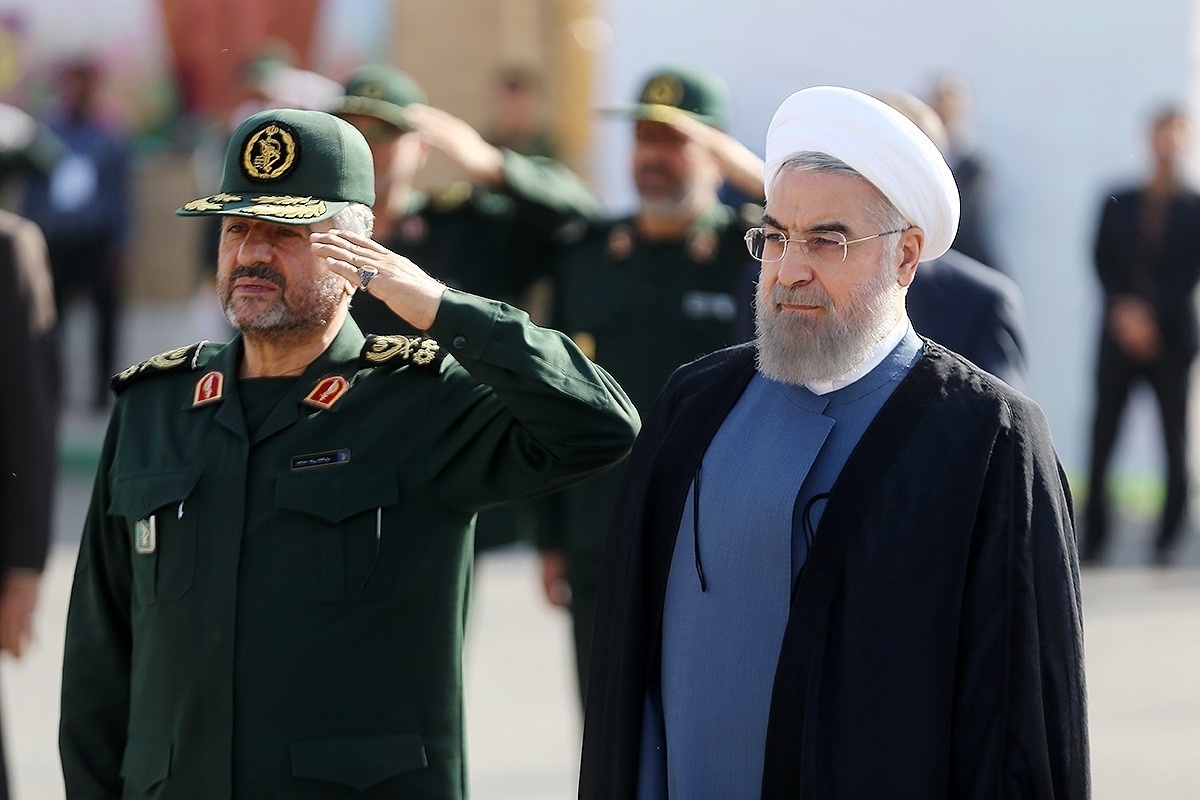
General Mohammad Ali Jafari of the Revolutionary Guards and Iranian President Hassan Rouhani
by Eldar Mamedov
In case anyone thought Iran was bluffing with its threats to respond robustly to U.S. “maximum pressure,” recent developments should have disabused them of that notion. Not only did Iran down a highly sophisticated American drone near its borders in the Persian Gulf, but it also announced plans to reduce its commitments under the nuclear deal (the Joint Comprehensive Plan of Action or JCPOA). The phase of strategic patience Iran exercised in the year after the United States violated the agreement has come to an end. It is now being replaced by an assertive action phase. That action will develop on two main fronts: the nuclear agreement and regional security.
Contrary to a popular view in the West, this shift is not the result of “hard-liners” displacing “moderates.” There is a job division within the Iranian system: diplomats deal with the nuclear dossier while the Revolutionary Guards lead on military deterrence. There is, however, an overarching unity of purpose: to strike back, with all means available, at what Iran sees as an economic war waged by the United States and its regional allies Saudi Arabia, the United Arab Emirates, and Israel.
Far from being an act of suicidal defiance by some irascible religious fanatic, Iran’s decision to respond to U.S. pressure follows from a set of careful strategic calculations and domestic political imperatives. After respecting fully their JCPOA commitments and being denied economic dividends, Iranians decided that they should not be the only ones paying the price of the American decision to violate that agreement.
On the nuclear file, the decision to surpass the stockpiles of 300 kilograms of low enriched uranium (LEU) permitted by the JCPOA by July 2019 is designed to pressure the Europeans to deliver on their commitments to provide economic benefits to Iran. Although the EU insists on full implementation of the JCPOA, reduced compliance is the best that Iran can offer at this stage. Such a decision is the result of a national compromise among different forces, including those calling for pulling out of the JCPOA and possibly even the Nuclear Non-Proliferation Treaty (NPT) as well.
The purpose of this move, according to Iranian officials, is not to destroy the JCPOA but to save it. As soon as Iranians get the promised sanctions relief, the process can be quickly reversed to a stockpile below 300 kilograms of LEU.  To get back to that point, a practical solution has to be found on Iranian oil exports. If European companies refrain from buying Iranian oil out of a fear of heavy American sanctions, officials in Tehran insist that the EU issue credit lines: make money available to Iran to cover its needs in exchange for oil deliveries after the lifting of the sanctions in the future. Iranians reason that if the EU indeed sees the JCPOA as essential to its security, as its officials often claim, it should put its money where its mouth is.
On the military side, Iran is increasing pressure on the United States to abandon its “maximum pressure” policy by seeking to impose real costs. Tehran’s downing an American drone should be seen in this context, not as an unprovoked hostile act. Although American drones reportedly violated Iranian territorial integrity in the past, the current context obliges Iranians to respond, at some point, publicly and visibly, as both a deterrent and a demonstration of their ability to defend their people and territory.
Trump’s announcement that he stopped a retaliatory strike and now looks forward for “negotiations without preconditions” with Iran might appear as an opportunity to arrest the slide to war. Not so in the eyes of the Iranian Revolutionary Guards. This, again, is not a sign of some pathological stubbornness or ideological anti-Americanism. It is simply because negotiating now would validate the basic premise of the “maximum pressure” campaign: that suffocating Iran economically has forced it to the negotiating table to make further concessions—this time also on ballistic missiles and regional policies, deliberately excluded from the JCPOA. Trump´s imposition of sanctions on top Iranian officials, including Ayatollah Khamenei and foreign minister Javad Zarif, only underscores the hollowness of his offer to talk.
So, as Washington doesn´t appear to be serious about lifting the economic siege of Iran, Tehran will seek to coerce it to do so. The downing of the drone is a message that Iran means business. Absent changes in American behavior, this may not be the last step in the series of Iranian escalations. Officials in Tehran have repeatedly warned that, if they are unable to export oil, no one else in the Persian Gulf will either.
Just like with the nuclear issue, however, this escalation is reversible if the United States takes steps to stop its economic war against Iran. That, and not more sanctions, could even open the door for the talks Trump claims to seek.  Ayatollah Khamenei made it clear that Iran would not negotiate “under pressure”—not that it would not do so under any circumstances. Potentially, that could even lead to broader talks on regional issues and ballistic missiles. But then all other issues will have to be brought to the table too, such as region-wide non-proliferation, covering Israel´s nuclear arsenal, Western arms sales to Saudi Arabia and the United Arab Emirates, the war in Yemen, and so on.
Although Iran’s strategy of reversible escalation enjoys a consensus among the elite, it is a risky one. Reducing commitments under the JCPOA may push Europeans closer to Trump, instead of stimulating them to deliver on their commitments to Iran, and increase Iran´s diplomatic isolation.
When it comes to United States, Iranians, particularly in the conservative camp, seem to be too sanguine about Trump not willing to start a war in order not to harm his re-election prospects in 2020. Despite the restraining influence of such figures on the American right as Senator Rand Paul and Fox TV anchor Tucker Carlson, Trump may still be painted into a corner by his hawkish advisers and lash out militarily at Iran.
When confronted with these doubts, Iranian officials seem to concede that their strategy is a gamble. However, a strong sense of being a wronged party, Iranian nationalism, and the regime´s revolutionary resistance ideology are preventing them from blinking first in their confrontation with the Americans. Whatever one thinks of the wisdom of such a posture given the existing balance of power, if the standoff ends up in a war, it will be America’s fault, not Iran’s.

Thursday, June 20, 2019

Trump admin aims to kill historic talks and strangle Iran with evidence-free accusations

By Ben Norton


Since entering office, the Donald Trump administration has been itching for a war on Iran. And it may have found an excuse to justify an escalation of military aggression — or at least kill independent international attempts at diplomacy with Tehran.
On the morning of Thursday, June 13, two oil tankers were allegedly attacked in the Gulf of Oman, just off the coast of Iran. The US government immediately blamed Iran for the incident, without providing any evidence.
The vessels happened to be en route to Japan at precisely the same time that Japanese Prime Minister Shinzo Abe was in Tehran. The first Japanese leader to visit Iran since its revolution 40 years ago, Abe was holding a historic meeting with Ayatollah Ali Khamenei when the incident took place.
This coincidence did not escape Iran’s foreign minister, Javad Zarif, who said, “Suspicious doesn’t begin to describe what likely transpired this morning,” and reiterated a call for regional dialogue and cooperation.
Prominent Iran expert Trita Parsi noted that the timing of the suspicious attacks suggests that there is fear in Washington that efforts at Iran-Japan diplomacy might succeed in softening the de facto US-led economic blockade of Tehran.
Since Trump illegally sabotaged the international Iran nuclear deal (known officially as the JCPOA) in May 2018, the US government has striven to isolate Iran and suffocate its economy by preventing the country from exporting oil, importing food and medicine, and trading with foreign nations.
The Trump administration has even threatened close ally Japan, the world’s fourth-largest consumer of oil, with secondary sanctions, forcing the country to halt Iranian oil imports.
Concerns that the Trump administration has been fretting about a potential Iranian diplomatic breakthrough with Japan were validated by the US response.
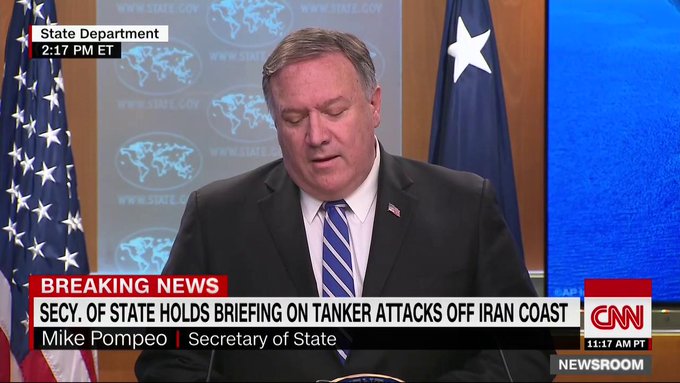
Secretary of State and former CIA director Mike Pompeoimmediately pointed the finger at Tehran, calling the alleged attacks “a threat to international peace and security, a blatant assault on the freedom of navigation, and an unacceptable escalation of tension by Iran.”
Saudi Arabia and its regime media went into overdrive amplifying the Trump administration’s accusations against Iran.
Many Western corporate media outlets, too, lazily echoed the US government’s unsubstantiated claims. The New York Times, for example, published a breaking piece headlined, “Pompeo Says Intelligence Points to Iran in Tanker Attack in Gulf of Oman.”
The Times did concede, however, that “Pompeo did not present any evidence to back up the assessment of Iran’s involvement.”
And several mainstream media outlets actually diverged from their traditional pro-war stances and expressed cautious skepticism about the secretary of state’s unproven accusations.
Surprisingly, CNNNPR, and The Independent stressed that Pompeo provided no evidence for his claims.
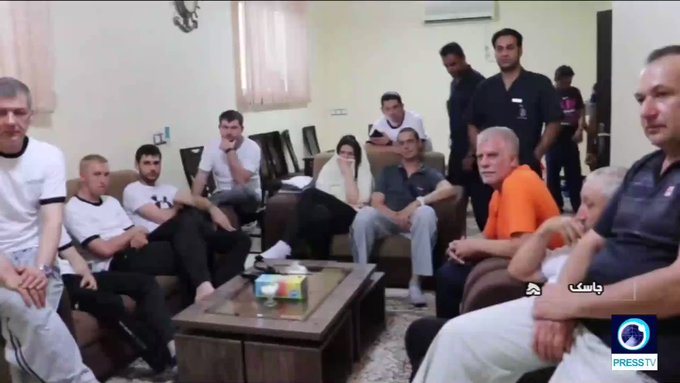
Iran’s Press TV outlet published video of what it said were crew members of one of the tankers who had been saved by an Iranian rescue team.
The Iranian government-backed channel accused the Trump administration of exploiting incidents like this “to wage war.”
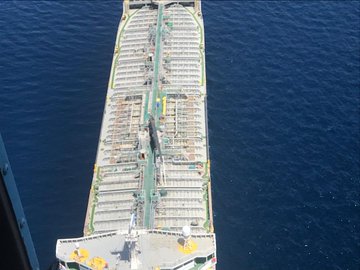
Press TV also tweeted photos of one of the tankers hours after the alleged attack, noting that the vessel was unharmed and the fire had been put out.
These facts nevertheless did not stop notorious war hawks and neoconservatives from beating the drum of war.
Fanatical anti-Muslim activist Brigitte Gabriel bizarrely described the incident as “an attack on the United States.”
Neoconservative commentator Michael Weiss, who has spent the past eight years pushing for regime change in Syria, implied the alleged attacks were proof that Iran is a “threat.”
Neoconservative Senator Marco Rubio, who has spent the past five months heavily lobbying for US military intervention in Venezuela, quickly turned his attention to Iran. He pointed the finger at the IRGC’s Quds Force, without citing any evidence.
Rubio also berated skeptics, insisting it would not “make sense” for any other actor to carry out the alleged attacks.
The US government has previously blamed Iran for alleged attacks on oil tankers, again without providing any evidence. In May, two Saudi vessels were attacked, and the Trump administration immediately accused Tehran — but in reality this attack was mostly likely carried out by Yemen’s Houthi movement, which governs northern Yemen and has been fighting a defensive war against US-backed Saudi and Emirati forces since March 2015.
Many observers noted how the Trump administration’s unsubstantiated accusations against Iran are eerily reminiscent of the 1964 Gulf of Tonkin incident, in which the US government and a compliant corporate press sold lies to the public to justify a war of aggression on Vietnam.
It is certainly possible that Washington could exploit these supposed attacks to justify a war on Iran. But it is just as likely that the Trump administration could hope to use this incident to try to pressure Japan to halt its historic negotiations with Tehran.
Donald Trump unilaterally withdrew from the JCPOA in May 2018, blatantly violating a UN Security Council resolution and sabotaging an international deal that had been negotiated by China, Russia, Britain, France, Germany, and the European Union.
The far-right president has also surrounded himself with anti-Iran hawks, including Pompeo and neoconservative national security adviser John Bolton, who has spent years lobbying for war on Iran.
Trump has made it clear that his goal is to pressure Iran to renegotiate a nuclear deal with the United States, and is using a “maximum pressure” campaign to force Tehran to submit to Washington’s diktat.
On June 13, Ayatollah Khamenei reiterated that he rejected Trump’s offer to discuss a new agreement, stating, “I do not consider Trump as a person worth exchanging any message with.”
In the meantime, longtime US proxy Saudi Arabia stands to benefit from the escalating aggression. Oil prices immediately spiked in response to the alleged attacks on the tankers, enriching oil producers such as the viciously anti-Iran Saudi monarchy.