Showing posts with label Nicaragua. Show all posts

Sunday, November 17, 2019

Consequences of the Trump coup in Bolivia

By Hanif Ghaffari

The recent US government coup in Bolivia will have severe consequences for Washington and its allies. This coup will not only weaken socialism and anti-imperialism in Central America and South America, but will also strengthen the opposition of the United States in Latin America.
The presence of White House opponents in the governments of Venezuela, Cuba, and Nicaragua has led White House officials to officially name them the "Triangle of Evil" and to refrain from any direct confrontation with these governments and their people. Trump's continued effort to overthrow Maduro's government in Caracas is an indication of this fact. However, the recent victory of Bolivia's Evo Morales and the victory of Fernandez, an anti-American left-wing candidate in Argentina's general election, shocked the White House. . These were indicative of Trump's total failure to deal with anti-imperialist currents in Latin America. The US president, who has been contemplating the collapse of the Cuban, Venezuelan and Nicaraguan governments since his inauguration, has not only achieved this goal but has witnessed the spread of American opposition in other countries. He did a stupid act and designed and executed a coup in Bolivia.
The President of the United States knows very well how expensive his recent move to Bolivia will be for Washington, yet Trump has shown that he always makes the worst decisions at the White House!
Anti-imperialist currents are rooted in Latin America. Leaders such as Castro, Che Guevara, Ortega, Hugo Chavez, and Morales have maintained anti-imperialism through their actions over the years and decades and past decades.
Undoubtedly, American fascism will not eventually open up to the citizens of the countries in the region. In the very near future, institutionalized socialism in Bolivia will overturn American fascism and end the life of this deterrent, dangerous Western thinking. It must be remembered that today the confrontation with US domination is not limited to countries such as Venezuela, Cuba and Nicaragua and anti-American currents are intensely active in countries such as Chile, Ecuador, Peru, Argentina, and Bolivia. Trump's recent move in Bolivia will further awaken these currents to Washington and its allies.

Monday, July 29, 2019

America’s Enemies, Who’s On the List?

Prospects and Perspectives

For almost 2 decades, the US pursued a list of ‘enemy countries’ to confront, attack, weaken and overthrow. 
This imperial quest to overthrow ‘enemy countries’ operated at various levels of intensity, depending on two considerations:  the level of priority and the degree of vulnerability for a ‘regime change’ operation.
The criteria for determining an ‘enemy country’ and its place on the list of priority targets in the US quest for greater global dominance, as well as its vulnerability to a ‘successfully’ regime change will be the focus of this essay.
We will conclude by discussing the realistic perspectives of future imperial options.
Prioritizing US Adversaries
Imperial strategists consider military, economic and political criteria in identifying high priority adversaries.
The following are high on the US ‘enemy list’:
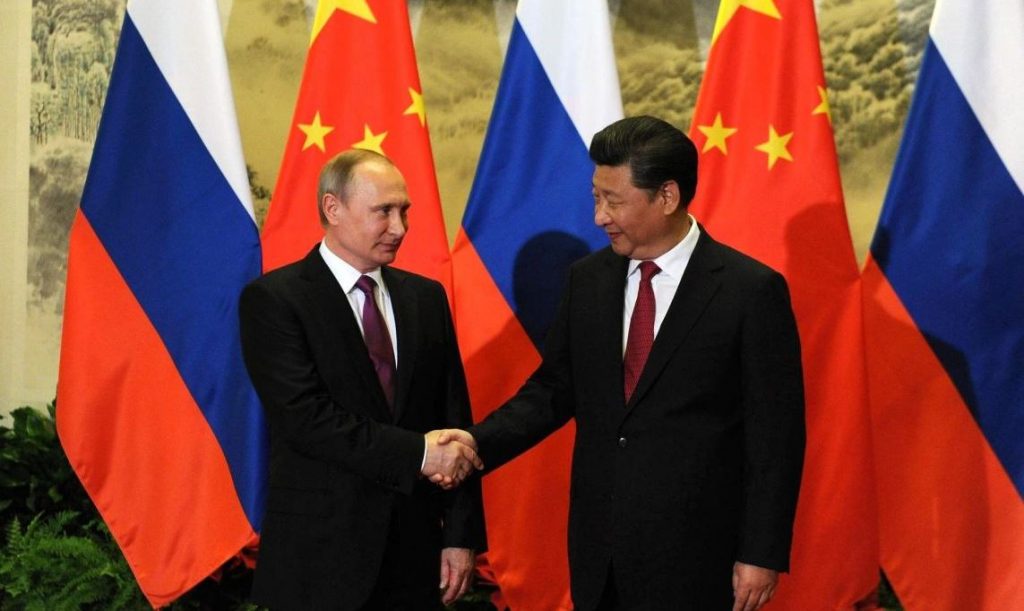
1) Russia, because of its military power, is a nuclear counterweight to US global domination.  It has a huge, well-equipped armed force with a European, Asian and Middle East presence.  Its global oil and gas resources shield it from US economic blackmail and its growing geo-political alliances limit US expansion.
2) China, because of its global economic power and the growing scope of its trade, investment and technological networks.  China’s growing defensive military capability, particularly with regard to protecting its interests in the South China Sea serve to counter US domination in Asia.
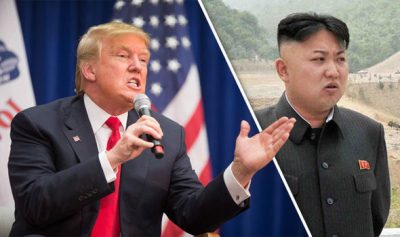
3) North Korea, because of its nuclear and ballistic missile capability, its fierce independent foreign policies and its strategic geo-political location, is seen as a threat to the US military bases in Asia and Washington’s regional allies and proxies.
4) Venezuela, because of its oil resources and socio-political policies, challenge the US centered neo-liberal model in Latin America.
5) Iran, because of its oil resources, political independence and geo-political alliances in the Middle East, challenge US, Israeli and Saudi Arabia domination of the region and present an independent alternative.
6) Syria, because of its strategic position in the Middle East, its secular nationalist ruling party and its alliances with Iran, Palestine, Iraq and Russia, is a counterweight to US-Israeli plans to balkanize the Middle East into warring ethno-tribal states.
US  Middle-level Adversaries :
1)  Cuba, because of its independent foreign policies and its alternative socio-economic system stands in contrast to the US-centered neo-liberal regimes in the Caribbean, Central and South America.
2) Lebanon, because of its strategic location on the Mediterranean and the coalition government’s power sharing arrangement with the political party, Hezbollah, which is increasingly influential in Lebanese civil society in part because of its militia’s proven capacity to protect Lebanese national sovereignty by expelling the invading Israeli army and helping to defeat the ISIS/al Queda mercenaries in neighboring Syria.
3) Yemen, because of its independent, nationalist Houthi-led movement opposed to the Saudi-imposed puppet government as well as its relations with Iran.
Low Level Adversaries
1) Bolivia, because of its independent foreign policy, support for the Chavista government in Venezuela and advocacy of a mixed economy;  mining wealth and  defense of indigenous people’s territorial claims.
2) Nicaragua, because of its independent foreign policy and criticism of US aggression toward Cuba and Venezuela.
US hostility to high priority adversaries is expressed through economic sanctions military encirclement, provocations and intense propaganda wars toward North Korea, Russia, Venezuela, Iran and Syria.
Because of China’s powerful global market linkages, the US has applied few sanctions.  Instead, the US relies on military encirclement, separatist provocations and intense hostile propaganda when dealing with China.
Priority Adversaries, Low Vulnerability and Unreal Expectations
With the exception of Venezuela, Washington’s ‘high priority targets’ have limited strategic vulnerabilities. Venezuela is the most vulnerable because of its high dependence on oil revenues with its major refineries located in the US, and its high levels of indebtedness, verging on default.   In addition, there are the domestic opposition groups, all acting as US clients and Caracas’ growing isolation within Latin America due to orchestrated hostility by important US clients, Argentina, Brazil, Colombia and Mexico.
Iran is far less vulnerable: It is a strong strategic regional military power linked to neighboring countries and similar religious-nationalist movements.  Despite its dependence on oil exports, Iran has developed alternative markets, like China, free from US blackmail and is relatively safe from US or EU initiated creditor attacks.
North Korea, despite the crippling economic sanctions imposed on its regime and civilian population, has ‘the bomb’ as a deterrent to a US military attack and has shown no reluctance to defend itself.  Unlike Venezuela, neither Iran nor North Korea face significant internal attacks from US-funded or armed domestic opposition.
Russia has full military capacity – nuclear weapons, ICBM and a huge, well-trained armed force – to deter any direct US military threat.  Moscow is politically vulnerable to US-backed propaganda, opposition political parties and Western-funded NGO’s.  Russian oligarch-billionaires, linked to London and Wall Street, exercise some pressure against independent economic initiatives.
To a limited degree, US sanctions exploited Russia’s earlier dependence on Western markets, butsince the imposition of draconian sanctions by the Obama regime, Moscow has effectively counteredWashington’s offensive by diversifying its markets to Asia and strengthening domestic self-reliance in its agriculture, industry and high technology.
China has a world-class economy and is on course to become the world’s economic leader.  Feeble threats to ‘sanction’ China have merely exposed Washington’s weakness rather intimidating Beijing.  China has countered US military provocations and threats by expanding its economic market power, increasing its strategic military capacity and shedding dependence on the dollar.
Washington’s high priority targets are not vulnerable to frontal attack: They retain or are increasing their domestic cohesion and economic networks, while upgrading their military capacity to impose completely unacceptable costs on the US for any direct assault.
As a result, the US leaders are forced to rely on incremental, peripheral and proxy attacks with limited results against its high priority adversaries.
Washington will tighten sanctions on North Korea and Venezuela, with dubious prospects of success in the former and a possible pyrrhic victory in the case of Caracas. Iran and Russia can easily overcome proxy interventions.  US allies, like Saudi Arabia and Israel, can badger, propagandize and rail the Persians, but their fears that an out-and-out war against Iran, could quickly destroy Riyadh and Tel Aviv forces them to work in tandem to induce the corrupt US political establishment to push for war over the objections of a war-weary US military and population. Saudi and Israelis can bomb and starve the populations of Yemen and Gaza, which lack any capacity to reply in kind, but Teheran is another matter.
The politicians and propagandists in Washington can blather about Russia’s interference in the US’s corrupt electoral theater and scuttle moves to improve diplomatic ties, but they cannot counter Russia’s growing influence in the Middle East and its expanding trade with Asia, especially China.
In summary, at the global level, the US ‘priority’ targets are unattainable and invulnerable.  In the midst of the on-going inter-elite dogfight within the US, it may be too much to hope for the emergence of any rational policymakers in Washington who could rethink strategic priorities and calibrate policies of mutual accommodation to fit in with global realities.
Medium and Low Priorities, Vulnerabilities and Expectations
Washington can intervene and perhaps inflict severe damage on middle and low priority countries.  However, there are several drawbacks to a full-scale attack.
Yemen, Cuba, Lebanon, Bolivia and Syria are not nations capable of shaping global political and economic alignments.  The most the US can secure in these vulnerable countries are destructive regime changes with massive loss of life, infrastructure and millions of desperate refugees . . . but at great political cost, with prolonged instability and with severe economic losses.
Yemen
The US can push for a total Saudi Royal victory over the starving, cholera-stricken people of Yemen.  But who benefits?  Saudi Arabia is in the midst of a palace upheaval and has no ability to exercise hegemony, despite hundreds of billions of  dollars of US/NATO arms, trainers and bases.  Colonial occupations are costly and yield few, if any, economic benefits, especially from a poor, geographically isolated devastated nation like Yemen.
Cuba
Cuba has a powerful highly professional military backed by a million-member militia.  They are capable of prolonged resistance and can count on international support.  A US invasion of Cuba would require a prolonged occupation and heavy losses.  Decades of economic sanctions haven’t worked and their re-imposition by Trump have not affected the key tourist growth sectors.
President Trump’s ‘symbolic hostility’ does not cut any ice with the major US agro-business groups, which saw Cuba as a market. Over half of the so-called ‘overseas Cubans’ now oppose direct US intervention.
US-funded NGOs can provide some marginal propaganda points but they cannot reverse popular support for Cuba’s mixed ‘socialized’ economy, its excellent public education and health care and its independent foreign policy.
Lebanon
A joint US-Saudi economic blockade and Israeli bombs can destabilize Lebanon.  However, a full-scale prolonged Israeli invasion will cost Jewish lives and foment domestic unrest.  Hezbollah has missiles to counter Israeli bombs.  The Saudi economic blockade will radicalize Lebanese nationalists, especially among the Shia and the Christian populations.  The Washington’s ‘invasion’ of Libya, which did not lose a single US soldier, demonstrates that destructive invasions result in long-term, continent-wide chaos.
A US-Israeli-Saudi war would totally destroy Lebanon but it will destabilize the region and exacerbate conflicts in neighboring countries – Syria, Iran and possibly Iraq.  And Europe will be flooded with millions more desperate refugees.
Syria
The US-Saudi proxy war in Syria suffered serious defeats and the loss of political assets.  Russia gained influence, bases and allies.  Syria retained its sovereignty and forged a battle-hardened national armed force.  Washington can sanction Syria, grab some bases in a few phony ‘Kurdish enclaves’ but it will not advance beyond a stalemate and will be widely viewed as an occupying invader.
Syria is vulnerable and continues to be a middle-range target on the US enemy list but it offers few prospects of advancing US imperial power, beyond some limited ties with an unstable Kurd enclave, susceptible to internecine warfare, and risking major Turkish retaliation.
Bolivia and Nicaragua
Bolivia and Nicaragua are minor irritants on the US enemy list. US regional policymakers recognize that neither country exercises global or even regional power.  Moreover, both regimes rejected radical politics in practice and co-exist with powerful and influential local oligarchs and international MNC’s linked to the US.
Their foreign policy critiques, which are mostly for domestic consumption, are neutralized by the near total US influence in the OAS and the major neo-liberal regimes in Latin America.  It appears that the US will accommodate these marginalized rhetorical adversaries rather than risk provoking any revival of radical nationalist or socialist mass movements erupting in La Paz or Managua.
Conclusion
A brief examination of Washington’s ‘list of enemies’ reveals that the limited chances of success even among vulnerable targets.  Clearly, in this evolving world power configuration, US money and markets will not alter the power equation.
US allies, like Saudi Arabia, spend enormous amounts of money attacking a devastated nation, but they destroy markets while losing wars.  Powerful adversaries, like China, Russia and Iran, are not vulnerable and offer the Pentagon few prospects of military conquest in the foreseeable future.
Sanctions, or economic wars have failed to subdue adversaries in North Korea, Russia, Cuba and Iran.  The ‘enemy list’ has cost the US prestige, money and markets – a very peculiar imperialist balance sheet.  Russia now exceeds the US in wheat production and exports.  Gone are the days when US agro-exports dominated world trade including trade with Moscow.
Enemy lists are easy to compose, but effective policies are difficult to implement against rivals with dynamic economies and powerful military preparedness.
The US would regain some of its credibility if it operated within the contexts of global realities and pursued a win-win agenda instead of remaining a consistent loser in a zero-sum game.
Rational leaders could negotiate reciprocal trade agreements with China, which would develop high tech, finance and agro-commercial ties with manufacturers and services.  Rational leaders could develop joint Middle East economic and peace agreements, recognizing the reality of a Russian-Iranian-Lebanese Hezbollah and Syrian alliance.
As it stands, Washington’s ‘enemy list’ continues to be composed and imposed by its own irrational leaders, pro-Israel maniacs and Russophobes in the Democratic Party – with no acknowledgement of current realities.
For Americans, the list of domestic enemies is long and well known, what we lack is a civilian political leadership to replace these serial mis-leaders.

Sunday, July 28, 2019

Iranian Foreign Minister Calls for Global Unity Against US Radical Unilateralism

Iranian Foreign Minister Calls for Global Unity Against US Radical Unilateralism
by Stephen Lendman

US rage to control other nations, their resources and populations is the greatest threat to world peace, stability and security.

Its imperial agenda threatens everyone everywhere, risking potential destruction of planet earth to own it, all life forms endangered by its rage.

Bipartisan US ruling authorities, including congressional war party leaders, want pro-Western puppet regimes installed everywhere, sovereign independence of all nations eliminated.

They want ruler-serf societies everywhere they control, US-dominated NATO transformed into a global military on every continent - enforcing US interests, along with official narrative mind control, alternative views eliminated.

They want global societies unfit and unsafe to live in, US-headquartered masters of the universe enforcing the will of Wall Street; the military, industrial, security, controlled media complex; and other corporate predators.
Orwell's 1984 no longer is fiction. Big Brother watches everyone. Endless wars rage against invented enemies, planned new ones on the drawing board to be launched at the whim of the US ruling class.

The nation I grew up in long ago no longer exists. The American dream members of my generation enjoyed is gone. You have to be asleep to believe otherwise, the late George Carlin explained.

An increasingly totalitarian/tyrannical oligarchic plutocracy replaced the US of my youth - intolerant of democratic values and the rule of law everywhere, especially not at home.
Iranian Foreign Minister Zarif is participating in the July 20-21 Ministerial Meeting of the Coordination Bureau of the Non-Aligned Movement (NAM), taking place in Caracas - Venezuela the host country, enhancing the Bolivarian Republic's sovereign independence and prestige on the world stage.

Some 120 nations comprise the NAM, two-thirds of UN member states.
The organization was established in 1961, an initiative of Indian Prime Minister Jawaharlal Nehru and Yugoslav President Josip Broz Tito.
In his 1979 Havana Declaration, Fidel Castro defined the organization's purpose, saying the following.

It's to insure "the national independence, sovereignty, territorial integrity, and security of non-aligned countries (in their) struggle against imperialism, colonialism, neo-colonialism, racism, and all forms of foreign aggression, occupation, domination, interference or hegemony, as well as against great power and bloc politics."

NAM's founding Declaration said "(p)eace cannot achieved with separation, but with the aspiration towards collective security in global terms and expansion of freedom, as well as terminating the domination of one country over another."

The movement's five principles include:

Mutual respect for each other's territorial integrity and sovereignty.

Mutual non-aggression.

Mutual non-interference in domestic affairs.

Equality and mutual benefit.

Peaceful co-existence.

All of the above are contrary to the imperial aims of US-dominated NATO and partners.
NAM member state ministers are discussing international law principles, the right of sovereign independence for all nations, decolonization processes, Venezuelan and Iranian resistance against US aggression, along with other relevant topics.

Iran's Foreign Minister Zarif sounded the alarm about what he called a "new wave of US radical unilateralism," the world community of nations threatened by its rage for global dominance - pursued by economic, financial, trade, sanctions, and preemptive hot wars.
"This challenge is weakening the rule of law in the world and is threatening global peace and stability," Zarif stressed, adding:

"Even many US allies are being exposed to the unprecedented US interference in their internal affairs."

Zarif called for NAM member states to "resist this new (US) wave and push it back." He hailed Iran's "pioneering in resisting (US) economic terrorism."

"Our sincere efforts to respond to unfounded concerns about our peaceful nuclear program is one of the many victims of the new unilateralism," he stressed. 

He slammed the Trump regime's aim "to push the nuclear deal to the brink of collapse despite the world's investment in" preserving it, adding:

"Not only did the US violate the UNSC resolution, but also has sanctioned the countries that wanted to stick to the agreement" - namely Iran, Russia and China.

Zarif expressed solidarity with Venezuela's democratically elected and reelected President Maduro.

He denounced Trump and Netanyahu regime aims to deny Palestinians their universally recognized right of self-determination.

The US "brings insecurity and instability to anywhere it sets foot. Today it has taken insecurity to the Persian Gulf, Middle East, as well as South and Latin America by its presence," he stressed, adding:

"We don't know anywhere in the world to which US presence has brought stability. Anywhere they have set foot, they caused extremism and terrorism and put people under pressure."

While in Latin America, Zarif will also visit Nicaragua and Bolivia to express solidarity with their sovereign independence and leadership.

He warned Trump regime hardliners against "playing with Iran. We always respond...We say you may start a war, but you won't be the ones who end it" - adding loud and clear:
"We will survive. We will prosper long after...Trump is gone. Our time slots are in millennia."

Friday, July 26, 2019

Zarif lauds his fruiful diplomatic trip

Zarif lauds his fruiful diplomatic trip

Tehran, July 26, IRNA - Iranian foreign minister sent a message on the way back home and hailed hisfruitful tour to UN, Venezuela, Bolivia, Senegal and Nicaragua.
"On my way back to Tehran after fruitful diplomatic trip—to the UN in NY, attending NAM conference in Caracas; visiting Venezuela, Nicaragua, Bolivia, and finally Senegal," Mohammad Javad Zarif tweeted on Friday.
Zarif arrived in Dakar, Senegal, early on Thursday in the context of intensive diplomatic campaign against the US economic terrorism against Iran.
Zarif's day-long visit to Senegal is taking place in continuation of his diplomatic tour to the Latin American countries.
After attending United Nations Economic and Social Council in New York, Zarif traveled to Venezuela to take part in the Non-Aligned Movement (NAM) ministerial meeting.
Then, the Iranian foreign minister left for Nicaragua and Bolivia.
During his visits, Zarif held talks with top officials of the Latin American states, including presidents and parliament speakers of those countries.

Thursday, July 25, 2019

‘US economic terrorism will backfire’: Iranian foreign minister calls for unity in Nicaragua

Video by Ben Norton

The Grayzone reports from Managua, the capital of Nicaragua, which just celebrated the 40th anniversary of the Sandinista Revolution that ousted a US-backed dictatorship.
Iran’s foreign minister, Javad Zarif, has just arrived here from Caracas, Venezuela, where he was attending the international summit of the new Non-Aligned Movement, where Iran, Nicaragua, and Venezuela, among other nations, were discussing ways to get around crippling US sanctions that are being imposed on all of these countries.
We asked Minister Zarif several questions about the US economic warfare and the recent seizure of several oil tankers.

Transcript

Ben Norton: Over a year ago now, the United States unilaterally withdrew from the JCPOA. In your meetings with European diplomats, do you get the sense that they’re actually committed to saving the deal? They say they are, but thus far they have not actually taken serious economic steps to try to work around US sanctions.
You also, minister, have just come from Caracas, where you were meeting with the Non-Aligned Movement. Are countries in the world that are suffering under unilateral US sanctions working to try to create new forms, new economic mechanisms to get around this unilateral economic warfare? And do you think that European countries are willing to be part of that, or have they subordinated their foreign policy to the United States?
Javad Zarif: I think the excessive use of economic power by the United States, and the excessive use of the dollar as a weapon in US economic terrorism against other countries, will backfire, sooner or later.
Countries are deciding to get away from the US dollar as a means of doing international transactions. Of course this will not happen tomorrow, but this will be a long-term process.
The INSTEX that the Europeans have created in order to conduct business with Iran may not have the desired impact for Iran, but it is in fact a very important alarm for the United States that people are getting away from focusing and using primarily the US dollars in their international transactions.
The same is happening between even US allies and US friends in our region and beyond our region.
Last year we did 35 percent of our bilateral transactions with Turkey in our own currencies. And this is happening between us and China, between us and India, between us and Russia, and between us and the countries in the region.
So it is important that we, who are subjects of US economic terrorism, so-called sanctions, understand the realities and understand our potential.
And we started yesterday in Caracas discussing these. And we are discussing the same with our Nicaraguan friends, in many areas. And I think the future is ours.
I think we want to live based on international law, the rule of law, the charter of the United Nations. And I think those who are running against these measures, those who want to revive the unilateralist measures of 20th and 19th century, are doomed to fail.
On European preparedness, I think the Europeans want to preserve JCPOA; I think the Europeans understand that they need to preserve JCPOA; I think the Europeans have realized that they cannot allow the United States to bully them.
But whether they are prepared to make the necessary investment in order to to achieve this goal is a different matter.
I have said time and again that you cannot swim without getting wet. The Europeans must be ready to invest for their own future. Not for us; we’re not asking anybody to invest for us.
If the Europeans want to be able to have a voice in international relations, then they need to invest in having that voice.
Max Blumenthal: It’s been widely reported, and the Spanish foreign minister has said, that the UK seized an Iranian oil tanker on orders from the United States, specifically from John Bolton. Does Iran’s retaliatory measures, seizing a British tanker which apparently entered Iranian waters, signal a lack of faith in the UK, which is a signatory of the Iran deal?
And of Europe in general, that it will not honor the Iran deal, and that it is being led by what you call the B Team, of Bolton, Bibi, bin Zayed, and bin Salman? And what does this mean for the future of Iranian and European relations?
Javad Zarif: When unfortunately it was very clear from the beginning that the excuses that the United Kingdom and the Gibraltar authorities provided for the confiscation of the ship that was carrying Iranian oil — it wasn’t an Iranian ship but it was a ship carrying Iranian oil — was clearly unfounded.
The EU does not apply its rules to third parties as a matter of principle. And the United Kingdom, on its way out of the EU, is becoming holier than the Pope, in doing things that the EU itself would not do, and has said publicly that it would not do.
So it was clear from the very beginning that the United Kingdom was doing the bidding for the Trump administration. This is not the first time that the United Kingdom started doing bidding for the United States administration.
As soon as President Trump got elected, and before he entered into office, the United Kingdom prevented implementation of agreements that we had reached with the previous government of the United States on behalf of President Trump. And the Iranian people have not forgotten that.
However, the measures that we took in the Strait of Hormuz against the US ship was not in retaliation, but was an implementation of international law.
What the Brits did, and what the Gibraltar authorities did, in the Strait of Gibraltar was a violation of international law, was piracy.
What we did was in order to implement the provisions of international law on safe passage. The UK ship had turned off its signalling for more than the time that it was allowed to do so; was passing through the wrong channels; endangering the safety and security of shipping and navigation in the Strait of Hormuz, for which we are responsible.
We have 1,500 miles of coastline in the Persian Gulf. We are responsible for the security and freedom of navigation in the Persian Gulf. That is our lifeline.
And it is much, much better for the United Kingdom not to be engaged in implementing the ploys of the B Team.
The B Team is losing ground in the United States, and now they are turning their attention to the United Kingdom.
I guess the same policies that failed in the US will fail in the United Kingdom.