
Venezuela, the Monroe Doctrine, and the Challenge to America’s Traditional Order in Latin America
Hojjat Soltani, former Iranian ambassador to Venezuela, in an interview with the Strategic Council on Foreign Relations website regarding the United States’ strategic objectives in attacking Venezuela, stated that the U.S. undoubtedly has long-term goals in attacking this country. He said: “Based on the Monroe Doctrine, the United States claims that Venezuela, as a country located in the backyard of the United States, should be under Washington’s management. However, Venezuela, especially in recent years, has acted contrary to this American demand.”
He added: “In recent years, Venezuela has established various interactions, particularly economic ones, with China and Russia. Certainly, this policy has not been satisfactory to the Americans. Moreover, a significant portion of Venezuela’s oil has been directed to China in recent years, and Beijing has cooperated with Venezuela in the areas of oil exploration and extraction, as well as in defense cooperation.”
He further emphasized: “China is considered the primary trading partner not only for Venezuela but for all of Latin America, surpassing the United States. Naturally, the Americans are dissatisfied with this matter.”
This expert on Latin American affairs, referring to the United States’ desire and objective to seize Venezuela’s rich resources, said: “Dominating Venezuela’s resources is another goal of the United States in attacking this country. These are issues that American officials have explicitly and officially acknowledged. U.S. officials have clearly stated that they seek to reestablish control over Venezuela’s oil, gas, and other resources.”
The former Iranian ambassador to Venezuela emphasized: “I believe that the attack on Venezuela should be seen as part of the puzzle of power projection and the United States’ efforts to restore its dominance and hegemony over the international arena, not merely the Latin American region.”
Competition Among Major Powers and Venezuela’s Position in the Transitional International Order
Soltani said: “In the competition among major powers, on one hand, we witness intense efforts by the United States to present itself as a superpower in the world. On the other hand, other countries, power circles, and regional organizations such as BRICS and the Shanghai Cooperation Organization, along with Russia and China, are trying to challenge the United States in various political, economic, and security dimensions.”
Regarding Venezuela’s political and military response to the U.S. attack, he said: “According to the Venezuelan government’s statement, a state of emergency has been declared for now, and a mobilization of armed and popular forces has been called.”
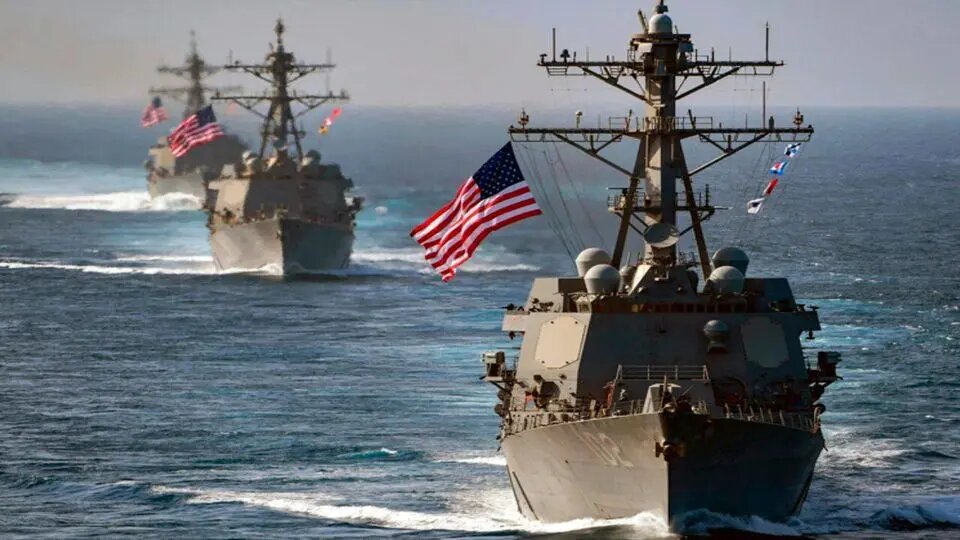
Soltani said: “The Trump administration has deployed U.S. military equipment in the Caribbean Sea for over four months and felt that it needed to take action, even if only to preserve its own image. How the situation will unfold in Caracas remains to be seen in reality, as part of the hybrid war by the United States and the West against this country involves manipulating public opinion and weakening the morale of the Venezuelan people and government.”
Regarding the response of China and Russia to the U.S. attack on Venezuela, he emphasized: “China and Russia have previously shown that they politically condemn this action and will demand an emergency meeting of the Security Council regarding this matter. After all, these two countries and the members of the Security Council are responsible for maintaining international peace and security and, as major members with veto power, play an important role in this regard. They should not allow the United States to violate international regulations and the sovereignty and territorial integrity of other countries without being held accountable.”

No comments:
Post a Comment