
Hongda Fan warns U.S. and Israeli interference could reshape regional alliances and intensify security rivalries
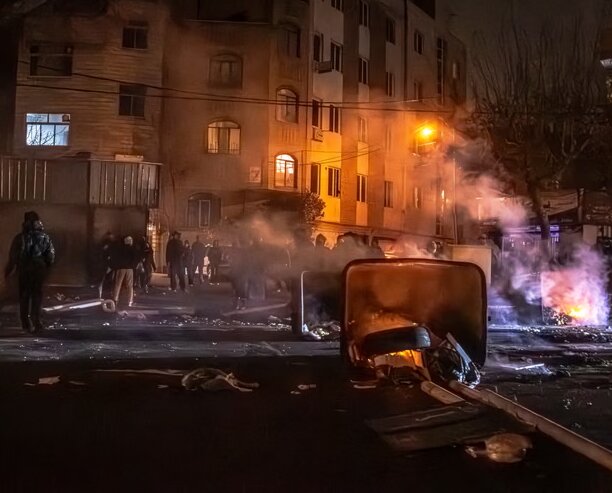
TEHRAN-Amid renewed unrest in Iran and escalating rhetoric from Washington and Tel Aviv, questions are mounting over whether Western claims of supporting civil liberties mask deeper geopolitical objectives. To explore these dynamics, Tehran Times spoke with Professor Hongda Fan, Professor and director of the China-Middle East Center at Shaoxing University, China.
Professor Fan is a Professor and director of the China-Middle East Center at Shaoxing University, a senior expert on West Asian geopolitics, Iran’s foreign relations, and great-power competition in the region. He has closely followed U.S. and Israeli policies toward Iran, as well as China’s diplomatic engagement with the Middle East.
In this exclusive interview, Professor Fan offers a critical assessment of U.S. sanctions, media narratives, Israeli calculations, and the broader regional implications of foreign interference amid Iran’s internal challenges.
Below is the full text of the interview:
Trump publicly encouraged Iranian protesters while threatening military action. From your perspective, is this genuine support for civil liberties, or a deliberate attempt to destabilize Iran politically and economically?
Forcing Tehran to submit, following last year's 12-day war, has been the fundamental objective of the US and Israel regarding Iran. President Trump's support for Iranian protests and military threats also serve this objective. This has little to do with supporting civil liberties. The US needs an Iran that is subservient and poses no threat to Israel.
How do U.S. sanctions and economic measures, combined with public rhetoric, function as tools of strategic interference to amplify unrest and weaken Iranian sovereignty?
Frankly speaking, it is a fact that discontent is growing within Iran. Amidst this internal unrest, US actions can exacerbate Iran's internal conflicts.
Both sanctions and public rhetoric can achieve this. Tehran has given external forces far too much room for intervention. Of course, the United States' behavior is very domineering.
Israel has openly aligned with U.S. statements criticizing Iran during these protests. How do you evaluate Israel’s role in potentially exploiting domestic unrest in Iran to weaken its regional adversary?
Compared to the United States, Israel takes a tougher stance towards the Islamic Republic, hoping to weaken or even overthrow it. Every instance of internal turmoil in Iran presents an opportunity for Israel. To date, I believe the Iran-Israel confrontation is the most acute conflict in the Middle East.
Western media often highlight protests while ignoring foreign involvement. How does this selective framing serve U.S. and Israeli geopolitical objectives?
Western media's focus on the internal protests in Iran is evident. This phenomenon isn't limited to Iran; it's also seen in their coverage of unrest in other countries affected by external influences.
This is a common practice in Western media reporting on developing countries. Undeniably, some of the reporting by American and Israeli media on the Iranian unrest does serve their national objectives.
Furthermore, I personally believe that the high death toll in this Iranian unrest is also a reason for their reporting in this way.
How do U.S. and Israeli actions during these protests affect regional alliances, security dynamics, and the balance of power in the Middle East?
Iran is not the only country in the Middle East with security concerns. Israel also has its share of countries it dislikes in the region.
While the root causes of the unrest in Iran certainly lie internally, external interference cannot be ignored. Other Middle Eastern countries with security risks, particularly those in the Persian Gulf, cannot afford to ignore this issue. In short, the geopolitical restructuring in the Middle East is far from over.
Could U.S. and Israeli interference backfire, strengthening Iranian unity against foreign pressure?
This depends on Tehran's policies. Iran's current crisis didn't develop overnight. If Tehran's policymakers want to inspire national unity against external threats, they must give Iranians hope for the country's future.
I believe in the patriotism of the Iranian people, but I also believe they need more hope from official policies.

No comments:
Post a Comment