
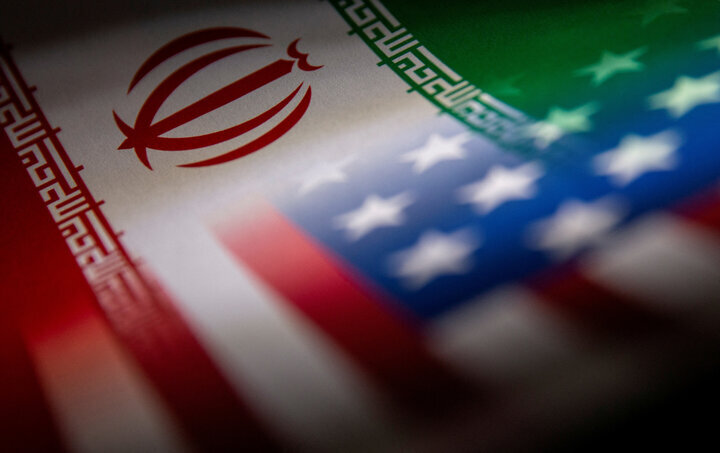
MADRID - Yesterday, 12 January, against an already tense backdrop and amid the prospect of a military escalation with Iran, US President Donald Trump announced the imposition of a blanket 25 percent tariff on all imports from any country that maintains commercial relations with the Islamic Republic of Iran.
Framed as an exercise in “maximum economic pressure” designed to choke off the Iranian state’s resources, the initiative represents the most aggressive turn yet in a conflict that, over several decades, has progressively shifted from the military to the financial domain.
Its ultimate significance, however, cannot be understood solely within the confines of the Persian Gulf. Rather, it must be situated in the global context of strategic competition between the United States and China, and in the longer historical evolution of sanctions as a dominant form of confrontation in the twenty-first century.
This is not merely an expansion of selective sanctions, the customary instrument of coercion. In practical terms, the measure amounts to the declaration of a comprehensive zone of economic exclusion, an attempt to project the extraterritorial power of the dollar with unprecedented intensity. The executive order seeks to turn Iran into an economic pariah, insofar as any state that trades with Tehran will incur punitive costs in its relationship with Washington. The immediate effect is to force both US allies and, more significantly, its strategic competitors into a binary choice between the United States and Iran.
To grasp the scale of this move, it must be placed within the long history of economic warfare against Iran. What began after the 1979 revolution as a limited embargo was progressively refined and expanded over subsequent decades. From the early 2000s, and especially after 2010, the sanctions architecture acquired a new dimension. Measures targeting specific individuals or sectors were replaced by a global financial siege. By exploiting the centrality of the dollar and its influence over international payment systems and financial messaging networks, the United States succeeded in isolating a complex and deeply integrated economy from the global financial system. While the stated objective was to deter Iran’s nuclear program, the outcome was severe economic contraction, episodes of hyperinflation, shortages of essential goods, and a social impact that fell disproportionately on the civilian population.
This episode marked a turning point. It demonstrated that, in a highly interdependent world, economic coercion could generate strategic effects comparable to those of military intervention, without incurring the political and human costs associated with invasion. Warfare thus shifted from battlefields to financial infrastructure, and from military command to economists, lawyers and technocrats. Iran became the principal laboratory for a mode of conflict that some analysts describe as “war by other means”, in which a hegemonic power uses its dominance over global economic networks to impose structural limits on the autonomy of other states.
That strategy, however, was never wholly effective. Iran developed notable adaptive mechanisms. It learned to operate through opaque trade networks, barter arrangements, alternative currencies and the deepening of ties with actors willing to defy US pressure. The 2015 nuclear agreement was, in part, an implicit acknowledgement of the limits of total economic siege. It represented a geoeconomic truce that allowed for Iran’s partial reintegration into the global economy. Its subsequent collapse reignited the confrontation, albeit in a profoundly altered international context.
The decisive factor: global competition
Trump’s announcement cannot be understood in isolation from the strategic rivalry between the United States and China. Iran has ceased to be merely a troublesome regional actor for Washington and has become a relevant piece in a broader systemic competition. In 2021, Tehran and Beijing signed a 25-year strategic agreement envisaging substantial Chinese investment in Iran’s energy and infrastructure sectors in exchange for a stable supply of hydrocarbons. For Washington, this rapprochement signalled the convergence of two strategic challenges on a single front.
The new 25 percent tariff should therefore be read primarily as an instrument designed to obstruct that convergence. It seeks to block China’s strategy of weaving alternative economic and logistical networks, including those associated with the Belt and Road Initiative, aimed at reducing dependence on Western-controlled corridors. Iran, given its geographic position and resource base, occupies a central place in that project. By threatening trade penalties against any country that maintains economic ties with Tehran, Washington is attempting to raise dramatically the cost of participating in this realignment. The objective is not merely to punish Iran, but to discipline the wider set of actors that might facilitate its integration into an alternative economic order.
From this perspective, the measure constitutes geoeconomics in its purest form. Economic instruments are deployed explicitly to achieve geopolitical ends. The legitimacy of this policy does not derive from multilateral consensus, but from the structural power the United States retains within the international economic system, particularly through the role of the dollar as a reserve and settlement currency. It is a demonstration of force intended to reaffirm that access to the US market and financial system remains the central asset of the global economy, and that Washington is prepared to wield it in an increasingly coercive manner.
The paradox of sanctions and self-determination
This episode reopens a deeper debate about the nature and legitimacy of economic sanctions as a tool of foreign policy. A persistent tension exists between their condemnation as a mechanism of neo-imperial coercion and their defence in specific historical contexts, such as the international isolation of South Africa’s apartheid system or, more recently, the campaigns of Boycott, Divestment and Sanctions against Israel.
That apparent contradiction dissolves when one examines the specific political and economic function sanctions perform in each case. They are not a neutral instrument. Their legitimacy depends on whether they are used to sustain or to dismantle structures of domination. In the Iranian case, the recurrent use of sanctions by the United States fits the pattern of a tool designed to limit the strategic autonomy of a state that, following a popular revolution, consolidated itself as an independent actor challenging a Western-sponsored regional order. The declared objectives, ranging from nuclear containment to behavioural change, have served as a cover for broader pressure aimed at restricting Iran’s capacity for regional projection and the construction of alternative alliances.
Sanctions operate by exploiting the structural vulnerabilities of a country embedded in a global economic system shaped by Western powers. Financial blockade is only possible because of the centrality of the dollar, a direct legacy of the postwar order. Combined with military pressure and diplomatic hostility, the result is an encirclement designed either to force capitulation or, failing that, to provoke an internal crisis that destabilises the state. The rhetoric of “maximum pressure” points less towards negotiation than towards a logic of unconditional surrender.
From the perspective of self-determination, understood not only as formal political independence but as effective economic sovereignty in the face of external domination, the unilateral use of broad-based sanctions constitutes a serious violation. It does not protect a particular governing elite, but rather concerns the right of a society to define its political and economic trajectory without massive external coercion. Sanctions aimed at strangling a national economy are, in practice, a form of undeclared warfare whose principal victims are civilians.
Consequences and an uncertain future
The implications of the new tariff are profound and uncertain. In the short term, it will accelerate the fragmentation of the global economy. China, Russia, India and other actors are unlikely to accept the ultimatum. They can be expected to intensify efforts to develop alternative trade and financial channels, through the use of national currencies and the construction of parallel infrastructures that reduce dependence on the dollar. Trump’s initiative may, paradoxically, hasten the transition towards an order Washington seeks to prevent.
For Iran, without downplaying the importance of the measure, it need not prove decisive. External pressure will reinforce the official narrative of resistance to persistent hostility, while deepening the economic difficulties faced by a population already under severe strain. Its internal impact is, in any case, ambiguous. It may contribute to greater cohesion around a discourse of national resistance or, alternatively, and this is one of Washington’s objectives, exacerbate social tensions arising from the progressive deterioration of living conditions.
In Europe, the measure generates unease and frustration. Transatlantic allies are once again forced to choose between their economic relationship with the United States and their own commercial and energy interests. Confidence in the alliance, already weakened, erodes further.
The imposition of this 25 percent tariff is not simply another sanction. It represents the culmination of a process in which the economy has become the principal battlefield. It is an assertion of structural power aimed at slowing China’s rise by using Iran as a testing ground. It is also a reminder that, in the twenty-first century, war can take the form of a blocked transaction, a frozen asset or a devastating tariff barrier. By extending economic conflict to all of Iran’s trading partners, the United States is not merely confronting a specific adversary. It is attempting, by force, to redefine the rules of global interdependence.

No comments:
Post a Comment