Showing posts with label Oil Tanker. Show all posts

Wednesday, July 24, 2019

Follow the leader – the UK’s ill-advised piracy on the high seas

TEHRAN, Jul. 24 (MNA) – The United Kingdom should recognize what has become its position in the world – an important nation with an imperialistic history but now a much-diminished global power.
Blindly following the United States into hazardous waters could have dangerous results: America might not reward subservience or could change course in its own self-interest. While following George Bush into Iraq is now widely conceded in the UK as having been ill-advised, British leaders seem to have forgotten the consequences of that disastrous decision.
On July 4, UK forces seized an Iranian supertanker, Grace I, off the coast of Gibraltar. At first, the reason for the seizure in news reports was that London was responding to a request from the United States because the tanker was carrying oil to the Syrian refinery of Banias in violation of UN sanctions. This report was quickly ‘corrected’ by Jeremy Hunt, the UK Foreign Minister. The official word was that the Iranian vessel had been seized yes because the oil was destined for Syria, but which was in violation of EU (not UN) sanctions on Syria. Iran objected vehemently to this seizure and clearly retaliated by seizing a British tanker, the Steno Impero, on July 19 in the Persian Gulf. Then Jeffrey Hunt went on the warpath and threatened Iran with “serious consequences” if Iran does not release the tanker, rhetoric further inflamed by the British defense minister branding the seizure “a hostile act.”
Three things stand out for us — the UK in fact seized the Iranian tanker at the request of the US, Mr. Hunt has made matters worse by his rhetoric and the UK and the US are now boxed in without a face-saving exit. Let me explain.
The premise that the oil was destined for Syria is a tough claim that cannot be substantiated. How can the British Foreign Minister prove that the oil was so destined? Even if he had irrefutable proof, couldn’t Iran at some point has changed its mind and diverted the tanker?
If every country acted so, seizing goods because they may be destined to a sanctioned country, world commerce would become entangled and come to a standstill. If the initial media reports were to be believed, namely, that supplying oil to Syria is in violation of UN sanctions, who determined this? Leaving aside the claim of a UN sanctions violation, the British Foreign Minister is clearly reported as saying that the UK took this action because of the EU embargo on oil supplies to Syria. Who in the EU reached this conclusion and made the decision to seize the Iranian tanker? The lie becomes even worse when we note that the EU embargo on oil supplies to Syria applies to EU member states, namely, EU countries cannot supply Syria with oil. This rule does not apply to supplies from Iran or any other third country. Surely the British Foreign Minister must be familiar with EU resolutions seeing as the UK is still in the EU! Clearly, this seizure was not triggered by a violation of the EU but was most likely in response to a US request.
There is another perplexing aspect of this tanker seizure. Even if the EU or just simply the UK had imposed sanctions on the delivery of fuel from any country to Syria, would the seizure of a tanker be “legal” as claimed by a number of UK politicians and military personnel? If so, then any nation could sanction whoever they wished and seize tankers, or any other vessel, at will! This would be an unusual interpretation of legality and thus justification of piracy by the powerful.
But the Foreign Minister’s untruths have become magnified after his ill-advised rhetoric. The folks who run Iran’s IRGC (Revolutionary Guards) are not traditional military leaders and diplomats. They are intelligent and street smart and have an image to uphold in Iran and in the region. Mr. Hunt clearly has no understanding of their thinking and how they might react to provocation. As to be expected, Iran seized the British tanker, Steno Impero, in retaliation. But Mr. Hunt threatened Iran much as he might have done when Great Britain was an imperial power and ruled the waves. Again, with little comprehension of the IRGC and its leadership.
As a result, Mr. Hunt has now backed the UK into an even tighter box. What are the UK’s options? They could release the Iranian tanker and get the British tanker released. But this would hurt Britain’s global image. They could do nothing, again a stand that would not work well at home and would humiliate Great Britain at the hands of lesser power. Or they could join forces with the US, [P]GCC countries and Israel to bomb or possibly invade Iran, start a regional war and incur the wrath of most Iranians inside and outside of Iran and many other Muslims around the world for years to come.
The short and the long of this is that the seizure of the Iranian tanker was a monumental policy blunder. The UK is trying to divorce itself from its European partners but is in the process falling in line as a devoted follower, not partner, of a power whose influence has already crested. It now does not have a favorable strategy for an exit from its blunder. Future British foreign ministers would do well to better understand the thinking of Britain’s adversaries and how they might react, as well as the motives of their closest ally.

Sunday, July 21, 2019

Tehran Ready ’For Different Scenarios’ After Seizure of British Tanker - Iranian Ambassador to UK


The Iranian Revolutionary Guards Corps (IRGC) captured the British-flagged Stena Impero tanker on Friday, allegedly for breaking international laws.
Iranian Ambassador to the UK Hamid Baidinejad said that Tehran continues to adhere to its position and is ready "for different scenarios".
"UK government should contain those domestic political forces who want to escalate existing tension between Iran and the UK well beyond the issue of ships. This is quite dangerous and unwise at a sensitive time in the region. Iran however is firm and ready for different scenarios," Baidinejad wrote on Twitter.
According to Allahmorad Afiphpur, who spoke on Iranian TV, and the heads the agency responsible for the seaports located in the territory of the Iranian province of Hormozgan, the crew of the UK-flagged oil tanker Stena Impero is safe and feels good.
"All 23 crew members are on the ship, they are safe and feel good," Afiphpur said.
In turn, UK Junior Defence Minister Tobias Ellwood said that Britain is evaluating ways to respond to Iran's seizure of the tanker.
"Our first and most important responsibility is to make sure that we get a solution to the issue to do with the current ship, make sure other British-flagged ships are safe to operate in these waters and then look at the wider picture," Tobias Ellwood said.
"We are going to be looking at a series of options ... We will be speaking with our colleagues, our international allies, to see what can actually be done," he added speaking about possible sanctions.
On Friday, the Iranian Islamic Revolutionary Guard Corps (IRGC) seized UK-flagged oil tanker Stena Impero in the Strait of Hormuz over what it described as a breach of international maritime regulations. According to the authorities of the Islamic Republic, the tanker's crew includes 18 Indians, three Russians, as well as several citizens of Latvia and the Philippines.
The IRGC reportedly claimed that the UK-flagged ship had broken maritime rules by switching off its tracking system and ignoring the lane for ships entering the Persian Gulf. 
In turn, UK Foreign Secretary Jeremy Hunt said earlier that he was worried that Iran had taken a "dangerous path" after it seized a British-flagged tanker.
The latest development marks an escalation in tension between UK and Iranian officials following the recent detainment of Iranian supertanker Grace 1 off the coast of Gibraltar earlier in July.

Saturday, June 15, 2019

Who benefits most of suspicious attacks on oil tankers, tensions in PG?


Who benefits most of suspicious attacks on oil tankers, tensions in PG?

TEHRAN, Jun. 13 (MNA) –The events roiling the Persian Gulf in recent weeks and days have the potential to affect everything from the price of gas to the fate of small regional states.
A look at the tensions going on around the world including the Middle East and Persian Gulf region, East Europe, Venezuela all indicate that these tensions originate from the US administration’s unilateral unlawful measures.
The White House’s unlawful withdrawal from the Iran’s nuclear deal (JCPOA), designation of the Islamic Revolutionary Guards Corps (IRGC) as a terrorist group, reimposing sanctions on Iran and trying to drive Iran’s oil export to zero all are provocative and suspicious moves of the US that have fueled the regional tensions.
The US and its regional allies including Saudi Arabia and the UAE’s suspicious and provocative move to accuse Iran of being behind the attacks on two ships at Fujairah in the UAE without presenting any document was also foiled by Iran’s vigilant approach and reduced tensions to some extent.
While the Japanese Prime Minister is visiting Iran after 4 decades and many expected even more reduction of the tensions in the region due his visit, in another suspicious and provocative move two oil tankers were targeted in Sea of Oman, a move that can intensify the tensions more than before.
Undoubtedly the US and its proxies in the region as usual will accuse of Iran being behind the incident without any document in hours once again, but the main question is that who is benefiting the most of the tensions in the Persian Gulf region?
Pondering the following reasons one can realize that the number one beneficiary of the tensions and attacks on tankers in the Persian Gulf and the Middle East is the USA and respectively Tel Aviv and the undemocratically  appointed rulers of some regional Arab states seeking their survival in following the US policies.
- Contrary to decades ago the US is now one of the biggest oil and gas producers in the world seeking to grab the market share of the other countries in the world. Following US unlawful withdrawal from the JCPOA and its efforts to drive Iran’s oil export to zero under the pretext of different accusations, in fact the US is making efforts not only to grab Iran’s share of the energy market but also to limit Iran’s income to reduce Iran’s regional influence. The US move to create tensions in Venezuela and East Europe and slapping sanctions against Caracas and Moscow can also be interpreted in this line.
- Any tension in the Persian Gulf not only will increase the energy price in global market but also will create enough pretexts for Washington to boost its military presence in the region. This means control of energy routes by the US in order to contain its rivals like China, EU, Japan and new rising economies like India which their economies are heavily dependent on the energy coming from the Persian Gulf and Middle East.
- Tensions in the region besides Iranophobia project will guarantee continuation of purchase of American weapons by some regional countries such as Saudi Arabia. By continuation of selling weapons to Saudi Arabia the US not only creates thousands of jobs for Americans but also keeps its rivals like China and Russia out of Middle East weapon market.
- Tensions and conflicts created by the US in Middle East has resulted in great rifts and divergence among regional states which is vital for Tel Aviv’s security and its expansionist policies.

Kuwait disputes US’ anti-Iran claims on PG oil tanker attacks

Kuwait disputes US’ anti-Iran claims on PG oil tanker attacks

TEHRAN, Jun. 15 (MAN) – A close ally of Saudi Arabia and the United States, Kuwait has also implicitly disputed Washington’s accusations against Iran over the Thursday attacks on two oil tankers in the Sea of Oman, calling for an “unbiased, objective investigation” into the matter.
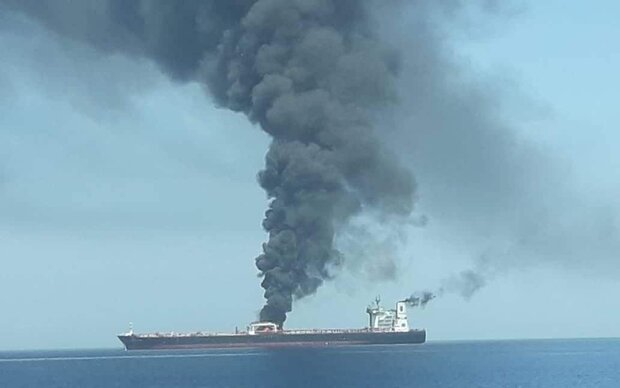
Two large tankers were hit by explosions in the Sea of Oman — also called the Gulf of Oman — on Thursday. The tankers were identified as the Marshal Islands-flagged Front Altair and the Panama-flagged Japanese-owned Kokuka Courageous.
Kuwait's Permanent Representative to the UN Mansour Al-Otaibi said on Thursday that the attack on tankers in the Sea of Oman is "a violation of international law," calling for an unbiased investigation into the matter, instead of jumping into hasty and baseless conclusions.
"We want a thorough investigation so that we know who stands behind this incident," he noted.
"Everybody wants an unbiased and objective investigation. However, there have been no proposals, no decisions by the UN Security Council yet on who should conduct this investigation," the diplomat said.
Member countries of the UN Security Council have also called for an investigation into the attacks on the two tankers in the Gulf of Oman, Al-Otaibi said.
"We have not discussed any evidence," Al-Otaibi stressed, while Kuwait's ally, the United States, has accused Iran of being involved in the suspicious attacks.
US Secretary of State Mike Pompeo quickly blamed Iran. President Donald Trump did the same on Friday. US military also released video footage to blame Iran for the attacks on the oil tankers; however, the claim has been disputed even by Washington's allies and Western analysts.
The US claimed the ships hit a mine planted by Iran.
The claim, however, was soon rejected by the Japanese ship's operator, whose president said on Friday its sailors on board the Kokuka Courageous saw "flying objects" just before the attack, suggesting the tanker wasn't damaged by mines.
"The crew told us something came flying at the ship, and they found a hole," President Yutaka Katada of Kokuka Sangyo told a press conference in Tokyo. "Then some crew witnessed the second shot."
Iran has strongly dismissed the US’ claims, saying the suspicious nature of the recent attacks on two oil tankers in the Sea of Oman is "not funny or ridiculous but alarming."
Less than a day after the US Central Command (CENTCOM) released the video late Thursday purportedly showing "Iranian sailors" removing a mine from the Japanese-owned Kokura Courageous' hull earlier in the day, European governments — except for Britain — have so far refused to accept the US' narrative that Tehran was to blame for the "suspicious" attacks.
They are reluctant to accept the White House’s claims at face value and do not want to provide Washington with any pretext for war.
German Foreign Minister Heiko Maas said on Friday the video is not sufficient to prove the US claim that Iran was behind the attacks.
"The video is not enough. We can understand what is being shown, sure, but to make a final assessment, this is not enough for me," Maas, who was in Iran earlier this week on an official two-day visit, told reporters in Oslo.
Nathalie Tocci, a senior adviser to European foreign policy chief Federica Mogherini also rejected the US allegations, saying, “Before we blame someone, we need credible evidence.”
Iranians are deeply rational actors, she said. And for Iran to have attacked a Japanese ship when the Japanese prime minister was in Tehran “is not an especially rational thing to do.”
Speaking on Friday, UN Secretary-General Antonio Guterres also denounced the incident, calling for in an “independent investigation” to establish those responsible for the attacks.

Thursday, June 13, 2019

Who benefits most of suspicious attacks on oil tankers, tensions in PG?

Who benefits most of suspicious attacks on oil tankers, tensions in PG?
TEHRAN, Jun. 13 (MNA) –The events roiling the Persian Gulf in recent weeks and days have the potential to affect everything from the price of gas to the fate of small regional states.
A look at the tensions going on around the world including the Middle East and Persian Gulf region, East Europe, Venezuela all indicate that these tensions originate from the US administration’s unilateral unlawful measures.
The White House’s unlawful withdrawal from the Iran’s nuclear deal (JCPOA), designation of the Islamic Revolutionary Guards Corps (IRGC) as a terrorist group, reimposing sanctions on Iran and trying to drive Iran’s oil export to zero all are provocative and suspicious moves of the US that have fueled the regional tensions.
The US and its regional allies including Saudi Arabia and the UAE’s suspicious and provocative move to accuse Iran of being behind the attacks on two ships at Fujairah in the UAE without presenting any document was also foiled by Iran’s vigilant approach and reduced tensions to some extent.
While the Japanese Prime Minister is visiting Iran after 4 decades and many expected even more reduction of the tensions in the region due his visit, in another suspicious and provocative move two oil tankers were targeted in Sea of Oman, a move that can intensify the tensions more than before.
Undoubtedly the US and its proxies in the region as usual will accuse of Iran being behind the incident without any document in hours once again, but the main question is that who is benefiting the most of the tensions in the Persian Gulf region?
Pondering the following reasons one can realize that the number one beneficiary of the tensions and attacks on tankers in the Persian Gulf and the Middle East is the USA and respectively Tel Aviv and the undemocratically  appointed rulers of some regional Arab states seeking their survival in following the US policies.
- Contrary to decades ago the US is now one of the biggest oil and gas producers in the world seeking to grab the market share of the other countries in the world. Following US unlawful withdrawal from the JCPOA and its efforts to drive Iran’s oil export to zero under the pretext of different accusations, in fact the US is making efforts not only to grab Iran’s share of the energy market but also to limit Iran’s income to reduce Iran’s regional influence. The US move to create tensions in Venezuela and East Europe and slapping sanctions against Caracas and Moscow can also be interpreted in this line.
- Any tension in the Persian Gulf not only will increase the energy price in global market but also will create enough pretexts for Washington to boost its military presence in the region. This means control of energy routes by the US in order to contain its rivals like China, EU, Japan and new rising economies like India which their economies are heavily dependent on the energy coming from the Persian Gulf and Middle East.
- Tensions in the region besides Iranophobia project will guarantee continuation of purchase of American weapons by some regional countries such as Saudi Arabia. By continuation of selling weapons to Saudi Arabia the US not only creates thousands of jobs for Americans but also keeps its rivals like China and Russia out of Middle East weapon market.
- Tensions and conflicts created by the US in Middle East has resulted in great rifts and divergence among regional states which is vital for Tel Aviv’s security and its expansionist policies.