Showing posts with label Britain and France. Show all posts

Tuesday, December 25, 2018

Trump Pulling Out

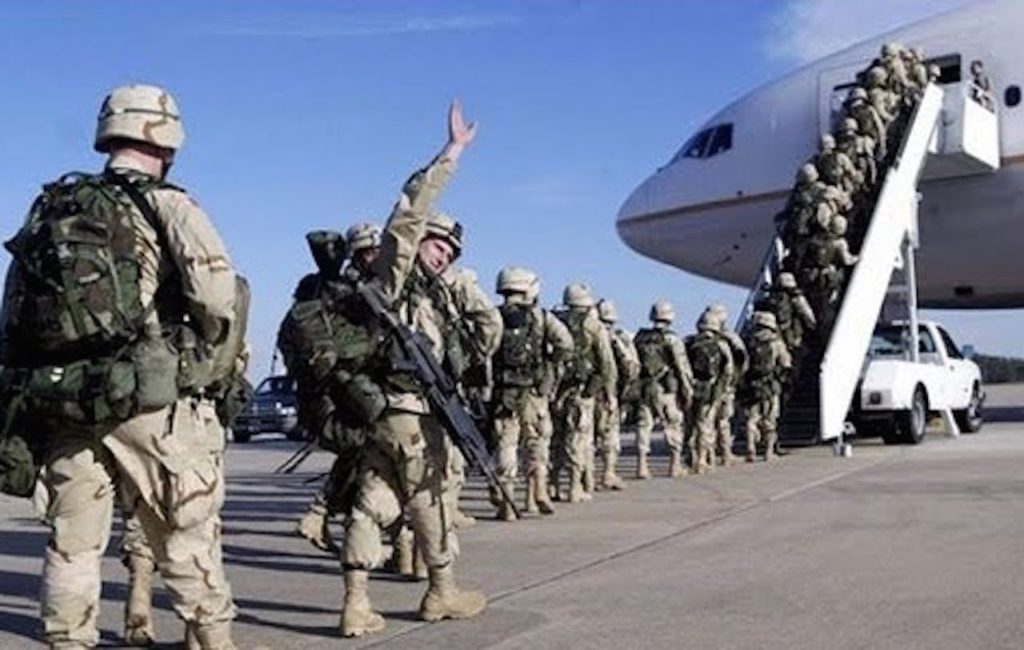
It is significant that US President Donald Trump has decided to withdraw his troops from Syria. The 14th December decision was followed immediately by another announcement by the President to pull out a sizeable number of soldiers from Afghanistan where the US has been involved in a war for the last 17 years — the longest war in its history.
Both the decisions, especially the one on Syria, have been condemned by a lot of US Senators and Members of the House of Representatives. They feel that the decisions undermine the US’s role as a global power. US allies such as Britain and France have also criticised the pull-outs. By getting out of Syria in particular, the US has made it easier for certain powers from within and without the region to exert even more influence over the politics of that country and that of its neighbours to the detriment of the West. Most of the international media argue that US success in fighting the terrorists in Syria which Trump cited as the reason for the withdrawal will be rendered meaningless in no time since terrorist cells are still alive and capable of striking at civilians. In the case of Afghanistan, the US cut-back, the media contends, will expedite the Taliban’s goal of gaining total control over the country.
Conventional wisdom suggests that whether or not the US is around the Taliban will emerge victorious sooner than later. If anything, the US military presence — a foreign power on Afghan soil — has enhanced the Taliban’s reputation as a resistance force among the ordinary people. The eventual total withdrawal of the 16,000 US soldiers will allow the Afghan people themselves to determine their future which will be influenced to some extent at least by Afghanistan’s important neighbours, Pakistan, Iran, China, India and Russia.
If we now turn to the situation in Syria, we would realise that the US role in combating terrorism was limited. The Syrian Army, with the backing of the Lebanese Hezbollah, Iranian militias and the Russian military were primarily responsible for the defeat of the multitude of terrorist outfits in the country between 2012 and 2017. Indeed, there is more than enough evidence to show that some of the more prominent terrorist outfits were in different times and in different circumstances aided and abetted by institutions and organisations associated with the US, Britain and France and countries in the region such as Israel, Saudi Arabia, Qatar and Turkey. They provided financial assistance, military training and critical intelligence, apart from establishing regional and global networks to buttress the activities of the terrorists.
Viewed against this backdrop, the end of the US military operation in Syria may well accelerate efforts within the country to bring about much needed constitutional and political reforms which Syrian President Bashar al-Assad had tried to initiate in 2001. In formulating these reforms, he will have to work closely with his allies, Iran and Russia. But at the end of the day it is the Syrian people themselves who will determine the destiny of their historically and culturally rich nation.
Suppressing the independence and sovereignty of the Syrian nation — and not combatting terrorism – was the real reason behind the active intervention and involvement of numerous actors from within and without the region in the 7 year Syrian conflict.  Simply put, the aim was to oust Bashar, the protector of Syrian sovereignty, to achieve regime change in pursuit of theUS-Israeli agenda of perpetuating their hegemony. Trump realised even before he became President that he would not be able to achieve this. Hence,his troop withdrawal.
This should not give us the impression that Trump is in any way opposed to US-Israeli hegemony. His staunchly pro-Israel policy; his intimate relationship with the Saudi elite; his military support for the Saudi-led war on the people of Yemen; his aggressive stance against Venezuela and his lukewarm attitude towards Cuba; his perpetuation of sanctions against Russia stemming from US policy on Crimea and the Ukraine; and his trade war against China aimed at curbing its economic dynamism all seem to indicate that he believes in flexing US power on the global stage. Besides, under Trump US military expenditure has remained high at 610 billion dollars in 2017.
What are the real reasons then that persuaded Trump to act the way he did on Syria and Afghanistan?  In both countries the prospect of imminent defeat was a factor that influenced Trump’s decision. More than that was the financial cost of war in the two countries. It is estimated that the Syrian war would cost the US 15.3 billion dollars in 2019. The figures are even more staggering for Afghanistan. With 16,000 troops in the country, the war costs the US taxpayer 45 billion dollars a year. Between 2010 and 2012 when the US had 100,000 troops on the ground, the Afghan war cost a 100 billion a year.
Will some future analyst conclude that in withdrawing US troops from Syria and Afghanistan, Donald Trump acted on his well-honed business instincts?
Dr. Chandra Muzaffar is the President of the International Movement for a Just  World (JUST). Malaysia.

Saturday, November 03, 2018

West and Saudi's Petro Dollars

By Mohammad Ghaderi 
TEHRAN - Although Western countries have condemned the murder of Jamal Khashoggi by Mohammad bin Salman, they are simultaneously trying to cover the unimaginable crime of the Saudis. 
Khashoggi, the Saudi Arabian journalist and author, entered the Saudi Arabian consulate in Istanbul on 2 October 2018, but did not leave the building. Amid news reports claiming that he had been killed and dismembered inside, an inspection of the consulate, by Saudi Arabian and Turkish officials, took place on 15 October. Initially the Saudi Arabian government denied the death, claiming Khashoggi had left the consulate alive, but on 20 October admitted that Khashoggi was killed inside the consulate, claiming he had been strangled to death after a fight had broken out. This was later contradicted when, on 25 October, Saudi Arabia's attorney general stated that the murder was premeditated.
Although Western governments tried to show that they're severely against  this brutal act by bin Salman, sending signals about Saudi petrodollars by countries such as Germany, Britain and France have once again uncovered the true face of the European troika in the international system. Britain and France (along with the United States of America), as the three permanent members of the Security Council, who have veto power due to the unfair structure of the world today, prefer their "commercial interests" to any other factor, including the lives of innocent people. However, this time it's no more about Western governments; people all around the world raised to protest the murder of Jamal Khashoggi.
No doubt, in this equation, Theresa May, Merkel, and Macron are no more than mere losers, and even Saudis' billions of petrodollars can't stop this process. Here are some points that should be accordingly taken into consideration:
The projection of the European authorities towards the murder of Khashoggi is quite noticeable. For example, as the Spiegel and other German sources reported, German Chancellor Angela Merkel announced that she'll stop exporting arms to Riyadh until all the aspects of Jamal Khashoggi case is brightened. Although the German Chancellor may think that such a move is considered as a kind of humanitarian and anti-dictatorial gesture, but we're not to forget that Saudi Arabia has bought 416 million euros of military equipment from Germany since the beginning of 2018. According to existing evidences, after Algeria, Saudi Arabia is the second largest importer of weapons from Germany.
The next point is about the way West reacts to the Khashoggi case. Western authorities, such as Trump, have apparently condemned the kidnapping and murder of Saudi journalist Jamal Khashoggi by bin Salman and his men, while on the other hand, they has been repeatedly emphasizing their strong financial ties with Saudi Arabia! In other words, the European troika and even some other members of the European Union have shown that they lack the will to deal with the case of khashoggi's murder. The soft reaction of Western officials to the case of Jamal Khoshoggi once again challenged the selective and instrumental approach of human rights claimants to this issue. Meanwhile, governments and security officials in the West are using all their capabilities to prevent their citizens from "knowing more" about this case. The fact is that the governments of the United States and France have used both their public and secret diplomacy capabilities to prevent the murder of Khashoggi by Saudi Crown Prince from turning into a hot topic among their citizens.
Given that the "Saudi exoneration" project is no longer possible regarding his brutal murder and dismembering, the European troika has moved towards the project of "Managing Western Public Opinion" through adopting democratic gestures. However, this won't change the West's fundamental policy in support of Al Saud's crimes.
European players, especially the three countries of Germany, Britain and France, have spent a lot on organizing their "operational", "political" and "media" approach in the international system. But the power of the independent media, and the disclosures made by independent journalists on such cases, prevent the realization of this "hideous game." At the moment, those like Macron, Merkel and Theresa May should be held accountable for their coordination with Saudi Arabia in the killing of innocent people in Yemen, especially Yemeni children. Today, people around the world are carefully following the case of Jamal Khashoggi, and such public awareness is certainly not a good news for Western partners of Riyadh and supporters of Saudi Arabia's crimes in the West Asia region.

Wednesday, September 05, 2018

Is Europe's opposition to America real?

By Hanif Ghaffari


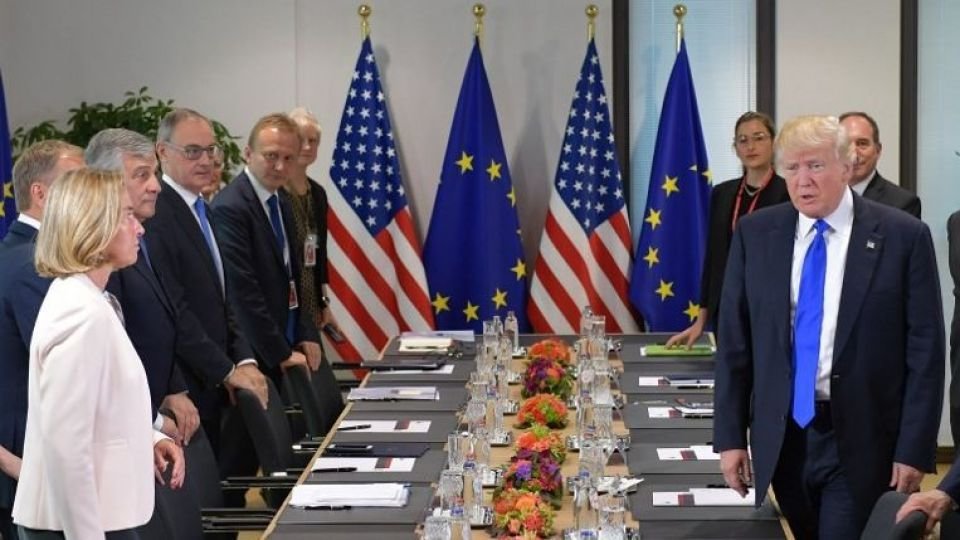
Western media has recently published reports on the new approach of European authorities over the Joint Comprehensive Plan of Action (JCPOA). German Chancellor, Angela Merkel, has officially opposed to her Democrat Foreign Minister, Heiko Mass. Maas recently mentioned that Europe and the U.S. “have been drifting apart for years” and urged Europe to “assume our equal share of responsibility” in order to “form a counterweight when the U.S. crosses the line,” pull “our weight when America retreats … [and] start a new conversation.”
Among his bolder suggestions on how to do this, he came with the suggestion of an independent system of financial transactions that would protect European companies seeking to do business with Iran. In response, Merkel stated that there are many barriers to the formation of such a system, and in the meantime, U.S. and Europe's security cooperation can't be ignored. Many analysts believe that the U.S. and EU's opposition over the JCPOA remains strong, although there's no guarantee that Europe would remain committed to the nuclear deal in the future.
Accordingly, a review on the Atlantic's recent article is worth noting. Emphasizing that Donald Trump and his advisers have a consistent record of confronting and threatening Iran, most prominently by withdrawing from the nuclear deal, the article reads that Trump expanded the threats against Iran to all those who do business with the country, declaring on Twitter they “will NOT be doing business with the United States.”
If taken literally, this would mean a new front in America’s economic battle with the Europeans, who have remained in the nuclear agreement—not to mention many other countries around the world determined to do business in Iran.
Regarding what the Atlantic and other American sources say (on the battle of the United States and Europe over the JCPOA), there are some points that should be taken into consideration.
The analysis presented by the Atlantic can be reviewed from different dimensions. First and foremost, there should be a realistic understanding of the economic conflict between the United States and Europe. At this critical period and in examining the Europe's package of proposals, we need to make strategic, rational and determined distinctions between the two terms of "commitment" and "guarantee".
Undoubtedly, the EU's words on remaining "committed" to the JCPOA is of no use to Islamic Republic of Iran. In this period we're exactly looking for the EU guaranteeing its commitments to the nuclear deal. It should not be forgotten that not only during Trump's presidency, but also during Obama's time, the European troika didn't take any effective steps to lift the ban on the European bank relations with Iran.
 They event hesitated to accuse the U.S. Treasury of violating paragraphs 26-29 of the JCPOA, and chose to sacrifice their legal obligations to make a compromise with the current and previous U.S. governments. Therefore, the European Union is facing a tough test, and if it doesn't or can't succeed in this test, there will be practically no nuclear deal. This issue should be made clear to the European authorities by our country's diplomatic and foreign policy.
Not long ago French Foreign Minister Jean-Yves Le Drian said it was unlikely European powers would be able to put together an economic package for Iran before November. As we can see, the European officials are following a "tactical" delay in this regard. On the one hand, they're waiting to see the results of imposing secondary sanctions on the Iranian economy (to gain more benefits from our country), and on the other hand, they intend to set their own policy based on the results of the U.S. mid-term elections.
 Accordingly, if the Republicans win the mid-term elections in November, the European Union will define its policies in a way which is closer to those by Trump. However, if Democrats win mid-term elections, the United Europe will be slightly more open to this issue. As it can be seen, the EU hasn't even defined its own independent approach to the nuclear deal yet, let alone its willingness to offer its final package on the basis of this independent approach. Moreover, European officials believe that this delay would make Iran accept a minimal package of proposals, which is not true of course!
On the other hand, it should not be forgotten that the economic and political interactions of the United States and Europe over the nuclear deal remain strong. In recent weeks, signals have been delivered from the White House to the European troika in this regard. U.S. Secretary of State Mike Pompeo said he is negotiating with his European counterparts. Without a doubt, the more European troika is affected by the United States, the farther it would get from reaching an agreement with Iran. Thus the European official should be aware that they can't ignore the existing realities through magnifying the current gaps between EU and the United States over the JCPOA.
However, as the Iranian officials noted, it seems that "Europe is not yet ready to pay the price (of truly defying the U.S.)" and "Iran can respond to Europe’s political will when it is accompanied by practical measures".
 We have witnessed the special resistance of Merkel and other European authorities to this "practical plan". It should be noted that along with the negotiations of the European Union (especially the European troika) with Iran on how to maintain the nuclear deal, parallel negotiations were ongoing between the United States and the foreign ministers of the three countries of Germany, England and France. The reflection of these negotiations, which are mostly held in secret, is visible in the statements made by the senior European officials, including Merkel and Macron.
If the European leaders do not have a real intention to maintain the nuclear deal and will not pay for it, there is no reason for the Islamic Republic of Iran to remain committed to its obligations defined under the JCPOA. The issue has been repeatedly reminded by our country's authorities to the European Union, especially the three countries of the Germany, Britain and France.
    

Tuesday, August 01, 2017

Sykes-Picot: Collapse of the Political Framework

Colonial interests have been chaperoned by willing Arabian partners
Zaakir Ahmed Mayet


The Israeli think tank, the Jerusalem Centre for Public Affairs, connected to the Director General in the Israeli Foreign Ministry Dore Gold, hosted a special conference in August 2016. In the Q&A session with panelists, former ambassador of Israel to the United States and member of the International Advisory Board of the Brookings Institution Itamar Rabinovich and Col. (ret.) Dr. Jacques Neriah, former deputy head for assessment of Israeli Military Intelligence and former foreign policy advisor to Prime Minister Yitzhak Rabin, a strangely pertinent question was posed by the chair of the session,
You have talked about the need to neutralise radical Islamic and jihadi forces before the Middle East can move ahead. How does that happen at this juncture, does it happen through international intervention or can it happen as you mentioned at the end of your talk? Can the Arab world headed by Egypt and Saudi Arabia, the GCC put together political will and have the capability of self-securing as you will in this new Middle East?
It would appear that the conference and the chair’s question were prophetic. He not only accurately identified the current alliance against Qatar but also referred to the Muslim East as a “new” Middle East. The more plausible answer that ties into the earlier discussion about Israeli interests is that the entire dynamic playing out around Qatar was formulated in Israel. It is vital to bear in mind that this conference took place 10 months before the current events. It draws us to the Sykes-Picot agreement. What is its relevance to Israel and the US?
The Sykes-Picot agreement was drawn up in 1916 with the fall of the Ottoman Sultannate. The hegemonic powers at the time, key players in the division of the Ottoman Sultanate were Britain and France represented respectively by Mark Sykes and François Georges-Picot. The important elements were not the negotiations of the agreement or even the actual division but the principles that underlined the division. The most important point was that the hegemonic powers would be able to retain control via direct and indirect means to secure their interests in the region.
The key tool utilised was the Arabian rebellion led by the Amir of Najd, ‘Abd al-‘Aziz ibn Sa‘ud, and the Ottoman-appointed King of the Hijaz, Sharif Husayn. The Arabian rebellion acted in Western hegemonic interests to defeat the Ottoman Sultanate. The rewards are seen today in the Kingdom of Saudi Arabia, named after the ruling Najdi family, and the other Gulf states. It can, therefore, be concluded that the monarchies of the Muslim East were established with the backing of the hegemonic powers and that their continued survival is intrinsically linked to their power in the region.
Over time, French and British hegemony receded and was replaced by new hegemonic powers: the US and USSR. This is most clearly viewed in history documenting Arab nationalism and the various backers of Zionist Israel and its Arabian adversaries in their wars. The end of the Cold War, which saw the collapse of the Soviet Union, left the US as the sole hyper-power with an extensive network of military bases throughout the world. This allowed Washington to project Western interests and broad spectrum dominance, particularly in the Muslim East.
Interestingly, a particularly important development in the policy of disengagement from the region was witnessed during the Obama regime. There was a clear decline in attempts at projecting hegemonic power concerning US dependents, namely Israel and the GCC+1. That is not to suggest that US projection of hegemony ceased exposing its allies Israel and the GCC+1 to their fate. The Trump regime was eagerly anticipated by the GCC and Israel to reset Obama’s disengagement policy.
When analysing US hegemony we must seek the fundamental principle underpinning Sykes-Picot: control and protection of colonial interests. This is primarily achieved via three permutations: destabilisation by backing rival factions internally causing friction and civil war, regime change, and the installation of puppet rulers like the Gulf monarchs. These were practised in El Salvador earning the epithet, the El Salvador option. These were later utilised by the US military via generals Stanley McCrystal and Michael Flynn.
They also appeared in Somalia when the Supreme Council of Islamic Courts Union was formed, which was not only representative, but also the most stable form of governance. Interestingly al-Shabab was marginalised by more level-headed elements within the Court Union. The US began funding Ethiopia and Kenya to engage the Court militarily, destabilising Somalia leaving al-Shabab as the only option to protect the people. Such destabilisation often prepares the groundwork for larger invasions as seen during the Gulf War, Iraq, Afghanistan, and later Somalia with regards to al-Shabab or limited kinetic operations via Special Forces and covert structures that lack accountability such as Joint Special Operations Command — which interestingly operated out of Qatar for sometime as part of the War of Terror. The net result of both is installation of a pliable ruler as was seen in Afghanistan (Hamid Karzai), or continued destabilisation that allows the US to achieve its strategic objectives and allow continuation of the Wolfowitz, Rumsfeld, Cheney policy of the world as a battlefield. Either permutation is acceptable to the US. It is at this point that it would be important to shift attention to Israel, which is the projection of US interests in the region.
The lens through which recent events must be viewed is that of Israel, which is the central axis of conflation of interest. The US-Israeli relationship is symbiotic. At times US-Israeli interests were so perfectly aligned that they could be perceived as if the US was dependent on Israel in the region. At other times, the divergence in certain aspects of policy created the impression of independence and Israeli reliance on the US.
Not a secret anymore, retired Saudi Major General Anwar Eshki, left, officially meets with director-general of the Israeli Foreign Ministry at the Council on Foreign Relations in New York, 6-4-2015. Notice how Gold has his skullcap on, whereas there is nothing that distinguishes Eshki as a Muslim, or even an Arab.

This was particularly clear while studying history documenting US-Israeli relations. A brief review of the records highlights two examples of this. In May 1970, a meeting took place between US President Nixon and Yitzak Rabin, who was then Israel’s ambassador in Washington. As per Rabin’s account, Nixon asked, “In view of the Soviet involvement, is Israel’s position still…” Rabin answered, “Give us the tools and we’ll do the job,” Nixon replied “Good, that’s all I wanted to know.”
In fact, the Israeli Ministry of Foreign Affairs in a publication quoted Nixon as saying, “the best Soviet stopper in the Mideast.” Under Ronald Reagan, Israel was described as a strategic asset. These statements create a perception that Israel is a “game-changer” extension of US policy in the Muslim East. However, the antics of Israeli Prime Minister Benjamin Netanyahu during the Obama regime reflected a slight divergence from the above interpretation and demonstrated Israel’s dependency on the US. The relationship between Trump and Netanyahu prima facie may be likened to that of yesteryears as Trump pursues a heavy-handed approach not only to the Islamic Republic of Iran but also pledged to move the US embassy to Jerusalem, which has serious implications in international law. In summary, the US-Israeli position can be viewed as analogous in relation to the Muslim East taking into consideration the various comments made by “Mad Dog” Mattis and company on regional issues.
The Zionist State has long held onto the fear of the Muslim Brotherhood, especially as manifested via the creation and growing strength of Hamas in Palestine, fear of the 1979 Islamic Revolution in Iran, and the formation of Hizbullah in Lebanon in response to Israel’s occupation of Beirut in 1982.
We will now address the issue of how the GCC+1 have aligned themselves with Israeli interests and have boarded the proverbial Israeli boat to support imperial hegemony. It is acknowledged that the Saudi monarchy acts as the big brother of GCC states and influences their policies. Therefore the major focus shall be on the conflation of interests between Bani Saud and Bani Israel as depicted in their relationship.
In 2012 WikiLeaks released a flood of cables dating back to 2009. They related to permission the Saudi regime granted Israel to strike Islamic Iran. At the time Saudi Foreign Minister Saud al-Faisal denied such claims stating that news of this nature only sought to fray Arab unity. As the picture became clearer, Saudi-Israeli relations were indeed strengthening raising questions about Saudi denials. The extensive nature of the clandestine relationship between Bani Saud and Bani Israel included secret discussions, special flights over Saudi air space for Israeli personnel, publishing op-eds by Saudi policymakers in Israeli newspapers, sharing public platforms, economic ties, and security cooperation.
In 2015 it was revealed that Israeli goods were appearing under foreign names to circumvent global boycott. The Israeli Iron Dome was offered to the GCC states according to Haaretz indicating open avenues of communication. More recently, three striking actions symbolise the normalisation of ties between Bani Saud and Bani Israel. The first is US President Trump’s direct flight from Riyadh to Tel Aviv, which attracted a fair deal of media attention. The second is the groundbreaking move to allow a Saudi analyst, for the first time since the creation of Israel, to speak on Israeli television. The final and most striking was in 2015 when retired Saudi General Anwar Eshki spoke to Israel’s Channel 10 news during a remarkable event in Washington in which he shared a platform with the incoming director-general of the Israeli Foreign Ministry, Dore Gold.
In the case of the United Arab Emirates (UAE), relations with Israel have been less secretive. The most explosive revelation occurred in 2015 when a senior official of the resistance front confirmed that Israel had not intended to continue Operation Protective Edge of 2014 beyond a 10-day assault on Gaza. It was only after the UAE undertook to bankroll the balance of the 41 days that Tel Aviv continued with its slaughter.
Israeli Major General Yossi Baidatz and Dr. Dmitry Adamsky said the deterrence-driven operations theory was to be used in Gaza in 2014. This meant short and aggressive operations with limited attacks carried out in-between. The drastic departure from this theory not only lends credibility that a large part of the operation was funded by a foreign power (UAE) but gives rise to a further possibility that Israeli attacks on Gaza were an attempted occupation that failed. In 2015 Israel opened its first diplomatic mission in the UAE heralding strengthened economic and diplomatic ties between them. In March 2017 the UAE held joint military drills with Israel and the US. This provides a clear indication of the UAE jumping on the Israeli boat.
The other important state involved is Bahrain. Its illegitimate rulers have brutally suppressed the people to crush protests calling for political reform and representative elections. Last February, 60 Israeli special forces personnel flew into the UAE to “train Bahraini riot police.” The irony is that these are the same barbaric tactics used against the Palestinian people. The Israeli Minister of Regional Cooperation in January 2017 provided an explosive revelation regarding Bahraini-Israeli cooperation and relations when he said, “Bahraini riot commanders are being trained in Israel, Bahraini authorities have good relations with us, in addition to political affairs, medical actions for the king of Bahrain and his family are being done by Israeli specialists either in Tel Aviv or in Bahrain.”
The military, economic and political relations between Israel and Egypt have never been secret. Israel reopened its embassy in Egypt in 2015. General ‘Abd el-Fattah el-Sisi has been a vital component in wresting control away from the elected Muslim Brotherhood and acts as Israel’s enforcer along the Gaza border. It was confirmed to this writer by the resistance that on August 1, 2014, Egypt allowed Israeli forces to penetrate Gaza via Rafah. This was meant to surprise the resistance fighters as much of the ground fighting was concentrated in the northern and eastern parts of Gaza. During a surprise operation, Hamas was able to capture an Israeli soldier that activated the “Hannibal Directive” authorising Israel to use of unbridled force to prevent such captures. Hamas representatives told this writer that the skies opened and fire rained down upon the Palestinian people. Figures indicate that after three hours of continuous bombardment, 135 civilians — 75 of them children — were massacred. Amnesty International and other organisations dubbed this event as “Black Friday” denoting the crimes committed by Israel that day. It was stated by the Washington Institute that when el-Sisi overthrew the Mursi government, Israel immediately threw its support behind the coup leader. In fact “Israel launched diplomatic missions (initiatives) in Washington and several major European capitals to support Egypt’s new political situation and prevent a diplomatic blockade on Cairo.”
It is evident from the above that Israel’s outlook on the Muslim Brotherhood, Hamas, Iran, and Hizbullah predate the policy shift of the GCC+1. It is therefore logical to reason that the GCC+1 has stepped on board the Israeli-US boat and have effectively sacrificed the Palestinian people for their own personal gain.
This places us in the vital position to now strike at the crux of the issue. We have unpacked the fallacy of the public claim that Qatar was solely responsible for supporting terrorism in the region. We have determined that Israel, particularly during the Trump regime, is an extension of US interests and that the survival of the strategic asset would be paramount. We have determined that the GCC+1 have been falling into the Israeli orbit and have imbibed Israel’s strategic concerns as their own. The net effect is that the root of the current fiasco regarding Qatar is related far more closely to Israeli concerns than those of the GGC+1. That is not to dismiss concerns of the GCC+1 but the strategic concerns particularly those stated in the recent coverage, that is, the Muslim Brotherhood, Hamas, Hizbullah, Iran, al-Jazeera are Israeli interests and predate the GCC+1 arrival on the scene. It, therefore, begs the question: what aspect relating to the Israeli interests triggered the current event?
Zaakir Ahmed Mayet is Chairman of the Media Review Network of Pretoria, South Africa.
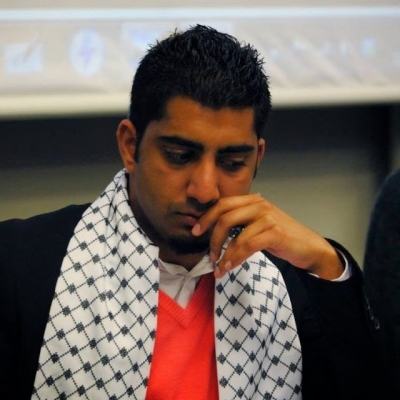
 

Zaakir Ahmed Mayet