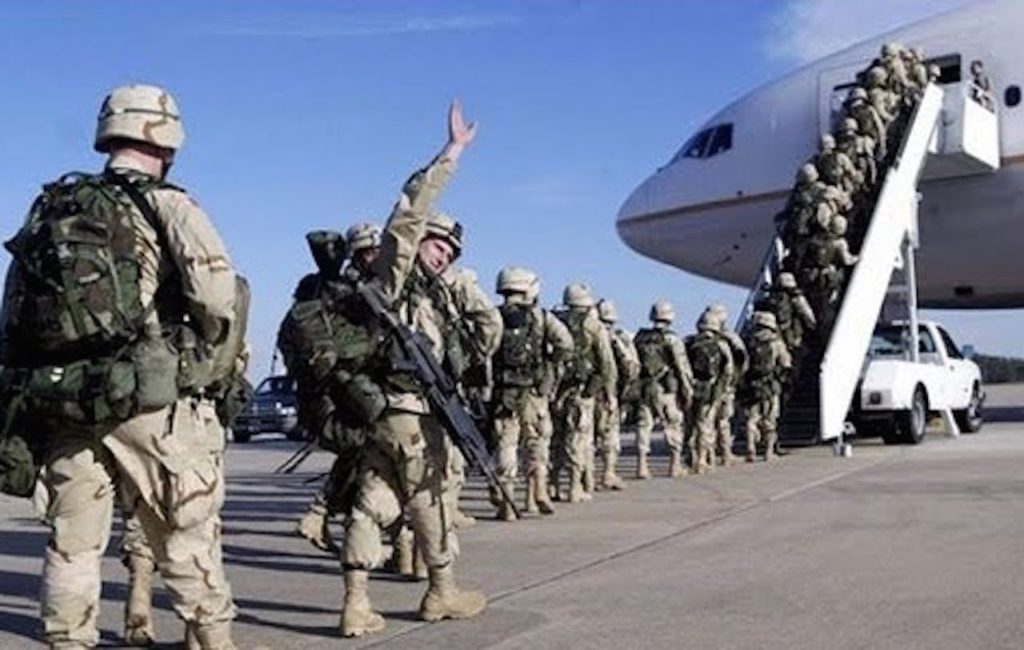
It is significant that US President Donald Trump has decided to withdraw his troops from Syria. The 14th December decision was followed immediately by another announcement by the President to pull out a sizeable number of soldiers from Afghanistan where the US has been involved in a war for the last 17 years — the longest war in its history.
Both the decisions, especially the one on Syria, have been condemned by a lot of US Senators and Members of the House of Representatives. They feel that the decisions undermine the US’s role as a global power. US allies such as Britain and France have also criticised the pull-outs. By getting out of Syria in particular, the US has made it easier for certain powers from within and without the region to exert even more influence over the politics of that country and that of its neighbours to the detriment of the West. Most of the international media argue that US success in fighting the terrorists in Syria which Trump cited as the reason for the withdrawal will be rendered meaningless in no time since terrorist cells are still alive and capable of striking at civilians. In the case of Afghanistan, the US cut-back, the media contends, will expedite the Taliban’s goal of gaining total control over the country.
Conventional wisdom suggests that whether or not the US is around the Taliban will emerge victorious sooner than later. If anything, the US military presence — a foreign power on Afghan soil — has enhanced the Taliban’s reputation as a resistance force among the ordinary people. The eventual total withdrawal of the 16,000 US soldiers will allow the Afghan people themselves to determine their future which will be influenced to some extent at least by Afghanistan’s important neighbours, Pakistan, Iran, China, India and Russia.
If we now turn to the situation in Syria, we would realise that the US role in combating terrorism was limited. The Syrian Army, with the backing of the Lebanese Hezbollah, Iranian militias and the Russian military were primarily responsible for the defeat of the multitude of terrorist outfits in the country between 2012 and 2017. Indeed, there is more than enough evidence to show that some of the more prominent terrorist outfits were in different times and in different circumstances aided and abetted by institutions and organisations associated with the US, Britain and France and countries in the region such as Israel, Saudi Arabia, Qatar and Turkey. They provided financial assistance, military training and critical intelligence, apart from establishing regional and global networks to buttress the activities of the terrorists.
Viewed against this backdrop, the end of the US military operation in Syria may well accelerate efforts within the country to bring about much needed constitutional and political reforms which Syrian President Bashar al-Assad had tried to initiate in 2001. In formulating these reforms, he will have to work closely with his allies, Iran and Russia. But at the end of the day it is the Syrian people themselves who will determine the destiny of their historically and culturally rich nation.
Suppressing the independence and sovereignty of the Syrian nation — and not combatting terrorism – was the real reason behind the active intervention and involvement of numerous actors from within and without the region in the 7 year Syrian conflict. Simply put, the aim was to oust Bashar, the protector of Syrian sovereignty, to achieve regime change in pursuit of theUS-Israeli agenda of perpetuating their hegemony. Trump realised even before he became President that he would not be able to achieve this. Hence,his troop withdrawal.
This should not give us the impression that Trump is in any way opposed to US-Israeli hegemony. His staunchly pro-Israel policy; his intimate relationship with the Saudi elite; his military support for the Saudi-led war on the people of Yemen; his aggressive stance against Venezuela and his lukewarm attitude towards Cuba; his perpetuation of sanctions against Russia stemming from US policy on Crimea and the Ukraine; and his trade war against China aimed at curbing its economic dynamism all seem to indicate that he believes in flexing US power on the global stage. Besides, under Trump US military expenditure has remained high at 610 billion dollars in 2017.
What are the real reasons then that persuaded Trump to act the way he did on Syria and Afghanistan? In both countries the prospect of imminent defeat was a factor that influenced Trump’s decision. More than that was the financial cost of war in the two countries. It is estimated that the Syrian war would cost the US 15.3 billion dollars in 2019. The figures are even more staggering for Afghanistan. With 16,000 troops in the country, the war costs the US taxpayer 45 billion dollars a year. Between 2010 and 2012 when the US had 100,000 troops on the ground, the Afghan war cost a 100 billion a year.
Will some future analyst conclude that in withdrawing US troops from Syria and Afghanistan, Donald Trump acted on his well-honed business instincts?
Dr. Chandra Muzaffar is the President of the International Movement for a Just World (JUST). Malaysia.