Showing posts with label Dr Chandra Muzaffar. Show all posts

Saturday, December 07, 2019

The US-Sponsored Coup that Ousted Evo Morales. Bolivia’s Partnership with China in Lithium Production

By Dr. Chandra Muzaffar

Any human being who values justice and freedom would condemn the coup that ousted the Bolivian president Evo Morales on the 10th of November 2019.
Morales obtained 47.08 % of the vote to secure a fourth term as president in the election held on the 20th of October. Since his vote was more than 10% of what his closest rival had harnessed, there was no need for a second round of voting according to the Bolivian Constitution. However his opponents did not want to accept the result. Neither did the Organisation of American States (OAS) nor the United States of America (USA) nor the European Union (EU).  They alleged “electoral fraud” without providing any tangible evidence. It should be emphasised that international observers from a number of countries testified to the legitimacy of the polls.
To protest Morales’s re-election, his adversaries organised strikes and boycotts. They disrupted public order and even resorted to violence.  The police allowed this to happen because like the military it was also opposed to the president. Indeed, the military and the police played a critical role in undermining Morales.
It was partly because of the failure of the military and police to protect the Constitution and the rule of law that chaos escalated accompanied by the intensification of violence. Morales did not want the situation to deteriorate further and decided to resign as president. A number of other top leaders also chose to quit. Mexico offered Morales political asylum. An opposition politician with the full backing of the military, Jeanine Anez, declared herself interim president of Bolivia. Anez had garnered only 1.7% of the votes cast in the October elections.
It would be naïve to believe that the ouster of Morales and the installation of a new president was the result of the dynamics of internal politics alone. The US had a huge role in the entire episode. Some members of the US elite not only colluded with elements in the Bolivian military but also helped to engineer the convulsions that forced Morales out of office. The National Endowment for Democracy (NED), an appendage of the US establishment with a reputation for orchestrating ‘regime change’ in  a number of countries all over the world was allegedly heavily involved in Bolivian political and civil society activities long  before the October elections.
Why is the US elite so determined to control and direct Bolivia?  It is partly because Bolivia since Evo Morales came to power in 2006 has sought to be a truly independent and sovereign nation. As the first president from an indigenous community (the indigenous constitute 63% of the population) Morales is deeply committed to protecting Bolivia’s wealth and resources and ensuring that they are utilised for the well-being of the people. It is widely recognised that he has succeeded to a great extent to reduce poverty, improve the standard of health of the people, especially the rural folk, and expand educational opportunities for the disadvantaged. Morales has also tried to curb the power of mega corporations in the economy.
In this regard, just before he was ousted, Morales , it is reported, decided to partner with Chinese firms to develop Bolivia’s lithium deposits since Western mining companies were not prepared to comply with the terms that the Bolivian government laid out. For Morales, the exploitation of lithium had to benefit the Bolivian people before anyone else.  Western companies and the US elite saw the Bolivian president as a hurdle.  They were convinced that Morales had to go.
In passing, it has to be highlighted that lithium is in great demand in the world battery market today. It is crucial for the electric car which is predicted to play a significant role in transportation in the near future. Bolivia claims to have 70% of the world’s lithium reserves.
Will Bolivia’s partnership with China in lithium mining come to an end with Morales’s overthrow? It is very likely. But the larger trend towards change in Latin America and the Caribbean in which Morales’s contribution was pivotal will continue. Opposition to the military backed coup in Bolivia is strong and sustained.
Though at least 23 Morales’ supporters have been killed so far by the new regime, the protest against the usurpation of power by an unpopular elite remains unabated.  In Venezuela all attempts, both external and internal, to crush a leadership that is determined to protect the nation’s independence have failed. A right-wing government in Brasilia has not been able to extinguish the Brazilian people’s desire for justice. In Argentina some of the progressive elements have returned to power through the ballot-box.  Ecuador is another example of a country where those with a progressive orientation are prepared to resist the retrogressive forces that seek to re-shape the nation.  The leadership of Nicaragua remains committed to people based policies in spite of all the challenges. The new president of Mexico is attempting to introduce reforms that matter to the people. Most of all, there is Cuba 60 years after a Revolution steadfast as ever in its pursuit of human dignity and national sovereignty and serving as a pioneer of that monumental transformation that awaits Latin America and the Caribbean.
All this has to be located within a broader tapestry – a tapestry in which US and Western power is declining significantly and new centres of power are emerging and becoming more assertive.
*Dr Chandra Muzaffar is the President of the International Movement for a Just World (JUST). Malaysia. He is Research Associate of the Centre for Research on Globalization (CRG).

Friday, November 01, 2019

Kashmir: Self-Determination is the Solution


It is a pity that some groups and individuals are urging palm oil importers in India to refrain from buying the commodity from Malaysia. The Solvent Extractors Association of India, India’s top vegetable oil trade body is one such outfit. Apparently, this boycott is a sort of “punishment” for Prime Minister Dr Mahathir Mohamad’s remarks on Kashmir at the United Nations General Assembly on 27th September 2019.
The Indian government has reportedly protested against Dr Mahathir’s criticism of Indian action in Kashmir. However so far it has not voiced support for the call to boycott Malaysian palm oil. There are also groups such as the Tamil Nadu Congress Committee that have come out against the reduction of Malaysian palm oil imports by India because of the possibility of retaliatory measures that could impact adversely upon workers from Tamil Nadu employed in the information technology sector and restaurant business in Malaysia.
This is one of the dangers of trade boycotts and the like in bilateral relations. They escalate quite easily doing irreparable damage to ties that have been cultivated over a long period of time. It is commendable that the two governments have displayed a degree of restraint. Vested interests, political parties and civil society groups in India and Malaysia should also demonstrate their maturity and approach the issue at hand in a balanced manner.
Since both countries are practising democracies, criticisms of certain aspects of the policies and practices of one another should be viewed as integral to their underlying value system. A democracy does not overact to a critical comment about its policy or practice. This is especially so if the state in question is also the world’s largest democracy.
Besides, one should examine the view expressed by Mahathir without any blinkers. Its main thrust was that the longstanding Kashmir conflict should be resolved “by peaceful means.” UN resolutions on Kashmir should not be disregarded. This is a position that a number of other governments have also expressed from various platforms.
At the crux and core of the UN’s stand on Kashmir is the solemn recognition that the wishes of the people of Jammu and Kashmir should be accorded primacy. This is why right from the outset the UN had urged all sides involved in the conflict to allow for a UN supervised plebiscite in Jammu and Kashmir which would decide the destiny of the people of that region. In other words, the people of Jammu and Kashmir should exercise their sacred right of self-determination.
In the early decades, self-determination was understood as the people of Jammu and Kashmir joining either India or Pakistan. In recent years, a new dimension has emerged. Self-determination in the real sense must also mean the people’s right to establish their own independent, sovereign state of Jammu and Kashmir which is part of neither Pakistan nor India.
Whatever the eventual goal, self-determination as a principle has not only been ignored but often suppressed. Uprisings by the people have been mercilessly crushed, the most infamous of which was the Jammu Massacre of 6th November 1947. It is alleged that Indian occupation forces alongside Dogra forces and RSS militants killed around half a million Kashmiri Muslims. Killings have continued in the last seven decades. It was this that Mahathir alluded to in his UN speech.
It is important to emphasise that these massacres have spawned the rise of militants and militancy in Kashmir. While militancy in Kashmir is largely home-grown and is intimately interwoven with the legitimate struggle for self-determination, it is quite conceivable that it receives material and moral support from elements in the Pakistani power stratum. This support and the militancy itself have now complicated the quest for a just solution to the conflict.
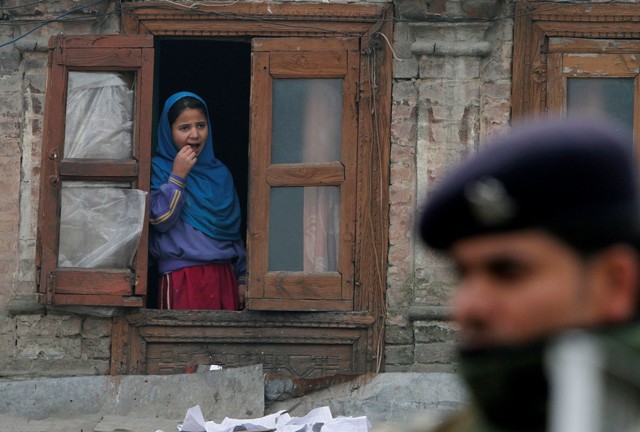
Sometimes political decisions made by New Delhi intensify — perhaps unwittingly — militancy among Kashmiris. The recent revocation of Kashmir’s special status through the abrogation of Article 370 in the Indian Constitution on the 5th of August 2019 is a case in point. A portion of Kashmiris will interpret the revocation and all that it implies in terms of ownership of land, the right of settlement and the alteration of ethnic and religious demographics as the wilful annexation of Indian occupied Kashmir into the Indian Union and therefore a clear repudiation of the desire of the Kashmiri people to determine their own future.
It appears that the abrogation of Article 370 will only perpetuate the violence and the bloodshed associated with one of the longest political conflicts in modern times.

Thursday, September 05, 2019

Concealing The Truth

Concealing the truth from the people is not unusual in politics. It is perhaps more pronounced in global politics partly because it is more difficult to hold powerful global actors accountable. That might is right is an adage that rings true at the international level more than in the domestic arena.
There are currently a number of international issues where the truth is concealed or camouflaged. The demonstrations in Hong Kong for instance which have gone on for weeks are perceived by a lot of people as a struggle for freedom and democracy against an authoritarian government in Beijing. The truth may be a little more complex. It may be in the interest of certain elements in some Western capitals to encourage mass protests in Hong Kong as part of their larger agenda to create instability in China. This in turn may be aimed at curbing China’s rise as a global power which its adversaries perceive as a challenge to their hegemony of the planet.
The crisis in Kashmir is another example of an issue where the entire story may not be known to the people. While changes made to the Indian Constitution have been presented by the government in New Delhi as an attempt to integrate the disputed territory into the national structure, the real reason may be more closely aligned to the ideological orientation of the present BJP leadership. This is why it may have serious repercussions for India’s religious diversity which has been its civilizational hallmark.
A third region in crisis may also reveal that the underlying causes may be quite different from what has been portrayed in the media. Iran has been depicted as the country that is responsible for the present tensions in West Asia. Even if we confined our observation to the immediate circumstance, it is obvious that it is the United States’ decision to scuttle the Iran nuclear deal of July 2015 that is the real reason for the tensions. Why President Trump moved in that direction has a lot to do with increased Israeli and Saudi influence over the White House and their misperception of the power dynamics in West Asia.
Perhaps an even more blatant instance of concealing the truth is the continuing crisis in Venezuela. The US and some of its allies are trying to convey the impression that if the oil-rich state is grappling with serious economic challenges it is due entirely to an oppressive leadership pursuing socialist policies. The truth is that unending schemes and ploys bythe US since the presidency of Hugo Chavez which even witnessed a failed coup against him in April 2002 are the main cause of Venezuela’s woes.
If the truth about what is happening in relation to Venezuela, Iran, Kashmir and Hong Kong is not widely known it is largely because the media, old and new, serve the interests of the powerful. This may not be obvious to many of us because these are on-going crises in constant flux. A quick look at some past episodes may be useful.
In August 1964, the US leadership alleged that North Vietnamese ships had fired at US ships in the Gulf of Tonkin. The allegation provided the justification for the US to intensify its aggression against North Vietnam. The truth is there was no North Vietnamese attack against US ships. The incident was invented as the US Secretary of Defence at that time Robert McNamara admitted years later.
To justify US military action against Iraq when the latter invaded Kuwait in August 1990, a story was concocted that accused Iraqi soldiers of plucking babies out of their incubators and throwing them onto the floor of a hospital in Kuwait. The fabrication was designed to incite public anger against an “utterly brutal and inhuman regime” in Baghdad.  A few years later a monstrous lie was invented about Iraq’s weapons of mass destruction in order to convince the world that the Anglo-American invasion of Iraq in 2003 was totally justified.
A more recent example of political lying was the accusation that Bashar Al-Assad of Syria was responsible for a chemical gas attack in Eastern Ghouta on the 21st of August 2013.  It was the celebrated investigative journalist Seymour Hersh who revealed the truth: that the Western backed rebels were behind the chemical attack.
More than any country in West Asia it is tiny Cuba that has borne the brunt of its huge neighbour’s lies and distortions. Since its Revolution in 1959, it has been constantly accused of fomenting instability and violence in Latin America. And yet, it is the US through its agents and proxies that has orchestrated acts of terror against Cuba the most infamous of which was the downing of a Cuban commercial plane on the 6th of October 1976 that killed 73 people including a number of children. The mastermind of that heinous crime Posada Carilles was given protection in the US until his death in May 2018.
Why lies are propagated so frequently and the truth sacrificed so easily, it is not difficult to understand. It is because the powerful want to protect their power at all costs. Sometimes this would require targeting their foes without proof.
This may be true of two final episodes which I have kept to the end because both have not been investigated thoroughly and therefore one cannot draw definite conclusions. The 9-11 tragedy and the MH 17 disaster though different in many ways are similar in some respects. In both cases, a certain party pointed fingers at the “culprits” almost immediately without presenting an iota of evidence. US officials and the media accused Osama bin Laden of planning  9-11 within hours of the attacks upon the Twin Towers and the Pentagon. Similarly, the then US Secretary of State, John Kerry stated that “There is overwhelming evidence of Russia complicity in the downing of a Malaysia airline plane,” as quoted in the BBC on the 21st of July 2014, 4 days after the disaster.  Kerry did not bother to provide any evidence.
It is equally significant that in both cases important questions about the actual episodes have remained unanswered. In the 9-11 episode, it is still unclear what caused the collapse of a third tower in the vicinity of the Twin Towers and what exactly hit the Pentagon. Likewise, in the case of MH 17, the official version of what had caused the downing of the plane does not blend with some eye-witness accounts or with expert analysis of the nature of the damage to the cockpit.
9-11 was the raison d’etre for the US led onslaught on Afghanistan on the 7th of October 2001. More important, it ignited the US led War on Terror that lasted more than a decade and was seen by many Muslims as an affront to their identity and their dignity. Is it a coincidence that after the July 17th air disaster — the overwhelming majority killed were Europeans —- European governments were more supportive of severe economic sanctions against Russia proposed by the US some months before?  Did the disaster unwittingly achieve some geopolitical objective?
It is only if we continue to ask probing questions that the truth that is concealed will be revealed for the good of everyone.
Dr. Chandra Muzaffar is President of the International Movement for a Just World (JUST). Malaysia.

Wednesday, August 14, 2019

Paul Findley: A Man of Courage

Paul Findley one of the most remarkable Congressmen that the US House of Representatives had produced since the Second World War passed away on the 9th of August 2019. He was 98 years old. He was first elected to Congress in 1960 from a district in Illinois once represented by Abraham Lincoln, his immortal hero.  Findley was elected 11 times from that constituency until his defeat in 1982.
As a Congressman, he played a significant role in the formulation of the War Powers Act which required the US president to notify Congress of foreign military engagements. He was also critical of wasteful pentagon spending. He was one of a handful of early legislators who opposed the Vietnam War.
But Findley’s “notoriety” is associated with something else. He was a consistent critic of the influence of the Israel Lobby over Congress. He could see how the Lobby shaped US policies especially in West Asia. He was very much aware of the tactics the Lobby employed to silence anyone who questioned even mildly the biasness of the US position in the Israel- Palestine/Arab conflict.
Findley himself was a victim of the Lobby’s vicious targeting. Because of his concern over the conflict he had visited the late Palestinian leader, Yasser Arafat, who was then regarded by the US government as a “terrorist.”   That visit became cannon-fodder for the Israel Lobby to mount a massive campaign against Findley which was one of the main reasons for his defeat in the 1982 Congressional election.
Following his defeat, he wrote a couple of books about the power of the Lobby in US public life and how institutions and individuals were confronting the Lobby. They Dare to Speak Out had a bigger impact outside the US than within. His next book,Deliberate Deceptions, revealed the nexus between US and Israel forged through money, corporate links and personal relationships. Findley was now perceived by the US Establishment as a staunch opponent of Israeli power over the US.
His explorations into Israeli and Zionist power in the US invariably compelled him to look into how that power determined public perceptions of Islam and Muslims in general. His tentative perspective on the issue received a boost when he was invited to participate in a workshop in Penang, Malaysia on perceptions of Islam and Muslims in the Western media organised by JUST in October 1995. That workshop, as Findley had observed many times since changed his outlook on not only Islam but also the West’s relationship with a civilization which often invoked negative sentiments especially among the ‘educated. ’ He began to realise that the roots of the antagonism towards the religion and its followers were deeply embedded in the West’s history and entangled with the crusades and colonialism  and post-colonial structures of global power and dominance.
On his return he produced a Friendly Note on his Muslim Neighbour which was widely circulated and later authored a book entitled Silent No More that sought to demolish America’s false images of Islam and Muslims. The book sold 60,000 copies.
As Findley’s mission to combat ignorance about, and prejudice against, another civilisation was beginning to make some progress, it suffered a severe setback through two major events at the start of the new century. Both the destruction of the twin towers in New York on the 11th of September 2001 — the infamous 9-11 incident —- which was the rationale for the US helmed ‘War on Terror’ and the Anglo-American invasion of Iraq in March 2003 made bridge-building between Christians and Muslims a monumental challenge. Nonetheless, Findley persevered. He continued to lend support to the work of the Council on American—Islamic Relations (CAIR) and other such causes.
His last correspondence with me was in January 2016. He had written an article for the JUST Commentary January 20, 2016 entitled, “Truth Seeking About Islam.”  He lamented that his eye-sight was failing —- though his spirit was still high.
Findley was a man of extraordinary courage. The positions he adopted on Israeli power or on Palestinian rights or on justice for Muslims in the US incurred the wrath of many. He was often isolated and marginalised. But he never abandoned his principles.
The tenacity with which he adhered to them was what made him a man of integrity and dignity. He knew the price would be heavy. But it was a price he was prepared to pay.
It is this — his moral conduct in the face of adversity   — that will be his lasting legacy.
Dr Chandra Muzaffar is the President of the International Movement for a Just World (JUST). Malaysia.

Wednesday, August 07, 2019

White Supremacy

A number of commentators have linked the killing of 20 people at a Walmart store in El Paso in the United States of America on Saturday 3rd August 2019 to the rising tide of White Supremacism.
White Supremacism is a belief that whites are superior to others and therefore have a right to dominate them. There were elements of such thinking in a “manifesto” posted online allegedly written by the suspected killer, a 21 year old white from a Dallas suburb. The suspect had justified his massacre as a response “to the Hispanic invasion of Texas” and had made references to the Christchurch (New Zealand) shootings in March this year where a white gunman killed 51 mosque worshippers.
It has been suggested that the notion of white supremacy has become more virulent in the US in the last two years mainly because of president Trump’s rhetoric against Mexicans and other Hispanics and non-white minorities in general. This is the reason why when his daughter Ivanka condemned the Al Paso massacre there was an immediate torrent of criticisms against her. Congresswoman Rashida Tlaib for instance advised her to “check your dad in his tweets. 251 mass shootings in the US in 216 days. He incites violence every day with his hate agenda and racism. More people are dying because he fails to fight white supremacist terrorists.”
White supremacist ideology and practice has a long history behind it. It precedes the American civil war in the middle of the 19th century. The oppression of the African slave population and indeed the institution of slavery itself embodied the contempt and hatred that the whites bore towards the blacks.  The elimination of a huge segment of the indigenous American Indian communities and the systematic marginalisation of those who survived was further proof of white supremacy.  In that sense the Ku Klux Klan as the flag bearer of white racism is not alien to American history.
However, white racism and white supremacy go beyond the US. Western colonialism, whatever its economic and strategic motives, was rooted to a great extent in the ideology of white supremacy. Colonial rulers and administrators were deeply imbued with this ideology. A case in point would be Winston Churchill who stated in 1937, “I do not admit for instance that a great wrong has been done to the Red Indians of America or the black people of Australia. I do not admit that a wrong has been done to these people by the fact that a stronger race, a higher-grade race, a more worldly-wise race to put it in that way has come in and taken their place.”
Of course, in Britain and in much of the contemporary Western world blatant white supremacist thinking has declined considerably. This is partly because of the end of formal colonial rule and the emergence of alternative centres of civilisation especially in the non-Western world.  Nonetheless, because Western hegemony persists in current patterns of global political, economic and cultural power, hints of superiority continue to manifest themselves in various spheres of life. This is why the struggle to evolve more equitable global structures remains formidable.
If anything, two recent developments have exacerbated the situation. Expressions of white supremacy and racist hatred are disseminated more widely today through the social media. Analysts have observed that the vile and vicious propaganda of white supremacists for instance appears to have a greater impact because of the new avenues of communication — avenues which allow their users to adopt extreme positions without assuming responsibility for them. Add to this the flow of migrants to Europe from West Asia, North Africa and Sub- Saharan Africa which has encouraged the Right in the continent to manipulate baseless fears   about the so-called threat to the white, European way of life from these newcomers whose cultures and religions are different. For the Right, the migrant sometimes escaping the chaos at home created by the politics of regime change instigated by Western powers has become a boon to their political fortunes.
In spite of these developments, there are countless groups in Europe and the US standing up to white supremacist politics and racism. They have become vocal champions of inclusivity and diversity in their societies. They eschew the politics of fear and hatred. In fact, Trump’s brazen attempt to harness the support of the white majority by frightening them of some imaginary danger posed by minorities appears to have backfired. A grassroots movement is developing rapidly in various parts of the US seeking to repudiate the politics of white supremacy as anathema to the ideals of the American Constitution and the American Republic.
Dr Chandra Muzaffar is the President of the International Movement for a Just World (JUST).
Malaysia.

Wednesday, July 17, 2019

Stifling The Amman Message

In any civilised society no one will resort to violence, or the threat of violence, to stifle the voices that one does not want to hear.  Unfortunately, this is what happened in Malaysia a few days ago when some bigots managed to force the cancellation of a public seminar on ‘The Amman Message’ organised by certain civil society groups scheduled to be held in Kuala Lumpur on the 13th of July 2019. A Facebook Account holder threatened to bomb the venue of the seminar, the International Institute of Advanced Islamic Studies (IAIS).
Threatening to bomb a place constitutes an act of terror. While there have been instances in the past when force has been employed by groups to disrupt peaceful public gatherings, this is perhaps one of those rare occasions where an individual blatantly links himself and the group he is representing, GerakanBanterasSyiah( the movement to stop the spread of Syiah) to a terrorist threat. It suggests a degree of boldness which we have not witnessed before.
What is shocking about this brazen act is that it is driven by a stark lie. It projects the Amman Message as a devious instrument to propagate Syiah teachings when anyone who has a basic understanding of the Message knows that it merely recognises the validity of all 8 Mathhabs(legal schools) of Islam and forbids takfir (declarations of apostasy) between Muslims. Aimed at creating unity and harmony within the Muslim Ummah, the message was initiated by a Sunni Ruler, King Abdullah of Jordan in 2004. The majority of those involved in drafting and endorsing the document were Sunnis. Besides, the Amman Message was unanimously adopted by the summit of the Organisation of the Islamic Conference (now Cooperation) in Mecca in December 2005. It is undoubtedly true that the Amman Message is one of the most important documents produced by the Muslim world in the last 100 years.
Manufacturing a lie in order to tarnish a noble effort and then deploying that lie to whip up popular emotions is becoming quite pervasive in our society.Of course, the manipulation of the lie is so much a part of politics in Malaysia and most other countries. Nonetheless, in a situation in which fears are exaggerated and uncertainties are exploited even more than in the past, the lie becomes even more impactful — and therefore more dangerous.
It is a pity that so few Malaysians including human rights advocates are prepared to expose the lies that are churned out. Even the threat of violence to silence the truth has not elicited as much condemnation from sane and rational people as it should. When the people are not doing enough, it becomes imperative for those in authority to act with courage and firmness.
In the case of the aborted Amman Message seminar since names and identities are known it is assumed that the police have not encountered insurmountable difficulties in their investigation.As one of the three organisers of the seminar, the International Movement for a Just World (JUST) would like to know what action has been taken against the individual and group that threatened to bomb the venue. The public has a right to know.
It is only when prompt and effective action is taken against those who threaten peace and peaceful dialogue that we will be convinced that the rule of law is supreme in our society and that we uphold civilised norms of human behaviour.
Dr. Chandra Muzaffar is the President of the International Movement for a Just World (JUST), Malaysia.

Saturday, May 18, 2019

Targeting Iran

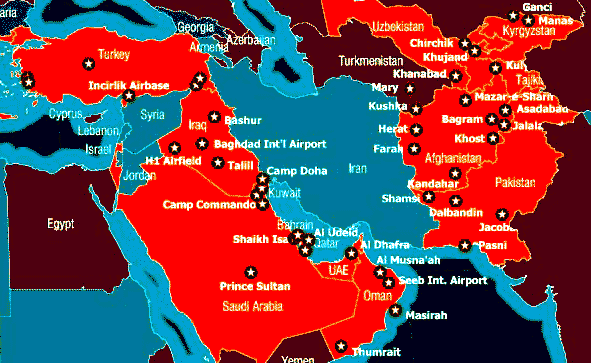
A dangerous flashpoint has emerged in world politics at the moment. There is widespread fear that the United States and its allies might launch a military operation against Iran at any time. A US aircraft carrier and B-52 bombers are already deployed in the region. The alleged sabotage of four oil tankers, two of them Saudi, and the attack on a major oil pipeline are being linked in certain circles without an iota of evidence to Tehran. There is no need to repeat that scenarios of this sort are often manufactured to justify military aggression.
For more than a year now since unilaterally repudiating the 2015 Iran nuclear deal forged between Iran and six world powers, the US has not only re-imposed economic sanctions upon Iran but has also forced other states that trade with Iran to reduce drastically their interaction with Tehran. US targeting of Iran is a grave travesty of justice for the simple reason that the UN’s nuclear inspection agency, the International Atomic Energy Agency, has reiterated over and over again that Iran has complied with the nuclear deal. It should not therefore be punished with old or new sanctions. This is also the position adopted by the other signatories to the deal, namely, Russia, China, Britain, France and Germany.
But US president, Donald Trump is determined to act against Iran partly because of the growing influence of the Israeli government led by Benyamin Netanyahu and a segment of the Israeli lobby in the US upon his administration.  Though Israel has harbored deep distrust of the Iranian leadership since the 1979 Islamic Revolution because of the latter’s proven commitment to the Palestinian cause, it is only in recent years that it has begun to sense that a combination of three factors renders Iran and its people a formidable challenge to Israel’s goal of establishing its hegemonic power over West Asia. Iran’s oil and gas wealth has been reinforced by its scientific knowledge and capabilities underscored by a passionate devotion to the nation’s independence and sovereignty derived from both its historical experience and its attachment to a spiritual identity. Besides, the Iranian government is a staunch defender of the Syrian government which refuses to yield to Israel’s annexation of the Golan Heights, in itself a gross violation of international law.  Iran is also linked to the Hezbollah which has successfully resisted Israeli attempts to gain control over Lebanon, thus threatening the tiny nation’s  sovereignty.
There is also perhaps another reason why Israel and the US are hell-bent on targeting Iran at this juncture. Very soon, leaders of these two states will announce the so-called “deal of the century”, a farcical attempt to resolve the longstanding Israel-Palestine conflict. Because the deal from what little is known of it, is so palpably unjust to the Palestinian people, the Palestinians and the majority of the people of West Asia are expected to reject it outright. According to various sources, the deal condemns the Palestinians to perpetual apartheid. Iran and its allies can be expected to spearhead the opposition. It explains to some extent why Iran has to be hobbled immediately.
As an aside, it is ironical that Israel is showing such hostility to Iran when the Iranian Constitution not only recognizes the Jews as a minority but also provides the community with representation in its legislature. This is unique in West Asia. Israel’s failure to appreciate this is perhaps proof that its real commitment is not so much to the well-being of the Jews as the triumph of its Zionist ideology with its goal of expansionism and hegemony.
It is not simply because of Zionism or Israel that the US Administration is seeking to emasculate Iran. Weakening and destroying Iran is foremost on the agenda of another of Trump’s close allies in the region. The Saudi ruling elite also saw the Iranian Revolution of 1979 as a mortal threat to its position and power because it overthrew a feudal monarch, was opposed to US dominance of the region and sought inspiration in a vision of Islam rooted in human dignity and social justice.  As Iranian influence in West Asia expanded especially after the Anglo-American invasion of Iraq, the Saudi elite became even more apprehensive of Iran and wanted the US to curb Iran’s role in the region. In this regard it is worth observing that if Iran has become more influential in the region in the last 15 years or so, it is not only because of the astuteness of the Iranian leadership but also because of the follies of the Saudi and US ruling elite. The overthrow of Saddam Hussein through an Anglo-American invasion of Iraq in 2003 for instance paved the way for the ascendancy of Shia politicians more inclined towards Iran.
How and why Saudi and Israeli elite interests and ambitions are intertwined in the US push against Iran is not highlighted in the media including the new media. Consequently, only a small fraction of the public understands the real causes for the escalation of tensions in West Asia centering on Iran. It is largely because the media conceals and camouflages the truth, that a lot of people see the victim as the perpetrator and the perpetrator as the liberator. Or as Malcolm X once put it, “If you are not careful, the newspapers will have you hating the people who are being oppressed and loving the people who are doing the oppressing.”
Dr. Chandra Muzaffar is the President of the International Movement for a just World (JUST) Malaysia.

Thursday, January 24, 2019

A Morally Right Decision

The decision of the Malaysian government not to allow Israelis to enter the country to participate in the World Para Swimming Championships in Sarawak in July-August 2019 is both politically correct and morally right. TunDr. Mahathir Mohamad’s firm stand on this issue has been endorsed by PKR president, Dato Seri Anwar Ibrahim and Deputy Sports Minister, SimHee Kyung. A coalition of 29 NGOs has also voiced support for the decision.
That Malaysia has no diplomatic relations with Israel provides the political rationale for our stand. What this means in concrete terms is that Israelis cannot visit Malaysia just as Malaysians cannot visit Israel. This is an important dimension of our foreign policy. As a national policy it supersedes internal arrangements on the immigration rights of a state within the Malaysian Federation.
If our decision on Israeli swimmers is politically viable it is because it is anchored in a powerful moral ethos. In international law, Israel is an occupier that has annexed and usurped not only Palestinian land but also Syrian and Lebanese territories. If Malaysia recognised Israel, we would be bestowing legitimacy upon Israeli occupation and oppression.
Israeli occupation has become much more severe since 1948 as reflected in its seizure of the West Bank and Gaza in 1967; its tightening grip over East Jerusalem; and the construction of a wall that divides the West Bank and marginalises the Palestinian population. Even more tragic is the continuous massacre of Palestinians and other Arabs in the course of the last 70 years through wars and brutal assaults. If they are not killed or executed, the victims of Israeli aggression are subjected to imprisonment and torture or simply humiliated through body searches at numerous check-points. Indeed, what Israel has established in the West Bank and even within Israel itself is an ‘Apartheid State’ that denies Palestinians their basic human dignity.
It is against this backdrop that one should view the Malaysian decision to bar Israelis from entering our country. There are thousands of individuals and organisations all over the world that are opposed to Israel’s intransigent arrogance. By boycotting Israel, many of them are hoping to compel Israel to obey international law. This is the aim of the global Boycott, Divestment and Sanctions (BDS) movement which has grown and expanded over the last 15 years or so. Through boycott of Israeli sporting activities, musical concerts, academic programmes and Israeli goods produced especially in the West Bank, the BDS movement aims to isolate Israel and as a result create awareness among the Israeli people of the imperative importance of forcing the Israeli government to recognise the legitimate rights of the Palestinian people. It is significant that the BDS movement is totally committed to peaceful protest.
Academic organisations such as the American Studies Association (ASA) have joined the movement as have churches in the United States like the Presbyterian Church and the Methodist Church that have divested their investments in Israel. The Dutch pension fund, PGGM is another entity that has divested its shares in companies operating in the country. There are also big European companies such as Veolia, Orange and CRH that have exited the Israeli market. As a result of all this, there was a 46% drop in Foreign Direct Investment (FDI) into Israel in 2014 compared to 2013.
It is not just Churches and companies.  There are even cities such as Dublin in Ireland and Leicester in Britain that are part of the BDS movement. Among prominent individuals associated with BDS is the indefatigable Desmond Tutu who sees parallels between what is happening in Israel-Palestine today and Apartheid South Africa in the past.
It is within the context of the BDS movement that we should view our own boycott of Israeli swimmers. We are strengthening the most promising movement alive today for the liberation of the Palestinian people.  It is a movement that has drawn people from diverse religious and cultural backgrounds into a common commitment to a common cause — a cause which Nelson Mandela once described as the greatest moral issue of our time.
By saying ‘no’ to Israeli swimmers — as others have said ‘no’ to other Israeli athletes in other fields — we are continuing to champion a struggle that we have been devoted to for such a long while. Criticisms from various quarters, even economic and political moves against Malaysia as a nation, should not deter us from continuing with our struggle. Let us remind ourselves that we are not alone in this noble quest for justice.
Dr. Chandra Muzaffar is the President of the International Movement for a Just World (JUST). Malaysia.

Friday, January 04, 2019

The Uighur Question: A Civil Society Solution

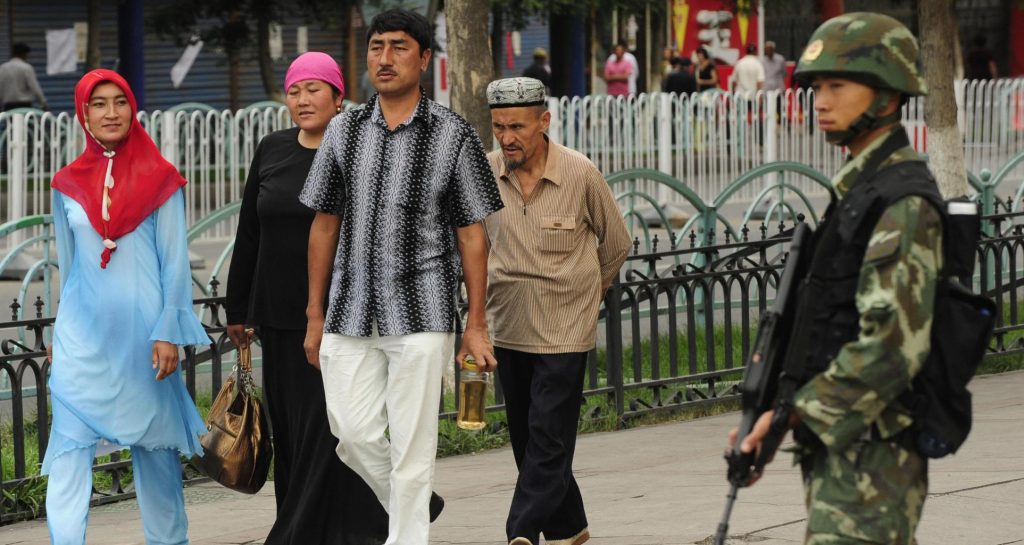
In the last few months, the International Movement for a Just World (JUST) like so many other civil society groups in various parts of the world has been inundated with videos and articles from different sources alleging  cruel persecution and harsh oppression of the Uighur Muslim minority in Xinjiang province in the Western part of China. It is alleged that the Chinese government views the Uighur and also some other Muslim groups such as the Kazakhs and Kyrgyzas as threats to national security given their purported links to terrorism and separatist insurgency. Even a UN human rights panel had issued a report in August 2018 that stated that in order to wean them away from terrorism “as many as 2 million people may have been forced into a vast network of detention camps” in Xinjiang.
In these camps, according to dissident Uighurs, there is a systematic effort to brainwash the detainees. The propaganda is not just about immunising them against militancy or separatist ideologies. They are required it is alleged to abdicate Islamic prohibitions and even to renounce their faith. Torture is apparently common in these camps and even deaths have occurred. Some critics have gone so far as to describe the targeting of the Uighurs as “the most brutal repression the regime has undertaken since the Cultural Revolution.”
The Chinese authorities have denied vehemently these allegations. They reject any suggestion that there has been forced renunciation of Islam in the camps. They admit though that there are re-education centres but focused entirely on combating terrorism, religious extremism and separatism.
These denials have not convinced the critics especially those from civil society in the West and the East. They persist with their allegations and are disappointed that governments as a whole have chosen to keep quiet about the atrocities supposedly committed by the Chinese authorities. They attribute their silence to the governments’ fear that China with its huge economic clout will make things difficult for countries that have become dependent upon Chinese investments and trade for their own economic well-being.
At the same time it is equally true that China is being attacked much more in the media and by civil society groups today than in the past because of its phenomenal rise as a global power. The forces that dominate the present global system resent this since they are hell-bent on perpetuating their hegemony. This is why they are using the media and civil society to expose flaws and foibles in Chinese governance. How Beijing treats the Uighurs and other minorities is perhaps one of those flaws that is susceptible to manipulation and distortion. And indeed, there has been a great deal of exaggeration and hyperbole in the media about the plight of the Uighurs. This does not mean however that the real challenges confronting the Uighurs and other minorities should be glossed over.
To convince everyone that the Chinese government is willing to address  genuine Uighur grievances it should invite representatives from civil society in a number of Muslim majority countries to undertake a fact-finding mission to Xinjiang  whose primary purpose would be to examine and analyse the actual situation on the ground facing the Uighur and other alleged victims of persecution. The mission should have maximum access to the Uighur community and to the authorities in the province. Members of the mission should have the full freedom to visit the re-education centres and conduct interviews with detainees past and present. The mission’s report should be submitted to not only the authorities in Xinjiang and to the leaders of the Uighur community but also to the government in Beijing. The countries from which the members of the mission are drawn and the world at large should also have full access to its findings.Most of all, one hopes that if the recommendations are feasible, Beijing and Xinjiang will try to implement them with sincere trust.If that is done, it is quite conceivable that the chapter on the Uighurs will be brought to a close.
It is in Beijing’s interest to resolve the Uighur issue in such a manner that the identity and dignity of the Uighurs and other minorities in Xinjiang are protected and enhanced. If injustices against Uighurs real or perceived are allowed to fester much longer, it may erode China’s standing among Muslim majority countries. This is especially so since the Hui, Muslims among the majority Han people, it is alleged, are also now being targeted by the authorities.
As negative perceptions of the Chinese government’s treatment of the Uighurs and other Muslims grow, there could be repercussions in the medium and long-term for China’s Belt Road Initiative (BRI) since it involves a large number of countries with substantial Muslim populations. China is also heavily dependent upon the import of oil from Muslim countries. There are already civil society groups in a couple of these countries which are unhappy about Beijing’s attitude towards the Uighurs and Muslims in general. They are demanding action against Beijing.
Viewed in this context, resolving Uighur challenges immediately may well secure China’s economic position and fortify its global role.
Dr Chandra Muzaffar is the President of the International Movement for a Just World (JUST) Malaysia.

Wednesday, January 02, 2019

Terrorism is “Made in the USA”. The “Global War on Terrorism” is a Fabrication, A Big Lie

By Prof Michel Chossudovsky


First published in March 2015
Prominent academic and author Dr Michel Chossudovsky warned that the so-called war on terrorism is a front to propagate America’s global hegemony and create a New World Order.
Dr Chossudovsky said terrorism is made in the US and that terrorists are not the product of the Muslim world.
According to him, the US global war on terrorism was used to enact anti-terrorism laws that demonised Muslims in the Western world and created Islamophobia.
Elaborating on his argument, Dr Chossudovsky said that NATO was responsible for recruiting members of the Islamic state while Israel is funding “global jihad elements inside Syria”.
Dr Chossudovsky, who is also the founder of the Centre for Research and Globalisation, further emphasised that the global war on terrorism is a fabrication, a big lie and a crime against humanity.

Echoing

 Dr Chossudovsky’s arguments, Malaysia’s prominent political scientist, Islamic reformist and activist Dr Chandra Muzaffar said that the US has always manipulated religion to further its global hegemony on sovereign states.
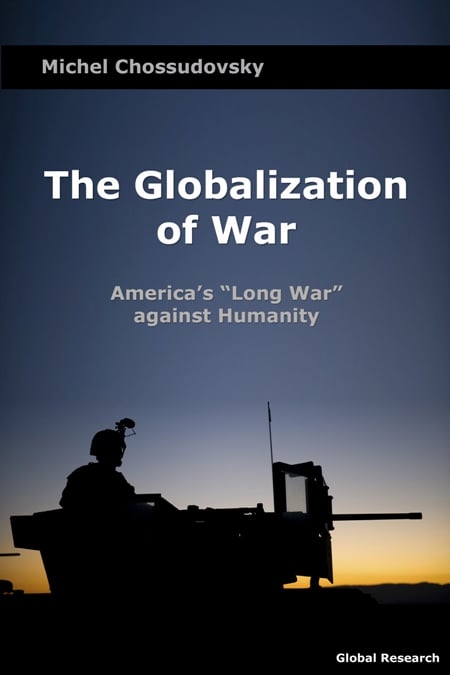
 “The Globalization of War is undoubtedly one of the most important books on the contemporary global situation produced in recent years. 
In his latest masterpiece, Professor Michel Chossudovsky shows how the various conflicts we are witnessing today in Ukraine, Syria, Iraq and Palestine are in fact inter-linked and inter-locked through a single-minded agenda in pursuit of global hegemony helmed by the United States and buttressed by its allies in the West and in other regions of the world.”   Dr Chandra Muzaffar, President of the International Movement for a Just World (JUST)

The Globalization of War: America’s “Long War” against Humanity

Michel Chossudovsky

$14.00, Save 39%

Tuesday, December 25, 2018

Trump Pulling Out

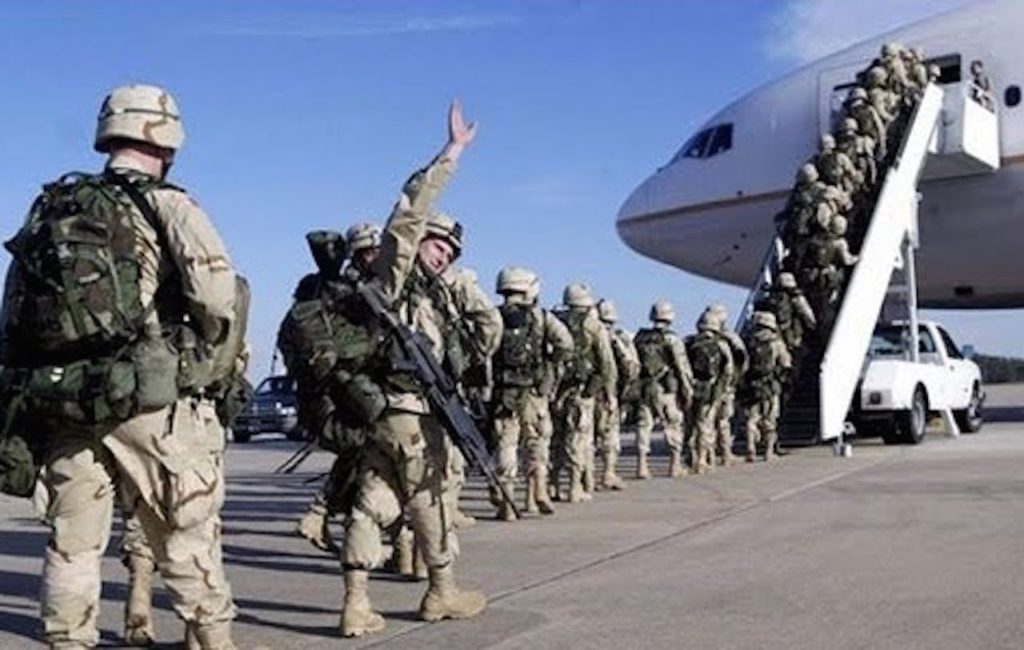
It is significant that US President Donald Trump has decided to withdraw his troops from Syria. The 14th December decision was followed immediately by another announcement by the President to pull out a sizeable number of soldiers from Afghanistan where the US has been involved in a war for the last 17 years — the longest war in its history.
Both the decisions, especially the one on Syria, have been condemned by a lot of US Senators and Members of the House of Representatives. They feel that the decisions undermine the US’s role as a global power. US allies such as Britain and France have also criticised the pull-outs. By getting out of Syria in particular, the US has made it easier for certain powers from within and without the region to exert even more influence over the politics of that country and that of its neighbours to the detriment of the West. Most of the international media argue that US success in fighting the terrorists in Syria which Trump cited as the reason for the withdrawal will be rendered meaningless in no time since terrorist cells are still alive and capable of striking at civilians. In the case of Afghanistan, the US cut-back, the media contends, will expedite the Taliban’s goal of gaining total control over the country.
Conventional wisdom suggests that whether or not the US is around the Taliban will emerge victorious sooner than later. If anything, the US military presence — a foreign power on Afghan soil — has enhanced the Taliban’s reputation as a resistance force among the ordinary people. The eventual total withdrawal of the 16,000 US soldiers will allow the Afghan people themselves to determine their future which will be influenced to some extent at least by Afghanistan’s important neighbours, Pakistan, Iran, China, India and Russia.
If we now turn to the situation in Syria, we would realise that the US role in combating terrorism was limited. The Syrian Army, with the backing of the Lebanese Hezbollah, Iranian militias and the Russian military were primarily responsible for the defeat of the multitude of terrorist outfits in the country between 2012 and 2017. Indeed, there is more than enough evidence to show that some of the more prominent terrorist outfits were in different times and in different circumstances aided and abetted by institutions and organisations associated with the US, Britain and France and countries in the region such as Israel, Saudi Arabia, Qatar and Turkey. They provided financial assistance, military training and critical intelligence, apart from establishing regional and global networks to buttress the activities of the terrorists.
Viewed against this backdrop, the end of the US military operation in Syria may well accelerate efforts within the country to bring about much needed constitutional and political reforms which Syrian President Bashar al-Assad had tried to initiate in 2001. In formulating these reforms, he will have to work closely with his allies, Iran and Russia. But at the end of the day it is the Syrian people themselves who will determine the destiny of their historically and culturally rich nation.
Suppressing the independence and sovereignty of the Syrian nation — and not combatting terrorism – was the real reason behind the active intervention and involvement of numerous actors from within and without the region in the 7 year Syrian conflict.  Simply put, the aim was to oust Bashar, the protector of Syrian sovereignty, to achieve regime change in pursuit of theUS-Israeli agenda of perpetuating their hegemony. Trump realised even before he became President that he would not be able to achieve this. Hence,his troop withdrawal.
This should not give us the impression that Trump is in any way opposed to US-Israeli hegemony. His staunchly pro-Israel policy; his intimate relationship with the Saudi elite; his military support for the Saudi-led war on the people of Yemen; his aggressive stance against Venezuela and his lukewarm attitude towards Cuba; his perpetuation of sanctions against Russia stemming from US policy on Crimea and the Ukraine; and his trade war against China aimed at curbing its economic dynamism all seem to indicate that he believes in flexing US power on the global stage. Besides, under Trump US military expenditure has remained high at 610 billion dollars in 2017.
What are the real reasons then that persuaded Trump to act the way he did on Syria and Afghanistan?  In both countries the prospect of imminent defeat was a factor that influenced Trump’s decision. More than that was the financial cost of war in the two countries. It is estimated that the Syrian war would cost the US 15.3 billion dollars in 2019. The figures are even more staggering for Afghanistan. With 16,000 troops in the country, the war costs the US taxpayer 45 billion dollars a year. Between 2010 and 2012 when the US had 100,000 troops on the ground, the Afghan war cost a 100 billion a year.
Will some future analyst conclude that in withdrawing US troops from Syria and Afghanistan, Donald Trump acted on his well-honed business instincts?
Dr. Chandra Muzaffar is the President of the International Movement for a Just  World (JUST). Malaysia.