Showing posts with label Zaakir Ahmed Mayet. Show all posts

Monday, July 16, 2018

Sykes-Picot: Collapse of the Political Framework

Colonial interests have been chaperoned by willing Arabian partners

By  Zaakir Ahmed Mayet


The Israeli think tank, the Jerusalem Centre for Public Affairs, connected to the Director General in the Israeli Foreign Ministry Dore Gold, hosted a special conference in August 2016. In the Q&A session with panelists, former ambassador of Israel to the United States and member of the International Advisory Board of the Brookings Institution Itamar Rabinovich and Col. (ret.) Dr. Jacques Neriah, former deputy head for assessment of Israeli Military Intelligence and former foreign policy advisor to Prime Minister Yitzhak Rabin, a strangely pertinent question was posed by the chair of the session, You have talked about the need to neutralise radical Islamic and jihadi forces before the Middle East can move ahead. How does that happen at this juncture, does it happen through international intervention or can it happen as you mentioned at the end of your talk? Can the Arab world headed by Egypt and Saudi Arabia, the GCC put together political will and have the capability of self-securing as you will in this new Middle East? It would appear that the conference and the chair’s question were prophetic. He not only accurately identified the current alliance against Qatar but also referred to the Muslim East as a “new” Middle East. The more plausible answer that ties into the earlier discussion about Israeli interests is that the entire dynamic playing out around Qatar was formulated in Israel. It is vital to bear in mind that this conference took place 10 months before the current events. It draws us to the Sykes-Picot agreement. What is its relevance to Israel and the US? 


The Sykes-Picot agreement was drawn up in 1916 with the fall of the Ottoman Sultannate. The hegemonic powers at the time, key players in the division of the Ottoman Sultanate were Britain and France represented respectively by Mark Sykes and François Georges-Picot. The important elements were not the negotiations of the agreement or even the actual division but the principles that underlined the division. The most important point was that the hegemonic powers would be able to retain control via direct and indirect means to secure their interests in the region. The key tool utilised was the Arabian rebellion led by the Amir of Najd, ‘Abd al-‘Aziz ibn Sa‘ud, and the Ottoman-appointed King of the Hijaz, Sharif Husayn. The Arabian rebellion acted in Western hegemonic interests to defeat the Ottoman Sultanate. The rewards are seen today in the Kingdom of Saudi Arabia, named after the ruling Najdi family, and the other Gulf states. It can, therefore, be concluded that the monarchies of the Muslim East were established with the backing of the hegemonic powers and that their continued survival is intrinsically linked to their power in the region.


 Over time, French and British hegemony receded and was replaced by new hegemonic powers: the US and USSR. This is most clearly viewed in history documenting Arab nationalism and the various backers of Zionist Israel and its Arabian adversaries in their wars. The end of the Cold War, which saw the collapse of the Soviet Union, left the US as the sole hyper-power with an extensive network of military bases throughout the world. This allowed Washington to project Western interests and broad spectrum dominance, particularly in the Muslim East. Interestingly, a particularly important development in the policy of disengagement from the region was witnessed during the Obama regime. There was a clear decline in attempts at projecting hegemonic power concerning US dependents, namely Israel and the GCC+1. That is not to suggest that US projection of hegemony ceased exposing its allies Israel and the GCC+1 to their fate. The Trump regime was eagerly anticipated by the GCC and Israel to reset Obama’s disengagement policy.


 When analysing US hegemony we must seek the fundamental principle underpinning Sykes-Picot: control and protection of colonial interests. This is primarily achieved via three permutations: destabilisation by backing rival factions internally causing friction and civil war, regime change, and the installation of puppet rulers like the Gulf monarchs. These were practised in El Salvador earning the epithet, the El Salvador option. These were later utilised by the US military via generals Stanley McCrystal and Michael Flynn. They also appeared in Somalia when the Supreme Council of Islamic Courts Union was formed, which was not only representative, but also the most stable form of governance. Interestingly al-Shabab was marginalised by more level-headed elements within the Court Union.


The US began funding Ethiopia and Kenya to engage the Court militarily, destabilising Somalia leaving al-Shabab as the only option to protect the people. Such destabilisation often prepares the groundwork for larger invasions as seen during the Gulf War, Iraq, Afghanistan, and later Somalia with regards to al-Shabab or limited kinetic operations via Special Forces and covert structures that lack accountability such as Joint Special Operations Command — which interestingly operated out of Qatar for sometime as part of the War of Terror. The net result of both is installation of a pliable ruler as was seen in Afghanistan (Hamid Karzai), or continued destabilisation that allows the US to achieve its strategic objectives and allow continuation of the Wolfowitz, Rumsfeld, Cheney policy of the world as a battlefield. Either permutation is acceptable to the US. It is at this point that it would be important to shift attention to Israel, which is the projection of US interests in the region.


 The lens through which recent events must be viewed is that of Israel, which is the central axis of conflation of interest. The US-Israeli relationship is symbiotic. At times US-Israeli interests were so perfectly aligned that they could be perceived as if the US was dependent on Israel in the region. At other times, the divergence in certain aspects of policy created the impression of independence and Israeli reliance on the US.


Not a secret anymore, retired Saudi Major General Anwar Eshki, left, officially meets with director-general of the Israeli Foreign Ministry at the Council on Foreign Relations in New York, 6-4-2015. Notice how Gold has his skullcap on, whereas there is nothing that distinguishes Eshki as a Muslim, or even an Arab. This was particularly clear while studying history documenting US-Israeli relations. A brief review of the records highlights two examples of this. In May 1970, a meeting took place between US President Nixon and Yitzak Rabin, who was then Israel’s ambassador in Washington. As per Rabin’s account, Nixon asked, “In view of the Soviet involvement, is Israel’s position still…” Rabin answered, “Give us the tools and we’ll do the job,” Nixon replied “Good, that’s all I wanted to know.” In fact, the Israeli Ministry of Foreign Affairs in a publication quoted Nixon as saying, “the best Soviet stopper in the Mideast.” Under Ronald Reagan, Israel was described as a strategic asset. These statements create a perception that Israel is a “game-changer” extension of US policy in the Muslim East.


However, the antics of Israeli Prime Minister Benjamin Netanyahu during the Obama regime reflected a slight divergence from the above interpretation and demonstrated Israel’s dependency on the US. The relationship between Trump and Netanyahu prima facie may be likened to that of yesteryears as Trump pursues a heavy-handed approach not only to the Islamic Republic of Iran but also pledged to move the US embassy to Jerusalem, which has serious implications in international law. In summary, the US-Israeli position can be viewed as analogous in relation to the Muslim East taking into consideration the various comments made by “Mad Dog” Mattis and company on regional issues.


 The Zionist State has long held onto the fear of the Muslim Brotherhood, especially as manifested via the creation and growing strength of Hamas in Palestine, fear of the 1979 Islamic Revolution in Iran, and the formation of Hizbullah in Lebanon in response to Israel’s occupation of Beirut in 1982. We will now address the issue of how the GCC+1 have aligned themselves with Israeli interests and have boarded the proverbial Israeli boat to support imperial hegemony. It is acknowledged that the Saudi monarchy acts as the big brother of GCC states and influences their policies. Therefore the major focus shall be on the conflation of interests between Bani Saud and Bani Israel as depicted in their relationship. In 2012 WikiLeaks released a flood of cables dating back to 2009. They related to permission the Saudi regime granted Israel to strike Islamic Iran. At the time Saudi Foreign Minister Saud al-Faisal denied such claims stating that news of this nature only sought to fray Arab unity. As the picture became clearer, Saudi-Israeli relations were indeed strengthening raising questions about Saudi denials.


The extensive nature of the clandestine relationship between Bani Saud and Bani Israel included secret discussions, special flights over Saudi air space for Israeli personnel, publishing op-eds by Saudi policymakers in Israeli newspapers, sharing public platforms, economic ties, and security cooperation. In 2015 it was revealed that Israeli goods were appearing under foreign names to circumvent global boycott. The Israeli Iron Dome was offered to the GCC states according to Haaretz indicating open avenues of communication. More recently, three striking actions symbolise the normalisation of ties between Bani Saud and Bani Israel. The first is US President Trump’s direct flight from Riyadh to Tel Aviv, which attracted a fair deal of media attention. The second is the groundbreaking move to allow a Saudi analyst, for the first time since the creation of Israel, to speak on Israeli television. The final and most striking was in 2015 when retired Saudi General Anwar Eshki spoke to Israel’s Channel 10 news during a remarkable event in Washington in which he shared a platform with the incoming director-general of the Israeli Foreign Ministry, Dore Gold. In the case of the United Arab Emirates (UAE), relations with Israel have been less secretive.


The most explosive revelation occurred in 2015 when a senior official of the resistance front confirmed that Israel had not intended to continue Operation Protective Edge of 2014 beyond a 10-day assault on Gaza. It was only after the UAE undertook to bankroll the balance of the 41 days that Tel Aviv continued with its slaughter. Israeli Major General Yossi Baidatz and Dr. Dmitry Adamsky said the deterrence-driven operations theory was to be used in Gaza in 2014. This meant short and aggressive operations with limited attacks carried out in-between. The drastic departure from this theory not only lends credibility that a large part of the operation was funded by a foreign power (UAE) but gives rise to a further possibility that Israeli attacks on Gaza were an attempted occupation that failed. In 2015 Israel opened its first diplomatic mission in the UAE heralding strengthened economic and diplomatic ties between them.


In March 2017 the UAE held joint military drills with Israel and the US. This provides a clear indication of the UAE jumping on the Israeli boat. The other important state involved is Bahrain. Its illegitimate rulers have brutally suppressed the people to crush protests calling for political reform and representative elections. Last February, 60 Israeli special forces personnel flew into the UAE to “train Bahraini riot police.” The irony is that these are the same barbaric tactics used against the Palestinian people. The Israeli Minister of Regional Cooperation in January 2017 provided an explosive revelation regarding Bahraini-Israeli cooperation and relations when he said, “Bahraini riot commanders are being trained in Israel, Bahraini authorities have good relations with us, in addition to political affairs, medical actions for the king of Bahrain and his family are being done by Israeli specialists either in Tel Aviv or in Bahrain.” The military, economic and political relations between Israel and Egypt have never been secret. Israel reopened its embassy in Egypt in 2015.


General ‘Abd el-Fattah el-Sisi has been a vital component in wresting control away from the elected Muslim Brotherhood and acts as Israel’s enforcer along the Gaza border. It was confirmed to this writer by the resistance that on August 1, 2014, Egypt allowed Israeli forces to penetrate Gaza via Rafah. This was meant to surprise the resistance fighters as much of the ground fighting was concentrated in the northern and eastern parts of Gaza. During a surprise operation, Hamas was able to capture an Israeli soldier that activated the “Hannibal Directive” authorising Israel to use of unbridled force to prevent such captures. Hamas representatives told this writer that the skies opened and fire rained down upon the Palestinian people. Figures indicate that after three hours of continuous bombardment, 135 civilians — 75 of them children — were massacred. Amnesty International and other organisations dubbed this event as “Black Friday” denoting the crimes committed by Israel that day.


It was stated by the Washington Institute that when el-Sisi overthrew the Mursi government, Israel immediately threw its support behind the coup leader. In fact “Israel launched diplomatic missions (initiatives) in Washington and several major European capitals to support Egypt’s new political situation and prevent a diplomatic blockade on Cairo.” It is evident from the above that Israel’s outlook on the Muslim Brotherhood, Hamas, Iran, and Hizbullah predate the policy shift of the GCC+1. It is therefore logical to reason that the GCC+1 has stepped on board the Israeli-US boat and have effectively sacrificed the Palestinian people for their own personal gain.


 This places us in the vital position to now strike at the crux of the issue. We have unpacked the fallacy of the public claim that Qatar was solely responsible for supporting terrorism in the region. We have determined that Israel, particularly during the Trump regime, is an extension of US interests and that the survival of the strategic asset would be paramount. We have determined that the GCC+1 have been falling into the Israeli orbit and have imbibed Israel’s strategic concerns as their own. The net effect is that the root of the current fiasco regarding Qatar is related far more closely to Israeli concerns than those of the GGC+1. That is not to dismiss concerns of the GCC+1 but the strategic concerns particularly those stated in the recent coverage, that is, the Muslim Brotherhood, Hamas, Hizbullah, Iran, al-Jazeera are Israeli interests and predate the GCC+1 arrival on the scene. It, therefore, begs the question: what aspect relating to the Israeli interests triggered the current event?


Zaakir Ahmed Mayet is Chairman of the Media Review Network of Pretoria, South Africa.

Friday, September 01, 2017

Zionism’s doomsday scenario


Failure of Israel’s deterrent capability
Zaakir Ahmed Mayet


There appears to be blood across the Israeli flag as politicians, the security establishment and parties with vested interests battle it out to direct the future of the colonial state. As fighting continues an inevitability has dawned on all the major players including hardliners, that the current trajectory of Israeli policy mirrors that of Apartheid South Africa. The end result will be a one state solution which means the dismantling of the colonial outpost to reflect a democratic state representative of all the people.
Statements at the Herzliya conference (May 2017) reflect a deeply fractured Israeli landscape. Former Israeli Prime Minister (one-time defence minister) Ehud Barak stated at the conference that current policy “will surely result in a ‘one-state solution’ which will either be an ‘Apartheid State’… or a ‘bi-national state’ in which the Jews will become a minority within a couple of generations, and will most likely be in a continuous civil war.” This was not the only attack on the hard-line coalition. The erstwhile former Foreign Minister Tzipi Livni added to the chorus, “The decision of whether to work toward a two-state solution or toward a single united nation should be a national one, in order to ‘take back our democratic Jewish Israel.’” The recent publication of the “Security First” report authored by over 200 former Israeli generals, Shabak, and Mossad figures, and the Center For A New American Security report paint a similar picture of polarisation. The recognition by the Israeli security establishment that military force can no longer solve the problems Israel faces is a damning indictment of the failure of Israeli policy. Therefore, the current discourse revolves around a two-state or one-state solution, the latter lifting the veil on the apartheid nature of Israel which is being exhibited by the current right-wing regime. As the political crisis continues, Israel faces a far more serious challenge.
The State of Israel was founded on the basis of terror and disproportionate force. The first signs of this entrenched policy emerged in the massacres of Deir Yassin, which were characterised with such brutality that it served as a primer for the mass exodus and ethnic cleansing of the indigenous Palestinian population. Menachem Begin stated, “Without what was done at Deir Yassin there would not have been a State of Israel.” He added, “While the Haganah [the Jewish terrorist group] was carrying out successful attacks on the other fronts… The Arabs began fleeing in panic, shouting ‘Deir Yassin’.”
This policy has remained the cornerstone of Israeli militarism. History is often written by the victors and the public narrative of the June 1967 war is no exception. Israel was portrayed as a victim, bullied and bludgeoned by its larger Arab neighbours. The 1967 victory was projected as a miracle confirming alleged divine help and the justness of Zionist occupation.
Occasionally, the true narrative pierces the proverbial propaganda veil and truth filters through. The catalytic deterrence capacity policy was the prime motivator for the first strike Israel conducted to spark the 1967 war. Ariel Sharon, a divisional commander at the time stated “deterrence capability… our main weapon — the fear of us.” The deterrence capacity policy of Israel has been characterised as one of deterrence by punishment which constitutes disproportionate force and punishment.
This particular shade of Israel’s deterrence doctrine was incorporated by the Israeli military with adoption of the Dahiya doctrine. Major General (ret) Giora Eiland who is thought to be the real mastermind behind this doctrine argued the “impossibility of defeating Hizbullah.” He devised a policy that would “lead to the elimination of the Lebanese military, the destruction of the national infrastructure, and intense suffering among the population,” so much so that “the suffering of hundreds of thousands of people are consequences that can influence Hizbullah’s behaviour more than anything else.” The diabolical playbook of disproportionate force was utilised by the then head of Israel’s Northern Command, Gadi Eizenkot who stated,
What happened in the Dahiya quarter of Beirut in 2006 will happen in every village from which Israel is fired on… We will apply disproportionate force on it and cause great damage and destruction there. From our standpoint, these are not civilian villages, they are military bases…
This doctrine is premised on the fact that the sheer magnitude of destruction would discourage further engagement on the battlefield and reinforce three concepts: that the Israeli military has the capacity to wipe out the opposition merely with the might of its bombardment (shock and awe). Second, that Israel would act viciously against anyone, be they civilian or combatant, once they had commenced bombardment and finally, that their conduct should serve as a signifier of the fate that will await any who cross their path.


This doctrine of deterrence via punishment was successful in all major Israeli-Arabian wars, particularly the 1967 war. Adoption of Israeli policy of deterrence was also hinged on shorter and increasingly brutal engagements. The aim of these shortened engagements is to project deterrence while preventing a war of attrition. This rubric, however, was rewritten with the war against the Hizbullah in 2006 with the first effective failure of the cornerstone of Israeli militarism and deterrence capacity. This came on the back of Israel’s forced abandonment of a portion of Lebanon in 2000 due to Hizbullah’s heroic resistance. In a public lecture under the auspices of the Jerusalem Centre for Public Affairs, Major General Uzi Dayan delivered a striking blow to the deterrence doctrine and the outward edifice of success that Israel was projecting post-2006. He stated that Israel lost a lot of deterrence in the last war in Lebanon (2006), this being a turning point not only for Israel but other resistance movements. This acknowledgement emerged from the then opposition leader Benjamin Netanyahu who stated, “The greatest failure as a result of the war is that Israel’s deterrent capability has been severely harmed.”
Israel’s inability to adapt to the changing environment resulted in the further implementation of the doctrine in Gaza during 2008. The stated aim of Operation Protective Edge was to put an end to Hamas rocket fire, a feeble attempt at restoring Israel’s deterrence capacity. On the contrary, global opinion shifted dramatically against Israel and calls for the prosecution of Israeli leaders for war crimes grew louder. The finding of the United Nations Fact-Finding Mission was a severe blow to Israel in the global arena. Further engagements occurred inside the Gaza Strip. Despite the brutality of Operation Cast Lead, the Palestinian resistance movement Hamas rolled out extensive rocket and mortar attacks on Israel in 2014. The record of prior engagements regardless of whether initiated by Israel or Palestinians evidences the fact that the deterrence or fear of Israel has not been re-established. According to the Washington Institute “Over time, deterrence in the Gaza situation will likely fail. Deterrence works best in essentially stable situations, wherein the sides clearly understand each other’s calculus.”
The continued siege of Gaza fuels instability that creates an appetite for resistance. The equation that follows is that but for Israel’s occupation, there would be no need to resist. In fact, instead of deterring escalation, according to US analysis, the resistance in Gaza is becoming stronger. The same report by the Washington Institute stated, “The military capabilities of the Qassam Brigades and other organisations have increased, perhaps making them more confident as well as more dangerous. This may lead to sharper fighting along the buffer zone — and inevitably to more casualties, including IDF — along with increased pressure on the IDF to respond with greater force.” This deterrence failure was further captured in a Congressional Service Report by analyst Jim Zanotti in which it was stated,
Teams of engineers, chemists, and machinists have improved the range and payload of the Qassam series rockets over time, and Israeli military raids have targeted several individuals and facilities associated with rocket research and production operations. Over the years, rockets have expanded in range beyond relatively small Israeli communities near the Gaza border, such as the town of Sderot (population est. 24,000), to the larger coastal cities of Ashqelon (population est. 120,000) and Ashdod (population est. 200,000) and to the Negev city of Beersheva (population est. 185,000). Mid-range Gradstyle rockets (thought to be smuggled into Gaza) that travel farther than Qassam rockets have been fired from Gaza by Hamas, Palestinian Islamic Jihad (al-Quds series) and the Popular Resistance Committees (Nasir series).
The alleged success of Iron Dome appears to be fraudulent. According to Theodore Postol, missile expert from the Massachusetts Institute of Technology (MIT), the Iron Dome is only intercepting 5% or less of Hamas projectiles. Further supporting evidence comes from the comments of Major General Uzi Dayan when he related the story of an Israeli who stated that if Israel cannot stop Hamas, what chance do they have of stopping Iran. Hamas’ challenge was magnified in the last conflict via the penetration of resistance forces into Israeli territory via the sea. Footage appears to have leaked showing Hamas frogmen infiltrating Zikim beach military facility. The troops opened a new era of warfare which exposed a military threat to Israel from the Mediterranean. This new front of operations is now open from the north via Hizbullah after they targeted the Israeli navy’s missile corvette, one of the most sophisticated pieces of Israeli military equipment; the Saar-5 during the 2006 Lebanon war. In February of 2017, the Times of Israel ran a story stating that Hizbullah had acquired sophisticated anti-ship missiles during the Syrian conflict. This weapon in the hands of the Hizbullah as per the Israeli source would be a game changer thus severely constraining Israeli’s dominance. Therefore a pincer-like threat engulfs Israel from both the north and south thus compromising the western borders of the Zionist State and poses a tangible threat to Israel’s access to its gas fields. This was communicated in March of this year by Dr. Efraim Inbar, who is Director of the BESA Center (Begin-Sadat Center for Strategic Studies) and professor-emeritus of political science at Bar-Ilan University.
The defeat of Israel in 2006 set the bar for Hamas and an opaque reference to the same was made in the aforementioned report,
The Iran-backed Hizbullah movement in Lebanon provides military training as well as financial and moral support and has acted in some ways as a mentor or role model for Hamas, which has sought to emulate the Lebanese group’s political and media success.
There was a distancing of Hamas from Iran during the Syrian conflict, which weakened the axis of resistance. However, post the elections within Hamas, there has been an embracing of Hamas by both Iran and Hizbullah. It has been reported that in the most recent speech of Sayyid Hasan Nasrullah of Hizbullah he honoured Hamas, which symbolised an important rapprochement. The meeting in 2016 between Iran and Hamas was of particular importance as one of the key meetings was between Hamas and Major General Qasem Soleimani, the Commander of the Quds Forces. This marked a realignment of forces once again directed at the Zionist occupation of Israel. This reignited the fears of Israel and the United States as Israel is indeed an extension of its hegemonic policy in the Muslim East. The threat to the existence of Israel was communicated in the erstwhile congressional report that said,
Israel also fears that Iran, Syria, and possibly other actors in the region might use Hamas’s proximity to Israel either to facilitate a coordinated multi-front military attack or to mobilize regional and international political pressure against Israel through the precipitation of crises and causes célèbres.
Zaakir Ahmed Mayet is Chairman of the Media Review Network of Pretoria, South Africa.

Tuesday, August 01, 2017

Sykes-Picot: Collapse of the Political Framework

Colonial interests have been chaperoned by willing Arabian partners
Zaakir Ahmed Mayet


The Israeli think tank, the Jerusalem Centre for Public Affairs, connected to the Director General in the Israeli Foreign Ministry Dore Gold, hosted a special conference in August 2016. In the Q&A session with panelists, former ambassador of Israel to the United States and member of the International Advisory Board of the Brookings Institution Itamar Rabinovich and Col. (ret.) Dr. Jacques Neriah, former deputy head for assessment of Israeli Military Intelligence and former foreign policy advisor to Prime Minister Yitzhak Rabin, a strangely pertinent question was posed by the chair of the session,
You have talked about the need to neutralise radical Islamic and jihadi forces before the Middle East can move ahead. How does that happen at this juncture, does it happen through international intervention or can it happen as you mentioned at the end of your talk? Can the Arab world headed by Egypt and Saudi Arabia, the GCC put together political will and have the capability of self-securing as you will in this new Middle East?
It would appear that the conference and the chair’s question were prophetic. He not only accurately identified the current alliance against Qatar but also referred to the Muslim East as a “new” Middle East. The more plausible answer that ties into the earlier discussion about Israeli interests is that the entire dynamic playing out around Qatar was formulated in Israel. It is vital to bear in mind that this conference took place 10 months before the current events. It draws us to the Sykes-Picot agreement. What is its relevance to Israel and the US?
The Sykes-Picot agreement was drawn up in 1916 with the fall of the Ottoman Sultannate. The hegemonic powers at the time, key players in the division of the Ottoman Sultanate were Britain and France represented respectively by Mark Sykes and François Georges-Picot. The important elements were not the negotiations of the agreement or even the actual division but the principles that underlined the division. The most important point was that the hegemonic powers would be able to retain control via direct and indirect means to secure their interests in the region.
The key tool utilised was the Arabian rebellion led by the Amir of Najd, ‘Abd al-‘Aziz ibn Sa‘ud, and the Ottoman-appointed King of the Hijaz, Sharif Husayn. The Arabian rebellion acted in Western hegemonic interests to defeat the Ottoman Sultanate. The rewards are seen today in the Kingdom of Saudi Arabia, named after the ruling Najdi family, and the other Gulf states. It can, therefore, be concluded that the monarchies of the Muslim East were established with the backing of the hegemonic powers and that their continued survival is intrinsically linked to their power in the region.
Over time, French and British hegemony receded and was replaced by new hegemonic powers: the US and USSR. This is most clearly viewed in history documenting Arab nationalism and the various backers of Zionist Israel and its Arabian adversaries in their wars. The end of the Cold War, which saw the collapse of the Soviet Union, left the US as the sole hyper-power with an extensive network of military bases throughout the world. This allowed Washington to project Western interests and broad spectrum dominance, particularly in the Muslim East.
Interestingly, a particularly important development in the policy of disengagement from the region was witnessed during the Obama regime. There was a clear decline in attempts at projecting hegemonic power concerning US dependents, namely Israel and the GCC+1. That is not to suggest that US projection of hegemony ceased exposing its allies Israel and the GCC+1 to their fate. The Trump regime was eagerly anticipated by the GCC and Israel to reset Obama’s disengagement policy.
When analysing US hegemony we must seek the fundamental principle underpinning Sykes-Picot: control and protection of colonial interests. This is primarily achieved via three permutations: destabilisation by backing rival factions internally causing friction and civil war, regime change, and the installation of puppet rulers like the Gulf monarchs. These were practised in El Salvador earning the epithet, the El Salvador option. These were later utilised by the US military via generals Stanley McCrystal and Michael Flynn.
They also appeared in Somalia when the Supreme Council of Islamic Courts Union was formed, which was not only representative, but also the most stable form of governance. Interestingly al-Shabab was marginalised by more level-headed elements within the Court Union. The US began funding Ethiopia and Kenya to engage the Court militarily, destabilising Somalia leaving al-Shabab as the only option to protect the people. Such destabilisation often prepares the groundwork for larger invasions as seen during the Gulf War, Iraq, Afghanistan, and later Somalia with regards to al-Shabab or limited kinetic operations via Special Forces and covert structures that lack accountability such as Joint Special Operations Command — which interestingly operated out of Qatar for sometime as part of the War of Terror. The net result of both is installation of a pliable ruler as was seen in Afghanistan (Hamid Karzai), or continued destabilisation that allows the US to achieve its strategic objectives and allow continuation of the Wolfowitz, Rumsfeld, Cheney policy of the world as a battlefield. Either permutation is acceptable to the US. It is at this point that it would be important to shift attention to Israel, which is the projection of US interests in the region.
The lens through which recent events must be viewed is that of Israel, which is the central axis of conflation of interest. The US-Israeli relationship is symbiotic. At times US-Israeli interests were so perfectly aligned that they could be perceived as if the US was dependent on Israel in the region. At other times, the divergence in certain aspects of policy created the impression of independence and Israeli reliance on the US.
Not a secret anymore, retired Saudi Major General Anwar Eshki, left, officially meets with director-general of the Israeli Foreign Ministry at the Council on Foreign Relations in New York, 6-4-2015. Notice how Gold has his skullcap on, whereas there is nothing that distinguishes Eshki as a Muslim, or even an Arab.

This was particularly clear while studying history documenting US-Israeli relations. A brief review of the records highlights two examples of this. In May 1970, a meeting took place between US President Nixon and Yitzak Rabin, who was then Israel’s ambassador in Washington. As per Rabin’s account, Nixon asked, “In view of the Soviet involvement, is Israel’s position still…” Rabin answered, “Give us the tools and we’ll do the job,” Nixon replied “Good, that’s all I wanted to know.”
In fact, the Israeli Ministry of Foreign Affairs in a publication quoted Nixon as saying, “the best Soviet stopper in the Mideast.” Under Ronald Reagan, Israel was described as a strategic asset. These statements create a perception that Israel is a “game-changer” extension of US policy in the Muslim East. However, the antics of Israeli Prime Minister Benjamin Netanyahu during the Obama regime reflected a slight divergence from the above interpretation and demonstrated Israel’s dependency on the US. The relationship between Trump and Netanyahu prima facie may be likened to that of yesteryears as Trump pursues a heavy-handed approach not only to the Islamic Republic of Iran but also pledged to move the US embassy to Jerusalem, which has serious implications in international law. In summary, the US-Israeli position can be viewed as analogous in relation to the Muslim East taking into consideration the various comments made by “Mad Dog” Mattis and company on regional issues.
The Zionist State has long held onto the fear of the Muslim Brotherhood, especially as manifested via the creation and growing strength of Hamas in Palestine, fear of the 1979 Islamic Revolution in Iran, and the formation of Hizbullah in Lebanon in response to Israel’s occupation of Beirut in 1982.
We will now address the issue of how the GCC+1 have aligned themselves with Israeli interests and have boarded the proverbial Israeli boat to support imperial hegemony. It is acknowledged that the Saudi monarchy acts as the big brother of GCC states and influences their policies. Therefore the major focus shall be on the conflation of interests between Bani Saud and Bani Israel as depicted in their relationship.
In 2012 WikiLeaks released a flood of cables dating back to 2009. They related to permission the Saudi regime granted Israel to strike Islamic Iran. At the time Saudi Foreign Minister Saud al-Faisal denied such claims stating that news of this nature only sought to fray Arab unity. As the picture became clearer, Saudi-Israeli relations were indeed strengthening raising questions about Saudi denials. The extensive nature of the clandestine relationship between Bani Saud and Bani Israel included secret discussions, special flights over Saudi air space for Israeli personnel, publishing op-eds by Saudi policymakers in Israeli newspapers, sharing public platforms, economic ties, and security cooperation.
In 2015 it was revealed that Israeli goods were appearing under foreign names to circumvent global boycott. The Israeli Iron Dome was offered to the GCC states according to Haaretz indicating open avenues of communication. More recently, three striking actions symbolise the normalisation of ties between Bani Saud and Bani Israel. The first is US President Trump’s direct flight from Riyadh to Tel Aviv, which attracted a fair deal of media attention. The second is the groundbreaking move to allow a Saudi analyst, for the first time since the creation of Israel, to speak on Israeli television. The final and most striking was in 2015 when retired Saudi General Anwar Eshki spoke to Israel’s Channel 10 news during a remarkable event in Washington in which he shared a platform with the incoming director-general of the Israeli Foreign Ministry, Dore Gold.
In the case of the United Arab Emirates (UAE), relations with Israel have been less secretive. The most explosive revelation occurred in 2015 when a senior official of the resistance front confirmed that Israel had not intended to continue Operation Protective Edge of 2014 beyond a 10-day assault on Gaza. It was only after the UAE undertook to bankroll the balance of the 41 days that Tel Aviv continued with its slaughter.
Israeli Major General Yossi Baidatz and Dr. Dmitry Adamsky said the deterrence-driven operations theory was to be used in Gaza in 2014. This meant short and aggressive operations with limited attacks carried out in-between. The drastic departure from this theory not only lends credibility that a large part of the operation was funded by a foreign power (UAE) but gives rise to a further possibility that Israeli attacks on Gaza were an attempted occupation that failed. In 2015 Israel opened its first diplomatic mission in the UAE heralding strengthened economic and diplomatic ties between them. In March 2017 the UAE held joint military drills with Israel and the US. This provides a clear indication of the UAE jumping on the Israeli boat.
The other important state involved is Bahrain. Its illegitimate rulers have brutally suppressed the people to crush protests calling for political reform and representative elections. Last February, 60 Israeli special forces personnel flew into the UAE to “train Bahraini riot police.” The irony is that these are the same barbaric tactics used against the Palestinian people. The Israeli Minister of Regional Cooperation in January 2017 provided an explosive revelation regarding Bahraini-Israeli cooperation and relations when he said, “Bahraini riot commanders are being trained in Israel, Bahraini authorities have good relations with us, in addition to political affairs, medical actions for the king of Bahrain and his family are being done by Israeli specialists either in Tel Aviv or in Bahrain.”
The military, economic and political relations between Israel and Egypt have never been secret. Israel reopened its embassy in Egypt in 2015. General ‘Abd el-Fattah el-Sisi has been a vital component in wresting control away from the elected Muslim Brotherhood and acts as Israel’s enforcer along the Gaza border. It was confirmed to this writer by the resistance that on August 1, 2014, Egypt allowed Israeli forces to penetrate Gaza via Rafah. This was meant to surprise the resistance fighters as much of the ground fighting was concentrated in the northern and eastern parts of Gaza. During a surprise operation, Hamas was able to capture an Israeli soldier that activated the “Hannibal Directive” authorising Israel to use of unbridled force to prevent such captures. Hamas representatives told this writer that the skies opened and fire rained down upon the Palestinian people. Figures indicate that after three hours of continuous bombardment, 135 civilians — 75 of them children — were massacred. Amnesty International and other organisations dubbed this event as “Black Friday” denoting the crimes committed by Israel that day. It was stated by the Washington Institute that when el-Sisi overthrew the Mursi government, Israel immediately threw its support behind the coup leader. In fact “Israel launched diplomatic missions (initiatives) in Washington and several major European capitals to support Egypt’s new political situation and prevent a diplomatic blockade on Cairo.”
It is evident from the above that Israel’s outlook on the Muslim Brotherhood, Hamas, Iran, and Hizbullah predate the policy shift of the GCC+1. It is therefore logical to reason that the GCC+1 has stepped on board the Israeli-US boat and have effectively sacrificed the Palestinian people for their own personal gain.
This places us in the vital position to now strike at the crux of the issue. We have unpacked the fallacy of the public claim that Qatar was solely responsible for supporting terrorism in the region. We have determined that Israel, particularly during the Trump regime, is an extension of US interests and that the survival of the strategic asset would be paramount. We have determined that the GCC+1 have been falling into the Israeli orbit and have imbibed Israel’s strategic concerns as their own. The net effect is that the root of the current fiasco regarding Qatar is related far more closely to Israeli concerns than those of the GGC+1. That is not to dismiss concerns of the GCC+1 but the strategic concerns particularly those stated in the recent coverage, that is, the Muslim Brotherhood, Hamas, Hizbullah, Iran, al-Jazeera are Israeli interests and predate the GCC+1 arrival on the scene. It, therefore, begs the question: what aspect relating to the Israeli interests triggered the current event?
Zaakir Ahmed Mayet is Chairman of the Media Review Network of Pretoria, South Africa.

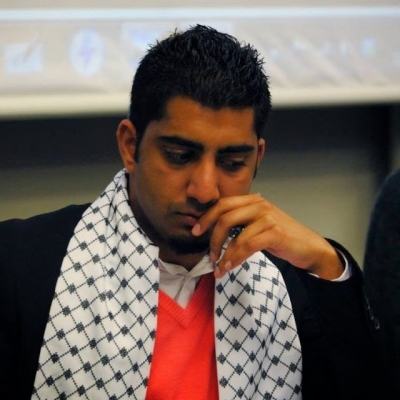
 

Zaakir Ahmed Mayet