Showing posts with label Hanif Ghaffari. Show all posts

Monday, March 04, 2019

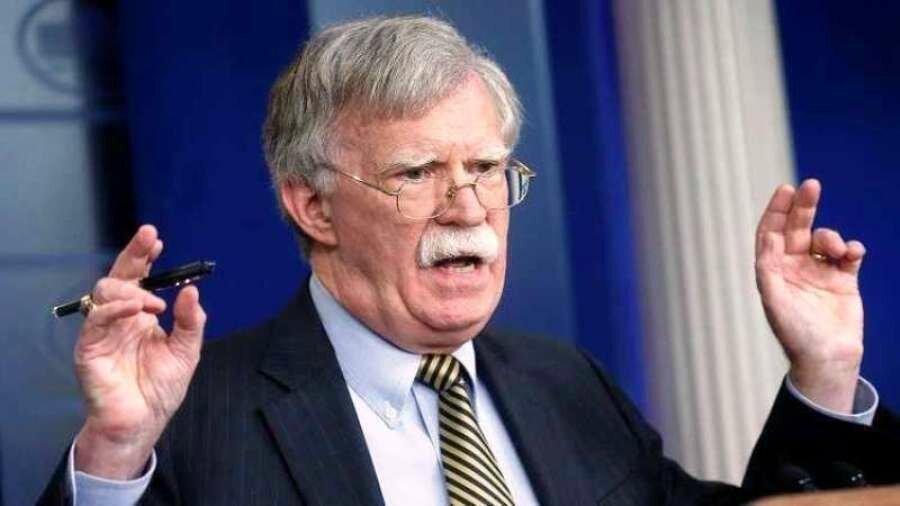
John Bolton must confess to his failure

By Hanif Ghaffari

TEHRAN - The U.S. National Security Advisor is having difficult days. John Bolton has not been able to achieve his goals toward the Islamic Republic of Iran. Many American analysts say the National Security Advisor to the Trump government has become the symbol of the White House's failure in the international system. Of course, this is not the first time John Bolton has become the symbol of Washington's failure in the world!
 Bolton was one of the influential officials in the country since the start of the war in Iraq in 2003, by the George Walker Bush administration until 2008 (when the neocons in the United States were at the head of the political and executive equations of the country). Bolton and his entourage have repeatedly become the symbol of the failure of the United States in the West Asia region.
However, Bolton's defeat in the United States is now far broader! John Bolton, the U.S. National Security Advisor, continues his anti-Iranian negotiations in various fields. In recent mounts, he has been busy discussing the presence of Iran in Syria and, on the other hand, engaging in negotiations with other countries over Iran's sanctions. But the existing evidences suggest that the U.S. National Security Advisor is not going to succeed in this regard.
Bolton's remarks comes at a time when China, India and Turkey are refusing to comply with U.S. secondary sanctions against Iran. Under such circumstances, even Trump's close friends (some of whom are opposed to the presence of Bolton at the White House) and many traditional Republicans doubt Bolton's success in confronting Iran. It's to be noted here that John Bolton was the main advocate of George W. Bush invasion to Iraq in 2003.
 However, after a while it became clear that he and the other conservatives had stuck Washington in a terrible mire. By the end of the Bush presidency, Bolton has become the symbol of the defeat of the U.S. President both inside and outside the country. Such a fate is already expected for Trump and Bolton. Many international affairs analysts believe that John Bolton, the current national security adviser in the United States, will soon become a symbol of the failure of the Trump government.
John Bolton, in his newest attempt against Iran, could not turn the anti-Iranian conference of Warsaw (held in the capital of Poland) into a place for international opposition to the Islamic Republic of Iran! The failure of the Warsaw conference brought costs and consequences for the U.S. National Security Advisor and other officials of the country.
What is certain is that John Bolton has no choice but to confess to defeat against Iran. As we can see, John Bolton has started a full-fledged opposition to the Islamic Republic of Iran in the economic, political and regional dimensions. Donald Trump seems to have given Bolton full authorization in this regard, but he has not been able to take a practical step forward in confronting Iran.

Thursday, November 29, 2018

Trump’s challenge on defending Bin Salman

By: Hanif Ghaffari

Trump’s challenge on defending Bin Salman


TEHRAN, Nov. 28 (MNA) – Many US sources have recently condemned the position taken by President Donald Trump on Khashoggi’s murder by Mohammad bin Salman, calling for a White House appeal against the Saudi Crown Prince.
Even some Republican senators such as Lindsay Graham asserted that they have been disappointed with Mohammad bin Salman, despite their initial optimism, and demanded his withdrawal from power.
They believe that the presence of bin Salman in Riyadh, and subsequently the continued support of Donald Trump and other White House officials for him, would be costly for Washington in the international system. However, it seems that Trump doesn’t intend to stop supporting the young prince of Saudi Arabia!
Trump is now looking to ignore the murder of Jamal Khashoggi so that it won’t disturb the Washington-Riyadh relationship. This is while the US President’s defense of Saudi Arabia, whose leaders have denied knowledge of the brutal murder of Khashoggi while acknowledging that its agents carried it out, marks another instance of the American authorities’ violation of human rights.
In a recent article, the Washington Post has once again called into question the Trump government's approach to the murder of Jamal Khashoggi. This source noted that while the US government should try to maintain strategic relations with Saudi Arabia, Trump should stop supporting bin Salman.
This is while Trump avoided blaming Mohammed bin Salman, despite the CIA’s findings that the Saudi crown prince had ordered the assassination. When the US President was asked that who should be held accountable for Khashoggi’s murder, Trump said; “maybe the world should be held accountable, because the world is a vicious place.”
As the Washington Post has pointed out, Trump's concerns over the Khashoggi’s case is about the strategic relationship that exists between Washington and Riyadh, an issue that even the US Department of State has referred to. That’s why Donald Trump, under the influence of these strategic relationships, is unwilling to approve the CIA's investigation of bin Salman crimes.
The article reads; “Congressional Republicans continued to line up this weekend to criticize President Trump over his defense of Saudi Crown Prince Mohammed bin Salman, who the CIA believes ordered the killing of Saudi journalist Jamal Khashoggi”
“I disagree with the president’s assessment,” Sen. Mike Lee (R-Utah) said Sunday on NBC’s “Meet the Press.” “It’s inconsistent with the intelligence I’ve seen...?.? The intelligence I’ve seen suggests that this was ordered by the crown prince.”
The Washington Post also wrote; “the White House has been struggling to square a widespread sense that the crown prince directed the killing with a desire for Saudi support for its foreign policy priorities and the need to manage close relationships between bin Salman, the Trump administration and members of Trump's family.”
According to this source, Trump, while referring to Saudi Arabia’s influence over the oil price, said that abandoning Saudis would be a “terrible mistake”, and that he’s not going to destroy the US economy over bin Salman’s crimes! 
"In any case, our relationship is with the Kingdom of Saudi Arabia. They have been a great ally in our very important fight against Iran," said Trump.
The highlight of the Washington Post's analysis is the part it confesses to the failure of "Trump-bin Salman" alliance in confronting the Islamic Republic of Iran and the regional power of our country. Accordingly, the US reliance on bin Salman to face Iran didn’t work.
This is what many other sources had to acknowledge besides the Washington Post. However, the tensions raised in the US political atmosphere regarding Mohammed bin Salman is an indication of the disagreements over US foreign policy. This is what makes the situation harder for Trump and his companions.

Wednesday, September 05, 2018

Is Europe's opposition to America real?

By Hanif Ghaffari


Western media has recently published reports on the new approach of European authorities over the Joint Comprehensive Plan of Action (JCPOA). German Chancellor, Angela Merkel, has officially opposed to her Democrat Foreign Minister, Heiko Mass. Maas recently mentioned that Europe and the U.S. “have been drifting apart for years” and urged Europe to “assume our equal share of responsibility” in order to “form a counterweight when the U.S. crosses the line,” pull “our weight when America retreats … [and] start a new conversation.”
Among his bolder suggestions on how to do this, he came with the suggestion of an independent system of financial transactions that would protect European companies seeking to do business with Iran. In response, Merkel stated that there are many barriers to the formation of such a system, and in the meantime, U.S. and Europe's security cooperation can't be ignored. Many analysts believe that the U.S. and EU's opposition over the JCPOA remains strong, although there's no guarantee that Europe would remain committed to the nuclear deal in the future.
Accordingly, a review on the Atlantic's recent article is worth noting. Emphasizing that Donald Trump and his advisers have a consistent record of confronting and threatening Iran, most prominently by withdrawing from the nuclear deal, the article reads that Trump expanded the threats against Iran to all those who do business with the country, declaring on Twitter they “will NOT be doing business with the United States.”
If taken literally, this would mean a new front in America’s economic battle with the Europeans, who have remained in the nuclear agreement—not to mention many other countries around the world determined to do business in Iran.
Regarding what the Atlantic and other American sources say (on the battle of the United States and Europe over the JCPOA), there are some points that should be taken into consideration.
The analysis presented by the Atlantic can be reviewed from different dimensions. First and foremost, there should be a realistic understanding of the economic conflict between the United States and Europe. At this critical period and in examining the Europe's package of proposals, we need to make strategic, rational and determined distinctions between the two terms of "commitment" and "guarantee".
Undoubtedly, the EU's words on remaining "committed" to the JCPOA is of no use to Islamic Republic of Iran. In this period we're exactly looking for the EU guaranteeing its commitments to the nuclear deal. It should not be forgotten that not only during Trump's presidency, but also during Obama's time, the European troika didn't take any effective steps to lift the ban on the European bank relations with Iran.
 They event hesitated to accuse the U.S. Treasury of violating paragraphs 26-29 of the JCPOA, and chose to sacrifice their legal obligations to make a compromise with the current and previous U.S. governments. Therefore, the European Union is facing a tough test, and if it doesn't or can't succeed in this test, there will be practically no nuclear deal. This issue should be made clear to the European authorities by our country's diplomatic and foreign policy.
Not long ago French Foreign Minister Jean-Yves Le Drian said it was unlikely European powers would be able to put together an economic package for Iran before November. As we can see, the European officials are following a "tactical" delay in this regard. On the one hand, they're waiting to see the results of imposing secondary sanctions on the Iranian economy (to gain more benefits from our country), and on the other hand, they intend to set their own policy based on the results of the U.S. mid-term elections.
 Accordingly, if the Republicans win the mid-term elections in November, the European Union will define its policies in a way which is closer to those by Trump. However, if Democrats win mid-term elections, the United Europe will be slightly more open to this issue. As it can be seen, the EU hasn't even defined its own independent approach to the nuclear deal yet, let alone its willingness to offer its final package on the basis of this independent approach. Moreover, European officials believe that this delay would make Iran accept a minimal package of proposals, which is not true of course!
On the other hand, it should not be forgotten that the economic and political interactions of the United States and Europe over the nuclear deal remain strong. In recent weeks, signals have been delivered from the White House to the European troika in this regard. U.S. Secretary of State Mike Pompeo said he is negotiating with his European counterparts. Without a doubt, the more European troika is affected by the United States, the farther it would get from reaching an agreement with Iran. Thus the European official should be aware that they can't ignore the existing realities through magnifying the current gaps between EU and the United States over the JCPOA.
However, as the Iranian officials noted, it seems that "Europe is not yet ready to pay the price (of truly defying the U.S.)" and "Iran can respond to Europe’s political will when it is accompanied by practical measures".
 We have witnessed the special resistance of Merkel and other European authorities to this "practical plan". It should be noted that along with the negotiations of the European Union (especially the European troika) with Iran on how to maintain the nuclear deal, parallel negotiations were ongoing between the United States and the foreign ministers of the three countries of Germany, England and France. The reflection of these negotiations, which are mostly held in secret, is visible in the statements made by the senior European officials, including Merkel and Macron.
If the European leaders do not have a real intention to maintain the nuclear deal and will not pay for it, there is no reason for the Islamic Republic of Iran to remain committed to its obligations defined under the JCPOA. The issue has been repeatedly reminded by our country's authorities to the European Union, especially the three countries of the Germany, Britain and France.
    

Democrats' collective from Kerry to Al Gore attack on Trump

By Hanif Ghaffari


In recent days, many of the American Democrats have intensified their verbal and political attacks on President Donald Trump. Former Secretary of State John Kerry implicitly stated that he would not rule out running for president in 2020. Kerry was the Democratic nominee for president in 2004 but ultimately lost the election to former U.S. President George W. Bush. He had also emphasized on the critical situation of the United States following the presence of Trump at the White House.
 Also Al Gore, the former vice president and Democratic presidential candidate, publicly called for President Donald Trump to resign. Moreover, former U.S. President Barack Obama challenged the existing policies in the United States during John McCain's funeral, without naming Trump. Delivering his eulogy, Obama said: “So much of our politics, our public life and our public discourse can seem small and mean and petty, trafficking in bombast and insult and phony controversies and manufactured outrage.”
In front of the thousands gathered, including leaders from both sides of the political aisle – but excluding Trump, who was expressly not invited, Obama continued: “It’s a politics that pretends to be brave and tough but in fact is born of fear."
The fact is that one of the main goals of the American Democratic Party leaders in their recent political attacks on Trump is winning the U.S. mid-term elections and the conquest of the House of Representatives and the Senate. Right now the republicans hold the majority of the Congress, and many members of the party, while opposing Trump's policies, are not willing to confront him and stand up against the White House. But the Democrats, on the other hand, are trying to provide the ground for their victory in the 2020 presidential elections by explicitly criticizing, and even resisting to some of Trump's decisions.
 Democrats such as John Kerry, believe that if the Republicans fail in the Congress midterm elections and lose their dominance on the House of Representatives and Senate, it will be difficult for Trump to win the 2020 presidential elections.
 However, if the democrats fail this time against Republicans, just like the way they did in 2016, and lose seats in the House of Representatives and the Senate, Trump will not have a difficult way to win the next presidential election. Many American think-tanks and analysts believe that the mid-term elections this year (2018) will turn into a rigorous opposition between Trump's supporters and opponents.
It should be noted here that Democrat candidates for the presidential election in 2020 are not yet introduced. As John Kerry has announced, this is supposed to be after the Congress elections. Bernie Sanders, Joe Biden and John Kerry are considered as possible candidates for the next U.S. presidential elections. However, some Democrat leaders believe that they should introduce a new figure for this battle.
Finally, it should be stated that the closer we get to the mid-term elections' competitions in November, we will see an increase in the verbal and political attacks of Democrat figures against Trump and his administration and companions at the White House. Some analysts believe that if the Republicans fail in the mid-term elections, we will see a crackdown between the traditional Republicans and Trump.
 Of course such a gap exists at the moment, but the leaders of the Republican Party and the affiliated news sources are refraining from fully disclosing it. However, it seems that in case the Republicans lose the congress, it would difficult for the Republican leaders to keep on playing this game! Under such circumstances, Trump is going to be considered as the main accused of the republican' defeat, and is to blame by the remarkable figures in the party.

Monday, August 27, 2018

Bolton's negotiations against Iran

By Hanif Ghaffari


John Bolton, the U.S. National Security Advisor, continues his anti-Iranian negotiations in various fields. In recent weeks, he has been busy discussing the presence of Iran in Syria and, on the other hand, engaging in negotiations with other countries over Iran's sanctions.

Bolton knows well that he will have to come to an agreement with other international players in this regard until November; the time when the U.S. sanctions against Iran's oil and the Central Bank will begin. But the existing evidences suggest that the U.S. National Security Advisor is not going to succeed in this regard.

On the sidelines of his recent visit to Nikolai Patrushev, the secretary of President Vladimir Putin's Security Council, Bolton explicitly raised the issue of Iran's oil embargo, and mentioned that the U.S. is prepared to use sanctions to drive Iranian oil exports down to zero.

“Regime change in Iran is not American policy, but what we want is massive change in the regime’s behaviour,” Bolton said.

He also addressed the European authorities in a specific way and said that the Europeans have to make a choice between the U.S. and Iran in observing American sanctions which he claims have been more effective than expected.

“We expect that Europeans will see, as businesses all over Europe are seeing, that the choice between doing business with Iran or doing business with the United States is very clear to them".

Bolton's remarks comes at a time when China, India and Turkey are refusing to comply with U.S. secondary sanctions against Iran. On the other hand, European countries are also preparing a plan (a new package of proposals) for maintaining the nuclear deal.

Under such circumstances, even Trump's close friends (some of whom are opposed to the presence of Bolton at the White House) and many traditional Republicans doubt Bolton's success in confronting Iran. It's to be noted here that John Bolton was the main advocate of George W. Bush invasion to Iraq in 2003.

However, after a while it became clear that he and the other conservatives had stuck Washington in a terrible mire. By the end of the Bush presidency, Bolton has become the symbol of the defeat of the U.S. President both inside and outside the country. Such a fate is already expected for Trump and Bolton. Many international affairs analysts believe that John Bolton, the current national security adviser in the United States, will soon become a symbol of the failure of the Trump government.

Another issue that Bolton had negotiated with the Russian authorities was about Iran's military presence in Syria. This was also discussed at the recent joint meeting of Bolton and Patrushev. The visit was largely influenced by verbal attacks from American and Russian officials. Russian sources have emphasized that the Russian and American officials couldn't come to an agreement over issues such as the presence in Syria. However, the parties have announced that they will continue negotiations in the future.

At the end, Bolton and Nikolai Patrushev failed to sign a joint statement following five hours of discussion in Geneva covering security issues, amid a historic low in relations between the two countries. Both Bolton and Patrushev spoke to reporters after the meeting, the first official bilateral talks since Putin’s summit with U.S. President Donald Trump last month, and they said there would be no joint declaration because Russia opposed U.S. accusations.

After his meeting with Patrushev, Bolton stated that Russian President Vladimir Putin told the United States that an Iranian presence in Syria does not tally with Russian interests, but he can't force Iran out of Syria. He also mentioned that Washington and Moscow don't agree on the presence of Iranian forces in Syria.

Bolton's statements reflect the failure of his talks with the secretary of Putin's Security Council on Iran's military presence in Syria. As we can see, John Bolton has started a full-fledged opposition to the Islamic Republic of Iran in the economic, political and regional dimensions.

President Donald Trump seems to have given Bolton full authorization in this regard, but he has not been able to take a practical step forward in confronting Iran. He has faced crises and obstacles on the imposition of oil sanctions against Iran and on regional policies of our country; an issue which has raised concerns among Zionist lobbies that support Bolton in the United States.