Thursday, January 01, 2026

Pax Silica and the weaponization of AI supply chains: The new front in US global economic warfare

 Washington's latest anti-China alliance seeks to control the materials, technologies, and trust networks of the AI age by reshaping supply chains into political weapons 

“If the 20th century ran on oil and steel, the 21st century runs on compute and the minerals that feed it.”

So declared US Under Secretary for Economic Affairs, Jacob Helberg, as part of the State Department’s announcement of Pax Silica, the new flagship initiative for artificial intelligence (AI) and supply chain security. 

With this declaration, Washington is drawing a new iron curtain across global economic infrastructure – one forged in rare metals, cutting-edge chips, and digital infrastructure, and justified through the familiar language of trust, security, and prosperity. In short, Pax Silica is a non-binding declaration of intent to form a political-economic alliance in the field of AI and its supply chains, primarily directed against China, and includes seven countries, among them Israel.

What is Pax Silica?

According to the announcement earlier this month, Project Pax Silica is the State Department's latest effort in the field of AI and supply chain security: “We believe that true economic security requires reducing excessive dependencies and forging new connections with reliable partners and suppliers committed to fair market practices.”

At its core, the alliance aims to dominate the AI economy by tightly controlling the supply chains that underpin it – from raw materials and shipping lanes to data flows and chip manufacturing. Ostensibly framed around “economic security” and “trusted partnerships,” the initiative serves as a geopolitical instrument to isolate China and cement western supremacy in the industries of the future.

Despite its Latin branding (Pax meaning peace and stability, while Silica refers to the world of technology and computer chips, alluding to Silicon Valley), Pax Silica is the economic architecture of a new Cold War. The declaration was signed at the Pax Silica Summit in Washington on 12 December, and the selection of member states – Japan, South Korea, Singapore, the Netherlands, the UK, Israel, the UAE, and Australia – mirrors the containment coalitions of previous eras. 

Guest contributions from Taiwan, the EU, Canada, and the Organization for Economic Co-operation and Development (OECD) further reinforce the Atlanticist orientation of this emerging bloc. Partners in the Persian Gulf and NATO member Turkiye are also obvious contenders to join, especially given the latter’s “deep industrial capacity and proximity to European markets.”

Trust as a weapon

Pax Silica functions less as an agreement and more as a framework for political consolidation. Its real purpose is to establish a shared lexicon of risks and priorities in the AI economy – a kind of ideological supply chain. When countries unify their definitions of what constitutes a “risk,” a “sensitive technology,” or a “trusted partner,” they embed exclusion into policy.

Washington grasps this strategy well. The initiative clears a path for treating computing power, chips, and rare metals as strategic assets – tools of influence rather than neutral market goods. This opens space for governments to override market dynamics in favor of political allegiance.

Through tighter controls on investments, infrastructure expansion under approved networks, and incentives for compliant industries, Washington seeks to hardwire political allegiance into the circuitry of the AI economy. Economic resilience, under this arrangement, no longer refers to market strength, but to loyalty to a strategic order.

From commodity to leverage

Pax Silica signals a decisive shift away from open global markets toward a regime of restricted access and engineered alliances. Instead of interconnectedness, the new model prioritizes compartmentalized networks guarded by political loyalty. Supply routes, once neutral infrastructure, are being recalibrated into tools of influence and control.

By casting AI and its critical inputs as national security concerns, Washington is turning economic interdependence into strategic leverage. Cloud infrastructure, data centers, refined metals, and even undersea cables each become a node of control.

The emphasis on private-sector “creativity and power” reveals a shifting balance in which real authority lies with corporations. These firms may operate within national borders, but their investment decisions – on where to build, what to cut, whom to serve – redraw the geopolitical map. This dystopian state–corporate fusion enables new forms of economic coercion: embargoes in everything but name.

The initiative also opens the door for the private sector to become a central geopolitical actor. Companies’ investment decisions – where to build factories, data centers, or design hubs – now shape international power balances as much as government policy. By controlling sensitive assets such as chips, cloud infrastructure, cables, and refined minerals, private firms can effectively turn supply chain nodes into tools of leverage or coercion. This dynamic fosters the emergence of domestic “tech lobbies” that pressure governments toward stricter regulations or sanctions, turning market competition into a political instrument and amplifying the potential for economic escalation between blocs.

The rise of techno-blocs

Pax Silica is less a defensive pact and more a forward deployment of economic discipline. It is the scaffolding of a techno-political bloc – an economic NATO for the AI age.

At its heart lies a blunt logic: control the raw materials and systems that make AI possible, and you control the world’s future. The text of the declaration itself acknowledges that the AI revolution is “reorganizing the global economy” and “reshaping supply chains,” and that “value and growth” will flow through “every level” of the global AI supply chain. In this way, the announcement redefined the next competition field as a complete chain starting with energy and metals and ending with chips, computing, and digital infrastructure.

US officials openly compare Pax Silica to the G7 during the industrial era – framing it as a coordination platform for a cartel of influence. It is a governing structure built not to manage competition, but to exclude rivals from the foundational infrastructure of tomorrow’s economy.

China emerges as the most present implicit context in western coverage of the initiative. In US President Donald Trump's administration's approach, control of certain sensitive links – especially critical metals and industrial capabilities associated with the chips – is seen as giving Beijing space to use “bottlenecks” politically. 

Targeting China

Explicitly singling out China and the Belt and Road Initiative (BRI), Helberg was quoted by POLITICO as saying: 

“This is an industrial policy for the economic security coalition, and it’s a game-changer because there is no group today where we can come together on the AI economy and how we’re going to compete with China in the AI space. By aligning our economic security approaches, we can begin to move in concert to basically block China’s Belt and Road Initiative, which is designed to grow its export-oriented model, by blocking China’s ability to buy up ports, major highways, transportation, and logistics corridors.”

Helberg added that “This grouping of countries will be to the AI age what the G7 was to the industrial age,” noting that “It commits us to a process by which we’re going to cooperate on aligning our export controls, screening of foreign investments, addressing anti-dumping but with a very proactive agenda on securing choke points in the global supply chain system.”

Beijing’s response has been cautious. On 12 December, Chinese Foreign Ministry spokesperson Guo Jiakun said, “We have noted relevant reports,” urging “All parties should adhere to the principles of a market economy and fair competition and work together to maintain the stability of the global supply chain.”

However, the state-run Global Times was more forthright, describing Pax Silica as a US attempt to decouple China from the global semiconductor supply chain – warning that such a move would destabilize markets and drive up costs.

Israel’s bid for AI centrality

Tel Aviv’s prominent role in Pax Silica reflects both the alliance’s core intentions and Israel’s strategic recalibration. Rather than a peripheral tech partner, Israel is positioned as a principal node in the AI economy – spanning resource access, design capabilities, and logistics.

Israeli commentators have openly described the move as a decisive alignment with Washington’s post-China economic order. Tel Aviv is exchanging political loyalty for secure entry into the command centers of AI development, viewing its participation as part of the broader US–China strategic rivalry and a “common front” against China’s dominance in critical minerals and advanced technologies. Once intent on avoiding direct confrontation with Beijing, Israel is now increasingly compelled to align with Washington, even at the cost of narrowing its own strategic and economic flexibility.

“Israel’s accession to the US-led Pax Silica Initiative is a mark of distinction for Israel and for Israel’s high-tech industry,” Israeli Prime Minister Benjamin Netanyahu’s economic advisor Avi Simhonin said in a statement, “which is regarded as a global leader in innovation and artificial intelligence.”

This decision also speaks to its regional dilemmas. Despite the expansion of normalization efforts – including ongoing diplomatic overtures toward Syria and Tel Aviv's recent recognition of Somaliland – Israel’s regional isolation remains unresolved. 

Popular opposition to normalization persists across West Asia, and efforts to militarily weaken the Lebanese resistance continue. In this context, Tel Aviv’s fallback has been to entrench itself in transnational infrastructures protected by US dominance. 

Its integration into Pax Silica represents a calculated hedge – an attempt to anchor its economic future in Washington-led frameworks while managing the long-term consequences of its colonial entrenchment.

As resistance spreads and normalization falters, Israel’s fallback is to entrench itself in transnational infrastructures shielded by US dominance. Its integration into Pax Silica represents an economic survival strategy – a bid to insulate itself from the consequences of its colonial entrenchment.

A new phase of economic confrontation

Pax Silica represents a transition in how Washington projects economic influence. Rather than relying on traditional trade frameworks, it is reshaping the rules of commerce to consolidate control over the lifelines of the AI economy. Innovation, once viewed as the driving force, now moves in lockstep with security doctrine.

The shift places AI within a hardened architecture of strategic planning, where access to materials, infrastructure, and data becomes a function of geopolitical loyalty. Economic networks no longer serve as shared platforms but as instruments of division and leverage.

For countries outside the core bloc, particularly in the Global South, this consolidation narrows strategic options. As supply chains are redrawn to reflect ideological alignment, access to critical systems increasingly depends on political positioning rather than economic need. 

India’s absence from the framework, while notable, has been downplayed by US officials. Helberg referred to ongoing discussions with New Delhi, stating: “We view India as a highly strategic potential partner on supply chain security-related efforts, and we welcome the opportunity to engage with them.” 

Washington’s endgame appears to be the construction of a digital fortress – an infrastructure of supremacy guarded by standards, restrictions, and selective cooperation. Whether this vision holds depends as much on material flows as on the willingness of others to either resist or submit to the structure it imposes.

January 16, the day when Iranian nation ousted the US-backed dictator

January 16th marks the anniversary day when Mohammad Reza Pahlavi--the last Pahlavi dictator--fled Iran once he found his regime collapsing. On this occasion khamenei.ir publishes excerpts from Ayatollah Khamenei's speeches on the collapse of the Pahlavi dictatorship​:
People rose up and ousted Mohammad Reza Pahlavi

Gradually the regime's organizations, office workers, military staff, and even officials joined the people in their movement. Consequently, indications of the collapse of the Pahlavi regime visibly emerged, and finally the regime fell out. Prior to the day, when Mohammad Reza Pahlavi fled from Iran, the Pahlavi regime had actually collapsed. He realized remaining in Iran would be useless. Thus, they made a puppet out of a miserable, wretched, notorious man--who later became even more notorious--to preserve a regime on the brink of total annihilation. He was in office for thirty-forty days, until Imam Khomeini (ra) came back to Iran; and everything revolved around this one single move.

The monarchy in Iran was hollowed out. Why? It was because of the people’s uprising. Why did the people rise up? They rose up for their creed, because their slogans were Islamic slogans; because, the leaders, Islamic mentors, and clergy were trusted by the people.
February 03, 1995


U.S. gave refuge to the the Pahlavi dictator

The U.S. gave refuge to Mohammad Reza Pahlavi, who fled the Iranian nation, and they received him as an invitee. Mohammad Reza had with him properties worth billions of dollars, which he had invested in the United States. Anywhere in the world, when someone at the top of a regime is ousted, his personal properties are confiscated; they are transferred to the nation and new state that comes into power. If you read newspapers on various issues, you will see that has been the norm elsewhere in the world. What Mohammad Reza Pahlavi did was unheard of; in that, he kept for himself all that money--which belonged to the Iranian people--and then he locked it in his and his agents’ bank accounts in the U.S.

They did not offer up a single penny to the Iranian nation, and kept every bit of it for themselves; today, they still they have it with them. As of now, the U.S. regime owes the Iranian nation billions of dollars. Yet, they hold onto properties that the government and nation of Iran has previously bought and, overtime, has needed. To this date, they have not given back any of these assets to the government and people of the Islamic Republic of Iran. Iranian assets in the U.S. have been frozen and never returned. Why? Because, they were wishful they could annihilate the Islamic Republic. They thought to themselves: 'today we won’t give them back their money to make use of.' This is to say, that since the victory of the Islamic Revolution, the regime overseeing the United States has adopted the same approach towards Iran as it did before the revolution; in other words, it practiced animosity and hostility towards the Iranian nation and the Islamic Republic establishment. It was during such a similar setting that the storming of the U.S. embassy in Tehran had occurred.

November 02, 1994

Beyond Disarmament: What Israel really wants from Lebanon

Tel Aviv’s goal is not just a demilitarized south Lebanon, but a permanently weakened Lebanese state unable to resist the encroachment of Israeli and western interests

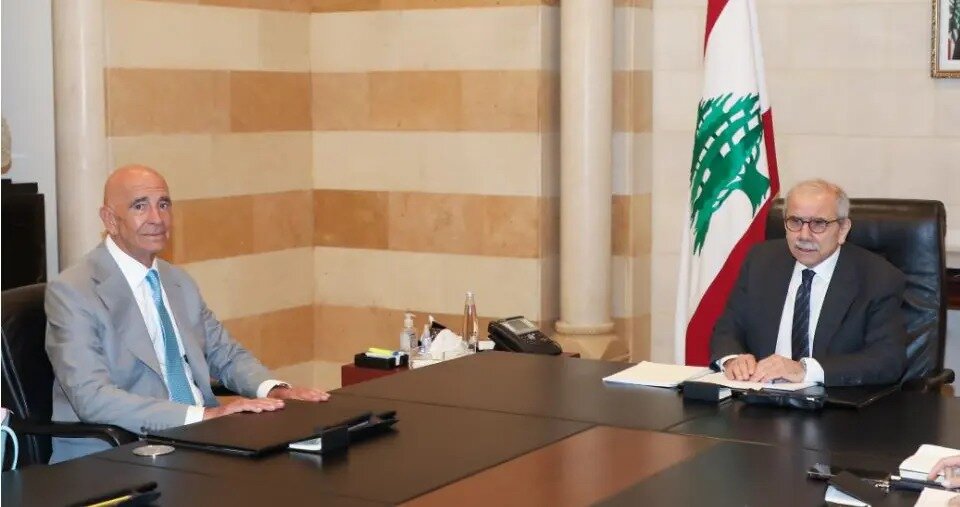
US President Donald Trump will meet Israeli Prime Minister Benjamin Netanyahu in Florida today to discuss regional matters, including Lebanon and Iran, just days before Washington’s 31 December deadline for the disarmament of Hezbollah. 

While officially framed around Gaza and regional de-escalation, the meeting at Trump’s Mar-a-Lago club in Miami will also address Israel’s broader strategic push: from weakening Iranian influence across the Levant, to reshaping Lebanon’s political and security order in a manner that dismantles the resistance axis and secures Tel Aviv’s northern front.

Lebanon’s fragile reality

Lebanon’s security reality today reflects decades of asymmetrical power, repeated violations of sovereignty, and the ongoing struggle of southerners to live free of occupation and foreign domination. Conditions along the southern border are both longstanding and intensified. 

While the 2024 ceasefire between Beirut and Tel Aviv curtailed full-scale war, it has failed to produce lasting calm. Israeli violations continue, echoing earlier patterns dating back to Israel's 1982–2000 occupation of Lebanon. For many, these conditions are part of a broader pattern of coercive pressure that treats Lebanese land and life as expendable within a regional power calculus.

In this context, the Lebanese resistance remains central to the national narrative. Regardless of disagreement with its current strategies, it is broadly recognized that resistance grew out of necessity, not ideology: a response to a state that was either unable or unwilling to protect its people, and to an external aggressor capable of violating borders with impunity. 

This reality has been implicitly acknowledged by actors spearheading the efforts to dismantle the resistance; recent comments by US envoy Tom Barrack cautioned that it is unreasonable to expect Hezbollah, Lebanon’s primary resistance force, to be forcibly disarmed, admitting the movement’s deep entrenchment within Lebanon’s political and security fabric. 

His remarks reveal a long-standing paradox: calls for disarmament persist even when the conditions that gave rise to armed resistance – insecurity, a neighboring expansionist colonial entity, and compromised sovereignty – remain.

Yet Lebanon’s internal political order is nonetheless shifting alongside a broader transformation of the regional power balance. While most Lebanese reject any normalization with Israel – a constitutional crime – a small but vocal pro-Israel discourse has surfaced within elite far-right circles and select media platforms, often amplified through external funding or western-aligned outlets. 

This, alongside the result of the 2024 war, which revealed the limits of military solutions to weaken the resistance, has created a rare strategic opening for Israel to shift its focus to a new policy beyond Hezbollah’s disarmament: towards reshaping Lebanon’s political structure to create lasting advantage and suppress active resistance to Israel.

Today, Israel’s strategy increasingly centers on influencing Lebanon’s political order from within, departing from the traditional objective of degrading Hezbollah militarily, towards a long-term strategic vision aimed at reducing Iranian-backed support through political change. 

The aim is to reconfigure Lebanese institutions to undermine the social foundations supporting the resistance, redirect public frustration towards internal actors, and cultivate a political climate subordinate to Israeli and western interests.

In decolonial terms, this represents a familiar pattern: when direct domination becomes too costly, indirect influence is recast as “reform,” and the reshaping of political identity becomes an extension of military strategy. In this framework, political identity itself becomes a contested battlefield.

Reframing the disarmament agenda

Despite recent statements by UNIFIL leadership denying evidence of Hezbollah rebuilding in the south, there is growing Israeli consensus that the resistance movement is restoring its capabilities faster than they are being dismantled.

While this could be a premise to justify renewed Israeli escalation, it also functions as a pressuring mechanism against the Lebanese state, urging it to intensify efforts against Hezbollah. Israeli analysts frequently frame Hezbollah’s remaining arsenal as an existential threat, emphasizing that “being safe” and “feeling safe” are not the same. 

Despite extensive efforts to dismantle Hezbollah-linked sites across the border, many northern Israeli settlements remain largely abandoned, showing that military action alone fails to deliver the security Israel seeks.

At a deeper level, Israeli strategists acknowledge that Hezbollah cannot be reduced to a conventional militia. It is embedded within Lebanon’s political system and is an indispensable faction of Lebanese society. Even if forcibly disarmed, its political influence and organizational capacity would allow it to rebuild.

Furthermore, an aggressive othering campaign has targeted Lebanon’s Shia community – the backbone of Hezbollah’s support – before, during, and after the 2024 war. This, coupled with the rise of far-right pro-Israel rhetoric, has presented Israel with an opportunity to exploit internal divisions and undermine Hezbollah not only militarily, but also to obliterate it politically, socially, and ideologically.

What Tel Aviv actually wants from Beirut

Israeli officials have long hinted at wanting a “responsible, effective government” in Beirut. While Israel publicly avoids describing how Lebanon’s internal politics should look, its long-term interests are clear.

Lebanon’s current political leadership is now widely considered the most openly anti-Hezbollah in the country’s history. Israel has welcomed this, viewing the state as aligned with its goals to weaken the resistance movement and create favorable conditions.

Given the Sanaa government’s de facto status in Yemen, Hezbollah remains Iran’s most capable non-state ally. Any shift in Lebanese politics away from Tehran would serve Israel’s long-term security. The current climate has occasionally created opportunities for Lebanon to distance itself from Iran and allow for greater influence from western, Persian Gulf, and other international actors.

A system that avoids confrontation and limits Hezbollah’s power would lower the likelihood of future conflicts. In this context, the Lebanese state has increasingly yielded to US-Israeli pressure, at times overlooking or even violating constitutional principles governing Lebanon’s stance toward Israel.

For Tel Aviv, a stable northern frontier reduces the risk of miscalculation and opens opportunities for potential economic cooperation, such as the 2022 maritime border deal, which showed that cooperation is possible even without formal normalization.

Influence, not invasion

Israel has rarely intervened openly in Lebanon’s domestic politics, largely due to its failure to instill a friendly government in 1982. Today, however, the perceived window of opportunity has encouraged a more cautious but multifaceted approach employing both direct and indirect tools.

Country-wide strikes on alleged Hezbollah-linked infrastructure continue. However, the aim of much of these remains two-fold: to disrupt any effort of regained normalcy amongst Hezbollah’s support base, and to exert pressure on the Lebanese state to adopt harsher policies toward the group, in hopes that its support – and therefore legitimacy – will eventually deteriorate.

Israeli messaging increasingly underscores the claimed economic and social costs of Hezbollah’s anti-Israel stance and its ties to Iran, while simultaneously floating promises of prosperity and security to communities outside the resistance axis. This dual campaign aims to erode public support by portraying the resistance as an obstacle to national well-being.

Though indirectly, Israel is simultaneously advocating for ‘reforms’ of Lebanese financial institutions in line with US guardianship over Lebanon. Proposals such as the ‘economic zone’ across southern border villages further incentivize the state to increase pressure on Hezbollah. These dynamics are reinforced by a US policy blatantly prioritizing Israeli objectives, a diminishing French role, a UNIFIL under pressure, and sustained Gulf leverage over Lebanon.

Replacing resistance with subservience

Lebanon’s current trajectory – prioritizing Hezbollah’s disarmament over more pressing security needs – suggests increasing alignment between the US-backed state and Israel’s long-term vision. 

After decades of conflict and shifting regional dynamics, and a rare window to not only eliminate Hezbollah as a military force but also reshape Lebanon’s trajectory toward Israel, Israeli decision makers understand that a US-influenced Lebanese state that limits Iranian reach and hostile rhetoric toward Israel is essential for Israel’s long-term security. 

With the fast-approaching US-imposed deadline for Hezbollah’s disarmament, some fear that Israel’s impatience could trigger a renewed offensive. However, this is unlikely – at least for now – since the previous war had clearly shown the limits of Israel’s military action. 

Alternatively, the deadline could be pushed back to give the state more time. Regardless, the plan rests on replacing the resistance with the state, while the latter’s submissive posture, coupled with continued Israeli aggression, yields only opposite results: demonstrating the state’s impotence in the most crucial field – that of defense. 

Concerns remain that political paralysis and internal tensions will exacerbate instability. Given the inability to disarm Hezbollah, a more likely scenario involves attempting to bolster the existing ceasefire mechanism with more military and civilian personnel as an alternative to achieve disarmament – an approach that will further inflame tensions between the state and the Shia community.

Yet, many misinterpret Hezbollah’s strategic ambiguity amid these upheavals. They also overlook how this very same heavy-handed pressure can backfire, pushing Lebanese factions to rally around Hezbollah under the banner of national unity against a blatant Israeli agenda. 

Despite the undebated weakening of Hezbollah and Shia groups across the region, the depth of Shia political and religious identity in Lebanon remains one of the most enduring sources of resistance. The real sense of siege and threat will likely drive a return to identity politics, recreating the conditions that enabled Hezbollah’s emergence. 

Moreover, US-Gulf efforts to pursue disarmament without reconstructing war-torn Shia-majority areas are more likely to remobilize the community toward resistance rather than deter it – a dilemma that Israel, the US, and their Gulf allies have yet to grasp.