Showing posts with label Payman Yazdani. Show all posts

Tuesday, September 24, 2019

Iranian viewpoint: US’ strategy to play major role in global energy market

TEHRAN, (MNA) – Enjoying the world’s major shale oil reserves and thanks to its technological power the United States has become independent from the Persian Gulf and the Middle East oil and is positioning itself to play a major role in world energy market.
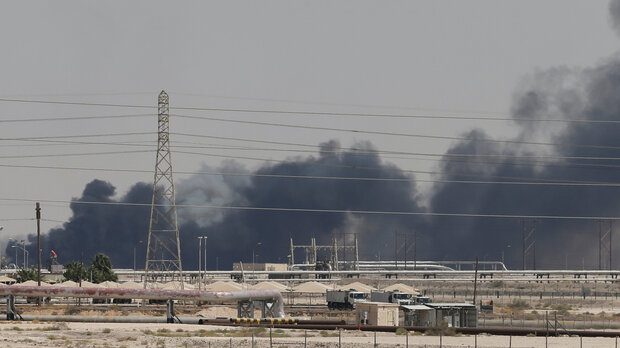
Former US President Barak Obama’s strategy of “pivot to east” which was based on the above mentioned fact is now confirmed by Donald Trump after recent drone attack on Saudi Aramco oil installations.
Despite the US independence of the Persian Gulf energy, the country will not close its eyes on controlling the energy routes in the region to keep pressure on rivals like China.
A report by Rystad Energy shows that production of shale oil in the US has changed the country to enjoy the biggest oil reserves in the world. (264 billion barrels). 50 percent of the US oil reserve is shale oil. The report says the US shale oil production is going to exceed 14.5 million barrel a day.
In 2012 the US Department of Energy announced that production of shale oil would have been economical if the price of the oil had been above 54 dollar for a barrel, but World Energy agency findings showed that the price for each barrel of oil should be over 60$ if the shale oil production is going to be economically justified.
Development of shale oil production has paved the way for Washington to use it as a political tool against other major oil producers in the world to materialize its geopolitical goals. Sanctioning of major oil producing countries and creating tensions in oil rich regions like Persian Gulf by the US in recent years all can be interpreted in line with the US efforts to position itself as a major player in world energy market.
Reuters in a September 2019 report revealed that overall exports of crude and refined products by state-run oil company Petroleos de Venezuela (PDVSA) and its joint ventures declined to some 770,000 barrels per day (bpd) from 992,565 bpd in July and 1.13 million bpd in June, according to revised data. It is noteworthy that the countries oil production was 2 million and 373 thousand barrels a day in 2016.
Iran’s oil production has also decreased some 1.5 to 2 million barrels a day during the last 10 years due to the US sanctions.
Washington is also trying to reduce the Russia’s share of global oil market by slapping sanctions against the country and threatening its European consumers.
The US’ green light to Saudi Arabia to attack Yemen which led the country to a quagmire can also be interpreted in line with the US efforts to grab its ally’s share of oil market to materialize its geopolitical goals. A couple of days ago Yemeni’s retaliatory drone attack on Saudi Aramco oil plant forced Saudi Arabia to cut half of its oil production and immediately the US announced Washington is ready to replace Saudi oil in the world market. In the long term this can result in grabbing of Saudi share of market by the US.
By sanctioning oil producing countries and creating tensions in oil rich regions the US is pursuing its geopolitical goals:
First, by disrupting existing major exporters including Saudi Arabia, Venezuela, Iran and Russia and raising prices, the US is able to make its own exports more competitive. Second, grabbing share of other producers by tools of sanction and disturbing their oil export. Third, containing and keeping pressure on rivals like China, EU and Japan by creating tensions in Persian Gulf which their economies are heavily dependent on the oil coming from the region. Fourth, creating a lucrative market for the US military industry and weapons by adding to tensions in the Persian Gulf region. Saudi Arabia has been the world biggest weapon importer in 2018. Fifth, keeping pressure on Persian Gulf nondemocratic kingdoms who are reluctant to join the US proposed naval security mission in Strait of Hormuz.

Wednesday, September 18, 2019

Geopolitical expert talks of US plan to grab Saudi oil share from global market

Geopolitical expert talks of US plan to grab Saudi oil share from global marketTEHRAN,(MNA) – Anthony Cartalucci says it surely is no coincidence the US is targeting virtually every major energy producer from Iran, Venezuela, and Russia, but also including its own "allies" such as Saudi Arabia.

Following drone attacks on Saudi oil plants by Yemenis, the White House said on Saturday that the United States was committed to keeping oil markets well-supplied in the wake of an attack on Saudi Arabian oil plants by Yemen’s Houthi group.
many believe since the US has become a major oil producer in the world it is trying to grab the share of the major oil producing countries in global energy market by different tools like sanctioning and creating tensions. 
Sanctioning Iran, Russia and Venezuela in recent years can be interpreted in this context. To this end even the US is trying to grab its regional ally's share, Saudi Arabia.
To touch upon the issue we reached out to Bangkok- based geopolitical researcher Anthony Cartalucci. 
Referring to US real goal of creating tensions in the Persian Gulf and dragging Saudi Arabia to the quagmire of Yemen war, he said, "The US is positioning itself as an exporter of energy. However its gas and oil is more expensive to extract, process, and ship overseas. By disrupting existing major exporters and raising prices, the US is able to make its own exports more competitive. It surely is no coincidence the US is targeting virtually every major energy producer from Iran, Venezuela, and Russia, but also including its own "allies" such as Saudi Arabia."
He added, "The resulting conflict is also a huge boon for America's other major export - weapons."
Cartalucci went on to say,"The US has used Saudi Arabia as a pawn for decades - encouraging the worst and most unsustainable kinds economic and foreign policies, keeping them dependent on US protection and placing them directly at the center of US-driven conflict in the Middle East. 
In addition to the energy oriented implications of this recent incident - the attacks and how they are being exploited by the White House helps move forward Washington's plans to provoke wider conflict with Iran. The US has recently placed troops in Saudi Arabia and as it continues to ratchet up tensions with Iran, is creating a potential conflict that will consume not the US, its territory, people, and resources, but Saudi Arabia's and other Persian Gulf nations aligned with the US."
Commenting on the ways to tackle the tensions in the region, he noted,"As US power wanes, the ability for nations traditionally aligned with the US and the wider West have an opportunity to build ties with emerging global powers like China and re-emerging global powers like Russia. For example, while the US was "pivoting" toward Southeast Asia - the region itself made its own pivot toward China and other Eurasian powers. Nations once thought of as close US allies are now deeply invested in moving into the future as close Chinese and Russian allies. 
Another aspect of Southeast Asia's transformation out from under US primacy was the improvement of relations between nations pitted against one another by US interests. 
Saudi Arabia and other nations in the region currently suffering because of their "allied" status with the US must perform a similar "pivot." Just like in Southeast Asia, the Persian Gulf will benefit greatly if relations were improved between nations like Saudi Arabia and Iran. But also just like in Southeast Asia where the US targeted each and every nation escaping out from under its regional primacy with political instability, economic extortion, and even terrorism, the Persian Gulf will have to prepare for some hard times before its situation improves. Of course, the alterative is allowing the US to fight its regional allies down to the last Saudi, Emarati, and Qatari, leaving nations entirely broken."
Interview by Payman Yazdani

Saturday, June 15, 2019

Who benefits most of suspicious attacks on oil tankers, tensions in PG?


Who benefits most of suspicious attacks on oil tankers, tensions in PG?

TEHRAN, Jun. 13 (MNA) –The events roiling the Persian Gulf in recent weeks and days have the potential to affect everything from the price of gas to the fate of small regional states.
A look at the tensions going on around the world including the Middle East and Persian Gulf region, East Europe, Venezuela all indicate that these tensions originate from the US administration’s unilateral unlawful measures.
The White House’s unlawful withdrawal from the Iran’s nuclear deal (JCPOA), designation of the Islamic Revolutionary Guards Corps (IRGC) as a terrorist group, reimposing sanctions on Iran and trying to drive Iran’s oil export to zero all are provocative and suspicious moves of the US that have fueled the regional tensions.
The US and its regional allies including Saudi Arabia and the UAE’s suspicious and provocative move to accuse Iran of being behind the attacks on two ships at Fujairah in the UAE without presenting any document was also foiled by Iran’s vigilant approach and reduced tensions to some extent.
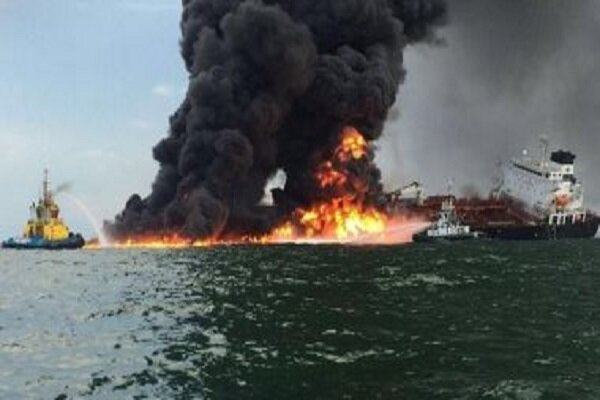
While the Japanese Prime Minister is visiting Iran after 4 decades and many expected even more reduction of the tensions in the region due his visit, in another suspicious and provocative move two oil tankers were targeted in Sea of Oman, a move that can intensify the tensions more than before.
Undoubtedly the US and its proxies in the region as usual will accuse of Iran being behind the incident without any document in hours once again, but the main question is that who is benefiting the most of the tensions in the Persian Gulf region?
Pondering the following reasons one can realize that the number one beneficiary of the tensions and attacks on tankers in the Persian Gulf and the Middle East is the USA and respectively Tel Aviv and the undemocratically  appointed rulers of some regional Arab states seeking their survival in following the US policies.
- Contrary to decades ago the US is now one of the biggest oil and gas producers in the world seeking to grab the market share of the other countries in the world. Following US unlawful withdrawal from the JCPOA and its efforts to drive Iran’s oil export to zero under the pretext of different accusations, in fact the US is making efforts not only to grab Iran’s share of the energy market but also to limit Iran’s income to reduce Iran’s regional influence. The US move to create tensions in Venezuela and East Europe and slapping sanctions against Caracas and Moscow can also be interpreted in this line.
- Any tension in the Persian Gulf not only will increase the energy price in global market but also will create enough pretexts for Washington to boost its military presence in the region. This means control of energy routes by the US in order to contain its rivals like China, EU, Japan and new rising economies like India which their economies are heavily dependent on the energy coming from the Persian Gulf and Middle East.
- Tensions in the region besides Iranophobia project will guarantee continuation of purchase of American weapons by some regional countries such as Saudi Arabia. By continuation of selling weapons to Saudi Arabia the US not only creates thousands of jobs for Americans but also keeps its rivals like China and Russia out of Middle East weapon market.
- Tensions and conflicts created by the US in Middle East has resulted in great rifts and divergence among regional states which is vital for Tel Aviv’s security and its expansionist policies.

Thursday, June 13, 2019

Who benefits most of suspicious attacks on oil tankers, tensions in PG?

Who benefits most of suspicious attacks on oil tankers, tensions in PG?
TEHRAN, Jun. 13 (MNA) –The events roiling the Persian Gulf in recent weeks and days have the potential to affect everything from the price of gas to the fate of small regional states.
A look at the tensions going on around the world including the Middle East and Persian Gulf region, East Europe, Venezuela all indicate that these tensions originate from the US administration’s unilateral unlawful measures.
The White House’s unlawful withdrawal from the Iran’s nuclear deal (JCPOA), designation of the Islamic Revolutionary Guards Corps (IRGC) as a terrorist group, reimposing sanctions on Iran and trying to drive Iran’s oil export to zero all are provocative and suspicious moves of the US that have fueled the regional tensions.
The US and its regional allies including Saudi Arabia and the UAE’s suspicious and provocative move to accuse Iran of being behind the attacks on two ships at Fujairah in the UAE without presenting any document was also foiled by Iran’s vigilant approach and reduced tensions to some extent.
While the Japanese Prime Minister is visiting Iran after 4 decades and many expected even more reduction of the tensions in the region due his visit, in another suspicious and provocative move two oil tankers were targeted in Sea of Oman, a move that can intensify the tensions more than before.
Undoubtedly the US and its proxies in the region as usual will accuse of Iran being behind the incident without any document in hours once again, but the main question is that who is benefiting the most of the tensions in the Persian Gulf region?
Pondering the following reasons one can realize that the number one beneficiary of the tensions and attacks on tankers in the Persian Gulf and the Middle East is the USA and respectively Tel Aviv and the undemocratically  appointed rulers of some regional Arab states seeking their survival in following the US policies.
- Contrary to decades ago the US is now one of the biggest oil and gas producers in the world seeking to grab the market share of the other countries in the world. Following US unlawful withdrawal from the JCPOA and its efforts to drive Iran’s oil export to zero under the pretext of different accusations, in fact the US is making efforts not only to grab Iran’s share of the energy market but also to limit Iran’s income to reduce Iran’s regional influence. The US move to create tensions in Venezuela and East Europe and slapping sanctions against Caracas and Moscow can also be interpreted in this line.
- Any tension in the Persian Gulf not only will increase the energy price in global market but also will create enough pretexts for Washington to boost its military presence in the region. This means control of energy routes by the US in order to contain its rivals like China, EU, Japan and new rising economies like India which their economies are heavily dependent on the energy coming from the Persian Gulf and Middle East.
- Tensions in the region besides Iranophobia project will guarantee continuation of purchase of American weapons by some regional countries such as Saudi Arabia. By continuation of selling weapons to Saudi Arabia the US not only creates thousands of jobs for Americans but also keeps its rivals like China and Russia out of Middle East weapon market.
- Tensions and conflicts created by the US in Middle East has resulted in great rifts and divergence among regional states which is vital for Tel Aviv’s security and its expansionist policies.

Tuesday, June 11, 2019

The odds of success for Japanese PM's visit to Iran

TEHRAN, Jun. 09 (MNA) –US President’s recent retreat from his previous rhetoric stances towards Iran should not be misinterpreted as the White House’s retreat from its policy of ‘maximum pressure’ on Iran.
In line with its maximum pressure on Iran policy, on Friday the United States imposed new sanctions on Iran that target the country's petrochemical industry, including its largest petrochemical holding group, the Persian Gulf Petrochemical Industries Company (PGPIC).
The main reason behind the changes to Trump administration’s tone against Iran in fact is internal pressure on him. Americans are against a new war in the region. Also opposition from the US allies which will suffer from great losses in case of any war in the region is another reason behind change to Trump’s tone.
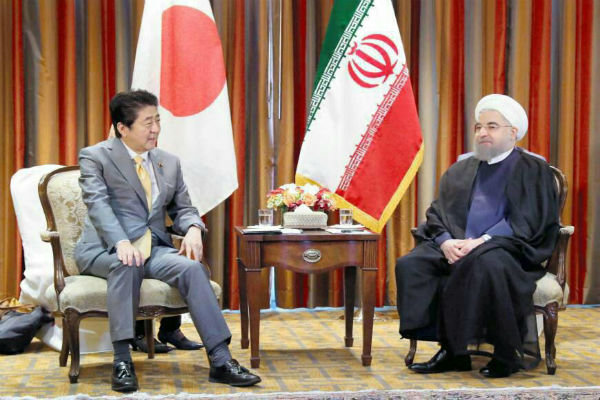
Japanese Prime Minister Shinzo Abe is slated to visit Tehran on Wednesday June 12. He hopes to use his warm relation with Iran and the US to mediate between the countries.
Besides Abe’s warm relations with Iranian and the US leaders there are others reasons that potentially make him a proper mediator including Japan’s efforts to have independent Middle East policy and not having imperialistic record in the region which is a good trust building factor for Iran.
Above all, as the third largest economy of the world Japan is very dependent on the energy importing from the region. Japan imports 80 percent of its consuming energy from the Middle East which passes through Hormuz strait, so any war and confrontation in the region will inflict great losses and damages to the country’s economy and consequently to the world economy.
To answer the question that how Mr. Abe’s efforts will be effective to settle the tensions depends on two factors.
First on the ‘real will’ and determination of the US and Iran to solve the ongoing problems especially the US ‘real will’. One cannot ask for talk and at the same time further undermine the trust between the two sides by taking some hostile measures like new sanctions that the US slapped against Iran’s petrochemical section last night on the eve of Mr. Abe’s visit to Tehran. If there is a real will, even no need to mediator.
Second we have to wait to see that how the Japanese PM will be able to affect the US’ decisions. Iran’s Keivan Khosravi spokesman for the Supreme National Security Council said efforts to remove US extraterritorial sanctions against Iran could guarantee the success of Japanese PM’s visit to the Islamic Republic.