Showing posts with label Oman Sea. Show all posts

Thursday, July 25, 2019

Strait of Hormuz; main shareholder of world economy

The Strait of Hormuz is a waterway connecting the Oman Sea to the Persian Gulf. This 39 kilometer-long passage is the narrowest part of one of the most strategic international shipping routes for the world and the main artery for the transportation of oil from the Middle East, half of which is the territorial waters of Iran and the other half of the Omani territorial waters, the area in the middle of it has been provided as the international waterway for the passage of ships.
Although the narrowest point in the Strait is just 33 kilometers, the transport lines reach 3 kilometers in both directions because the water is not deep enough for large tankers. It is only 33 to 95 kilometers (21 to 60 miles) is spread in its length.
The lands of Iran and Oman are connected to the Strait of Hormuz, and the two countries have sovereignty. To determine the length of the Strait of Hormuz, the best yardstick is the maritime border between Iran and Oman. The length of the boundary line reaches 202 kilometers. The longest distance between the Strait of Hormuz is 84 kilometers (from the banks of Bandar Abbas in the north to the northernmost point of the Musandam coast in the south), the shortest (between Iranian Lark Island in the north and Omani Island of As Salama in the south) is 33.6 kilometers.
This strait is the second strategic and busy waterway in the world. The Persian Gulf, in general, and the Strait of Hormuz, in particular with many islands and high lands near canal ways, have made the region more important than a waterway in terms of strategic position in the shipping industry, especially in the energy sector.
Also, the special conditions governing this strait caused the traffic of oil tankers to be created and special provisions are set up to prevent the occurrence of sea accidents and facilitate transit.
According to Article 38 of the Maritime Law Convention (1982), the Strait of Hormuz is known as a international strait that can link a part of the high sea to an economic region. The privilege of cruising of ships and merchant ships, submarines and aircraft from this strategic area is based on the national interests of the countries on the shores of the Strait.
Economic features
The Strait of Hormuz is a vital transit route for Middle Eastern oil traders and customers. It is a waterway for transit of goods and energy to markets in Asia, Europe, the United States and beyond. Over a fifth of the produced oil and one third of the world's LNG is exported from the region. Qatar is the largest natural gas exporter (LNG) in the world.
A large portion of OPEC oil (the Organization of Petroleum Exporting Countries) is being produced in the region and exported by oil tankers around the world.
According to the US Energy Information Administration (EIA), in 2018, the daily flow of oil in the Strait is on average 21 million barrels per day, equivalent to about 21% of global consumption. The Straits of Malacca are next in transit with a daily transfer of 15.7 million barrels and the Suez Canal with 4.6 million barrels per day.
Other reasons for the importance of the Persian Gulf and the Strait of Hormuz are the existence of the largest gas and oil reserves in the region, with more than 60 percent of the world's proven oil reserves and 30 percent of global oil trade are led to the region.
Security of Maritime transportation in global economy
Global challenges for the transfer of oil and other energy derivatives from the maritime route have doubled the focus on global energy security. Transit speed and cost reductions are among the most important reasons for countries to pay attention to shipping, and this is seen as one of the pillars of global economic growth, as more than 90 percent of the world's trade is on the sea. Thus, the sustainability of the safety of sea routes, especially the waterways and straits, plays a key role in the prosperity and economic growth of many countries.
Iran and Oman, two countries that dominate the waterway on both sides of the Strait of Hormuz have always stated that they do not want the security and tranquility of this route to be disturbed, but examining the reason beyond the increasing tensions in current juncture with paying attention to the statements of White House officials, especially Donald Trump, takes us into the words of Middle East affairs scholar Patrick Clawson of the Washington Institute for Near East Policy on the importance of the Strait of Hormuz; he said, “If the Strait of Hormuz is closed, the global economy will collapse because it is a vital energy passage.”
In fact, the dependence of many countries on Middle Eastern energy, especially East Asia, has caused their economic growth as well as the world to have a direct relationship with the security of the Persian Gulf, and in particular the Strait of Hormuz. The issue has increased the importance of White House exerting pressure and increasing cost for countries such as China, whose economy grew rapidly and surpassed other rivals. It can be seen since the rise in shale oil production in the United States, which has led them to enter the black gold export market. This has been the cause for the White House's greed to make cost for buyers and even oil vendors in the area.
Regarding the safety and security of commute of ships in the Persian Gulf, especially the Strait of Hormuz, Iran has repeatedly criticized the presence of foreign powers in the region. The Islamic Republic, because of the highest maritime border in the region, especially in the Strait of Hormuz, wants security and calm, but the existence of energy resources in the Persian Gulf, which gives life to the vital vein of the world economy, has led the hegemonic countries to seek insecurity and the tensions aiming at continuing to expand their influence in the region, as they are aware that this is a major shareholder of the world economy.


Monday, June 17, 2019

Intel. Community reluctant to accept U.S. hypothesis aiming to boost its military presence in ME: Zaccara

By Payman Yazdani

Referring to hasty US accusations against Iran after the suspicious attacks on oil tankers in Oman Sea, Qatar University research assistant says international community is reluctant to accept US hypothesis aiming to boost its military presence in the Middle East.
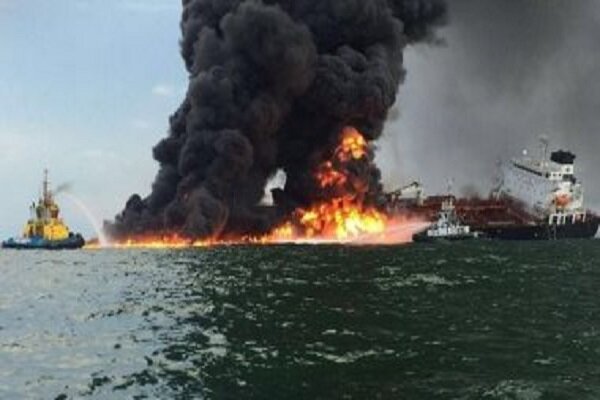
While the Japanese Prime Minister was visiting Iran after 4 decades and many expected even more reduction of the tensions in the region due his visit, in another suspicious and provocative move two large tankers were hit by explosions in the Sea of Oman on Thursday, a move that can intensify the tensions more than before.
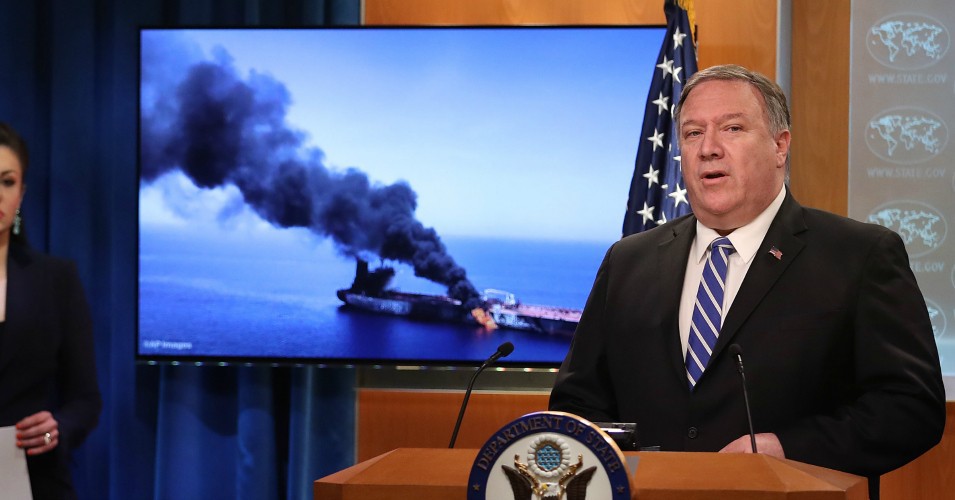
Following the attack, US Secretary of State Mike Pompeo hastily accused Iran of carrying out the attacks without providing any evidence to back up his accusation.
In this regard, Iran rejected US Secretary of State Mike Pompeo's anti-Iran accusations, saying the suspicious nature of the recent attacks on two oil tankers in the Sea of Oman is "not funny or ridiculous but alarming".
To know more about the issue we reached out to Dr. Luciano Zaccara, research assistant professor in Qatar University.
Q: The US administration has hastily accused Iran of being behind the attacks on two oil tankers in Oman Sea. How do you assess validity of the accusations?
A: After one month of the previous incident in Fujairah port, which so far has not been clarified, and with the lack of proper evidence apart from a released video which actually is not demonstrating anything, I believe the US administration is rushing too much to reach the conclusions that only Iran can be behind those attacks. It is evident that the current US government, mainly Bolton and Pompeo, is trying to make a case against Iran, with the objective to justify the withdrawal from the JCPOA, and in order to increase the military presence in the Persian Gulf, engaging all the Arabian Peninsula states in the MESA (Arab NATO), with the aim to contain Iran. However, the international community is reluctant to accept the American hypothesis. Simply, the false accusation against Iraq regarding its military nuclear program that justified the 2003 invasion is a clear precedent of the failure of the preventive war doctrine, and nobody in the region would be interested in starting a new war just because the US intelligence is pointing to Iran.
Q: Is it rational for Iran to commit such an action, while the Japanese PM is visiting Iran?
A: The attacked vessels were related to Japan, and one of them was transporting goods coming from Qatar, one of the few states that are actually in good terms with Iran in the region. As mentioned by most of the analysts in the recent days, it would be ‘shooting on its on foot’ if Iran conducted such an action in the middle of Abe’s meetings with Rouhani and Ayatollah Khamenei. Iran is the country that would lose the most if this incident proved to be done by any Iranian affiliated group, and it would provoke the total isolation from the international community, something that Rouhani’s government has been trying to prevent since he assumed office in 2013.
Q: In fact who is the biggest beneficiary of the provocative incidents taking place in the region that threatens world energy security and route? Can any instability in the region affect EU interests?
A: I don’t believe any regional actor would be benefited from the increasing instability of the Persian Gulf, despite the fact that the oil price increase can definitively benefit most of the producing countries, including Iran, Saudi Arabia, and the Emirates. A war atmosphere will certainly harm all the economies in the region, mainly Qatar and Iran, but also the rest of the PGCC states. I wouldn’t dismiss the hypothesis that a non-state actor may be linked to this incident that can only spark tension and a possible war. On the other hand, neither of the oil consuming countries, including the EU, Japan, India, China, and Korea, are happy with this situation that may disrupt their oil purchases. Still trying to escape from recession and just ending the crisis started in 2007, the EU is the region that would suffer the most with the disruption of oil supply or the dramatic increase of the oil price.

Sunday, June 16, 2019

The White House promotional campaign against Iran is defeated

By Mohammad Ghaderi

The United States Secretary of State, who is one of the symbols of assassination, violence, killing and disregard for international law, has accused the Islamic Republic of Iran of recent attacks in the Oman Sea. This charge comes from Mike Pompeo to Iran, the nature of the Trump government has long been outlined for the world's public opinion!
The reality is that the propaganda squad and the psychological warfare of US officials against Iran will fail this time. Recent statements by Mike Pompeo show that the US Secretary of State has been involved in a craft that he and other members of the White House have created.
“Taken as a whole, these unprovoked attacks present a clear threat to international peace and security, a blatant assault on the freedom of navigation, and an unacceptable campaign of escalating tension by Iran,” Secretary of State Mike Pompeo said, vowing the U.S. would defend itself and its partners.
Interestingly, Mike Pompeo called for the cooperation of the members of the UN Security Council in negotiations with our country! This comment comes as the White House officials over the past two and a half years have not been essentially following multilateralism in the international system. When they left the nuclear deal with Iran and re-imposed unlawful and cruel sanctions against the Iranian people, they showed that they were not reliable at all. Also, actions such as the withdrawal from the Paris Pact by the Trump, or the violations of the NAFTA Treaty in North America, have shown that Washington is in delusion! The president of the United States thinks that it is the post-Cold War era and that Washington is absolute power in the world! However, recent Secretary of State remarks showed the White House is severely vulnerable. As time passes, Washington will be closer to the point of failure and collapse.
Ultimately, the Trump government will soon become one of the hallmarks of the United States' defeat in the world. Undoubtedly, the game of people like Mike Pompeo and John Bolton against Iran could not save the president of the United States from the current situation.

Pompeo’s Tanker Narrative

It appears that Mike Pompeo has a hard time kicking his old habits.  He appears to be as smug about lying as a CIA operative as he is as Secretary of State.  Categorically blaming the Iranians for the recent oil attack tankers has left allies scratching their heads; and perhaps leaving foes thinking: “Thank God my enemy is so stupid”!
On June 13, 2019, as Ayatollah Khamenei was holding talks in Tehran with Japanese prime minister, Shinzo Abe, two oil tankers carrying oil to Japan were attacked.  As investigations into the incident were just beginning, Pompeo had already concluded his assessment and had it ready for the press.  Much to the audible surprise of the world, and without any proof or supporting documents, he laid the blame firmly at Iran’s feet citing “intelligence”.
To his relief, in no time at all, US officials claimed that they had managed to get their hands on videos and pictures.  They presented a grainy video alleging to show an Iranian navy boat removing mines from the damaged Japanese ship.  It is easy to understand why the grainy video’s existence was necessary.
Precisely a month prior, on May 13th,  four oil tankers were damaged in the region.   The United States blamed Iran without any evidence.  Saudi Arabia followed suit.  The rest of the world was skeptical and doubts floated about the about the accuracy of US claims.  This time around, Pompeo was saved by the video – although not for long! The Japanese vessel owner disputed the presence of mines damaging his vessel (as suggested in the blurry video).
Even allies were skeptical.  To enforce its position and allegations against Iran,  the Trump administration made its argument  based on misinterpreting what Iran had said about the oil embargo.   Following Trump’s announcement on April 22nd that America would not renew US waivers for countries which imported oil from Iran, in essence, imposing an oil embargo, on April 25the Iranian government retorted by condemning America’s illegal demands and stated that no other country could take its share of the oil market.
The Trump team would like us to believe that what Iran meant was the sabotage of the oil tankers.   This is far from true.    Iran was referring to its legal right under the 1982 United Nations Convention on the Law of the Sea (UNCLOS) which legally allows it to impede the passage of oil shipments through its territorial waters – the Strait of Hormuz.
While UNCLOS stipulates that vessels can exercise the right of innocent passage, and coastal states should not impede their passage, under the UNCLOS framework, a coastal state [Iran] can block ships from entering its territorial waters if the passage of the ships harms “peace, good order or security” of said state, as the passage of such ships would no longer be deemed “innocent”[i].
Given Iran’s recourse to international law, American diplomacy at its all time low, and the rally behind Iran – if only verbally – it makes absolutely no sense for Iran to blow up oil tankers and turn the world opinion in favor of  Trump and his the warmongering advisors – Pompeo and Bolton.
But tankers were blown up.   What other motivation were there?
Perhaps NOPEC – No to Oil Producing and Exporting Cartels Act.   In February, House passed a Bill that would cripple OPEC.   The Bill would prohibit OPEC from coordinating production and influencing prices.  While the Bill was said to provide a useful leverage for the White House, Persian Gulf Arab states sent their warnings to Wall Street.
On April 5th, Saudi Arabia even threatened to drop Dollar for oil trades in order to discourage US from passing the NOPEC Bill.  The Saudi threat came on the heels of UAE cautions the prior month that if such bill passed, it would in effect, break up OPEC.
Perhaps this was the reason behind Saudi Arabia’s lack of cooperation.   After Trump announced his Iran oil embargo, a senior US administration assured the world at large that Trump was confident Saudi Arabia and the United Arab Emirates would fill any gap left in the oil market.  He was mistaken. On April 29th, the Saudi Energy Minister, Khaled el-Falih made it clear that Saudi Arabia would not “rush to boost oil supply to make up for a loss of Iranian crude”.
After the May 13th incident, apparently America’s accusations did not carry any weight around the world, but they did have an impact on the jittery Saudis.   On June 3rd, Bloomberg reported that over the last month, the Saudis  raised their oil production to replace lost Iranian oil.    The oil market was satisfied and America could continue to put pressure on friend and foe to stop buying Iranian oil – there would be no shortages.
What then explains the second tanker incidents of June 13th?
Perhaps the motive is two-fold.  Firstly, the United States would reinforce its unfounded allegations that Iran is a ‘bad actor’ and discourage and dissuade the international community from cooperation with Iran.  And secondly, the hike in the price of oil as a result of the tanker attacks no doubt sent a sigh of relief to shale oil producers in the United States.  A drop in oil prices would greatly harm or bankrupt US shale-focused, debt-dependent producers.
Not on Trump’s watch.
Although many states in the US and some countries in the world have banned shale oil production due to its adverse effects on the environment, specifically water, the United States’ goal is to be the biggest producer and supplier of oil depending on its shale oil production.  Currently, according to the latest US Energy Information Administration (EIA), the United States is a net importer of oil.   With low oil prices, a halt or slowing of shale, the trend would continue to be an importer.
Having Saudi Arabia cower to US demands, demonizing Iran, intimidating allies and non-allies with fear of conflict in the region in order to press further demands on Iran, increase in the price of oil, and the weapons that would be purchased by US allies in the nervous neighborhood, seems like a win-win situation for America.  For now.
Soraya Sepahpour-Ulrich is an independent researcher and writer with a focus on U.S. foreign policy.


[i] Martin Wahlisch, The Yale Journal of International Law, March 2012, citing UNCLOS, supra note 12, , art. 19, para1, and art. 25, para1.

Saturday, June 15, 2019

Who benefits most of suspicious attacks on oil tankers, tensions in PG?


Who benefits most of suspicious attacks on oil tankers, tensions in PG?

TEHRAN, Jun. 13 (MNA) –The events roiling the Persian Gulf in recent weeks and days have the potential to affect everything from the price of gas to the fate of small regional states.
A look at the tensions going on around the world including the Middle East and Persian Gulf region, East Europe, Venezuela all indicate that these tensions originate from the US administration’s unilateral unlawful measures.
The White House’s unlawful withdrawal from the Iran’s nuclear deal (JCPOA), designation of the Islamic Revolutionary Guards Corps (IRGC) as a terrorist group, reimposing sanctions on Iran and trying to drive Iran’s oil export to zero all are provocative and suspicious moves of the US that have fueled the regional tensions.
The US and its regional allies including Saudi Arabia and the UAE’s suspicious and provocative move to accuse Iran of being behind the attacks on two ships at Fujairah in the UAE without presenting any document was also foiled by Iran’s vigilant approach and reduced tensions to some extent.
While the Japanese Prime Minister is visiting Iran after 4 decades and many expected even more reduction of the tensions in the region due his visit, in another suspicious and provocative move two oil tankers were targeted in Sea of Oman, a move that can intensify the tensions more than before.
Undoubtedly the US and its proxies in the region as usual will accuse of Iran being behind the incident without any document in hours once again, but the main question is that who is benefiting the most of the tensions in the Persian Gulf region?
Pondering the following reasons one can realize that the number one beneficiary of the tensions and attacks on tankers in the Persian Gulf and the Middle East is the USA and respectively Tel Aviv and the undemocratically  appointed rulers of some regional Arab states seeking their survival in following the US policies.
- Contrary to decades ago the US is now one of the biggest oil and gas producers in the world seeking to grab the market share of the other countries in the world. Following US unlawful withdrawal from the JCPOA and its efforts to drive Iran’s oil export to zero under the pretext of different accusations, in fact the US is making efforts not only to grab Iran’s share of the energy market but also to limit Iran’s income to reduce Iran’s regional influence. The US move to create tensions in Venezuela and East Europe and slapping sanctions against Caracas and Moscow can also be interpreted in this line.
- Any tension in the Persian Gulf not only will increase the energy price in global market but also will create enough pretexts for Washington to boost its military presence in the region. This means control of energy routes by the US in order to contain its rivals like China, EU, Japan and new rising economies like India which their economies are heavily dependent on the energy coming from the Persian Gulf and Middle East.
- Tensions in the region besides Iranophobia project will guarantee continuation of purchase of American weapons by some regional countries such as Saudi Arabia. By continuation of selling weapons to Saudi Arabia the US not only creates thousands of jobs for Americans but also keeps its rivals like China and Russia out of Middle East weapon market.
- Tensions and conflicts created by the US in Middle East has resulted in great rifts and divergence among regional states which is vital for Tel Aviv’s security and its expansionist policies.

Thursday, June 13, 2019

Who benefits most of suspicious attacks on oil tankers, tensions in PG?

Who benefits most of suspicious attacks on oil tankers, tensions in PG?
TEHRAN, Jun. 13 (MNA) –The events roiling the Persian Gulf in recent weeks and days have the potential to affect everything from the price of gas to the fate of small regional states.
A look at the tensions going on around the world including the Middle East and Persian Gulf region, East Europe, Venezuela all indicate that these tensions originate from the US administration’s unilateral unlawful measures.
The White House’s unlawful withdrawal from the Iran’s nuclear deal (JCPOA), designation of the Islamic Revolutionary Guards Corps (IRGC) as a terrorist group, reimposing sanctions on Iran and trying to drive Iran’s oil export to zero all are provocative and suspicious moves of the US that have fueled the regional tensions.
The US and its regional allies including Saudi Arabia and the UAE’s suspicious and provocative move to accuse Iran of being behind the attacks on two ships at Fujairah in the UAE without presenting any document was also foiled by Iran’s vigilant approach and reduced tensions to some extent.
While the Japanese Prime Minister is visiting Iran after 4 decades and many expected even more reduction of the tensions in the region due his visit, in another suspicious and provocative move two oil tankers were targeted in Sea of Oman, a move that can intensify the tensions more than before.
Undoubtedly the US and its proxies in the region as usual will accuse of Iran being behind the incident without any document in hours once again, but the main question is that who is benefiting the most of the tensions in the Persian Gulf region?
Pondering the following reasons one can realize that the number one beneficiary of the tensions and attacks on tankers in the Persian Gulf and the Middle East is the USA and respectively Tel Aviv and the undemocratically  appointed rulers of some regional Arab states seeking their survival in following the US policies.
- Contrary to decades ago the US is now one of the biggest oil and gas producers in the world seeking to grab the market share of the other countries in the world. Following US unlawful withdrawal from the JCPOA and its efforts to drive Iran’s oil export to zero under the pretext of different accusations, in fact the US is making efforts not only to grab Iran’s share of the energy market but also to limit Iran’s income to reduce Iran’s regional influence. The US move to create tensions in Venezuela and East Europe and slapping sanctions against Caracas and Moscow can also be interpreted in this line.
- Any tension in the Persian Gulf not only will increase the energy price in global market but also will create enough pretexts for Washington to boost its military presence in the region. This means control of energy routes by the US in order to contain its rivals like China, EU, Japan and new rising economies like India which their economies are heavily dependent on the energy coming from the Persian Gulf and Middle East.
- Tensions in the region besides Iranophobia project will guarantee continuation of purchase of American weapons by some regional countries such as Saudi Arabia. By continuation of selling weapons to Saudi Arabia the US not only creates thousands of jobs for Americans but also keeps its rivals like China and Russia out of Middle East weapon market.
- Tensions and conflicts created by the US in Middle East has resulted in great rifts and divergence among regional states which is vital for Tel Aviv’s security and its expansionist policies.