Showing posts with label Persia. Show all posts

Sunday, August 18, 2019

The Longest Poem Ever Written: Shahnameh – The Epic Book of Kings

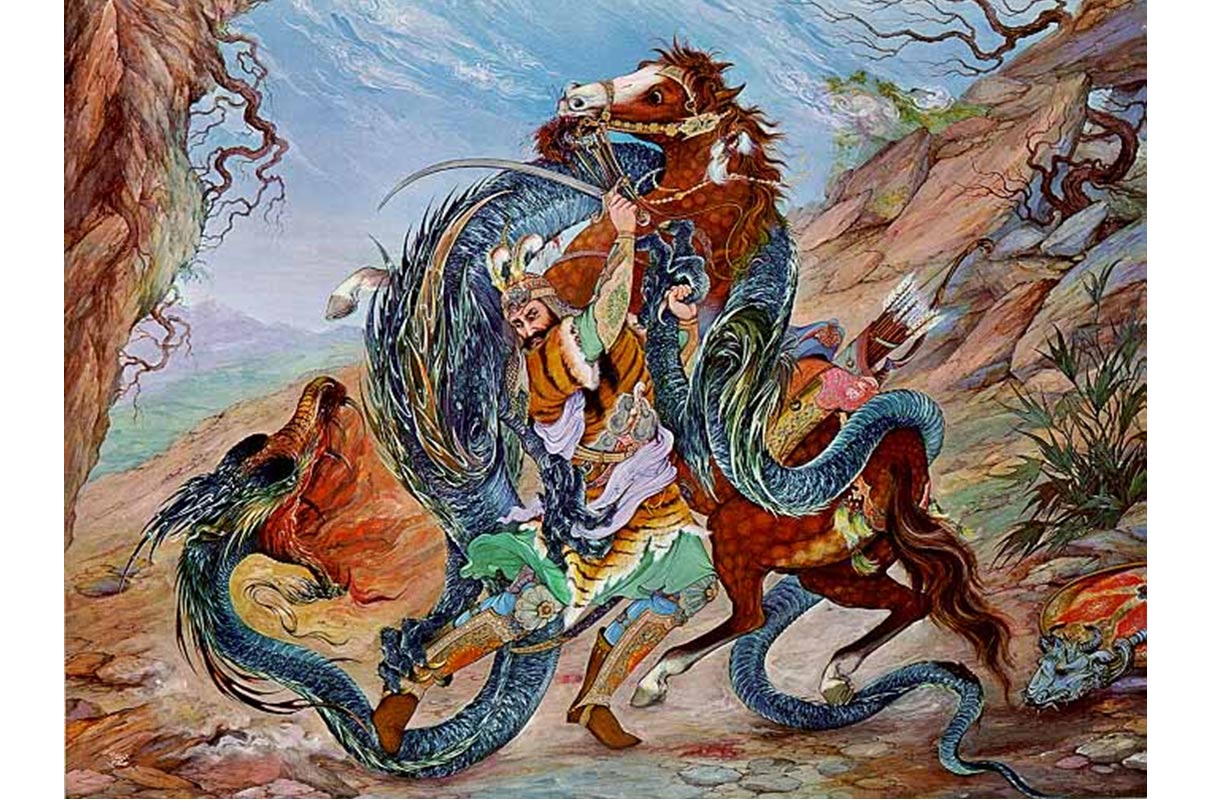
Rostam the hero fighting the Dragon in the Seven Quests of Rostam. Iranian miniature illustration from Shahnameh
In 977 AD, a Persian poet named Ferdowsi began on a grandiose poetic journey that would take him 33 years to complete. He used ancient Persian tales which had been told from generation to generation for several millennia as the source for writing his poems about epic kings and heroes and about mythical creatures and adventures. This resulted in the creation of the epic which in Persian is called Shahnameh or translated The Book of Kings, the longest poem ever written in history. Ferdowsi's great aim was to revive the ancient Persian culture, mythology and language after the invasion of the Islamic Caliphate of the Arabs.

The Life of Ferdowsi


Ferdowsi was born in 935 AD in the city of Tus located in the modern day province called Khorasan in northeastern Iran. At this time, the Samanid dynasty had restored native Persian rule on Iranian territories as the second post-Islamic Persian empire after the eastern parts of the Islamic Caliphate had been liberated from the Arabs in 861 AD. Ferdowsi came from a line of wealthy noble families which generation after generation inherited the title dehqan. The dehqans were among the social top class and were the leaders of communities and owners of land. By the time Persians were violently forced to become Muslims after the invasions, the dehqans converted to Islam not for following Islam itself, but mainly for using their social authority for preserving the ancient Zoroastrian culture of Persia. For centuries, the dehqans were the preservers of the traditional customs, culture and literature of ancient Persia and hence acted as fundamental factors for the survival of Iranian identity. Dehqans were often able to afford the best education which resulted in Ferdowsi gaining considerable knowledge in literature. He was closely tied to the ancient Persian culture and studied ancient scripts which inspired his poetry.
In the year 977 AD, a shift in power had been initiated in Persia with the end of the Samanid dynasty and the beginning of the Ghaznavid dynasty. Ferdowsi became a poet of the Ghaznavid royal court and due to the exquisite and superb quality of the poems that he wrote, the king entitled him Ferdowsi. This name derives from the Persian word pardisi or fardisi which means from paradise . With the new title given to him by the king, he began writing Shahnameh which would become the greatest poetic journey of his life and one of the greatest works of poetry in the world.
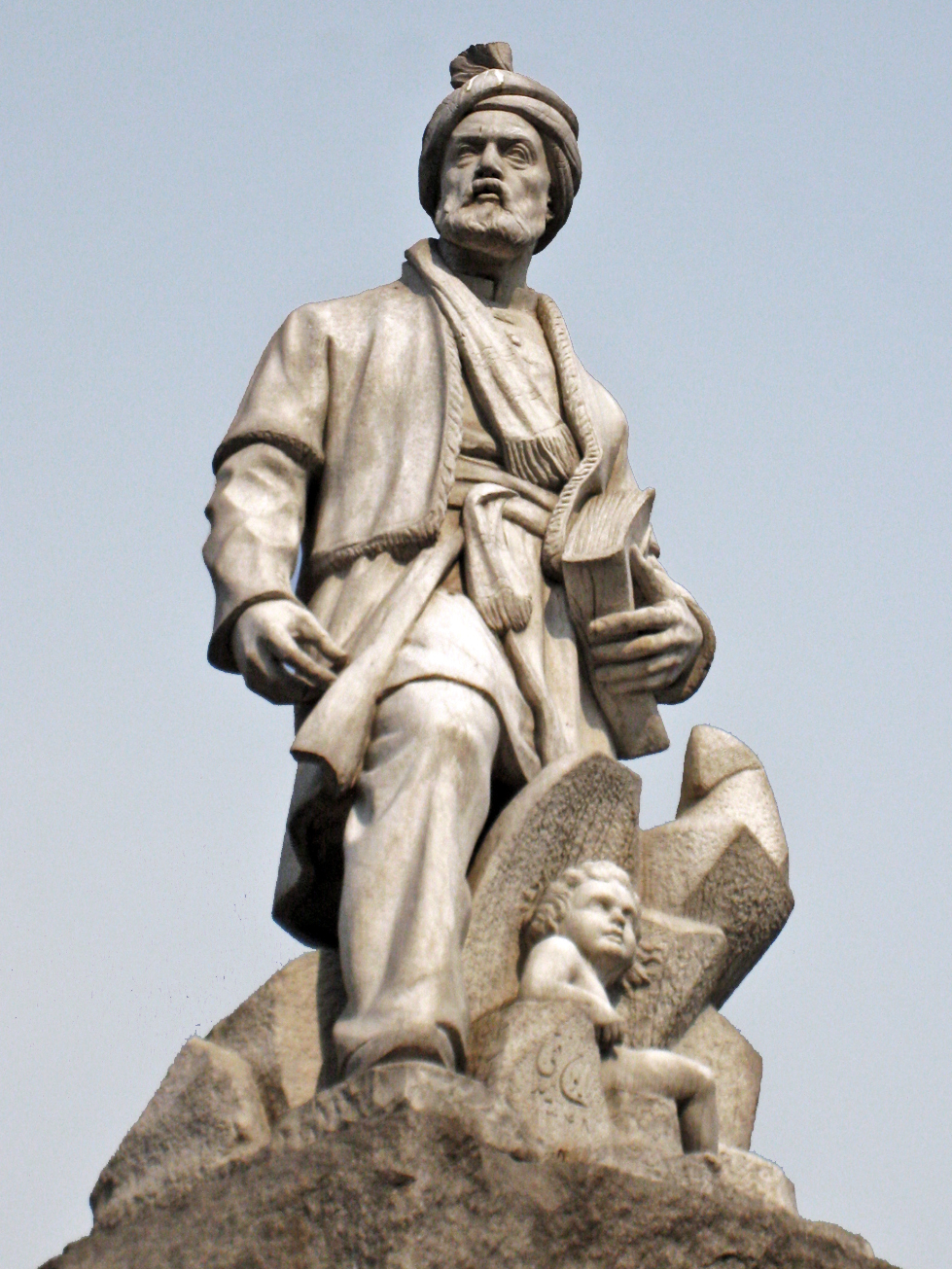
Statue of Ferdowsi in Tehran, Iran
Statue of Ferdowsi in Tehran, Iran ( http://toos051.persiangig.com/new_folder/Ferdowsi_Statue.jpg)

Shahnameh – The Epic


Prior to writing Shahnameh, Ferdowsi collected literary material from ancient sources such as from the middle Persian Pahlavi work named Khodaynameh, which translates to Book of God in English. The documentation of this ancient work was ordered by the Sassanid king Anushiravan and was based on historical facts documented by Zoroastrian priests as well as legendary accounts of mythical eras written in Avesta, the holy book of the Zoroastrian religion Some ancient sources has stated that the Persian literary tradition of recording royal events and mythical stories has existed at least from the time of the Achaemenid era in the 6th century B.C, although the stories are thousands of years older and have been transferred verbally for generations. Many of the stories are very similar to ancient Indo-Iranian/Aryan stories, indicating the close connection of Persians to their Aryan heritage.

Ferdowsi divided the timeline of Shahnameh into three major periods; the mythical era the heroic era and the historical era . A very brief description of each era follows:        
The mythical era comprises of poems about the creation of the world and of the first man named Keyumars who became the first king. Keyumars's grandson Hushang discovered fire and established the yearly fire festival Sadeh. Jamshid the shepherd, who became a great king in the favor of God named Ahura Mazda, ruled the lands with prosperity and struck down the evil demons named deev. Jamshid also established the Persian New Year Nowruz meaning New Day which is celebrated on 20 March every year. The child of the devil Ahriman, the evil serpent man Zahhak, killed Jamshid and became the new king. Ahriman kissed Zahhak's shoulders and out of his shoulders, two snakes grew out. Zahhak tried to cut off the snakes but they always grew out again, he was cursed. The snakes required to be fed with fresh brains of young boys every day. Zahhak therefore fulfilled their requests in fear of being killed by the snakes. This led to the uprising of the blacksmith Kaveh who refused to sacrifice his last son. Kaveh started the uprising and made a banner out of his leather apron by putting it on top of a spearhead. With the help of the people and a prince named Fereydun who eventually became king, they captured Zahhak and chained him to mount Damavand in northern Iran, the highest volcano in all of Asia and the highest peak in the Middle East. There are stories about king Fereydun and his three sons Salm, Tur and the youngest Iraj. They inherited the three corners of the world after their father died and Iraj inherited the empire of Persia. This resulted in jealousy of the two older brothers towards their younger brother Iraj and stories about epic wars between the brothers are told. Iraj was killed by Tur and Iraj’s grandson Manuchehr became the king of Persia to avenge his grandfather's death

Zahhak bound on mount Damavand. Baysungur's Shahnama, 1430.
Zahhak bound on mount Damavand. Baysungur's Shahnama, 1430. ( Wikimedia Commons )
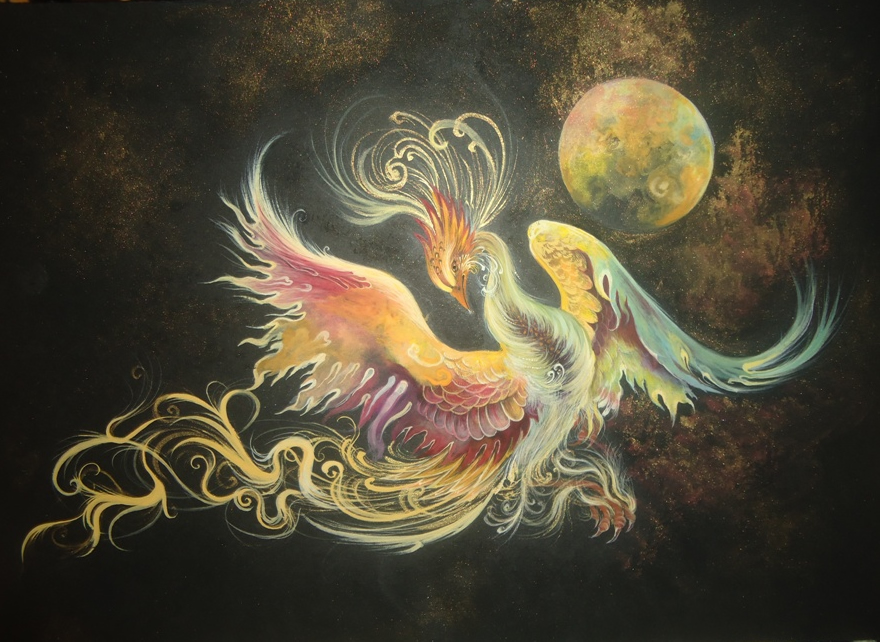
The heroic era comprises of poems about legendary love stories, epic heroes and battles. A man named Sam, who was the fellow companion of king Manuchehr, became the father of a child who he named Zal. Zal was born albino with white hair and pale skin. Manuchehr thought the child was demonic and Zal was therefore rejected as an infant and put on top of mount Damavand to die. Luckily, the loving and wise mythical bird Simorgh who nested in the mountain, found Zal and nourished him. Simorgh had experienced three ancient world destructions from which she harbored the knowledge of all ages. When Zal had grown up, he left the custody of Simorgh. Simorgh gave him three golden feathers from her wing which Zal could burn in a sacred fire whenever he needed help from Simorgh. Zal met his love, princess Rudabeh and she fell in love with Zal's unique features, charisma and wisdom. They eventually married and Rudabeh gave birth to a boy who they named Rostam. Rostam grew up to become the greatest hero of Persia. He went on seven adventures called the Seven Quests of Rostam, where he together with his loyal and strong horse Rakhsh fought battles with the White demon, The beautiful Sorceress, the Dragon, the Lion and various kings. Rostam found his love, princess Tahmineh and they became parents to a boy named Sohrab. Rostam gave Sohrab a bracelet as a gift when he was an infant before leaving him and Tahmineh. Sohrab grew up without ever seeing Rostam until several years later when the armies of Rostam and Sohrab met in a battle. Father and son did not know each other until Rostam fatally wounded Sohrab in a duel. It was then, while Sohrab was dying in his arms, that Rostam noticed the bracelet around Sohrab's neck. Rostam then tragically realized that he had killed his own son. The legendary love story is also told about Bijan, the son of a famous knight from Persia and Manijeh, the princess of an empire called Turan in modern day Central Asia, which mythologically was the greatest enemy of Persia. This love story ultimately resulted in an epic war between the two empires.
Iranian miniature painting of the mythical bird Simorgh
Iranian miniature painting of the mythical bird Simorgh ( http://nadiaartgallery.com/wp-content/uploads/2013/07/simorgh.jpg)
The historical era comprises of historical accounts starting from the dynasty of the Parthian kings after Iranian territories had been freed from Greek and Macedonian rulers. A lot of the focus is put on the succeeding dynasty of the Sassanid emperors and the stories regarding this dynasty are exquisitely told. Shahnameh ends with the Islamic Arab conquest of Persia in 651 AD. Ferdowsi poetically described this event as a major disaster over what he calls the arrival of “the army of darkness”.

The Legacy of Ferdowsi


After 33 years at the age of 71, Ferdowsi finished the writing of Shahnameh on 8 March 1010 AD and in 1020 AD, Ferdowsi died at the age of 82. He was buried in his birth place Tus. Shahnameh contains 62 stories, 990 chapters and 60 000 rhyming couplets which makes it the longest poem in the history of literature, a work seven times longer than the Illiad of Homer. Ferdowsi wrote his work entirely in classical Persian which is still spoken today by Iranians and people related to the Iranian culture in countries once part of Greater Iran. It was a linguistic renaissance considering that the Persian language was officially banned in Persia by the Arab rulers for almost 200 years. Today, Shahnameh is a common book in Iranian households and it is the national epic of the Persian speaking world. The epic stories of this masterpiece influenced the literature of Asia for centuries and the stories are enthusiastically told to this day. The philosophical message of Shahnameh is that since the world is transient and everyone is merely a passerby, one is wise enough to avoid cruelty, lying and other evil deeds. Instead one should strive for justice, truth and order which brings happiness, ease and honor. Ferdowsi put lifelong dedication and sacrificed a lot to complete his work. Ferdowsi's writing style is that of a superb poet's. His epic language is rich, moving and lavish so that it truly enchants the reader. He is remembered as the greatest of the Persian poets who with the power of the pen rescued and revived the Persian language, culture and heritage.
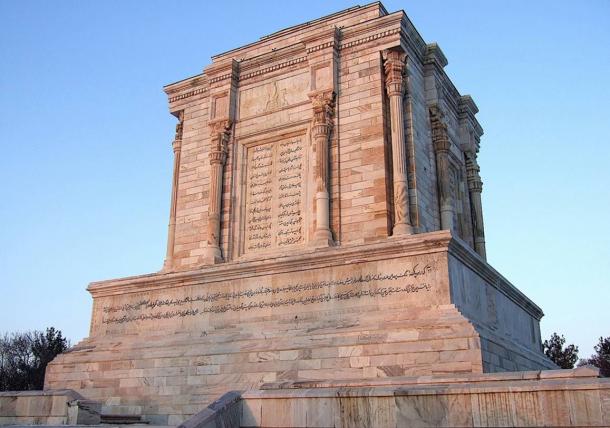
Ferdowsi's tomb in Tus, Iran
Ferdowsi's tomb in Tus, Iran ( Wikimedia Commons )
Below are the words of Sohrab spoken to Rostam as he did not know he was dying in the arms of his father. From Shahnameh - The Persian Book of Kings, translated by Dick Davis:
I brought this on myself, this is from me,
And Fate has merely handed you the key
To my brief life, not you but heaven's vault –
Which raised me and then killed me – is at fault.
Love for my father led me here to die.
My mother gave me signs to know him by,
And you could be a fish within the sea,
Or pitch black, lost in night's obscurity,
Or be a star in heaven's endless space,
Or vanish from the earth and leave no trace,
But still my father, when he knows I'm dead,
Will bring down condign vengeance on your head.
One from this noble land will take this sign
To Rostam's hands, and tell him it was mine,
And say I sought him always, far and wide,
And that at last, in seeking him, I died.

Wednesday, July 11, 2018

Saudi Sectarianism: A Disease Characterized by Hardening of the Categories

By Abu Dharr

Deceptions, dishonesties, defamations, denigrations — these are the words that summarize the attitude of individuals, the media, and institutions that have been and still are contentious toward the trailblazing efforts of a leadership and population who are pioneering a momentous change within the human family. This begins with its Islamic members. Obviously we cannot cover the broad range of cantankerous characters and grumpy governments that have displayed their combination of ignorance and malice toward an Iran that is Islamic and a leadership that is free from foreign exploitation and domestic manipulation. What concerns us is a particular type of Islamic literati who perceive of “Iran” as an existential threat — so much so that Israel has become their political pal and strategic supporter.
These “Islamic pundits” are in high demand by the corporate mass media to convince their particular audience that Iran is pursuing an agenda of control, manipulation, domination, and hegemony! These pundits are located in an assortment of countries — some of them Muslim and others foreign. Briefly, their probe and breakdown of Islamic Iran relies on two canards. The first is that Iran is in reality a sectarian nation-state. The second is that Iran is a “Majusi” (Magian/Zoroastrian) country. They never refer to the Iranian people or the Iranian government with the word Islamic. The people in Iran, according to their descriptions, are either Persian, Safawis, Shi‘is or some other description that sounds like it is incompatible with Islam.
One of the falsehoods, which can only be peddled to the naive, is the conflation, by some of these commentators, of Iran’s Safawi past with its Islamic present. The sectarian bug has circulated so profoundly in the bloodstream of these analysts that they no longer are able to realize that Islamic Iran has broken away from its past Safawi sectarianism as surely as it broke away from its contemporary Pahlavi interventionism. It should be noted here that even though there is a strong Islamic current in today’s Turkey, that current carries within it a deep-seated affinity with its Ottoman past and wants to compel a Pax ‘Uthmania (Ottomanica) wherever it can extend its Islamic influence. There is no doubt that both histories (Persian and Turkic) had elements of a sectarian trend in them, as there is no doubt that both countries still have sectarian trends within them today. The difference is that the Islamic inclination in Turkey with all its secular foils has not been able to make a clean break from the mistakes of the past (without disparaging the accomplishments of that same past) and join hands with Islamic Iran on a post-sectarian strategy that has the very real potential of reviving the Muslim Ummah.
With the prudent guidance of its historically experienced ‘ulama and decision makers, Islamic Iran has been, with Allah’s helping hand, able to tame the sectarian beast within its own ranks, and therefore muzzle the voices of its schismatic Shi‘is. This was most recently demonstrated by the vocal objection of the committed ‘ulama in Islamic Iran to the Shirazi schismatic and divisive Shi‘is whose client relationship with not-so-great Britain was presented to the public without any “Shi‘i”-first bias. Compare the frank and brave drawing of a red line between the conviction of the “Shi‘i” Imams and “Shi‘is” of Isma‘il Safawi’s conviction. And here you may even go a step further and ask yourself: will the time come when members of the “Sunni” Islamic movements have the candor and courage to draw their red line between the conviction of the “Sunni” khulafa’ and the “Sunnis” of Muhammad ibn ‘Abd al-Wahhab’s conviction? The Safawi dynasty produced generations of “Shi‘i” fanatics. Likewise, the Wahhabi dynasty is responsible for generations of “Sunni” fanatics. The difference is the Safawi dynasty is long gone and dead, even though there are still pockets of their fanaticism — as subtle and substantial as it is in its own enclaves — that linger on here and there, especially in scattered communities from its starting point in Tabriz (hundreds of years ago) to its headquarters (nowadays) in London.
But the Wahhabi dynasty is still alive. And there are more than just pockets of Wahhabis and their vicious fanatics located throughout the world. Their influence, unlike the subtlety of their Safawi sectarian counterparts, is barefaced and brazen. Their notorious call to arms via their takfiri creed should be a wakeup call for the “Sunni” Islamic movements, and especially for Turkey. Their crimes against Muslims resulted in smoldering countries: Afghanistan, Iraq, Libya, Somalia, Syria, Yemen, and perhaps more yet to come.
The analysts and authorities who are peddling an anti-Islamic oratory when they do express themselves against Islamic self-governance in Iran never explain to us why the Saudi-Wahhabi strategy of political sectarianism (they claim to represent the Sunnis of the world) and its officials are entering into a political marriage with the Zionist bandits who stole Palestine and dispossessed millions of “Sunni” Palestinians! Can these analysts explain and tell us whether it is a coincidence that Saudi-Wahhabi spokespersons happen to be bad-mouthing Islamic Iran and sweet-talking Zionist Israel at the same time?!
The malicious minds of the debased British diplomats and spies did very well in recruiting the Saudi-Wahhabi dynasty to the colonialist, imperialist, and Zionist causes. The degree of their success can be gauged by the fact that hundreds of thousands of otherwise sincere Muslims were conscripted into imperialist and Zionist wars against the teachings of Islam. The wars in Syria and Yemen would have been impossible to execute without a “religious” justification. The Wahhabi-Salafi underlings of the Saudi ruling family were turned into convenient recruiters for the wars that are raging in and around the Holy Land. And if there are Wahhabi-Salafi ‘ulama who object or may object to this abuse of Islam by the Saudi functionaries of Tel Aviv and Washington, well then, lock them up. And that is where many of them are today: in Saudi prisons. They are left to hang there — high and dry. No one seems to care for them. Barely anyone mentions them. When Muhammad bin Salman (MBS) apprehended and imprisoned hundreds of millionaires and billionaires the mainstream media was a cacophony of news about their most celebrated one: al-Walid ibn Talal… along with a few others. But no one in the mainstream media mentions Hasan Farhan al-Maliki, or Salman al-‘Awdah, or the hundreds of other scholars who are languishing behind bars.
The “intellectual poison” that has injured our understanding of Islam and corrupted the character of certain scholars is in need of an antidote. And that type of cure is not going to come from an article in a magazine or a book in the library — as important as they are. The medicine for this sectarian sickness is the grand jihad beginning with Islamic Iran 39 years ago that has outwitted the Zionist minds, thwarted the imperialist militaries, and stopped the Zionists dead in their tracks.
The “intellectual poison” trying to take effect within the Muslim public mind would have us believe that Iran is anti-Islam and Israel and the US are pro-Islam. No amount of misquoting ayat and misrepresenting hadiths will be able to obscure the slow but sure uncloaking of the Saudi schemers,
And there are people who say, “We affirm and commit to Allah and the Final Day” — but, in fact, they are not committed. They make an effort to deceive Allah and the committed Muslims and in reality they deceive no one but themselves, and they do not sense [what they are doing] (2:8–9).

Thursday, April 16, 2015

Islam and tribalism

BY IRFAN HUSAIN. WHAT do Afghanistan, Somalia, Saudi Arabia, Mali, northern Nigeria, Pakistan’s tribal areas and Yemen have in common? They all have Muslim populations, are socially backward, mistreat women, and have a profound distrust of reason and modern education. Above all, they are tribal societies that use Islam to rationalise and uphold archaic tribal values and laws. Unsurprisingly, most of them are caught up in violent conflicts fuelled in equal parts by tribal loyalties, faith and ignorance. Shia-Sunni rivalry is one fault line dividing the Muslim world. The second one is the tension between those aspiring to democracy, and the autocrats who oppress and misrule them. But the third fault line derives from history and social development. Across the world, nations that had nautical trade links tended to be more receptive to new ideas as ships brought not just goods, but books and travellers from distant lands. By contrast, societies that evolved far from the sea tended to be more inward-looking; tra­ding caravans covered shorter routes in general, and brought goods from similar regions. And while Yemen traded extensively for centuries, the dominant north of the country remained largely insulated from the southern coast. The trajectories that Muslim societies took after their conversion to Islam obviously differed, but two broad categories soon emerged. Countries that had already achieved a level of civilisation in their pre-Islamic period retained their culture, combining it with their new Muslim identity. Extremist Muslim groups have given Islam a bad name worldwide..
Persia, Cairo, Baghdad and Damascus were all centres of ancient civilisations and retai­ned their sophistication. And after the Tur­kish occupation of Constantinople, the conquerors acquired features of Byzantine cul­ture. In India, between the Sultanate period and the fall of the Mughal Empire, Delhi, Lucknow and Hyderabad were synonymous with refinement and gracious living. Perhaps Islamic civilisation reached its apogee in Muslim Spain in Grenada, Cordoba and Seville. But Riyadh? Jeddah? Mogadishu? For centuries, Muslim nations in the hinterland played little part in world affairs, and contributed nothing to human advancement. In fact, this absence of creativity has remained unchanged. What has changed, however, is their role in contemporary affairs. In the case of Saudi Arabia and the Gulf states, the emergence of oil as an essential source of energy a century or so ago has transformed their fortunes, and made them major global players. But this stroke of luck has done little to change their tribal attitudes or autocratic outlook.
The oil embargo of 1973 caused a sudden spike in oil prices, and gave Saudi Arabia a huge cash injection that permitted it to finance the export of its literal, austere Wahabi version of Islam around the world. It has focused on madressahs in the poorest Muslim countries where children are made to memorise religious texts, but are taught little else.
Wahabi influence and money has thus transformed the social and religious landscape across much of the Muslim world. This vision has fuelled extremism by excluding other, less-rigid interpretations of Islam, deeming followers of different sects non-believers. The normal trajectory from tribalism to liberal democracy passes via feudalism and industrialisation. But as the tribal societies mentioned here have very little agriculture, the feudal phase simply did not emerge. And although oil has transformed some of them into wealthy urbanised states, this change has not been accompanied by a change in social attitudes. Thus, while rich Saudis may drive expensive cars and live in lavish homes, most of them remain Bedouins at heart.
This would be no bad thing had it not been for the fact that this adherence to a literalist belief system, and the conviction that anybody not sharing these views is somehow inferior, has major implications for the world. It is no coincidence that the majority of the 9/11 bombers were Saudis.
While we find the self-styled Islamic State’s violence repugnant, we tend to forget that it mimics the Saudi penalties of beheading and flogging, as well as the repressive attitude towards women. Harsh geography combined with tribal laws often produces a cruel penal system as we have seen across the societies we have examined briefly here. The Taliban, Boko Haram, IS and Al Qaeda are not that far from Riyadh in the way they punish those deemed as having transgressed the rules. Through mindless terrorism, extremist Muslim groups today have given Islam a bad name across the world. Foreigners are unlikely to analyse the fault lines dividing the Muslim world in an effort to understand what lies behind the insanity gripping so many Muslims. And yet, by lumping the entire Islamic world into one monolithic whole, they overlook the underlying tensions and divisions. To this day, the West has refused to acknowledge the Saudi role in the export of the toxic ideas that have inspired two generations of terrorists. Until we can learn to distinguish between these different strands of Islam, we will not understand why and how our faith has been hijacked.