Compiled By: Firouzeh Mirrazavi
Deputy Editor of Iran Review

Deputy Editor of Iran Review
 | ||
 | ||
 | ||
 | ||
 | ||
 | ||
 | ||
 | ||
 | ||
| ||

Persian literature spans two and a half millennia, though much of the pre-Islamic material has been lost. Its sources have been within historical Persia including present day Iran as well as regions of Central Asia where the Persian language has been the national language through history.
As one of the great literatures of mankind the Persian literature has its roots in surviving works in Old Persian or Middle Persian dating back as far as 522 BCE, the date of the earliest surviving Achaemenid inscription, the Bisotun Inscription. The bulk of the surviving Persian literature, however, comes from the times following the Islamic conquest of Persia circa 650 CE. After the Abbasids came to power (750 CE), the Persians became the scribes and bureaucrats of the Islamic empire and, increasingly, also its writers and poets.
Persians wrote both in Persian and Arabic; Persian predominated in later literary circles. Persian poets such as Sa'di, Hafiz , Rumi and Omar Khayyam are well known in the world and have influenced the literature of many countries.
Pre-Islamic Persian literature
Pre-Islamic Persian literature
Very few literary works survived from ancient Persia. This is partly due to the destruction of the library at Persepolis. Most of what remains consists of the royal inscriptions of Achaemenid kings, particularly Darius I (522–486 BC) and his son Xerxes. Zoroastrian writings mainly were destroyed in the Islamic conquest of Persia. The Parsis who fled to India, however, took with them some of the books of the Zoroastrian canon, including some of the Avesta and ancient commentaries (Zend) thereof. Some works of Sassanid geography and travel also survived albeit in Arabic translations.
No single text devoted to literary criticism has survived from pre-Islamic Persia. However, some essays in Pahlavi such as "Ayin-e name nebeshtan" (Principles of Writing Book) and "Bab-e edteda’I-ye" (Kalileh o Demneh) have been considered as literary criticism (Zarrinkoub, 1959).
No single text devoted to literary criticism has survived from pre-Islamic Persia. However, some essays in Pahlavi such as "Ayin-e name nebeshtan" (Principles of Writing Book) and "Bab-e edteda’I-ye" (Kalileh o Demneh) have been considered as literary criticism (Zarrinkoub, 1959).
Some researchers have quoted the Sho'ubiyye as asserting that the pre-Islamic Persians had books on eloquence, such as 'Karvand'. No trace remains of such books. There are some indications that some among the Persian elite were familiar with Greek rhetoric and literary criticism (Zarrinkoub, 1947).
Persian literature of the medieval and pre-modern periods
While initially overshadowed by Arabic during the Umayyad and early Abbasid caliphates, New Persian soon became a literary language again of the Central Asian lands. The rebirth of the language in its new form is often accredited to Ferdowsi, Unsuri, Daqiqi, Rudaki, and their generation, as they used pre-Islamic nationalism as a conduit to revive the language and customs of ancient Persia.
In particular, says Ferdowsi himself in his Shahnama:
"For thirty years, I endured much pain and strife,
with Persian I gave the Ajam verve and life".
"For thirty years, I endured much pain and strife,
with Persian I gave the Ajam verve and life".
Poetry
So strong is the Persian aptitude for versifying everyday expressions that one can encounter poetry in almost every classical work, whether from Persian literature, science, or metaphysics. In short, the ability to write in verse form was a pre-requisite for any scholar. For example, almost half of Avicenna's medical writings are in verse.
Works of the early era of Persian poetry are characterized by strong court patronage, an extravagance of panegyrics, and what is known as "exalted in style". The tradition of royal patronage began perhaps under the Sassanid era and carried over through the Abbasid and Samanid courts into every major Persian dynasty. The Qasida was perhaps the most famous form of panegyric used, though quatrains such as those in Omar Khayyam's Ruba'iyyat are also widely popular.
Khorasani style, whose followers mostly were associated with Greater Khorasan, is characterized by its supercilious diction, dignified tone, and relatively literate language. The chief representatives of this lyricism are Asjadi, Farrukhi Sistani, Unsuri, and Manuchehri. Panegyric masters such as Rudaki were known for their love of nature, their verse abounding with evocative descriptions.
Khorasani style, whose followers mostly were associated with Greater Khorasan, is characterized by its supercilious diction, dignified tone, and relatively literate language. The chief representatives of this lyricism are Asjadi, Farrukhi Sistani, Unsuri, and Manuchehri. Panegyric masters such as Rudaki were known for their love of nature, their verse abounding with evocative descriptions.
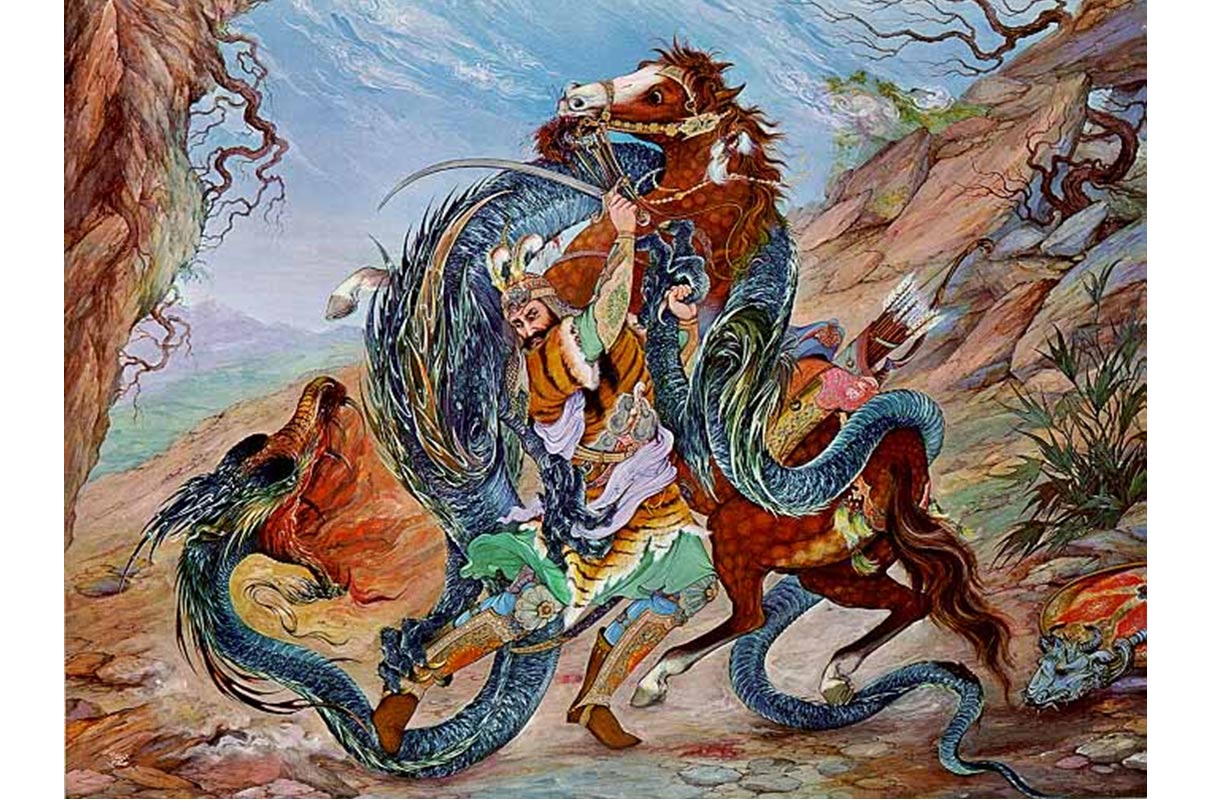
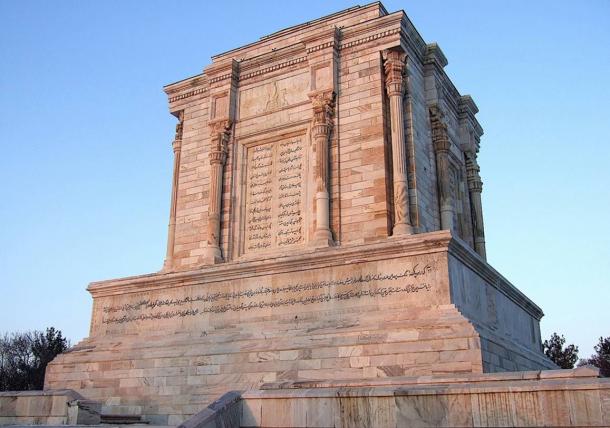
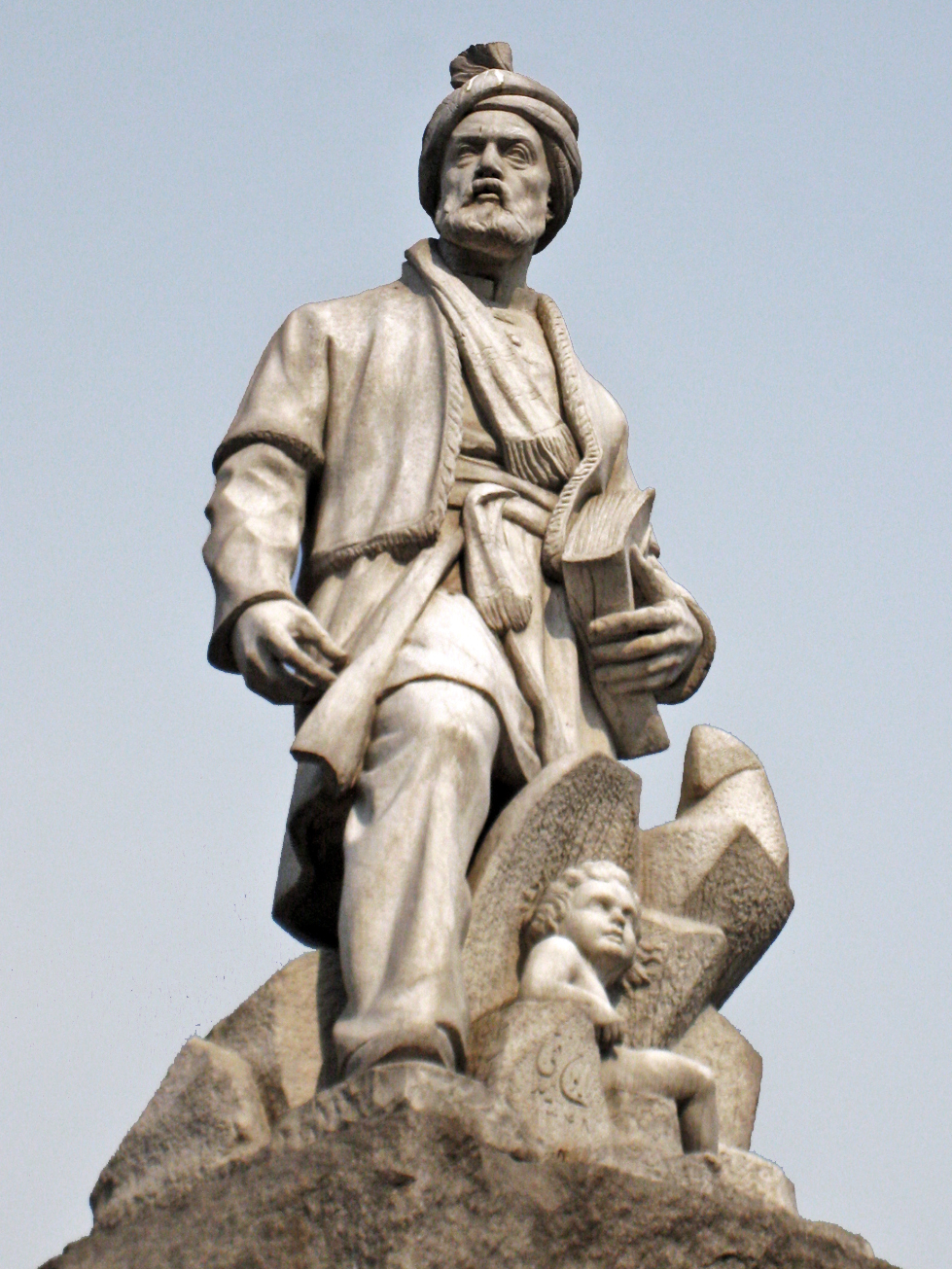
Through these courts and system of patronage emerged the epic style of poetry, with Ferdowsi's Shahnama at the apex. By glorifying the Iranian historical past in heroic and elevated verses, he and other notables such as Daqiqi and Asadi Tusi presented the "Ajam" with a source of pride and inspiration that has helped preserve a sense of identity for the Iranian peoples over the ages. Ferdowsi set a model to be followed by a host of other poets later on.
The thirteenth century marks the ascendancy of lyric poetry with the consequent development of the ghazal into a major verse form, as well as the rise of mystical and Sufi poetry. This style is often called "Araqi style", (western provinces of Iran were known as Araq-e-Ajam or Persian Iraq) and is known by its emotional lyric qualities, rich meters, and the relative simplicity of its language. Emotional romantic poetry was not something new however, as works such as Vis o Ramin by Asad Gorgani, and Yusof o Zoleikha by Am'aq Bokharai exemplify. Poets such as Sana'i and Attar (who ostensibly have inspired Rumi), Khaqani Shirvani, Anvari, and Nezami, were highly respected ghazal writers. However, the elite of this school are Rumi, Sadi, and Hafez.
In the didactic genre one can mention Sanai's Hadiqat-ul-Haqiqah (Garden of Truth) as well as Nezami's Makhzan-ul-Asrār (Treasury of Secrets). Some of Attar's works also belong to this genre as do the major works of Rumi, although some tend to classify these in the lyrical type due to their mystical and emotional qualities. In addition, some tend to group Naser Khosrow's works in this style as well; however the true gem of this genre is Sadi's Bustan, a heavyweight of Persian literature.
After the fifteenth century, the Indian style of Persian poetry (sometimes also called Isfahani or Safavi styles) took over. This style has its roots in the Timurid era and produced the likes of Amir Khosrow Dehlavi, and Bhai Nand Lal Goya
The most significant essays of this era are Nizami Arudhi Samarqandi's "Chahār Maqāleh" as well as Zahiriddin Nasr Muhammad Aufi's anecdote compendium Jawami ul-Hikayat. Shams al-Mo'ali Abol-hasan Ghaboos ibn Wushmgir's famous work, the Qabus nama (A Mirror for Princes), is a highly esteemed Belles-lettres work of Persian literature. Also highly regarded is Siyasatnama, by Nizam al-Mulk, a famous Persian vizier. Kelileh va Demneh, translated from Indian folk tales, can also be mentioned in this category. It is seen as a collection of adages in Persian literary studies and thus does not convey folkloric notions.
The most significant essays of this era are Nizami Arudhi Samarqandi's "Chahār Maqāleh" as well as Zahiriddin Nasr Muhammad Aufi's anecdote compendium Jawami ul-Hikayat. Shams al-Mo'ali Abol-hasan Ghaboos ibn Wushmgir's famous work, the Qabus nama (A Mirror for Princes), is a highly esteemed Belles-lettres work of Persian literature. Also highly regarded is Siyasatnama, by Nizam al-Mulk, a famous Persian vizier. Kelileh va Demneh, translated from Indian folk tales, can also be mentioned in this category. It is seen as a collection of adages in Persian literary studies and thus does not convey folkloric notions.
Among the major historical and biographical works in classical Persian, one can mention Abolfazl Beyhaghi's famous Tarikh-i Beyhaqi, Lubab ul-Albab of Zahiriddin Nasr Muhammad Aufi (which has been regarded as a reliable chronological source by many experts), as well as Ata al-Mulk Juvayni's famous Tarikh-i Jahangushay-i Juvaini (which spans the Mongolid and Ilkhanid era of Iran). Attar's Tadkhirat al-Awliya ("Biographies of the Saints") is also a detailed account of Sufi mystics, which is referenced by many subsequent authors and considered a significant work in mystical hagiography.
The oldest surviving work of Persian literary criticism after the Islamic conquest of Persia is Muqaddame-ye Shahname-ye Abu Mansuri, which was written in the Samanid period. The work deals with the myths and legends of Shahname and is considered the oldest surviving example of Persian prose. It also shows an attempt by the authors to evaluate literary works critically.
One Thousand and One Nights is a medieval folk tale collection which tells the story of Scheherazade, a Sassanid queen who must relate a series of stories to her malevolent husband, King Shahryar (Šahryār), to delay her execution. The stories are told over a period of one thousand and one nights, and every night she ends the story with a suspenseful situation, forcing the King to keep her alive for another day. The individual stories were created over several centuries, by many people from a number of different lands.
The nucleus of the collection is formed by a Pahlavi Sassanid Persian book called Hazār Afsānah (Thousand Myths), a collection of ancient Indian and Persian folk tales.
During the reign of the Abbasid Caliph Harun al-Rashid in the eighth century, Baghdad had become an important cosmopolitan city. Merchants from Persia, China, India, Africa, and Europe were all found in Baghdad. During this time, many of the stories that were originally folk stories are thought to have been collected orally over many years and later compiled into a single book. The compiler and ninth-century translator into Arabic is reputedly the storyteller Abu Abd-Allah Muhammad el-Gahshigar. The frame story of Shahrzad seems to have been added in the fourteenth century.
The influence of Persian literature on World literature
William Shakespeare referred to Iran as the "land of the Sophy". Some of Persia's best-beloved medieval poets were Sufis, and their poetry was, and is, widely read by Sufis from Morocco to Indonesia. Rumi (Maulānā) in particular is renowned both as a poet and as the founder of a widespread Sufi order. The themes and styles of this devotional poetry have been widely imitated by many Sufi poets.
Many notable texts in Persian mystic literature are not poems, yet highly read and regarded. Among those are Kimiya-yi sa'ādat and Asrar al-Tawhid.
Afghanistan and the Transoxiana can claim to be the birthplace of Modern Persian. Most of the great patrons of Persian literature such as Sultan Sanjar and the courts of the Samanids and Ghaznavids were situated in this region, as were writers such as Rudaki, Unsuri, and Ferdowsi. As such, this rich literary heritage continues to survive well into the present in countries like Tajikistan, Uzbekistan and Afghanistan.
With the emergence of the Ghaznavids and their successors such as the Ghurids, Timurids and Mughal Empire, Persian culture and its literature gradually moved into the vast Indian subcontinent. Persian was the language of the nobility, literary circles, and the royal Mughal courts for hundreds of years. (In modern times, Persian has been generally supplanted by Urdu, a heavily Persian-influenced dialect of Hindustani.)
Under the Moghul Empire of India during the sixteenth century, the official language of India became Persian. Only in 1832 did the British army force the Indian subcontinent to begin conducting business in English. (Clawson, p.6) Persian poetry in fact flourished in these regions while post-Safavid Iranian literature stagnated. Dehkhoda and other scholars of the 20th century, for example, largely based their works on the detailed lexicography produced in India, using compilations such as Ghazi khan Badr Muhammad Dehlavi's Adat al-Fudhala Ibrahim Ghavamuddin Farughi's Farhang-i Ibrahimi, and particularly Muhammad Padshah's Farhang-i Anandraj. Famous South Asian poets and scholars such as Amir Khosrow Dehlavi, Mirza Ghalib and Muhammad Iqbal of Lahore found many admirers in Iran itself.
Persian literature was little known in the West before the nineteenth century. It became much better known following the publication of several translations from the works of late medieval Persian poets, and it inspired works by various Western poets and writers.
• In 1819, Goethe published his West-östlicher Divan, a collection of lyric poems inspired by a German translation of Hafiz (1326–1390).
• The German essayist and philosopher Nietzsche was the author of the book Thus Spoke Zarathustra (1883–1885), referring to the ancient Persian prophet Zoroaster (circa 1700 BCE).

• A selection from Ferdowsi's Shahnameh (935–1020) was published in 1832 by James Atkinson, a physician employed by the British East India Company.
• A portion of this abridgment was later versified by the British poet Matthew Arnold in his 1853 Rustam and Sohrab.
• The American poet Ralph Waldo Emerson was another admirer of Persian poetry. He published several essays in 1876 that discuss Persian poetry: Letters and Social Aims, From the Persian of Hafiz, and Ghaselle.
• The German essayist and philosopher Nietzsche was the author of the book Thus Spoke Zarathustra (1883–1885), referring to the ancient Persian prophet Zoroaster (circa 1700 BCE).
• A selection from Ferdowsi's Shahnameh (935–1020) was published in 1832 by James Atkinson, a physician employed by the British East India Company.
• A portion of this abridgment was later versified by the British poet Matthew Arnold in his 1853 Rustam and Sohrab.
• The American poet Ralph Waldo Emerson was another admirer of Persian poetry. He published several essays in 1876 that discuss Persian poetry: Letters and Social Aims, From the Persian of Hafiz, and Ghaselle.
Perhaps the most popular Persian poet of the nineteenth and early twentieth centuries was Omar Khayyam (1048–1123), whose Rubaiyat was freely translated by Edward Fitzgerald in 1859. Khayyam is esteemed more as a scientist than a poet in his native Persia, but in Fitzgerald's rendering, he became one of the most quoted poets in English. Khayyam's line, "A loaf of bread, a jug of wine, and thou", is known to many who could not say who wrote it, or where.
The Persian poet and mystic Rumi (1207–1273) (known as Molana in Iran) has attracted a large following in the late twentieth and early twenty-first centuries. Popularizing translations by Coleman Barks have presented Rumi as a New Age sage. There are also a number of more literary translations by scholars such as A.J. Arberry.
The classical poets (Hafiz, Sa'di, Khayyam, Rumi, Nezami and Ferdowsi) are now widely known in English and can be read in various translations. Other works of Persian literature are untranslated and little known.
During the last century, numerous works of classical Persian literature have been translated into Swedish by baron Eric Hermelin. He translated works by, among others, Farid al-Din Attar, Rumi, Ferdowsi, Omar Khayyam, Sa'adi and Sana'i. Influenced by the writings of the Swedish mystic Emanuel Swedenborg, he was especially attracted to the religious or Sufi aspects of classical Persian poetry.
More recently Rumi, Hafiz, Fakhruddin 'Iraqi and Nizami Aruzi are available in translation by Ashk Dahlén, scholar in Iranian Studies, who has made Persian literature known to a wider audience in Sweden.
During the last century, numerous works of classical Persian literature have been translated into Italian by Alessandro Bausani (Nizami, Rumi, Iqbal, Khayyam), Carlo Saccone ('Attar, Sana'i, Hafiz, Nasir-i Khusraw, Nizami, Ahmad Ghazali), Angelo Piemontese (Amir Khusraw Dihlavi), Pio Filippani-Ronconi (Nasir-i Khusraw, Sa'di), Riccardo Zipoli (Kay Ka'us, Bidil), Maurizio Pistoso (Nizam al-Mulk), Giorgio Vercellin (Nizami 'Aruzi), Giovanni Maria D'Erme ('Ubayd Zakani, Hafiz), Sergio Foti (Suhrawardi, Rumi, Jami), Rita Bargigli (Sa'di, Farrukhi, Manuchehri, 'Unsuri). A complete translation of Firdawsi's Shah-nama was made by Italo Pizzi in XIX century.
Contemporary Persian literature
In the nineteenth century, Persian literature experienced dramatic change and entered a new era. The beginning of this change was exemplified by an incident in the mid-nineteenth century at the court of Nasereddin Shah, when the reform-minded prime minister, Amir Kabir, chastised the poet Habibollah Qa'ani for "lying" in a panegyric qasida written in Kabir's honor. Kabir saw poetry in general and the type of poetry that had developed during the Qajar period as detrimental to "progress" and "modernization" in Iranian society, which he believed was in dire need of change. Such concerns were also expressed by others such as Fath-'Ali Akhundzadeh, Mirza Aqa Khan Kermani, and Mirza Malkom Khan. Khan also addressed a need for a change in Persian poetry in literary terms as well, always linking it to social concerns.
The new Persian literary movement cannot be understood without an understanding of the intellectual movements among Iranian philosophical circles. Given the social and political climate of Persia (Iran) in the late nineteenth and early twentieth centuries, which led to the Persian Constitutional Revolution of 1906–1911, the idea that change in poetry was necessary became widespread. Many argued that Persian poetry should reflect the realities of a country in transition. This idea was propagated by notable literary figures such as Ali-Akbar Dehkhoda and Abolqasem Aref, who challenged the traditional system of Persian poetry in terms of introducing new content and experimentation with rhetoric, lexico-semantics, and structure. Dehkhoda, for instance, used a lesser-known traditional form, the mosammat, to elegize the execution of a revolutionary journalist. 'Aref employed the ghazal, "the most central genre within the lyrical tradition, to write his "Payam-e Azadi" (Message of Freedom).
Some researchers argue that the notion of "sociopolitical ramifications of esthetic changes" led to the idea of poets "as social leaders trying the limits and possibilities of social change."
An important movement in modern Persian literature centered on the question of modernization and Westernization and whether these terms are synonymous when describing the evolution of Iranian society. It can be argued that almost all advocates of modernism in Persian literature, from Akhundzadeh, Kermani, and Malkom Khan to Dehkhoda, 'Aref, Bahar, and Rafat, were inspired by developments and changes that had occurred in Western, particularly European, literatures. Such inspirations did not mean blindly copying Western models but, rather, adapting aspects of Western literature and changing them to fit the needs of Iranian culture.
Following the pioneering works of Ahmad Kasravi, Sadeq Hedayat and many others, the Iranian wave of comparative literature and literary criticism reached a symbolic crest with the emergence of Abdolhossein Zarrinkoub, Shahrokh Meskoob, Houshang Golshiri and Ebrahim Golestan.
Literary criticism
Pioneers of Persian literary criticism in nineteenth century include Mirza Fath `Ali Akhundzade, Mirza Malkom Khan, Mirza `Abd al-Rahim Talebof and Zeyn al-`Abedin Maraghe`i.
Prominent twentieth century critics include:
• Allameh Dehkhoda
• Badiozzaman Forouzanfar
• Mohammad-Taqi Bahar
• Jalal Homaei
• Mohammad Moin
• Saeed Nafisi
• Parviz Natel-Khanlari
• Sadeq Hedayat
• Ahmad Kasravi.
• Abdolhossein Zarrinkoub
• Shahrokh Meskoob
• Allameh Dehkhoda
• Badiozzaman Forouzanfar
• Mohammad-Taqi Bahar
• Jalal Homaei
• Mohammad Moin
• Saeed Nafisi
• Parviz Natel-Khanlari
• Sadeq Hedayat
• Ahmad Kasravi.
• Abdolhossein Zarrinkoub
• Shahrokh Meskoob
Saeed Nafisi analyzed and edited several critical works. He is well known for his works on Rudaki and Sufi literature. Parviz Natel-Khanlari and Gholamhossein Yousefi, who belong to Nafisi's generation, were also involved in modern literature and critical writings. Natel-Khanlari is distinguished by the simplicity of his style. He did not follow the traditionalists, nor did he advocate the new. Instead, his approach accommodated the entire spectrum of creativity and expression in Persian literature.
Contemporary Persian literary criticism reached its maturity after Sadeq Hedayat, Ebrahim Golestan, Houshang Golshiri, Abdolhossein Zarrinkoub and Shahrokh Meskoob. Among these figures, Zarrinkoub held academic positions and had a reputation not only among the intelligentsia but also in academia. Besides his significant contribution to the maturity of Persian language and literature, Zarrinkoub boosted comparative literature and Persian literary criticism. Zarrinkoub's Serr e Ney is a critical and comparative analysis of Rumi's Masnavi. In turn, Shahrokh Meskoob worked on Ferdowsi’s Shahnameh, using the principles of modern literary criticism.
Mohammad Taghi Bahar's main contribution to this field is his book called Sabk Shenasi (Stylistics). It is a pioneering work on the practice of Persian literary historiography and the emergence and development of Persian literature as a distinct institution in the early part of the twentieth century. It contends that the exemplary status of Sabk-shinasi rests on the recognition of its disciplinary or institutional achievements. It further contends that, rather than a text on Persian ‘stylistics’, Sabk-shinasi is a vast history of Persian literary prose, and, as such, is a significant intervention in Persian literary historiography.
Jalal Homaei, Badiozzaman Forouzanfar and his student, Mohammad Reza Shafiei-Kadkani, are other notable figures who have edited a number of prominent literary works.
Critical analysis of Jami's works has been carried out by Ala Khan Afsahzad. His classic book won the prestigious award of Iran's Year Best book in the year 2000.
Persian short stories
Historically, the modern Persian short story has undergone three stages of development: a formative period, a period of consolidation and growth, and a period of diversity.
The formative period was ushered in by Mohammad Ali Jamalzadeh's collection Yak-i Bud Yak-i Nabud (1921; tr. H. Moayyad and P. Sprachman as Once Upon a Time, New York, 1985), and gained momentum with the early short stories of Sadeq Hedayat (1903–51). Jamalzadeh (1895–1997) is usually considered as the first writer of modern short stories in Persian. His stories focus on plot and action rather than on mood or character development and in that respect are reminiscent of the works of Guy de Maupassant and O. Henry. In contrast, Sadeq Hedayat, the writer who introduced modernism to Persian literature, brought about a fundamental change in Persian fiction. In addition to his longer stories, "Boof-e kur" (his masterpiece) and "Haji Aqa" (1945), he wrote collections of short stories including She Ghatra Khun (Three Drops of Blood, 1932; tr. into French by G. Lazard as Trois gouuttes de sang, Paris 1996) and Zende be Gur (Buried Alive, 1930). His stories were written in a simple and lucid language, but he employed a variety of approaches, from realism and naturalism to surrealistic fantasy, breaking new ground and introducing a whole range of literary models and presenting new possibilities for the further development of the genre. He experimented with disrupted chronology and non-linear or circular plots, applying these techniques to both his realistic and surrealist writings. Unlike Hedayat, who focused on the psychological complexity and latent vulnerabilities of the individual, Bozorg Alavi depicts ideologically motivated personages defying oppression and social injustice. Such characters, seldom portrayed before in Persian fiction, are Alavi's main contribution to the thematic range of the modem Persian short story. This commitment to social issues is emulated by Fereydun Tonokaboni (b. 1937), Mahmud Dawlatabadi (b. 1940), Samad Behrangi (q.v.; 1939–68), and other writers of the left in the next generation.
Sadeq Chubak was one of the first authors to break the taboo. Following the example of William Faulkner, John Steinbeck, Erskine Caldwell, and Ernest Hemingway, his blunt approach appears in the early short story collections Khayma Shab-bazi (The Puppet Show, 1945) and Antar-i ke Luti-ash Morda Bud (1949; tr. P. Avery as "The Baboon Whose Buffoon was Dead", New World Writing 11, 1957, pp. 14–24), Later stories like "Zir-e Cheragh-e Ghermez", "Pirahan-e Zereski", and "Chera Darya Tufani Shoda Bud" describe the naked bestiality and moral degradation of the personages with no trace of squeamishness. His short stories mirror rotting society, populated by the crushed and the defeated. Chubak picks marginal characters—vagrants, pigeon-racers, corpse-washers, prostitutes, and opium addicts—who rarely appear in the fiction of his predecessors, and whom he portrays with vividness and force. His readers come face to face with grim realities and incidents that they have often witnessed for themselves in everyday life but have shunned out of their mind through complacency.

A distinctive trait of post-war Persian fiction in all the three stages of development is the attention devoted to narrative styles and techniques. In matters of style two main trends prevail. Some authors, like Chubak and Al-e Ahmad, follow colloquial speech patterns; others, such as Ebrahim Golestan (b. 1922) and Mohammad Etemadzadeh "Behazin" (b. 1915), have adopted a more literary and lyrical tone. Although the work of all four writers stretch into later periods, some brief remarks about their differing techniques, which delineated future paths, need mentioning at the outset. Golestan experimented with different narrative styles, and it was only in two late collections of stories, Juy o Divar o Teshna (The Stream and the Wall and the Parched, 1967) and Madd o Meh (The Tide and the Mist, 1969) that he managed to find a style and voice of his own. His poetic language draws inspiration both from syntactical forms of classical Persian prose and the experiments of modernist writers, most notably Gertrude Stein. The influence of modernism is evident also in the structure of Golestan's short stories, in which the traditional linear plot line is abandoned in favor of disrupted chronology and free association of ideas. Contrary to most other modern Persian authors, Golestan pays little heed to the state of the poor and the dispossessed. Instead, his short stories are devoted to the world of Persian intellectuals, their concerns, anxieties and private obsessions. Golestan's brand of modernism has influenced the later generation of writers like Bahman Forsi (b. 1933) and Houshang Golshiri (b. 1937). Although the stories of Behazin show similar indebtedness to classical Persian models, he does not follow Golestan's modernist experiments with syntax. Behazin is an author whose stories, delivered in a lucid literary style, express his leftist social beliefs. In some of his later works like the short story collection Mohra-ye Mar (The Snake Charm, 1955), he turns to literary allegory, imbuing ancient tales with a new message, a technique, which allows him to express his critical views obliquely. Behazin's predecessors in the sub-genre of the allegorical tale were Hedayat (in Ab-e Zendegi, 1931) and Chubak ("Esa'a-ye Adab" in the collection Khayma-Shab-Bazi).
The second period in the development of the modern Persian short story began with the coup of 19 August 1953, and ended with the revolution of 1979. Jalal Al-e Ahmad is among the proponents of new political and cultural ideas whose influence and impact straddle the first and the second periods in the history of modern Persian fiction. His writings show an awareness of the works of Franz Fanon and the new generation of third-world writers concerned with the problems of cultural domination by colonial powers. Al-e Ahmad, Behazin, Tonekaboni, and Behrangi can all be described as engaged writers because most of their stories are built around a central ideological tenet or thesis and illustrate the authors' political views and leanings. Among poets of this period, Forough Farrokhzad (1935–1967) has a special place as the first female poet of the Persian language acclaimed by her contemporaries and who left a lasting legacy despite her short life. Her legacy and influence is not primarily (or uniquely) political; however, she was among the first women able to set a personal and original mark. In this sense she is elevated to iconic status.
Another notable author from this period is Simin Daneshvar (b. 1921), the first woman writer of note in contemporary Persian literature. Her reputation rests largely on her popular novel Savusun ("The Mourners of Siyāvosh," 1969). Simin Daneshvar's short stories deserve mention because they focus on the plight and social exclusion of women in Persian society and address topical issues from a woman's point of view.
Gholam Hossein Saedi's (1935–85) short stories, which he called ghessa, often transcend the boundaries of realism and attain a symbolic significance. His allegorical stories, which occasionally resemble folkloric tales and fables, are inhabited by displaced persons, trapped in dead ends (Sepanlu, p. 117). They emphasize the anxieties and the psychological perturbations of his deeply troubled characters. Sadeghi (1936–84) was yet another author who focused on the anxieties and secret mental agonies of his characters.
Hooshang Golshiri (1937-2000) and Asghar Elahi (b. 1944) created memorable psychological portraits through interim monologue and stream of consciousness techniques. Golshiri, the author of the long story "Shazda Ehtejab" (Prince Ehtejab, 1968), is particularly noted for his successful experiments with extended interior monologues. A bold, innovative writer eager to explore modern methods and styles, Golshiri uses stream of consciousness narrative to reassess familiar theories and events.
Period of diversity
Poetry
Of the hundreds of contemporary Persian poets (classical and modern), notable figures include Mehdi Akhavan-Sales, Simin Behbahani, Forough Farrokhzad, Mohammad Zohari, Bijan Jalali, Siavash Kasraie, Fereydoon Moshiri, Nader Naderpour, Sohrab Sepehri, Mohammad-Reza Shafiei-Kadkani, Ahmad Shamlou, Nima Yushij, Manouchehr Atashi, Houshang Ebtehaj, Mirzadeh Eshghi (classical), Mohammad Taghi Bahar (classical), Aref (classical), Parvin Etesami (classical), and Shahriar (classical).
Classical Persian poetry in modern times

A few notable classical poets have arisen since the nineteenth century, among whom Mohammad Taghi Bahar and Parvin Etesami have been most celebrated. Mohammad Taghi Bahar had the title "king of poets" and had a significant role in the emergence and development of Persian literature as a distinct institution in the early part of the twentieth century. The theme of his poems was the social and political situation of Iran.
Parvin Etesami may be called the greatest Persian poetess writing in the classical style. One of her remarkable series, called Mast va Hoshyar (The Drunk and the Sober), won admiration from many of those involved in romantic poetry.
Modern Persian poetry
With the emergence of newspapers in Iran, which opened the way for political and literary magazines, the written, and consequently the literary language, was one of the essential elements of any movement towards the modernisation of literature in general. The effects of this inevitable change are reflected in the works of such poets as Iraj Mirza (1874-1925), Arif Qazvini (1882-1933) and Mirzadeh Eshqi (1893-1923). However, all their efforts in changing the language, form and subject matter were the beginning of a real movement towards exploration and experimentation in Persian poetry.
This movement was established through the revolutionary measures taken by Nima Youshij (Ali Esfandiyari, 1896-1959) to establish a new perspective in Persian poetry. Prior to him, form was, directly or indirectly, the key to the composition of a poem.
Nima Yushij is considered the father of modern Persian poetry, introducing many techniques and forms to differentiate the modern from the old. Nevertheless, the credit for popularizing this new literary form within a country and culture solidly based on a thousand years of classical poetry goes to his few disciples such as Ahmad Shamlou, who adopted Nima's methods and tried new techniques of modern poetry.
The transformation brought about by Nima Youshij, who freed Persian poetry from the fetters of prosodic measures, was a turning point in a long literary tradition. It broadened the perception and thinking of the poets that came after him. Nima offered a different understanding of the principles of classical poetry. His artistry was not confined to removing the need for a fixed-length hemistich and dispensing with the tradition of rhyming but focused on a broader structure and function based on a contemporary understanding of human and social existence. His aim in renovating poetry was to commit it to a "natural identity" and to achieve a modern discipline in the mind and linguistic performance of the poet.
Nima held that the formal technique dominating classical poetry interfered with its vitality, vigor and progress. Although he accepted some of its aesthetic properties and extended them in his poetry, he never ceased to widen his poetic experience by emphasizing the "natural order" of this art. What Nima Youshij founded in contemporary poetry, his successor Ahmad Shamlou continued.
The Sepid poem (which translates to white poem), which draws its sources from this poet, avoided the compulsory rules which had entered the Nimai’ school of poetry and adopted a freer structure. This allowed a more direct relationship between the poet and his or her emotional roots. In previous poetry, the qualities of the poet’s vision as well as the span of the subject could only be expressed in general terms and were subsumed by the formal limitations imposed on poetic expression.
Nima’s poetry transgressed these limitations. It relied on the natural function inherent within poetry itself to portray the poet’s solidarity with life and the wide world surrounding him or her in specific and unambiguous details and scenes. Sepid poetry continues the poetic vision as Nima expressed it and avoids the contrived rules imposed on its creation. However, its most distinct difference with Nimai’ poetry is to move away from the rhythms it employed. Nima Yioushij paid attention to an overall harmonious rhyming and created many experimental examples to achieve this end.
Ahmad Shamlu discovered the inner characteristics of poetry and its manifestation in the literary creations of classical masters as well as the Nimai’ experience. He offered an individual approach. By distancing himself from the obligations imposed by older poetry and some of the limitations that had entered the Nimai’ poem, he recognized the role of prose and music hidden in the language. In the structure of Sepid poetry, in contrast to the prosodic and Nimai’ rules, the poem is written in more "natural" words and incorporates a prose-like process without losing its poetic distinction. Sepid poetry is a developing branch of Nimai’ poetry built upon Nima Youshij's innovations. Nima thought that any change in the construction and the tools of a poet’s expression is conditional on his/her knowledge of the world and a revolutionized outlook. Sepid poetry could not take root outside this teaching and its application.
Soon Shamloo completely abandoned rhythm and rhyme and gave to his work the natural music of the Persian language, using soft and harmonious words to make his poems different from ordinary prose. "The Fresh Air" and "The Garden of Mirror" are two collections of his poems from this experimental period. Being in search of a poetical identity, he began to employ some of the characteristics of classical Persian prose of the eleventh and twelfth centuries. He also created some compound words as well as new images. These attempts gave his poetry a relatively independent character, but failed to make it more expressive and powerful. It was more his earlier simple poems, with their politico-lyrical images, that justified his reputation among his admirers.
... On my shoulder is a dove
that drinks from your mouth,
On my shoulder is a dove
That refreshes my throat,
On my shoulder is a dove,
kind and graceful,
That talks to me of light,
And of Man, who is the god of all deities...
My bird of golden song
Nests in the foliage of your abode;
Sweetheart, put on your best dress,
Love is fond of us.
With you I follow my dreams in wakefulness,
I find my poetry in the truth of your brow.
You talk with me of light, and of Man,
Who has kinship with all the gods...
that drinks from your mouth,
On my shoulder is a dove
That refreshes my throat,
On my shoulder is a dove,
kind and graceful,
That talks to me of light,
And of Man, who is the god of all deities...
My bird of golden song
Nests in the foliage of your abode;
Sweetheart, put on your best dress,
Love is fond of us.
With you I follow my dreams in wakefulness,
I find my poetry in the truth of your brow.
You talk with me of light, and of Man,
Who has kinship with all the gods...
In the 1960s a new generation of poets appeared who, like Ahmad Shamloo, wrote prose poems, but tried hard to be modern by experimenting with Dadaism, automatism, formalism, futurism, surrealism and other known and unknown trends. They called themselves the New Wave Poets. One of them, Ahmad-Reza Ahmadi, was not even twenty when his poems, because of their unusual, sometimes amazing, unyielding and wild imagery, caused controversy.
...I went up blue all the stairs;
The sky of our house was not the same as our neighbours,
I went down hungry all the stairs
To the depth of wheat.
Searching for the whiteness of the horse,
All over the wheat field I could see only one path,
Which my father, with his grey hair, trod.
I had crossed the wheat field alone,
I had seen the wheat
But still I could not say: My horse!
They reaped my horse.
Ahmadi’s poetry could not give him a place among the established poets, but it did encourage many poets to break the boundaries of familiar and hackneyed imagery, pointing to a new poetical horizon.
...I went up blue all the stairs;
The sky of our house was not the same as our neighbours,
I went down hungry all the stairs
To the depth of wheat.
Searching for the whiteness of the horse,
All over the wheat field I could see only one path,
Which my father, with his grey hair, trod.
I had crossed the wheat field alone,
I had seen the wheat
But still I could not say: My horse!
They reaped my horse.
Ahmadi’s poetry could not give him a place among the established poets, but it did encourage many poets to break the boundaries of familiar and hackneyed imagery, pointing to a new poetical horizon.
According to Simin Behbahani, Sepid poetry did not received general acceptance before Bijan Jalali's works. He is considered the founder of Sepid poetry according to Behbahani. Behbahani herself used the "Char Pareh" style of Nima, and subsequently turned to ghazal, a free-flowing poetry style similar to the Western sonnet. Simin Behbahani contributed to a historic development in the form of the ghazal, as she added theatrical subjects, and daily events and conversations into her poetry. She has expanded the range of traditional Persian verse forms and produced some of the most significant works of Persian literature in the twentieth century.
A reluctant follower of Nima Yushij, Mehdi Akhavan-Sales published his Organ (1951) to support contentions against Nima Yushij's groundbreaking endeavors. But before long he realized that Nima and the modernists emulating him had more to offer than a just a change in rhythm, rhyme, and the general application of the classical Arabic meters. In Persian poetry, Mehdi Akhavan Sales has established a bridge between the Khorassani and Nima Schools. The critics consider Mehdi Akhavan Sales as one of the best contemporary Persian poets. He is one of the pioneers of free verse (new style poetry) in Persian literature, particularly of modern style epics. It was his ambition, for a long time, to introduce a fresh style to Persian poetry.
Before coming to Tehran from his native city, Mashhad, in the province of Khorassan, he wrote ghazals and qasidas in the classical style with quite remarkable skill. Soon he adopted Nima Youshij's views on form and his outlook changed considerably. He could never alter the antique tone of the classics, though he occasionally used colloquial and local words, giving an interesting, sometimes humorous, tone to his poems. His poetry has a pronounced musical quality with its many puns, rhymes and inter-rhymes. In his poetry this music" with a mixture of colloquial and literary language, sounds like a deliberate accompaniment of the lyre of lyricism with the drum of epic. His excessive interest in rhyme produces many lines, which, though beautiful in themselves, are superfluous. Many of Akhavan Saless's poems are outstanding in all aspects and will survive as the best poems of our time.
Ahmad Shamloo began his poetic career by writing sentimental, lyrical and patriotic prose poems. Having some knowledge of the French language and literature, he abandoned the Persian classics and searched for inspiration in the world of modern French poetry, as well as in the works of some other European poets in French translation. He is deeply influenced by Paul Eluard, Garcia Lorca, Luis Aragon and the great Turkish poet, Nazim Hekmat. This influence produced a new point of view and created a new poetical culture in which Shamloos poetry was appreciated and understood by many who were keen to read modern poetry but could not understand and enjoy the poems of Nima Youshij and of many others.
Forough Farrokhzad is important in the literary history of Iran for three reasons. First, she was among the first generation to embrace the new style of poetry, pioneered by Nima Yushij during the 1920s, which demanded that poets experiment with rhyme, imagery, and the individual voice. Second, she was the first modern Iranian woman to graphically articulate private landscapes from a woman's perspective. Finally, she transcended her own literary role and experimented with acting, painting, and documentary film-making.
Forough Farrokhzad, a poetess who published three books of poems, influenced by Tavallali and his followers, especially Nosrat Rahmani, soon became famous. She was the first woman to be bold, even brave enough to write about the hidden feelings of Iranian women. Her early poetry was weak in form and without any originality in imagery. Later, however, her friendship with writers and poets like Ebrahim Golestan, Yadollah Roya'i Parviz Dariyoush, Ahmad Shamloo and especially Ahmad-Reza Ahmadi, encouraged her to enter quite a different territory of poetical vision. She also began to use broken metres, which are lines of unequal syllables in a poem. She would sometimes let a line fall off the metre in one or two syllables and then return to it. It may or may not have been deliberate, but it gave a fresh tone to the music of her poems.
A poet of Shamloos generation, who was also regarded as a modern artist, was Sohrab Sepehri. He began writing prose poems using rather abstract symbolism. His experience with the colours and lines of stylised paintings gave a visual dimension to some of his poems, making them musical pictures. The most notable feature in his poetry is mysticism, a blend of Sufism, Zen-Buddhism and Zoroastrianism, through which the poet invites man to turn away form his evil ways, regaining the innocence of a child in nature.
Later Sepehri almost stopped writing prose poetry and began loosely to use a few of the classical metres, which suited the sad and mystical tone of his narration. He soon became fascinated with abstract images and allowed his poetry to lose its most important element -its simplicity and lucidity of expression. Here are a few of those new images:
Gradually on the wet height of meeting the monastery of light was built...
A throat in the cool thickness of wind was murmuring the loneliness of a friend...
It is morning, the ideal sparrow is chirping,
The autumn is disintegrating on the unity of the wall;
The passage of the exhilarating sun
Startles the mass of decay out of its sleep;
Between the tree and the green moment
The repetition of azure mixes with regret of speech...
Ah, the glance of motion
The mass of the repetitions finger
Closed the crack of my fervour...
This body without night and day
Behind the steep garden of figures
Slept like myth...
A throat in the cool thickness of wind was murmuring the loneliness of a friend...
It is morning, the ideal sparrow is chirping,
The autumn is disintegrating on the unity of the wall;
The passage of the exhilarating sun
Startles the mass of decay out of its sleep;
Between the tree and the green moment
The repetition of azure mixes with regret of speech...
Ah, the glance of motion
The mass of the repetitions finger
Closed the crack of my fervour...
This body without night and day
Behind the steep garden of figures
Slept like myth...
With his fascination with such abstract images, Sepehri, like Forough Farrokhzad, was, to a great extent, influenced by Ahmad-Reza Ahmadi, and also by Yadollah Roya'i, the leader of an avant-garde group which called its style "Volume", meaning image with more than one dimension.
Fereydoon Moshiri is best known as conciliator of classical Persian poetry with the New Poetry initiated by Nima Yooshij. One of the major contributions of Moshiri's poetry, according to some observers, is the broadening of the social and geographical scope of modern Persian literature.
A poet of the last generation before the Islamic Revolution worthy of mention is Mohammad-Reza Shafiei-Kadkani (M. Sereshk). Though he is from Khorassan and sways between allegiance to Nima Youshij and Akhavan Saless, in his poetry he shows the influences of Hafez and Mowlavi. He uses simple, lyrical language and is mostly inspired by the political atmosphere. He is the most successful of those poets who in the past four decades have tried hard to find a synthesis between the two models of Ahmad Shamloo and Nima Youshij.