Showing posts with label arabs. Show all posts

Tuesday, August 27, 2019

Why India’s Hindu nationalists worship Israel’s nation-state model

India’s Hindu nationalists and the Israeli right have a remarkable mutual affinity. Binyamin Netanyahu welcomed Narendra Modi to Israel in 2017 with these words: “Prime Minister Modi, we have been waiting for you for a long time, almost 70 years … We view you as a kindred spirit.”
The two premiers, both battling for re-election in spring 2019, share a warm rapport, and regularly refer to each other on Twitter as “my friend Narendra” and “my friend Bibi.”
The Modi-Bibi bonhomie rests on much more than personal chemistry, or even the Israeli military-industrial complex’s significant role in servicing Indian needs. It is rooted in the profound admiration of generations of Hindu nationalists for Zionism and its product, Israel, whose model of nation-state they seek to emulate in India.
Indian secularists often claim that the Hindu nationalists intend to turn India into a Hindu version of Pakistan. This is not wrong. Just as Pakistan founder Muhammad Ali Jinnah’s politics fused religion, nation and state, so does “Hindutva”, the political ideology of Hindu nationalism born in the 1920s.
But the Pakistan analogy is limited. For more than 60 years, Pakistan has been a state dominated by the military. India is a highly evolved democracy. It has always been inconceivable that an equivalent of Zia-ul Haq, the Islamist military dictator who ruled Pakistan from 1977 to 1988, could appear in India and “Hinduise” the state. The intent of Hindu nationalism to remake India therefore needs to be pursued, and accomplished, in a way compatible with a democratic polity.
The prototype exists of a form of state which is simultaneously democratic and supremacist: Israel. Israel was a self-described “Jewish and democratic state” until July 2018, when the right-wing majority in its parliament narrowly won a vote to further tighten Israel’s identity to “the nation-state of the Jewish people, which respects the rights of all its citizens”. The revision reflects the ascendancy of hardliners and extremists in Israeli politics.

Affinity for Zionism and Israel

Successive generations of Hindu nationalists – from Vinayak Damodar Savarkar (1883-1966), who coined and elaborated the Hindutva concept, to Modi today – have professed a deep affinity for Israel. Savarkar wrotein the 1920s: “If the Zionists’ dreams are ever realised – if Palestine becomes a Jewish state – it will gladden us almost as much as our Jewish friends.”
In late 1947, Savarkar was very upset when the Indian delegate in the UN General Assembly argued for a binational Arab-Jewish state in Palestine and voted against the proposal to partition Palestine into a larger Jewish state and a smaller Arab state.
Madhav Sadashiv Golwalkar (1906-73), who steered the Hindu nationalist movement in post-independence India as the chief of the volunteer organisation Rashtriya Swayamsevak Sangh (RSS), wrote in the late 1930s that the Zionist movement exemplified his own “five unities” framing of Indian nationhood: “The Jews had maintained their race, religion, culture and language, and all they wanted was their natural territory to complete their nationality.”
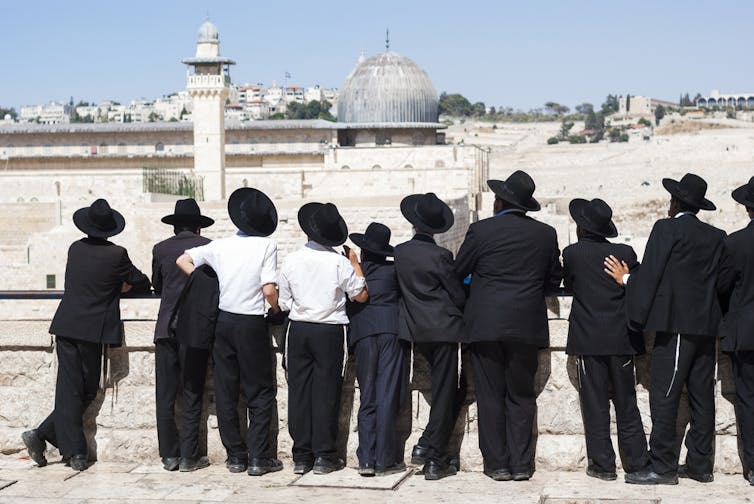
Israel: model for a type of ethnic democracy. Nina Mikryukova/Shutterstock

Ethnic democracy as the shared ideal

It is Jewish Israeli scholars who have explicated the paradigm of “ethnic democracy”, using the case of their own country. One such scholar, Sammy Smooha defined ethnic democracy as “an alternative non-civic form of democratic state that is identified with and subservient to a single ethnic nation.” He said this is “best exemplified by Israel”, which is “based on Jewish and Zionist hegemony and the structural subordination of the Arab minority” – who are currently 20% of the population of the Jewish state. Propelling this is an ideology, Smooha says, that “makes a crucial distinction between members and non-members of the ethnic nation”. Non-members are seen as undesirable and threatening – as agents of biological dilution, demographic swamping, cultural degeneration, security risks, and even as a fifth column for enemy states.
This is the typical Hindu nationalist perspective on India’s Muslims who, at just under 15% of the population, are India’s largest religious minority.
The distinction made between members and non-members of the nation underlies a very controversial amendment to India’s citizenship laws that has been strongly pushed by Modi’s Bharatiya Janata Party (BJP) government since 2016. The proposed legislation would confer Indian citizenship on members of designated religious minorities (Hindus, Sikhs, Christians, Buddhists, Jains, Zoroastrians) from three Muslim-majority countries in India’s neighbourhood – Bangladesh, Pakistan and Afghanistan – who have settled in India without legal status.
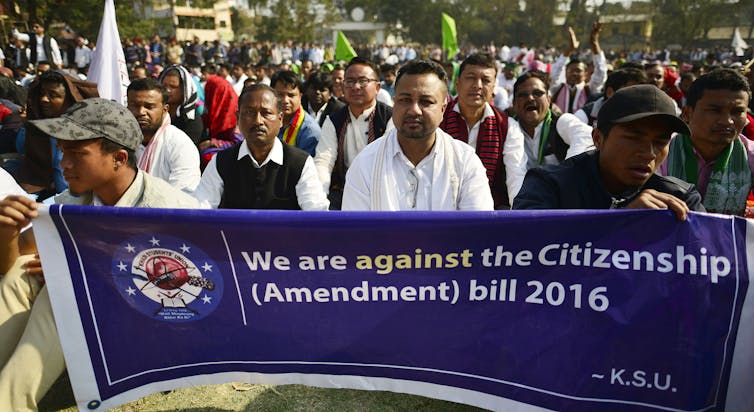
A protest in Assam against India’s citizenship bill in late January 2019. EPA
So, Hindus and other non-Muslims from these countries would have a fast track to Indian citizenship, the argument being that they are victims of religious persecution. The proposed law is, in a more limited scope, analogous to the Israeli policy of promoting migration of Jews from across the world to Israel. It sends an unmistakable signal of who are preferred as citizens and who are viewed as undesirables.

India as a clone of Israel?

Ethnic democracies do not totally exclude or disenfranchise the citizens viewed as undesirables. Israeli Arabs are entitled to cultural and religious rights. Arabic is officially recognised (though the July 2018 revision asserted the primacy of Hebrew), and usually around 10% of the Knesset’s members are Israeli Arabs. Still, a range of formal and informal policies ensure that the Arab community mostly remains ghettoised in deprived enclaves, relegated to what is in effect second-class citizenship.
Israel is not the only example of an ethnic democracy. There is Sri Lanka, where the post-colonial state was captured by majoritarian Sinhala-Buddhist nationalism from 1956 onward. There is Croatia, since 2013 a member-state of the European Union. It proclaimed independence in 1991 as: “The national state of the Croatian people, and a state of other nations and minorities who are its citizens.”
What ethnic democracies do is to create a de facto but very real hierarchy of citizenship, in which some are full, first-class citizens and others are second class – at best. The current Hindu nationalist movement is remarkably faithful to the ideological creed laid down by its pioneers Savarkar and Golwalkar eight decades ago. In 1938, Savarkar declared that “the Hindus are the Nation in India and the Moslem minority a community” just as “the Turks are the Nation in Turkey and the Arab or the Armenian minority a community.” Golwalkar wrote in 1938: “The non-Hindu people of Hindustan … may stay in the country, wholly subordinated to the Hindu nation.”
The type of “democratic” state exemplified by Israel – and not Pakistan – is the model the Hindu nationalist movement, led by its core RSS organisation, aspires to establish in an Indian variant. But will its vision prevail? It’s far from certain that a 1.3 billion-strong country, defined culturally by multiple identities and politically by cross-cutting cleavages, can be turned into a giant-sized version of Israel, Croatia, or Sri Lanka.

Sunday, August 18, 2019

The Longest Poem Ever Written: Shahnameh – The Epic Book of Kings

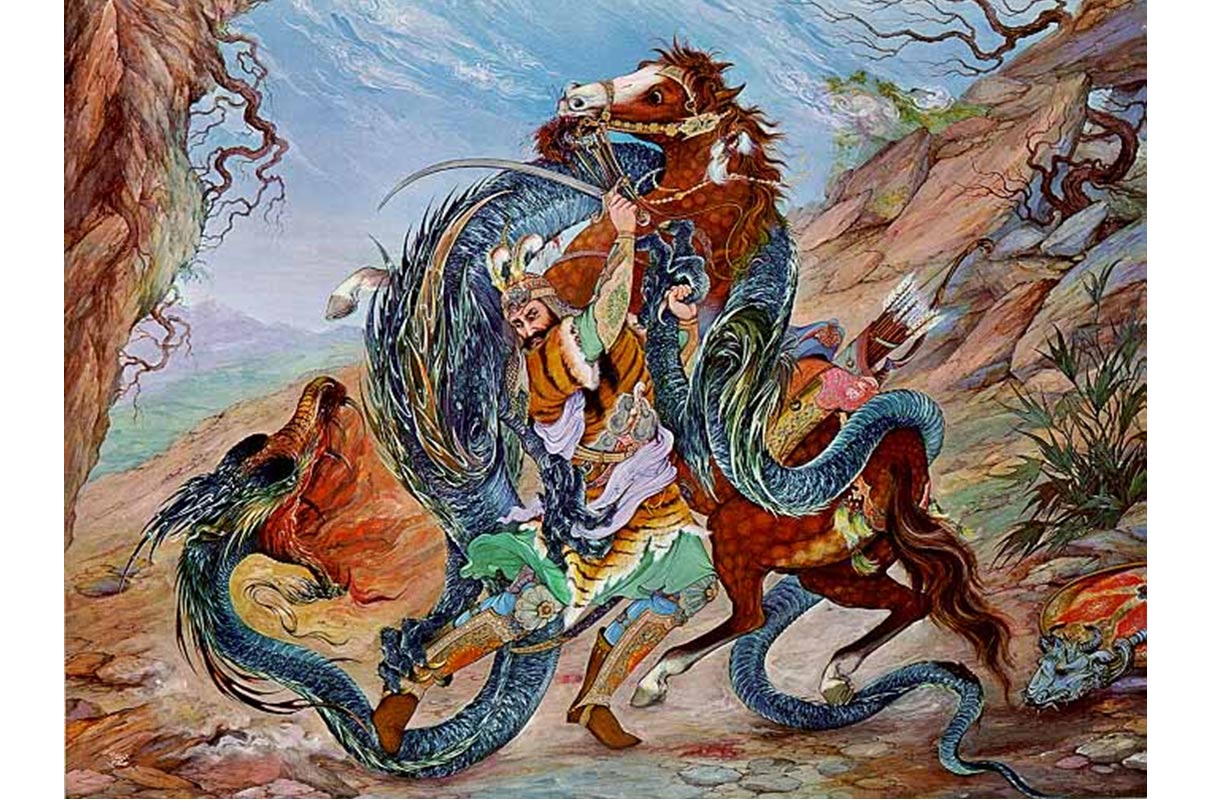
Rostam the hero fighting the Dragon in the Seven Quests of Rostam. Iranian miniature illustration from Shahnameh
In 977 AD, a Persian poet named Ferdowsi began on a grandiose poetic journey that would take him 33 years to complete. He used ancient Persian tales which had been told from generation to generation for several millennia as the source for writing his poems about epic kings and heroes and about mythical creatures and adventures. This resulted in the creation of the epic which in Persian is called Shahnameh or translated The Book of Kings, the longest poem ever written in history. Ferdowsi's great aim was to revive the ancient Persian culture, mythology and language after the invasion of the Islamic Caliphate of the Arabs.

The Life of Ferdowsi


Ferdowsi was born in 935 AD in the city of Tus located in the modern day province called Khorasan in northeastern Iran. At this time, the Samanid dynasty had restored native Persian rule on Iranian territories as the second post-Islamic Persian empire after the eastern parts of the Islamic Caliphate had been liberated from the Arabs in 861 AD. Ferdowsi came from a line of wealthy noble families which generation after generation inherited the title dehqan. The dehqans were among the social top class and were the leaders of communities and owners of land. By the time Persians were violently forced to become Muslims after the invasions, the dehqans converted to Islam not for following Islam itself, but mainly for using their social authority for preserving the ancient Zoroastrian culture of Persia. For centuries, the dehqans were the preservers of the traditional customs, culture and literature of ancient Persia and hence acted as fundamental factors for the survival of Iranian identity. Dehqans were often able to afford the best education which resulted in Ferdowsi gaining considerable knowledge in literature. He was closely tied to the ancient Persian culture and studied ancient scripts which inspired his poetry.
In the year 977 AD, a shift in power had been initiated in Persia with the end of the Samanid dynasty and the beginning of the Ghaznavid dynasty. Ferdowsi became a poet of the Ghaznavid royal court and due to the exquisite and superb quality of the poems that he wrote, the king entitled him Ferdowsi. This name derives from the Persian word pardisi or fardisi which means from paradise . With the new title given to him by the king, he began writing Shahnameh which would become the greatest poetic journey of his life and one of the greatest works of poetry in the world.
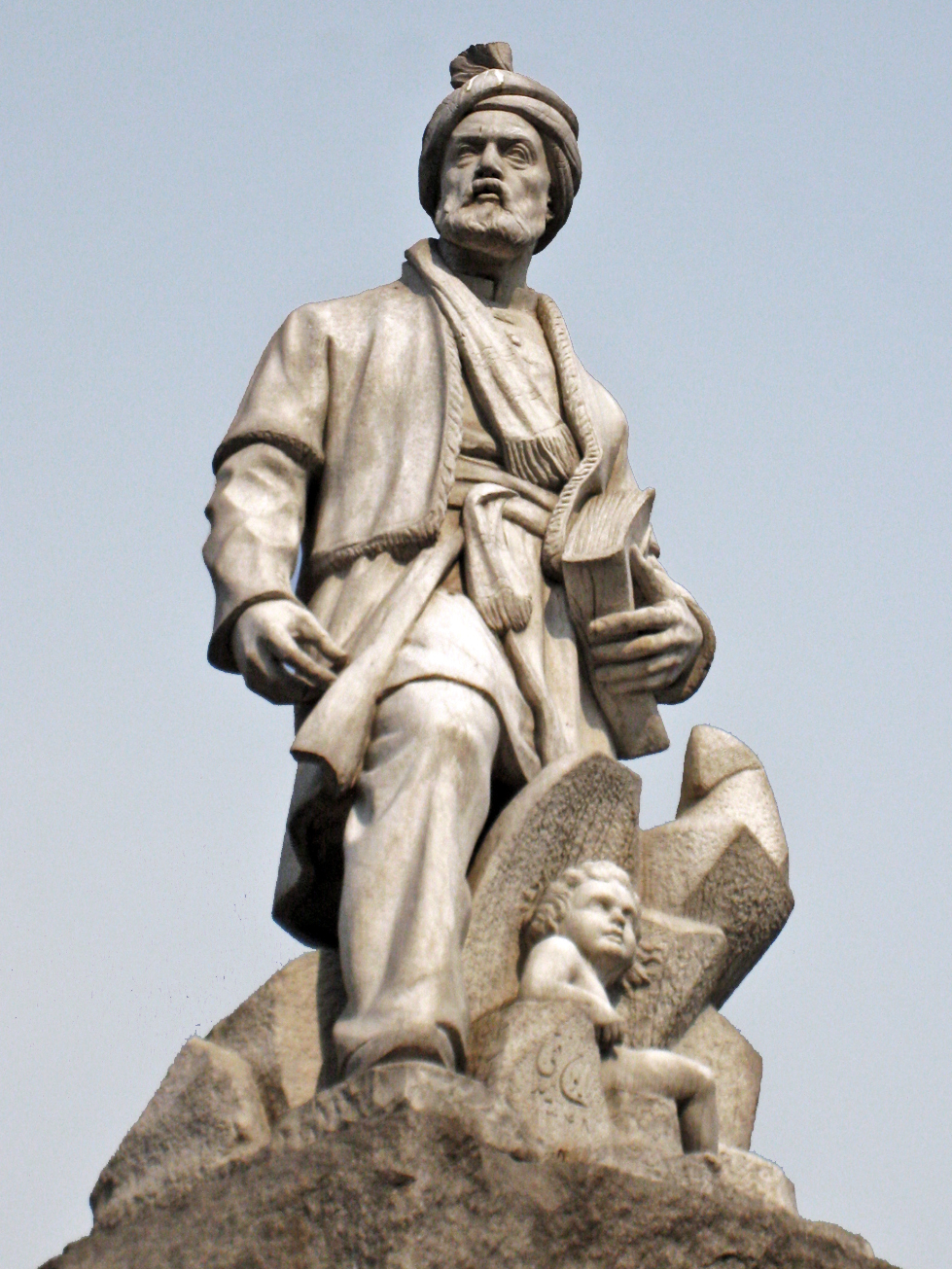
Statue of Ferdowsi in Tehran, Iran
Statue of Ferdowsi in Tehran, Iran ( http://toos051.persiangig.com/new_folder/Ferdowsi_Statue.jpg)

Shahnameh – The Epic


Prior to writing Shahnameh, Ferdowsi collected literary material from ancient sources such as from the middle Persian Pahlavi work named Khodaynameh, which translates to Book of God in English. The documentation of this ancient work was ordered by the Sassanid king Anushiravan and was based on historical facts documented by Zoroastrian priests as well as legendary accounts of mythical eras written in Avesta, the holy book of the Zoroastrian religion Some ancient sources has stated that the Persian literary tradition of recording royal events and mythical stories has existed at least from the time of the Achaemenid era in the 6th century B.C, although the stories are thousands of years older and have been transferred verbally for generations. Many of the stories are very similar to ancient Indo-Iranian/Aryan stories, indicating the close connection of Persians to their Aryan heritage.

Ferdowsi divided the timeline of Shahnameh into three major periods; the mythical era the heroic era and the historical era . A very brief description of each era follows:        
The mythical era comprises of poems about the creation of the world and of the first man named Keyumars who became the first king. Keyumars's grandson Hushang discovered fire and established the yearly fire festival Sadeh. Jamshid the shepherd, who became a great king in the favor of God named Ahura Mazda, ruled the lands with prosperity and struck down the evil demons named deev. Jamshid also established the Persian New Year Nowruz meaning New Day which is celebrated on 20 March every year. The child of the devil Ahriman, the evil serpent man Zahhak, killed Jamshid and became the new king. Ahriman kissed Zahhak's shoulders and out of his shoulders, two snakes grew out. Zahhak tried to cut off the snakes but they always grew out again, he was cursed. The snakes required to be fed with fresh brains of young boys every day. Zahhak therefore fulfilled their requests in fear of being killed by the snakes. This led to the uprising of the blacksmith Kaveh who refused to sacrifice his last son. Kaveh started the uprising and made a banner out of his leather apron by putting it on top of a spearhead. With the help of the people and a prince named Fereydun who eventually became king, they captured Zahhak and chained him to mount Damavand in northern Iran, the highest volcano in all of Asia and the highest peak in the Middle East. There are stories about king Fereydun and his three sons Salm, Tur and the youngest Iraj. They inherited the three corners of the world after their father died and Iraj inherited the empire of Persia. This resulted in jealousy of the two older brothers towards their younger brother Iraj and stories about epic wars between the brothers are told. Iraj was killed by Tur and Iraj’s grandson Manuchehr became the king of Persia to avenge his grandfather's death

Zahhak bound on mount Damavand. Baysungur's Shahnama, 1430.
Zahhak bound on mount Damavand. Baysungur's Shahnama, 1430. ( Wikimedia Commons )
The heroic era comprises of poems about legendary love stories, epic heroes and battles. A man named Sam, who was the fellow companion of king Manuchehr, became the father of a child who he named Zal. Zal was born albino with white hair and pale skin. Manuchehr thought the child was demonic and Zal was therefore rejected as an infant and put on top of mount Damavand to die. Luckily, the loving and wise mythical bird Simorgh who nested in the mountain, found Zal and nourished him. Simorgh had experienced three ancient world destructions from which she harbored the knowledge of all ages. When Zal had grown up, he left the custody of Simorgh. Simorgh gave him three golden feathers from her wing which Zal could burn in a sacred fire whenever he needed help from Simorgh. Zal met his love, princess Rudabeh and she fell in love with Zal's unique features, charisma and wisdom. They eventually married and Rudabeh gave birth to a boy who they named Rostam. Rostam grew up to become the greatest hero of Persia. He went on seven adventures called the Seven Quests of Rostam, where he together with his loyal and strong horse Rakhsh fought battles with the White demon, The beautiful Sorceress, the Dragon, the Lion and various kings. Rostam found his love, princess Tahmineh and they became parents to a boy named Sohrab. Rostam gave Sohrab a bracelet as a gift when he was an infant before leaving him and Tahmineh. Sohrab grew up without ever seeing Rostam until several years later when the armies of Rostam and Sohrab met in a battle. Father and son did not know each other until Rostam fatally wounded Sohrab in a duel. It was then, while Sohrab was dying in his arms, that Rostam noticed the bracelet around Sohrab's neck. Rostam then tragically realized that he had killed his own son. The legendary love story is also told about Bijan, the son of a famous knight from Persia and Manijeh, the princess of an empire called Turan in modern day Central Asia, which mythologically was the greatest enemy of Persia. This love story ultimately resulted in an epic war between the two empires.
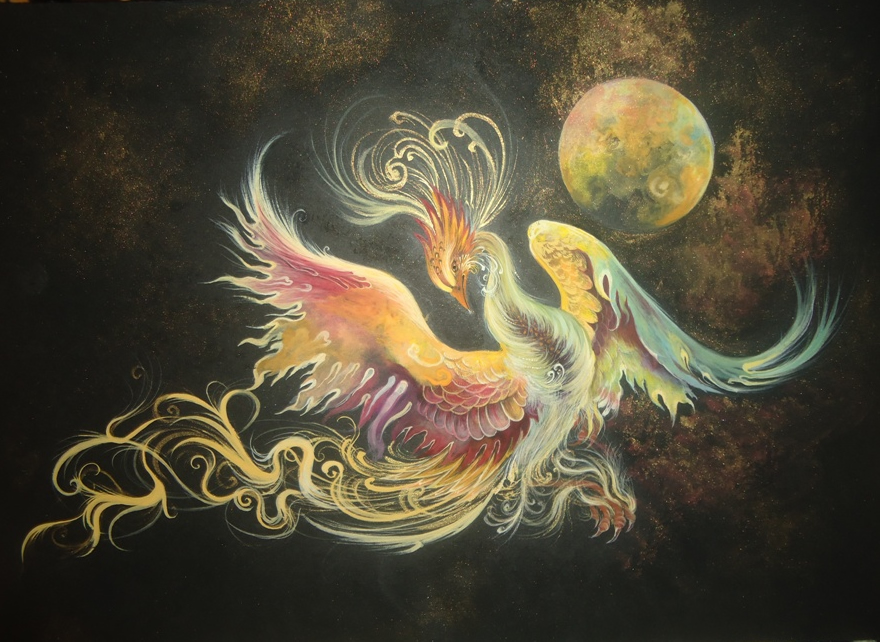
Iranian miniature painting of the mythical bird Simorgh
Iranian miniature painting of the mythical bird Simorgh ( http://nadiaartgallery.com/wp-content/uploads/2013/07/simorgh.jpg)
The historical era comprises of historical accounts starting from the dynasty of the Parthian kings after Iranian territories had been freed from Greek and Macedonian rulers. A lot of the focus is put on the succeeding dynasty of the Sassanid emperors and the stories regarding this dynasty are exquisitely told. Shahnameh ends with the Islamic Arab conquest of Persia in 651 AD. Ferdowsi poetically described this event as a major disaster over what he calls the arrival of “the army of darkness”.

The Legacy of Ferdowsi


After 33 years at the age of 71, Ferdowsi finished the writing of Shahnameh on 8 March 1010 AD and in 1020 AD, Ferdowsi died at the age of 82. He was buried in his birth place Tus. Shahnameh contains 62 stories, 990 chapters and 60 000 rhyming couplets which makes it the longest poem in the history of literature, a work seven times longer than the Illiad of Homer. Ferdowsi wrote his work entirely in classical Persian which is still spoken today by Iranians and people related to the Iranian culture in countries once part of Greater Iran. It was a linguistic renaissance considering that the Persian language was officially banned in Persia by the Arab rulers for almost 200 years. Today, Shahnameh is a common book in Iranian households and it is the national epic of the Persian speaking world. The epic stories of this masterpiece influenced the literature of Asia for centuries and the stories are enthusiastically told to this day. The philosophical message of Shahnameh is that since the world is transient and everyone is merely a passerby, one is wise enough to avoid cruelty, lying and other evil deeds. Instead one should strive for justice, truth and order which brings happiness, ease and honor. Ferdowsi put lifelong dedication and sacrificed a lot to complete his work. Ferdowsi's writing style is that of a superb poet's. His epic language is rich, moving and lavish so that it truly enchants the reader. He is remembered as the greatest of the Persian poets who with the power of the pen rescued and revived the Persian language, culture and heritage.
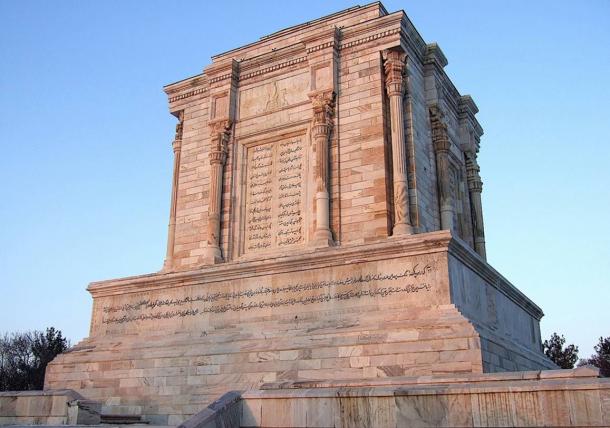
Ferdowsi's tomb in Tus, Iran
Ferdowsi's tomb in Tus, Iran ( Wikimedia Commons )
Below are the words of Sohrab spoken to Rostam as he did not know he was dying in the arms of his father. From Shahnameh - The Persian Book of Kings, translated by Dick Davis:
I brought this on myself, this is from me,
And Fate has merely handed you the key
To my brief life, not you but heaven's vault –
Which raised me and then killed me – is at fault.
Love for my father led me here to die.
My mother gave me signs to know him by,
And you could be a fish within the sea,
Or pitch black, lost in night's obscurity,
Or be a star in heaven's endless space,
Or vanish from the earth and leave no trace,
But still my father, when he knows I'm dead,
Will bring down condign vengeance on your head.
One from this noble land will take this sign
To Rostam's hands, and tell him it was mine,
And say I sought him always, far and wide,
And that at last, in seeking him, I died.

Saturday, July 20, 2019

It’s ‘dangerous’ that some Arabs states are normalizing ties with Israel, Larijani warns

TEHRAN – A move by some Arab and non-Arab Muslim states to normalize ties with Israel is “dangerous”, Iranian Parliament Speaker Ali Larijani warned on Tuesday, calling on Iraq to help prevent this move.
“Normalization of ties between Islamic-Arab countries and the Israeli regime is dangerous,” Larijani said in a meeting with President of the Iraqi Supreme Council of the Judiciary Faeq Zidan in Tehran, Fars reported.
Larijani said conflicts between certain Muslim states should not prompt them to establish ties with Israel, asking Iraq to prevent such a thing from happening.
“Iraq plays a significant role in this regard since the existing problems among Islamic countries should not lead them into making peace with Israel.”
The parliament speaker also praised the amicable ties between Iran and Iraq, saying Washington has made numerous efforts to cause a rift between the Iranian and Iraqi nations but they have all ended in failure.
For his part, the Iraqi official said Baghdad will stand by Tehran.
Zidan also underscored the strong relationship between Iraq and Iran, saying, “Enemies try to impede such relations via imposing maximum pressure on the Iraqi central bank to stop its cooperation with Iranian companies.”
'Normalizing ties with Israel amounts to suicide’
He also said normalization of relations with Israel by certain Islamic states pose a major danger to the region.
Bahrain held a U.S.-sponsored conference in Manama on June 25 and 26 with the aim of normalizing ties between the Tel Aviv regime and Arab countries.
“The recent Manama conference, held to promote this purpose, was defeated but the U.S. will not stop its efforts in this regard,” Zidan said.
He said, “We must not remain silent (toward this plan).”
The top Iraqi judicial official said normalizing ties with Israel amounts to “suicide”. 
“Normalization of relations with Israel is the red line of Iraq and a type of committing suicide due to religious issues and matters of beliefs,” he underlined.
Israel has been continuously annexing the remaining parts of the West Bank in violation of international law.
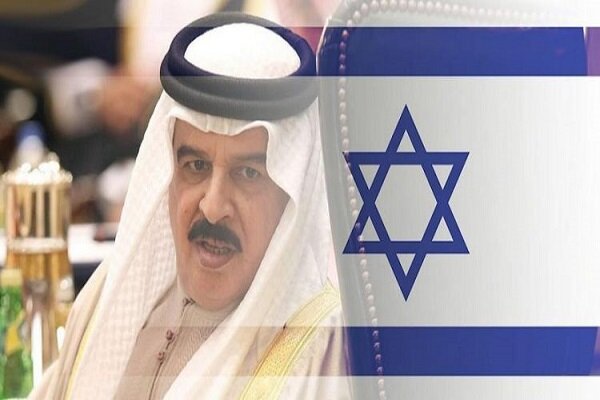
Late last month, Hossein Amir Abdollahian, a senior advisor to Larijani, reminded Bahraini Foreign Minister Khalid bin Ahmed al Khalifa that the monarchy must listen to its people and stop being manipulated by Tel Aviv and pro-Zionists.
Amir Abdollahian lashed out at Khalid bin Ahmed al Khalifa for implementing policies in the region dictated by Israel.
Relations between Israel and Saudi Arabia is also no longer a secret.
Turki Al-Faisal, the former Saudi Intelligence chief revealed in February 2019 that secret relations between Israel and a number of Persian Gulf Arab states date back as far as 25 years.
According to Qatari newspaper Al-Arab, Al-Faisal was interviewed by Israeli journalist Barak Ravid, who claims to have conducted interviews with 20 prominent Persian Gulf Arab officials with knowledge of secret relations with Israel. However, many of these people refused to speak to the camera.
Ravid said that Al-Faisal – who had spoken several times to Israeli media and criticized the Palestinian resistance – agreed to speak to a program called “The Secrets of the Gulf”, which explores the secret relations between Israel, Saudi Arabia, Bahrain and Qatar.

Friday, July 13, 2018

The Qur’an as a Historical Document

Apart from its liturgical dimension the Holy Qur’an is one the primary sources for the Islamic belief system and as Sharaiz Chaudhry explains it is also an important source of history to understand the developments of the first Muslim community The Qur’an is an indispensable historical source that sheds light on the evolving dynamics of the Prophet’s life. The Qur’an provides more information than simply referring to particular events. By dividing the Qur’an into its Makkan and Medinan revelations, which constitute the first thirteen and final ten years of the Prophet’s life respectively, it is possible to see how Islam developed as a message from its inception on Jabal an-Nour (the Mountain of Light) to the Prophet’s death. A historical analysis of the Qur’an reflects the changing dynamics of this period and provides an understanding of the Prophet’s life and how he interacted with his followers and those who opposed him. The Makkan Period The content and language used in the Qur’an shows that the Islamic movement was in its initial phase during the Makkan period. Following the first revelation the Prophet Muhammad(s) was told to preach to the Quraish. In some senses the revelation at this preliminary stage was not new, but rather followed the message brought down by previous prophets. They focused on traditional tenets of monotheism, introducing them to a new audience – the Arabs. The most important of these ideas was the belief in God and His unity. While the Makkans had a vague understanding of God, believing that He was the ‘High God’ and Creator, they did not see this as something that affected their lives or actions. The Qur’an, in chapter al-‘Alaq, (The Clot of Blood) emphasises the blessings that God had bestowed upon man by creating and guiding him from the outset. Thus, it provided a more precise understanding of God, showing that He was, first and foremost, ar-Rahman (The Compassionate). In return for His generosity, people are ordered to worship Him. Belief in a god was no longer considered inconsequential and required purification. The above two points are condensed into the chapter Quraish, which outlines God’s blessings on the tribe and in return tells them to worship Him. Finally, the Qur’an introduced the concept of accountability on the Day of Judgement, where everyone would be tried according to his or her actions. This was completely alien to the Arabs, who had a vivid awareness of mortality in their uncompromising environment. Thus, revelations in the Makkan period primarily focused on introducing new concepts to the Arabs and explaining the theological foundations of Islam. …the Qur’an introduced the concept of accountability on the Day of Judgement, where everyone would be tried according to his or her actions. This was completely alien to the Arabs, who had a vivid awareness of mortality in their uncompromising environment. The language used in these chapters was passionate, aiming to shock and wake the people from their spiritual slumber. Furthermore, it often addressed the people in general, reflecting the broad audience it targeted. This suggests that the Qur’an was being used as a tool to attract people’s attention and indeed, there are many examples of where it succeeded in doing this. The Qur’an was particularly effective in attracting the downtrodden and the youth. They found it more difficult to ignore the warnings and hopes so eloquently spoken about in the revelation to Muhammad that they readily converted. The language and nature of revelation in the Makkan period therefore reflects the position of Islam at this preliminary stage, and sought to introduce the key ideas in a way that would draw people towards it. Opposition in Makkah One of the Qur’an’s most fascinating elements is that rather than providing a monologue of information, it establishes a dialogue with its opponents. It therefore provides some valuable historical insight into the nature of the opposition that the Prophet Muhammad(s) faced during his time in Makkah. One element of this was the personal attacks against the Prophet’s self. On several occasions, revelation reassures Muhammad(s) that these accusations are baseless. Apart from such personal insults, the Qur’an shows that the Quraish intellectually opposed the message. The Last Day in particular was a point of contention. While the idolaters would reject the possibility and mock Muhammad(s) to hasten it, the Qur’an would tell them that it was inevitable. Additionally, they would ask the Prophet to perform miracles to prove his prophecy, to which the Qur’an would respond by pointing to the already present miracles, such as Creation. Parts of chapters al-Isra and al-Kahf came in the context of such intellectual challenges, as they were revealed to answer questions that the Quraish received from the Jews to test Muhammad. The Qur’an’s willingness to engage the disbelievers provides useful historical information that offers an insight into the nature of debate during this period. The Qur’an also reflects the changing mood within Makkah and the growing oppression and hostility towards the Muslims. One aspect of this is its strong response to the disbelievers, warning them of the punishment they will face for their intransigence. As the Makkan period continued, more parallels were drawn between the contemporary situation and that of previous prophets. This acted as a warning for the oppressors, while encouraging the Muslims to practise patience. The language used, in particular by switching the verb tenses (al-iltifaat), created a direct link between these historical events and the contemporary situation. The Qur’an therefore exposes the devastating effects that the revelation had on the status quo. It reflects the changing relationship between the Muslims and idolaters in Makkah as the former began to shake the foundations on which Arab society was built. The Medinan Period Following the hijra, the dynamics of the Islamic movement fundamentally changed and this was reflected in the Qur’an. The Muslims were now a majority and the Prophet was the political as well as spiritual leader. Revelation took a more rational tone, focusing on the political situation and challenges facing the community. One key change in this regard was that revelation sometimes referred to specific events, unlike in Makkah. The language was far more specific, focusing on particular legislative issues and addressing the believers and People of the Book rather than humanity as a whole. Events were consequently used to establish general codes of conduct, which would form the legal foundations of Medina. For example, the Quranic verses (24:11-20) were revealed, calling on those who make accusations to bring four witnesses and outlining the punishment for falsifying. Medinan chapters would outline new religious practices, such as Friday prayers, and social reforms on topics such as inheritance, marriage and divorce. The Qur’an was particularly effective in attracting the downtrodden and the youth. They found it more diffiult to ignore the warnings and hopes so eloquently spoken about in the revelation to Muhammad that they readily converted. volvement in politics meant that Muhammad(s) had to provide regulations through which society could be organised. Its basis in revelation suggests that it was being ordered according to God’s plan. Therefore, while maintaining the spiritual foundations of Islam from the Makkan period, the nature of revelation adapted to new challenges that the community faced upon migrating to Medina and evolved to reflect these changes. Opposition in Medina As the Muslims established their own society, the dynamics of their relationship with non-Muslims naturally changed. With regards to the polytheists of Makkah, the old message of patience was superseded by the command for Muslims to fight and defend themselves against aggression. This reflects the changing environment and fortunes of the Muslim community. As they strengthened, the Qur’an adapted to the balance of power by allowing the Muslims to assert their authority against their previous oppressors. As Islam gradually spread its influence across Arabia, the Qur’an became more forceful against the idolaters, eventually even barring them from Makkah – Surah at-Tawba (The Repentance). Thus, from the Makkan to Medinan period and the subsequent victory of Islam, the relationship between the Muslims and disbelievers (primarily of Makkah) fundamentally changed, and this was reflected in the Qur’an, which evolved to cater for these shifts. The polytheists however, were not the only group that the new Muslim community had to face once in Medina. The Quranic opinion on the Jews for example, followed the fluctuating relationship between the Muslims and Jews of Yathrib. The Qur’an at first portrays the People of the Book as part of the same tradition, attempting to strengthen links with them in an attempt to win converts to Islam. However, the Jews’ continued opposition to Muhammad(s) triggered a change in their portrayal in the Qur’an. The changing of the qibla from Jerusalem to Makkah narrated in the Qur’an, for example, came in response to the Jews mocking the Prophet for not having his own direction of prayer. It was thus a symbolic turning away from the Jews, breaking association with them. The subsequent banishment of all the Jews from Medina, which was endorsed by the Qur’an, reflects the further deterioration of this relationship. Thus, like their relationship with the polytheists, the Muslims’ affiliation with the Jews also evolved and the Qur’an provides insight into the trajectory of this change. The Qur’an therefore provides valuable historical insight into the dynamics and balance of power in Medina, and Arabia as a whole. Historical document The Qur’an is a useful historical document that helps the reader to understand the life of the Prophet Muhammad(s) and how his message and stance towards others developed as the surrounding environment changed. The content of revelation shifted from general theological beliefs in Makkah, aimed at all people, to more specific and legislative injunctions, aimed at the believers and communities in Medina. The usefulness of the Qur’an as a historical document however, is best illustrated by inspecting the changing depiction of non-Muslim communities throughout the 23 years in which it was revealed. In this sense, the Qur’an reflects the historical evolution of the Muslim community from an oppressed minority in Makkah to the dominant force in Arabia. Therefore, in addition to being a spiritual guide, the Qur’an is a useful document that reflects the evolving historical context in which it was revealed.

Wednesday, June 03, 2015

Pentagon game to divide Iranians and Arabs

Sharmine Narwani

Pentagon game to divide Iranians and Arabs
(Image by Robert Christine)
Sharmine Narwani says: “If you want to understand what’s going on in the Middle East today, go back to see what the US Military was doing 4 years ago, as the ‘Arab Spring’ kicked off, and US-backed dictators were falling like flies. Shia-vs-Sunni and Iran-vs-Arabs was the script being developed by the Pentagon. My article in 2011: “Pentagon game to divide Iranians and Arabs”
This secret exercise would not have been remarkable except for its timing in March 2011. Washington was losing stalwart allies – Tunisia’s Ben Ali, Egypt’s Mubarak – and at the time there was unrest brewing in Jordan, Bahrain and Yemen too. So why, of all things, was the Pentagon test-driving “Iran-vs-Arabs” narratives during the height of this crisis?
The introduction to the article follows with a link to see the full story, read on:
Analysts and pundits have spent the past two weeks puzzling over the alleged Iranian plot to assassinate a Saudi diplomat in Washington, in part because of a complete lack of either motive or benefit for the Islamic Republic. Iran, reputed to place much stock in cost-benefit analyses of its geopolitical calculations, clearly fails to gain materially or politically from any part of the allegations thus far. So what gives?
Instead of scrutinizing the “whys” of Iran’s involvement, it may be more illuminating to examine Washington’s motivation in advancing this bit of political theater.  The criminal charges were followed by high-profile statements and sanctioned leaks from the White House, the departments of State, Justice, Treasury, Defense, FBI and the CIA, well orchestrated for maximum impact. The U.S. government then sought to persuade the global community via the U.N. Security Council and “phone calls to many capitals” of the gravity of the charges.
Such fanfare went beyond the service of prosecuting a single crime.  More likely, the charges being leveled at Iran came in the service of “public diplomacy,” an attempt to establish a broad narrative that serves a policy decision. Pushing the narrative of the Iranian “boogeyman” is not unusual in U.S. policy circles. What may be new is the emphasis on this story in the aftermath of Arab uprisings throughout the Middle East.
Bring in the “Red Team”
Last March, as the Arab revolts swept through the Middle East and North Africa, the U.S. military’s Central Command for military operations in 20 countries — including Iran, Saudi Arabia, Iraq, Egypt, Yemen, Bahrain and Jordan — held a “Red Team” exercise to examine a political narrative that perpetually pits Arabs and Iranians against each other, according to a source involved in the project.
CENTCOM’s Red Team was formed in 2006,  a spokesman told me last year, to “think outside the box, offer contrarian thinking [and] … sharpen the reasoning and force intellectual rigor” on critical issues for the benefit of senior military officials.
 Here are some of the premises and questions included in CENTCOM’s Arabs versus Iranians exercise. (Note: The Red Team refers to Iranians as “Persians.”)
  • Premise: “The Arab-Persian dynamic is a divide.  History, religion, language and culture simply pose too many obstacles to overcome.”
  • Premise: “A general Arab inferiority complex relative to Persians means that many Arabs are fearful of Persian expansion and hegemony throughout the Middle East.  In their minds, the Persian Empire has never gone away and it is more self-sufficient than most Arab states.”
  •  Premise: “Barring a “clash of civilizations” – i.e., a modern crusades, Islam vs Judeo-Christians, warfare between the West/Israel vs Arabs/Persians – there does not appear to be a scenario where Arabs and Persians will join forces against the US/West.”
  •  Question: “Is it appropriate to frame the discussion as Arab-Persian or is Sunni-Shia a more appropriate framework?”
  •  Question: “Assuming a schism, what could unite Arabs and Persians, even temporarily?”
These narratives assume two things: that the division between Iranians and Arabs is a fact and that the greater unity of the two groups in the wake of the Arab uprisings is a potential threat to U.S. interests. Hence the worried question:  What could unite them, even temporarily?
Does the goal then become to ensure a state of chronic hostility between Iranians and Arabs?
Read more:

Pentagon game to divide Iranians and Arabs

A military planning exercise illuminates the story driving Washington's response to the Arab Spring

OCTOBER 26, 2011

SHARMINE NARWANI

Analysts and pundits have spent the past two weeks puzzling over the alleged Iranian plot to assassinate a Saudi diplomat in Washington, in part because of a complete lack of either motive or benefit for the Islamic Republic. Iran, reputed to place much stock in cost-benefit analyses of its geopolitical calculations, clearly fails to gain materially or politically from any part of the allegations thus far. So what gives?
Instead of scrutinizing the “whys” of Iran’s involvement, it may be more illuminating to examine Washington’s motivation in advancing this bit of political theater.  The criminal charges were followed by high-profile statements and sanctioned leaks from the White House, the departments of State, Justice, Treasury, Defense, FBI and the CIA, well orchestrated for maximum impact. The U.S. government then sought to persuade the global community via the U.N. Security Council and “phone calls to many capitals” of the gravity of the charges.
Such fanfare went beyond the service of prosecuting a single crime.  More likely, the charges being leveled at Iran came in the service of “public diplomacy,” an attempt to establish a broad narrative that serves a policy decision. Pushing the narrative of the Iranian "boogeyman" is not unusual in U.S. policy circles. What may be new is the emphasis on this story in the aftermath of Arab uprisings throughout the Middle East.
Bring in the "Red Team"
Last March, as the Arab revolts swept through the Middle East and North Africa, the U.S. military’s Central Command for military operations in 20 countries -- including Iran, Saudi Arabia, Iraq, Egypt, Yemen, Bahrain and Jordan -- held a “Red Team” exercise to examine a political narrative that perpetually pits Arabs and Iranians against each other, according to a source involved in the project.
CENTCOM’s Red Team was formed in 2006,  a spokesman told me last year, to “think outside the box, offer contrarian thinking [and] ... sharpen the reasoning and force intellectual rigor” on critical issues for the benefit of senior military officials.
 Here are some of the premises and questions included in CENTCOM’s Arabs versus Iranians exercise. (Note: The Red Team refers to Iranians as “Persians.”)
  • Premise: “The Arab-Persian dynamic is a divide.  History, religion, language and culture simply pose too many obstacles to overcome.”
  • Premise: “A general Arab inferiority complex relative to Persians means that many Arabs are fearful of Persian expansion and hegemony throughout the Middle East.  In their minds, the Persian Empire has never gone away and it is more self-sufficient than most Arab states.”
  •  Premise: “Barring a “clash of civilizations” - i.e., a modern crusades, Islam vs Judeo-Christians, warfare between the West/Israel vs Arabs/Persians - there does not appear to be a scenario where Arabs and Persians will join forces against the US/West.”
  •  Question: “Is it appropriate to frame the discussion as Arab-Persian or is Sunni-Shia a more appropriate framework?”
  •  Question: “Assuming a schism, what could unite Arabs and Persians, even temporarily?”
These narratives assume two things: that the division between Iranians and Arabs is a fact and that the greater unity of the two groups in the wake of the Arab uprisings is a potential threat to U.S. interests. Hence the worried question:  What could unite them, even temporarily?
Does the goal then become to ensure a state of chronic hostility between Iranians and Arabs?
Spokesman Maj. T.G. Taylor told Salon that CENTCOM planners "postulate multiple scenarios and potential outcomes to better anticipate and understand the nature of a complex and diverse region.  It is through this prudent military planning and cultural research that we are able to evaluate how to best protect U.S. and partner interests while reducing the risk of miscalculation stemming from ethnic and national differences."
There is no disputing the region is rife with fault lines that divide populations.  I call the three biggest the Stink Bombs of the Middle East: Sunni versus Shia, Arabs versus Iran, Islamists versus secularists.  While there may be some natural tension between these groups, since the 1979 Iranian revolution there has been a marked increase in narratives that create fear of Shiites, Iranians and Islamists for geopolitical advantage.  And U.S. allies in the region -- Jordan, Saudi Arabia, Egypt, Kuwait, Bahrain, Yemen -- have been at the forefront of these efforts.
... is Sunni-Shia a more appropriate framework? Arabs are afraid of Persian hegemony ...  Islam vs Judeo-Christians ...”
Such  themes have been embedded in superficial narratives of the Middle East that recur in our media.  The Red Team exercise was not particularly exceptional in many respects. But two things are highly unusual about this drill: the timing and its sponsor. The question baffles: Why did the U.S. militarydecide to shine a spotlight on the Arabs vs. Iran narrative three months into the uprisings sweeping through the Arab world?
Why not a broader, more urgent evaluation of how to realign U.S. interests with emerging democratic actors in the region?
The balance of power shifts
At the time of the Red Team exercise, peaceful, political protest had swept away pro-American regimes in Tunisia and Egypt and reached a critical mass in Bahrain and Yemen. The former is home to the U.S. Navy's Fifth Fleet. The latter is an operational center for al-Qaida and a recent proxy battleground for Saudi-Iranian tensions.
U.S policymakers had reason to worry. The de facto beneficiary of the uprisings was Iran, a country that for three decades has challenged the primacy of U.S. and Israeli interests in the Middle East.  The fall of pro-U.S. dictators all but guaranteed that, in the hands of new populist leaders, the region’s foreign policy outlook would likely shift toward Iran’s perspective, although not be steered by Iran.
According to the New York Times’ David Sanger, the U.S. administration never lost sight of this development. Last February, a month before the Red Team exercise, he wrote;
“Every decision — from Libya to Yemen to Bahrain to Syria — is being examined under the prism of how it will affect what was, until mid-January, the dominating calculus in the Obama administration’s regional strategy: how to slow Iran’s nuclear progress, and speed the arrival of opportunities for a successful uprising there.”
Viewing the Arab uprisings through an Iranian lens offered a possible advantage for the United States. Arab public polls consistently favor Iran when it is contrasted with the United States, but not nearly as much when it is compared to other Arab regimes, even unpopular ones.  This tendency has long provided opponents of Iran to sow discord in the Arab world– even before the 1979 Islamic Revolution, but especially afterward. Narratives about expansionist, aggressive aspirations of the Iranian Shia have been sown far and wide in the largely Saudi-controlled Arab media, even though there has not been a serious conflict between Iranians and Arabs since the Iran-Iraq war ended in 1988.
A testimony to the power of propaganda and the knowledge deficit it encourages, mistrust between Iran and many Arab nations has simmered on low boil ever since. As Washington seeks to manage its losses and assert some control over future developments in the region, this narrative tool becomes a cost-effective way to wrest back some of its primacy by defining a new Middle East and drawing others into those  assumptions.
The Pentagon and social media
 The Red Team exercise did not take place in a vacuum. The Arab revolts have, to a large degree, been driven by the existence of social media platforms, valuable communication assets in countries where public congregation is not encouraged, or is altogether banned.
The Pentagon is actively seeking to understand, influence and control these platforms and the messages they transmit. In July, the technology arm of the Department of Defense, DARPA, announced a $42 million program to enable the U.S. military to “detect, classify, measure and track the formation, development and spread of ideas and concepts (memes)” within social media.
Wired magazine calls the project the Pentagon’s “social media propaganda machine” because of its plans for “counter messaging of detected adversary influence operations.”
In order to “allow more agile use of information in support of [military] operations” and “defend” against “adverse outcomes,” the project will enable the automation of processes to “identify participants and intent, measure effects of persuasion campaigns,” and ultimately, infiltrate and redirect social media-based campaigns overseas, when deemed necessary.
With cyberspace now designated an “operational domain” for the armed forces, we don't know when and where these online tools will be mobilized. But we can be certain one of the most likely targets is Iran, which earlier this year announced plans to disconnect from the rest of the world and establish its own national Internet.
Manufacturing narratives
Promoting the narrative that casts Iran as a regional threat to Arab nations serves several urgent interests today: It justifies the upcoming sale of more than $120 billion in weapons to Arab governments, and works toward preventing Iran from gaining a further foothold in Iraq once U.S. troops complete their withdrawal in December.
But the Arab uprisings have interfered with Washington’s story. Saudi Arabia, Iran’s main rival and the U.S’s closest Arab ally, has sent troops into Bahrain to violently quell protests, has offered sanctuary to embattled dictators and is subsidizing many of the remaining autocratic Arab regimes throughout the region.
Counter-revolutionary Saudi Arabia's substantial treasury insures its perspective will be heard in Washington. The Saudis will pay for more than half -- $67 billion -- of the total value of the region's controversial arms purchases. The monarchy is also developing an elite 35,000-man force to “protect the kingdom’s oil riches and future nuclear sites,” to be overseen by none other than CENTCOM.
The Arab revolts pose a threat to such business. In recent months, the Obama administration has been hard-pressed to gain approval for even a mere $53 million slice of its weapons sale to Bahrain, which has been censured internationally for its suppression of peaceful protests.  Withstanding pressures from Congress and human rights groups, a State Department official last week finally announced the approval of the sale.
 “The deal is part of a move to defend Bahrain from aggression,” a spokesman told the Gulf News, a not so subtle reference to Iran.
As these Arab uprisings continue to dismantle the regional status quo – for better or for worse – it appears the United States is acting not in accordance with its declared values, but is instead allowing financial and hegemonic calculations to drive foreign policy. Narratives manufactured to support myopic interests over fundamental values cast a long shadow over our ability to play a leading role in global affairs.  We don’t reason, we spin.  And, in the case of this newly vulnerable Middle East, nobody is more proficient in the business of keeping conflict humming.

SHARMINE NARWANI