Showing posts with label Ali Rabiei. Show all posts

Tuesday, October 29, 2019

Al-Baghdadi's death and necessity for US to leave ME

Al-Baghdadi's death and necessity for US to leave ME

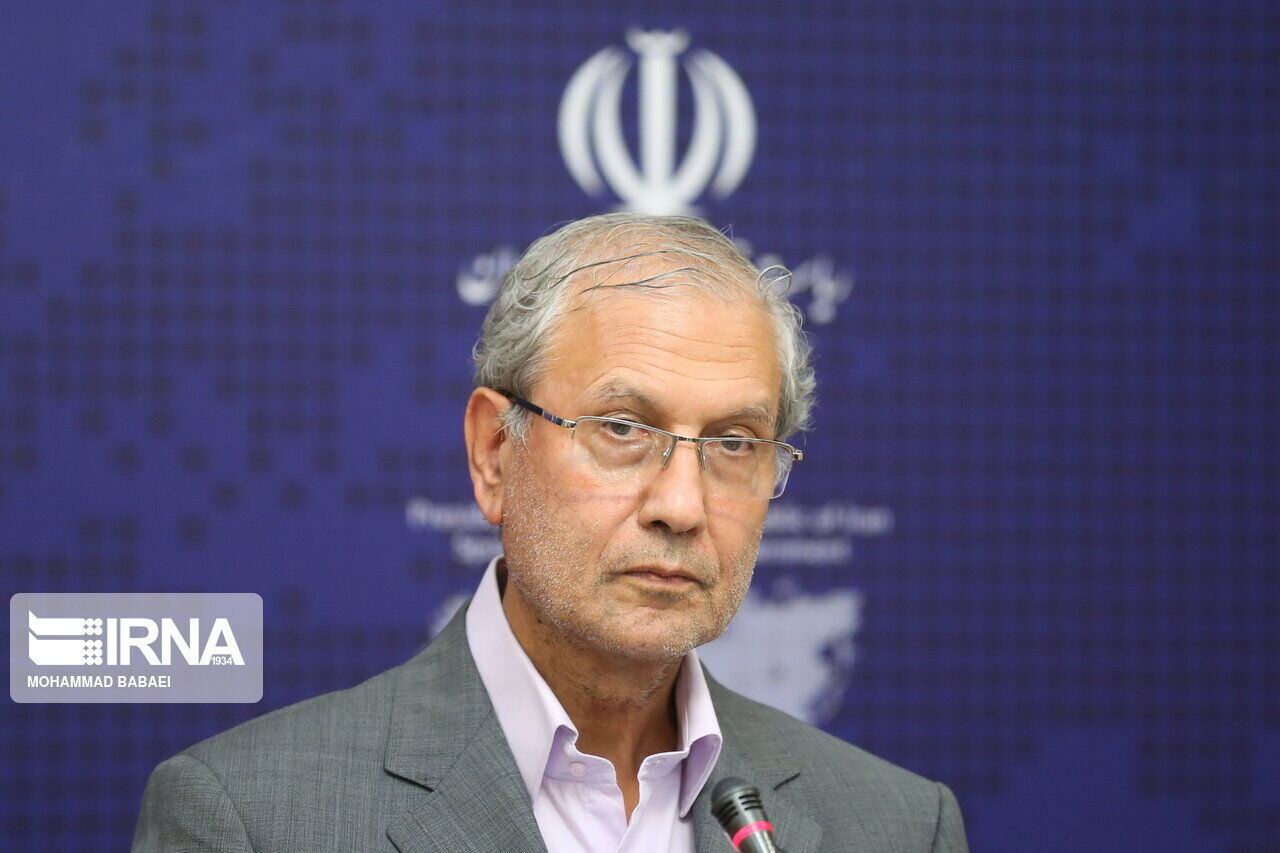
The spokesman of the Government of Iran wrote in a short article that the death of Abu-Bakr al-Baghdadi is the end of the icon of destructive terrorism aiming to induce the thought of death and ruining the image of Islam before the international public opinion.
But, as the death of Osama bin Laden didn’t eradicate terrorism, the death of al-Baghdadi will not put an end to Daeshism (ISISism), Ali Rabiei wrote.
The death of neither bin Laden nor al-Baghdadi is the end of fighting Daesh terrorism; it is just the end to one chapter of that.
Terrorism is still growing and has a manifestation. Its growth is through the US policies, as well as Petrodollars of the region, and its manifestation is through the Takfiri ideology.
The quagmire of terrorism cannot be dried unless these three sources are dried out.
The US is trying to monopolize civilization and reflects its oppressive deployment of forces all over the world as fighting terrorism. This is while the terrorism in Western Asian and Northern Africa is the fruit of intelligence-military policies, oil thirst, and support for Arrogance.
Rabiei added that killing al-Baghdadi will not downplay the illegal intervention of the US that has been done through "al-Baghdadis and bin Ladens" in the past decades.
The US' operation scheduled at the time when the Syrian Army was on the verge of mopping the Idlib Province cannot downplay the bravery of the Syrian people, alongside their Iranian and Russian allies, trying to take back the areas that had been occupied by Daesh with direct and indirect support from the US.   
In the meantime, Iran has always been among the firsts to fight terrorism through the plan of the world free of violence and countering extremism and giving military advice.
Iran is also among the supporters of fighting Daeshism through diplomatic and ideological approach.
No one should forget that the people of the region know that killing one dangerous terrorist will not wash the hands of his supporters of the blood of tens of thousands of people of the region. Nor will it soothe the pains of hundreds of thousands of people that have been deprived of honorable living.
Total annihilation of terrorism will be materialized through complete restoration of Syrian territory, re-establishment of Syria's national sovereignty all over the country, the annihilation of all the Daesh centers, and unconditional retreat of all the US and other foreign forces.
While the US is praising itself with a highly-exaggerated show, it is high time that the international community set its goal to push the US forces out of Syria, to put an end to the Syrian sedition against the country, and paved the way for Damascus to return to the international community, and to make up for the financial and psychological damages to the country.
Alongside its partners and countries with the most sense of responsibility, Iran will continue to try to reduce the pains of the Syrians through diplomatic methods and its commitments in the Astana Talks in order to make sure that terrorism, violence, and extremism and foreign intervention have no place in Syria and that Syrian governments be able to decide for their own fate.
On Saturday, the US officials announced that they had killed the commander of Daesh, Abu-Bakr al-Baghdadi, in Idlib.

Sunday, October 20, 2019

Tehran, Riyadh's steps to de-escalate tensions

Tehran, Riyadh's steps to de-escalate tensions TEHRAN, (MNA) – Past tensions between Iran and Saudi Arabia in recent days have been replaced by positive signals for engagement and negotiation; the signs are evident in the speeches and statements of the Islamic Republic of Iran and Saudi Arabia’s officials.

According to a report by IRNA, After years of tension and disagreement in various fields between Iran and Riyadh, there are now positive and promising signs from the authorities of two sides.
Rejection of war with Iran by Saudi Crown Prince Mohammed bin Salman and emphasis on the effectiveness of diplomatic relations with Iran indicates a clear shift in the position of Saudi leaders.
The readiness of some regional actors such as Iraqi Prime Minister Adil Abdul-Mahdi and Pakistani Prime Minister Imran Khan to mediate between Iran and Saudi Arabia also shows that they hope to find a peaceful resolution of the Tehran-Riyadh disputes. 
In addition, Iranian Government Spokesman Ali Rabiei recently revealed Saudi Arabia's message to Tehran, which Saudi Arabia had their own interpretation for their domestic public opinion and foreign allies.
For instance, Saudi Minister of State for Foreign Affairs Adel al-Jubeir wrote oh his twitter that what Iranian Government Spokesman said was not accurate about the message of Saudi Arabia to Iranians. What happened is that some countries were trying to reduce the tension; we also told them that Saudi Arabia was constantly trying to create security and stability in the region.
The Islamic Republic of Iran, which has always sought to improve its relations with neighboring and regional countries, such as Saudi Arabia, continues to emphasize its approach in the current situation.
In this regard, Iranian Foreign Minister Mohammad Javad Zarif told Turkey's TRT World that Iran has always been ready to negotiate on all issues with Saudi Arabia. It is Iran’s neighbor. There is no choice but to talk to each other. Negotiation with Saudi Arabia can be direct or through mediation. Iran never rejects mediation.
Iran's peace plan, named Hormuz Peace Endeavor (HOPE), proposed by President Hassan Rouhani at the annual meeting of the UN General Assembly this year in early September, showed the importance of endogenous security to achieve peace in the region.
Addressing the UN General Assembly session, Rouhani described ensuring security, peace, stability, and progress in the Persian Gulf and Strait of Hormuz as Iran’s historical responsibility and invited all countries that are affected by the Persian Gulf and Strait of Hormuz developments to join the Hormuz Peace Endeavour (HOPE) initiative.
The Initiative is based on the fact that all regional states are duty-bound to ensure peace, stability, and prosperity in the region. They along with the global community have common interests in maintaining freedom of navigation and transfer of energy. HOPE is designed to include all countries of the region and aims to expand cooperation beyond regional security.
The Initiative promotes solidarity, mutual understanding and peaceful and friendly relations and cooperation among regional states as well as boosting collaboration in uprooting terrorism, extremism, and sectarian tensions and making sure about energy security, freedom of shipping and free flow of oil are among the objectives of the initiative.
Rouhani's Initiative came days after Yemen's missile strikes on Saudi Aramco facilities inflicting heavy cost on the Saudis. In this regard, some of Iran's enemies sought to exert pressure on Iran by taking advantage of this incident and claiming that Tehran was responsible for the attack.
Nearly a month after the Aramco attacks, US President Donald Trump is still seeking to take the most advantage of the attack for his multi-purpose goals, such as isolating and pressuring Iran, increasing disparities in the region, especially between countries of the Persian Gulf and the Oman Sea, sending American weapons to these countries, justifying military presence and intervention in the region, and so on.
The US Secretary of Defense Mark Esper said on Friday 19 October that US has approved the deployment of 3,000 additional troops and military hardware to Saudi Arabia, boosting the country's defense capability after attacks on its oil installations. He authorized the deployment of two more Patriot missile batteries, one THAAD ballistic missile interception system, two fighter squadrons, and one air expeditionary wing, according to Pentagon statement.
Observers believe that the sale of military equipment and weapons, along with the significant US military presence in Saudi Arabia, will be used to militarize the region and bring the money of selling of the Saudi Arabian oil products to the United States. The danger that has even caught the attention of congressmen, who have repeatedly protested the effects of Trump's greed for weapons sales and stood in front of the president, but have so far failed to succeed.