Showing posts with label Al-Qaeda and Nusra. Show all posts

Wednesday, September 11, 2019

Eighteen Years After 9/11, Has Al-Qaeda Won The War On Terrorism?

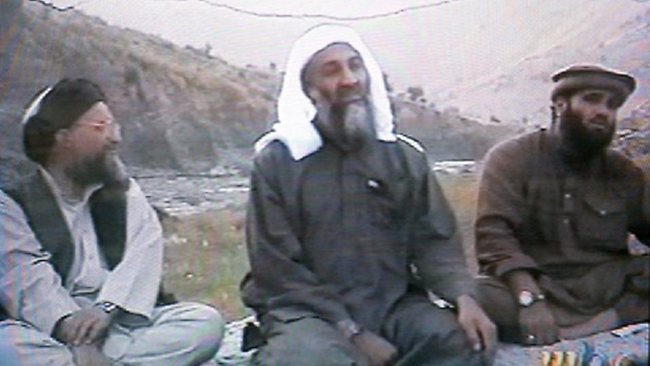
Al-Qaeda leaders Ayman al-Zawahri, Osama bin Laden and Suleiman Abu Ghaith in 2002.
by Peter Ford
What blasphemy is this? al-Qaeda has won? Absurd!
Most observers would say reflexively that, eighteen years after 9/11, the U.S. has cut al-Qaeda down to size, and if it has not quelled it altogether the remaining operations against Osama bin Laden’s organisation—such as the strike on al-Qaeda in Syria in Idlib on 31 August—amount to not much more than mopping up. But is this not a superficial reading of the situation?
Until Trump nixed the deal (temporarily?) the anniversary of 9/11 was set to coincide with an agreement between the U.S. and the Taliban, whereby the U.S. would withdraw from Afghanistan in return for assurances that U.S. troops will not be attacked as they leave and that the Taliban will not support groups such as al-Qaeda. Much of the discussion on the putative deal revolves around the question of whether the Taliban will respect any assurances they give.
But there is a deeper question here: the Taliban may or may not attack U.S. troops, but why would al-Qaeda today even want to attack the U.S. from Afghanistan? Or from anywhere at all? Has the U.S. not ended up aligning itself with al-Qaeda on the causes closest to al-Qaeda’s heart?
A Convergence of Interests
And what causes might those be? Leave aside the cause of besting its rival, the Islamic State (IS or ISIS), although the U.S. has done al-Qaeda an immense if unintended favour by largely removing from the scene al-Qaeda’s biggest competitor for recruits and funding. More to the point, how about the causes of fighting Iran, the Shia, the Syrian government, Hezbollah, and the Houthis, and generally making the Middle East safe for Sunni extremism?
‘Iran is the number one nation of terror’: has Donald Trump with this mantra not shifted the spotlight off Sunni terrorism, the undisputed bugbear of the U.S. in the first ten years after 9/11? And has al-Qaeda on its side not lost much of its anti-Western focus and become principally concerned with what it sees as heresy within Islam in the shape of Shiism and its offshoots?
Look at the absence of al-Qaeda reaction to the recent announcement that in light of the Iranian ‘threat’ the U.S. would be stationing troops once again in Saudi Arabia. Such stationing was an important catalyst for Bin Laden’s movement when, in the run up to and aftermath of the first U.S. war on Iraq in 1991, the U.S. kept thousands of troops in the holy land of Islam, considered anathema by many Muslims at the time. Now the prospect arouses barely a peep, so conditioned have the Saudi people and Sunnis generally become to seeing Iran as the enemy, not Israel or its protector the U.S.
Not that al-Qaeda ever appeared to care much about Israel’s misdeeds, at least to judge by actions rather than words. When did al-Qaeda ever mount a significant attack against Israel? So much fulmination, so little action. Even action against the U.S.: what did al-Qaeda do against the U.S. after the big coup of 9/11? It is necessary to go to the archives to come up with anything at all: the Times Square foiled car bomb attack in 2010 by a Pakistani who may or may not have been linked to al-Qaeda. The attack on the U.S. consulate in Benghazi in the confused aftermath of Muammar Gaddafi’s downfall in 2012 may also just count. Even taking into account a number of plots allegedly foiled by U.S. security agencies (often involving agents provocateurs), the record hardly amounts to strong evidence of a continuing major al-Qaeda targeting of the U.S.
The feeling, or quasi-indifference, appears to have been mutual. After the killing of Bin Laden in 2011 the U.S. seemed to act as though it believed that the account had been squared and there was not a lot of point in doing more than go through the motions on combatting al-Qaeda, especially with the appearance of the new kid on the terrorist block, IS, itself an offshoot of al-Qaeda in Iraq.
Allies in Syria and Beyond
The emerging convergence of interest between the U.S. and al-Qaeda has been most obvious in Syria. During the Obama years, the U.S. funnelled immense amounts of arms and equipment to jihadi groups in full knowledge that much of it was ending up in the hands of al-Qaeda affiliates, notably the group originally known as Jabhat Al Nusra. This group began life as al-Qaeda in Syria, before disagreements with al-Qaeda central led to a degree of distancing. With the passing years Nusra stepped up efforts to rebrand itself, first as Jabhat Fatah ash-Sham (JFS), then as Hayat Tahrir ash-Sham (HTS), its current avatar. But its basic radical jihadi ideology, and its oppressive sharia-inspired behaviour in areas it controlled, never changed.
The U.S., by mobilising all the immense means at its command to weaken and attempt to overthrow Bashar al-Assad, did much of the work of Nusra/JFS/HTS for it. The U.S. still does that, without ever manifesting the slightest concern that removing Assad would inevitably pave the way to jihadi control over all Syria. For if the U.S. no longer finds it expedient to pour arms directly into the maw of jihadi groups, it lifts not a finger to prevent ally Turkey from doing so with advanced U.S.-supplied weaponry, or Qatar from channelling copious funding to those groups. It constantly admonishes, with threats, the Syrian government and the Russians for using much the same level and type of military effort to dislodge HTS from Idlib that the U.S. itself used in Coalition operations to remove IS from Mosul, Fallujah, and Raqqa. At one point in 2018 it threatened to bomb Syria if Assad’s attempts to recover Idlib were not halted, prompting barbed comments that the U.S. Air Force, which had already bombed Syrian targets twice—in 2017 and 2018—was acting as the al-Qaeda air wing.
U.S. officials have put considerable effort into attempting to hobble Assad and the Syrian Arab Army in what they call their war on terrorism by imposing sanctions, withholding international reconstruction assistance, and pressuring countries not to normalise relations with Syria. It lionises groups like the White Helmets, considered by the Syrian government and Russia to be auxiliaries of HTS. It encourages think tanks hostile to Syria and Russia and does everything in its power to shape a mainstream media narrative on Syria that can only give comfort to a group, HTS, which plays adroitly on Western consciences in the hope that assistance from the West will continue and possibly even develop into armed intervention.
True, the U.S. continues to pay lip service to the cause of fighting al-Qaeda and even occasionally mounts some token military action against it, as when on 30 June this year the USAF launched a strike on a location near Idlib where commanders of an al-Qaeda affiliate, Hurras al-Din (the Guardians of Religion), were gathering. The Pentagon claimed that the purpose of the strike was to pre-empt ‘external’ attacks, which would endanger ‘U.S. citizens, our partners, and civilians’. The main impact of this curious attack out of the blue, following two years of complete U.S. inaction against al-Qaeda in Syria, was to deflate an emerging clamour for U.S. intervention in Syria, and may have been a Pentagon power play against ultra hawk John Bolton. The U.S. carried out an almost identical strike on 31 August, which is likely to strengthen the hold of HTS, left unscathed, over Hurras al-Din and other unruly factions that are more brazen in their al-Qaeda affiliation. Even if the two strikes are taken entirely at face value their rarity underlines that if the U.S. seriously wished to oppose al-Qaeda, it could and would be bombing HTS and its allies regularly. It can only be assumed that the U.S. broadly prioritises undermining Assad and Iran over the fight against Sunni terrorists, who for their part—especially now with IS a spent force—no longer have much appetite or incentive for attacking the U.S.
The de facto convergence between the U.S. and al-Qaeda is equally obvious in Yemen, where the U.S. is propping up the Saudi-led military coalition in its efforts to remove the Houthi-controlled government, deemed over-reliant on Iran. The U.S.-Saudi intervention has led to a chaotic situation where al-Qaeda in the Arabian Peninsula has gathered considerable strength.
U.S. rhetorical support for the Uighurs (to spite China) and military cooperation with predominantly Muslim Azerbaijan, from which Israeli drone attacks on pro-Iranian forces in Iraq have reportedly been launched, may also not be seen with disfavour by al Qaeda, jihadi ranks in Syria being full of Uighurs and Caucasus Muslims.
Repeating the Past
We have seen this movie before, of course. U.S. support for Afghan mujahideen fighting Russia helped create the conditions for the emergence of al-Qaeda in that country in the first place, just as the overthrow of secular dictators in Iraq and Libya helped create the conditions for the emergence of IS and other jihadi groups in those countries.
At some subliminal level, the architects of U.S. Middle East policy seem to recognise that they have a problem with pretending that Iran has overtaken al-Qaeda or al-Qaeda-inspired groups as terrorist-in-chief. Possibly for this reason, Secretary of State Mike Pompeo has tried to smear Iran as a secret supporter of al-Qaeda, a claim no honest observer can possibly take seriously.
At all events, the question today—18 years after 9/11—is whether the U.S. obsession with Iran will not backfire like previous misadventures and play once again into the hands of Sunni extremists, inheritors of the Bin Laden legacy. We shall see the answer to that if U.S. Syria policy succeeds, and an economically crippled and politically fragmented Syria becomes once more ungovernable, with Assad forced out of power—an outcome for which al-Qaeda must be fervently praying.
Peter Ford is an expert on the Middle East. An Arabist, he served as British Ambassador to Syria and Bahrain before joining the UN to work on refugee issues.


Tuesday, June 18, 2019

Now the truth emerges: how the US fuelled the rise of Isis in Syria and Iraq

The sectarian terror group won’t be defeated by the western states that incubated it in the first place
The war on terror, that campaign without end launched 14 years ago by George Bush, is tying itself up in ever more grotesque contortions. On Monday the trial in London of a Swedish man, Bherlin Gildo, accused of terrorism in Syria, collapsed after it became clear British intelligence had been arming the same rebel groups the defendant was charged with supporting.
The prosecution abandoned the case, apparently to avoid embarrassing the intelligence services. The defence argued that going ahead with the trial would have been an “affront to justice” when there was plenty of evidence the British state was itself providing “extensive support” to the armed Syrian opposition.
That didn’t only include the “non-lethal assistance” boasted of by the government (including body armour and military vehicles), but training, logistical support and the secret supply of “arms on a massive scale”. Reports were cited that MI6 had cooperated with the CIA on a “rat line” of arms transfers from Libyan stockpiles to the Syrian rebels in 2012 after the fall of the Gaddafi regime.
Clearly, the absurdity of sending someone to prison for doing what ministers and their security officials were up to themselves became too much. But it’s only the latest of a string of such cases. Less fortunate was a London cab driver Anis Sardar, who was given a life sentence a fortnight earlier for taking part in 2007 in resistance to the occupation of Iraq by US and British forces. Armed opposition to illegal invasion and occupation clearly doesn’t constitute terrorism or murder on most definitions, including the Geneva convention.
But terrorism is now squarely in the eye of the beholder. And nowhere is that more so than in the Middle East, where today’s terrorists are tomorrow’s fighters against tyranny – and allies are enemies – often at the bewildering whim of a western policymaker’s conference call.
For the past year, US, British and other western forces have been back in Iraq, supposedly in the cause of destroying the hyper-sectarian terror group Islamic State (formerly known as al-Qaida in Iraq). This was after Isis overran huge chunks of Iraqi and Syrian territory and proclaimed a self-styled Islamic caliphate.
The campaign isn’t going well. Last month, Isis rolled into the Iraqi city of Ramadi, while on the other side of the now nonexistent border its forces conquered the Syrian town of Palmyra. Al-Qaida’s official franchise, the Nusra Front, has also been making gains in Syria.
Some Iraqis complain that the US sat on its hands while all this was going on. The Americans insist they are trying to avoid civilian casualties, and claim significant successes. Privately, officials say they don’t want to be seen hammering Sunni strongholds in a sectarian war and risk upsetting their Sunni allies in the Gulf.
A revealing light on how we got here has now been shone by a recently declassified secret US intelligence report, written in August 2012, which uncannily predicts – and effectively welcomes – the prospect of a “Salafist principality” in eastern Syria and an al-Qaida-controlled Islamic state in Syria and Iraq. In stark contrast to western claims at the time, the Defense Intelligence Agency document identifies al-Qaida in Iraq (which became Isis) and fellow Salafists as the “major forces driving the insurgency in Syria” – and states that “western countries, the Gulf states and Turkey” were supporting the opposition’s efforts to take control of eastern Syria.
Raising the “possibility of establishing a declared or undeclared Salafist principality”, the Pentagon report goes on, “this is exactly what the supporting powers to the opposition want, in order to isolate the Syrian regime, which is considered the strategic depth of the Shia expansion (Iraq and Iran)”.
Which is pretty well exactly what happened two years later. The report isn’t a policy document. It’s heavily redacted and there are ambiguities in the language. But the implications are clear enough. A year into the Syrian rebellion, the US and its allies weren’t only supporting and arming an opposition they knew to be dominated by extreme sectarian groups; they were prepared to countenance the creation of some sort of “Islamic state” – despite the “grave danger” to Iraq’s unity – as a Sunni buffer to weaken Syria.
That doesn’t mean the US created Isis, of course, though some of its Gulf allies certainly played a role in it – as the US vice-president, Joe Biden, acknowledged last year. But there was no al-Qaida in Iraq until the US and Britain invaded. And the US has certainly exploited the existence of Isis against other forces in the region as part of a wider drive to maintain western control.
The calculus changed when Isis started beheading westerners and posting atrocities online, and the Gulf states are now backing other groups in the Syrian war, such as the Nusra Front. But this US and western habit of playing with jihadi groups, which then come back to bite them, goes back at least to the 1980s war against the Soviet Union in Afghanistan, which fostered the original al-Qaida under CIA tutelage.
It was recalibrated during the occupation of Iraq, when US forces led by General Petraeus sponsored an El Salvador-style dirty war of sectarian death squads to weaken the Iraqi resistance. And it was reprised in 2011 in the Nato-orchestrated war in Libya, where Isis last week took control of Gaddafi’s home town of Sirte.
In reality, US and western policy in the conflagration that is now the Middle East is in the classic mould of imperial divide-and-rule. American forces bomb one set of rebels while backing another in Syria, and mount what are effectively joint military operations with Iran against Isis in Iraq while supporting Saudi Arabia’s military campaign against Iranian-backed Houthi forces in Yemen. However confused US policy may often be, a weak, partitioned Iraq and Syria fit such an approach perfectly.
What’s clear is that Isis and its monstrosities won’t be defeated by the same powers that brought it to Iraq and Syria in the first place, or whose open and covert war-making has fostered it in the years since. Endless western military interventions in the Middle East have brought only destruction and division. It’s the people of the region who can cure this disease – not those who incubated the virus.

Wednesday, October 31, 2018

Why Is Washington Backing Al-Qaeda and ISIL in Syria And Yemen?


Syria’s UN Ambassador Bashar al-Jaafari has once again denounced sanctions imposed on his country by the United States and the European Union, saying the bans are harming the Syrian people.
Jaafari told a Security Council session on Monday that foreign-backed Takfiri terrorists and the sanctions imposed by the US and the EU are inflicting suffering on the Syrian people.
On May 28, the EU extended its restrictive measures against the Damascus government until June 1, 2019. The sanctions currently in place against Syria include an oil embargo, restrictions on certain investments and a freeze of the assets of the Syrian central bank held in the EU. The EU bans are also in place on dozens of companies linked to the Syrian government.
Because of the bans, the US and the EU lack moral and ethical standards while dealing with today’s crises, particularly in the universal war against terrorism. But why should the US be willing to embark on such measures that end up in supporting Al-Qaeda and its offshoots like Nusra Front in Syria? It is not as strange as it may seem:
The US-led war on Syria has admittedly required Washington to partner up with “moderate militants” in pursuit of its colonial and aggressive foreign policy goals, including partitioning Syria and protecting Israel. But the war has produced too much evidence to keep the myth of "moderate militants" alive, even for pro-US experts and media. Though completely clear and globally condemned, this de facto alliance with terrorists and extremist groups, even ISIL, is necessary to facilitate the more long-term goals in the Middle East. This includes regime change in Iran.
That explains why the US is turning a blind eye to Al-Qaeda and ISIL and their crimes, and why President Trump says there will be no arms sales ban for Saudi Arabia despite the fact that its rulers were behind the grisly murder of journalist Jamal Khashoggi in the Saudi consulate in Istanbul on October 2.
As for Syria, and more specifically for the Idlib province, it suffices to state that according to President Trump’s Special Envoy to fight ISIL, “Idlib province is the largest Al-Qaeda safe haven since 9/11.”
US officials – including President Trump himself – keep warning the Syrian government not to re-take its own territory from Al-Qaeda control because if Idlib is re-taken by the Syrian army, Wasington or more specifically the Pentagon loses its major foothold in the country, meaning that the American, Saudi and Israeli dream of “regime change” for Syria will be buried altogether and that will be the last and probably most effective ring in the chain of victories of Syria and its allies, Iran and Russia, in burying the US scheme for Syria.
One of the last groups of ISIL fighters in Syria is around the Al-Tanf US military base which has operated illegally in Southeastern Syria - that is assessed as a strategic juncture at Syria's border with Iraq and Jordan - for the past two years. The US has no permission from the Syrian government to be there. Anytime Russia warns the US military in the region that it is about to launch an assault on ISIL fighters around the illegal US base, the US responds by sending in Marines and conducting live-fire exercises as a warning.
The US is occupying the region while it has turned a blind eye to ISIL and Al-Qaeda in the neighborhood as it helps to prolong the bloodshed, justify occupation, and protect Israel. Syria, Russia and Iran have been protesting at the US for allowing ISIL terrorists to operate in the region freely. The US has warned that it has imposed a no fly zone in the region on the pretext of protecting its military, but this has provided the ISIL with free movement without any worries about Syria and Russian air power.
The base that is also used by the US military troops to train Syrian anti-government militants is adjacent to The Rukban refugee camp, which now hosts about 50,000-60,000 people, at Al-Tanf district (Homs province) near the Jordanian border. The US has been hindering the delivery of UN humanitarian assistance to the area, while tens of thousands of refugees are dying of hunger. UN Undersecretary-General for Humanitarian Affairs Mark Lowcock said on Monday the United Nations is prepared to immediately send a humanitarian convoy to the al-Rukban camp once safe conditions for its passage can be ensured.
"The UN is ready and willing to proceed with the convoy immediately," Lowcock said, just days after a planned aid delivery was delayed due for security reasons. "Please, make the necessary arrangements to ensure the security of the humanitarian personnel and the accompanying convoy so it can proceed without delay".
Lowcock also said reports of insecurity along the planned delivery route had forced the UN and the Syrian Arab Red Crescent to postpone plans to deliver the aid on Saturday. Initially, UN, humanitarian workers along with the Syrian Arab Red Crescent, had planned to deliver aid to some 50,000 people, begin a vaccination campaign for around 10,000 children and conduct a rapid needs assessment during their visit to the camp, Lowcock stressed.
US troops are protecting ISIL and starving tens of thousands of people at Al-Tanf to admittedly train anti-government forces in quest for its regime change fantasies in Syria. Yet, this is not the only case of Washington's detrimental and lethal presence in the country. The United States' military forces have established a much wider presence along Eastern Syria to the North-East.
The same foreign policy game is being played in Yemen. The US-backed, Saudi-led war on the impoverished nation is benefiting Al-Qaeda. Washington and its allies have been fighting the Ansarullah (Houthi) movement that has been the only force fighting the Al-Qaeda terrorists in the country, while the Saudi-backed militants of Mansour Hadi have admittedly been working with Al-Qaeda in a number of regions to fight off Ansarullah popular movement. Again, the US helps Al-Qaeda in Yemen to prolong the war, justify occupation, protect Israel and Saudi Arabia, plunder Yemen’s energy resources, and fight the Iranian influence in the Peninsula.
Long story short, the United States and its regional allies are aiding ISIL and Al-Qaeda, which did attack the West and the region. But they justify such deadly ignorance on the pretext of containing Iran in the region - a country that hasn’t attacked its neighbors for more than two hundred years and is at the forefront of the war on terror in Syria.
Meaning, the US-led warmongers are supporting various terrorist groups for their regime change fantasies, and under international law they are complicit in war crimes and crimes committed against humanity by their terror proxies or due to their direct and indirect protection and support for internationally recognized terrorist groups.